

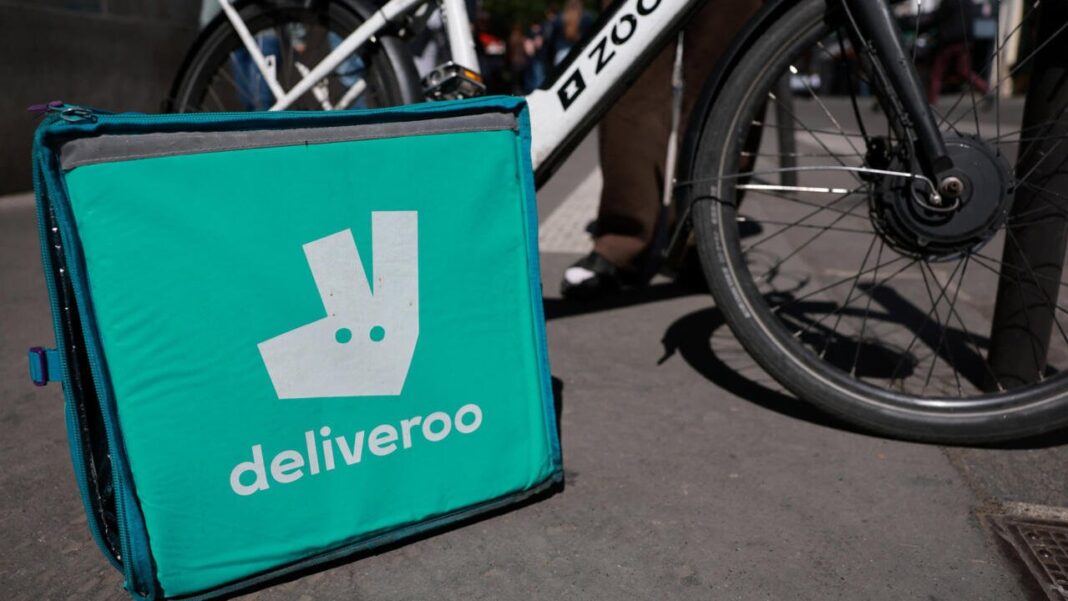

In France, the Deliveroo and Uber Eats platforms are the subject of a complaint for “trafficking in human beings”, filed on Wednesday April 22 with the Paris prosecutor’s office by four delivery driver associations. An unprecedented approach which denounces working conditions considered unworthy and extreme precariousness.
At the origin of this complaint against Deliveroo and Uber Eats: the Maison des livreurs de Bordeaux, the Maison des couriers in Paris, as well as the AMAL and Ciel associations. They accuse the platforms of exploiting the situation of very vulnerable workers, the vast majority of whom are immigrants.
According to the data provided, the situation is particularly difficult: delivery workers work on average 63 hours per week for an income of around 1,000 euros net monthly, or 1,480 euros gross, or around 300 euros less than the minimum wage. A Médecins du monde report published at the end of March also mentions a strong dependence on the platforms’ algorithms.
Also readFrance: “It’s getting worse and worse”, meal delivery drivers victims of a big drop in their income
Working conditions denounced
The associations rely on testimonies collected throughout France and on data from surveys carried out for more than two years. More than 200 delivery people were questioned as part of the complaint.
According to these organizations, the system imposed on couriers is opaque, forcing them to accept “any working conditions” while being considered “totally independent”. Out of a thousand delivery drivers questioned, 98% were born abroad and 64% did not have residence permits.
Circé Liénart, coordinator of the Maison des couriers de Paris, underlines the effects of this situation: “We see that this has consequences on the health and lives of workers,” she explains, adding that these conditions can lead to extreme precariousness and sometimes serious accidents.
A recourse to justice for lack of alternative
The associations’ lawyer, Thibault Laforcade, affirms that the legal route was chosen after the failure of other approaches. “Several channels were used, political, journalistic, scientific. They don’t work,” he believes, denouncing “a form of acceptance of the economic system” and its consequences.
“We have therefore decided to activate another, perhaps the last, that of justice,” he continues, hoping thus “to stop an inexorable progression for several years”. He specifies that the associations have collected documents on the living conditions, health and remuneration of delivery people in order to “document as much as possible” the file and call for the opening of an investigation.
With this complaint, the associations also hope to create a legal framework, currently non-existent according to them, and encourage similar initiatives abroad. For their part, the platforms strongly contest the accusations. Uber Eats claims that this “complaint […] is not based on any basis”, while Deliveroo says it “vigorously contests the intentions attributed to it” and “firmly rejects any assimilation of its model to a situation of exploitation or trafficking in human beings”.
Also readBicycle delivery workers in France: workers enslaved by platforms, denounces Médecins du monde
Originally published at Almouwatin.com