


Hunger is pushing 56 per cent of South Sudan’s population into high levels of acute food insecurity between April and July 2026, reaching Phase 3 or above on the world’s hunger classification system, the IPC.
▶ See our UN News explainer on the evidence-based IPC index here.
Among those projected to face acute food insecurity, 73,300 people are facing catastrophic levels (Phase 5), the most severe level under the internationally-backed alert system. This represents a dramatic increase of 160 per cent from the last estimate.
UN agencies said the crisis is being driven by escalating conflict, mass displacement, economic decline, climate shocks, flooding and below-capacity agricultural production.
Meanwhile, 2.5 million people are in IPC Phase 4 – Emergency level, and 5.3 million are in Crisis (IPC Phase 3).
Lack of services
In Jonglei alone, nearly 300,000 people have been displaced, leaving many communities cut off from humanitarian assistance, while rising food prices, disrupted markets, and weak household purchasing power are further deepening food insecurity.
At the same time, acute malnutrition is being exacerbated by lack of access to health and nutrition services that have been damaged or closed due to conflict.
In addition, shortages of supplies and funding have reduced access to life-saving treatment. Disease outbreaks, including cholera, malaria, and measles, are compounding the crisis, particularly among vulnerable and already acutely malnourished children.
Risk of famine
The UN agencies warn of a credible risk of famine in four counties across Upper Nile and Jonglei states.
The IPC projects 11 counties across Upper Nile, Unity, and Jonglei states to face IPC Acute Malnutrition Phase 5 (Extremely Critical) outcomes.
Humanitarian assistance is being scaled up in some areas, but coverage remains uneven, with some communities still inaccessible and receiving little or no support.
“Since the beginning of the year, we have seen a significant increase in conflict in Jonglei and Upper Nile and repeated blockages in our attempts to access people in these areas,” said Ross Smith, WFP’s Director of Emergencies and Preparedness.
“We are now engaged in a critical race against time to expedite and increase our deliveries to remote locations in anticipation of an early rainy season” he added.
Children bearing the burden
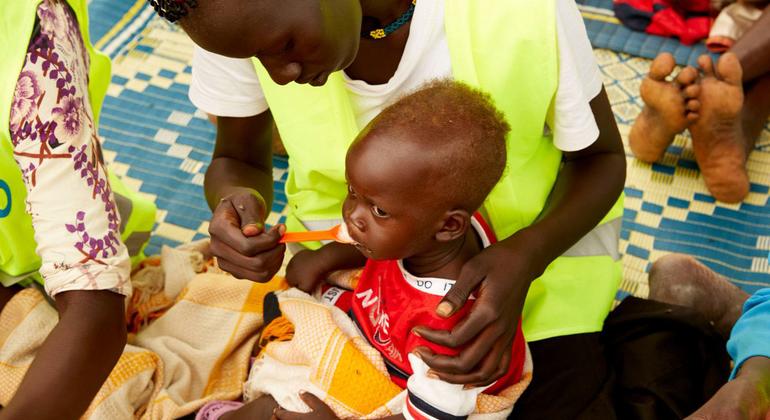
For children, the nutritional situation has continued to worsen. The number aged six months to five years facing acute malnutrition has increased by 100,000 cases when compared to six months ago.
Through July this year, 700,000 children are projected to face severe acute malnutrition, the deadliest form. Similarly, 1.2 million pregnant and breastfeeding women are acutely malnourished, placing both mothers and infants at heightened risk.
“Conflict is hitting women and children the hardest. These children are the future of the country, but without urgent support, that future is at risk,” Mr Smith said.
The UN is calling on the international community and governments to act immediately, with critical funds needed to prevent further deterioration and support food assistance, nutrition programmes, clean water and sanitation, and health services.