World News in Brief: Somalia drought response, Gaza and Ukraine aid updates, human rights abuses in Tunisia
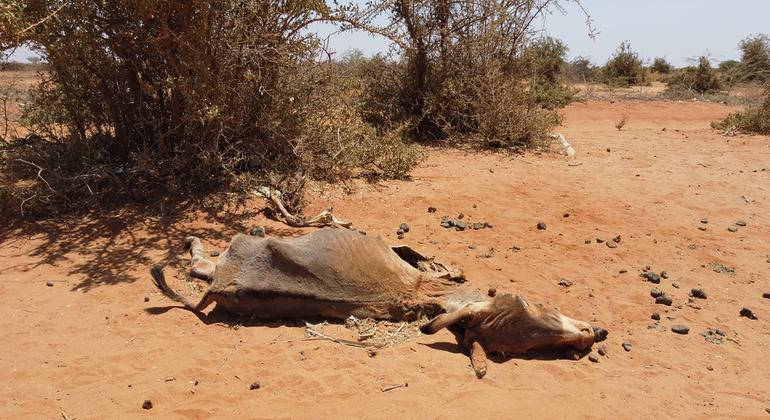
The World Food Programme (WFP) warned on Thursday that drought, conflict and severe funding shortfalls are pushing millions into food insecurity across the country.
Around 6.5 million people are now experiencing crisis-level hunger or worse, nearly double the number recorded a year ago.
Of those, two million are facing emergency levels of food insecurity, while more than 1.8 million children are expected to suffer acute malnutrition this year.
Lack of funding
Although Somalia is better positioned to respond than during the country’s devastating 2022 drought crisis, humanitarian agencies say funding shortages are forcing major cutbacks.
The agency, which delivers nearly 90 per cent of food assistance in Somalia, said it had provided emergency cash transfers to 380,000 drought-affected people through Government-backed systems aimed at strengthening national social protection efforts.
However, WFP says it can now only reach one in ten people in urgent need. Emergency food assistance has already been suspended in several districts, while nutritional support for pregnant and breastfeeding women has been reduced.
In Gaza, ‘rats bite children in the night in their tents while they sleep’
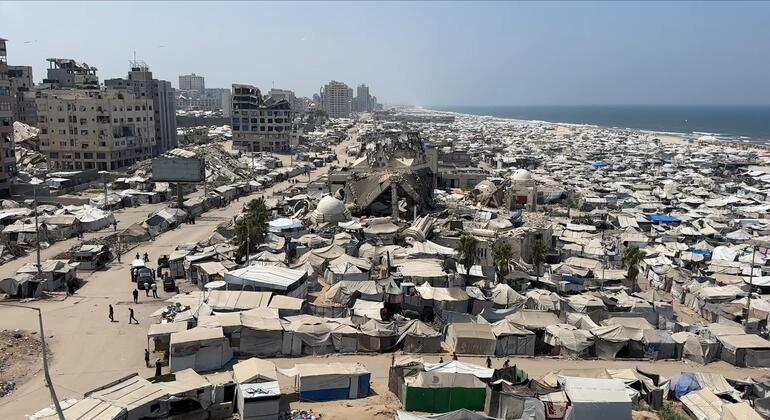
To Gaza, where aid teams say that rats bite children as they sleep, as conditions continue to deteriorate amid ongoing airstrikes, shelling and gunfire.
The alert from UNRWA, the UN agency for Palestinians, also highlights how the devastated enclave’s already vulnerable population faces a “much higher risk of disease” because of repeated displacement, overcrowded tents, a lack of clean water and broken sanitation systems.
UNRWA is working closely with the UN World Health Organization and local partners to track the rise of skin infections and rodent infestations in tents.
The agency and partners are scaling up hygiene kit distribution but far more tents, insecticides and medications are needed urgently, amid ongoing delays to the most basic aid deliveries.
Stick to priorities
To mitigate risks of fire, sanitation workers must be allowed to remove waste from displacement sites and residential areas and transport it to Gaza’s designated landfills, according to the UN aid coordination office (OCHA).
With designated landfills becoming inaccessible during hostilities, the market has been used as a major solid waste dump, with trash now covering an entire city block and exceeding four flights in height.
Gaza’s two sanitary landfills are near the perimeter fence surrounding the Strip, where access needs to be enabled by Israeli authorities.
OCHA warns that restoring local services is hindered by restrictions on the entry of critical items into Gaza – and by movement restrictions impacting key humanitarian partners.
Ukraine: aid convoys deliver life-saving relief near the frontline
In Ukraine, the UN and partners are continuing to deliver vital aid in support of residents living near the front line and still enduring attacks by Russia, as part of its ongoing full-scale invasion.
UN aid coordination office, OCHA, said in an update that major urban centres in eastern Ukraine have suffered heavy bombardment, which have harmed civilians and first responders.
This week, humanitarian convoys reached residents in Kharkiv and Donetsk regions.
Matthias Schmale is the UN’s top aid official in Ukraine. Here he is now speaking from Sviatohirsk – a former tourist destination – which a humanitarian convoy reached on Tuesday.
“Before the full-scale invasion in 2022, I understand there were thousands of people living in this community. Now there is close to 300 left, so you can also in those terms measure the impact of this war on the population of a place that I understand once was at the core of a touristic area… All of that is gone now.”
UN delivers
With the help of the UN and NGOs, aid convoys have delivered solar lamps, medicine, construction materials and hygiene kits for the elderly.
There have been 20 humanitarian convoys to frontline communities so far this year, providing critical support to nearly 22,000 residents.
Across the country, approximately 30 civilians were killed and 170 injured on Tuesday and in the early hours of Wednesday, according to authorities.
Attacks came from glide bombs and missiles in the cities of Zaporizhzhia, Kramatorsk and Dnipro. Multiple residential buildings, a dormitory, an education facility and other civilian infrastructure were also damaged, OCHA said.
UN rights chief Türk warns Tunisia to end repression of journalists, civil society
UN human rights chief Volker Türk urged Tunisia on Thursday to halt what he described as widening repression against civil society groups, journalists, activists and opposition figures.
The intervention by the top UN official followed court-ordered suspensions against Avocats Sans Frontières – Lawyers Without Borders – and the Tunisian League for Human Rights.
Mr. Türk also criticised increasing restrictions on the media.
Wrongful arrest
He cited journalist Zied El Heni who was arrested last month under a law criminalising online communications deemed to “harm others”, while dozens of other journalists have faced prosecution and prison sentences.
“Tunisia’s democratic and human rights gains after 2011 must be maintained, not progressively dismantled,” the UN rights chief insisted.
He called for the immediate release of people detained for expressing protected views and warned that limits on freedoms must remain lawful, necessary and proportionate.