Germany’s Scientology Policy Faces Scrutiny After Decades Without Evidence

Germany’s long-running treatment of Scientologists is facing renewed scrutiny after nearly three decades of official suspicion failed to produce evidence of a real threat to the country’s constitutional order. The issue is no longer a debate about theology. It is a question of whether public authorities maintained exceptional measures against a minority belief community without the evidence required in a democratic state governed by law.
Decades of suspicion, but no proven threat
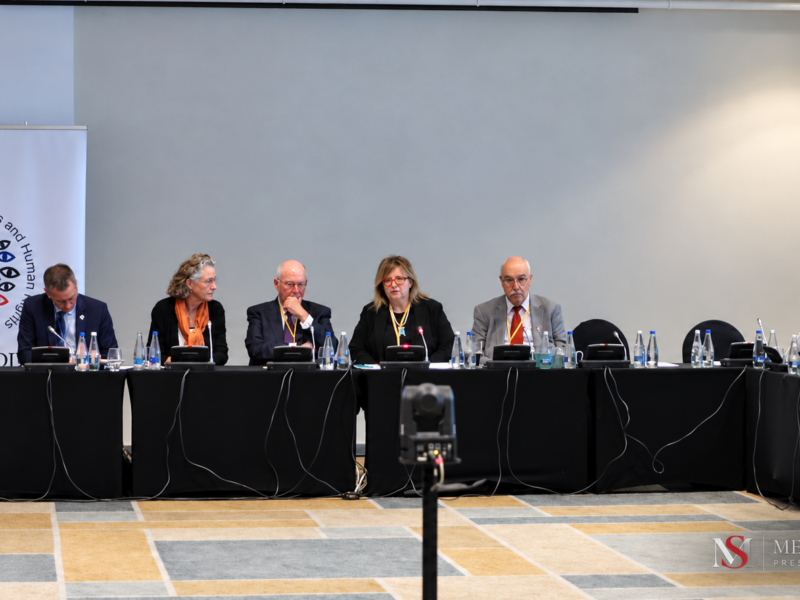
A new STAND article argues that international institutions repeatedly warned Germany about measures affecting Scientologists, including intelligence observation, public suspicion and so-called “sect filter” declarations. STAND, which describes itself as an initiative opposing discrimination against Scientologists and others, says the end of federal-level routine observation should prompt a wider public review of the policies that accompanied it.
For years, German authorities presented their approach as a defence of the free democratic basic order. But that justification now faces a basic evidentiary problem: after decades of surveillance, public reporting and administrative scrutiny, no concrete attempt by Scientologists to overthrow or subvert German democracy has been established. Even in earlier years, intelligence officials and observers reportedly questioned whether the available material justified the scale and duration of the measures imposed.
The debate has gained new relevance after Germany’s federal domestic intelligence service reportedly ended Scientology as a standalone federal area of observation after nearly three decades. The federal shift reopens serious questions about proportionality, evidence and the long-term consequences of official suspicion directed at a specific belief community.
International warnings were not new
One of the clearest international interventions came in 2019, when UN special rapporteurs wrote to Germany about information they had received concerning discriminatory measures against Scientologists. Their communication focused on “Schutzerklärung” declarations, often described as “sect filters,” which asked applicants in some settings to distance themselves from Scientology-related methods, training or organisations.
The UN communication did not decide the facts in advance. But it asked Germany to explain the legal basis for such measures and raised concern that individuals identifying as Scientologists should not be required to disclose or disavow their beliefs unless the state could show a legitimate and substantiated reason. That point remains central: a democratic state may regulate unlawful conduct, but it may not burden people because of belief, association or religious identity without clear and specific justification.
Similar concerns have appeared in other religious-freedom reporting. The U.S. Commission on International Religious Freedom has also noted that in some parts of Germany, potential employees or grant recipients had been asked to sign statements showing no connection to the Church of Scientology. Such measures go beyond ordinary public administration. They create a test of ideological distance from one named religious community.
German courts have limited discriminatory practices
German courts have recognised that individual Scientologists may invoke constitutional protections for religion or worldview, depending on the facts of the case.
A significant example came in 2022, when Germany’s Federal Administrative Court ruled that Munich could not deny an environmental mobility subsidy because an applicant refused to sign a declaration distancing herself from Scientology. The court found that the declaration was not sufficiently connected to the environmental purpose of the subsidy and interfered with constitutional protections, including equality and freedom of religion or belief.
That ruling did not require public authorities to approve of Scientology. It confirmed something more fundamental: access to public benefits cannot be conditioned on a person’s declaration against a specific belief community.
The burden is now on the state
The renewed discussion should not be framed as whether German institutions like or dislike Scientology. That is not the democratic test, because states must remain non-judgemental in regards to beliefs. The test is whether the state treated individuals and communities according to law, evidence, proportionality and equal dignity.
After nearly thirty years, the burden is no longer on Scientologists to prove that they are entitled to ordinary civic treatment. The burden is on public authorities to explain why they continued the unjustified exceptional measures, while there was no evidence, why those measures were maintained for so long, and whether any remaining administrative forms, procurement rules or local practices still single out Scientology by name.
Previous European Times coverage has raised similar questions about the relationship between surveillance, public language and the civic treatment of Scientologists in Germany. The latest STAND account adds another layer by placing those concerns within a longer record of international warnings.
The appropriate next step is a transparent review of all remaining Scientology-specific declarations, public-contract requirements and administrative practices. Such a review should ask a direct question: if decades of scrutiny did not establish a concrete threat, why should any exceptional treatment remain? What redress will the government now undertake to repair the damaged lives of thousands of Scientologists in the country?
For Scientologists in Germany, the issue is personal as well as legal. For the wider European debate, it is a test of whether minority belief communities can expect the same standards of neutrality, evidence and attribution that democratic institutions promise to all.