“Ukrayinskaya Pravda” reported on 4 June 2022 law enforcement officers announced that they had exposed the head of a charitable organization in the Odessa region in the illegal use of humanitarian aid
Details: The security forces say that the head of one of the huge charitable foundations in the Odessa region (according to the source of the UP – the Assol Foundation -ed.) organized the supply of helmets, body armor, medical and other supplies to Ukraine from international donors, allegedly for the needs of the army through ” Humanitarian Aid Center.
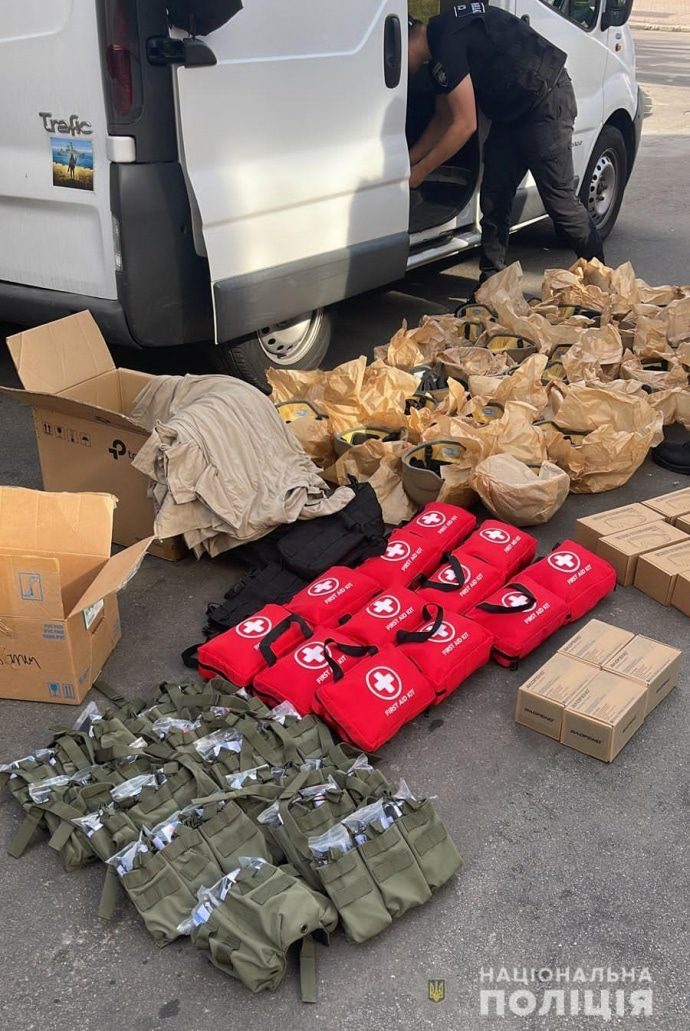
From February to June 2022, the director of the center was looking for humanitarian aid providers from the EU countries, and also received free help from caring citizens of Ukraine in the form of food, clothing, medicines, as well as military goods, including helmets (helmets), bulletproof vests, first aid kits, tactical glasses, walkie-talkies, unloading equipment, medical turnstiles, etc.
However, despite the promises to philanthropists to transfer the humanitarian cargo to its destination, the man sold everything received, the security forces say.
It is reported that the offender was detained “red-handed” during the implementation of a consignment of international humanitarian aid in the amount of almost 500 thousand hryvnia.
During urgent searches of vehicles, housing, office and storage facilities of the charitable organization, protective helmets, first aid kits, unloading gear, bulletproof vests and other humanitarian aid, as well as funds received for its illegal sale, were seized.
It is indicated that the activities of the “Center for Humanitarian Aid”, through which the sale of humanitarian aid for military purposes was terminated.
At present, the detainee has been informed of suspicion under Part 3 of Art. 201-2 of the Criminal Code of Ukraine and the issue of choosing a measure of restraint is being decided.
The pre-trial investigation continues.
According to data from open sources, the Odessa “Center for Humanitarian Aid” BO “Assol” is headed by Dmitry Antipov.
He led the humanitarian center at the Odessa Regional Military Administration. But after the appointment of a new head of the OVA, Maxim Marchenko Antipov, was removed from his post.
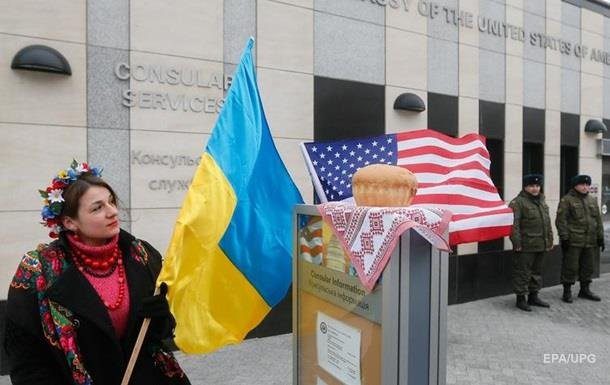
Refugees from Ukraine have a high chance of ending up in the United States, according to Today.ua. Nearly 50,000 Americans have already declared their readiness to help Ukrainian citizens. And their numbers are increasing day by day. In America, the state handed over the care of Ukrainian refugees to private sponsors, and ordinary Americans showed unheard-of activity.
The American media write about it.
The US says the private sponsorship program for refugees from Ukraine, which was launched on April 25, has already broken all records compared to previous similar programs. More than 47,000 Americans have already expressed their desire to take part in this action to help Ukrainians forced to flee the war.
As part of this Uniting for Ukraine program, as of June 1, more than 6,500 refugees from Ukraine had already arrived in the United States. But at the same time, even more will arrive: visas have already been issued to 27,000 citizens of the country.
“This program could quickly become the largest official private refugee sponsorship initiative in US history. It could eclipse a program shut down in the 1990s that allowed Americans to fund the resettlement of 16,000 refugees for six years,” the American source wrote.
In the United States, decided to give care of Ukrainian refugees to private hands. Students, volunteers and just caring citizens were involved in the organization of the program.
In which US cities are most waiting for refugees from Ukraine
New York became the leader in terms of the number of sponsors willing to host Ukrainians: 15% of their total number live there. In addition to New York, many applicants turned out to be in Chicago, Seattle, Philadelphia, Los Angeles, Miami, Washington, Sacramento, Portland and Cleveland.
Recall, while Poland, which received the largest number of refugees from Ukraine, announced the termination of social payments for most Ukrainian citizens. They will be left only for a narrow circle of the most needy people.
Due to insolvency, the popular fashion chain is forced to close all its branches across the country, aussiedlerbote.de reports.
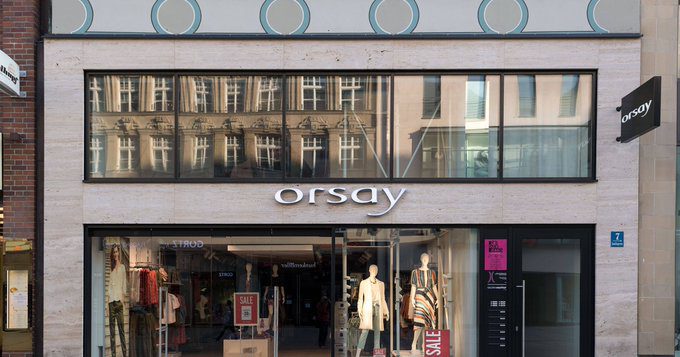
Now everything is finally over and fashion chain Orsay closes its doors to German citizens at the end of June.
The effects of the pandemic will be felt for a long time to come.
What is the reason?
Popular chain of fashion stores Orsay has been experiencing financial difficulties since the end of last year. At the time, it was said that the main reason was Coronavirus and the declining demand for holiday wear. So the company filed for bankruptcy by way of self-management and actually wanted to find a way out of a difficult situation.
But now it’s clear: in just a few weeks Orsay will become a thing of the past in the German fashion trade.
Is it because of the pandemic and the war?
“The work of the Orsay store will be closed at the end of June. It will end no later than June 30 and will affect all 197 branches,” said Wolfgang Weber-Tedi, spokesman for the company. “Back in March, we made a decision to cease operations, during which all employees, landlords and service providers were notified,” Weber-Tedy continued.
At the beginning of the war in Ukraine, “we actually had a restored branch network.” 67 branches were closed during this “reorganization of the branch network in the course of bankruptcy in the self-government regime.”
As part of the reorganization, brand representatives worked on a decision to continue operations. In the course of this, numerous stakeholders were involved in the negotiations.
“And then an untold war got in the way, and our liquidity outlook deteriorated significantly,” the spokesman explained.
This war has significantly worsened investors’ appetite for risk. “In the end, no agreement was found that would satisfy all parties,” Weber-Tedy explains.
Without external funding, the Orsay network can no longer do anything in the current situation.
Approximately 1,200 employees have already been notified in March of the layoffs, as well as all tenants.
At present, Orsay branches in Nuremberg, Erlangen, Ansbach, Würzburg, Aschaffenburg and Bayreuth are still open in Franconia. But only until the end of the month.
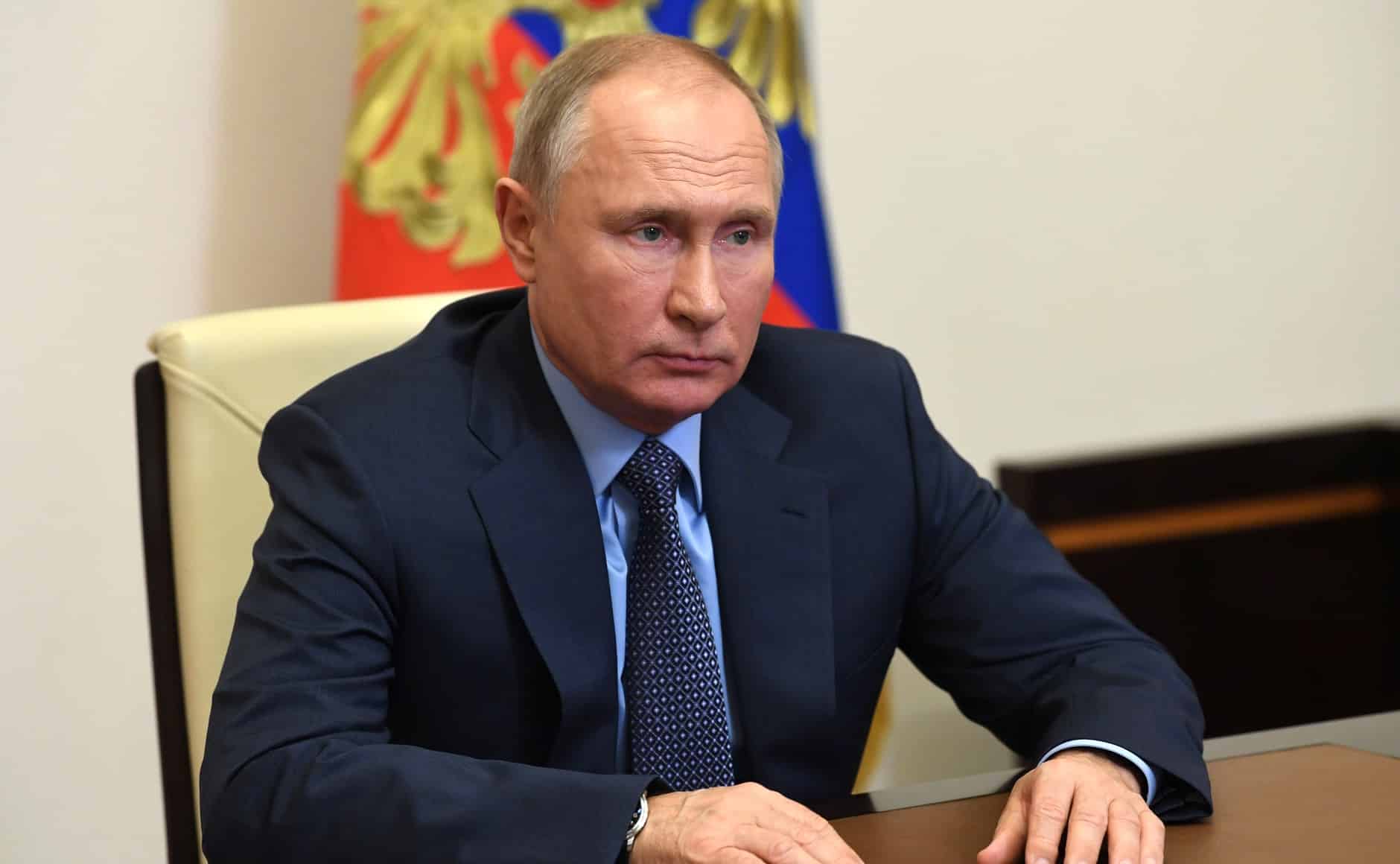
Russian President Vladimir Putin decided to go to war with Ukraine, having performed at least two rituals with shamans. The UNIAN website writes about this, quoting the well-known Russian historian, political analyst and publicist Valery Soloviev on the air of the Feigin LIVE program, reports the Israeli information and analytical website detaly.co.il
According to Valery Solovy, there were two rituals – one at Putin’s residence Bocharov Ruchey in Sochi, the second – in the Altai Territory, where the Russian president visited in the fall of 2021.
“Those who inspired Putin to feats of arms, who led him to the fact that he actually canceled the original plan of the Chief of the General Staff Valery Gerasimov, they paid dearly for this,” the historian said. – The original plan of Gerasimov provided that the Russian troops would not cross the borders of Ukraine for three weeks. It was about bombing, bombing, hitting with rockets, using artillery, using the air force … Only after the military-civilian infrastructure is blown up, launch an offensive.
According to Nightingale, these shamans were brought to Putin by Russian Defense Minister Sergei Shoigu, who “hurried to become a marshal of victory.” Nightingale added that the Russian dictator believed them, because his experience with shamans dates back to the zero years.
The poet invests money from his Nobel Prize at the Russian Samovar restaurant in New York
There are people whose destiny has made them a completely unidentified cosmopolitan. Only they choose what they really feel. Soviet dissident Joseph Alexandrovich Brodsky (1940-1996) remained a Russian until the end. The poet was born into a Jewish family in former Leningrad. In today’s Russia, he is called a Russian Jew and a dissident poet, and in America, an American poet of Russian descent. However, none of these definitions will be completely true. He himself refutes them – Joseph Brodsky.
Joseph Brodsky (Dr. Brodsky) was awarded the Nobel Prize for Literature (1987) and winner of the Golden Wreath at the Struga Poetry Evenings (1991).
After being convicted in the USSR, thanks to the intercession of intellectuals, including Samuel Marshak, Dmitry Shostakovich, Anna Akhmatova and others, he was saved from exile and in 1972 emigrated to America. There he became a university lecturer. He is the author of poetry collections, poems, essays and many translations.
He died in New York and was buried in Venice.
This is, in short, the biography of a world celebrity with enormous intellectual potential. Brodsky’s life is worthy of a film with a sad narrative and a happy ending. The last five years have been the happiest in his life, but unfortunately the last. It seems like an unfair ending, but full of some clever idea for the living to think about.
Brodsky was born on May 24, 1940, in the family of photographer and journalist Alexander Brodsky and his wife Maria Wolpert. Little Joseph was a baby when his parents were evacuated to Cherepovets after Hitler’s German attack on the Soviet Union and the siege of Leningrad. They returned to Leningrad after the end of the war. The young Brodsky studied until the eighth grade and at the age of 15 he started working in a machine-building plant – he was trained as a miller.
He will try his hand at various other professions – firefighter, paramedic, sailor and geologist. At one time he even worked in the morgue of a hospital. But in fact, all this time – in the battle for food, he was interested in only one thing – literature.
She educated herself. From a very young age he showed a deep interest in classical philosophy, religion and mythology; English and American poetry.
Brodsky learned English and Polish and translated from and into them. It feeds on translations. He began writing poetry at 16, but did not publish it. He met famous Leningrad writers. He became close to Anna Akhmatova, who significantly influenced his future career. He began to recite his works in public. Among the recitations, however, he also makes statements that are not unequivocally accepted by the guardians of social censorship. It attracts the attention of the services. In fact, it has been under surveillance since the 1960s.
Some of the books in Brodsky’s personal library. Today it is exhibited in Brodsky’s “American Cabinet” at the Anna Akhmatova Museum in St. Petersburg
The first publication to make it famous was a version of The Ballad of the Little Tug (The Ballad of the Little Barge, 1962). In 1963 he was arrested for “parasitism”, whatever that means? … The next year he was sentenced and sent to 5 years in exile in the Arkhangelsk region. He does not fatally accept his exile. Even later he would say that it was a happy period in his life – he had a lot of time to read and write.
According to one critic, Brodsky’s exile proved to be “as creative a success as Pushkin’s exile in the Caucasus.” In the Arkhangelsk region Brodsky got to know the people, the coastal inhabitants of the North, fishermen and farmers. She dedicates her poem “People” to them, which Anna Akhmatova defines as “the anthem of the people”.
Anna Akhmatova is not the only one who advocated for Brodsky during his exile. Many artists and cultural figures in the former Soviet Union are pushing for his release. And after 18 months of exile, in September 1965 the poet was released.
In the same year his book “Poems and Poems” was published in the USA, and in 1970 – “Stop in the Desert”. However, there were cataclysms in Brodsky’s personal life, which led him to even attempt suicide. The reason is his separation from his great love and the mother of his son Andrei (born 1968) – the artist Marina Basmanova.
In 1972, Brodsky received an offer to leave the Soviet Union. According to some sources, the alternative was to be placed in a psychiatric clinic if he did not agree. In June of that year, he was stripped of his Soviet citizenship and forced to leave.
He first settled in Vienna and then left for the United States. In 1977 he received American citizenship.
His books “In England” (1977), “The End of the Wonderful Age” (1977), “Part of Speech” (1977), “Roman Elegies” (1982), “New Stations in August” (1983), ” Urania “(1987), the drama” Marble “(1984 ) and a collection of essays in English “Less than one” (1986). He settled in Ann Arbor and became a professor at the University of Michigan. He later taught at Columbia University in New York.
Since 1986 he has been a professor of literature at Mount Holyoke College. In addition to Russian, he writes poetry in English.
He lectures, reports, writes and publicly recites his poems. In December 1987, he received the Nobel Prize for Literature, which was motivated as follows: “For his extensive work, full of poetic passion and pure thought.” The American media is beginning to call Brodsky “the last poet of the Silver Age.”
Until Perestroika, however, his works were not published in his homeland. In 1990, his Soviet citizenship was restored and collections of his works began to be published in Russia. And in 1995 the poet was awarded the title “Honorary Citizen of St. Petersburg”. In 2005, a monument was erected in his honor in Russia.
The poet spent his last years in New York with his family – with his wife – Russian-Italian translator Maria Sotsani, whom he married in 1990, and their young daughter Anna. From his previous marriage the poet has a son – Andrei Basmanov.
On January 28, 1996, Brodsky died of a heart attack at the age of 55. His ashes were originally buried in America and moved to Italy a few months later, in the cemetery on the island of Saint-Michele, Venice. This was the last wish of the poet.
The memoirs of the prominent Russian literary critic and publicist Vladimir Bondarenko about Yosif Brodsky are interesting:
When Joseph Brodsky was buried in Venice, many remembered his unfulfilled prophecy: “I will come to die on Vasilevsky Island.” Russia is his friends and opponents, both the St. Petersburg liberals and the Moscow landowners.
These sworn enemies agreed that Brodsky, a red-haired Jew from the Foundries, was a stranger to Russia; that Russia did not understand and did not accept it; that his poetry did not suit Russia, just as the cartridges of the NATO M-16 rifle did not suit the Kalashnikov.
Such a position suited everyone. In the first place, “St. Petersburg’s poetic losers, overshadowed in Russian culture by the bright figure of Brodsky … from the Russian state.
Alas, the Russianness of Joseph Brodsky proved unnecessary both to our Russian patriots – to the critics of the Brodsky camp, and to the critics of the liberal movement, who struck out Russia as such and erased any manifestation of Russianness from the poet’s fate. ” . (Vladimir Bondarenko, 2003, “Literary Russia”)
Bondarenko is trying to “bring Brodsky home” in the bosom of Russian poetry. In his essay, the literary critic convincingly proves that Brodsky’s emigration and his demonstrative refusal to return to Russia were connected not only with his insult to “Bolshevism” but mainly with his tragic love for Marina Basmanova, the mother of his son Andrei. . Dozens of the poet’s best poems were dedicated to Marina. And if the first is from 1962, then the last is from 1989 – ie. shortly before Brodsky married Maria, 30 years his junior. In confirmation of his version that Brodsky never gave up on Russia, Bondarenko published a remarkable little-known document – Brodsky’s letter to Brezhnev. It has the following contents:
“I belong to Russian culture and I feel part of it. Even though I lose my Soviet citizenship, I never cease to be a Russian writer. I believe that I will return, writers always come back – if not personally, then on paper, and if my people do not need my presence, they may need my soul. “
Brodsky begs Brezhnev to stay in the USSR, willing to work only as a translator, but he is not allowed to do so.
Did he grieve for Russia as an emigrant to America? – One fact: On his initiative, a restaurant called “Russian Samovar” was opened in New York. Moreover, Brodsky invests in the restaurant part of the money from his Nobel Prize. He hoped that this place would become a place of Russian emigration – to become “Russian New York”.
The following fact is also curious about Brodsky’s personality: he forbade him to be sung in a synagogue during his lifetime. More than once he repulsed attempts to put him in a “Jewish circle”, as he put it. Then, already as a professor, he declined the invitation of the University of Jerusalem to give lectures there?
According to some critics, this feature of the “Jew Brodsky” comes from the fact that the descendants of Jews in the former Soviet Union were fully integrated into the state. Unlike America. Brodsky himself once wrote: “When I found myself in the West, I was struck by the strict distinction between Jews and non-Jews.” This seems like a paradox at first glance, but it is confirmed by other Jews in America.
In 1990, the poet met Maria Sotsani, an Italian aristocrat with Russian maternal roots. The two are 30 years apart. She listens to his lectures as a student and from the side they both look like a father and a daughter, but other, stronger feelings arise between them. They get married in Sweden. Their daughter is born.
Unfortunately, Brodsky died just when he was happiest …
Brodsky suffered from angina pectoris before emigrating. In 1978, before his first heart operation in America, he asked the Soviet authorities to let his parents and son go to see them. But they were not allowed. Brodsky’s parents subsequently filed 12 applications with such content. The poet’s mother died in 1983, his father a year later, and Brodsky was not allowed to attend the funeral.
His health is deteriorating. His heart was weak anyway. Since 1964, the poet has suffered four heart attacks, and before he died he had four heart surgeries behind him. However, he did not stop smoking for the rest of his life. “Life is a remarkable thing, precisely because there is no guarantee of anything in it!” He told doctors when advised to stop smoking.
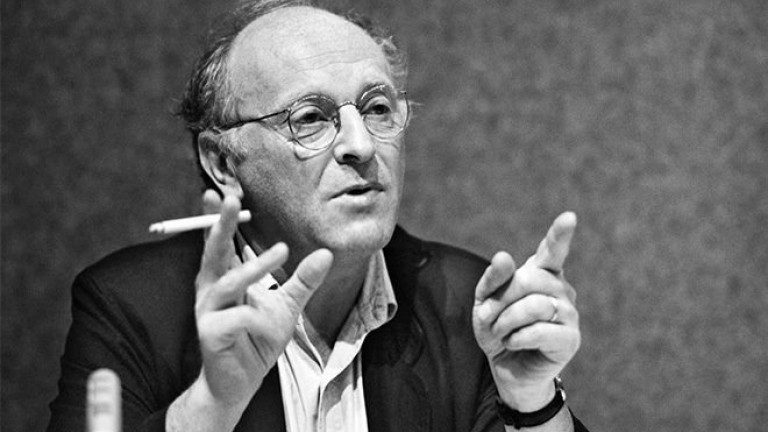
In many photos we will see him either with a cigarette or a cat in his arms – he adored these animals because of their graceful movements.
Did he foresee his death? Two weeks before he died, Brodsky bought a grave site in New York. On the last night of his life, he worked in his office. In the morning, his wife Maria found him dead. Cause of death – heart attack. The fifth in a row … But all the relatives of the poet are unanimous that the last five years of his life were the happiest for him.
IN THE NEXT CENTURY (excerpt)
Reality passes into reality gradually.
You will read the letters that come out from under this pen,
you will rebuke him like an ant tree,
for his laziness.
Remember: people leave their apartments only with someone directly
occasion – her rent jumped, she began a housing crisis;
just the future wants to come and go
without them.
In any case, what is written in prison shows us that hell is a creation of people, created and completed by them. And this is our perspective to endure it, because people are as cruel as they are paid, and for the same reason they are negligent, salesman, lazy, etc. No man-made system is perfect, and the penal system is no exception. ” (Joseph Brodsky, excerpt from his essay “The Writer in Prison”)
Photo: Joseph Brodsky / Archives of the Union of Writers in Russia
The Antiquities Authority is investigating a citizen who robbed excavation sites.
The Antiquities Authority’s Theft Prevention Unit is investigating a Modiin resident suspected of embezzling 1,500 valuable artifacts, including rare ancient coins. Details will be announced June 4 on local news site mynet.
There are many archaeological sites around Modiin. Scientists find artifacts from the period of the Hasmonean dynasty to Roman rule. Sometimes archaeologists notice traces of illegal search for valuables and petty theft on objects. But what was discovered in the apartment of a resident of Modiin surprised even worldly-wise scientists.
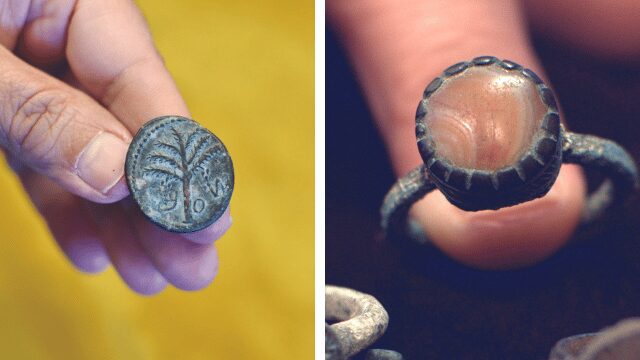
The head of the Antiquities Authority, Eli Ascosido, believes that some of the items found in the suspect’s apartment were recently stolen from excavations. According to a report published by the Antiquities Authority, among the items were: a coin from the period of the great revolt against the Romans 2000 years ago, coins from the time of the Bar Kochba revolt, ancient jewelry.
The report says that during a search of the apartment, envelopes were found, with the help of which the suspect was going to send coins to recipients abroad. This will serve as evidence in court about the preparation of illegal transactions for the sale of archaeological treasures.
By law, any resident of Israel who finds an object of historical or archaeological value must report it to the Antiquities Authority or the police. Carrying artifacts from excavation sites, and even more so robbing and devastating archaeological sites, is prohibited by law.
Upon completion of the investigation, an indictment will be filed against the suspect from Modiin. It is estimated that this will happen in a few weeks.
Photo: Ancient objects found in suspect’s apartment (Antiquities Administration)
Switzerland allowed EU countries to supply parts for military equipment.
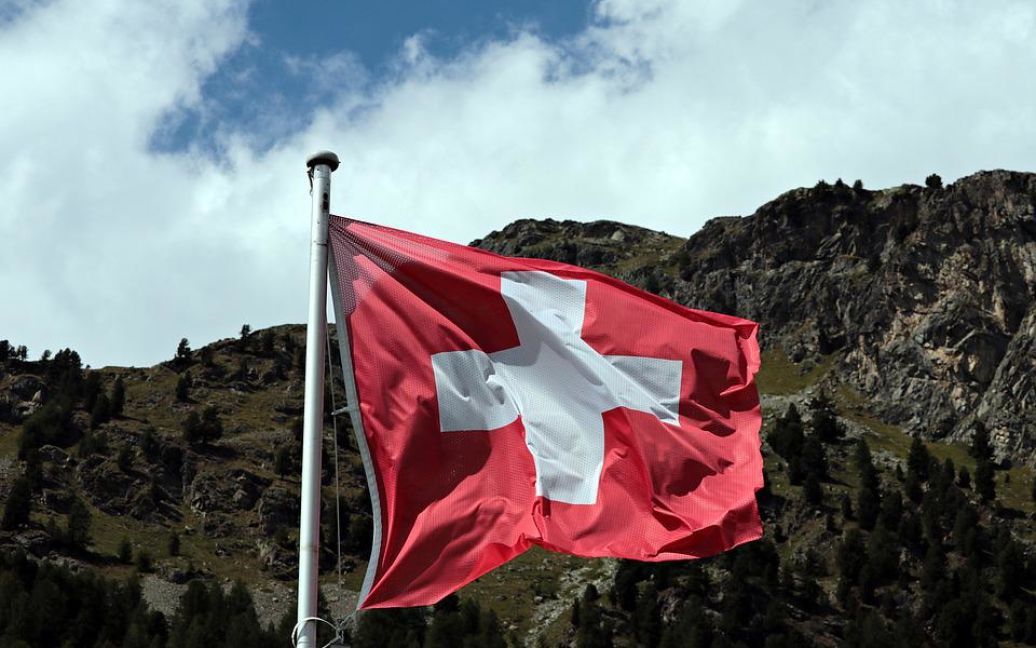
The Swiss authorities have allowed European countries to supply Ukraine with spare parts for military equipment purchased in Switzerland. They noted that this type of re-export does not violate the neutrality of the country.
This is stated on the website of the Swiss Federal Council.
The country’s government has studied two requests for the export of “parts and components by Swiss enterprises to arms companies in Germany and Italy.” In the first case, we are talking about the components of anti-tank launchers, in the second – about air defense systems.
“In accordance with the current practice of the Federal Council, the supply of military equipment in the form of spare parts and assembly elements is allowed in principle,” the statement said.
In particular, Bern permits the sale of such products in Germany and Italy.
A Russian doctor claims that mosquitoes bite sweaty people more
An effective remedy against mosquito bites is more frequent bathing, and formic acid can help against stings during a trip to the woods or a stay on the beach, said doctor Alexei Khukhrev to the TV channel “Moscow 24”.
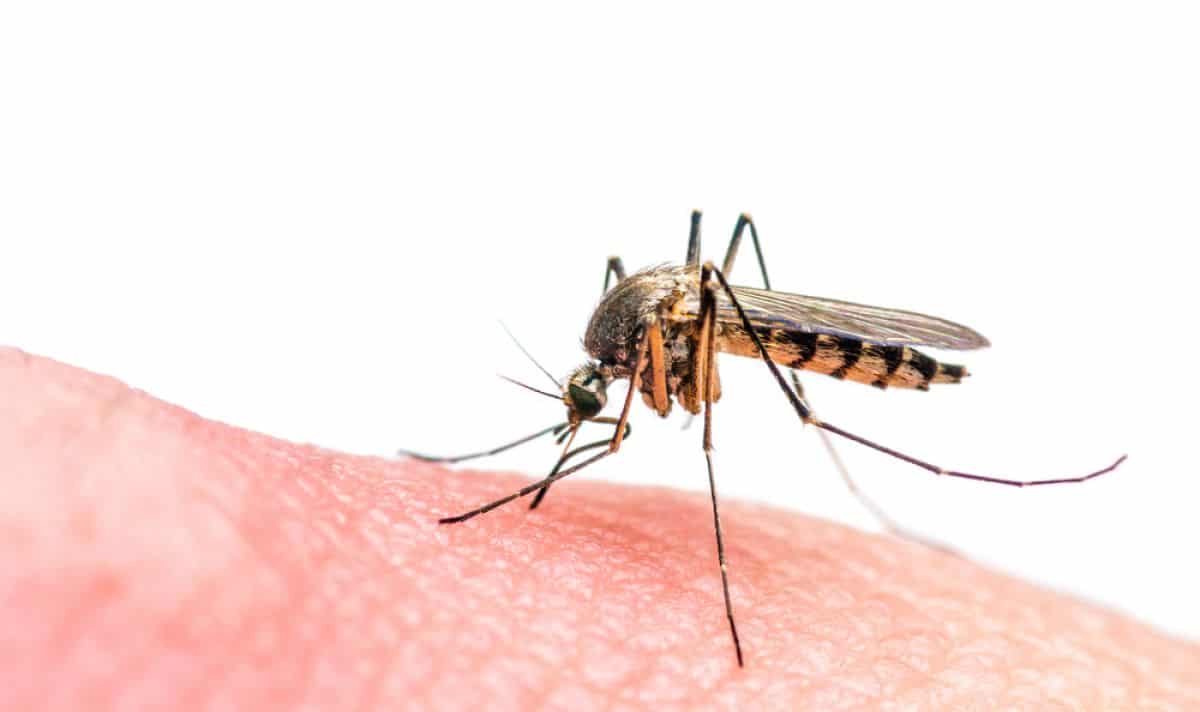
“Mosquitoes bite sweaty people much more often than those who do not sweat. They just feel the sweat in the distance and fly to the person,” said the specialist.
He claims that mosquitoes react to urea, which is released with sweat. To protect yourself from insect bites, you should take a shower more often in the summer, explains the therapist. In addition, while walking in the woods, the presence of an anthill nearby can help you deal with the problem.
“You take a rag and put it on it. On one side and on the other. Then you shake off the ants and you can rub yourself with the piece. And no mosquito will come near you, because formic acid is a very unpleasant smell for them,” the doctor concluded.
It all started about 10 years ago, when a Dutch newspaper described the Belgian city of Charleroi as “the ugliest city in the world”:
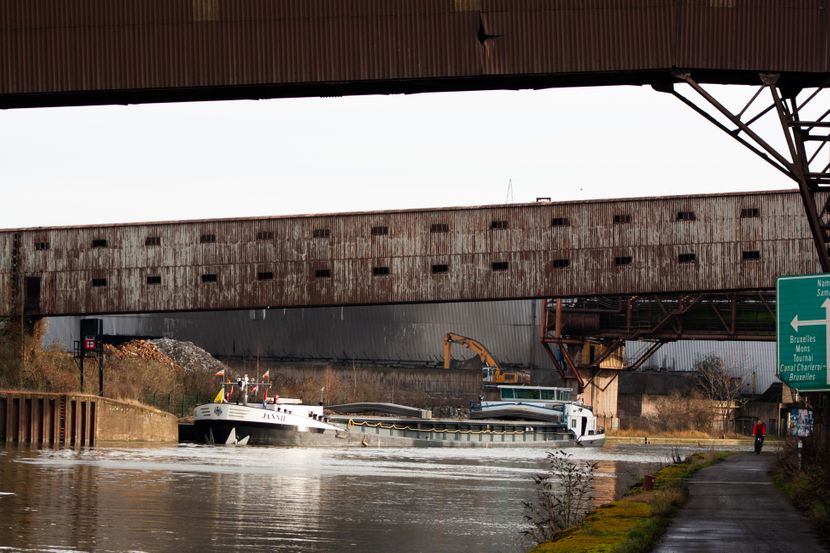
The Belgian city of Charleroi, after the collapse of the industry and lack of financial resources, was left to fend for itself. Trains have also stopped running in this part of the country.
Charleroi, a city of 200,000 people just 64 km south of Brussels, is known for its housing estates and crumbling factories. Abandoned factories and aircraft wreckage predominate in the city, there are no people at the stations and there is a lot of graffiti.
According to a report by the humanitarian organization Maptia, which cares for the world around us and focuses on the problems, two mayors of the city recently had to resign after getting involved in financial scandals.
Two to five subway lines were designed to serve the city and were never completed. The empty stations now serve as a breeding ground for vandals, self-proclaimed graffiti artists and drug addicts.
Despite these images of the city, the past looked different. The coal and steel industries in this city were the object of industrial envy in Europe. Belgium had the second longest rail network on the continent after Britain. But in the 1990s, the shortage of coal and steel marked the beginning of the end, and the financial crisis hit hard.
However, there was a turnaround
It all started 10 years ago, when a Dutch newspaper described the city as “the ugliest city in the world”. The townspeople didn’t like it either, and they didn’t want to admit it. Other media outlets joined the chase, and writings about the depressed city grew day by day.
However, as the old saying goes, “every advertisement is a good advertisement”, tourists after a few bad texts about the city began to come and visit it.
The locals greeted them ready. They decided to use the moment and the “epithet” of their city and used it, so they started to develop a kind of exotic and absurd tourism.
The former ghost town is now more “alive”, dangerous areas are now more tame pedestrian paths, the streets are new asphalt, buildings and shopping centers have begun to be built.
Local artist Nicolas Buisart organized a “city safari”, which took guests to the empty metal factories, walking with them on the most depressed street in Charleroi. Abandoned factories serve as a platform that gives a wide view of the city.
The United Nations has said it is in intensive talks with Russia to unblock Ukrainian ports and release tens of millions of tonnes of grain to prevent a global food crisis.
One hundred days after Russia’s invasion of Ukraine, UN coordinator for the war-torn country, Amin Auad, emphasized the high stakes in the “very, very complicated” negotiations to break the deadlock.
Ships loaded with grain remain stranded in Ukraine, which before February was considered the world’s granary as a leading exporter of corn, wheat and sunflower seeds, feeding 400 million people worldwide last year.
The talks are being led by the head of the UN aid service, Martin Griffith, and Rebecca Ginspan, who heads the UN agency for trade and development, Awad told Geneva.
The UN has warned that especially African countries, which import more than half of their wheat consumption from Ukraine and Russia, are facing an “unprecedented” crisis caused by the conflict.
Food prices in Africa have already surpassed those after the 2011 Arab Spring and the 2008 food riots.
Putin said Moscow was ready to look for ways to transport grain stranded in Ukrainian ports, but called on the West to lift sanctions.
Awad stressed that Russia is also under pressure from some of its allies, who are experiencing difficulties.
“There are many contacts between Moscow and other countries that are concerned,” he said.
Today, Russian President Vladimir Putin met at his Black Sea residence in Sochi with African Union President and Senegalese President Maki Sal.
Opening the talks, Sal called on Putin to “realize” that African countries are “victims” of the conflict in Ukraine.
Awad stressed that Russia “has allies in the south”, stressing that some of the countries affected could help change the situation.
“I am optimistic that on some topics we can give in, something can be done,” he said, expressing hope that we could “see a breakthrough”.
But he stressed that the negotiations are “very complicated” and “conducted through many channels”.
The UN World Food Program has said that unblocking ports will have a huge impact.
“Black Sea ports seem to be the silver bullet when it comes to avoiding global shortages, global hunger,” Matthew Hollingworth, coordinator of the World Food Emergency Program in Ukraine, told reporters.
He said that while efforts are being made to reopen ports, the UN and other organizations are considering other options for exporting much-needed grain from Ukraine, including by truck, train or through ports to neighboring countries.
However, such options would mean “exporting 1-1.5 million tonnes”, he said, stressing that while this may sound like a lot, “it is nothing when before the war the country exported 5 million tonnes per month”. .
Auad agreed, citing a number of challenges in transporting grain by truck or rail.
“In order to export 50-60 million tons of food, sea transport must really be used,” he said.
European Mediterranean countries, through which major migrant routes to Europe pass, are expecting more than 150,000 new arrivals this year after food shortages caused by Russia’s invasion of Ukraine threaten a new wave of migrants from Africa and the Middle East.
“This year, the Member States of the European Union at the forefront are expected to receive more than 150,000 migrants, as we discussed,” Cypriot Interior Minister Nikos Nuris said today after meeting with colleagues from the so-called MED5 group. in Venice.
Nearly 36,400 asylum seekers and migrants have already arrived in Italy, Spain, Greece, Cyprus and Malta this year, up from a total of 123,318 newly arrived migrants last year, according to the United Nations High Commissioner for Refugees.
However, their total number remains significantly lower than in 2015, when more than one million migrants arrived in the five countries to escape poverty and conflict in Africa and the Middle East.
Deficiencies in wheat and other cereals could affect 1.4 billion people, UN Crisis Coordinator Amin Awad said yesterday, adding that further talks were needed to unblock Ukrainian ports to avoid famine and mass migration around the world.
Russia and Ukraine account for almost a third of global wheat supplies, with Russia also a key exporter of fertilizers and Ukraine an important supplier of corn and sunflower oil.
“If wheat remains stranded in Black Sea ports, we should expect a greater (migrant) flow,” Italian Interior Minister Luciana Lamorgese told Sky-TV 24 yesterday, adding: “We are concerned, like all frontline countries.” .