Sunday, September 20, 2026
Home Blog Page 101

From cook to helicopter pilot: Air Force recruitment will be carried out with AI, HR ensures that there will be no discriminatory bias

0
From cook to helicopter pilot: Air Force recruitment will be carried out with AI, HR ensures that there will be no discriminatory bias

The Air and Space Force has signed a partnership with the French start-up Gojob, which will use its AI to sort applications for all of the 4,000 positions for which the institution recruits each year.

The French start-up Gojob, a specialist in temporary recruitment with artificial intelligence solutions, has been selected by the Air and Space Force to manage all of its personnel needs, the company announced on Monday April 13. After a test phase, Gojob has been deploying its AI solution since April 1 “to manage and pre-qualify all of the institution’s applications and recruitments, or around 70,000 files per year”, according to a press release.

“There are 4,000 people to recruit permanently every year. It remains an extremely important issue,” declared General Philippe Hirtzig, director of human resources for the Air and Space Force. The institution is recruiting for 50 professions, from cook on an air base to helicopter pilot, he added.

An initial selection made by AI based on specific criteria such as age (you must be an adult to join the army) and nationality (you must be a French citizen, except to join the Foreign Legion) should make it possible to quickly prioritize the most relevant applications before army recruiters take over and contact the candidates directly.

The HR director promises that there is no bias

Although it is gradually becoming more widespread, recruitment using AI continues to be debated, in particular due to bias in algorithms which can reproduce or amplify discrimination. Examples of AI software sorting CVs and displaying sexist or racist bias, and devaluing women or black people, are numerous. “AI systems, which learn from data full of stereotypes, often reflect and reinforce gender bias,” explains Zinnya del Villar, data scientist and technology director at Data-Pop Alliance, in an interview published on UN Women.

Thanks to the tests carried out upstream, “we have the assurance that the biases of artificial intelligence are not discriminatory”, affirmed General Philippe Hirtzig, adding that “sampling checks” will be carried out.

“All our models can be audited,” assured Benjamin Vallat, deputy general director of Gojob, explaining that they have put in place safeguards to structure the data while avoiding bias. This partnership, the amount of which has not been revealed, allows, according to General Philippe Hirtzig, to put forward a “sovereign” solution meeting “the canon of certifications and security guarantees” in France and Europe. Founded in 2015, Gojob, which also collaborates with France Travail, claimed a turnover of nearly 200 million euros in 2025. It has around 250 employees spread between France and the United States.

Originally published at Almouwatin.com

Gulf countries: the end of the boom years?

0
Gulf countries: the end of the boom years?

The Gulf countries emerge weakened from these five weeks of strikes. The missiles and drones fired by Iran have caused sometimes considerable damage to their vital infrastructure. Above all, it is the image of countries hitherto spared the risks of armed conflict which are seeing their entire diversification model called into question. What if they were the real losers of the war – and of the ceasefire? We welcome Christian Chesnot, senior reporter in the international editorial team of Radio France.


Source:

www.france24.com

Originally published at Almouwatin.com

Propaganda war on TikTok, Orban beaten, a female coach in the Bundesliga: what does it say this April 13?

0
Propaganda war on TikTok, Orban beaten, a female coach in the Bundesliga: what does it say this April 13?

This Monday, April 13, the war between Iran and the United States is also being played out on TikTok with videos generated by AI, Viktor Orban is beaten despite a campaign fueled by fake accounts, and Marie-Louise Eta becomes a coach in a major European championship, a historic first.

“Hi it’s Leo, what does it say? »

The war is also being played out on the networks. Since the start of the conflict with Iran, videos generated by artificial intelligence have flooded TikTok and racked up hundreds of millions of views. Behind this content, sometimes presented as “independent”, lies in reality propaganda without filter or verification, which further blurs the line between information and manipulation. Iranian creator of viral “Lego” videos admits to BBC working for Islamic regime

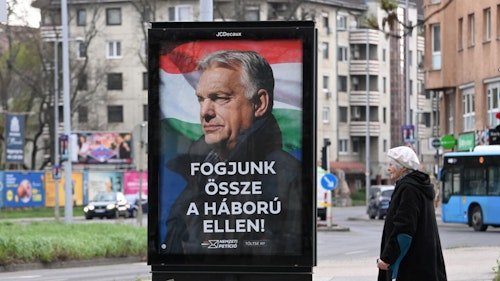
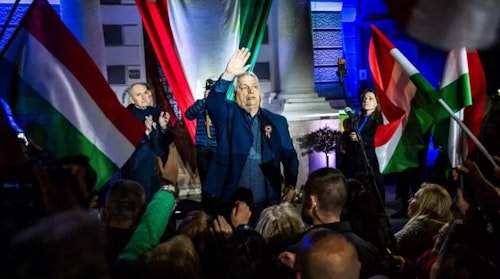
In Hungary, outgoing Prime Minister Viktor Orban was defeated despite a campaign marked by networks of fake pro-Russian accounts. His opponent, Peter Magyar, won and embodies a return of a pro-European right. Proof that, even in the era of massive digital campaigns, predictions can be thwarted.

And then, it’s a first in European football. Marie-Louise Eta becomes coach of Union Berlin in the Bundesliga. A strong symbol in a still very masculine environment: women are extremely rare on the benches of men’s teams, and even in women’s football, the majority of coaches remain men. One more step towards standardization which is still far from being achieved.

“What does it say? », a podcast to listen to from Monday to Friday from 8:30 a.m. on franceinfo.fr, on the franceinfo WhatsApp channel (New window), on TikTok (New window) or on all podcast platforms:

A particular desire, a piece of news that questions you or made you react? Introduce yourself and send a voicemail to “What does it say” to participate in a future episode: “Hi Léo, hello Sarah! »

Originally published at Almouwatin.com

The Next Big Sweepstakes Casino Arms Race Is Happening Behind the Login Screen

0


Sweepstakes casinos still appear to be a front-end game. Gamblers see the game room, the promotions, the colours,

Source link

Emmanuel Lechypre against Raphaël Legendre: Orbán’s defeat, a chance for Europe? – 04/13

0
Emmanuel Lechypre against Raphaël Legendre: Orbán’s defeat, a chance for Europe? – 04/13

This Monday, April 13, Benjamin Couteau, researcher at the Grande Europe Center of the Jacques Delors Institute, was the guest of Annalisa Cappellini in The World That Moves – The Interview, on the show Good Morning Business, presented by Laure Closier. He returned to the defeat of Viktor Orban in the legislative elections in Hungary, and the consequences of Péter Magyar’s victory for Europe. Find the show from Monday to Friday and listen to it again as a podcast.

This Monday, April 13, the programs and positions of Péter Magyar, considered quite close to those of Viktor Orbán, were discussed by Annalisa Cappellini in her column, in the show Good Morning Business, presented by Laure Closier, on BFM Business. Find the show from Monday to Friday and listen to it again as a podcast.

This Monday, April 13, the results of an Ifop survey according to which half of retirees would be ready to make efforts to redress the public accounts were discussed by Raphaël Legendre in his editorial, in the show Good Morning Business, presented by Laure Closier, on BFM Business. Find the show from Monday to Friday and listen to it again as a podcast.

This Monday, April 13, the house of Sam Altman, boss of OpenAI, which was targeted by two attacks, in a context of tensions linked to the development of artificial intelligence, was addressed by Anthony Morel, in Culture AI, on the show Good Morning Business. Find the show from Monday to Friday and listen to it again as a podcast.

Omar Dekkiche, co-founder and general manager of Amatera, was Laure Closier’s guest in Le Pitch on the Good Morning Business show, this Monday April 13. They returned to a technology developed by Amatera which makes it possible to create new, more resistant varieties of coffee and vines, on BFM Business. Find the show from Monday to Friday and listen to it again as a podcast.

This Monday, April 13, the challenge facing the Action discount store chain as it prepares to establish itself in the United States was addressed by Eva Jacquot in her column Morning Retail, in the show Good Morning Business, presented by Laure Closier, on BFM Business. Find the show from Monday to Friday and listen to it again as a podcast.

Every morning, Étienne Bracq reviews the performance of the main stock markets and current trends in Morning Briefing, in the show Good Morning Business, presented by Laure Closier, on BFM Business. Find the show from Monday to Friday and listen to it again as a podcast.

This Friday, April 10, Niels Gavoille, co-founder and director of operations of No Contest, Aurélien Saintoul, LFI deputy and co-rapporteur of the Information Mission on military dependencies, Antoine Foucher, president of Quintet, Jérémy Caussade, president and co-founder of Aura Aero, and Marc Fiorentino, managing partner of Euroland, were guests on the Good Morning Business show on BFM Business. Find the show from Monday to Friday and listen to it again as a podcast.

Find the debrief of the news from Friday April 10 in the show Good Morning Business, presented by Laure Closier. Find the show from Monday to Friday and listen to it again as a podcast.

Originally published at Almouwatin.com

Washington to impose blockade of Iranian ports

0
Washington to impose blockade of Iranian ports

Originally published at Almouwatin.com

Hungary Votes, and a Rights Test Begins

0
Hungary Votes, and a Rights Test Begins

Hungary’s election on 12 April 2026 has already made history. Viktor Orbán has conceded defeat, and the fall of the long-dominant Fidesz-KDNP alliance now raises a harder question: will political change finally bring legal and administrative relief for religious minorities, independent NGOs and civic groups that spent years under pressure? If the incoming leadership wants to show that Hungary is turning a page, one of the clearest places to begin will be freedom of religion or belief, freedom of association and equal treatment under the law.

By Sunday night, Orbán had acknowledged defeat after 16 years in power, while Péter Magyar and the Tisza party emerged as the election’s clear winners. The political significance is obvious. But for many Hungarians, and for many in Brussels, Strasbourg and beyond, the deeper issue is whether this vote will now be followed by institutional repair. Elections can change governments in a day. Systems of discrimination usually take longer to dismantle.

More than an electoral upset

Orbán’s era will be remembered not only for constitutional change, media concentration and conflict with the European Union, but also for a governing style that divided civil society into “loyal” and “suspect” actors. That distinction affected migrant-support organisations, anti-corruption groups, independent media and also several religious communities that did not fit comfortably inside the government’s preferred narrative of “Christian Hungary.”

That concern has not come only from political opponents. In October 2024, UN Special Rapporteur Nazila Ghanea warned that Hungary still needed further reforms so that all religious and belief communities could operate without discrimination. The issue was not symbolic. It concerned legal personality, equal recognition, access to rights and the ability of communities to function without political favour. The European Times has also previously reported on those concerns.

The church law problem did not disappear

One of the clearest examples is Hungary’s long-running church-status regime. The 2011 Church Law stripped official recognition from nearly 350 religious communities, leaving many smaller groups in a weaker legal position. In 2014, the European Court of Human Rights held that the loss of full church status breached rights protected by the European Convention, warning in substance against a system in which religious communities had to seek political approval from Parliament in order to regain recognition.

The legal story did not end there. Even after later amendments, the UN’s assessment in 2024 was that the framework still produced unequal treatment among communities. In practice, that meant some groups could still feel tolerated rather than treated equally, when not (for at least a number of them) persecuted. In a democratic Europe, that is not a minor distinction. It goes to the heart of state neutrality.

The consequences have also been concrete. According to Human Rights Watch, Hungarian authorities in August 2024 revoked the operating licences of three schools run by the Methodist Evangelical Church, a community associated with long-running disputes over church recognition and state treatment. When legal discrimination reaches schools and social services, it is no longer an abstract constitutional question. It becomes a matter of daily life for families, children and vulnerable communities.

NGOs were treated as targets, not partners

The same political logic shaped Hungary’s treatment of NGOs. In 2020, the Court of Justice of the European Union ruled against Hungary’s so-called foreign-funded NGO transparency law, finding that the restrictions were discriminatory and unjustified. The law forced affected organisations to register publicly as foreign-supported and disclose donor information, reinforcing the message that independent civic activity was somehow suspect.

Then came the “Stop Soros” package. In 2021, the same court found that Hungary had breached EU law by criminalising certain forms of assistance to asylum seekers. That mattered far beyond migration politics. Once a government starts turning legal aid, humanitarian advice or solidarity work into grounds for suspicion, it weakens the basic democratic space in which civil society operates.

More recently, that pressure was updated rather than abandoned. The 2023 sovereignty law and the creation of the Sovereignty Protection Office added a new mechanism that critics said could chill public debate and stigmatise organisations receiving outside support. The European Commission referred Hungary to the Court of Justice over the law, while Freedom House reported that anti-corruption organisations and investigative media were subjected to arbitrary and frivolous investigations. The Venice Commission was blunt: the framework created a chilling effect and should be repealed.

If Peter Magyar is serious about renewal, these are the tests

The new majority will now have a rare opportunity. It can treat rights repair as secondary to economics and anti-corruption, or it can understand that the two are connected. A democratic state cannot credibly promise clean government while leaving intact the legal tools used to pressure minority faiths, stigmatise NGOs or intimidate watchdog journalism.

A serious first phase of reform would be both practical and visible. It would mean restoring a genuinely equal legal framework for religious communities, ending politically conditioned recognition systems, protecting faith-based schools and charities from retaliatory treatment, and bringing Hungarian law fully into line with European court rulings already delivered years ago.

It would also mean revisiting the laws and institutions built to frame civic organisations as agents of foreign influence. That includes ending arbitrary investigations, rolling back sovereignty-based intimidation and making clear that independent NGOs are part of a democratic society, not enemies of it. Hungary does not need a new rhetoric of tolerance. It needs equal citizenship under neutral laws.

The message for Hungary’s winners

If Péter Magyar and the incoming leadership want to demonstrate that this election was not only a change of faces but a change of direction, they should move early on freedom of religion or belief and civic space. Those issues are sometimes treated as secondary, yet they are among the clearest indicators of whether a democracy is confident enough to protect people and groups it does not control.

Hungary’s next chapter should not be written only in terms of markets, Brussels funding or geopolitical repositioning. It should also be written in the everyday reality of whether a minority church can keep its status without political bargaining, or keep its religiously sacred documents and practices, it is whether a faith-based school can operate without retaliation, and whether an NGO can defend rights without being branded disloyal.

Orbán’s defeat, if followed by real reforms, could become more than a dramatic electoral event. It could become the moment when Hungary finally begins to heal the civic and religious freedoms that were wounded under Orban and Semjen’s rule. That is the democratic test now facing the winners. Europe will be watching.


Source link

LIVE, war in the Middle East: the US military announces a naval blockade of all Iranian ports starting Monday afternoon

0
LIVE, war in the Middle East: the US military announces a naval blockade of all Iranian ports starting Monday afternoon

“Effective immediately, the United States Navy (…) begins the process of blocking all ships attempting to enter or exit the Strait of Hormuz,” Donald Trump announced on his network, Truth Social, on Sunday.

“I have also ordered our navy to search and intercept any vessel in international waters that has paid a right of passage to Iran. Anyone who pays an illegal toll will not benefit from any right of passage on the high seas,” he said, in reference to boats which have reportedly negotiated their passage through the Strait of Hormuz in recent days by paying a toll.

“Iran promised to open the Strait of Hormuz, and knowingly broke its word. This situation has caused anguish, disorganization and suffering for many populations and many countries around the world,” regretted the American president, accusing Iran of “rape[er] all laws in force.

Furthermore, Donald Trump announced that the United States would “start destroying the mines that the Iranians have laid in the strait. Any Iranian who shoots at us, or at peaceful ships, will be sent to hell! “, he warned.

Originally published at Almouwatin.com

Elections in Hungary live: polling stations have closed, record participation

0
Elections in Hungary live: polling stations have closed, record participation

04/12/2026 – 7:24 p.m.

Non-definitive participation at 6:30 p.m.: 77.80%

The polling stations closed at 7:00 p.m., with a not yet definitive participation of 77.80% at 6:30 p.m., well exceeding the previous record of 70.5% established during the 2002 legislative elections.

Since no institute plans exit polls, the results will only be known as the counting progresses, which begins at the end of the election.

7.5 million voters were called to the polls in the country, as well as the other 500,000 registered abroad.

04/12/2026 – 7:22 p.m.

Non-definitive participation at 6:30 p.m.: 77.80%

The polling stations closed at 7:00 p.m., with a not yet definitive turnout of 77.80 at 6:30 p.m., well exceeding the previous record of 70.5% established during the 2002 legislative elections.

Since no institute plans exit polls, the results will only be known as the counting progresses, which begins at the end of the election.

7.5 million voters were called to the polls in the country, as well as the other 500,000 registered abroad.

04/12/2026 – 7:00 p.m.

Viktor Orban is also supported by Vladimir Putin’s Russia

During the campaign, uA consortium of Eastern European media revealed that Hungarian Foreign Minister Peter Szijjarto provided “direct line” to Moscow, notably via his counterpart Sergei Lavrov, “strategic information on crucial issues”, on the sidelines of meetings in Brussels, notably a document concerning Ukraine’s accession negotiations to the EU.

Find here our article on the close relations between Viktor Orban and Vladimir Putin: “Hungary: the election that scares Vladimir Putin? »

04/12/2026 – 6:50 p.m.

Donald Trump’s unequivocal US support for Viktor Orban

The vice president JD Vance came to Budapest this week praise the merits of Viktor Orban and criticize the interference of “Brussels bureaucrats”. Trump himself multiplied the messages on Friday, promising to put the “economic power” of the United States at the service of Viktor Orban.

04/12/2026 – 6:44 p.m.

🔎 Read again: An electoral system tailor-made to benefit the Orban camp

Despite a comfortable lead in the polls, Peter Magyar’s Tisza party is far from assured of winning a parliamentary majority in Sunday’s legislative elections in Hungary. In question, an electoral system very favorable to Viktor Orban’s Fidesz and institutions which work for the camp of the outgoing Prime Minister.

69dbcb02e050d2f8eb7f1f75 Elections in Hungary live: polling stations have closed, record participation

Find this article here: “Legislative elections in Hungary: a tailor-made system to benefit the Orban camp”

04/12/2026 – 6:32 p.m.

End of reign or fifth term for Viktor Orban?

In power for 16 years, Viktor Orban is facing the closest election of his long political career. Elected Prime Minister for the first time in 2002, Viktor Orbán returned to power in 2010 with a very large victory. His party, Fidesz, and its allies obtained a two-thirds majority in Parliament.


Re-elected very largely in 2014, 2018 and 2022, this time he was left behind in the polls by Peter Magyar’s Tisza party.

04/12/2026 – 6:08 p.m.

Portraits of young voters on ENTR

04/12/2026 – 6:01 p.m.

🔎 Read again: “War or peace”: Orban brandishes Ukraine as a scarecrow before crucial elections

The war erected as an electoral argument. A few weeks before a decisive election, Viktor Orban is intensifying his attacks against Ukraine, to the point of making kyiv the central enemy of his campaign. Accusations of conspiracy, energy blackmail and alarmist scenarios: the Hungarian leader is playing the fear card to try to retain power.


69dbc2bac3ea8a34594ef814 Elections in Hungary live: polling stations have closed, record participation

Find this article here: “War or peace: Orban brandishes Ukraine as a scarecrow before crucial elections”

04/12/2026 – 5:50 p.m.

https://www.france24.com/fr/europe/20260326-guerre-peace-orban-brandit-ukraine-comme-%C3%A9pouvantail-avant-%C3%A9lections-l%C3%A9gislatives-cruciales

04/12/2026 – 5:48 p.m.

The war in Ukraine at the center of the campaign

During a very tense campaign, Viktor Orban increased attacks against Ukraine, to the point of designating the kyiv government as an enemy. Accusations of conspiracy, energy blackmail and alarmist scenarios: the Hungarian leader played the fear card to try to retain power, wanting to transform the vote into a choice between war or peace.

04/12/2026 – 5:40 p.m.

At 3 p.m., a record turnout of 66% was recorded

04/12/2026 – 5:26 p.m.

The atmosphere in a polling station in Budapest

In a polling station in Budapest, the Hungarian capital, which is rather favorable to the opposition, the France 24 special correspondent noted a desire for change among the young voters he met this Sunday

04/12/2026 – 5:12 p.m.

Update at 5 p.m.:

At 3 p.m., a record participation of 66% was recorded, compared to 52.75% in 2022 according to the National Electoral Office.7.5 million voters are called to the polls in the country, as well as the other 500,000 registered abroad.


Polling stations will close at 7 p.m. Since no institute is planning exit polls, the results will only be known as the counting progresses.

04/12/2026 – 4:58 p.m.

Good morning !

Welcome to this live broadcast devoted to the results of the legislative elections in Hungary which are taking place this Sunday

Originally published at Almouwatin.com

US ‘unable’ to win Iran’s trust in talks, says Tehran

0
US ‘unable’ to win Iran’s trust in talks, says Tehran

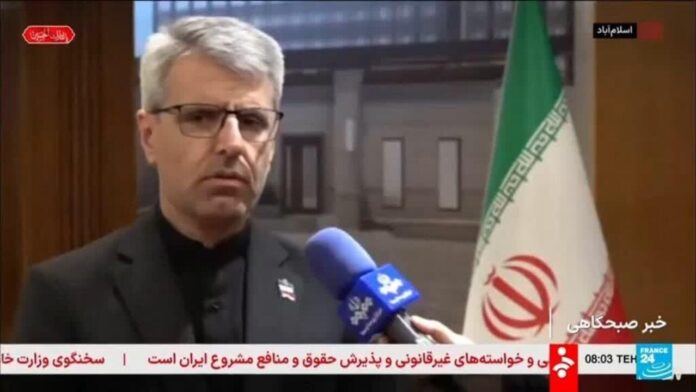
The United States failed to gain the trust of the Iranian delegation, which raised “forward-looking” initiatives during peace talks in Islamabad, says Iranian Parliament Speaker Mohammed Baqer Qalibaf. US Vice President JD Vance announced on Sunday that the US delegation was leaving Pakistan without reaching an agreement with Iran after 21 hours of negotiations, saying Iran had chosen not to accept US terms. Details from Siavosh Ghazi, France 24 correspondent in Tehran.


Source:

www.france24.com

Originally published at Almouwatin.com