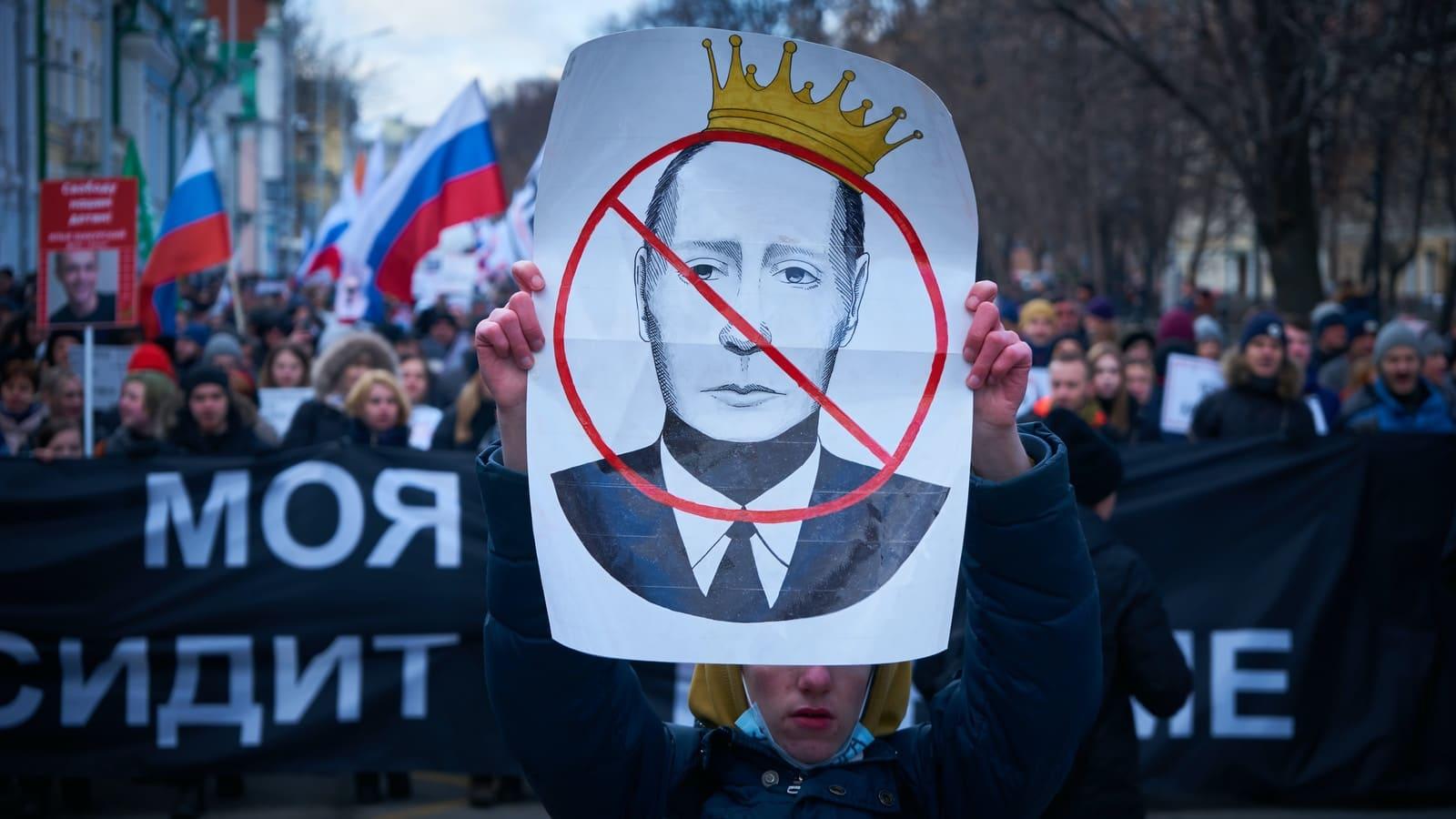
Rockets have been “raining down” on Ukraine’s cities and hundreds of people have been killed or injured since the Russian military offensive began, the UN Secretary-General said on Tuesday, at the launch of a $1.7 billion flash appeal to provide urgently-needed assistance.
António Guterres’s comments came as latest UN data indicated that 677,000 people have fled Ukraine since 24 February.
Today, we are launching two plans to help people across Ukraine and beyond – including funds to boost medicine & health supplies, safe drinking water, shelter & protection.
I urge the international community to respond to these life-saving appeals. https://t.co/h7n7UshBxA
— António Guterres (@antonioguterres) March 1, 2022
“United Nations agencies and our partners are now working 24-7 to assess humanitarian needs and scale up aid, particularly to women, children, older people and those with disabilities,” Mr. Guterres said, before thanking Member States that have kept their borders open to people fleeing the violence.
“We must help Ukrainians help each other through this terrible time,” the UN chief insisted, adding that electricity and water supplies have been disrupted, roads have been “damaged or destroyed by bombs” and food and medicine were in short supply in some areas.
In Geneva, UN emergency relief chief Martin Griffiths, explained that the purpose of the call for immediate humanitarian funding was to help people inside Ukraine – including those internally displaced – as well as those seeking shelter beyond its borders.
An estimated $1.1 billion is needed for the response inside Ukraine for three months, to help six million of the most vulnerable in Ukraine, as the escalating conflict has triggered an immediate and steep rise in demand for lifesaving aid. But essential supplies and services are being disrupted, as civilians flee for their lives.
$1.5 billion pledged, in rapid response
At the end of the launch event in Geneva, Mr. Griffiths announced that $1.5 billion had been pledged for the humanitarian appeals. The UN Spokesperson, Stephane Dujarric, welcomed the “outpouring of support” speaking to journalists in New York shortly afterwards.
“This is among the fastest and most generous responses a humanitarian flash appeal has ever received“, he said.
Refugee spike
Also briefing journalists, High Commissioner for Refugees, Filippo Grandi, appealed for “$550 million for the refugee agency and 12 partner agencies”. Noting that 520,000 people were estimated to have been displaced by the Ukraine crisis just last night, Mr. Grandi said that this had already risen sharply, in the space of just a few hours: “677,000 refugees have now fled Ukraine to neighboring countries in the past six days,” he said. “That is 150,000 more, in less than 24 hours.”
The UN estimates that 12 million people inside Ukraine will need relief and protection, while more than four million refugees may need protection and assistance in neighboring countries in the coming months.
On 27 February 2022, as military operations continue, people fleeing Ukraine walk along vehicles lining up to cross the border from Ukraine into Poland.
‘Third class citizens’
Reacting to reports that third-country refugees have been ill-treated at border crossings and inside Ukraine as they try to seek shelter, the UN refugee chief insisted that “there should be absolutely no discrimination between Ukrainians and non-Ukrainians. Europeans and non-Europeans. Everybody is fleeing from the same risks.”
While the European Union is discussing the possibility of giving temporary protection status to refugees from Ukraine, the tragedy is “likely to introduce a new dimension to the many years of debate on asylum status, responsibility sharing and so forth”, said Mr. Grandi.
The UN refugee agency, UNHCR, has already received more than $40 million in private contributions from individuals or companies, an “unprecedented” feat, he added. “I’ve never seen it and I think it’s positive.
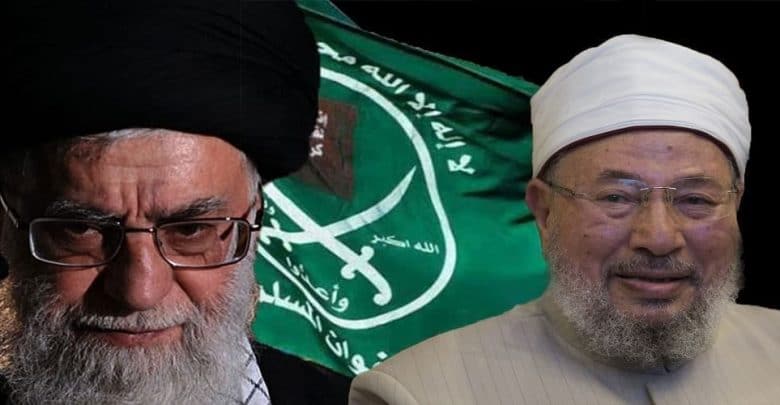
Many years before the Khomeini revolution, there were continuous meetings between the Iranian leadership and Hassan Al-Banna, the founder of the Muslim Brotherhood.
Al-Banna lays the foundation stone for the Brotherhood’s relations with the Shiites
He was the first to lay the foundation stone of the “Brotherhood-Shiite Convergence” in 1947 in an effort to bring Sunnis and Shiites closer together, through his famous saying that he delivered during a visit of an Iranian Shiite delegation to the headquarters of the General Centre of the Muslim Brotherhood and included the Shiite jurist “Muhammad Taqi al-Qummy.” He said, Know that Sunnis and Shiites are Muslims who are united by the word “There is no god but God, Muhammad is the Messenger of God.”
Sayyid Qutb and the Shiite revolution
As for Sayyid Qutb, who enjoys great love and popularity in Iran, this prompted her to try to intervene to lift the gallows from his neck after a death sentence was passed in the case known as the 1965 Special Organisation, which planned terrorist operations, led by Qutb Islam and considered him the basis for the theory of the establishment of the Islamic State and the nature of Muslim society, as previously there had been strong contacts and relations between the Iranians and Sayyid Qutb.
Moreover, Sayyid Qattat’s books, especially “In the Shadow of the Quran”, were the most widely distributed books in Iran after the revolution. This was not the first time that “Milestones on the Road” went to Iran while pressing its feet. On the contrary, it went there after 1966, when it was completed. The book was printed in Beirut, and this book was very popular among the Shiites, so no one knew of a book published by a Sunni writer that was so widespread and so widespread.
Popular in a Shiite state, just like Khomeini, in his idea of the guardianship of the jurist, and in his book “The Islamic Government” was touched by Sayyid Qutb’s idea of “governance”, and in 1966, Sayyid Ali Khamenei, the leader of the Iranian Republic, a disciple of Khomeini, who was also an outstanding student of Nawab Safavi, who was known for his close ties to the Brotherhood, Khamenei translated Sayyid Qutb’s book “The Future of this Religion” into Persian.
He wrote an introduction to the translation dripping with intense sentiment, in which he described Sayyid Qutb as a mujahid thinker, and the Egyptian regime had executed Qutb on charges of forming an organisation targeting the assassination of Gamal Abdel Nasser and the overthrow of the regime by force, which Qutb admitted to in a letter he wrote before his hanging entitled “Why did they execute me? That religion is a way of life, and that its rituals are not useful unless they express its truths, has been proven in a wonderful and objective way that the world will move towards our message and the future of this religion.
Brotherhood support for the Khomeinist revolution
The Brotherhood strongly supported the Khomeinist revolution in Iran and mobilised demonstrations against the late President Anwar Sadat’s reception of the Shah of Iran, and sided with Iran in its war against Iraq.”
While the Muslim Brotherhood saw the Islamic Republic in 1979 as a victory for their vision and the first Islamic government since the collapse of the Ottoman Caliphate, the Muslim Brotherhood has supported the Islamic Revolution in Iran since its inception because it was against the Shah’s regime. Reza Pahlavi, who was aligned with the Zionist enemy. Iran also considers the export of the revolution by the Muslim Brotherhood as a success.
After Khomeini came to power in Iran on 11 February 1979, one of the first planes to arrive at Tehran airport carried a delegation representing the leadership of the worldwide Muslim Brotherhood organisation: Al-Alsun spread among the Syrian opposition once the delegation offered Khomeini allegiance to him as Caliph of the Muslims if he accepted a published statement saying “that the dispute over the Imamate at the time of the Companions is a political matter, not a faith”. Khomeini waited and promised them an answer later, and when the new constitution of the Islamic Republic of Iran was promulgated, which says that “the Ja’fari doctrine is an official doctrine… and the guardianship of the jurist is a representative of the secret Imam”, Khomeini’s answer was clear.
Despite this, the Muslim Brotherhood in Egypt continued to support the new Iranian regime and organised large demonstrations against President Sadat’s hosting of the Shah of Iran in Egypt, then supported Iran in its war against Iraq and in the issue of Crescent magazine. The group’s general guide, Omar al-Telmisani, says: “I don’t know of anyone from the Muslim Brotherhood in the world who attacks Iran. An exception to this was the Syrian Brotherhood branch, which had just emerged from a bitter confrontation (1979-1982) with the Iranian-allied Syrian regime, although it was not official, but in the words of one of the Brotherhood’s leaders in Syria, Sheikh Saeed Hawa.
When Khomeini died on 4 June 1989, the General Guide of the Muslim Brotherhood, Hamid Abu Al-Nasr, published an obituary that included the following words: ‘The Muslim Brotherhood counts the death of Islam, Imam Khomeini, the leader who exploded the Islamic revolution against tyrants with God. During the time of Ali Khamenei, who became “Leader” after Khomeini’s death, Sayyid Qutb’s theories were taught in the ideological training schools of the (Iranian Revolutionary Guards), and the influence of religious authorities such as Ayatollah Mesbah Yazdi , Ahmadinejad’s spiritual teacher, also emerged. She hides her admiration for Sayyid Qutb and her influence on him.
The ideological similarity between the Brotherhood and the Shiites
The intellectual approach is similar between the Brotherhood and the leaders of the Khomeinist revolution, hence the belief in the universality of the message of monotheism. That Islam is the only way to a happy life and the belief in the plurality of opinions and the plurality of parties on the basis of freedom of thought and expression in Islam. Both sides share a view of the effects of the Western military onslaught on the Islamic world, and that it has not only led to military, political and economic control over Islamic countries, but has also produced strong tendencies in Islamic societies towards Westernisation of thought, culture, social life and fundamentalism, which sees that there is a starting point which is the origin, and time has been a process of deviation from it, and Muslims have to return to it. A materialistic and spiritually backward civilisation.
As for differences, they are limited to differences between them on the content of Islam, which is Sunni, the content is according to Al-Banna, the content is Shiite in Khomeini, and there is progressivism in achieving the goal according to Al-Banna The Muslim Brotherhood does not share Khomeini’s view that the American West is the Great Satan in relation to the Soviet Union, although they agree in their hostility towards both.
The scholar Dr. Ishaq Musa Al-Husseini, who was a member of the Arabic Language Academy in Cairo until his death in 1990, and was also a member of the Iraqi Scientific Academy, in addition to a member of the Islamic Research Academy, wrote this great scholar in his famous book “The Muslim Brotherhood. The Greatest Movement. Modern Islam” stated that the friendship was mutual between the Muslim Brotherhood and the Shiites. Indeed, the Shiites considered the Muslim Brotherhood as a branch of their branches and spokesman of their language among the Sunni nation, and what he said in this regard was “Some Shiite students who were studying in Egypt joined the Muslim Brotherhood, and it is known. The ranks of the Muslim Brotherhood in Iraq included many Twelver Imami Shiites.” When the Safavi representatives went to Syria and met with Dr Mustafa al-Sibai, the Muslim Brotherhood’s general observer there, he complained to him that some young Shiites were joining the secular and nationalist movements, so the representatives went to one of the pulpits. He said to a crowd of Shiite and Sunni youth: “Whoever wants to be a true Jaafari should join the Muslim Brotherhood.
Muslim Brotherhood offers Egypt to Iran after takeover
In the wake of the January revolution, which the Iranians saw as a new model of the Islamic revolution, especially with the rise of the political ideology of Islam, to the detriment of national identity, and the rise to power of the Brotherhood, the Iranians tried to strengthen their relationship with the Brotherhood, and during the Brotherhood’s rule, Qassem Soleimani, commander of the Al-Quds Force in the Guards, visited the Iranian revolutionary in Egypt and met with many Brotherhood leaders for rapprochement between the Brotherhood and Iran.
After the Muslim Brotherhood came to power with the victory of deposed President Mohamed Morsi in the 2012 elections, the group began a series of re-establishing rapprochement and relations with Iran. Morsi took advantage of the Non-Aligned Movement summit in August 2012, after a 35-year break in official Iranian relations, amidst extreme Iranian warmth towards the Muslim Brotherhood president and a warm embrace between Morsi Ahmadinejad, but the Muslim Brotherhood’s fears of popular anger at Iranian Shiites worried them.
It is also interesting to note that the Muslim Brotherhood tried to benefit from the expertise of the Iranian Revolutionary Guards and set an example in Egypt to protect the deposed president Mohamed Morsi, but they backed down amidst great popular discontent and rejected the idea completely.
What is happening today between Qatar and Iran is not insignificant, knowing that Qatar has always supported and financed the Muslim Brotherhood, especially in Europe.
European Commission Press release Brussels, 01 Mar 2022 The resolution of these banks was approved under the EU’s bank recovery and resolution framework – through the sale-of-business tool – to Hrvatska Poštanska Banka d.d. and Nova Ljubljanska Bank d.d, respectively.
We had, with the President, a very good and important meeting. You know that we are facing extremely difficult challenges. The EU has a very clear, very firm and very united position, and we are convinced that it is important to cooperate very closely with our friends and our partners. You know my personal engagement to your country, to Georgia.
I’ve tried to do my best over the last months to support all the positive efforts for stability, for economic reforms, and for democratic reforms in Georgia. And we are very clear, together with the European Commission and the European Parliament – we want to demonstrate our clear and concrete support to maintain all the efforts, to strengthen the ties between Georgia and the EU.
We have identified the important priorities on which we should work together, and we will be totally committed because in these extremely difficult times, it is very important to stick together, to express a very clear message of support for international law, the rules-based international order, the multilateral approach and full respect for the UN Charter. These are important principles. And we understand very well that it is important to make concrete progress to make sure that the strong ties between Georgia and the EU are very visible and tangible for the people in Georgia.
In the aftermath of Russia’s invasion of Ukraine, MEPs demand tougher sanctions on Russia and new efforts to grant Ukraine EU candidate status.
In a resolution adopted on Tuesday, Parliament condemns in the strongest possible terms Russia’s illegal invasion of Ukraine and demands that the Kremlin end all military activities in the country. It also denounces the role of Belarusian dictator Aliaksandr Lukashenka in the assault.
MEPs categorically reject the Russian “rhetoric hinting at the possible resort to weapons of mass destruction”, while reminding Russia of its international obligations and warning of the dangers of a nuclear escalation of the conflict.
They also call on the European Commission and EU countries to provide further emergency humanitarian assistance to Ukraine, in cooperation with UN humanitarian agencies and other international partner organisations.
The text was approved by 637 votes in favour, 13 against with 26 abstentions.
Working towards EU candidate status for Ukraine
The resolution calls on the EU institutions to work towards granting the country EU candidate status. Any such procedure should be in line with Article 49 of the Treaty on European Union and based on merit, the text says. In the meantime, the EU should continue to work towards Ukraine’s integration into the EU single market along the lines of the existing EU-Ukraine Association Agreement.
Stronger sanctions against Russia
While welcoming the swift adoption of EU sanctions, MEPs want to see broader restrictive measures aimed at strategically weakening the Russian economy and industrial base.
In particular, imports of the most important Russian export goods, such as oil and gas should be restricted, they say. New EU investment in Russia and new Russian investment in the EU should be banned. All Russian banks should be blocked from the European financial system and Russia should be banned from the SWIFT system.
A range of sanctions, including the SWIFT ban, should be extended to Belarus based on its direct support of the Russian invasion of Ukraine.
Weapon deliveries, refugee protection
In addition, the text calls on EU countries to provide Ukraine with defensive weapons more swiftly, in line with Article 51 of the UN Charter, which allows for individual and collective self-defence. It also favours increased EU intelligence cooperation with Ukraine regarding the ongoing aggression.
Parliament also welcomes the EU’s commitment to activate its Temporary Protection Directive, in order to provide all Ukrainians fleeing war with immediate access to protection. The responsibility for receiving the refugees arriving at the EU’s external borders should be shared equally among EU countries.
Targeted sanctions against individuals, no more “golden visas” for wealthy Russians
Targeted sanctions against individuals responsible for high-level corruption in Russia and Belarus as well as oligarchs and officials close to the countries’ leadership should be adopted swiftly, MEPs demand.
EU and allied countries with residence by investment schemes (so-called “golden visas”) should review all beneficiaries of such residence status and revoke those attributed to Russian high-net-worth individuals and their families, in particular those linked to sanctioned individuals and companies, says the text.
On 23 February 2022, the Council adopted Council Decision (CFSP) 2022/2641.
The Council decided to take further restrictive measures in response to Russia’s actions destabilising the situation in Ukraine.
The Candidate Countries North Macedonia, Montenegro and Albania2, the country of the Stabilisation and Association Process and potential candidate Bosnia and Herzegovina, and the EFTA countries Iceland, Liechtenstein and Norway, members of the European Economic Area, as well as Ukraine align themselves with this Council Decision.
They will ensure that their national policies conform to this Council Decision.
The European Union takes note of this commitment and welcomes it.
1Published on 23.02.2022 in the Official Journal of the European Union no. L 42 I, p. 95.
2North Macedonia, Montenegro, Serbia and Albania continue to be part of the Stabilisation and Association Process.
By — Shyamal Sinha – President of India, Ram Nath Kovind, Monday presented Padma Shri Award to Guru Tulku Rinpoche for Spiritualism. He is the 12th Abbot of Thubchog Gatsel Ling Monastery in Bomdila. A Buddhist monk, he is identified as the 12th incarnation in the lineage of Merag Lama Lodroe Gyatso who founded Tawang Monastery.
Guru Tulku Rinpoche received the prestigious award under the ‘spiritualism’ category along with Sadguru Brahmeshanand Acharya Swami from Goa.
Buddhist Monk Guru Tulku Rinpoche was born to Yab Lobsang Tshering and Yum Pema Choden on October 19, 1968 at Khamkharong in West Kameng district of Arunachal Pradesh. It’s believed that he was recognized as the reincarnation of Late Thupten Kelden Rinpoche at the age of five by the 14th Dalai Lama.
Late Thupten Kelden Rinpoche was the 11th Merag Lama.
Guru Tulku Rinpoche’s traditional haircutting was performed by the Dalai Lama when he was seven years old during his Kalachakra teaching and was named Tenzin Kelden. He was ordained as a novice monk or getshul two years later, when he was nine and as a monk or gelong when he was twenty.
Guru Tulku Rinpoche started serving at the office of the Dalai Lama from 1998 and continued there for ten years till 2008, when he was appointed as Abbot of the Tawang monastery. He stepped down from the position in 2016.
Debating Russia’s invasion of Ukraine, MEPs expressed unwavering support for Ukraine and for efforts to bring the country closer to the European community.
On Tuesday, the European Parliament held an extraordinary plenary session in Brussels to assess Russia’s military assault on Ukraine. Ukrainian President Volodymyr Zelenskyy and the Speaker of the Ukrainian Verkhovna Rada (parliament) Ruslan Stefanchuk spoke live from Kiev. European Council and Commission Presidents Charles Michel and Ursula von der Leyen, as well as the EU’s Foreign Policy chief Josep Borrell, also participated in the debate.
Opening the debate, Parliament President Roberta Metsola said: “We are here today in the dark shadow cast by Putin’s war. A war we did not provoke. A war we did not start. An outrageous invasion of a sovereign, independent state. On behalf of the European Parliament, I condemn the Russian military aggression against Ukraine in the strongest possible terms and express my solidarity with all those suffering and all those killed.”
“We will stand up. We will not look away when those fighting in the streets for our values face down Putin’s massive war machine. We will support the International Criminal Court’s jurisdiction and investigation of war crimes in Ukraine. We will hold him accountable”, she added.
Zelenskyy calls on the EU to prove it stands with Ukraine
Ukrainian President Volodymyr Zelenskyy said, “in a break between missile strikes”, that the Parliament and the EU’s leaders must now “prove that the EU is with Ukraine.” “I speak today on behalf of the citizens of Ukraine who are defending it by paying the ultimate price”, he continued.
Mr Zelenskyy referred to the attack on Kharkiv, “the city with the largest square in the country, called ‘Freedom Square’”. “This morning, two missiles hit this Freedom Square, with dozens killed. This is the price we are paying for our freedom. From now on, every square in every Ukrainian city will be called Freedom Square”.
“We are fighting for our rights, our freedoms, our lives, and currently – for our survival. We are also fighting to be equal members of Europe. So now, prove that you are with us”, he told MEPs. “Prove that you indeed are Europeans and then life will win over death, and light will win over darkness. Glory to Ukraine”.
Verkhovna Rada Speaker Ruslan Stefanchuk told MEPs: “Ukraine is defending the border of the civilised world, and if Ukraine falls, nobody knows where the Russians will stop”. He insisted that the best way to support Ukraine “is a real recognition of our European aspirations”.
“This brutal, massive invasion of Ukraine is unjustified, unprovoked and is based on despicable lies, and it happens for one reason only: because in Maidan Square, you made the choice of freedom, democracy and rule of law,” said European Council President Charles Michel, calling Russian President Vladimir Putin’s invasion “geopolitical terrorism”. He assured MEPs that the Council will analyse the “serious, symbolic, political and, in my view, legitimate request” by Ukraine to join the EU.
European Commission President Ursula von der Leyen said: “This is a moment of truth for Europe. This is a clash between the rule of law and the rule of the gun, between a rule-based order and naked aggression. We cannot take our security for granted, we have to invest in it”. She underlined that “if Putin was seeking to divide the EU, NATO and the international community, he has achieved the exact opposite.”
“To make peace, we need to be two; but for war, it is enough with one, as Mr Putin has shown. That is why we need to increase our deterrence capacity a lot, in order to prevent war”, said EU Foreign Policy Chief Josep Borrell. “Defending rule of law and strengthening trade relations will not be enough to turn the world into a peaceful place”, he added.
All EP groups leaders took the floor, namely Manfred WEBER (EPP, DE), Iratxe GARCÍA PÉREZ (S&D, ES), Stéphane SÉJOURNÉ (Renew, FR), Philippe LAMBERTS (Greens/EFA, BE), Marco ZANNI (ID, IT), Ryszard Antoni LEGUTKO (ECR, PL) and Manon AUBRY (The Left, FR). You can watch the recording of their interventions here.
During the debate, many MEPs emphasised how the Russian invasion of Ukraine marks the beginning of a new era for Europe and the world. They condemned Russian President Vladimir Putin and the Kremlin’s brutal aggression and expressed their admiration for how the Ukrainian army and people are resisting the assault, fighting for their country, freedom, democracy and common European values.
They also welcomed Europe’s strong response to the illegal attack, such as the adopted sanctions packages, while stressing the need to remain united to continue to face the serious challenges ahead.
Some Members advocated acknowledging Ukraine’s European aspirations and fight for freedom by stepping up the EU’s work to grant the country EU candidate status. Others highlighted the importance of jointly addressing the repercussions that the sanctions on Russia will have on a European economy still recovering from a global pandemic, by way of ensuring support for countries most affected as well as for businesses and citizens. Finally, some pointed to the need to welcome Ukrainians fleeing war and to all EU countries sharing that responsibility.
The trial in the Vatican for alleged misconduct in management of Secretariat of State funds has moved forward in the next steps of the judicial process. The next hearing will take place on March 17 and mark the start of what the president of the Court, Giuseppe Pignatone, termed “the real trial” with the first interrogation of Cardinal Giovanni Angelo Becciu. In an order of about forty pages, read this morning in the meeting hall of the Vatican Museums, Pignatone rejected all the requests for case dismissal presented by defense lawyers from July 27 up until yesterday’s hearing, which lasted over three hours. The ordinance: every defense claim rejected.
The panel of judges responded to each of the exceptions presented by the defense lawyers, stating many were “unfounded”, “inadmissible”, or “irrelevant”. The objections to the failure to deposit documents, the nullity of the decree of summons, the inclusion of the Secretariat of State, IOR, APSA, ASIF as civil plaintiffs, the omissions in the documents deposited or the Pope’s rescripts were all rejected.
A just process
Regarding the “alleged violations of due process”, the order states that “the Vatican system fully respects the indications found in article 6 of the European Convention on Human Rights regarding due process. In this regard, Pignatone referred to two sentences, that of the Italian Court of Cassation, which annulled the precautionary detention of financier Gianluigi Torzi, and that of the Swiss Federal Court, which confirmed the seizure of broker Raffaele Mincione on appeal, because they both refuted the allegation that in the Vatican, due to its unique institutional structure, the principles of “due process” do not exist. It is precisely these two sentences that recognize the independence of Vatican judges, thus rendering “completely unjustified and out of place the definitions of ‘special trial’ and ‘special court'” used by some defenders.
Response of the defence
The defendants’ lawyers have said they intend to challenge this order, saying the Vatican Court based its position not only “on the observance of the laws”, but also on the Pope’s four rescripts, which they claimed “are acts of normative value, but certainly not laws”.
President Pignatone then asked for the Court to be informed which defendants intended to undergo interrogation. The request led several attorneys to state that they wanted to “first have clear material”. That is, an expert analysis on the forensic copies “to evaluate the correspondence between the material seized and what is reproduced in the acts”. The request to obtain the computer materials seized from Monsignor Alberto Perlasca, considered to be the main witness, has been made by many. President Pignatone clarified that the Court “does not have the competence to decide on things that have been seized but not deposited” and invited the Office of the Promoter of Justice, represented today in court by Roberto Zannotti, to proceed with the requests for copies of the material. The Promoter of Justice reserved the right to evaluate “any request” for copies and provide them if possible by March 7.
Most of the attorneys have expressed their willingness to allow the interrogations of their clients, with the exception of the attorneys of three defendants: Raffaele Mincione, Gianluigi Torzi, and Cecilia Marogna. The defender of the latter, Fiorino Ruggio, explained that his client had pointed out a bond of secrecy with the Vatican Secretariat of State, the Italian State, and NATO. The Vatican Court, Pignatone clarified, can write to the Secretariat of State to ask for clarifications, but not to third parties, especially NATO noting that at this time it is “busy with other matters”. Ruggio responded by noting that if NATO does release her from the vow of secrecy, she remains bound by it; and he added that Marogna “fears for her personal safety”.
Cardinal Becciu to be questioned
The first person to be questioned on March 17 will therefore be Cardinal Giovanni Angelo Becciu, the only defendant present in court this morning. The cardinal will answer questions only on the sending of funds to the Sardinian Diocese of Ozieri and to the “Spes” cooperative, which was managed by his brother. It is expected that the cardinal will later be questioned with regard to the affair of the “London building affair” and the “Marogna issue.” Cardinal Giovanni Angelo Becciu commented on the sidelines of the hearing, saying, “Finally we are starting, now I can talk.”
In conclusion, Court President Pignatone asked the parties to present requests for evidence for the next hearing, but not concerning the witnesses. Other hearings are scheduled for March 18, 29, and 30 and for April 5 and 6.
Working translation, excerpts from original article in Italian
Unfortunately, the predictions of recent months have come true. Europe is condemning not only in the strongest possible terms, but also in deeds, Russia’s attack on Ukraine. In recent days Europe has moved from a trot to a sprint in the area of defence. Putin wanted to weaken NATO and divide Europe. However, he is achieving exactly the opposite of what he intended. The time when Europe only asserted itself as an economic giant is over. Our continent is at a historic turning point.
Europe has never been so united. With an unprecedented package of financial sanctions, Russian bank assets have been frozen to drain Putin’s war machine. The entire European airspace has been closed to all Russian aircraft, including the private jets of oligarchs. The Russian propaganda channels Russia Today and Sputnik have been banned to stop disinformation. For the first time in history, the EU will finance military equipment that Member States will deliver to Ukraine to the tune of half a billion euros. Germany has made a historic U-turn by announcing that it will invest 100 billion euros in defence and that 2% of GDP will go to defence, as NATO has been demanding for years. The Nordstream 2 pipeline has been suspended. A European emergency aid package worth 1.2 billion euro has been greenlighted for Ukraine. A decision to offer temporary protection for Ukrainian refugees will be taken this week.
Europe is acting as one while Russia turns into the pariah of the international community. And Europe will continue to stand firm. Any further military aggression by Russia against Ukraine will bear further consequences and heavy costs. Russia has invaded Ukraine but Europe has Russia by the throat financially. De-escalation can only happen if Russia withdraws its troops from Ukraine. It is still possible for Russia to change course. The sooner the better. Every hour that the conflict drags on is an hour that more people are killed. De-escalation is an absolute prerequisite for ending this conflict. At the same time, we must now dare to think ahead and not miss this opportunity to enforce our strategic autonomy in Europe in terms of defence and energy supply. Nobody knows what Putin is ultimately capable of. Europe depends on Russia for 40% of its gas supply. Drastic retaliatory measures are not inconceivable. Because of the crisis, the pressure is now on to make progress in boosting Europe’s independence in strategic sectors.
The will is there. To Putin’s regret, the result is not a divided but a united Europe and not a weaker but a stronger NATO. Is it not precisely in times of crisis that the EU has always made progress? This is an opportunity to unleash leadership and strengthen our European construction, let us not miss this chance to write history.