The risks of investing in liquefied gas terminals are related to prices, high emissions and locks in major infrastructure projects for decades to come
Additional European investments in clean energy provide the best way to ensure full security of supply for the phasing out of Russian gas, according to the latest report by analyst firm Artelys.
The report examines two scenarios related to the supply of liquefied natural gas through LNG terminals and the use of energy efficiency and renewable energy to end Russian dependence. Both scenarios rely to some extent on the supply of liquefied natural gas as part of the decision to phase out Russian gas.
However, liquefied natural gas supply volumes are twice as high for gas solutions as for clean energy solutions, leading to significant dependence on global LNG markets and price volatility.
When exposed to a 50% increase in gas prices, the European energy system faces a € 30 billion increase in supply costs for liquefied gas decisions and € 15 billion for clean energy decisions. The average European price for the supply of liquefied natural gas increases by 25% for gas solutions (respectively 16% for clean energy solutions), according to the Artelys report.
The analysis assesses the complete cessation of Russian gas supplies by 2025 (set out in the REPowerEU plan) as part of the European Union’s Fit for 55 policy. It gives an idea of what additional investments will need to be made over the next three years to ensure security of supply in Europe for both gas and electricity.
LNG supplies are seen as a viable alternative to natural gas imports from Russia. In addition to increasing the use of existing LNG terminals, the idea of building additional regasification capacity in Europe is gaining momentum.
The United States and the European Union have announced the creation of a working group to reduce Europe’s dependence on Russian gas. As a result, the US will increase the volume of liquefied natural gas exports to the EU (+15 billion cubic meters in 2022, +50 billion m3 / year by 2030), and the EU will work to accelerate regulatory procedures for the approval of liquefied natural gas import infrastructure.
And several member states have announced their ambition to invest in new liquefied natural gas terminals and pipelines as a way to ensure security of gas supply in the event of a complete shutdown of Russian gas.
In particular, countries such as Germany, France, Italy, Greece, Poland, Estonia and the Netherlands have set out plans to invest in floating and stationary liquefied natural gas imports. The proposed and renewed projects from the beginning of the crisis will have a total capacity of at least 70-80 billion cubic centimeters of LNG imports per year, including at least six new floating LNG terminals FSRU (Global Energy Monitor, 2022).
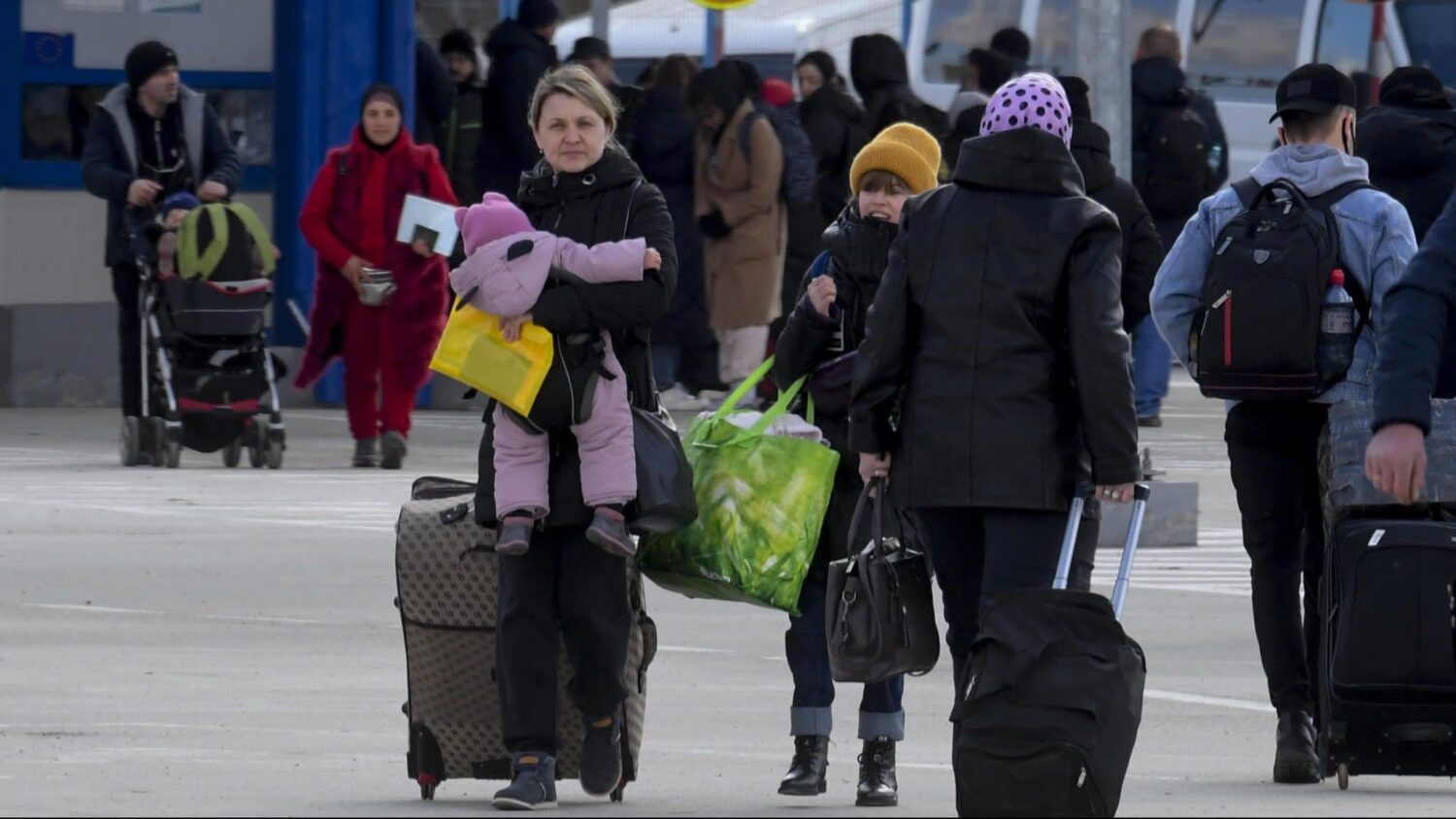
Ukrainians who leave Bulgaria are more than those who enter the country. This was said to the Bulgarian National Radio by Mariana Tosheva, chairwoman of the State Agency for Refugees. She said there was no information on whether refugees were choosing other EU countries or returning home. According to her, the situation is dynamic and this is not only in Bulgaria, but in all countries.
“Yesterday, 2,441 people entered our country 24 hours a day, but 2,792 left. This process has been observed for a week. The number of those leaving the country remains higher than those entering Bulgaria,” Tosheva said.
Hotels must be vacated by May 31 and Ukrainian refugees must be transported to other accommodation. Currently, more than 63,000 Ukrainians are accommodated in hotels. More than 33,000 are confirmed accommodation in municipal departments. Some Ukrainians they have stated that they want to leave the country, another part is available for free rent or go to relatives and acquaintances “, she explained. According to her, half of these 63,000 people will not stay in Bulgaria.
Tosheva stressed that the program for accommodation of refugees in hotels with state aid was previously agreed to end by May 31.
“The measure is provided with financial resources and was announced as temporary. From June 1 we enter the phase of integration – these people had time to orient themselves, to say if they would work and what. If a hotelier decides that at his own expense he can shelter Ukrainian citizens, the decision is individual, “she added.
According to her, the concerns of Ukrainians are understandable, but no one will be left on the street. “Ukrainian citizens are actively looking for work. We have a special approach to people from vulnerable groups – the elderly, the sick, mothers with many children. are the possibilities of the respective settlement to be accommodated … 70% want to start work immediately, 17% would start in a period of 1 to 6. Over 60% are people with higher education, about 30% are people with secondary special education “, Tosheva continued.
The measure to accommodate Ukrainians in hotels will not continue after the end of May. The integration of war refugees into the host society is already a priority. This was confirmed by the head of the agency for
More than 103,000 people have temporary protection status. About 90 children are in kindergartens in the country, over 500 Ukrainians are in Bulgarian schools. The centers where mothers will be able to leave their children during the day will be clear from the beginning of the new week.
The relocation of Ukrainian refugees to state and municipal bases after May 31 could turn into a fiasco. To date, the state has managed to secure 33,000 seats in state and
Less than 1/3 of the money that the European Union has allocated to support Ukrainian refugees in our country will actually be directed to these refugees. This was announced by the Deputy Prime Minister for Effective Governance
What kind of work do Ukrainians find in Bulgaria?
Tourism, trade and the garment industry are the areas in which most Ukrainian citizens who escaped the war in Bulgaria have started working, bTV reports, citing a report from the Employment Agency. In most cases, refugees occupy positions for which there have been no other candidates for years. They have the greatest desire to work as office secretaries, administrators in hotels, maids, as well as in restaurants and entertainment or vendors.
More than half of the candidates are from Ukraine. On average – about a third. And only 3% – with basic. 70 percent of Ukrainians are ready to start work in regular shifts immediately, and 9% – if there is someone to take care of their children. Ukrainians and members of their families with temporary protection can work in our country without a permit.
Nastya, for example, was an assistant educator at a kindergarten in Odessa. Now she has found a job in a sewing workshop in Burgas, and her 16-year-old son is taking care of her sister, who is 7. “I am here alone with two children, I have to feed them. I went to the Labor Office and they immediately found me a job. “I came and they took me,” the woman said. Four Ukrainian women work in the workshop. “These 4 positions have been vacant for 3 years. We have placed advertisements on all sorts of platforms – both paid and free, people just don’t come,” said Vasil Todorov of the sewing workshop.
However, only 9 refugees are employed through the Labor Office in Burgas. Most are waiting. “I want to work so that I do not depend financially on anyone and to arrange my life to some extent. But what if they want to relocate us? I do not know where I will go, which makes finding a job impossible,” said Nadezhda from Mariupol.
It is safe to say that there are secrets of ancient Roman civilization that even a century of close study will not reveal to us. Meanwhile, historians and archaeologists often discover artifacts that are confusing. One such object is the Roman dodecahedron.
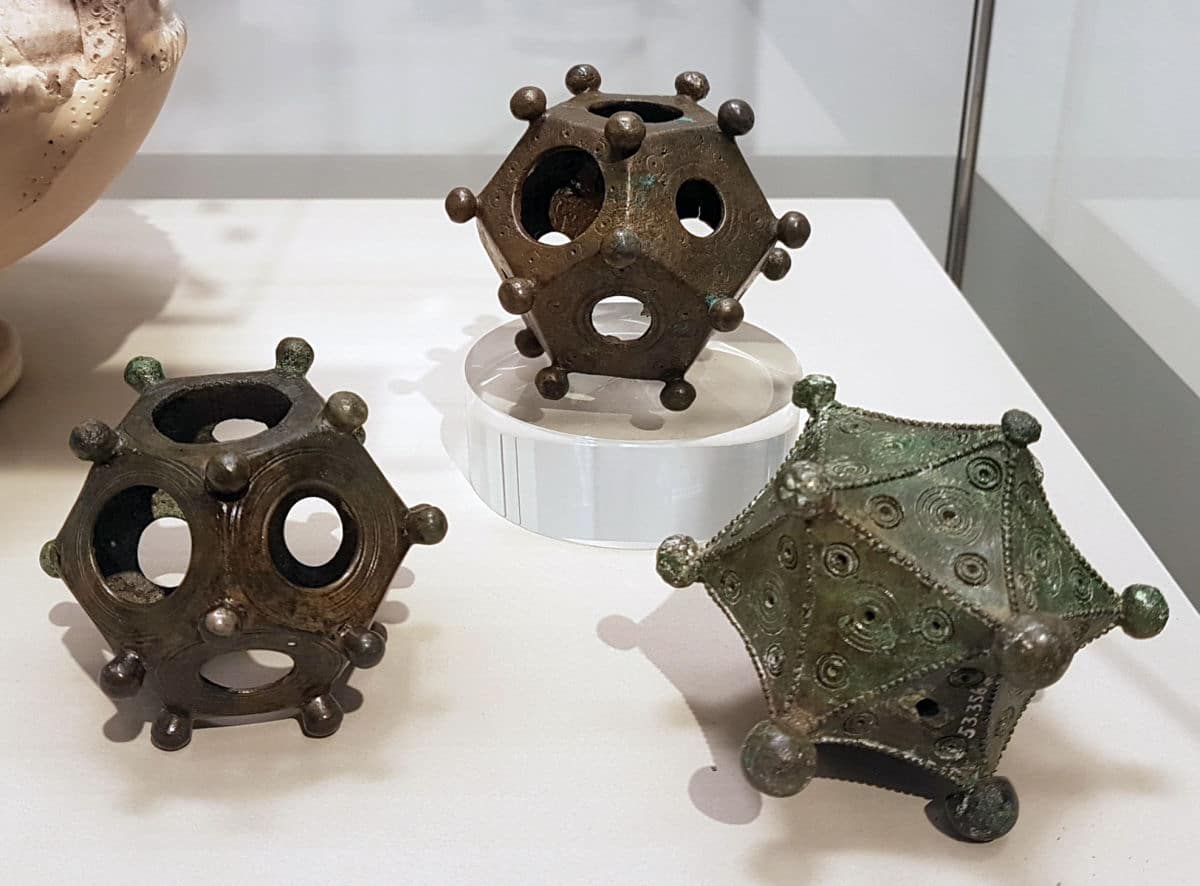
This is a hollow bronze decahedral puzzle with twelve flat pentagonal faces – a riddle. Nothing is known about its purpose. But there are some hypotheses that have been put forward since its first discovery over 300 years ago.
The strange discovery made all antique dealers tense, but there was no need to worry – there were more on the way.
Most dodecahedrons are between four and eleven centimeters in size and weigh between 35 and 580 grams. Each pentagonal surface contains a hole, but the sizes of these holes almost always vary. Each of the five vertices has a ball-shaped button.
Some appeared in theaters and tombs, others among piles of discarded coins. Many historians have also found these items from antiquarians, making it difficult to trace their provenance.
Each object discovered later differed in size and design.
In 2016, 116 dodecahedrons were discovered on the territory of modern Belgium, Croatia, France, Germany, Great Britain, Hungary, Luxembourg, the Netherlands and Switzerland. A single piece of silver was found in Geneva.
Interestingly, as far as we know, dodecahedrons do not exist in the Eastern Roman Empire.
Those found in the western region date back to the 2nd, 3rd, and 4th centuries AD. The randomness of their location, as well as the lack of a written context, has further puzzled historians.
They are full. They are scattered all over Europe and they are still a mystery. What could these little things mean? What were they made for?
The head of Mari El, Alexander Evstifeev, announced that he had decided to leave his post, RIA Novosti reported on May 10.
“In connection with the expiration of the term of office of the head of the Republic of Mari El, I turned to the President of Russia with a request to accept my resignation,” Evstifeev wrote on his Telegram channel.
He was appointed acting head of the republic in April 2017 after the powers of the head of Mari El were prematurely terminated by Leonid Markelov of his own free will. Prior to that, he was the chairman of the Arbitration Court of the Moscow Region.
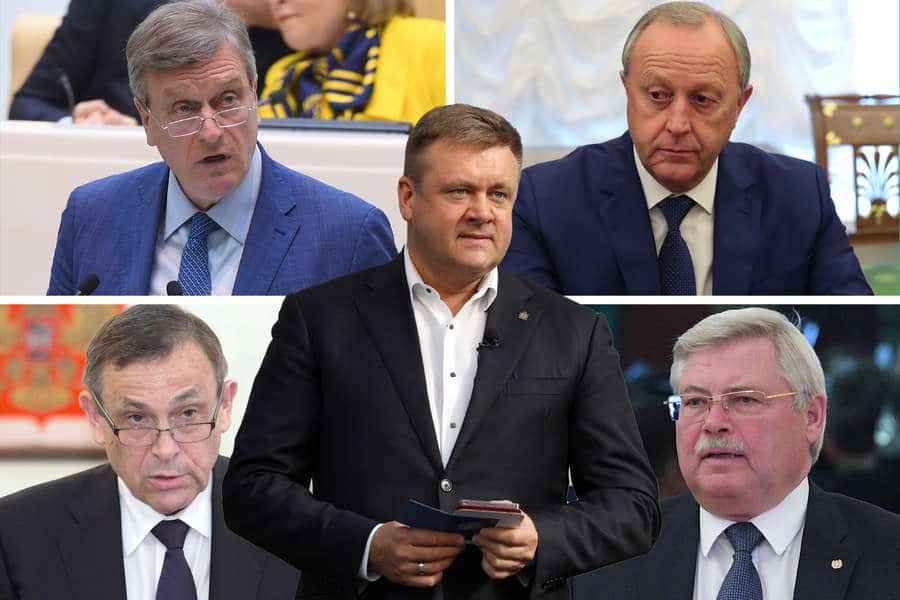
Earlier, the governor of the Tomsk region Sergey Zhvachkin, the head of the Kirov region Igor Vasilyev and their colleague from the Saratov region Valery Radaev announced similar decisions.
In addition, the head of the Ryazan region, Nikolai Lyubimov, said that he did not plan to run for new gubernatorial elections.
Zhvachkin added that in January of this year he turned 65 years old, he is one of the oldest heads of the region in the country. In his address to the residents of Tomsk, he thanked them for their support throughout the ten years of his tenure. Speaking about future plans, he noted that he would remain in Tomsk.
Sergey Zhvachkin has been the head of the Tomsk region since 2012. In 2017, he was re-elected for a second term as governor, which expires in 2022. Prior to that, Zhvachkin worked in the oil and gas sector.
Vasiliev thanked the team of the government of the Kirov region and the heads of municipalities for productive joint work. He, in turn, promised to support the positive undertakings of Kirov residents at the federal level.
He has served as governor of the region since July 28, 2016. Prior to that, he headed Rosreestr.
Radaev also thanked the residents of the Saratov region, where he served as governor for ten years. The official, he said, intends to focus on another area of work.
Radaev headed the region on March 23, 2012, and in 2017 he was re-elected to this position.
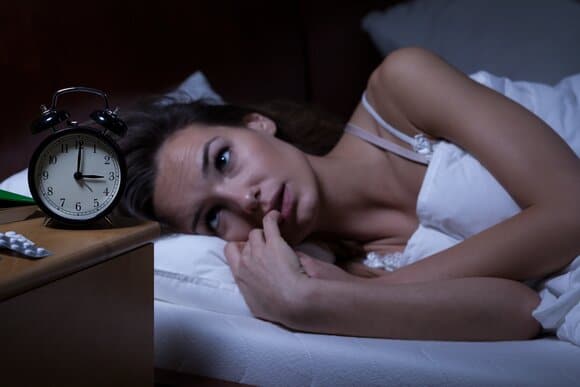
The reason for frequent awakenings at night can be a number of diseases. About this with reference to the therapist, somnologist and candidate of medical sciences Sophia Cherkasova reports “Lenta.ru”.
The specialist notes that frequent awakenings can be a symptom that signals a pathology of the thyroid gland associated with an increase or decrease in hormone production. Also, urological problems and cessation of breathing during sleep can lead to sleep disturbances.
Meanwhile, Cherkasova explained that people with depression often wake up early in the morning or, conversely, cannot fall asleep.
She added that sometimes the reason for frequent awakenings at night lies not in a serious pathology, but in the wrong way of life. Excessive caffeine, alcohol, and low levels of physical activity can cause sleep disturbances. It also happens that insomnia itself becomes a habit, persisting even after its cause has disappeared.
Earlier, sleep therapist Pavel Kudinov recalled the importance of observing a sleep schedule. According to him, when people fall asleep late, they shift their biological clock. As a result, there is a lack of sleep, daytime sleepiness appears and performance decreases.
Social jet lag, or the failure of the daily biological rhythms of the body, is a common problem in modern society. This was stated by the therapist-somnologist Pavel Kudinov.
According to him, falling asleep late and waking up late, people shift their biological clock. As a result, there is a lack of sleep, daytime sleepiness appears and performance decreases.
“Sleep disorders of any kind, including jet lag, are most dangerous for people who have chronic diseases. Sleep disorders lead to an acceleration of the process. This is especially true for those who suffer from cardiovascular diseases and diseases of the central nervous system. Lack of sleep and daytime sleepiness are also dangerous for people who are involved in work that requires increased concentration of attention,” Channel Five quotes Kudinov.
The somnologist noted that you need to start preparing in advance for an early awakening. In particular, the expert advised waking up an hour earlier every day, bringing the biological clock to the work schedule.
Kudinov stressed that preparations containing melatonin, which causes preliminary drowsiness, can help in this matter.
“Also, no one canceled herbs: mint, lemon balm, chamomile or peony tincture. But it’s better to deal with this issue on your own,” the doctor concluded.
Previously, clinical psychologist Dr. Mairav Kohen-Zion said that ideally, a person should fall asleep after 10 minutes, this can take a maximum of 20 minutes. Sleeping too long can make you feel sleepy and tired the next day.
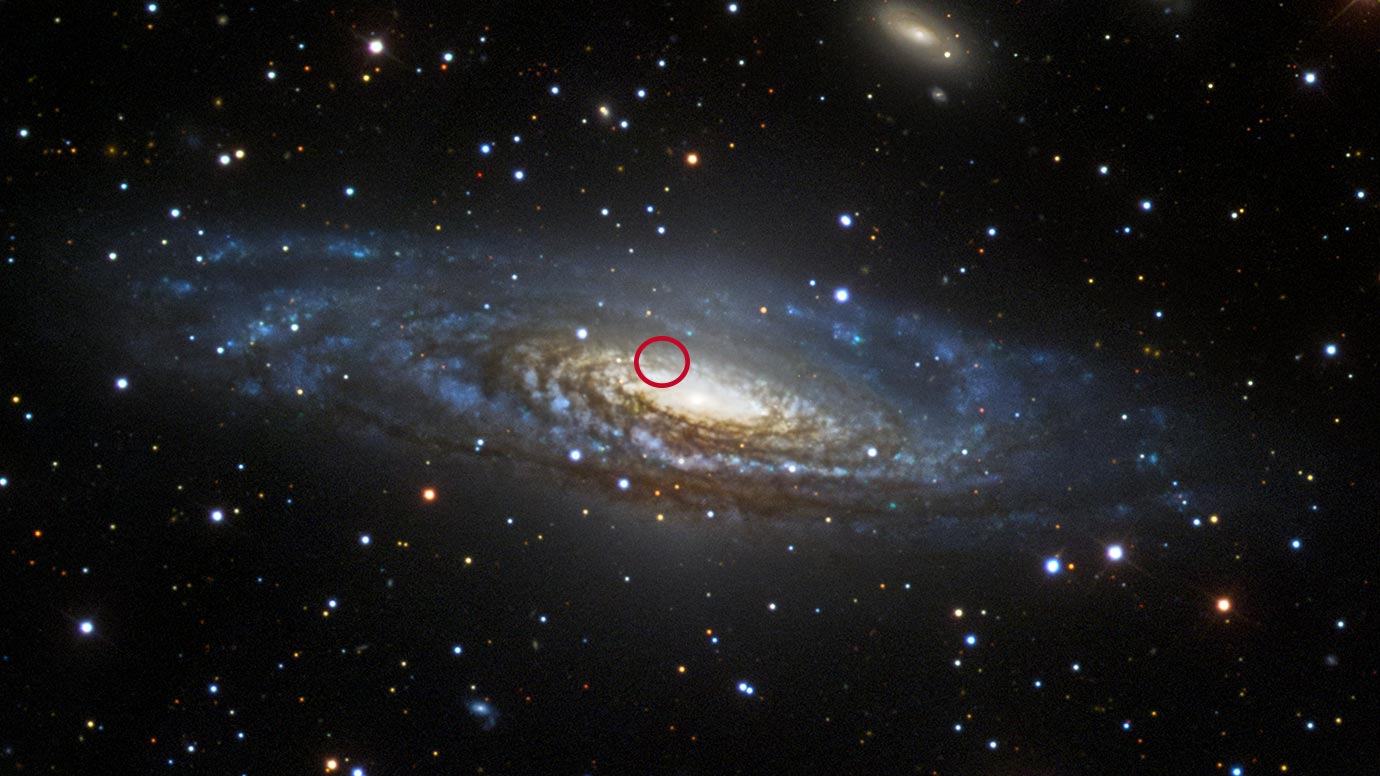
The supernova known as 2014C took place eight years ago—but scientists are still watching and learning from its aftermath. The very faintly visible explosion is shown circled in red. Credit: Sloan Digital Sky Survey
Study including University of Chicago researchers analyzes aftermath of 2014 supernova.
An international group of astronomers has uncovered new clues about a mysterious stellar explosion that was discovered eight years ago, but is continuing to evolve even as scientists watch.
The results help astronomers better understand the process of how massive stars—giants far larger than our own sun—live and die.
The study was published in The Astrophysical Journal by a group led by the University of Texas at Austin (UT Austin) and including scientists from the University of Chicago.
The lives of 2014C
In 2014, astronomers spotted a sudden bright spot in the sky—a sure sign that a star had exploded out in space.
When an exploding star is first detected, astronomers all around the world race to follow it with telescopes as the light it gives off changes rapidly over time. By watching how it evolves, using telescopes that can see visible light and also X-rays, radio waves, and infrared light, scientists can deduce the physical characteristics of the system.
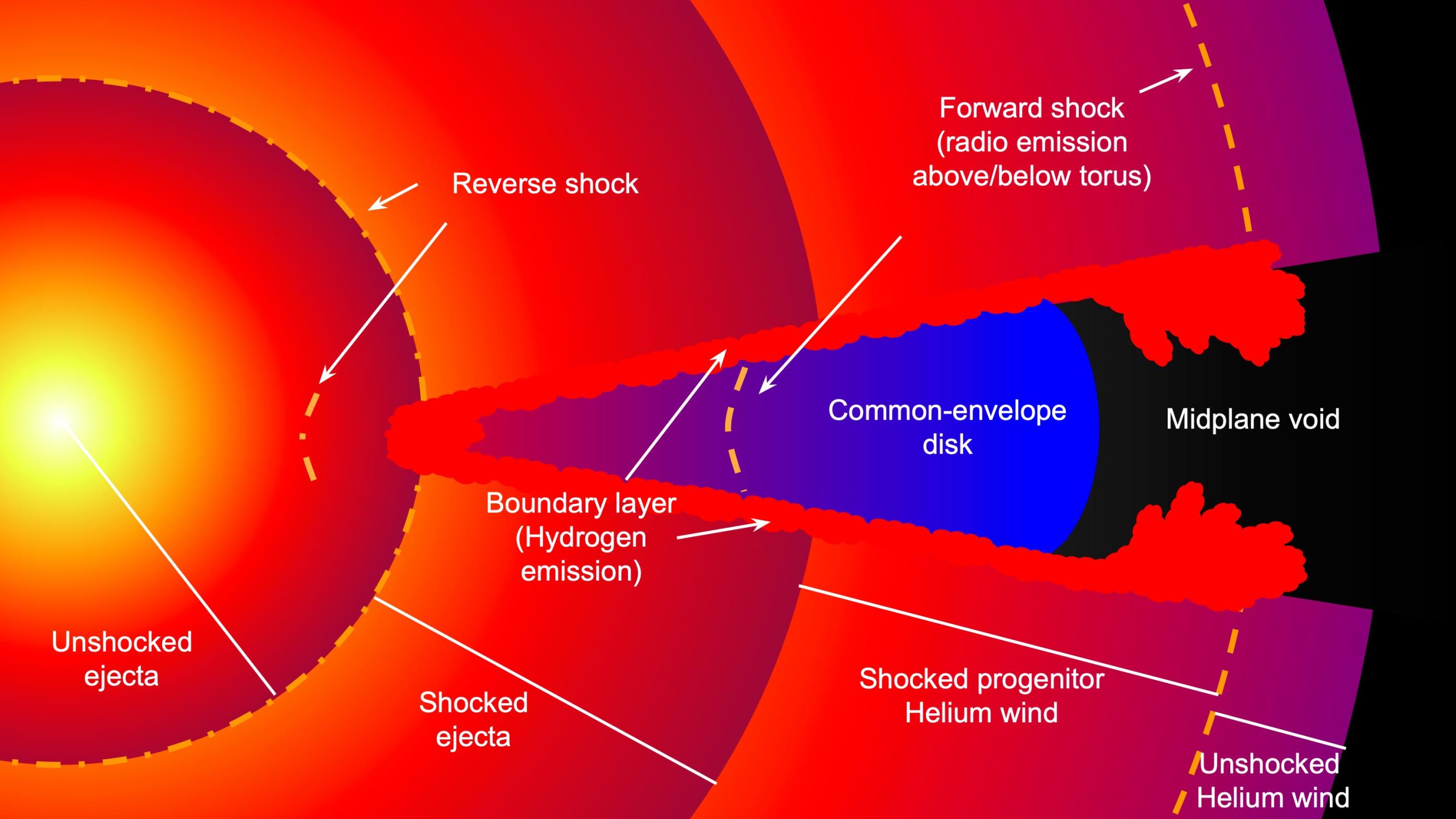
This schematic shows the various ejecta and winds (red and purple) given off by the exploding star (left, yellow). The common-envelope disk (blue) surrounds both stars, the one exploding as a supernova and its binary partner (not shown). The boundary layer around the common-envelope disk is the source of the hydrogen the team detected. Credit: B. Thomas et al./UT Austin
By doing this many times, astronomers have identified signatures and grouped these exploding stars into categories. 2014C, as this particular event was named, looked like what’s called a Type Ib supernova. They are what happens when the largest known stars in the universe die.
In fact, scientists think 2014C was probably originally not one but two stars orbiting each other, one bigger than the other. The more massive star evolved more quickly, expanded, and its outer layer of hydrogen got sucked away. When it eventually ran out of fuel, its core collapsed, triggering a gigantic explosion.
Research Prof. Vikram Dwarkadas
However, observations in the first 500 days after the explosion had shown that it was emitting more X-rays over time, which was unusual and seen only in a small number of supernovae. “It suggested that the shockwave was interacting with dense material,” said Vikram Dwarkadas, University of Chicago research professor of astronomy and astrophysics.
The group set out to collect all of the data on 2014C, including new data they obtained as well as from studies over the past eight years, and to fit it into a cohesive picture of what happened to the star.
The X-ray emissions, infrared light, and radio waves all showed the distinctive pattern of increasing and then decreasing. Meanwhile, the optical light—measured by UT Austin’s Hobby-Eberly Telescope—appeared to stay steady. The radio signal showed that the shockwave was expanding at a very high speed, whereas the optical light indicated a much slower speed.
The researchers suggested that the odd behavior had to do with a dense cloud of hydrogen around the two stars that was left over from earlier in their lifetimes.
When the star exploded, it produced a shockwave traveling at something like 67 million miles per hour in all directions. As the shockwave reached this cloud, its behavior would be affected by how the cloud was shaped.
These supernovae are what happen when the largest known stars in the universe die.
In the simplest model, this cloud would be assumed to be spherical and symmetrical. However, if the cloud had formed a “donut” around the two stars—that is, thicker around the middle—the thicker part of the ring would slow down the shockwave, showing up in the optical light as slower-moving material. Meanwhile, in the thinner areas, the shockwave would rush forward, as seen in the radio waves. “Think of the water hitting a rock in the center of the river,” Dwarkadas said.
Questions remain, the scientists said, but this unevenness could account for the different speeds of the shockwave indicated by the different wavelengths.
The study provided valuable clues as to the evolution of these stars and mass lost from these systems, and in a larger sense to the lives and deaths of these relatively mysterious stars, the scientists said.
“In a broad sense, the question of how massive stars lose their mass is the big scientific question we were pursuing,” said UT Austin professor and team member J. Craig Wheeler. “How much mass? Where is it? When was it ejected? By what physical process? Those were the macro questions we were going after.
“And 2014C just turned out to be a really important single event that’s illustrating the process.”
For more on this research, see Extraordinary Supernova Reveals Secrets to Astronomers.
Reference: “Seven Years of SN 2014C: a Multi-Wavelength Synthesis of an Extraordinary Supernova” by Benjamin P. Thomas, J. Craig Wheeler, Vikram V. Dwarkadas, Christopher Stockdale, Jozsef Vinko, David Pooley, Yerong Xu, Greg Zeimann and Phillip MacQueen, 4 May 2022, The Astrophysical Journal. DOI: 10.3847/1538-4357/ac5fa6 arXiv: 2203.12747
The study was led by Benjamin Thomas of the University of Texas at Austin. The other researcher from the University of Chicago on the paper was Yerong Xu, SM’20, now with the University of Palermo in Italy. For the full list of collaborators and telescopes, see the paper.
Funding: U.S. National Science Foundation, U.S. Department of Energy, NASA, Chandra Observatory, Hungary National Research, Development and Innovation Office.
Two researchers did an experiment to extract meanings from different translations of the sacred Hindu scripture, Bhagavad Gita, and found common meaning among them. Many translations have been done of the piece but they vary in meaning and result in potentially different interpretations. The experiment is using artificial intelligence (AI) to extract the meanings from the translations and analyze their differences and similarities.
The approach taken in the experiment was to analyze sentiment and semantics (emotion and meaning) from a set of the translations of the Bhagavad Gita using an artificial intelligence system developed at Google for understanding language. Dr. Rohitash Chandra said of the comparison, “Despite huge variations in vocabulary and sentence structure, we found that the patterns of emotion and meaning were broadly similar in all three.”
The Bhagavad Gita (often referred to as the Gita) means “The Song by God.” It is a poem of a conversation between the Hindu deity Lord Krishna and prince Arjuna. It is 700 verses in length and comprises a part of the Sanskrit epic Mahabharata that depicts a struggle within the Kurukshetra War between two factions of a family: the Kaurava and the Pandava. The Gita is the foundation of the philosophy of karma and a key element of the scripture of Hinduism, practiced by over 1 billion people globally. It is the potential of misinterpreted scripture that makes a project like the one done by Dr. Chandra so valuable.
The research was led by Dr. Chandra of UNSW Sydney and Venkatesh Kulkarni of IIT Guwahati. Dr. Chandra is a senior lecturer in data science who also leads a research program which applies AI to problems like climate extremes. He combined this with his interest in the philosophy of religion when beginning research into the interpretation of the Gita. Venkatesh contributed equally to the project as an engineer, providing implementation and experimentation and further contributing in results visualization and analysis.
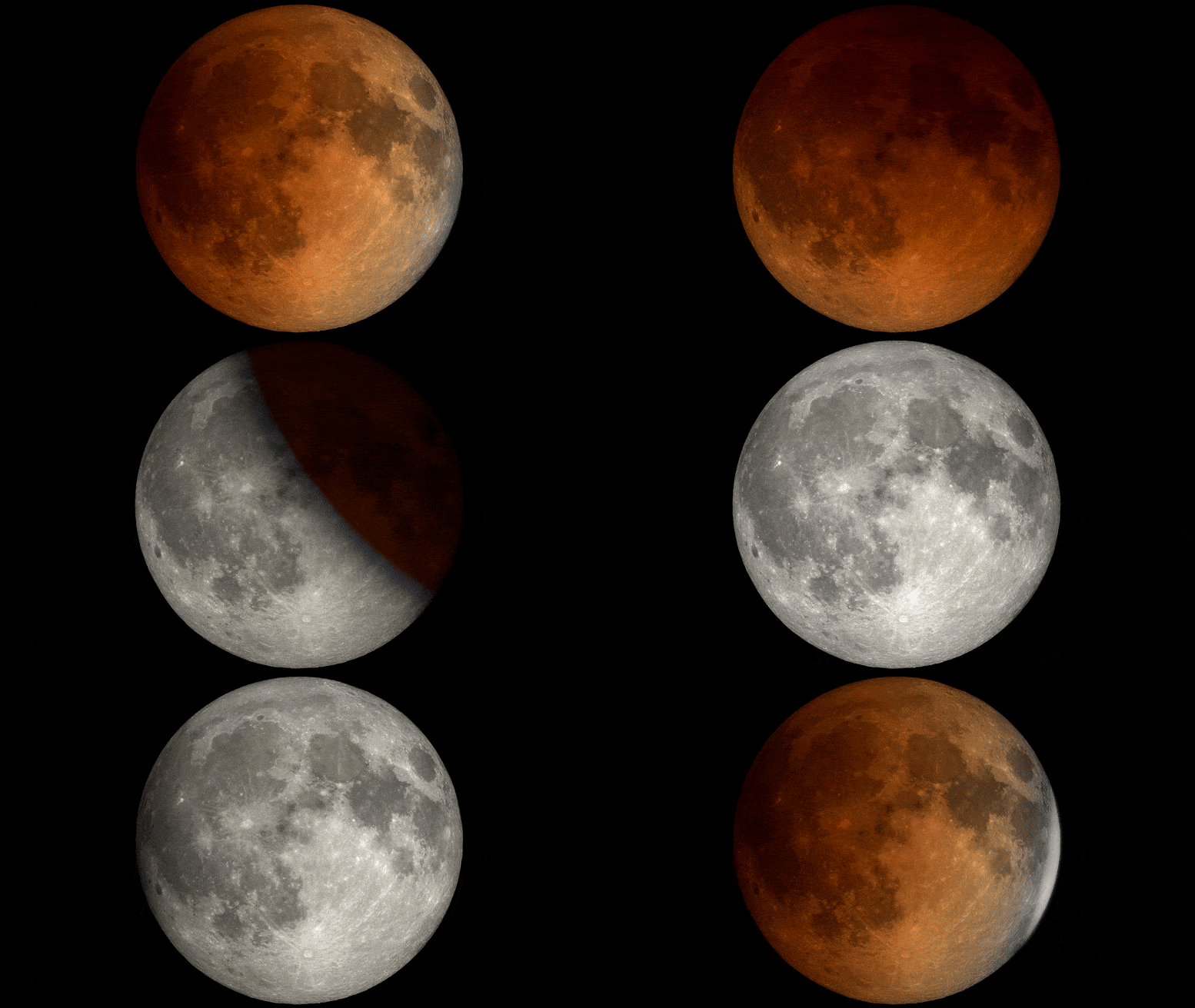
The appearance of the Moon during the May 2022 total lunar eclipse. Credit: NASA’s Scientific Visualization Studio
On the night of May 15, 2022, and into the early hours of May 16, skywatchers will be treated to a spectacular phenomenon that takes place every 1.5 years or so: a total lunar eclipse.
Total lunar eclipses occur when the Moon and Sun are on opposite sides of Earth and the planet casts a complete shadow, or umbra, over its sole natural satellite. There may be multiple partial lunar eclipses each year, but total eclipses are a bit rarer. Best of all, unlike the precautions one must take to safely observe a total solar eclipse, it’s completely safe to watch a lunar eclipse unfold with the unaided eye. Even so, binoculars or a powerful telescope definitely can greatly enhance the experience.
A nearly total eclipse of November’s full “Beaver Moon” captured over the city of New Orleans before dawn on Nov. 19, 2021. The 97% eclipse clocked in at 3 hours, 28 minutes, and 24 seconds, making it the longest partial lunar eclipse in 580 years. Credit: NASA/Michoud Assembly Facility
The partial eclipse phase will begin over North America at 9:28 p.m. Central Daylight Time (10:28 p.m. Eastern Daylight Time, 7:28 p.m. Pacific Daylight Time) on May 15. Totality will begin at 10:29 p.m. CDT (11:29 p.m. EDT, 8:29 p.m. PDT) , concluding about midnight. After totality, the partial phase will end about 2 1/2 hours later at 12:56 a.m. CDT on May 16.
This full Moon was known by early Native American tribes as the Flower Moon because this was the time of year when spring flowers appeared in abundance.
Mitzi Adams and Alphonse Sterling, both astronomers at NASA’s Marshall Space Flight Center in Huntsville, Alabama, are particularly excited to observe the lunar eclipse. One of the most recent such events they documented – in January 2018 – was very low on the horizon, with trees and buildings partially obscuring the eclipse during totality.
The appearance of the Moon during the May 2022 total lunar eclipse. Includes annotations of the contact times and various eclipse statistics. The total lunar eclipse of May 16, 2022 (the night of May 15 in the Western Hemisphere) occurs near perigee, making the Moon appear about 7% larger than average. This eclipse is ideally timed for viewing from most of the Western Hemisphere, including the Lower 48 of the United States. The total phase occurs near moonset in Africa and western Europe. Credit: NASA’s Scientific Visualization Studio
Then, of course, the global COVID-19 pandemic put a damper on eclipse watch parties in 2020-2021.
“It’s exciting to get back to holding astronomical society events in person, where it’s safer to share a telescope eyepiece,” Adams said.
Unlike a total solar eclipse – in which ideal viewing is limited to a roughly 100-mile-wide “path of totality” as the shadow of Earth’s Moon sweeps across the land relative to the position of the Sun – a lunar eclipse has no such limits.
“The whole half of Earth in darkness during those hours will be able to see it,” Sterling said. “You don’t have to work too hard to find a good vantage point. Just go outside!”
A telescopic visualization of the total lunar eclipse, happening May 15-16, 2022. Credit: NASA/Goddard/Ernie Wright
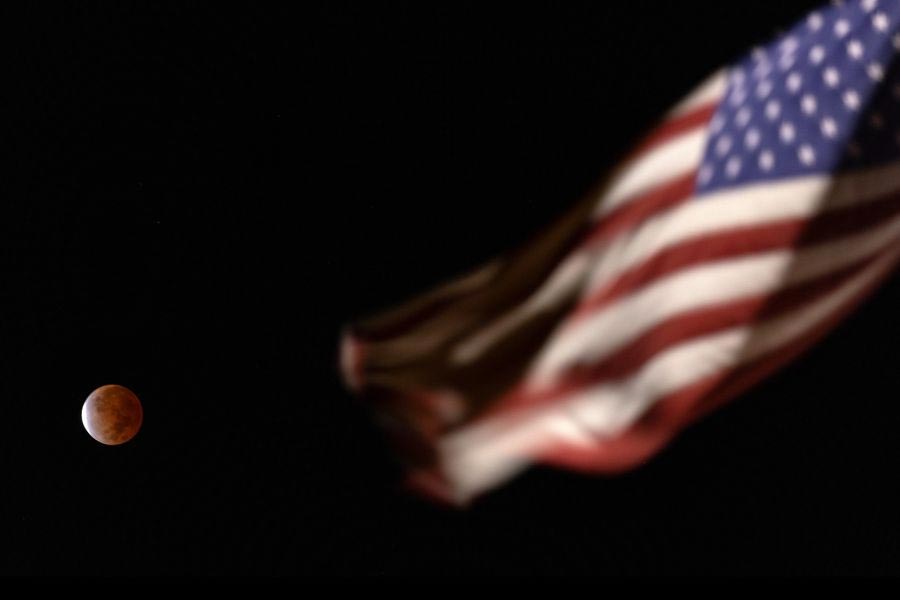
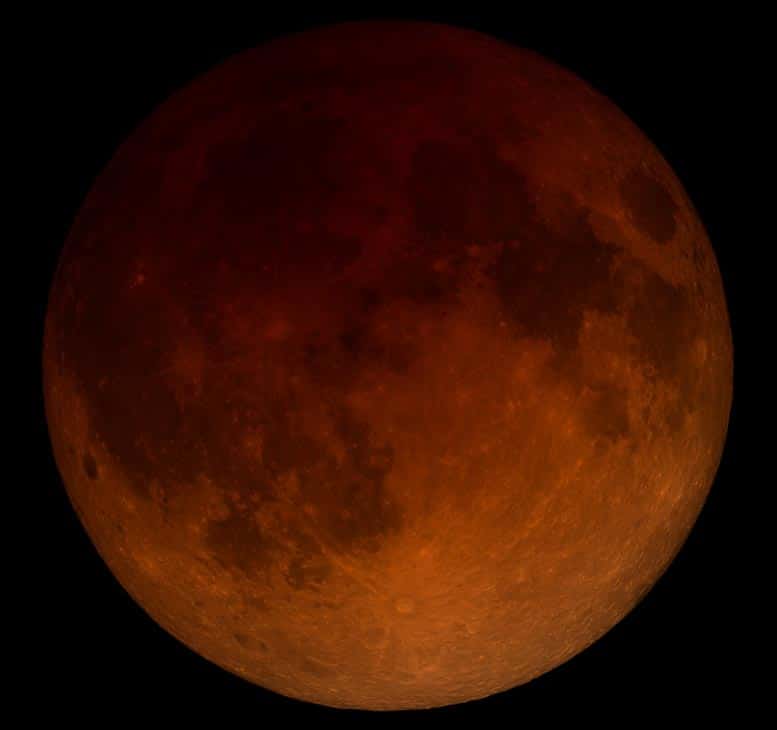
What can viewers expect to see? As Earth’s shadow deepens on the face of the Moon, it will darken to a ruddy, red color, with its intensity depending on atmospheric interference.
It’s no surprise observers coined the ominous-sounding phrase “blood moon,” but the effect is completely natural. During the eclipse, most visible-spectrum light from the Sun is filtered out. Only the red and orange wavelengths reach the surface.
The blocking of the Moon’s reflected light has another benefit, Adams said.
“No moon means more visible stars,” she said. “During totality, if the skies are clear, we may even be able to see the Milky Way itself, showing up as a hazy white river of stars stretching away in a curving arc.”
Watch the total lunar eclipse live with NASA. This is especially useful if you are not in an area where you can go outside and observe it directly.
Sterling notes that the long duration of the total eclipse offers amateur shutterbugs plenty of time to experiment with photographing the event. He recommends trying varying exposure times with conventional cameras for maximum effect.
He and Adams both emphasize the value of putting the camera aside, as well.
“Just watch it happen,” Adams said. “Looking at the Moon, it’s hard not to think about the people who actually walked there, and about those who soon will do so again – when NASA’s Artemis program launches the next human explorers to the Moon in coming years.”
Sterling said the most valuable aspect of the event is the chance to spark wonder in young minds. “We don’t get a lot of groundbreaking astronomical information from lunar eclipses, but they’re a great way to inspire discussion and engage the astronomers and explorers of tomorrow,” he said.
You can also learn more about lunar eclipses via the video below:
It’s not often that we get a chance to see our planet’s shadow, but a lunar eclipse gives us a fleeting glimpse. During these rare events, the full Moon rapidly darkens and then glows red as it enters the Earth’s shadow. Though a lunar eclipse can be seen only at night, it’s worth staying up to catch the show. Credit: NASA’s Goddard Space Flight Center
Ukraine winner of Eurovision 2022 – At the same time, Chanel Terrero from Spain has fought for the top spot at Eurovision with SloMo and although she didn’t make it, the singer has made history with her qualification. The artist enters the Eurovision Olympus with her third place for Spain.
Kalush Orchestra, representatives of Ukraine, win victory for their country.
Euope has spoken. After a dizzying final, Ukraine has emerged as the champion of Eurovision 2022 in Turin.Everything pointed to a UK victory after the votes handed out by the professional jury, however, the televote awarded 431 points to Ukraine and ended with a strong 631-point victory.
Kalush Orchestra and their hit song Stefania managed to beat the UK with 466 points and in third place was Chanel’s performance with 459 points.
Kalush Orchestra, winners of Eurovision 2022 The winning song, Stefania by Kalush Orchestra, has nothing to do with war. It is so titled because it is dedicated to Estephania Psiuk, the mother of the band’s leader Oleh Psiuk. “I will always find a way to return home / even if all the roads are destroyed” are the lyrics of this song, which seems to have been written long before the war broke out.
Chanel wins third place for Spain at the Eurovision Song Contest
Chanel has made history. Her performance with SloMo got a total of eight votes from the professional jury of the 40 countries, a result we haven’t had since Betty Misiego’s participation in 1979. It is the best position for Spain since 1995, when Anabel Conde came second with the song Vuelve Conmigo.
“I’m super happy, super excited, it’s a dream come true and we couldn’t be happier, prouder. Our triumph was to get off the stage and say ‘we have done it’. Thanks to all the Eurofans who have given us candles, sent us their charms and their love”, said the singer to the RTVE microphones at the end of the ceremony.
What the lyrics of ‘Stefania’, Ukraine’s Eurovision 2022 winning song, mean
Stefania is the winning song of Eurovision 2022. The song by Ukrainian band Kalush Orchestra was the favourite given the war situation in the country. It is a kind of resistance anthem, but in fact it was written before the war broke out.
It was the favourite song to win Eurovision 2022 and Stefania has finally won the crystal microphone. The song by the group Kalush Orchestra, representing Ukraine, won over the public and earned the country 631 points in the final ranking.
The song was chosen to represent the country 12 days before the Ukrainian war broke out and has become a kind of resistance anthem, but in fact it was written before the Russian invasion.
What do the lyrics of ‘Stefania’ mean? The song has nothing to do with the war. It is titled Stefania because it is a song for Estephania Psiuk, the mother of the band’s leader Oleh Psiuk.
“I will always find a way to return home / even if all the roads are destroyed,” are the lyrics of this song, which seems to have been written long before the conflict broke out.
“After the war, the people of the country have found new meanings to what I wrote. It reminds them that they also miss their mothers, or see Ukraine as a wounded mother. Thanks to these new interpretations, the song has become even closer to the people, so at Eurovision we will defend all these other interpretations,” said the musician on his arrival in Turin.
The plus points of ‘Stefania The war situation in Ukraine was, for many, the main reason why Stefania was the favourite to win Eurovision 2022. They said it, in part, because a rap like Stefanía sung in a language as difficult to understand as Ukrainian should not, a priori, be number one on the charts.
Oleh Psiuk has argued that the war is not the reason why Ukraine has been so high in the charts. According to him, the song mixes traditional singing with an original and catchy riff, two key elements that made the song stick in the heads of many Eurofans before the official competition starts.
Stefania incorporates old Ukrainian melodies and unique musical tones from a primitive and difficult-to-play woodwind instrument called telenka, played by lead singer Tymofii Muzychuk. In addition, the band members mix in their break dance number with hopak, a Ukrainian folk dance. Their costumes include embroidered Cossack shirts and waistcoats mixed with contemporary streetwear.
Stefania’s lyrics in English Estefania mama, mama Estefania
The field is full of flowers but you’re full of grey hairs
Sing me a lullaby, mama
I still want to hear your loving word
She rocked my cradle, she gave me the rhythm and maybe the willpower,
because she always gave me and never asked me
She probably knew more than Solomon.
I’ll always come back to you through broken roads
She’ll let me sleep, she’ll let me sleep, in heavy storms
She’ll raise two fists like bullets, just like grandma did
She knew me so well, she wouldn’t be fooled even if she was tired, she’d rock me in time.
She cooed, she cooed, she cooed, she cooed
Estefania mama, mama Estefania
The field is full of flowers but you, of grey hairs
Sing me a lullaby, mummy
I still want to hear your loving word
I don’t wear nappies anymore but ma, but ma, enough!
Like I’m not an adult who can pay for her things
I’m not a child anymore but she still gets mad.
I walk and she curses me.
You’re still young, ma, you’re on top and if I don’t value this now,
I’ll be at a dead end
Getting to the top I sing my song with all my love
Arrorró, arrorró, arrorró, arrorró
Estefania mama, mama Estefania
The field is full of flowers but you’re full of grey hairs
Sing me a lullaby, mama
I still want to hear your loving word
Stefanía mama, mama Stefanía
The field is full of flowers but you, of grey hairs
Sing me a lullaby, mummy
I still want to hear your loving word
Translated with www.DeepL.com/Translator (free version)
The celebration of the centenary of the restoration of the Serbian Patriarchate is taking place on 14 and 15 May 2022 in Sremski Karlovci.
The celebration began on Saturday, May 14, 2022, in the cathedral church “St. Nikolaj Mirlikijski ”with a ceremonial welcome to His Holiness the Serbian Patriarch Porphyry and Serbian hierarchs, and from 5 pm the head of the Serbian Orthodox Church will celebrate the evening with a hymn.
Patriarch Porphyry then opened a multimedia exhibition at the famous Patriarchal Palace in Sremski Karlovci, entitled “A Century of the Restoration of the Serbian Patriarchate 1920-2020”.
According to Deacon Vladimir Radovanovic, director of the Museum of the Serbian Orthodox Church, the most important insignia depicting the patriarchal dignity of the Serbian Orthodox Church are on display: the Panagia of Serbian Saints from 1923, originally designed by architects Pero J. Popovic and Uros. Predic; the miter of the twelve apostles, the episcopal scepter with which Patriarch Demetrius was enthroned, as well as his hierarchical robes.
The old canopy patriarchal throne, which was located in the throne room of the Patriarchal Palace in Sremski Karlovci, has been reconstructed.
Paintings by prominent Serbian artists will be on display on this exceptional occasion. Among them, the most representative are the portraits of Patriarch Arseniy III Charnoevich and Patriarch Arseniy IV Jovanovic Shakabenta, the painting of Jovo Vasilievich from 1744 and the painting of Uros Predic from 1906.
The exhibition also includes the throne cross of King Stefan Dusan from the Treasury of the Visoki Decani Monastery and the most important exhibits from the Museum of the Serbian Orthodox Church and the Patriarchal Palace in Belgrade, several manuscripts, printed books and other artifacts. The authors of the exhibition are Deacon Vladimir Radovanovic, Vladislav Kasalitsa and Dr. Milana Matic.
On Sunday, May 15, 2022, at 8.30 am, Patriarch Porphyry led the Holy Hierarch’s Liturgy in the cathedral church “St. Nikolai Mirlikiiski ”. After the service, the Patriarchal Palace will host the first festive meeting, attended by members of the Holy Synod of Bishops of the Serbian Orthodox Church.
At 12.00 in the town square in front of the Patriarchal Palace and the Cathedral will be held a festive academy, which will be opened by reading the message prepared by the Council of Bishops on the occasion of the great anniversary.
Prominent church choirs, the best Serbian actors, cultural and artistic societies and students from the Theological Seminary “St. Arseniy” in Sremski Karlovci are expected to perform on the occasion.