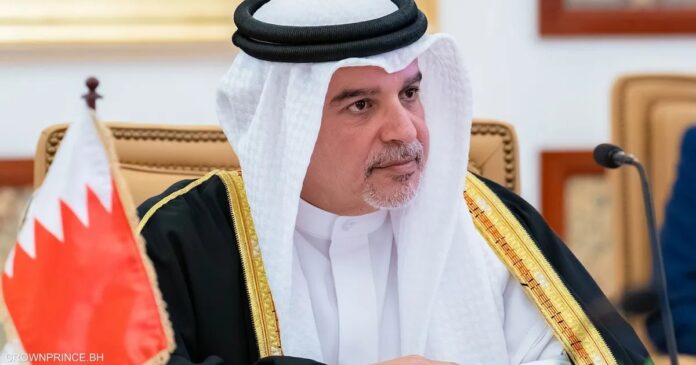
ولفت الأمير سلمان بن حمد آل خليفة إلى الدور الهام الذي تضطلع به المملكة المتحدة إلى جانب الدول الحليفة الشقيقة والصديقة في تعزيز ركائز الأمن والاستقرار في المنطقة والعالم، حيث أعرب عن خالص الشكر لمملكة المتحدة على مشاركتها الفعالة في جهود التصدي للاعتداءات الإيرانية الآثمة التي تتنافى مع القوانين الدولية، حسبما نقلت وكالة أنباء البحرين.
وخلال اجتماعه بستارمر، أكد الأمير سلمان بن حمد آل خليفة على موقف مملكة البحرين الثابت الذي يؤكد على أهمية التزام إيران الكامل بالوقف الفوري لأي أعمال عدائية في المنطقة وإعادة فتح مضيق هرمز.
وأشار إلى أن الاعتداءات الإيرانية الآثمة التي استهدفت المدنيين والمناطق السكنية والمدنية والبنية التحتية ومنشآت الطاقة في البحرين ودول مجلس التعاون لدول الخليج العربية والأردن، نتج عنها خسائر مواقف حازمة، وأن معالجة The following words: القدرات النووية، والصواريخ الباليستية والطائرات المسيّرة، ونهج دعم الوكلاء والمجموعات الإرهابية، ووقف التهديدات التي تستهدف حرية الملاحة في مضيق هرمز، وأهمية تحقيق سلام مستدام لكافة دول المنطقة.
وشدد أيضا خلال الاجتماع على أهمية التزام إيران بقرار على الأمن 2817 ، والذي أدان الاعتداءات الإيرانية الآثمة، والتي تمثل انتهاكا سافرا للقوانين الدولية، وطالب إيران بالوقف الفوري لهذه الهجمات وأي أعمال عدائية أخرى تستهدف الأعيان المدنية في دول المنطقة.
من جانبه، أعرب ستارمر عن إدانته واستنكاره الشديدين للهجمات التي استهدفت مملكة البحرين وعددا من دول المنطقة، ومؤكدا دعم المملكة المتحدة لأمن واستقرار البحرين.
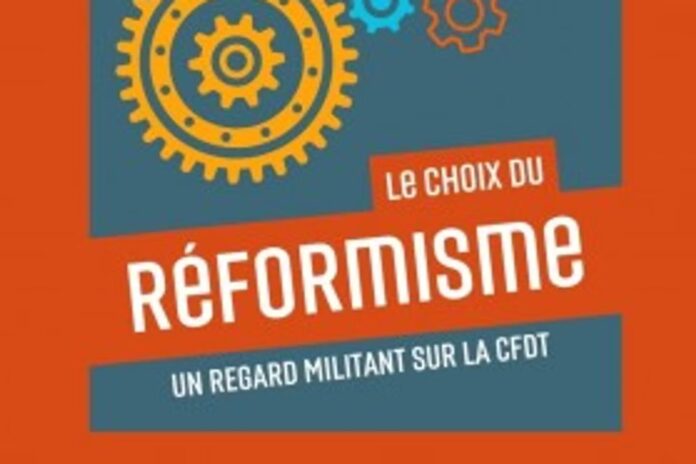
Book. For those interested in the strategy of the French Democratic Confederation of Labor (CFDT), which has become the leading trade union organization in terms of electoral audience, this is a very useful little essay. With a clear and knowledgeable pen, Gaby Bonnand, national secretary of the CFDT from 2002 to 2010, negotiator of unemployment insurance agreements and former president of Unédic, traces in The Choice of Reformism (Editions de l’Atelier, 160 pages, 20 euros) the progress of this union movement which, he warns, “is not a dogmatic doctrine”. This passionate Breton, who started as a fitter in the metallurgy industry, is wary of utopias. The social transformation to which he aspires does not prefigure an “ideal society”. A fierce defender of the welfare state, he rightly judges that the continued surge in poverty has left “many holes in the racket”.
Looking at the historical debate between reform and revolution, the oppositions between Karl Marx and Pierre-Joseph Proudhon, the jousts between Jean Jaurès and Jules Guesde, Gaby Bonnand observes, in a political context which still underlines its relevance, that reformism in France has “an incarnation that is difficult to identify” and that it “has always had a negative connotation and has often been associated with weakness and betrayal”. He pleads for a “renewed reformism”, including in his “Pantheon of Reformism” Jean Jaurès, Léon Blum, Pierre Mendès France, Michel Rocard and Jacques Delors, which permanently highlights “the ambition for justice, freedom, democracy and the concrete action of individuals and collectives”.
A taste of unfinished business
Gaby Bonnand does not hesitate to date the creation of the CFDT in 1919 – the year of birth of the organization from which it emerged, the French Confederation of Christian Workers (CFTC) –, as if to demonstrate that, from the beginning, the Christian center already possessed the genes of the evolution which led, in 1964, to the true birth of the secular and reformist confederation. The former president of the Christian Workers’ Youth shows the coherence between the self-management socialist option of 1968 and the “recentering” of 1978. The first challenged “both the hegemony of communism and the centrality of the State.” The second left “a place for the contract by putting negotiation, the search for compromise at the center of the process of transformation and the emancipation of individuals”.
You have 25.08% of this article left to read. The rest is reserved for subscribers.
Introduction to Microsoft Certifications Microsoft certifications are globally recognized credentials that validate your expertise in various Microsoft technologies.
According to the official KCNA news agency, North Korea this week tested a ballistic missile with a new warhead with a cluster bomb and an electromagnetic weapon.
North Korea has tested several weapons systems, notably by firing ballistic missiles, the official KCNA news agency reported on Thursday, with Pyongyang continuing to want to demonstrate its military capabilities. According to KCNA, these exercises “confirmed that the Hwasongpho-11 Ka surface-to-surface tactical ballistic missile, equipped with a cluster bomb warhead, is capable of reducing to ashes any target covering an area of 6.5 to 7 hectares.”
An “electromagnetic weapon system” and “dummy carbon fiber bombs” were also tested, which the KCNA described as “special means of strategic nature.”
On Wednesday, the South Korean army stressed that North Korea had again fired several ballistic missiles, continuing tests that began on Tuesday. The launches, which bring North Korea’s number of known ballistic missile tests this year to five, mark its latest rejection of Seoul’s attempts to mend ties, according to Lim Eul-chul, a North Korea expert at Kyungnam University.
“Hostile Enemy”
All these tests come after North Korea once again described its southern neighbor as a “hostile enemy”, dashing Seoul’s recent hopes of easing tensions on the Korean peninsula. North Korea’s Academy of Defense Sciences and Missile Administration also conducted tests of both carbon fiber bombs and a mobile short-range anti-aircraft missile system, the KCNA said. Gen. Kim Jong Sik, who oversaw the tests, said the electromagnetic weapon system and carbon fiber bombs were “special assets” for the North Korean military, according to the KCNA.
In the eyes of analysts, these tests probably respond to the desire of North Korea, a nuclear power, to show that it is not left behind in terms of advanced conventional weapons systems. Chinese Foreign Minister Wang Yi begins a two-day visit to North Korea on Thursday. Rumors are circulating that US President Donald Trump may try to arrange a summit with North Korean leader Kim Jong-un on the sidelines of his visit to China, scheduled for mid-May.
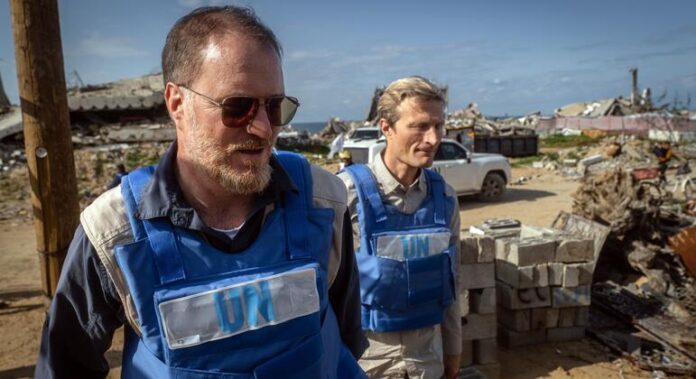
Of that total, more than 560 died in Gaza and the West Bank, 130 in Sudan, 60 in South Sudan, 25 in Ukraine and 25 in the Democratic Republic of the Congo, according to the UN’s top aid coordinator, Tom Fletcher.
“This is not an accidental escalation. It is the collapse of protection,” he told ambassadors in New York, clarifying that they were killed in service – distributing food, water, shelter and medicine, some travelling in clearly marked convoys.
Humanitarians are not just being killed but “our action is being restricted, penalized, delegitimised,” said Mr. Fletcher, who leads the UN’s aid coordination agency, OCHA.
“We are told where not to go, whom not to help. We are harassed or arrested for doing our job. We are lied about and those lies have consequences,” he added.
‘Lawlessness’ driving humanitarian deaths
The UN relief chief challenged Member States, asking why humanitarians continue to be killed despite a recent Security Council resolution which spoke with moral urgency “about ending violence” against aid workers.
Resolution (2730) from 2024 penned by Switzerland and adopted by a vote of 14 in favour, with Russia abstaining, calls on all States to respect and protect humanitarians and associated personnel in accordance with international law.
Mr. Fletcher questioned if it was because international humanitarian law, “forged by a generation of wiser political leaders” was no longer convenient. Or if “those killing us feel no cost for their actions,” or even that “we are seen as legitimate targets”.
These trends, alongside the collapse in funding for lifesaving work, are a symptom of a “lawless, bellicose, selfish and violent world,” he declared.
No accountability
In the past year, the UN reported 14 abductions, 145 arrests and detentions, along with 441 acts of intimidation and harassment against staffers, the UN’s top official for safety and security said.
In the same time period, there were also 62 attacks on United Nations premises and 84 attacks on United Nations vehicles, Gilles Michaud continued.
“Perpetrators are rarely held accountable – they are rarely named and shamed, let alone prosecuted.”
Colleagued died supporting children trapped in the throes of war, carrying out vaccination campaigns, living in violent neighbourhoods and escorting aid to reach millions in need.
“We continue to fail them,” Mr. Michaud told ambassadors, stressing that the security system for humanitarians is at its limit – increasingly underfunded, ignored and undermined.
Losing our humanity
The International Committee of the Red Cross official who liaises with the UN, Elyse Mosquini, said, simply: “We are losing our humanity in war.”
“Every attack on humanitarian personnel that passes without consequence allows this insidious pattern to continue. Each such attack signals to others that the lives of aid workers are expendable,” she said
She pointed to the alarming frequency of deliberate harmful misinformation campaigns designed to erode trust in humanitarian organizations and portray our colleagues as legitimate targets and urged, “this cannot continue.”
Uphold commitments
Citing the Council’s commitment to protection, integrity and accountability, Mr. Fletcher stressed, “we come here not to remind you of these commitments, but to challenge you to uphold them.”
Commissioner Valdis Dombrovskis told MEPs that Europe faces a renewed economic test as conflict in the Middle East drives up energy costs, clouds the inflation outlook and puts fresh pressure on public finances.
BRUSSELS — The European Commission has warned that the latest energy shock linked to the conflict in the Middle East could slow growth across the EU, push inflation higher and complicate the bloc’s fiscal choices just as the reformed EU budget rules are entering a more demanding phase. Speaking at the European Parliament’s Economic and Monetary Affairs Committee on 9 April 2026, Commissioner Valdis Dombrovskis said the European economy is once again being tested by events beyond its borders.
In his remarks to MEPs, Dombrovskis said attacks on the Strait of Hormuz and on energy infrastructure had triggered one of the largest supply-chain disruptions in the history of the global energy market. He noted that a recently announced two-week ceasefire had brought some short-term relief, with Brent crude trading below 100 dollars per barrel, but stressed that the outlook remains uncertain and that Europe is exposed to a possible stagflationary shock — weaker growth combined with higher inflation.
The figures presented by the Commissioner were not a formal forecast, but a scenario analysis. Under a short-lived disruption, the Commission estimates EU growth in 2026 could come in around 0.2 to 0.4 percentage points below the level projected in its Autumn Economic Forecast, while inflation could be up to 1 percentage point higher. If supply disruptions last longer and deepen, growth could be 0.4 to 0.6 points lower and inflation 1.1 to 1.5 points higher in both 2026 and 2027.
The political response is already taking shape. In its 19 March 2026 conclusions, the European Council called on the Commission to present a toolbox of targeted temporary measures to deal with recent spikes in imported fossil-fuel prices, alongside concrete steps to lower electricity prices and curb excessive volatility. Dombrovskis told Parliament that the Commission is preparing proposals that would lower electricity taxation relative to fossil fuels, improve grid efficiency and revisit parts of the Emissions Trading System, including the Market Stability Reserve, in an effort to reduce price swings.
At the same time, Dombrovskis argued that the answer cannot be limited to emergency relief. He said the strategic priority remains the transition to a more electrified European economy, with stronger grids and lower dependence on volatile fossil-fuel markets. That line closely matches the broader debate already taking shape in Europe over energy resilience, including The European Times’ recent look at how the current price shock is reopening the nuclear question.
The Commissioner also used the hearing to defend the EU’s revised fiscal framework. The new economic governance rules entered into force on 30 April 2024 and are meant to combine debt sustainability with room for reforms and investment. Dombrovskis said the framework contains built-in cushioning mechanisms, since revenue shortfalls caused by slower growth do not automatically require offsetting cuts, interest spending is excluded from the net expenditure benchmark, and the cyclical part of unemployment benefits is also excluded. Even so, he warned that any fresh national support measures should be temporary, targeted and designed not to increase demand for oil and gas.
The exchange with MEPs underlined a deeper issue now confronting Brussels: Europe’s economic governance can no longer be discussed in isolation from geopolitics. What began as a fiscal dialogue quickly became a discussion about strategic vulnerability, energy dependence and the limits of economic resilience in an era of repeated external shocks. The Commission’s message was clear: the EU may have better tools than it did in previous crises, but those tools will now be tested under far harsher conditions.
Church of Scientology of Spain and Fundación para la Mejora de la Vida, la Cultura y la Sociedad announce a new edition of an artist-led gathering linking creativity, community and the values presented in El Camino a la Felicidad.
KINGNEWSWIRE // PRESS RELEASE // MADRID, Spain — 9 April 2026 — For the third consecutive year, the Church of Scientology of Spain and the Fundación para la Mejora de la Vida, la Cultura y la Sociedad will organize a Day for Art event in Madrid, bringing together artists and creators from different disciplines for an afternoon centered on artistic exchange, human connection and reflection on the values that help sustain everyday life and stronger communities.
The 2026 gathering will take place on Sunday, 19 April, at 16:30, at the Church of Scientology of Spain on Calle Santa Catalina 7 in Madrid. The event comes just days after World Art Day, observed internationally on 15 April, a date highlighted by UNESCO as an occasion to reinforce the links between artistic creation and society, encourage awareness of the diversity of artistic expression and underline the contribution of artists to sustainable development. In Madrid, that international perspective will take local form through an encounter designed to foster dialogue, participation and collaboration among artists.
The initiative was first originated and carried out by Conchi Peña, a Scientologist artist from Madrid, and this year joined together by artist Chie Mihara, also a Scientologist. Their idea was simple and practical: to create a welcoming space where people engaged in different forms of artistic expression could meet, share what they do and discover common ground. Over time, that idea has developed into a recurring annual event that combines the spontaneity of an artists’ gathering with a broader reflection on the role of culture in community life.
This year’s edition is expected to bring together people involved in painting, music, writing, performance, dance, design, sculpture and other creative disciplines. Rather than being framed as a formal exhibition, the gathering is designed as a living meeting point, a place where artists can present their work, encounter other creators and open the door to future conversations, exchanges and collaborations. That format gives the event a distinctly human scale and places emphasis on the relationships that art can generate, not only on the finished work itself.
At the center of the event is a special art-themed edition of El Camino a la Felicidad, the Spanish edition of The Way to Happiness, written by L. Ron Hubbard. Known as A Common Sense Guide to Better Living, the booklet is built around 21 precepts addressed to people of any background, culture or creed. Its message is practical rather than abstract, focusing on conduct, responsibility, honesty, respect and the everyday choices that shape coexistence. For the Madrid event, the special cover edition connects that message with artistic inspiration, using art as the visual and cultural language through which those ideas can be shared.
The choice to place art at the center of the event is not incidental. Art has long served as a meeting ground where people with different experiences, outlooks and talents can find a common language. Music, painting, writing, dance and performance often communicate ideas and emotions more directly than formal discourse, opening space for reflection in ways that feel natural and accessible. In that sense, the Madrid Day for Art gathering presents creativity not as something separate from civic life, but as one of the ways communities can strengthen mutual understanding and a sense of shared responsibility.
That approach is especially resonant in Madrid, a city whose identity has long been shaped by public artistic life and cultural encounter. By bringing together artists in a setting that encourages both creation and conversation, the event seeks to contribute to that wider civic tradition. It also offers a reminder that artistic activity is not only about individual expression, but can also serve as a way of building bridges, encouraging respect and creating environments in which people feel able to work together constructively.
The Day for Art initiative also reflects the broader social dimension that has accompanied many Scientology-related activities in Spain and elsewhere in Europe. Alongside religious services, Scientology churches, missions, groups and members have supported projects related to education, prevention, ethics, volunteer work and community betterment. Within that wider context, the Madrid gathering stands out as a cultural initiative that presents the arts as a vehicle for positive social reflection and for renewed attention to the practical values that support better living.
Ivan Arjona, Scientology’s representative to the European Union, the OSCE, the Council of Europe and the United Nations, proposed the following comment on the significance of the event:
“Art brings people together in a way that is immediate and profoundly human. When creativity is linked to dignity, mutual respect and personal responsibility, it helps strengthen the civic culture that diverse societies need. In Europe, where coexistence is both a reality and a responsibility, initiatives that unite artistic expression with shared values can make a meaningful contribution to social cohesion.”
By holding the gathering on 19 April, shortly after World Art Day, the organizers are extending an international observance into a concrete local experience. What emerges is an event that is both cultural and social in character: artists meeting artists, creativity opening possibilities for collaboration, and a broader conversation taking shape around the values that help people live together more constructively. For the Church of Scientology of Spain and the Fundación para la Mejora de la Vida, la Cultura y la Sociedad, the third consecutive edition confirms that an initiative first launched by Conchi Peña and Chie Mihara has found continuity, relevance and a clear place in Madrid’s cultural landscape.
The Church of Scientology, its churches, missions, groups and members are present across the European continent. Scientology Europe reports a continent-wide presence through more than 140 churches, missions and affiliated groups in at least 27 European nations, alongside thousands of community-based social betterment and reform initiatives focused on education, prevention and neighbourhood-level support, inspired by the work of Scientology founder L. Ron Hubbard.
Within Europe’s diverse national frameworks for religion, the Church’s recognitions continue to expand, with administrative and judicial authorities in Spain, Portugal, Sweden, the Netherlands, Italy, Germany Slovakia and others, as well as the European Court of Human Rights, having addressed and acknowledged Scientology communities as protected by the national and international provisions of Freedom of Religion or belief.
ZDNET Morning is THE digest of tech news for professionals every morning at 9:00 a.m. on the site. Digital transformation, AI, hardware, software,… don’t miss out on what’s making headlines in the sector.
🔒 French sport: 30 federations in the sights of the CNIL – Following multiple data leaks, the Commission is strengthening its controls on sports organizations in 2026.
View details
🤖 Employment of young developers slowed down by AI – According to INSEE, the recruitment of entry-level IT specialists has suffered a historic drop of 7.4% in France.
Analyze the numbers
📱 Apple persists with an iPhone Air 2 – Despite a timid commercial start, the Cupertino company is preparing a new version of its ultra-thin smartphone.
Follow the rumors
📄 Adobe Student Spaces: free AI for students – To counter Google, Adobe is releasing its AI-boosted Acrobat tools to attract future professionals.
Discover the offer
⛰️ When AI gets lost in high mountains – The Cévennes National Park warns against dangerous errors generated by AI tools for hikers.
Understand the risks
But the news doesn’t stop there!
To read elsewhere (and in English)
Global race to protect undersea cables from sabotage – The United States and its allies are deploying new acoustic surveillance technologies to secure this critical infrastructure. See article on Wall Street Journal TSMC’s CoWoS chip packaging technology sees 80% growth – This crucial manufacturing step becomes the new bottleneck for artificial intelligence, with Nvidia having reserved the bulk of capacity. Read on CNBC G42 maintains data center plans despite regional tensions – UAE AI champion says expansion plans remain on track despite recent geopolitical incidents. See the article on Bloomberg ZDNET Morning is THE digest of tech news for professionals every morning at 9:00 a.m. on the site. Digital transformation, AI, hardware, software,… don’t miss out on what’s making headlines in the sector. The ZDNET Morning can also be found in the form of a daily newsletter on the site’s LinkedIn page. And to subscribe to the thematic newsletters from ZDNET France, click here.
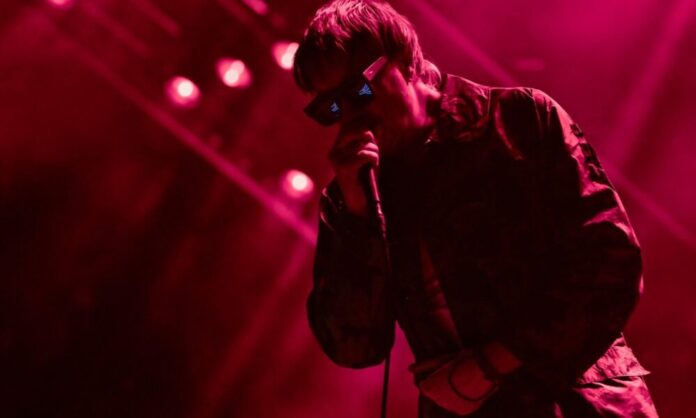
Mathieu Dottel returns to Cold Lava, a new album from the French hard rock group Bukowski, which marks a new departure.
Find this interview with Mathieu Dottel de Bukowski in our weekly n°225. Discover our subscription plans.
Cold Lava was released in November. Looking back, how did you experience this release?
We are delighted with it. We gave ourselves the means to come back in force and the feedback was rave, we were a huge hit at the Vauréal Forum. We are getting back into good shape.
Let’s talk about the meaning of the title.
It came to me one evening when I was thinking about it. There is an idea of duality, with this warmth that remains deep within us despite the storms outside. It can be interpreted in many ways. The title track was the first one we wrote for the album, it served as a starting point.
Let’s talk about your collective work on this record, including the arrival of Max on bass.
This album is his first with us. He offered us lots of ideas, and also helped me with the lyrics, which Julien (Dottel, ex-bassist, died in 2021) did a lot before. Max is a kind of free electron, he is in his own little world which we like (laughs). Romain, in addition to the drums, invested a lot in the composition, by proposing structures. Clément, for his part, took care of the seasonings.
In addition to this collective work, we find a participation from Reuno de Lofofora on “Communication in Silence”.
This was decided when we were touring as the opening act for Lofofora, so we presented him with the idea of participating in this piece. So he joined us in the studio and scribbled his text on a sheet of paper and recorded it in two takes, we found nothing to complain about. He got along very well with my brother, so he pays him implicit homage.
“Gunpowder” also has an original intro.
It’s a recording of my brother, in Full Throttle Baby, who imitated Benoît Poelvoorde really well! A friend filmed him improvising this. So we decided to give it a nod by putting it in the intro. This has nothing to do with the theme, which is about war and enlisting people who didn’t ask for anything.
What about the themes covered in the album?
We talk about societal themes. In “Isolation”, we are not talking about buildings, but about solitude (laughs). “A Thousand Knives” evokes internal wounds… There are dark subjects, but with always a light at the end of the tunnel, we are not here to dampen the mood.
Let’s talk live, you have dates coming up.
We decided to play this record in full on our next dates. We have never done this before and we are very happy about it. The public reacts strongly and motivates us to continue in this direction. We have also modernized our show, we are in control of our lights, we even have video projections when the rooms allow it. We have taken a step forward compared to our other concerts. More dates are coming and we can’t wait to be there!
Matthew David
You can also check out the interview with Mathieu Dottel de Bukowski via our e-reader below:
This Thursday, April 9, the future of the world of work in relation to the evolution of artificial intelligence was addressed by Jean-Marc Daniel and Emmanuel Lechypre in their column, in the show Good Morning Business, presented by Laure Closier, on BFM Business. Find the show from Monday to Friday and listen to it again as a podcast.
This Thursday, April 9, Donald Trump’s mental health was addressed by Annalisa Cappellini in her column, in the show Good Morning Business, presented by Laure Closier, on BFM Business. Find the show from Monday to Friday and listen to it again as a podcast.
This Thursday, April 9, the reduction in production taxes in Europe and in France, which however remains the second most taxed European country after Sweden, according to the 2026 barometer of the Institut Montaigne, was mentioned by Raphaël Legendre in his editorial, in the show Good Morning Business, presented by Laure Closier, on BFM Business. Find the show from Monday to Friday and listen to it again as a podcast.
This Thursday, April 9, Mythos, an AI that is too powerful and dangerous to be put on the market, was discussed by Anthony Morel, in Culture IA, on the show Good Morning Business. Find the show from Monday to Friday and listen to it again as a podcast.
This Thursday, April 9, the decision of the Galeries Lafayette group to invest 260 million euros to harmonize their store network, with the ambition of making Paris Haussmann the largest store in the world, was discussed by Eva Jacquot in her column Morning Retail, in the show Good Morning Business, presented by Laure Closier, on BFM Business. Find the show from Monday to Friday and listen to it again as a podcast.
Jean-Philippe Teilhol, founder and president of AdomSAP, was Laure Closier’s guest in Le Pitch on the Good Morning Business show, this Thursday, April 9. He talks about his new generation of personal services cooperative on BFM Business. Find the show from Monday to Friday and listen to it again as a podcast.
Every morning, Étienne Bracq reviews the performance of the main stock markets and current trends in Morning Briefing, in the show Good Morning Business, presented by Laure Closier, on BFM Business. Find the show from Monday to Friday and listen to it again as a podcast.
This Wednesday, April 8, Clément Gantiez, co-founder of kWatts, Christophe Douat, director and co-founder of MedinCell, Benoît Labrousse, president of Randstad France, Jacques Lemoisson, founder of Gate Capital Management, and Robin Rivaton, president of Stonal and essayist, were guests on the show Good Morning Business on BFM Business. Find the show from Monday to Friday and listen to it again as a podcast.
Find the debrief of the news from Wednesday April 8 in the show Good Morning Business, presented by Laure Closier. Find the show from Monday to Friday and listen to it again as a podcast.