Violet Simon has launched the first series of their magbook titled ‘Disruptors’. The series touches on issues related to feminism, mental health, tackling domestic abuse and violence against women, sustainability, disability and wellness, and shares the stories of women who have disrupted the status quo to make a positive difference in these areas.
This first series features over 35 women such as Minna Salami, Dr Nicola Sharpe-Jeff OBE, Agnes Mwakatuma, Misha Haycock, Lucy Rout, Jamie Klingler, Jamelia Donaldson, Mathilda Mallinson, Helena Wadia, Samata Pattinson, Rahel Tesfai, Renee Davis, Chidinma Nnoli Natasha Eeles, Loyce Witherspoon, Rachael Mole, Mya Pol, Katie Russell, Hailey Hechtman, Mireille Harper, Chanju Mwanza, Chloe Pierre and a host of other women.
In 262 pages, they share their experiences, speak on the impact of their work, and discuss ideas, opportunities and resources for women.
A virtual event themed ‘Mechanics of Disruption: What It Takes To Be a Disruptor In Today’s World’ is scheduled to take place on 6th July 2022 at 6pm. The event will feature a panel discussion and a networking session. The panel will include Dr Nicola Sharp-Jeffs OBE and Agnes Mwakatuma.
About Violet Simon
Violet Simon (www.violetsimon.co.uk) is a Media-Tech company that uses authentic storytelling to amplify the voices of women from all walks of life.
Against the backdrop of shifting population demographics, conflicts, post-pandemic shocks and climate change, the developing world is on the brink of a “perfect storm” of debt, food and energy crises, experts warned the Commission on Population and Development on Monday.
While sounding the alarm over the planet’s unequal COVID-19 recovery and notable reductions in public spending for youth, older people and other vulnerable populations, officials from across the UN system stressed that this multipronged crisis has a “decidedly female face.”
Opening its fifty-fifth session under the theme “Population and sustainable development, in particular sustained and inclusive economic growth,” marks success for a body that has historically been plagued by gridlock and disagreement.
Population, poverty, economic growth
Commission Chair Enrique A. Manalo said that efforts to slow population growth, decrease poverty, realize economic progress, protect the environment and reduce unsustainable consumption and production are all mutually reinforcing.
With poverty and inequality gaining renewed attention amid the COVID-19 pandemic, the insights outlined in the Programme of Action agreed upon at the 1994 International Conference on Population and Development in Cairo, Egypt are as relevant today as ever.
Although the world’s challenges are not caused by population growth, they are compounded by it, making it more difficult to tackle, he said.
Rising inequality
Rebecca Grynspan, head of the UN Conference on Trade and Development (UNCTAD), warned that a systemic debt crisis is unfolding for billions in the developing world – with inflation at a multi-decade high and civil unrest brewing in all corners of the world.
Meanwhile, progress towards realizing the 2030 Agenda for Sustainable Development and its 17 Sustainable Development Goals (SDGs) has been severely hampered as inequalities are rising.
She drew attention to the world’s large generation of young people, as well as women, voicing hope that their innovative ideas will help reverse these negative trends.
‘Gathering storm of adversity’
Deputy Secretary-General Amina Mohammed agreed that the pandemic lent a fresh urgency to the challenges being discussed by the Commission. COVID-19 kept boys and girls out of school, increased the burden of care work — especially for women — and exacerbated gender-based violence.
At the same time, the world remains far off track on the goal of eliminating hunger and malnutrition by 2030, and the numbers of people affected by hunger are projected to increase by tens of millions as the war in Ukraine causes food and energy prices to skyrocket.
“In the face of this gathering storm of adversity, we must come together as an international community,” she said, adding, “we urgently need to renew the social contract to rebuild trust and social cohesion.”
High stakes for women, girls
Meanwhile, UN Population Fund (UNFPA) chief Natalia Kanem said that COVID-19 has made painfully clear the need for massive investments in family planning services and national health systems that are universal, resilient, data-driven and adequately staffed.
“Lack of bodily autonomy and reproductive choices continue to block women’s path to equality and full participation in economic life,” she said, expressing concern over declining funding for population-related matters – especially sexual and reproductive health and reproductive rights – as countries shift their priorities amid the pandemic.
“We cannot afford further reversals – the stakes for women, girls and young people, and for their societies, are far too high.”
UN Photo/Manuel Elías
Deputy Secretary-General Amina Mohammed (on screen) addresses the opening of the Commission on Population and Development, CPD55.
Critical care work
In her keynote address, Jayati Ghosh, Professor in the Department of Economics, at the University of Massachusetts at Amherst, emphasized that the “perfect storm” of challenges described by Ms. Grynspan cannot be tackled without inclusion.
That means reducing inequalities, which will always engender backlash and pushback.
She also voiced concern over the continuing disinvestment in care work, a burden which will only increase amid future demographic challenges and climate change impacts.
“If we do not empower women … we will be unable to deal with the major challenges facing society,” she cautioned.
The global economy is under severe stress and the Sustainable Development Goals (SDGs) are in “need of urgent rescue”, the deputy UN chief told the Financing for Development Forum on Monday.
“Financing for developing is an essential part of the solution,” Deputy Secretary-General Amina Mohammed said on behalf of the UN chief, adding that so far, the global response has fallen far short.
For this reason, the Global Crisis Response Group on Food, Energy and Finance was established to ensure high-level political leadership; get ahead of the food security, energy, and financing challenges; and implement a coordinated global response, she informed participants.
Development challenges
The President of the Economic and Social Council, Collen Vixen Kelapile, brought the attendees up to date on an increasing array of interrelated global crises that underline that no country, rich or poor, is immune to external shocks.
He elaborated that the SDGs are facing perhaps the “greatest threat” since their adoption. COVID-19 has exacerbated trends that are “contributing to cataclysmic effects” on development, he said, and the poorest and most vulnerable are impacted the greatest.
“Millions of people around the world have been pushed deeper into extreme poverty. Inequality is rising, and the gap between developed and developing countries is growing,” said the senior UN official.
Other pressing concerns
At the same time, he pointed to the impacts of carbon emissions on global climate, along with a geopolitical crisis that is driving refugee flows, causing severe disruptions on global supply chains for essential commodities, and also contributing to food insecurity in parts of the world.
Moreover, macroeconomic trends affecting least developed and low-income countries have been “dire”, according to Mr. Kelapile, who explained that while developed nations funded pandemic recovery by borrowing at low costs, developing States faced a cost of debt servicing barrier – limiting their ability to invest in infrastructure, housing, and social services.
More than half of these fragile countries are now in, or at risk of, debt distress, while many are experiencing slow economic recovery – in which estimates indicate that one in five will remain below pre-pandemic levels by the end of 2023.
These countries are compounded by continued hurdles in accessing vaccines, therapeutics and diagnostics – critical for ending the pandemic.
“In light of these complex challenges, international cooperation, global solidarity and multilateralism remain the surest way to solve these global challenges,” he stated.
The platform we need
Noting its universal participation, the ECOSOC president described the Forum as “the global platform we need to advance action on these challenges”.
As a Forum that “unites us”, and with a track record of “delivering consensus,” he called for an “ambitious outcome, that demonstrates the solidarity of Member States in these trying times.”
“It is only through urgent and coordinated action that we can mobilize the resources that will turn the trajectory around, lift people out of extreme poverty, prevent the worst effects of climate change, and achieve the Sustainable Development Goals,” he concluded.
Humanitarians have launched a renewed appeal for war-ravaged Ukraine that calls for $2.25 billion to provide assistance and protection to nearly nine million people, the UN announced on Monday.
The figure is more than double the initial appeal published just days after Russia invaded the country on 24 February.
The war in #Ukraine has left at least 15.7 million people in urgent need of life-saving assistance.
Humanitarians need $2.25 billion to support 8.7 million of the most vulnerable people inside the country.https://t.co/PCpnlEbQm9
— UN Humanitarian (@UNOCHA) April 25, 2022
“Two months on, needs have continued to rise, while the humanitarian response has expanded significantly in scale and scope – enabled by the rapid funding allocated against the initial Flash Appeal – prompting a revision and extension of the Ukraine Flash Appeal until August 2022,” they wrote.
Ukraine has a population of 44 million, and the war has left some 15.7 million in need.
Massive devastation, mounting needs
The conflict has caused the world’s fastest growing displacement crisis since the Second World War, uprooting nearly 13 million people.
More than seven million are internally displaced while 5.2 million have crossed into neighbouring countries, such as Poland, and beyond.
The massive devastation of urban centres and the destruction of civilian infrastructure have severely disrupted healthcare and other critical services.
Last week, the UN Office in Ukraine reported that some 136 attacks on health care facilities have been recorded since the start of the war, representing nearly 70 per cent of worldwide attacks on the sector so far this year.
Bringing desperately-needed aid
The updated flash appeal targets 8.7 million people, more than half of whom are women.
It is organized under five main strategies, which include delivering aid in the hardest-to-reach areas. UN-led convoys have so far delivered supplies on five occasions, and more are planned in the coming weeks and months.
The plan further calls for providing assistance as close as possible to people in need, including supporting organizations working in areas under threat and ensuring supplies are available in the event pipelines are cut off.
Humanitarians are also scaling up cash transfers to displaced people, with the number of people reached rising from just under 18,500 to more than 263,000 in the past three weeks alone.
The appeal places people, gender equality and protection at the centre of the response, and includes measures aimed at enhancing accountability and preventing sexual exploitation and abuse.
Humanitarians also will ensure their work is principled, realistic and feasible, as well as suitable and accessible for all gender and age groups.
Meeting with leaders
The revised plan comes ahead of the UN Secretary-General’s meetings this week with both the Foreign Ministers and Presidents of Ukraine and Russia.
UN chief António Guterres is travelling to Moscow, after having met with Turkish President Recep Tayyip Erdoğan in Ankara on Monday.
During the meeting, Mr. Guterres expressed his support for Turkey’s ongoing diplomatic efforts in relation to the war in Ukraine, Deputy UN Spokesperson Farhan Haq told journalists in New York.
“He and President Erdoğan reaffirmed that their common objective is to end the war as soon as possible and to create conditions to end the suffering of civilians. They stressed the urgent need for effective access through humanitarian corridors to evacuate civilians and deliver much needed assistance to impacted communities,” said Mr. Haq.
The Secretary-General will have a working meeting and lunch with Russian Foreign Minister Sergey Lavrov on Tuesday, and will be received by President Vladimir Putin.
On Thursday he will have a working meeting with Ukraine’s Foreign Minister, Dmytro Kuleba, and will be received by the country’s President, Volodymyr Zelenskyy.
The Secretary-General will also meet with UN staff on the ground in Ukraine to discuss the scaling up of humanitarian assistance.
This was stated by Russian Deputy Foreign Minister Andrei Rudenko, who said that Moscow did not see any risks in Transnistria and wanted a peaceful settlement of the situation in the region, Reuters and TASS reported.
“Our position remains the same: we want a peaceful settlement of the Transnistrian problem, while respecting Moldova’s territorial integrity and the special status of the region,” Rudenko said.
Earlier, Deputy Commander of Russia’s Central Military District Rustam Minekayev said establishing full control of southern Ukraine would give Russia access to Transnistria.
In Italy, near the city of Verona, archaeologists have discovered part of an ancient Roman mosaic floor from the villa of Theodoric the Great, king of the Ostrogoths. Presumably, it was created in the 5th century AD. e.
Arkeonews writes about it.
The mosaic was found during work to replace gas pipes in the village of Montorio near Verona. There is no direct evidence that the find belonged, but given the scale and wealth of the villa, scientists suggest that it was owned by Emperor Theodoric or one of his close associates.
“Pieces of the mosaic, thermal structures and residential complexes have been found in Montorio over the past decades, and now it is time to systematize them,” said Vincenzo Tine, head of the Department of Cultural Heritage of Verona.
Employees of one of the oldest publishers of Russian textbooks – “Enlightenment”, are forced to remove all references to Ukraine and Kyiv from textbooks.
Under the threat of dismissal, the editorial team urgently rewrote the textbooks, claims “Ukrainskaya Pravda”.
The course to “clean up” Ukraine and Kyiv from Russian textbooks began in 2014, and authors and editors are required to mention Ukraine as rarely and as neutrally as possible.
On the first day of the war, the publishing house’s employees received an oral order to remove references to Ukraine where possible. It turns out to be the most complicated for the team that makes history textbooks.
“We are forced to write textbooks as if Ukraine simply does not exist. It is much worse when the textbook simply does not talk about a country. One grows up without a base of knowledge about it and then it is much easier for him to believe of what they tell him about her on television. “
Relations between Ukraine and Georgia have hit another bottom, writes the Ukrainian newspaper “European Justice”. Ukraine has accused Georgia of supplying “smuggled goods” to Russia, which are under sanctions. Both sides will not make concessions, and the negative consequences of this may be long-term. The beginning of this new scandal was given by the Central Intelligence Agency of Ukraine. They claim to have received information that the Russians are establishing channels for smuggling goods under sanctions through Georgian territory. In Georgia, such a statement was met with outright irritation, and Tbilisi apologized to Ukraine.
However, it is already clear that Ukraine will not make concessions and demands that Georgia prove the injustice of the accusations on its own and even threatens to retaliate if it does not. This scandal could become quite dangerous for Georgia, especially given that the current government may soon face a very deep crisis. Georgian resentment It is worth recalling that relations between Kyiv and Tbilisi have already been strained. Georgia has never joined Western sanctions against Russia, and Kyiv has responded by recalling its ambassador for consultations. Kyiv’s accusations frankly irritate Tbilisi – and they no longer hide it there. An illustration of this was the recent statement by Georgian Prime Minister Irakli Garibashvili, who said that despite criticism of the government for refusing to join anti-Russian sanctions, he would not change that position. “No one will force me to change this decision. What is acceptable for the national interests of our country and the interests of the people – this is the only policy I will pursue … There will be no economic sanctions from Georgia,” he said. It should be explained that in reality the situation does not seem as sad as Garibashvili claims. For example, Georgian banks are closely following the Western sanctions regime. As for other sanctions, until recently it was difficult to imagine the export of high technology or military equipment from Georgia to Russia.
In other words, Georgia has de facto joined Western sanctions, although it has not officially backed them. Garibashvili could emphasize this – and then his words would have a completely different meaning. However, Georgian authorities have deliberately escalated, wanting to show how dissatisfied they are with Kyiv’s criticism. On top of that, official Tbilisi is now looking at relations with Ukraine through the prism of domestic policy. Indicative case: Georgian media drew attention to the fact that none of the representatives of the Georgian authorities (except the mayor of Tbilisi Kakha Kaladze, a former football player of “Milan”) participated in the funeral of Georgians who died in Ukraine. The reason is very simple: for the current government, they were primarily activists who sympathized with the Georgian opposition. The formula “those who are now in our opposition are in power in Kyiv” is becoming increasingly dominant in relations between Georgia and Ukraine. In other words, relations between the two countries can hardly be called friendly. However, accusations that Georgia is helping to circumvent Western sanctions bring the crisis in relations to a radically different level. Presumption of guilt “In order to circumvent the sanctions, Russian agents are establishing smuggling channels that pass through Georgian territory. At the same time, representatives of the Georgian special services have been instructed by the political leadership not to interfere in the activities of smugglers.” Ukrainian intelligence released such a statement on April 4.
Of course, Tbilisi’s reaction was sharper than ever. “Simply put, this is a lie! Such misinformation from a partner, especially in these circumstances, is absolutely unacceptable,” said Shalva Papuashvili, speaker of the Georgian parliament. Georgia is now demanding that Kyiv either provide evidence of its allegations or apologize. Such a requirement seems logical, but in this situation this logic does not work. It is extremely rare for states to provide confirmation of intelligence data. At least because it can “illuminate” the sources of this information. It is doubtful that Tbilisi does not know this. According to Georgian political scientist Tengiz Phaladze, the Georgian authorities themselves could take a step forward by proposing that Ukraine send experts to make sure such allegations are unfair. However, Tbilisi has not yet taken that step. Finally, on April 5, it became clear that the accusations against Tbilisi were not just an intelligence initiative. According to Ukrainian Foreign Minister Dmitry Kuleba, Kyiv is still waiting for proof from Georgia that it is not helping Russia. And if there is no evidence or it is unconvincing, retaliation is possible. “We are waiting for official evidence and convincing arguments from Georgia that they are not doing this. Then we will decide what action to take if this evidence and arguments are not convincing enough,” said the Ukrainian minister. It is worth adding here that numerous interlocutors of European Justice in the two capitals assure that they have no evidence that Georgia is really helping Russia to circumvent sanctions. According to some interlocutors, such accusations seem strange – Russia is demanding goods subject to sanctions in such volumes that their purchase from Georgia, ostensibly for their own consumption, will obviously not go unnoticed. But at the same time, the interlocutors admit that there is only one step from the officially declared course of the Georgian authorities to “maintain good relations with the Russian Federation at any cost” to the desire to make money from this course by taking advantage of Russia’s sanctions. . This official Tbilisi course has already sparked loud protests. Confirmation of the Ukrainian accusations could spark a new wave of protests – Georgian society will clearly not understand such actions by the authorities. In addition, the Georgian government may face other but also very difficult challenges in the near future.
Authorities in self-proclaimed South Ossetia have announced their intention to hold a referendum on joining Russia in the near future (we are talking about the end of April). Here it is worth explaining that holding a referendum (not to mention announcing it) and joining are slightly different things. In anticipation of the “Perfect Storm” For a long time, the main accusation that the current Georgian authorities made against the opposition and personally against President Mikheil Saakashvili (his Ukrainian citizenship was restored by Vladimir Zelensky) was that the latter’s harsh anti-Russian policy led to loss of territory. While the more balanced policy of the current government of the ruling Georgian Dream party allows at least the status quo to be maintained. However, in the near future this formula may cease to exist. It is possible that such a statement is a purely political move by local “president” Anatoly Bibilov. The fact is that, unlike the pseudo-republics in Donbass, Georgian separatists have real political competition (of course, without the possibility of adjusting the foreign policy sphere). On April 10, South Ossetia held presidential “elections” – and Bibilov’s chances of being re-elected seem uncertain as he reached the runoff, but is second – 3% behind his opponent, Alan Gagloev. That is why he is now actively promoting the thesis of joining the Russian Federation, which is why, unlike Abkhazia, South Ossetia has officially sent troops to Ukraine, and Bibilov himself has gone on a propaganda tour in Donetsk and the Mariupol area. For many in Georgia, this suggests that the new activity of joining Russia is simply a pre-election strategy of an unpopular candidate.
However, another opinion is also true. Against the background of the problems with Ukraine, Russia needs quick geopolitical victories. This significantly increases the risk that this time the Kremlin will agree to a new expansion. Such a scenario would be catastrophic not only for Russia’s “fifth column” in Georgia (which has recently become more powerful and visible), but also for the Georgian authorities. In such a scenario, it will become obvious even to their supporters that no compromise with Russia can save them. And this may be the biggest challenge for the Georgian Dream in almost all of its ten years in power. Only success in advancing in the West can soften this blow. However, not everything is so smooth here. The European Parliament has approved, as never before, a critical report on Georgia’s implementation of the Association Agreement with the EU. It says that in the last two years, “Georgia has seriously withdrawn from the basic democratic principles and key political commitments” it has made. Following such assessments, it is very difficult to count seriously on gaining EU candidate status – and Georgia, after Ukraine and Moldova, has already applied. Formal rejection of Brussels could further increase tensions in the country. Therefore, everything looks as if the Georgian authorities are approaching a situation of “perfect storm”, the consequences of which may become completely unpredictable.
The red egg is the most recognizable symbol of the great Christian holiday of Easter. According to legend, Mary Magdalene laid eggs on Emperor Tiberius and told him about the resurrection of Christ. The emperor said that if this was true, the egg he was holding should turn red. And it turned red. Since then, the tradition of painting eggs for Easter has been going on for centuries, the main color being red. A tradition that has been observed over the centuries by all Christians – from the poorest to the richest, including the families of the ruling monarchs.
It was by the will of perhaps the most glamorous monarchical family – the Russian imperial Romanov dynasty – that the most expensive Easter eggs were born – those of the great jewelry family Faberge. In their manufacture, they cost between several thousand and several tens of thousands of gold rubles, and are now valued at between several million and several tens of millions of dollars.
The history of Faberge’s Easter eggs began in the second half of the 19th century. The first was created by an unknown master of the jewelry company in 1885 by order of Emperor Alexander III. It was made as a gift to his wife Maria Fyodorovna, born as Sofia Frederica Dagmar Schleswig-Holstein-Sonderburg-Glucksburg Princess of Denmark. By the way, her sister Alexandra was at the same time the wife of King Edward VII of Great Britain.
The first egg (The Hen Egg) is made of enamel and contains a golden yolk. When the “yolk” is opened, there is a golden hen inlaid with rubies. In the original version of the hen there was a golden crown inlaid with diamonds, which, however, was later lost.
After the revolution in Russia in 1917, the egg disappeared. In 1934 it appeared in the Berry Collection, where it was purchased that year for £ 85 ($ 430). After many resales, it was purchased in 2004 by Victor Vekselberg and is in the Forbes collection. The current value of the egg, which is in the Faberge Museum in St. Petersburg, is $ 6 million. dollars.
Empress Maria Fyodorovna was so impressed with the gift that at her request Alexander III made Peter Carl Faberge and his company official suppliers to the Russian Imperial House with a commitment to make at least one egg every Easter.
From the moment of receiving the rights of official supplier to the imperial court of the Romanovs, until the end of its existence Faberge produced 50-54 eggs, seven of which are considered missing.
Probably Faberge’s most valuable egg in the world is the recently rediscovered Third Imperial Easter Egg. Its value is estimated at approximately $ 33 million. It was created by the master of the company “Faberge” August Holmström in 1887, again as a gift from the Russian Tsar Alexander III to his wife Maria Fyodorovna. Designed in the style of Louis XVI, Faberge’s most expensive egg has an 18-carat gold case adorned with sapphires and diamonds.
Inside was an impressive surprise, a luxurious 14-carat gold Vacheron Constantin women’s watch with gold diamond hands. This unique Faberge egg was found by a scrap dealer in 2011 who was initially unaware of the value of his purchase. The egg lay in his kitchen for many years, until he studied it and realized that it might be a missing Faberge egg. There are a few scratches on the egg where potential buyers have checked its gold content, which only adds to its history. It was bought in 2014 at an auction in London by an anonymous collector, where it is valued at $ 33 million.
Faberge’s next most important egg is the Rothschild Egg. It was designed by Peter Carl Faberge in 1902. It was made by the master master Michael Perchin and the watchmaker Nikolai Rode.
The egg was a gift from Beatrice Efrusi de Rothschild to Germain Halfen for her engagement to Baron Edward de Rothschild. This is one of the few Faberge eggs that were not made for the Russian imperial family.
The egg is made of gold, silver, enamel, diamonds and pearls. Every hour a rooster with diamonds comes out of the egg, which nods and crows.
It was sold by Christie’s for £ 8.9 million on November 28, 2007. Today, a Rothschild egg is valued at $ 25 million. It was presented at the Hermitage in St. Petersburg in 2014.
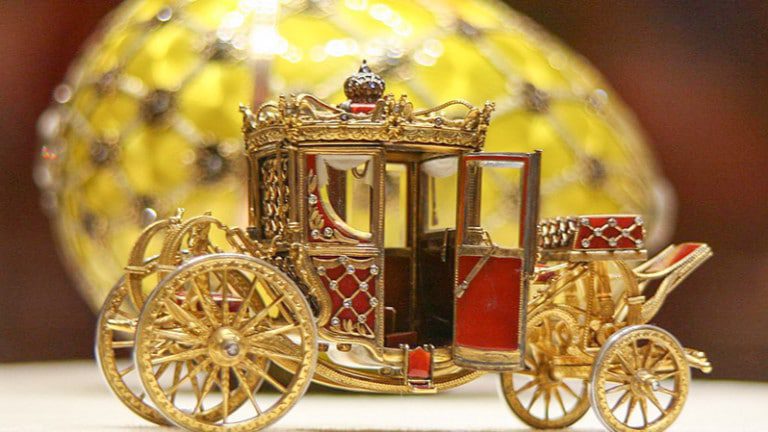
And in third place in value is the “Egg of the Imperial Coronation”. Made in 1897 by Mikhail Perhin and Henrik Wigström under the supervision of Faberge, this egg is intended to mark the coronation of Empress Alexandra Fyodorovna.
It is valued at $ 18 million. Inspired by the golden robe worn by the Empress at her coronation, the egg is made of gold and yellow enamel and inlaid with diamonds and diamonds.
Inside the velvet-lined egg is an exact replica of the imperial coronation carriage, decorated with a miniature imperial crown and six eagles. The spear has opening doors, moving wheels, a folding ladder and shock absorbers. This precious egg originally also contained a pendant with precious stones and two display cases.
In 2004 the egg was bought by Victor Waxelberg and is currently in the Faberge Museum in St. Petersburg.
According to recent simulations and analysis, the flagship fusion facility of the United States Department of Energy’s (DOE) Princeton Plasma Physics Laboratory (PPPL) might serve as the model for an economically appealing next-generation fusion pilot plant. The pilot plant could be the next step in the United States toward collecting the fusion power that powers the sun and stars on Earth as a safe and clean source of power for producing energy.
The fusion community in the United States has recently pushed for an urgent effort to develop and build a cost-effective pilot plant capable of generating electricity in the 2040s. The PPPL flagship, the National Spherical Torus Experiment-Upgrade (NSTX-U), which is currently being repaired, has unique features that make its design suitable for that role. “It’s all about trying to project whether this route is favorable for a cost-effective pilot plant and beyond,” said Walter Guttenfelder, principal physicist and main author of a study detailing the new discoveries published in the journal Nuclear Fusion.
Fusion produces vast energy by combining light elements such as hydrogen in the form of plasma, the hot, charged state of matter composed of free electrons and atomic nuclei, or ions. Plasma composes 99 percent of the visible universe and fuels fusion reactions that produce heat and light that create and sustain life on Earth.
Physicist Walter Guttenfelder with figures from the paper he authored with PPPL researchers including members of the NSTX-U team and 23 collaborative institutions world-wide. Credit: Photo by Elle Starkman/PPPL Office of Communications; collage by Kiran Sudarsanan
The spherically shaped NSTX-U produces high-pressure plasmas required for fusion reactions in a relatively compact and cost-effective configuration. Operating capabilities of the facility are greatly enhanced over its pre-upgraded predecessor. “The primary motivation for NSTX-U is to push up to even higher powers, higher magnetic fields supporting high-temperature plasmas to see if previously observed favorable trends continue,” Guttenfelder said.
Recent theory, analysis and modeling from the NSTX-U research team predict that many of these trends should be demonstrated in new NSTX-U experiments. Predicted operating conditions for the NSTX-U include the following:
Starting up plasma. Modeling has been developed to efficiently optimize plasma initiation and ramp up, and it was applied to help a spherical tokamak facility in the United Kingdom produce its first plasma.
Understanding the plasma edge. New models simulate the dynamics between the edge of the plasma and the tokamak wall that can determine whether the core of the plasma will reach the 150 million-degree temperatures needed to produce fusion reactions.
Applying artificial intelligence. AI machine learning has developed a rapid path for optimizing and controlling plasma conditions that closely match predicted test targets.
Novel techniques. Simulations suggest many novel techniques for shielding interior NSTX-U components from blasts of exhaust heat from fusion reactions. Among these concepts is the use of vaporized lithium to reduce the impact of heat flux.
Stable performance. Studies found that a window for NSTX-U performance can remain stable in the face of instabilities that could degrade operations.
What to avoid. Increased understanding of the conditions to avoid come from excellent agreement between the predicted range of unstable plasmas and a large experimental database.
Considerable progress has therefore been made in understanding and projecting how NSTX-U can advance the development of fusion energy, the Nuclear Fusion paper says. “The next step,” said Guttenfelder, “is to see if new experiments validate what we’re predicting, and to refine the predictions if not. These steps together will enable more confident projections for future devices.”
Reference: “NSTX-U theory, modeling and analysis results” by W. Guttenfelder, D.J. Battaglia, E. Belova, N. Bertelli, M.D. Boyer, C.S. Chang, A. Diallo, V.N. Duarte, F. Ebrahimi, E.D. Emdee, N. Ferraro, E. Fredrickson, N.N. Gorelenkov, W. Heidbrink, Z. Ilhan, S.M. Kaye, E.-H. Kim, A. Kleiner, F. Laggner, M. Lampert, J.B. Lestz, C. Liu, D. Liu, T. Looby, N. Mandell, R. Maingi, J.R. Myra, S. Munaretto, M. Podestà, T. Rafiq, R. Raman, M. Reinke, Y. Ren, J. Ruiz Ruiz, F. Scotti, S. Shiraiwa, V. Soukhanovskii, P. Vail, Z.R. Wang, W. Wehner, A.E. White, R.B. White, B.J.Q. Woods, J. Yang, S.J. Zweben, S. Banerjee, R. Barchfeld, R.E. Bell, J.W. Berkery, A. Bhattacharjee, A. Bierwage, G.P. Canal, X. Chen, C. Clauser, N. Crocker, C. Domier, T. Evans, M. Francisquez, K. Gan, S. Gerhardt, R.J. Goldston, T. Gray, A. Hakim, G. Hammett, S. Jardin, R. Kaita, B. Koel, E. Kolemen, S.-H. Ku, S. Kubota, B.P. LeBlanc, F. Levinton, J.D. Lore, N. Luhmann, R. Lunsford, R. Maqueda, J.E. Menard, J.H. Nichols, M. Ono, J.-K. Park, F. Poli, T. Rhodes, J. Riquezes, D. Russell, S.A. Sabbagh, E. Schuster, D.R. Smith, D. Stotler, B. Stratton, K. Tritz, W. Wang and B. Wirth, 30 March 2022, Nuclear Fusion. DOI: 10.1088/1741-4326/ac5448
Support for this research comes from the DOE Office of Science with many simulations produced using resources of the National Energy Research Scientific Computing Center, a DOE Office of Science User Facility. Coauthors of the paper include researchers from PPPL and 23 collaborative institutions world-wide.
PPPL, on Princeton University’s Forrestal Campus in Plainsboro, N.J., is devoted to creating new knowledge about the physics of plasmas — ultra-hot, charged gases — and to developing practical solutions for the creation of fusion energy.