
Warmer temperatures are often expected to make plants start growing earlier; that is what scientists have long assumed.
Rising temperatures can delay the arrival of spring
Artemis II mission began
At 00:35 CEST (18:35 local time on 1 April), NASA’s Space Launch System rocket lifted off from the Kennedy Space Center in
Minesweepers struggle to keep up with military technology
 In the Ukrainian conflict, landmine technology sets a precedent for a new era of development. 3D printers are used to produce basic models of landmines close to the battlefield, which can then be easily assembled, filled with explosives and dropped by drones. In fact, the majority of […]
Originally published at Almouwatin.com
المواكب الكاثوليكية العشرة في أوروبا يوم الجمعة العظيمة
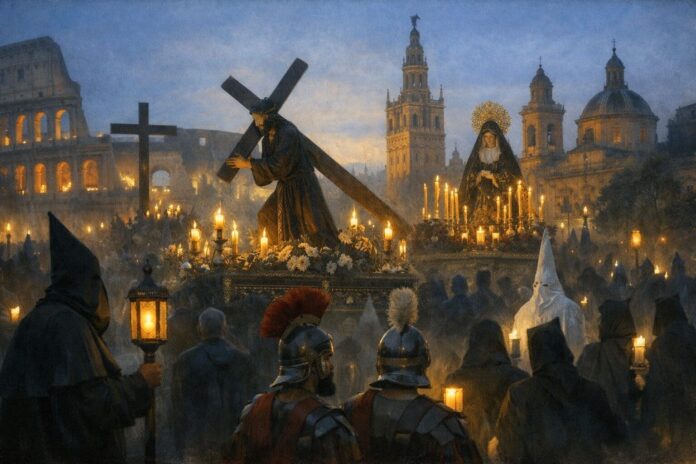
 الجمعة العظيمة 3 أبريل 2026يعد أحد أكثر الأيام احتفالًا في التقويم الكاثوليكي، ويتم الاحتفال به في جميع أنحاء أوروبا ليس فقط داخل الكنائس ولكن أيضًا في الشوارع. من طريق الصليب البابوي في روما إلى المواكب المضاءة بالموع في إسبانيا والبرتغال وإيطاليا ومالطا، تجمع هذه الأحداث بين الإيمان والتاريخ والفن والهوية المحلية. في حين أن أي […]
Originally published at Almouwatin.com
The 10 Catholic processions in Europe on Good Friday
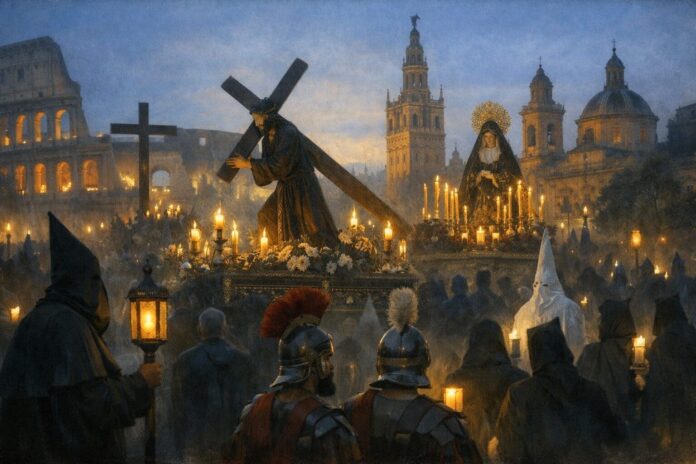
 Good Friday, April 3, 2026 is one of the most solemn days in the Catholic calendar and, throughout Europe, it is celebrated not only in churches but also in the streets. From the papal Via Crucis in Rome to the candlelight processions of Spain, Portugal, Italy and Malta, these events combine faith, history, art […]
Originally published at Almouwatin.com
The 10 Catholic processions in Europe on Good Friday
 Good Friday, April 3, 2026 is one of the most solemn days in the Catholic calendar and, throughout Europe, it is celebrated not only in churches but also in the streets. From the papal Via Crucis in Rome to the candlelight processions of Spain, Portugal, Italy and Malta, these events combine faith, history, art […]
Originally published at Almouwatin.com
Europe’s 10 Catholic Processions on Good Friday

Good Friday, 3 April 2026, is one of the most solemn days in the Catholic calendar, and across Europe it is marked not only inside churches but also in the streets. From the papal Via Crucis in Rome to the candlelit processions of Spain, Portugal, Italy and Malta, these events combine faith, history, art and local identity. While any “top 10” remains an editorial selection rather than an official Church ranking, the following list highlights some of the most notable Catholic processions in Europe this Good Friday based on their historic significance, public prominence and confirmed 2026 programming.
Holy Week in Europe is not uniform. In some places, such as Spain’s great Semana Santa traditions, processions dominate the urban landscape with confraternities, pasos and marching bands. In others, such as Rome or Braga, the emphasis falls more heavily on liturgical symbolism, silence and penitential devotion. Together, they show how Catholic public ritual continues to shape Europe’s cultural and spiritual landscape.
1. Rome, Italy — Via Crucis at the Colosseum
Rome stands at the top of the list because no Good Friday procession in Europe carries the same universal Catholic symbolism. The Holy See’s calendar for 3 April 2026 places the Way of the Cross at the Colosseum at 21:15, making it the most visible papal rite of the day and one of the best-known Catholic public devotions in the world.
2. Seville, Spain — La Madrugá into Good Friday
Seville remains Europe’s benchmark for Holy Week processions. The city’s official Holy Week programming confirms celebrations through 5 April 2026, with the most iconic moment being La Madrugá, the night leading into Good Friday. In those hours before dawn, Seville’s most revered brotherhoods cross the old city in one of the most emotionally charged public rituals in Catholic Europe.
3. Málaga, Spain — Good Friday through the historic quarters
Málaga earns its place for the scale and density of its Good Friday observance. According to the city’s official tourism information, processions from almost every historic quarter animate the city on this day, creating one of Spain’s largest and most visually striking Semana Santa experiences.
4. Trapani, Italy — Processione dei Misteri
Trapani’s official 2026 itinerary confirms the famous Processione dei Misteri begins at 14:00 on Good Friday and continues overnight into Holy Saturday. The long duration of the route, the sculptural groups depicting the Passion, and the deep local participation make Trapani one of the most distinctive Catholic processions in Europe.
5. Valladolid, Spain — General Procession of the Passion
Valladolid stands out not only for devotion but also for sacred art. The city’s Holy Week, highlighted by Spain’s official tourism portal, is especially known for its Good Friday Passion Procession, which gathers dozens of religious sculptures, many of them masterpieces from the 16th and 17th centuries.
6. Zamora, Spain — La Congregación
Zamora is often praised for the austerity and intensity of its Semana Santa. The official Spain tourism profile highlights Good Friday’s La Congregación procession as one of the city’s most moving moments, particularly the reverent encounter with the Virgin of Solitude. Zamora offers a quieter, more penitential atmosphere than Andalusia, but no less depth.
7. Braga, Portugal — Procissão do Enterro do Senhor
Braga is Portugal’s indispensable Good Friday destination. The city’s official Holy Week programme lists the Lord’s Burial Procession for 21:30 on Holy Friday, departing from the cathedral. Braga’s Holy Week combines solemn liturgy with rich baroque pageantry and remains one of the strongest Catholic public traditions in Portugal.
8. Enna, Italy — Good Friday confraternity procession
Enna, in Sicily, is one of Italy’s most intense Holy Week centres. According to Italy’s national tourism portal, thousands of confraternity members take part in the city’s Holy Week rites, with the Good Friday procession standing out for its torchlit atmosphere, slow pace and powerful penitential character.
9. Ferrol, Spain — Good Friday in Galicia
Ferrol represents northern Spain on this list and deserves wider European recognition. The city’s official Holy Week information presents it as Galicia’s most important Semana Santa celebration, with numerous processions and strong brotherhood participation. Good Friday remains one of its central days, especially for those seeking a less commercial but deeply rooted tradition.
10. Żebbuġ, Malta — Good Friday Procession
Malta’s island-wide Good Friday culture makes it a natural inclusion, and Żebbuġ is among the most notable examples for 2026. VisitMalta’s event listing confirms the solemn Good Friday procession at Saint Philip Parish Church on 3 April 2026. Malta’s processions are known for their strong local participation, devotional statues and highly theatrical but reverent atmosphere.
Faith, memory and identity in Europe’s streets
What unites these processions is not a single style, but a shared public language of remembrance. Rome offers universal papal symbolism. Seville and Málaga turn Holy Week into mass civic ritual. Valladolid and Zamora place art and austerity at the centre. Trapani and Enna preserve Sicily’s dramatic devotional heritage. Braga and Malta sustain traditions that remain deeply woven into local identity. On 3 April 2026, Good Friday once again turns large parts of Europe into an open-air expression of Catholic memory, grief and hope.
Why Most Businesses Are Structurally Unprepared for AI-Driven Search
AI-driven search is changing how content is evaluated, ranked, and delivered. While many businesses focus on adapting content
MIDDLE EAST LIVE 2 April: Civilian impact deepens as UN chief says ‘we must find a peaceful way out’ before region is engulfed by war
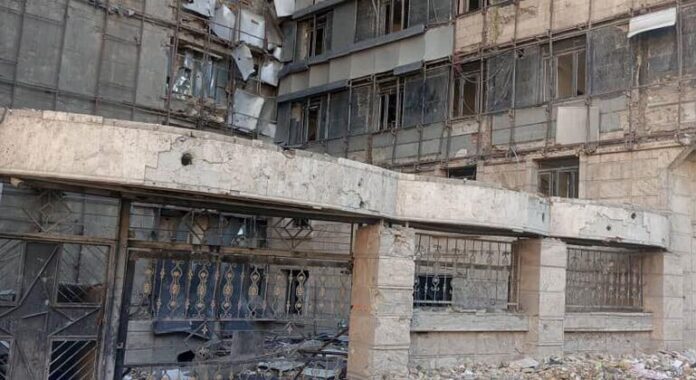
MIDDLE EAST LIVE 2 April: Civilian impact deepens as UN chief says ‘we must find a peaceful way out’ before region is engulfed by war
Guterres warns of ‘wider war’ as Middle East conflict enters second month
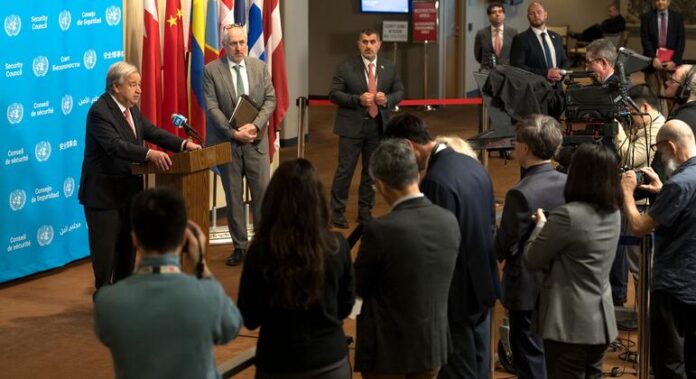
Speaking to the press outside the Security Council in New York, the UN chief painted a grim picture of the rapidly deteriorating situation, as Israel and the US continue to bomb Iran while Tehran carries out attacks on neighbouring Gulf States and threatens ships it deems hostile against using the crucial Strait of Hormuz.
“Every day this war continues, human suffering grows. The scale of devastation grows. Indiscriminate attacks grow,” Mr. Guterres stated, noting that the targeting of civilians and civilian infrastructure, as well as general perils to the world economy – especially the most vulnerable societies which depend on energy imports – are mounting daily.
Danger of a world at war
He emphasised that the impacts of the crisis are no longer contained within the region, pointing specifically to the severe disruptions surrounding freedom of navigation.
“When the Strait of Hormuz is strangled, the world’s poorest and most vulnerable cannot breathe,” he warned.
He noted that the consequences are already visible “in the daily lives of people struggling with rising food and energy costs from the Philippines…to Sri Lanka…to Mozambique.”
Shuttle diplomacy
To curb this escalating trajectory, the Secretary-General announced he is dispatching his Personal Envoy, Jean Arnault, to the region to assist in ongoing peace initiatives.
“The spiral of death and destruction must stop,” he implored, urging that diplomatic efforts be given the space and support to succeed.
Mr. Guterres stressed that any resolution must be anchored firmly in international law and the UN Charter.
He called for disputes to be settled peacefully, for the sovereignty and territorial integrity of all Member States to be respected, and for the protection of civilians and nuclear installations under threat in Iran and elsewhere as the war metastasizes.
Message to the US, Israel and Iran
Directly addressing the combatants, the Secretary-General declared: “To the United States and Israel, it is high time to stop the war that is inflicting immense human suffering and already triggering devastating economic consequences.”
Iran, he continued, must stop attacking its neighbours.
Reiterating that the Security Council has already condemned these attacks and reaffirmed the need to respect navigational rights in critical maritime routes, the UN chief reminded world leaders that the power to end the crisis lies in their hands.
“Conflicts do not end on their own,” Mr Guterres concluded. “They end when leaders choose dialogue over destruction. That choice still exists. And it must be made – now.”
Security Council: Gulf States decry Iranian attacks
The Middle East stands “at a dangerous precipice,” Assistant Secretary-General Khaled Khiari told the Security Council, which met on Thursday morning to discuss boosting cooperation between the UN and Arab States in the Gulf.
He condemned the attacks by the US and Israel on Iran and cited the demand – outlined in last month’s Council resolution 2817 (2026) – for an immediate end to all attacks by Tehran against Bahrain, Kuwait, Oman, Qatar, Saudi Arabia, the United Arab Emirates and Jordan.
The Secretary-General of the Gulf Cooperation Council (GCC), Jassim Albudaiwi, told ambassadors Iran had targeted vital civilian infrastructure, including airports, oil facilities, residential and commercial areas, fuel depots, service facilities and diplomatic missions.
“The GCC strongly condemns these blatant Iranian attacks, which constitute a flagrant violation of the sovereignty of GCC States”, as well as the principle of good-neighbourly relations, international law and the UN Charter, he stressed.
“GCC States do not seek war,” he insisted. “They seek the peace, security and stability that all peoples deserve.”
Follow speaker-by-speaker coverage in-depth on our Meetings Coverage website here.
Syria needs in spotlight
Needs meanwhile in Syria, remain immense, particularly after the return of some 180,000 nationals since the Middle East war erupted, along with 25,000 Lebanese.
Highlighting needs in Damascus and beyond, the UN’s top aid official, Tom Fletcher, said that both Lebanese and Syrian families have been fleeing “with virtually nothing”.
He also insisted that Syrians “are rebuilding…reopening markets, restoring services”.
Mr. Fletcher said that the UN’s humanitarian teams were on hand and constantly adapting to help the many people whose lives had been uprooted by the violence.
Ahead of Syria, Mr. Fletcher spent two days witnessing the devastating impacts of the conflict in Lebanon, where more than one million people have been displaced in a matter of weeks, amid ongoing Israeli and Hezbollah clashes, leaving “lives upended” and critical infrastructure “shattered”.
