
Thursday, March 26, 2026
Home Blog Page 111

From waste pickers to courtrooms: women demand a focus on gender at COP30

0

Women’s voices are rising with clarity and urgency, urging negotiators to ensure the conference leaves a lasting mark on the link between gender and climate policy.

At the heart of the discussions is Belém Gender Action Plan – a proposed plan that recognizes that climate change hits women harder and sets out measures for funding, training and leadership roles.

“Climate justice only exists when gender equality also exists,” says Ana Carolina Querino, Acting Representative of UN Women in Brazil, echoing a feeling heard in the rooms and on site since the opening of the summit last Monday, November 10.

If adopted, the plan would extend from 2026 to 2034, integrating gender-responsive approaches to just transitions, adaptation and mitigation strategies, as well as loss and damage mechanisms.

UN Info/Felipe de Carvalho

Nanci Darcolete is a self-employed waste picker from São Paulo and advocacy advisor for the Movimento de Pimpadores.

Waste pickers on the front line in reducing emissions

On the streets of São Paulo, Nanci Darcolete has been a waste picker since 1999.

Today, she runs Pimp My Carroça, an organization that fights for the rights of workers who turn discarded materials into resources, preventing mountains of waste from being thrown away or burned.

Waste pickers, she said, played a historic role at COP30 in showing how their work was reducing emissions and easing pressure on natural resources.

“We now understand how important it is for waste pickers to also work on composting organic waste,” she explains. “This will save municipalities money, provide income for harvesters and capture tons and tons of gas. [and] provide major mitigation by removing heavy pollutants from the environment.

Women at the head of the recycling chain

In Brazil, women make up most waste pickers and run most cooperatives. Yet they still face racism and gender-based violence on the streets, often while juggling caring for their homes and families.

For Nanci, climate change is making their work more difficult. Rising heat and flooding have hit low-income neighborhoods harder, adding strain to already difficult conditions. She wants the COP30 adaptation program to recognize waste pickers as “agents of transformation”, with better urban logistics, hydration points and paid contracts.

Litigation as a weapon for climate justice

Across the Atlantic, Portuguese lawyer Mariana Gomes, 24, uses law as what she calls “the most important tool” to fight the climate crisis. She founded Último Recurso, the group behind Portugal’s first climate litigation – which now leads more than 170 cases.

Mariana believes that litigation can turn promises into binding actions, especially after the International Court of Justice(ICJ) recent notice oblige States to act to keep global warming below 1.5°C.

“I think in the future we will see a lot of lawsuits against states, especially those that need to raise their ambitions, pass climate laws and align their goals with the targets set. Paris Agreement. Because now more than ever, we carry the weight of the International Court of Justice on our shoulders,” she told us.

UN Info/Felipe de Carvalho

Portuguese lawyer Mariana Gomes is a social entrepreneur and climate activist.

The right to a clean and healthy environment

Mariana argues that citizens can demand that their governments guarantee the right to a clean and healthy environment and a stable climate. In Portugal, she advocates for municipal climate action plans to help local authorities prepare for droughts, wildfires, floods and other disasters.

For her, adaptation and mitigation must recognize that climate disasters hit women harder, increasing the risks of gender-based violence, displacement and care burdens. Litigation, she says, can do more than reduce emissions or stop extractive projects, it can unlock funding and compensation for affected communities, protecting women’s rights.

UN NewsEastreport from Belémgiving you front row coverage of everything happening at COP30.

Originally published at Almouwatin.com

Now is the time for leadership and vision, Guterres tells G20 in South Africa

0

Now is the time for leadership and vision,” the UN Secretary-General António Guterres told reporters in Johannesburg on Friday, a day before the official opening.

The G20 bloc is made up of the world’s largest economies, although the United States has announced it will not officially participate.

This year’s summit highlights the need for climate adaptation and sustainable financing, under the theme “Solidarity, Equality and Sustainability”.

The UN chief is attending the summit to promote economic and climate action, as well as to end the spiral of conflict around the world.

“Unfortunately underrepresented”

Developing countries, particularly in Africa, suffer from shrinking fiscal space, a crushing debt burden and a failing global financial architecture, Guterres said.

He lamented that after decades of colonial rule, the continent remains “woefully underrepresented” in global institutions.

The G20 can help right this historic injustice and drive reforms that give developing countries – and Africa in particular – a real voice in global policymaking.and make global economic governance more inclusive, representative, equitable and effective in the years to come,” he said.

Economic action

Mr. Guterres called on the G20 to respect the commitments made in June during the Conference on financing for development in Sevillewhere countries promised to unlock more financing to stimulate sustainable growth.

This would involve tripling the lending power of multilateral development banks, reducing borrowing costs and allowing developing countries to mobilize their domestic resources.

Climate action

Countries have failed to keep temperatures at the 1.5 degree Celsius limit, Mr Guterres warned.

To avoid further climate chaos, the adaptation gap must be closed – urgently» and this requires an increase in funding, namely doubling adaptation funding to at least $40 billion this year.

He added that even though 90% of new electricity capacity comes from renewable energy and global investment in clean energy reached $2 trillion last year, only a negligible proportion went to Africa.

Africa should be at the heart of this clean energy revolution“, he insisted.

Action for peace

Listing some of the world’s most devastating conflicts, including in Sudan, the Democratic Republic of Congo, Ukraine and Gaza, Guterres called on G20 members to use their influence to end the fighting.

Everywhere – from Haiti to Yemen to Myanmar and beyond – we must choose a peace anchored in international law“, he concluded.

Originally published at Almouwatin.com

World news in brief: Violence against Haitian women, WHO alert on support for survivors around the world, Youth Activists Summit marks hope in the face of hatred

0

“Sexual violence accounted for just over half of the cases (around 3,700) and almost two-thirds of them involved gang rape (around 2,500),” he added.

Alarming levels of GBV persist in Haiti, but survivors and those at risk face very limited access to essential support due to insecurity, logistical challenges and funding gaps, the Office for the Coordination of Humanitarian Affairs (Office for the Coordination of Humanitarian Affairs) has warned.OCHA).

Financing gaps

Due to budget cuts, the UN and its partners were only able to reach seven percent of the 833,000 people they aimed to help, Dujarric reported.

The response remains seriously underfunded, with an overall shortfall of $13.5 million, or 70 percent of the more than $19 million needed for this year.

Despite these constraints, between January and February, the UN and its partners scaled up vital services, reaching those most affected, through more than 32,000 awareness sessions. Around 560 frontline workers also received training.

WHO warns of lack of support for survivors

Many girls and women who survive gender-based violence around the world are disappointed when they seek medical help – often because systems are not in place to provide them with what they need – the World Health Organization (WHO) said Thursday.

In a new report from the European office of the United Nations agency, it is indicated that almost three in ten women and girls over the age of 15 will be victims of physical and/or sexual abuse in the region.

Health services “are often the first – and only – point of contact for survivors”, and yet essential support is not provided, particularly post-rape services and access to safe abortion, which are urgently needed, maintains WHO.

According to data from 53 European countries, only seven offer safe abortion services, the agency found.

Policies in place are essential

WHO’s Melanie Hyde said that when looking at the different needs of sexual assault survivors, only 40 percent of member states in the European region have these provisions at the policy level: “What we’re seeing is that if it’s not in the policy, then it’s not going to be at the front line. »

The WHO describes this as a public health crisis that has a significant negative impact on individuals in terms of mental and physical health, but also on families and society.

Youth Activist Summit celebrates hope over hate and ‘humanity over hostility’

Finally, some welcome the good news from Thursday’s youth summit in Geneva, where activists shared their positive stories of change, which have helped tens of thousands of people around the world.

Among the inspiring figures at this year’s Youth Activist Summit was Marina El Khawand, who created a global platform for surplus medicines from scratch.

She made the decision following the deadly Beirut port explosion in 2020, when she struggled to find prescription medication for an elderly survivor who needed it to breathe properly.

Good Samaritan

Marina’s lightbulb moment came after she searched several pharmacies without success, before asking for help on her social media account.

Within hours, a stranger donated 12 boxes and it didn’t take long for her online platform – Medonations – to spring up, she said. UN News:

“The moment I took the first box of the 12 boxes that I hold in my hand, she cries because she saw her basic right to health, which is her medicine. It is the only thing that can keep her alive and make her breathe like it is the happiest and saddest moment.”

Young people lead change

Marina shared her story at the summit with four other young activists from Brazil, Ivory Coast, India and Japan, each with their own solutions for driving global change.

Representing the UN, communications chief Melissa Fleming urged the young audience and everyone online to turn the noise and negativity of social media into action, creativity and hope.

“Movements don’t start with institutions, they start with individuals,” she said, before encouraging everyone to register their actions on the UN Act Now campaign app, as 28 million people around the world have already done.

Originally published at Almouwatin.com

Security Council LIVE: Spotlight on rising casualties in Ukraine

0

THE Security Council is holding a rare open briefing on Ukraine after days of deadly Russian attacks on civilian areas and amid a renewed U.S. mission to kyiv seeking a peace deal. As attacks on energy infrastructure increase and the number of civilian casualties increases, Council members demanded answers and action. Can the Council increase pressure on veto-wielding Moscow, provide better protection and aid to civilians, and work toward an elusive ceasefire? Follow live below, find full coverage of UN meetings here; UN News app users you can click here.

Originally published at Almouwatin.com

Can industrial growth and climate action go hand in hand?

0

In Namibia’s Daures region, a bold experiment aims to prove that economies can create jobs without fossil fuels.

Once completed, the Daures Green Hydrogen Village will sustainably produce hydrogen and ammonia from renewable sources, which will be used to make the country’s first carbon-free green manure, reducing the need for imports.

The project is designed to benefit the wider community, with training in horticulture and crop production, as well as a solar-powered tomato paste processing plant to add value to local fresh produce and create more local jobs. More than 1,000 people are expected to benefit from sustainable employment and food security.

Projects like this are part of a broader effort to rethink the industry for a low-carbon future.

© Village Vert Hydrogène de Daures

Photo of the Village Vert Hydrogène de Daures website

What UNIDO does and why it matters

The Daures Hydrogen Green Village is just one example of how the United Nations Industrial Development Organization (UNIDO) works with countries of the South to achieve inclusive and sustainable industrial development.

Countries as diverse as Costa Rica and Morocco benefit from UNIDO assistance Global Program for Hydrogen in Industry (GPHI)which helps overcome obstacles and develop a fair and sustainable economy focused on green hydrogen.

Since its creation in 1966, UNIDO has championed inclusive and sustainable industrial development as a cornerstone of economic and social progress.

© Village Vert Hydrogène de Daures

Agronomy training sessions organized as part of the project in partnership with the Accelerate-2-Demonstrate mechanism implemented with UNIDO.

A transformation platform

From November 23 to 27, the UN agency will have the opportunity to show how it fulfills its mission of supporting developing countries and emerging economies in building and transforming their industries, at the Global Industry Summit in Riyadh, Saudi Arabia.

As the countdown begins for Riyadh, expectations are high for bold commitments and partnerships that can drive a just global economy, anchored in sustainability, equality and shared prosperity.

The conference will also address gender equality and women’s empowerment, UNIDO’s role in a reformed United Nations development system, as well as discussions on financing and digital platforms for monitoring results.

Things to watch out for at the Summit

The event, hosted at the King Abdulaziz International Conference Center, will include three days of thematic forums on critical issues:

  • Investment and Partnership Day – highlighting international cooperation and artificial intelligence as drivers of industrial transformation,
  • Women’s Empowerment Day – showcasing women’s leadership in shaping the future of the industry,
  • Youth and Young Talent Day – focused on creativity and entrepreneurship of the next generation.

Originally published at Almouwatin.com
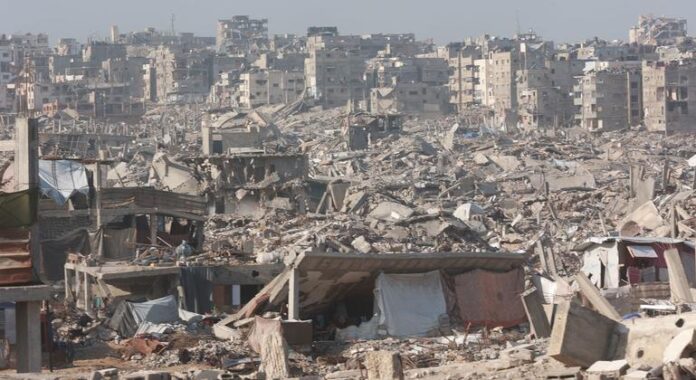
Gaza: Two children killed every day during fragile ceasefire, says UNICEF

0
Gaza: Two children killed every day during fragile ceasefire, says UNICEF

“Yesterday morning, a baby girl was reportedly killed in Khan Younis by an airstrike, while the day before, seven children were killed in Gaza City and the south,” said Ricardo Pires, spokesperson for the UN Children’s Fund, UNICEF.

What to know

  • UNICEF says 67 children have been killed during the ceasefire.
  • 280 Palestinian deaths and 672 injuries reported since the pause began.
  • Families face extreme food shortages despite some market activity.
  • Gaza’s health system is collapsing, leaving children without care.
  • About 4,000 children need urgent medical evacuation.

In an update, Mr. Pires told journalists: “There’s only one side party to the conflict in Gaza with the firepower to do airstrikes.”

Since 11 October, the first full day of the pause in hostilities between the Israeli military and Hamas fighters, at least 67 children have been killed in “conflict related incidents”, the UNICEF spokesperson noted.

His comments came as NGO Doctors Without Borders reported that a nine-year-old girl is receiving treatment for facial wounds after gunfire from quadcopter drones was reported on Wednesday.

Hundreds killed and injured

According to UNICEF, at least 67 children have been killed in “conflict-related incidents” since the Hamas-Israel pause in hostilities was announced on 10 October, at a rate of two a day.

Veteran UN aid worker Dr Rik Peeperkorn from the World Health Organization (WHO) echoed those concerns, adding that “although there’s a ceasefire, people still get killed”.

Latest Gaza Ministry of Health data indicates that 280 Gazans have been killed and 672 injured since the ceasefire, in addition to 571 bodies recovered from the rubble.

Alongside the ongoing insecurity, UN aid teams including the World Food Programme (WFP) continue to push for greater access to Gazans, including hundreds of thousands of displaced and extremely vulnerable families.

Trucks entering, ‘step in the right direction’

The agency is now sending approximately 100 trucks per day into the enclave loaded with relief supplies, which is almost two-thirds of its daily target amount – “a step in the right direction” – said Abeer Etefa, WFP Senior Spokesperson for the Middle East, North Africa and Eastern Europe.

She noted that although deliveries from the commercial sector are also crossing into Gaza, the main problem for UN and non-UN actors “is the fact that a lot of these food supplies stay in border crossing points for long days and therefore you know the possibility of them going bad is high.”

From inside Gaza, WFP Head of Communications in Palestine Martin Penner described the dire situation confronting the enclave’s exhausted people, after more than two years of war.

“One woman told us that she feels like her whole body is crying out for different kinds of food, different from the canned food and the dry rations that people have been living on for two years,” he said.

Prices ‘out of reach’

Markets are returning to Gaza stocked with food too, “but prices are still out of reach for most people,” Mr. Penner insisted. “A chicken costs $25, a kilo of meat $20. So many people still rely on food aid, food parcels, bread from bakeries.”

One mother told him that she did not take her children to market “so that they won’t see all the food that’s available…If they go near the market, she tells them to cover their eyes.

Another woman in the same town said she buys one apple and divides it between her four children.”

Meanwhile, healthcare provision in the Gaza Strip remains devastated and inadequate to treat trauma victims and those requiring specialist care.

“Gaza’s doctors tell us of children they know how to save but cannot,” said UNICEF’s Mr. Pires, who reeled off a list to journalists of youngsters “with severe burns, shrapnel wounds, spinal injuries, traumatic brain injuries, children with cancer who have lost months of treatment. Premature babies who need intensive care. Children who need surgeries that simply cannot be done inside Gaza today.”

Around 4,000 children are still waiting to be evacuated, including two-year-old Omyma “whose heart is failing because of a congenital issue doctors in Gaza cannot treat. She needs surgery urgently to save her life,” Mr Pires noted.

Source link

Inside Europe’s Shift to Climate- Neutral Farming

0

Climate KIC role in reshaping the future of farming in Europe.

Rising temperatures, longer droughts and erratic rainfall are testing even the most resilient food systems. At the same time, farmers across the continent are proving that transformation is both necessary and already underway.

Since 2022, Climate KIC has played a key role in ClieNFarms, a project funded under the EU’s Farm to Fork Strategy, which forms part of the European Green Deal and aims to make Europe’s food systems fair, healthy, and environmentally sustainable. Bringing together partners from across Europe and beyond, including one in New Zealand, ClieNFarms tests and scales practical solutions for climate-neutral and climate-resilient agriculture in a wide range of farming systems, from Mediterranean arable crops to Oceanic dairy and beef farms.

As it prepares for its final conference in Brussels this November, the project is sharing what three years of fieldwork have revealed: that systemic, farm-level innovation can drive meaningful change across the entire food system.

A network for transformation

The project’s demonstration approach, known as the Innovative Systemic Solution Space (I3S), brings together demonstration farms, advisors, researchers, financial actors and supply-chain partners to co-develop and test new approaches in real conditions. Each I3S operates as a ‘living lab’, where farmers and local stakeholders experiment with solutions tailored to their specific context. The aim is simple but ambitious: to connect technical, organisational and financial innovation so that climate-smart farming becomes economically viable and widely replicable.

Cutting emissions in practice

Across twenty demonstration sites, farmers have been testing a range of practices that together point the way to lower-carbon, more resilient food systems. 

  • In Portugal’s Alentejo region, trials at the Outeiro demonstration farm are sowing biodiverse strips of legumes and grasses between olive-tree rows. The aim is to revive tired soils that have been compacted by machinery and to bring back pollinators that keep orchards productive. Early results point to richer vegetation, better rainwater infiltration and fewer erosion losses, gains that make groves more resilient to both drought and heavy rain.
  • Further north, in south-west France’s Lauragais plain, farmers are experimenting with almost permanent soil cover between cash crops. Rotations of summer grasses and winter legumes are expected to cut fertiliser use and build organic matter, locking carbon in the ground instead of the air. The approach also avoids herbicides such as glyphosate by destroying cover crops mechanically, which shows that low-input farming can still be efficient.
  • In the United Kingdom, researchers at the GWCT Allerton Project are testing biochar made from farm residues. When added to soil, this carbon-rich material could store atmospheric carbon for centuries while improving water retention and fertility, turning hedge cuttings and crop waste into a long-term climate asset.

Each practice is modest on its own, but together they provide a blueprint for farms that emit less, store more carbon and remain productive in the face of climate change. 

Circularity and resource efficiency

The project has also explored circular uses of waste streams and renewable energy. 

  • In the United Kingdom, the University of Leeds is testing the N₂ slurry processor, which uses electricity to turn animal manure into a more stable, nutrient-rich fertiliser called Nitrogen Enriched Organic (NEO). The process traps nitrogen that would otherwise escape as ammonia or methane, cutting odours and greenhouse-gas emissions while reducing the need for synthetic fertiliser. Its full climate benefit depends on using renewable power to run the system.
  • While in Romania, researchers at the National Institute for Animal Biology and Nutrition (IBNA) are exploring how local oilseed by-products, known as oilseed cakes, can be used as a natural feed supplement for small ruminants. These high-lipid residues could cut methane emissions from digestion by up to 15 per cent while improving milk quality. And because the material is locally sourced, it also supports circular farming and reduces reliance on imported feed.

These solutions contribute to climate neutrality by reducing imported inputs, closing nutrient loops and valuing by-products that would otherwise go to waste.

Scaling trust, as well as tools

ClieNFarms is not only about testing techniques. Its strength lies in showing how innovations can spread. Through its Scaling Toolbox, developed by Climate KIC alongside project partners, a framework has been designed to help farmers, investors, advisors and policymakers turn local success into wider transformation.

The toolbox brings together methods for analysing barriers, building value chains and developing roadmaps for change – all grounded in three essentials: value, risk and trust. For farmers, it means instilling the confidence that new practices will pay off. For financial institutions, it means credible pathways to invest in transition. And for regional authorities, it means policy instruments that enable collaboration rather than fragmentation.

Alongside the toolbox sits the Solutions Catalogue, an open repository of farm-tested measures from across Europe, and new business models co-developed with companies such as Nestlé and Friesland Campina. These models explore how the food industry can reward climate-smart practices within supply chains, linking farm-level mitigation to market incentives.

Join the movement for resilient, regenerative food systems

Climate KIC building a movement for resilient, regenerative food systems by bridging the gap between policy, innovation and practice. From supporting farmers in adopting climate-smart agriculture and renewable-energy solutions, to facilitating dialogue between policymakers and practitioners at the European Carbon Farming Summit, Climate KIC is demonstrating that sustainable agriculture is practical, scalable and economically viable.

Discover more

Source link

Civilian deaths in Ukraine exceed last year’s toll as winter deepens crisis, Security Council warns

0

“Ukrainian civilians continued to bear the brunt of the Russian Federation’s growing air campaign,” said Kayoto Gotoh, UN Europe director. Department of Political and Peacebuilding Affairs (DPPA).

She made her briefing to the Council against the backdrop of sustained missile and drone strikes, including a barrage Wednesday evening that killed at least 25 people.

Despite the escalation of violence, Gotoh noted that the UN has helped more than six million people with electricity, heating, water and sanitation services.

She also highlighted the breakthrough made last month by the United Nations International Atomic Energy Agency (IAEA), which obtained an agreement from both parties to reconnect the Zaporizhzhia nuclear power plant to the network.

No region is spared

While most civilian casualties occur near the front line, Russia’s increasing use of long-range weapons is exposing more of the country to danger. Describing Wednesday’s assault as one of the “deadliest of the war”, Ms Gotoh said the western regions of Lviv and Ivano-Frankivsk were also hit. “No region in Ukraine is safe“, she warned.

Alarming figures in terms of victims underline the scale of the crisis. The number of civilians killed in kyiv at the end of October was almost four times higher than in all of 2024.and the total number of victims nationwide has already exceeded last year’s number.

According to the UN human rights office (OHCHR), 14,534 civilians – including 745 children – have been killed since the start of the war.

Russia is also suffering the growing consequences of the conflict: Ukrainian drone strikes reportedly killed 392 people, including 22 childrenaccording to Russian authorities. The UN has not been able to verify these figures.

Under voltage

Some 3.7 million Ukrainians remain internally displaced and nearly six million are refugees, said Edem Wosornu, director of operations and advocacy at the U.N. aid coordination office. OCHA.

This year alone, around 122,000 people have been displaced, mainly from frontline areas.

Aid workers continue to operate under constant threat of bombing, shifting battle lines and other security risks.

“We continue to call for the protection of civilians and civilian infrastructure, including humanitarian and medical personnel and assets,” Ms. Wosornu said.

She warned that the serious underfunding of the 2025 Humanitarian Response Plan is already reducing essential services, leaving 72,000 displaced people without adequate shelter, limiting specialist support for survivors of conflict-related sexual violence, and interrupting essential programs for more than 600,000 women and girls.

For complete coverage of all major meetings at UN Headquarters, see our Meetings Coverage Sectionand we have live, in-depth coverage of key country statements today here on the main page of UN News.

Originally published at Almouwatin.com

Various provisions in social matters

0

The Council of Ministers approved a preliminary draft law containing various measures in execution of the government agreement, in the strategic area of ​​social affairs. Source link

Originally published at Almouwatin.com

Security Council veto is ‘model’ of global impasse, says Baerbock

0

The UN was founded to “save future generations from the scourge of war,” Baerbock said, but the world body struggles to fulfill that mandate when the Council is vetoed of one of its five permanent members: China, France, Russia, United Kingdom and United States).

Real people, watching in real time, can question the credibility and legitimacy of not only the Security Councilbut of the UN as a whole“, she told the Member States.

State of play

Ms. Baerbock noted that the Council was paralyzed on “the most devastating conflicts,” including the crises discussed earlier in the week.

The veto initiative

Baerbock pointed to the Assembly’s veto initiative as one way members are trying to respond.

  • This requires an assembly debate each time a veto is issued in the Council.
  • This allows the UN to show that “even in the face of a blockage in the Council”, it still hears “the desperate voices of those affected by these conflicts”.
  • She highlighted the recent New York Declaration on the Palestinian question, supported by 142 Member States, as proof of strengthened interregional cooperation.

What she says

Ms Baerbock urged the Assembly to consider expanding its role:

  • Should new tools be developed to “complement” the Initiative?
  • Should the Assembly make recommendations to the parties to the conflict – or even to the Council – “if the Council is unwilling or unable to act”?
  • These questions, she said, highlight the need to view the United Nations “not just as one body, but as one a family together“.

Between the lines

Ms Baerbock acknowledged it was “regrettable” that the Initiative was necessary, as it reflected a deeper dysfunction within the global body. But she stressed that it provided crucial space “to intervene when needed; to hold us accountable, for ourselves and for others; to demonstrate our intention and act.”

Real-world consequences

Ms. Baerbock’s call to action is not just theoretical: vetoes have had profound consequences on people’s lives. For example, in June 2025, the The United States vetoed a Security Council resolution this would have required an “immediate, unconditional and permanent ceasefire” in Gaza – a text supported by 14 of the 15 members. The United States defended its actions by saying the draft resolution submitted to the Council did not condemn the actions of Hamas fighters in October 2023, who attacked and killed some 1,200 Israelis, sparking the current war.

Similarly, in February 2025, Russia vetoed amendments to a European-backed resolution on Ukraine, including one explicitly calling for respect for Ukraine’s sovereignty and another for a just and lasting peace, in line with the United Nations Charter. Russia launched its full-scale invasion of Ukraine on February 24, 2022.

Context: the Veto initiative

Created in April 2022 By General Assembly resolution, the Initiative requires the Assembly to meet within 10 working days of any veto in the Security Council. It does not override the veto, but guarantees a public and responsible debate on each use and its implications.

Originally published at Almouwatin.com