Parliament is ready to negotiate with EU governments on the final shape of the new rules governing the entire battery product life cycle, from design to end-of-life.
During the debate on Wednesday, MEPs underlined the crucial role that batteries have in the transition to a circular and climate-neutral economy and for the EU’s competitiveness and strategic autonomy. The draft legislation was adopted on Thursday 10 with 584 votes in favour, 67 against and 40 abstentions.
MEPs are in favour of overhauling the current legislation to take into account technological developments.
They propose stronger requirements on sustainability, performance and labelling, including the introduction of a new category of “batteries for ‘light means of transport’ (LMT)”, such as electric scooters and bikes, and rules on a carbon footprint declaration and label. By 2024, portable batteries in appliances, such as smartphones, and batteries for LMT must be designed so that consumers and independent operators can easily and safely remove them themselves, MEPs say.
According to the adopted position, industry should ensure that the battery value chain complies fully with human rights and due diligence obligations, thus addressing risks around the sourcing, processing and trading of raw materials, which are often concentrated in one or a few countries.
The report also sets minimum levels of recovered cobalt, lead, lithium and nickel from waste for reuse in new batteries and more stringent collection targets for portable batteries.
More details on specific requirements can be found here.
Quote
Rapporteur Simona Bonafè (S&D, IT) said: “For the first time in European legislation, the Battery Regulation lays down a holistic set of rules to govern an entire product life cycle, from the design phase to end-of-life. This creates a new approach to boost the circularity of batteries and introduces new sustainability standards that should become a benchmark for the entire global battery market. Batteries are a key technology for fostering sustainable mobility and for storing renewable energy. To achieve the objectives of the Green Deal and to attract investment, co-legislators need to swiftly adopt clear and ambitious rules and timelines.”
Background
In December 2020, the Commission presented a proposal for a regulation on batteries and waste batteries. The proposal aims to strengthen the functioning of the internal market, promoting a circular economy and reducing the environmental and social impact throughout all stages of the battery life cycle. The initiative is closely linked to the European Green Deal, the Circular Economy Action Plan and the New Industrial Strategy.
Humanitarians are deploying extra staff across Ukraine to aid the growing number of civilians sheltering from Russian bombardment, or fleeing the violence, the UN Spokesperson said on Thursday.
Stéphane Dujarric told correspondents at the daily briefing in New York that an estimated 1.9 million Ukrainians have been internally displaced, while more than 2.3 million have now crossed the western border in search of safety, according to the UN refugee agency, UNHCR.
“Three things are critical in the short term, as Emergency Relief Coordinator Martin Griffiths has stressed: civilians, whether they stay or leave, must be respected and protected; safe passage is needed for humanitarian supplies; and we need a system of constant communications with parties to the conflict”, said Mr. Dujarric.
“In terms of response, humanitarian organizations are deploying additional staff across the country and are working to move supplies to warehouses in different hubs within Ukraine and outside.”
Half a million reached
He said the UN and partners had reached more than 500,000 people with some form of humanitarian assistance in Ukraine so far, including life-saving food, shelter, blankets, and medical supplies.
And he added that if greater humanitarian access can be secured – depending on the willingness of Russian forces – “we are set to reach much higher numbers given the scope and scale of the humanitarian operations being currently deployed.”
UNHCR reports that by the end of yesterday, it had delivered 85 metric tons of humanitarian assistance to reception and transit centres in Vinnytsia in central Ukraine, which is hosting those who have fled hostilities further east.
Mr. Dujarric said the World Food Programme (WFP) was “deeply concerned about the impact of conflict on Ukraine’s food security and the waning ability of families in embattled areas, to feed themselves.”
‘Race against time’
WFP plans to assist up to 3.1 million, with a focus on supplying cities inside Ukraine with bulk food, bread, and food rations.
“With consignments of food assistance arriving every day, WFP is in a race against time to pre-position food in areas where fighting is expected to flare”, said the UN Spokesperson.
Meanwhile, the UN Food and Agriculture Organization (FAO) warns that the coming weeks will be critical, as farmers will need to prepare land for sowing vegetables in the middle of March. Ukraine is one of the world’s biggest suppliers of grain for export.
Between February and May, Ukrainian farmers would normally be preparing land for planting wheat, barley, maize, and sunflowers. FAO is stressing that all efforts should be made to protect harvests and livestock, during the intense and growing conflict.
The basement of a perinatal centre in Kyiv has been turned into a makeshift maternity ward amidst the escalating conflict in Ukraine.
Protecting children
The UN Children’s Fund UNICEF, said on Thursday that more than one million children have now fled Ukraine. To protect and sustain those who remain, who can be reached, six trucks carrying nearly 70 tons of supplies have arrived, Mr. Dujarric reported, including personal protection equipment and medical, surgical and obstetric kits.
“Working with its partners, UNICEF teams in Ukraine will be delivering medical supplies to 22 hospitals in five different conflict-affected areas in the country, to benefit 20,000 children and mothers.
“Across the border, three trucks were sent from Copenhagen – which is UNICEF’s warehouse in Europe and the largest humanitarian hub in the world – and those trucks were carrying essential supplies, such as early childhood development, recreational and hygiene kits. These supplies have now arrived in Poland.”
Health supplies pipeline
The World Health Organization (WHO), has delivered 81 metric tons of supplies and is establishing a pipeline of supplies for health facilities across Ukraine, he noted.
WHO has also released $10.2 million from its Contingency Fund and deployed staff to provide more essential care to exhausted and devastated refugees fleeing their homeland.
Appeal for Ukraine
The Ukraine Flash Appeal 2022 has received $109 million so far, which represents 9.6 per cent of what is needed. The appeal which was launched by the Secretary-General on 1 March, requires $1.1 billion for a three-month period for humanitarian response inside Ukraine.
“As we have said we encourage the donors who made generous pledges to release the money quickly and report their contribution to OCHA’s Financial Tracking Service”, said Mr. Dujarric.
If you want to make a donation to help the work of the UN and partners in Ukraine, please go here, to the UN crisis relief page for the country
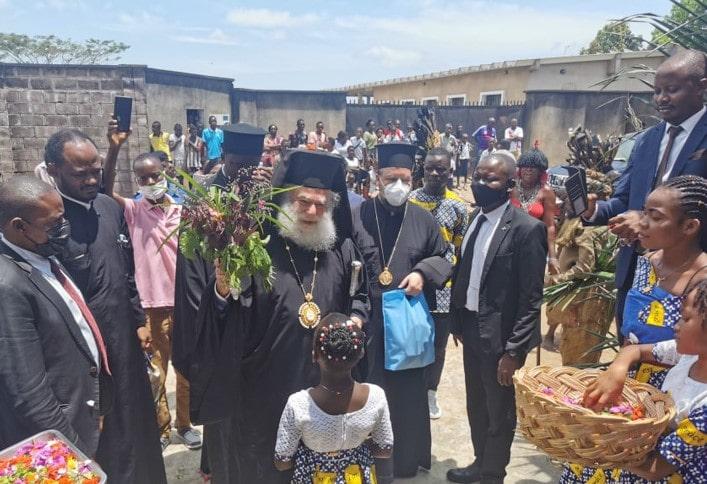
The head of the Patriarchate of Alexandria, Patriarch of Alexandria and All Africa Theodore II, has been visiting the Democratic Republic of the Congo since March 4 this year. His associates call the visit a “missionary tour” and it is undoubtedly linked to tensions among Orthodox Christians on the African continent following the actions of the so-called Exarchate of the Russian Orthodox Church – Moscow Patriarchate over the past two months. Everywhere patr. Theodore was greeted very warmly by the clergy and the people, who with their inherent enthusiasm greeted their spiritual father – the head of the Alexandrian Church. The ambassadors of Greece and Egypt, as well as senior representatives of the Congolese state were present.
A conference of clergymen from DR Congo and Congo-Brazzaville was also held, at which the unity of the Orthodox around the Patriarchate of Alexandria was attested.
Meanwhile, the Patriarchate of Alexandria has ordained new bishops in its extensive diocese, including Africans. And the current patriarchal visit is also dedicated to the establishment in the diocese of Kinshasa of the new Metropolitan Theodosius (Chichivos, a native of northern Greece). Until January this year, he was Metropolitan of Kananga (ordained in 2018), and after the death of COVID-19 of Mitr. Nicephorus was transferred to the capital’s diocese last summer.
Patriarch Theodore also appointed two of his deputies in dioceses that did not yet have their own bishops: Archim. Polycarp (Diamandopoulos, missionary, originally from Thessaloniki, Greece) for the diocese of Kisangani in Central Congo and archim. Timothy (Oak, Congolese) for the diocese of Goma in the eastern part of the country, one kilometer from the border with Rwanda.
The patriarch also appointed an archimandrite, Chrysostom (Kamuanga, Congolese), as abbot of the small monastic community at the temple of the Faculty of Theology at the Orthodox University of Kinshasa.
Both the patriarch and the local bishops and clergy of the Patriarchate of Alexandria spoke in their speeches about the anti-canonical incident of the Moscow Patriarchate’s invasion of Africa, condemning this spiritual invasion and expressing their desire to preserve the unity of Orthodox Christians in the continent. the ancient apostolic throne of St. Mark the Evangelist.
Reference: The Democratic Republic of the Congo (called Zaire in 1971-1997, formerly the Belgian Congo; not to be confused with the Republic of the Congo, also known as the Congo – Brazzaville and formerly the French Congo) is located in Central Africa. . The equator also passes through it. It is the second largest African country with a population of 75 million, making it the largest Francophone country in the world. The population of the capital Kinshasa is already 10 million. DR Congo is considered the richest country in the world in terms of natural resources, but unfortunately has the lowest per capita income.
The majority of Orthodox believers in the Patriarchate of Alexandria in DR Congo are local Africans who have converted to Orthodoxy in the last sixty years as a result of missionary work, primarily in Greek, but also in Cypriot and Finnish Orthodox brothers and sisters, respectively supported. entirely from their Orthodox churches. Congo can be called a Christian country, but we must know that two-thirds of the population is Roman Catholic and one-third Protestant, so the Orthodox are a minority. Orthodoxy in this country, as in other African countries, was “brought in” by Greeks who went there as entrepreneurs before decolonization in the 1960s. However, clergy who periodically visited small Greek communities gradually began to attract in the Orthodox faith of the local population. No one is now committed to estimating the number of Orthodox in the DRC, but it is estimated that there are tens of thousands, no matter how insignificant compared to its entire population. Due to the great distances of the Orthodox parishes in the country, new dioceses have been established in recent years and now, in addition to the capital Kinshasa, there are bishops in the cities of Kananga and Lumumbashi (Katanga region) to better care for Orthodox Congolese. For the same purpose, during his current visit, Patriarch Theodore appointed both of his deputies: archimandrite Polycarp for the bishopric of Kisangani and archimandrite Timothy – for the diocese of Goma. It should be noted that the priests are mostly local, and Africans are already being ordained bishops in order to overcome the criticism that leadership is exercised only by Europeans.
A team of scientists will use advances in high-energy physics to scan the Great Pyramid of Cheops at Giza using cosmic ray muons.
The researchers want to look deeper into one of the seven wonders of the world and map the object’s internal structure. The project is called Explore the Great Pyramid (EGP). During the mission, scientists will use muon tomography. The difference between EGP and the previous project, ScanPyramids, is that the new system of muon telescopes will be 100 times more powerful.
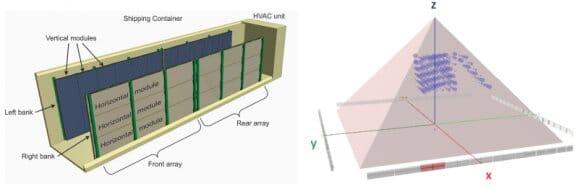
EGP will use very large sensors that will move to different points outside the pyramid. The detectors will be assembled in temperature controlled shipping containers for easy transport. Each will be 12m long, 2.4m wide and 2.9m high. In total, the project will involve two muon telescopes.
Cosmic ray muons are created when high-energy particles known as cosmic rays crash into Earth’s atmosphere. Cosmic rays are fragments of atoms – high-energy protons and atomic nuclei – that constantly fly from the Sun to Earth and out of the galaxy. When these particles collide with the Earth’s atmosphere, the collision produces streams of secondary particles. Some of these particles are muons.
Muons are unstable and decay in just a couple of microseconds (millionths of a second). But they move at a speed close to the speed of light. This allows them to penetrate deep into the object. There is an endless source of muons from cosmic rays that constantly bombard the Earth. The task of muon tomography is to efficiently measure particles.
Muon tomography is used in a variety of applications, such as checking shipping containers for contraband. Recent technological innovations in muon tomography increase its power and lead to new applications. For example, scientists in Italy will use muon tomography to image the interior of Mount Vesuvius, hoping to understand when it might erupt again.
Photo: On the left is an illustration of the containers that make up the telescope. On the right is an illustration of how the telescope will be set up in place.
Credit: Mission “Explore the Great Pyramid”, Bross et al. 2022
Russia has banned the export of more than 200 products and equipment produced abroad by the end of the year as part of Moscow’s response to sanctions imposed over the conflict in Ukraine.
The measure applies to goods and equipment that were previously imported into Russia from abroad.
“The list includes technological, communication and medical equipment, vehicles, agricultural machinery and electrical equipment – a total of more than 200 types of goods,” said an order signed by Russian Prime Minister Mikhail Mishustin.
“This measure is necessary to ensure the stability of the Russian market,” the order said.
The measure will affect all foreign countries, but exceptions may be made for members of the Moscow-led Eurasian Economic Union and Georgia’s breakaway regions of South Ossetia and Abkhazia.
In addition, the government has banned the export of “certain types of timber” to countries that have “committed hostile acts” against Russia. The list includes 48 countries, including EU and US countries.
Russia accounts for one-fifth of the world’s forests, and further use of this resource could help the country reduce its economic dependence on oil and gas.
People have been discussing the idea of colonizing Mars for a long time and are already taking steps in this direction – after all, the Red Planet is relatively close to Earth and even looks a little like it. With Mercury, the situation is different. “High-tech” tells how real it is to live on this planet and why it is needed.
The very idea of living and working on Mercury may seem like a surreal science fiction story. However, this idea is based on scientific facts – with the right technologies and solutions for life, humans can populate this planet. The correct strategy will even allow its residents to support themselves on their own.
For example, the local economy can be built around “adventure tourism” as well as mining and energy. Mercury is rich in ore and precious metals, and its proximity to the Sun provides it with a huge amount of stellar energy.
However, before building an economy, you need to understand how to live in this hostile environment. Here’s what can get in the way.
Extreme temperatures
Despite the fact that Mercury is closest to the Sun, it is not the hottest planet (this title belongs to Venus). The thing is that it almost never had and does not have an atmosphere, with the exception of a thin exosphere. It consists of atomic oxygen and hydrogen, sodium, magnesium, helium and other minerals in tiny amounts. However, the pressure on the planet does not exceed 5 x 10-15 bar (0.005 picobar). For comparison, this is one trillionth of the Earth’s atmospheric pressure (altitude – sea level). Because of this, Mercury does not retain heat from the Sun and suffers from sudden changes in temperature. What does it look like?
The side facing the Sun heats up to 427 ° C, and the “night” side cools down to –173 ° C. However, because of the orbit, these day and night extremes last for months! By the way, about the orbit. She is one of the most eccentric in the solar system. Due to its elliptical shape, the distance to the star ranges from 46 million km at perihelion to 70 million km at aphelion.
Really long days
The proximity to the Sun results in a long orbital period for the planet. As a result, the year on Mercury passes very quickly. It lasts 88 Earth days – during this time the planet manages to go through one circle in its orbit around the Sun. Moreover, a day lasts 58 earth days.
Due to its proximity to the Sun, Mercury receives very intense radiation. This means that even if people figure out how to protect themselves from extreme temperatures, the effects of daylight on Mercury will be simply fatal. The settlers will have to constantly stay away from the Sun. On this score, scientists have several ideas.
How to survive on Mercury?
If people hope to someday live on Mercury, they will have to figure out how to escape the Sun. The nature of the planet’s structure and orbit gives future colonizers a chance.
• Life underground
Based on observations and data from the MErcury Surface, Space Environment, GEochemistry and Ranging (MESSENGER) probe, scientists realized that Mercury, like the Moon, has lava tubes. These are remnants of the planet’s geologically active past. Some of them are large enough to accommodate an entire city.
Inside them, you can maintain a stable, and, most importantly, the optimal temperature for a comfortable stay (22 ± 1 ° C). Also, lava tubes can protect settlers from radiation. Given the lack of atmosphere, this will be very helpful. By the way, underground, in hermetically sealed conditions, it is possible to create an artificial earth-like atmosphere with a mixture of nitrogen and oxygen in a ratio of 78: 22.
• Life in motion
Another option is to create mobile settlements that will constantly move west and keep on the border between day and night. Since Mercury’s slow rotation and fast orbit results in 176 days of continuous daylight on one side of the planet, settlements do not need to move quickly.
• Life in a crater
Alternatively, a settlement can be established in permanently shaded areas such as the crater-covered north pole of Mercury. There temperatures are low enough for water ice to exist. The largest craters – Prokofiev, Chesterton, Kandinsky and Tryggvadottir – are large, from 31 km to 112 km. This is enough for a small town and even a metropolis.
In addition, data obtained by the MESSENGER probe showed that craters in this area could contain between 110 billion and 1.1 trillion tons of water ice. It could be harvested to meet the water needs of the colonists, and solar panels located along the edge of the crater would provide a constant source of energy. By the way, sunlight can penetrate the craters with the help of mirrors, which means that agriculture is theoretically possible.
Using the concept of paraterraforming, which was described by British mathematician Richard Taylor in 1992, it is possible to create an airtight space inside the craters to create an artificial closed atmosphere.
So why master Mercury?
Mercury receives 6.5 times more solar energy than Earth. Using a group of solar satellites, it can be used not only to provide for the life of the colonists. Now engineers are studying space solar energy as a means to tackle climate change.
The constellation of satellites in orbit around Mercury can collect huge amounts of solar energy. It could then be directed into the Earth-Moon system and elsewhere using microwave lasers. Mercury can be seen as the “powerhouse” of the solar system.
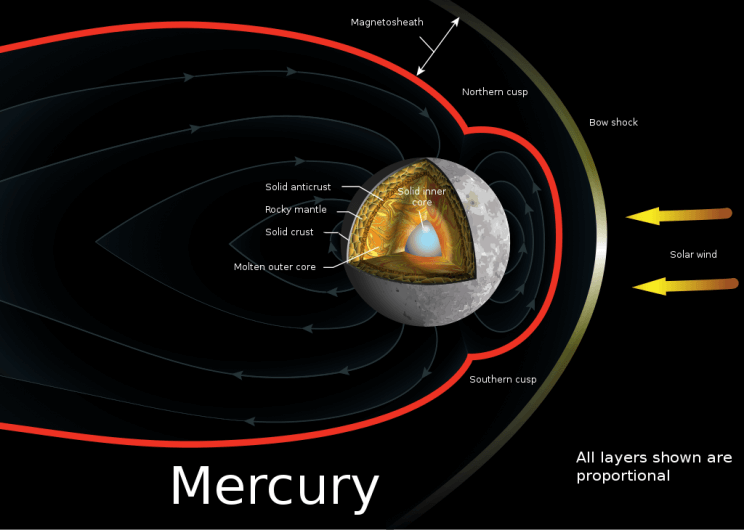
Mercury is incredibly rich in precious metals and minerals. Like other rocky planets (Venus, Earth, and Mars), it is composed of silicate minerals and metals, divided into a silicate mantle and a crust surrounding a metal core (composed primarily of an iron-nickel alloy).
Based on the latest data, geologists have calculated that the crust and mantle are 35 km 600 km thick, respectively, while the diameter of the core is estimated at 4 148 km. This means that the central region of the planet is 85% of the planet’s size. The surface is rich in magnesium and sulfur, and there are also large caches of minerals and precious metals that have been brought to the planet by asteroids and meteors throughout the history of the solar system.
Another plus of Mercury is its gravity. Despite the fact that it is the smallest planet in the solar system and even smaller than some moons (for example, the moon of Jupiter Ganymede), the gravity on its surface is close to that of Martian – 38% of the earth. Decades of research (in particular, the Twins Study) have shown that microgravity is bad for the human body – it loses muscle mass and bone density, vision, blood circulation, cardiovascular system and organ function are impaired. Less gravity would also make it relatively cheap to launch payloads or spacecraft from the surface.
Mercury is one of the candidates for colonization within the solar system along with Mars, Venus, Moon, Ceres, Europa, Ganymede, Callisto, Titan. Perhaps future generations can call it their home.
The obsessive tendency for children to grow up in an increasingly politically correct world may come in handy even to an infinitely liberal and tolerant person. Favorite classics are issued without racist qualifications, the toys become gender neutral, and you have the feeling that the next step is for everything to be asexual, colorless and as gray as the Sofia landscape in November. Just so that no one is offended.
Is this really happening? Aren’t you tired of the tasteless shelves in the shops, overflowing with pink and blue plastic and the endless search for boys’ clothes that are not in black, blue or green? Is it possible to set a limit acceptable to all countries – both more conservative and more liberal? And don’t we instill in children stereotypes that they don’t need?
The issue of politically correct upbringing of children reached Bulgaria only around 2009, when it turned out that in the new edition of “Pippi Longstocking” Captain Longstocking was no longer “King of the Negroes” on the island of Korekoredut, but “King of the South Sea”. because it has been accepted for years that the word “nigger” is offensive.
The word was also removed from Huckleberry Finn, and in different countries they corrected their own children’s books in the respective new politically correct vocabulary.
For example, in Germany in the popular fairy tale “The Little Witch” for years there are no “Eskimos”. The argument that there is nothing racist in the books themselves and that they simply reflect the time in which they were written and allow for critical reading was not accepted. On the other hand, removing a word does nothing to change a whole classic.
However, attempts to impose “politically correct” toys are far behind in time.
As early as the late 1990s, Mattel, the manufacturer of the Barbie doll, decided to change it and give it a more politically correct look. Its new design had a wider waist, thinner lips and a smaller bust. “This gives it a more modern and natural look,” Matel explained at the time.
Many of the comments were that the company was ruining its own icon, the most successful toy in the world, and that by that logic, the next step was to put a mustache, cellulite and varicose veins on it.
However, the company’s decision was the result of growing criticism of the unreal-looking doll, which is a model of a stereotypical brainless woman with an unattainable appearance. And from here to a generation of anorexic girls with low self-esteem, the road is short.
However, this is not exactly political correctness. Mattel simply follows the mainstream, which began to change in the late 1990s – mothers do not want their daughters to consider a blonde sex bomb a role model. At the same time, they “deform” one of the dozens of Barbie models – the others do not gain weight.
Over the years, there have been a series of attempts at “politically correct” toys following a similar pattern – expanding beyond the classic stereotype to cover more niche markets.
As early as the 1970s, “different” dolls appeared. Matel itself launches a pregnant doll that carries a small baby in its womb and may even be born. Even if the idea is good, the performance is quite sinister, so the life of the doll is quite short.
In an attempt to help fight breast cancer, Matel is also launching a pink Barbie, the color of the campaign. But this Barbie has the classic gorgeous and chic look of the doll and has nothing to do with women who have to experience the terrible side effects of the battle with cancer.
The situation is similar with a company that wants to draw attention to premature babies. But the babies of “Koleko” are full and round and have nothing to do with the children struggling to survive in incubators.
In 2008, a company from the US state of Utah called “Obama’s Sock” launched a monkey with the appearance of Barack Obama. And from there they claim that they did not intend to compare a black man with a monkey, on the contrary.
Curious is also the case with “Matel”, which puts a dark-skinned Barbie in clothes with the “Oreo” logo in a joint marketing campaign. Without realizing that in the United States, “Oreo” is the name given to blacks who want to be white – like the milk filling of a dark biscuit.
Matel’s most revolutionary step at the moment, however, is since 2019, when the company launched the world’s first series of gender-neutral dolls.
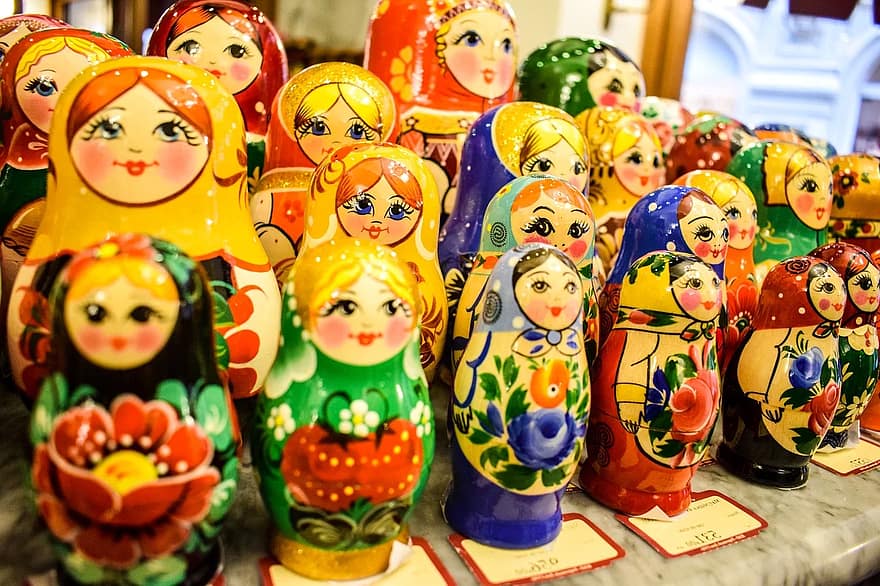
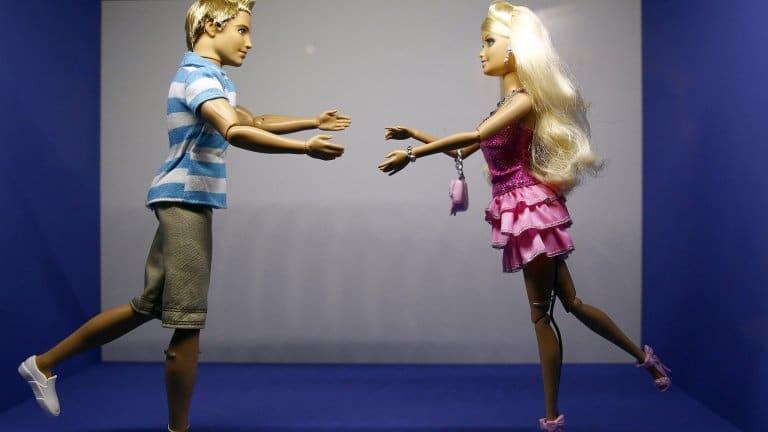
They have different skin colors and each has two hairstyle options – short and long hair, as well as the corresponding clothes – jeans, shirts, shorts, baggy pants, sweatshirts and a neutral wardrobe, without anything bright, pink and shiny. The doll can be a boy or a girl, asexual or both – her lips are not too thick, her eyelashes are not too long and her jaw is not too wide. He has neither Barbie’s chest nor Ken’s shoulders.
The reaction is expected – the liberal part welcomes, the conservative finds another proof of the collapse of American society.
Well, the reason is probably far more prosaic again – a response to market demand.
For years, millennials have been annoyed by the pink-and-blue division of toys for their children and want more neutral options – such as girls building airplanes or doing chemical experiments – toys that are traditionally on boys’ shelves.
That’s why in 2015 in the USA “Disney” removed the labels for boys and girls from their costumes and so the girls can also dress as “Captain America”. Gradually, engineering games for girls began to appear, dollhouses became green or yellow instead of pink, and kitchen sets were white and without flowers and butterflies on them.
However, the new doll is something more. It was tested among 250 families, including 15 children, who identified themselves as trans, gender non-binary, or gender fluid. And this doll is for them too, Mattel explains to the Times.
And this group of children is growing. A study in California, for example, found that 27% of teenagers in the state identified themselves as sexually inappropriate, ie. do not meet the social role required of their gender. Another study claims that 35% of Generation Z – born between 1995 and 2015 – know someone who uses a gender neutral pronoun such as “they”, while in Generation X of those born between 1965 and 1980, the percentage is 16%. . The expectations are that the trend will be upward in the Alpha generation of those born after 2010.
This, along with children who just want to replace trucks with dolls, is a big niche market.
The idea that boys are born with a desire to play with trucks and girls with dolls is also debunked by science. A study by psychologists Lisa Dinela and Erika Weisgram found that when toys with wheels are colored white, ie. without the signs for boys and girls, they are chosen equally often by both sexes.
Removing such signs also helps boys and girls to play together, which is a social training for later in life, when men and women have to interact as colleagues and partners.
“If boys, like girls, are encouraged to acquire parenting skills by playing with dolls, they will also become more empathetic fathers who have more to do with raising their own children,” Dinela explains.
Especially with regard to boys, the attitude of parents is more conservative than with regard to girls. That is, it is easier for a parent to accept a girl to play with strollers, but not a boy – with dolls. For example, more than three-quarters of participants in a 2017 survey say it is good for parents to encourage girls to play with toys related to boys.
But when asked about the opposite – boys to play with girls’ toys, “for” are 64% of respondents.
The videos from the test groups for the gender neutral doll also show that the parents are not ready, the Times notes. Many of them confuse “gender” – the gender and role with which a person identifies, with sexuality, ie. to which sex are the sexual preferences of the person. They also mix “gender neutral”, ie. without a specific social gender role, with a “transsexual” – a person who changes his social sex, and subsequently sometimes biological.
Unlike their parents, Generation Z is much more likely to believe that a person should not be defined by gender, and will raise their children that way. And accordingly he will buy their favorite toys.
And the sharp division between boys and girls is actually relatively recent. Until the 1930s and 1940s, toys were again what we now call “gender neutral” – they were rarely marketed as boys ‘or girls’.
It was not until the 1940s that manufacturers realized that wealthy families would buy different toys, supplies and even clothes for children of different genders.
And so the idea of pink and blue toys and clothes was born. Then come the princesses and supermen and the messages behind them – the boys are masculine, aggressive and active, and the girls – gentle, passive and busy with children.
Analyzes of Lego sets show the same thing – boys emphasize building skills and professional skills, and girls – that girls should take care of others and be beautiful. That is, girls spend their childhood exercising to be beautiful, and boys – how to become what they want.
Well, Lego has learned a lesson. It has recently become clear that they are another big company focusing on more gender neutral toys.
Traditionally, Lego is used more by boys, but the company also develops products aimed at art and craftsmanship, which are specially designed for both boys and girls. The next step will be to promote more education and care, as well as creative thinking and problem-solving skills.
The “for boys” or “for girls” labels have been removed, as well as the ability to filter by gender in the Lego online store.
And again: Gender neutral means no gender, not encouragement to express a different gender. Such toys will not make boys girls and vice versa.
More than 200 soldiers come with them to support them
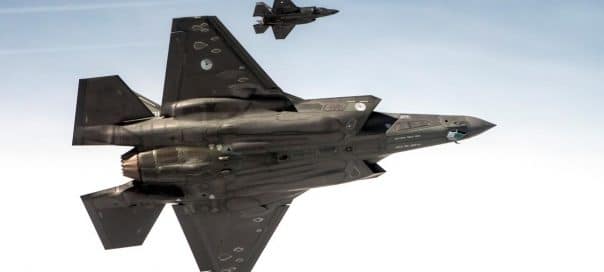
The Netherlands Air Force will guard us with F-35 aircraft. This was announced to Nova TV by Atanas Zafirov from the BSP, chairman of the parliamentary defense committee.
The cabinet has already made a decision in the period from April 1 to May 31 this year. including to strengthen the protection of the airspace of Bulgaria by performing tasks of the Bulgarian Air Force (Air Force) together with forces and means of the Air Force of the Netherlands.
They will be part of 2 planes on round-the-clock duty on the territory of the country.
It is planned for this purpose from March 4 to June 24 this year. on the territory of Bulgaria to deploy forces and means of the Netherlands Air Force consisting of up to 8 aircraft and up to 200 servicemen.
The Council of Ministers also allowed the deployment on the territory of Bulgaria until April 15, instead of April 5, of forces and means of the Spanish Air Force consisting of up to 10 Eurofighter F-2000 Typhoon aircraft and up to 200 servicemen.
Since February 17, Spanish aircraft have been participating in the implementation of joint tasks on enhanced airspace protection (Air Policing) with the Bulgarian Air Force.
This is the first time that F-35 aircraft invisible to radar have been sent for Air Policing in an allied country. At the moment it is not clear in which Bulgarian air base the stealth planes will be located.
The Netherlands is the first ally to use 5th generation fighters in this mission in Southeast Europe. Fighters have made a huge contribution to NATO’s collective defense.
One month ago, Finland signed a $ 9.4 billion deal with the United States to buy 64 F-35 fighters invisible to enemy radar, Reuters reported. The aircraft, which is the fifth generation, is considered one of the best currently used in the world.
LITHUANIA, March 10 – Шановний Посол України в Литві, пане Петре [Бешта],
Брати і сестри українці,
Madam Speaker of the Seimas, dear Viktorija,
dear colleagues, guests, dear people of Lithuania,
Our generation has hoped to never witness an open, full-scale, and brutal war in Europe, believing that the horrors of war are now but history, alive in our grandparents’ accounts, history textbooks, literature, and movies, and that they will stay there for good. s going on before our eyes today, on the doorstep of our homes. Unfortunately, we are having war unfolding right before our eyes, at our doorstep.
We wake up and go to bed with a TV coverage of massive explosions in the residential areas of Kharkiv, Mariupol, Kyiv… With the images of ruined houses and schools on the streets that some of us have walked. And of awfully quiet women, children, and the elderly – sheltering underground, under the rubble of their cities.
Father’s hand glued to the window of the rail car until the last second when the train inevitably moves, taking the children and the beloved woman to the unknown. To a new life unsought, where strangers will have to become their family and friends, and a foreign country – their home. The man stays in his own country to defend it. And to die, if need be, for the future of the Homeland. For the loved ones to return. For the happy and free future of his brother-in-arms’ babies, who first opened their eyes to the darkness of the hide-out instead of the daylight and the face of the father, unknown as yet.
With an afterimage of the departing Ukrainian train in my eyes—will it ever go?—I realize anew—clearer than ever—how happy we are that Lithuania had the courage and resolve to get on board the train of success 32 years ago. The train that took us to the freedom we fought so dearly for. To the security that we now enjoy through our membership of NATO. To the European present—more affluent than ever before. To the future built by ourselves.
Thirty-two years ago, unaware of what was in store for us but realizing the grandeur of the moment, we wiped tears of joy and pride watching on TV the long-hated Soviet hammer-and-sickle funeral wreath go to give way, for good and all, to our cherished tricolour—all this happening in these very premises, which are now the historic Hall of the Act of 11 March.
A year on, we were wiping our tears of pain and hope when accompanying the victims of 13 January to Antakalnio cemetery for eternal rest, where we, and the leaders of the free world now come to bow our heads.
We were proud to have brought down the evil empire standing up to it strong and united, hand in hand.
We had and still have something to be proud of.
Two weeks ago, on 24 February, tears welled up in my eyes again. Even those who did not want to believe in the Kremlin’ insanity to the last minute saw that we had been wrong all the way and that the empire, reborn and driven by the false illusion of its own strength, would seek revenge at all costs.
While the democratic world was lulling itself into a false sense of security after the assumed victory in the Cold War, new dictators grew up in the Kremlin and Minsk. While we cared for our well-being, engaged in trading and in dialogue with pathological liars and negotiated peace with those who want war, Putin and Lukashenko were gradually plunging into a parallel reality and dragging their people along. To a surreal, absurd, and grotesque world where the Soviet Union is not the nightmare of the past but the lost Atlantis. Where tens or—if need be—hundreds of thousands of imaginary enemies, including their own citizens, are once again laid under the tanks and rocket attacks for Pyrrhic victory. For the incomprehensible and inexplicable personal ambition to restore what never had any right to exist.
It seems likely that today, in fact, the real final liberation of the world from the Soviet totalitarianism is taking place. Now, it is Ukraine that has to withstand the agony of the doomed empire. And Ukraine is standing tall, giving a much stronger rebuttal than the Kremlin could have imagined. Or anyone else could have believed, except the Ukrainians themselves.
Ukraine is fighting for us all. But it has not been left on its own. Today, the democratic world is more united than ever before. Our help to Ukraine and response to the Kremlin is stronger than ever.
I am very glad that Lithuania, too, is more united than ever before. The Lithuanian people have reunited and showed their strength. Thousands of them—Lithuanians, Russians, Poles, Belarusians, and Jews—have taken to the streets to support Ukraine, have become volunteers, have donated, and continue to donate tens of millions of euros. Lithuanians of all ethnicities and political views have opened their homes to Ukrainians, have donated food, clothing, and essentials—at times filling squares and warehouses in just half a day. Day by day, continuous convoys of trucks carry to Ukraine the essentials donated by the state, businesses, and the people. This help will be needed for a long time to come—and the good work will continue, no doubts. Reaching the Ukrainians every day up until their victory, and that of us all.
From the bottom of my heart, let me thank each and every Lithuanian man and woman, enterprise, civil servant, and official, who have spared no effort, energy, nor health, who do what they feel they can and should do.
I’d love to thank them, but I don’t think I have that right. For they don’t do it because I or someone else have asked them to. They do so in good faith and consciousness.
This is Lithuania I love. I’m glad I’m part of it— just like everyone, doing what coincidentally is my job today.
Today, at this minute, it is my duty and privilege to stand here and address you, dear colleagues. Today we see the most beautiful Lithuania ever: unified, united, sparing nothing for our loved ones, and defending the freedom of us all.
It is not the Government or the opposition, but all of us, 141, have been elected by this wonderful Lithuania, and we all have received its mandate. Let’s live up to it. Let’s work for and together with it. Let us forget whether we are sitting to the left or to the right of this chamber.
This session of the Seimas is likely to be different from what we have expected. Together, we will have to make many necessary and urgent decisions to help Ukraine and strengthen Lithuania’s security. Decisions that may not have been on any party’s programme. But whose key objective— a free and secure Lithuania— has brought us all to this chamber—the chamber of the Seimas of Lithuania— one or another way.
Today, Ukraine is fighting not only for the future and freedom of its own. It is, in fact, fighting for us all, for the whole democratic world.
Members of the Ukrainian Parliament remain in their country, passing the necessary laws in Parliament and, with arms in their hands, standing shoulder to shoulder with their citizens. Ukrainian Prime Minister Denys Shmyhal remains in his country and will not go anywhere. Ukrainian President Volodymyr Zelenskyy remains in his country and will fight together with it and for it to the end. We are safe. Putin’s rockets do not land on our maternity hospitals and babies. Our skies are protected by NATO fighter jets.
Therefore, we, each of us, must not bathe in the glory of the heroes of Ukraine, applauding them from our beautiful bright offices, but get up and go, ride, and fly for them. Every day up until victory, we must be their support and their voice in the capitals of the entire civilized world, in the capital of Europe.
I want to believe that tomorrow, at the European Council, the leaders of the civilized world will do their utmost to ensure that Ukraine does not feel left stranded. To make those we call our friends feel that our friendship is made meaningful by actual deeds. I want to believe that tomorrow the voices of the 27 European leaders will unite into one single choir of Ukraine instead of the mumbling about the long road and homework. And sending a clear message about Ukraine’s membership of the European Union. And I want to believe that Lithuania’s voice will be the loudest in this choir. That the hands of Lithuania will be the hands that will bring the 28th chair to the table of the European Council. So that having defeated Mordor, Ukraine takes that chair.
I believe that the good can prevail over evil. And it will.
I want to believe that when it does, we are able to look in the eye of Ukrainians, of each other and of the people of Lithuania without guilt.
Let’s do everything in our power to make this happen.
BAHÁ’Í WORLD CENTRE — A rising wave of conferences is sweeping across the globe, bringing together the well-wishers of humanity to consult about how they can channel their energies and desire to promote unity and serve their fellow citizens into addressing the needs of their societies.
Gatherings at the local, national, and international levels are enabling participants to gain insights from experiences in Bahá’í community-building activities, initiatives undertaken for social action, and efforts to contribute to prevalent discourses.
In some places, conferences have an overarching theme, such as the recent gathering in Bangui, Central African Republic, in which some 500 women from the surrounding area gathered to explore the role of women in social progress.
“The full participation of women in these gatherings is essential, because women are instrumental in fostering a culture of peace,” says Louis Isidore Tenzonko-Boazamo, a member of that country’s Bahá’í National Spiritual Assembly. “This is why our very first in this series of conferences explored this theme.”
Conscious of the global challenges facing humanity—be it climate change, the pandemic, war and conflict, or widespread injustices—participants are finding a renewed sense of hope in humanity’s capacity for altruism, and they are feeling connected by bonds of love and fellowship with others in a global effort aimed at social betterment.
Images that give a glimpse of the larger wider of the gatherings are available here.