Sunday, September 20, 2026
Home Blog Page 1128

Mass graves of crusaders found in Lebanon

0

Despite the fact that thousands of people died in the Crusades, archaeologists are incredibly rare in their mass graves. According to one of the versions, those killed, found this time, were buried personally by Saint Louis IX, King of France, leader of two crusades.

History

In 2019, archaeologists were in luck: they found a mass grave of crusaders in Sidon (now called Sayda), Lebanon. The collection, study and analysis of the finds took time, so the scientific work describing them came out only now, as reported in a press release from the University of Bournemouth (UK).

Archaeological excavations near the Castle of St. Louis have revealed two mass graves. Both were in a dry ditch near the city walls. The remains of the people were partially mixed, but the researchers concluded that at least twenty-five people were buried there – and exclusively men or adolescent males (at an age when they could already hold a weapon). Radiocarbon dating dates the event to the middle of the 13th century.

Dr. Richard N. R. Mikulski of the University of Bournemouth, who excavated and analyzed the skeletal remains, explained: “All the bodies belonged to adolescents or adult males, indicating that they were fighters who fought in the Battle of Sidon. When during the excavations we found so much damage from weapons on the bones, I realized that we had made an unusual discovery. “

In addition, the study showed that the victims were not buried immediately after death: for some time they remained unburied. There is also an assumption that scavengers snatched their part of the prey. On some of the bones of the cervical spine of the deceased, traces remained, indicating decapitation by a blow from the back (probably execution). Finally, there are traces of charring on the remains – they tried to burn the bodies, not bury them.

Against whom did the crusaders of Sidon fight, by whom were they defeated, and who nevertheless betrayed their bodies to the earth?

Originating in the early Bronze Age, Sidon was already a fairly large trade center by the time of the Crusades in the Levant (1097-1291). As a result of the First Crusade, the Crusaders first captured Sidon in 1110. The city (and especially its harbor) became a key strategic port in a series of coastal settlements that formed the basis of Christian states in the Latin East. In the middle of the 13th century, Sidon, held by Christians, was twice ravaged by enemies. The first time this happened in 1253 – the fortress was captured (and then abandoned) by the Mamluks, who had recently taken power in Egypt and founded the Mamluk Sultanate there. The medieval chronicle “L’Estoire de Eracles” tells about this assault on Sidon.

Just a few years passed and enemies again came to the city walls. The Chronicle of “The Templars of Tire” tells how, in August 1260, Sidon was again attacked. This time it was plundered by Mongol troops led by Kitbuki. Many defenders were killed, some of them were captured. After these events, the city remained under the control of the Crusaders until it was abandoned in 1291.

As we can see, the situation is about the same: in both cases there could be executions, in both cases the winners were clearly not going to bury the defeated, and this was done later, when the invaders left the city.

It is, of course, difficult to draw an exact conclusion about exactly when those found in the mass grave were killed. But there is a detail that tells us that most likely the remains belong to people who died at the hands of the Mamluks, and not the Mongols.

Jean Joinville in his chronicle says that after the attack of the Mamluks, Saint Louis IX, the leader of the Seventh (and then the Eighth) Crusade, came to the city. The author of the chronicle was a contemporary and biographer of the king, so he wrote about the events that he himself saw. He says that King Louis IX helped other crusaders to collect decomposing corpses and bury them: “We found that the king himself made sure that the bodies of Christians killed by the Saracens (as described earlier) were buried. He personally carried the bodies, all rotting and fetid, to put them in trenches in the ground, and never once covered his nose, although others did. ” The manuscript “The Book of Hours of Jeanne d’Evre”, although it was created several decades after these events, depicts specific details regarding the burial of the victims, in which Louis IX participated.

And although scientists refrain from final conclusions, the coincidence of details from written sources and archaeological finds suggests that the graves of the crusaders found most likely date back to 1253 – the capture of Sidon by the Mamluks. The Mamluks are the personal army of the sultans of Egypt, at that time recruited mainly from Kipchak slaves (Polovtsians) who were sold in slave markets and eventually ended up in Egypt. Around 1250, this elite army of the sultans seized power in the country, establishing their own dynasty.

Photo: The Battle of El Mansour, depicted in the painting by Guillaume Saint-Patus “The Life and Miracles of Saint Louis”. The battle took place in 1250, a few years before the destruction of Sidon / © Bibliothèque nationale de France, Département des Manuscrits

Do animals warn us of disasters?

0

For millennia, people around the world have reported alarming animal behavior before natural disasters

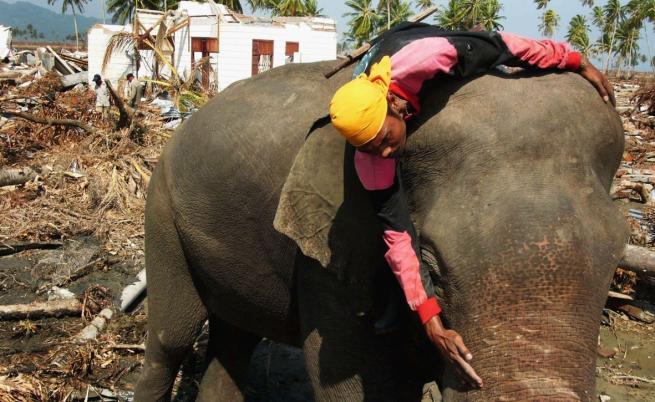
In 2004, a tsunami caused by a magnitude 9.1 underwater earthquake off Indonesia destroyed coastal communities around the Indian Ocean, killing at least 225,000 people in several countries. The huge death toll was partly due to the fact that many communities did not receive early warning. This was reported by the BBC.

According to eyewitnesses, minutes and hours before the natural disaster, the animals in the affected coastal communities began to behave differently than usual.

Elephants ran to higher ground, flamingos abandoned low-lying nesting sites, and dogs refused to go outside.

Early warning systems do not exist in many areas regularly affected by natural disasters. In 2017, the World Meteorological Organization found that the governments of about 100 countries still did not have early warning systems for natural disasters to which they were prone.

Stories of animal behavior before disasters have led some researchers to pay close attention to the theory that animals may have “embedded systems” that warn them of impending natural disasters.

This raises the question – Can animals provide natural early warning systems to humans?

One of the most important studies on how animals can predict disasters was conducted five years ago by a team led by Martin Wickelski of the Max Planck Institute for Animal Behavior in Germany. The study involved recording patterns of movement of various animals (cows, sheep and dogs) on a farm in the Marche earthquake region of central Italy. Chip collars were attached to each animal that sent movement data to a central computer every few minutes between October 2016 and April 2017.

During this period, official statistics recorded more than 18,000 earthquakes in the region, from small earthquakes of magnitude 0.4 to more than 10 earthquakes of magnitude 4 or more – including the devastating earthquake in Norway with a magnitude of 6.6.

Researchers have found evidence that farm animals began to change their behavior up to 20 hours before the earthquake.

Each time the observed farm animals were 50% more active for more than 45 minutes, the researchers predicted an earthquake with a magnitude greater than 4.0. Seven of the eight major earthquakes were properly predicted in this way.

“The closer the animals were to the epicenter of the impending shock, the earlier they changed their behavior,” Wickelski said in 2020, when the study was published.

Another study by Wickelski, which observed the movements of marked goats on the volcanic slopes of Mount Etna in Sicily, also found that the animals appeared to have a premonition of when Mount Etna would erupt.

In South America, behavioral ecologist Rachel Grant – now at the University of South Bank in London – found similar results. She conducted a biological study of animal movement patterns using motion-triggered cameras in the Yanachaga National Park in the Peruvian Andes for a period that included the 2011 magnitude 7.0 earthquake in Contaman.

“The number of animals recorded by the cameras began to decline about 23 days before the quake – with the decline accelerating eight days before the quake,” Grant said in his 2015 study paper, 10, 6, 5, 3 and 2. days before the earthquake – and on the day of the earthquake – no animal movements were recorded, which is very unusual. “

Most importantly, Grant also found evidence of what could cause changes in the behavior of local animals, in the form of a series of strong disturbances in local atmospheric charges every two to four minutes, starting two weeks before the earthquake. A particularly large fluctuation was registered about eight days before the earthquake in Contamana – coinciding with the beginning of the second stage of the disappearance of animals from view.

Scientists are now investigating whether these pre-earthquake electromagnetic disturbances could be a warning sign of impending earthquakes that animals may be feeling.

Earthquakes are invariably preceded by a period in which deep stresses occur in deep rocks – voltages known to create electronic charges. These highly mobile electronic charge carriers can travel rapidly to the earth’s surface, where they ionize air molecules above where they appear. Such ionization was observed before earthquakes around the world.

“The harbingers of the earthquake are not well documented scientifically,” said Matthew Blackett, an associate professor of physical geography and natural hazards at Coventry University. According to him, some scientists believe that the animals could develop a seismic escape mechanism. “Maybe they detect pressure waves before earthquakes arrive, maybe they detect changes in the electric field. Animals also contain a lot of iron, which is sensitive to magnetism and electric fields.

Many animals are equipped with a highly developed sensor apparatus that can read a set of natural signals on which their lives may depend – so it seems quite possible that some animals may be able to capture the precursors of earthquakes.

In a 2020 paper, Wickelski and colleagues presented a prototype for an earthquake early warning system, using animal activity monitoring sites based on data from his research in Italy.

China, meanwhile, has already set up an earthquake warning system at its earthquake office in Nanning, monitoring the behavior of animals, particularly snakes on farms in an earthquake-prone region. Snakes have a powerful set of sensory mechanisms aimed at detecting small changes in aspects of their environment and, in part, sudden changes in the behavior of snakes and other animals that led authorities to evacuate the Chinese city of Haicheng in 1975 just before a major earthquake countless lives.

 “Of all the creatures on earth, snakes are perhaps the most sensitive to earthquakes,” the then-Nanning bureau director told China Daily in 2006. “When an earthquake is about to happen, snakes will come out of their nests, even in the cold winter. “

Earthquakes are not the only environmental hazards that animals seem to warn about. Birds are increasingly in the spotlight, as they can obviously detect other impending natural hazards.

Source: BBC

Supermarkets are removing Russian goods from their shelves

0

Hundreds of stores are already boycotting Russian products, including vodka

Shops in Denmark, Germany, Finland, Sweden and Australia have started boycotting and removing Russian goods from their shelves.

The German supermarket chain Netto Nord has announced that it will immediately boycott Russian goods, DPA reported.

The decision by the chain, which has about 340 stores in northern and eastern Germany, followed an earlier move by the parent company, Salling Group, Denmark’s largest retailer.

A spokesman for Netto Nord said all products made in Russia were being taken off the shelves in protest of the war in Ukraine. This affects about 15 items, including confectionery, ready meals and vodka.

The company also has stores in Denmark and Poland.

“The situation in Ukraine and the horrific footage of the war excite us all,” said Henrik Winter Olessen, communications director at the Salling Group. In Poland, the company offers basic consumables for agencies caring for Ukrainian refugees, he added.

State-owned companies responsible for the retail sale of alcoholic beverages in Finland and Sweden announced last night that they had withdrawn all Russian beverages from stores, AFP reported.

The Finnish company Alko clarified that Russian drinks have also been withdrawn from online sales. Spokeswoman Anu Koskinen said the situation in Ukraine was shocking.

The group offers over 11,000 products, of which thirty are Russian, most of them vodka.

The measure is symbolic, as it covers 0.1 per cent of Alko’s turnover, but was taken in solidarity with Ukraine, as did other Finnish companies such as S, which brings together a number of companies that withdrew about 50 products. .

In neighboring Sweden, Systembolaget made a similar decision. The state-owned company decided to immediately and indefinitely suspend the sale of all Russian goods and cancel all presentations of Russian products.

In Australia, the Ukrainian diaspora has forced the largest chain of alcohol sales “Endeavor group” to stop selling Russian vodka in its stores, TASS reported. The company’s press service announced that the Russian goods will be withdrawn from sale within a few days, including on the Internet.

The sale of Russian vodka has also been banned in some US states, including Pennsylvania.

Kim Jong Un executes Squid Game fans

0

Another ban in 2021

The South Korean series focuses on the poor-rich opposition

Netflix’s latest project has become a total hit

The South Korean series “Squid Game” has become Netflix’s biggest hit in the history of the streaming service. North Korean journalists also talk about the popular show. The propaganda website Arirang Meari published an article describing the series as evidence of the decline of South Korea’s capitalist system.

“The squid game makes people aware of the sad reality of the monstrous South Korean society in which people are forced to engage in extreme struggles where their humanity is washed away,” said an anonymous journalist.

This is not the first time the North Korean media has reported on its neighbors’ film industry. Last February, they praised The Parasite, which won an Oscar for Best Picture, for its “dramatic” revelation of the economic gap between sections of society.

Head of State Kim Jong Un calls South Korean pop culture “cancer of sight” and has long banned it in his country. Persons convicted of violating the ban are punished, and distributors of banned works, according to media reports, could be executed.

The popular drama “Squid Game” by Huang Dong-hyuk has become the most successful original project in the history of Netflix and costs a modest 21.4 million dollars, according to Bloomberg. The series tells the story of 456 people in urgent need of money who become participants in a brutal survival game. They are placed on an isolated island where they play children’s games, but every loser faces the death penalty. As the participants are eliminated one by one, the total amount of the final prize increases, and the winner of the tournament receives about 38.5 million dollars. The idea came to Huang because of his own economic difficulties in his early life, as well as the class division in South Korea. Although he wrote the script in 2009, he failed to find a production company to fund the idea, while Netflix showed no interest in 2019 as part of a movement to increase its foreign programming. Huang himself wrote and directed all 9 episodes.

Humanoid robot arrested at Cairo airport under pretext of espionage

0

“She” is called Ai-Da. Under this gracious name hides a humanoid robot created by British artist Aidan Meller. Ai-Da should have been part of a contemporary art exhibition held at the Great Pyramid of Giza. Instead, upon arrival at Cairo airport last October, she found herself in Egyptian jails.

Ai-Da is a very realistic human-looking robot. The work of contemporary art specialist and gallery owner Aidan Meller, she is presented as a humanoid robot woman capable of creating works of art.

While she was to “present” in Egypt her own work of art, a clay sculpture based on a revisiting of the famous enigma that the Sphinx submits to Oedipus, Ai-Da was simply arrested at Cairo airport. and detained. Without access to his electric charging device, says The Times.

The reason for the anger or overzealousness of the suspicious Egyptian customs officials? According to Aidan Meller, as reported by The Guardian, border guards arrested Ai-Da for wearing a modem and having cameras in her eyes, used to draw and paint. Egyptian customs officials appeared to fear that Ai-Da was part of a “spy plot,” in the face of this curious elaborate computer tool, says The Guardian.

“I can give up modems, but I can not really tear his eyes out,” quipped the creator of this robot placed under arrest.

Ai-Da and her sculpture were therefore held at Egyptian customs for ten days, before being released on October 21, just in time for the exhibition at the foot of the Great Pyramid of Giza, to which she was however officially invited. To obtain this release, it took a “diplomatic crash” on the part of the British authorities, notes The Guardian.

Ai-Da can now present her work, a clay sculpture 2.5 meters wide and 2 meters high representing her with “three legs”, at the international exhibition Forever is Now, which will run until November 7. . The exhibition will also feature works by leading Egyptian and international artists, says The Guardian.

Photo: Ai-Da and her creator Aidan Meller, in Oxford, Great Britain on June 4, 2019. / Mattew Stock / REUTERS

Factories on Mars

0

What the Red Planet will be able to supply to the colonies of the solar system

The American scientist proposes to create on Mars the production of hydrogen, which will become one of the most valuable elements of the space economy.

In his new article, Mikhail Shubov of the University of Massachusetts in Lowell proposes to create hydrogen production on Mars after a colony is established there. The most abundant element in the universe will play an important role in the economy of the future, so such possible production could become a reality, according to universetoday.com.

Be always up to date with the Fast Focus telegram channel.

There is a lot of hydrogen on Jupiter or even on the Sun, but its production there will not be entirely profitable. Asteroids have water that can be used to extract hydrogen, but there is also little to meet the needs of the future solar system for this valuable element, Shubov says.

That is why the scientist turned his attention to Mars. Hydrogen on the Red Planet is found in water, which is in the form of ice. Scientists estimate that there are more than 5 million km3 of ice on or near the surface of Mars. Therefore, the colonists will be able to use this water to support the life of the colony, and send the rest to the production of hydrogen, Shubov suggests.

According to the scientist, the production of hydrogen will be profitable when hydrogen is massively used in the surrounding space, and secondly, the colony itself reaches such a level of development that it will be able to engage in such production.

Shubov claims that the process of extracting hydrogen can be started only when about 10,000 people will live in the future Martian colony.

However, this is not the only condition. Still, according to the scientist, it is necessary to build an infrastructure to send hydrogen beyond Mars. It should be a special launcher that will send a “package” of hydrogen into orbit.

And from orbit, the scientist proposes to send this hydrogen at first only to Earth, until other colonies in the solar system need this hydrogen. According to Shubov, this could radically change the economy of the future solar system.

Photo: Universe Today | Colony on Mars as seen by the artist

Little fiend of hell

0

Scientists have proven that domestic cats are characterized by psychopathy

In the distant past, this behavior was beneficial for the ancestors of cats in terms of obtaining resources, such as food, territory and mating opportunities.

If your favorite cat has been acting strange lately and surprises you with outrageous and sometimes dangerous behavior, now you can find out exactly what the problem is.

As shown by a new study by scientists from the University of Liverpool and the University of Liverpool. John Moores, this behavior may be associated with the psychopathic tendencies of the animal.

The study, which involved 2042 cat owners, illustrates the development of the first-ever method available to measure psychopathy in cats.

The experts developed a detailed questionnaire that owners used to analyze their four-legged friends to determine if they were psychopathic.

The test, called the CAT-Tri +, consisted of 46 questions that asked owners to answer how well each described their pet. So, for example, the owners of cats were asked whether their pet was tormenting its prey, and not killing it right away, whether it meows loudly for no apparent reason, whether it often becomes very excitable and uncontrollable.

Also, the owners had to answer whether their pet dominates the neighboring cats and whether he purrs, attacking other animals or people. All answers were scored on a five-point scale.

The results of the study help to determine the level of “meanness” of the cat, such traits as lack of empathy and callous aggression, lack of empathy, “disinhibition” – that is, problems with behavioral restraint, as well as the level of unfriendliness towards other animals and people.

“Our definitive questionnaire measures 5 factors in feline psychopathy: cockiness, meanness, disinhibition, dislike for pets, and dislike for humans,” said lead author Rebecca Evans of the University of Liverpool.

The results of the experiment confirmed the long-standing assumptions of researchers that all cats have an element of psychopathy, since in the distant past it was beneficial for their ancestors in terms of obtaining resources, such as food, territory and mating opportunities.

Experts hope their research will help improve the relationship between pets and their owners, as well as reduce the number of cats that end up in shelters or are euthanized. The questionnaire can also be used to identify undesirable behaviors in cats and improve their habitat.

So, for example, a pet that has received a high score on a scale of insolence can be occupied with tall trees, scratching posts, since such cats like to explore and climb a lot. In this way, you can reduce the aggressive behavior of the animal both towards other pets and people, and property.

Long-living dogs: these 9 breeds are 20 or older

0

Any owner wants his pet to delight him as long as possible. Some dogs are genetically predisposed to live longer. On average, a dog lives for about 10-13 years.

Small breeds tend to live longer than large breeds. However, among the age record holders, there are not only miniature animals. The leaders in life expectancy, according to the Guinness Book of Records, are representatives of nine breeds. They have reached the age of 20 or more.

Australian cattle dog

A dog of this breed, named Blue, has lived in Australia for 29 years and five months. The pet died on November 14, 1939. Blue has been considered the consummate long-liver among dogs for over 80 years. The average Australian herding dog lives between 12-16 years, according to the American Kennel Club.

Beagle

A Beagle named Butch has lived in the United States for exactly 28 years. The dog died in 2003. As a rule, dogs of this breed live from 12 to 15 years, however, Butch was able to exceed all expectations.

Pug

The average pug lives between 12 and 15 years, but Snooki from South Africa was able to outgrow those numbers. The pet has pleased the owners for 27 years and nine months, he died in 2018. The list of centenarians also includes a pug named Piccolo. He has reached the age of 23.

Border Collie

A representative of this breed is native to the UK. A pet named Bramble lived to a ripe old age. His life expectancy was 27 years and seven months. The animal was vegan. In general, border collies rarely live longer than 17 years.

Labrador Retriever

One of the most popular dog breeds does not have a natural predisposition for a longer life. Labradors live for about 12 years, but a dog named Adjutant has reached the age of 27 years and three months. The pet died in 1963.

Shiba inu

A dog of this breed, named Pusuke, was a Japanese long-liver until 2011. The pet lived for 26 years and eight months. On average, Siba Inu dogs live about 12-15 years, writes The Scotsman.

Dachshund

It is not uncommon to see a dachshund that has reached the age of 16. This breed is considered one of the longest lived. There is also a record holder among its representatives. A dachshund named Chantal has lived in the United States for 21 years and three months. She passed away in 1988.

Toy poodle

Another miniature breed that usually has a long lifespan. Toy poodles often live up to 18 years or more. For example, a pet named Seamus from the United States has reached the age of 20 years and nine months. The animal died in 2014.

Chihuahua

This breed is also renowned for its significant lifespan. Some representatives live up to 20 years. For example, a dog named Megabyte, originally from the United States, has delighted its owners for 20 years and eight months. The pet died in 2014.

According to experts, genetics plays a major role in the life span of a dog.

China is embarking on a transition to a green economy

0

Chinese President Xi Jinping has called end of 2021 for a global partnership against climate change

The Chinese authorities have presented a guidance document on how China intends to achieve its carbon neutrality goals according to a new development philosophy that sets out key concrete goals and measures for the coming decades.

By 2030, China’s carbon dioxide emissions will peak, then stabilize and then begin to decline. By 2060, China will be carbon neutral and have a complete green, low-carbon and circular economy, the document said.

It was jointly distributed by the Central Committee of the Chinese Communist Party and the State Council.

The plan outlines five important tasks, including achieving a green, low-carbon and circular economy, improving energy efficiency, increasing the share of fossil fuel consumption, reducing carbon dioxide emissions and increasing the capacity of ecosystems to absorb carbon.

Meanwhile, Chinese President has called for a global partnership against climate change.

“The international community must work together to tackle global challenges, in particular terrorism, climate change and threats to cybersecurity.”

Xi said this today in his speech before the solemn assembly on the occasion of the 50th anniversary of the restoration of China’s membership in the UN.

 “Climate change is a serious signal that nature is giving to humanity,” he said. “Countries around the world must take real action to protect nature, to stimulate green regeneration, green production and environmentally friendly consumption, to promote healthy lifestyles, to create a harmonious model of coexistence between man and nature, and to promote the environment should be an inexhaustible source of sustainable development, “said Xi Jinping.

Experts from China, meanwhile, are developing a method to extract oxygen from lunar soil, writes the South China Morning Post, citing the China Aerospace Science and Technology Corporation (CASC).

The corporation believes that oxygen can be extracted from the lunar soil, which is rich in titanium oxide and iron oxide, by heating to high temperatures (about 2500 degrees Celsius). As a result, according to Chinese experts, it is possible to produce up to 30 kg of oxygen from 100 kg of soil.

Experts note that other useful materials such as silicon, iron and titanium can also be extracted from the lunar soil.

According to CASC, oxygen production can be done with a fully automated solar-powered device.

Beijing is actively developing a national space program, developing meteorological, telecommunications and navigation satellites, as well as lunar exploration technologies.

Chinese scientists are also working on a project to study asteroids and Mars, planning to begin intensive exploration of its surface in the near future.

European Union drives use of standardized terminology in Member States with funding for SNOMED CT

0
European Union drives use of standardized terminology in Member States

European Union drives use of standardized terminology in Member States with funding for SNOMED CT

SNOMED CT: The global language of healthcare

The EU will provide its Member States with 60 per cent funding towards SNOMED CT membership until 2027, via the European Health and Digital Executive Agency.

LONDON, UNITED KINGDOM, March 2, 2022 – At the end of 2021, the European Health and Digital Executive Agency took a firm step towards increasing the semantic interoperability, re-use and the cross border exchange of health data.

The European Union will provide its Member States with 60 per cent funding towards SNOMED International membership until 2027, via the European Health and Digital Executive Agency (HaDEA). The goal of this initiative is to allow the residents of participating member states to easily access and share their own health data in their own language with healthcare providers as they travel in the European Union.

According to the European Commission, the objective of the agreement is to facilitate the use of a standardized terminology to express clinical meanings for clinicians and to benefit the citizens of the European Union. An important step toward building stronger, more resilient and accessible health systems, it also attempts to better manage the fragmentation and vulnerabilities of disparate health systems that were revealed throughout the COVID-19 crisis, noted SNOMED CT Expo 2021 Keynote Speaker Dr Andrzej Ryś, Director responsible for Health Systems, Medical Products and Innovation at the Directorate-General for Health and Food Safety, European Commission. “There is currently a fragmentation of standards used to express clinical concepts, which hampers the semantic interoperability of health data sharing and the ability of the European health data space from reaching its full potential.” 

One of the benefits cited in the agreement is SNOMED International’s approach to translation. Currently, entire or part translations of SNOMED CT are available in a number of languages and dialects, including United States English, United Kingdom English, Australian English, Spanish, Danish, Dutch, Lithuanian, Swedish and French. Translations in other SNOMED International Member countries and elsewhere are also in progress. Germany, which also became a Member in 2021, has formed a working group that includes Austria, Switzerland and Luxembourg to launch a joint German-language reference translation of SNOMED CT. SNOMED International’s translation tooling can also be used to support additional translations of SNOMED CT by Member countries/territories or groups of Members that share a common language. Ahead of formal membership by France, a collaborative group formed of representatives from France, Belgium, Switzerland, Luxembourg and Canada are working to develop a global French translation of SNOMED CT.

SNOMED International CEO Don Sweete hails the agreement as a creative and effective approach to encouraging the adoption of a common health terminology across a diverse group of countries, each with its own language and degree of digital health readiness. “This agreement falls in line with the SNOMED CT Case for Investment, which outlines why countries invest resources in the clinical terminology and how SNOMED CT meets the clinical terminology suitability requirements of the EU community,” said Sweete. “Partnering with an organization such as the European Health and Digital Executive Agency facilitates the adoption and implementation of SNOMED CT across Europe and significantly contributes to our goal of a single global language of health and supporting patients and citizens to better manage their own health.” 

Founded in 2007 by nine charter nations, which has now grown to serve 42 Members globally, SNOMED International is a not-for-profit organization that owns and maintains SNOMED CT, the world’s most comprehensive clinical terminology. With over 350,000 concepts, SNOMED CT is not just a coding system of diagnosis. It also covers clinical findings like signs and symptoms and tens of thousands of surgical, therapeutic and diagnostic procedures. Also within the scope of SNOMED CT are observables and those concepts representing body structures, organisms, substances, pharmaceutical products, physical objects, physical forces, specimens, etc. needed to be recorded in or around the health record.

For more information, visit www.snomed.org or email info@snomed.org.


Kelly Kuru
SNOMED International
comms@snomed.org
Visit us on social media:
Twitter
LinkedIn
Other