Commission invites interested parties to share views on the Revision of the Detergents Regulation
The Commission published today a public consultation on the Revision of the Detergents Regulation. The Commission seeks the views and experiences of all relevant parties on how to improve the current legislation in order to achieve clear, simplified and updated rules that allow for innovative products and sustainable new practices; burden reduction for manufacturers and clearer information to consumers; and an optimised protection of human health and the environment.
These include overlaps with other pieces of EU chemicals legislation such as the Regulation on Registration, Evaluation, Authorisation and Restriction of Chemicals (REACH) and the Regulation on classification, labelling and packaging of substances and mixtures. It points out unclear information to consumers, an increasingly complex regulatory framework for detergents and the need to update the legislation to adapt it to recent market developments and consumer practices.
The Detergents Regulation lays down specific rules for placing detergents on the EU market. The Revision of the Directive contributes to the EU Green Deal and its chemicals strategy for sustainability that aims to better protect the public and the environment against hazardous chemicals and encourage innovation in developing safe and sustainable alternatives. It also contributes to the EU Industrial Strategy and its 2021 Update by assessing the need to introduce digital labelling for detergents as a means of providing clearer information to consumers.
The European Parliament wants more support for Ukraine and tougher sanctions against Russia following its invasion of the country.
During an extraordinary session in Brussels on 1 March to discuss the EU’s response to Russia’s attack on Ukraine, Parliament President Roberta Metsola said: “The Russian invasion into Ukraine is part of President Putin’s destabilisation agenda. It is a path that will bring the Kremlin in direct confrontation with Europe and the rule-based world-order. It is a path that pits authoritarianism against democracy. It is a path that we cannot allow him to walk unchallenged.”
Ukrainian President Volodymyr Zelenskyy addressed the Parliament live from Kyiv. He spoke about the losses sustained by Ukrainians defending their country and and also thanked the EU for its support: “We are fighting for our rights, our freedoms, our lives, and currently – for our survival. We are also fighting to be equal members of Europe. So now, prove that you are with us.”
In a resolution adopted by an overwhelming majority on the same day, members strongly condemned Russia’s illegal invasion and called for stronger sanctions against Russia. They also called on EU countries to provide Ukraine with defensive weapons more quickly, targeted sanctions against people responsible for high-level corruption in Russia and Belarus as well as the end of “golden visas” for rich Russians.
MEPs also urged EU countries to work towards granting Ukraine EU candidate status.
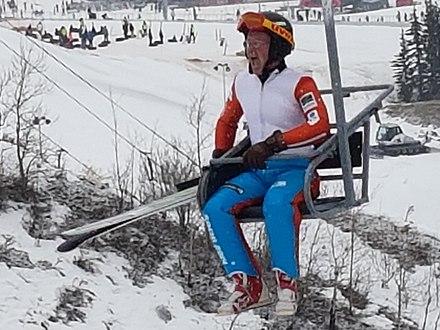
As the Winter Olympics have drawn to a close we find out what happened to second chance learner Eddie the Eagle, the unlikely hero of the 1988 Games.
Eddie the Eagle’s iconic ski jumps at the 1988 Winter Olympics at Calgary endeared him to the world as the lovable underdog. Even those too young to remember the Games may have seen the eponymous film starring Taron Egerton as ‘Eddie’. His performance, finishing last in both the 70 and 90 metre events, along with his thick glasses worn under goggles that often misted up, caught the imagination of the worldwide media. But since achieving fame as the unlikely star of those games Michael Edwards (his real name) found a new direction in life through returning to learning.
His story is an inspiration to all those who dream of success yet face huge barriers. He had no equipment, little access to training facilities and no money. He was sleeping in cars, barns and even a psychiatric hospital in Finland because it was a cheap place to stay, all whilst training to achieve his dream of heading to the Olympics. It’s clear that what this plasterer from Cheltenham had in spades was a dogged determination to succeed – something he attributes to ‘middle child syndrome’.
Calgary 1988 turned Michael into a media celebrity, appearing on ‘The Tonight Show with Johnny Carson’ alongside Burt Reynolds.
“My feet didn’t touch the ground for about three years,” he says. “I was travelling all over the world, opening shopping centres, golf courses and having a whale of a time. But what I really wanted to do was carry on ski jumping.”
Sadly a change in the qualifying rules for competitions meant he couldn’t compete at an elite level any longer. Disappointing as that was, for Michael it was all about taking part rather than just winning. His comment on the 2016 film sums up his sentiments:
“They did such a great job with the film because it really captured the heart, spirit and essence of my story. Just getting to those Olympic Games was my gold medal. “
Fame was sadly not accompanied by fortune. All the money he earned from the Calgary games went into a trust fund which was badly managed. As a result Michael was declared bankrupt after retiring from competitive ski jumping. Working with the lawyers who put together his bankruptcy case sparked an interest in studying law.
“Law is very analytical so it suited my way of thinking. It’s an interest I always had.”
To gain a place at university to study law – his ambition – meant that Michael needed to gain more qualifications. So in 1998 he enrolled on a number of distance learning courses with the National Extension College. This meant he could study at home in his own time.
“It was a nice easy way back into education and I really enjoyed it,” he says. “I loved that flexibility. I could study whenever I had an hour to spare. I always thought that I might be able to go back to education at a later point. It’s amazing how flexible education has become and now anybody can start and stop education at any time”.
Michael gained a place at De Montfort University to study for a degree in law as a full-time student, having saved up enough money and supplementing it with part time work. Taking law up professionally is something that wasn’t feasible for him after completing his degree, as becoming a solicitor or barrister involves completing a legal practice course costing £20,000. His passion for law means that he reads law books for pleasure. And there are always other avenues open for someone with a law degree and Michael’s determination.
One opportunity cropped up out of the blue when Michael came back from Calgary and his manager organised him to sing a song called ‘Fly Eddie Fly’ which reached about number 50 in the charts back in 1988. Then a few years later Irwin Goodman wrote a song about ‘Eddie the Eagle’ and invited him to duet with him in Finland (though sadly it ended up as a solo project after Goodwin passed away from a heart attack shortly before he was set to record the song). That song reached number two in the Finnish pop charts. Michael spent six months singing in pubs, clubs and music festivals in Finland, but no-one translated the lyrics so, to this day, he never knew what he was singing about!
What have Michael’s experiences taught him about learning and life?
“A lot of sportspeople, especially elite athletes, have trained from about five years old and all they’ve ever thought about is their sport and competing. When it comes to an end they’re lost. It’s only a very small percentage of athletes who go on to become trainers or pundits on television. But you can use the skills that you had in your sport to find something else. See if there are any courses locally or ones you can do from home. And be ready for any opportunities that come your way.”
Above all Michael’s experiences both as a sportsman and mature student have taught him perseverance.
“I had to fight tooth and nail for any kind of attention in sport, but that gave me tremendous resilience. Once I put my mind to doing something, I would go for it and that was the same with law. No matter how many people say ‘No, no it can’t be done’, I want to prove to them that it can. There’s always a way to learn and that’s what I like about education now; it can fit any lifestyle. You can always make time and study. I encourage many people to never stop learning.”
Although Michael never even came close to winning a medal he was the only British athlete who achieved a place in ski jumping at the 1988 Games. That in itself is a huge achievement.
Press release distributed by Pressat on behalf of The National Extension College (Part of the Open School Trust), on Tuesday 1 March, 2022. For more information subscribe and follow https://pressat.co.uk/
“On February 24, Russia deployed its military into Ukraine. Bombs and shelling have continued to escalate as people flee their homes and desperately seek safety.
War has been steadily waging over the last eight years in Ukraine, leaving more than 850,000 people internally displaced and almost 3 million people in need of humanitarian aid. The current escalation in conflict will have devastating consequences for the civilian population and humanitarian needs are expected to rise.
Ukraine officially declared itself an independent country in 1991 as the Soviet Union collapsed and the Cold War ended. Since then, the country has been forming closer ties with the European Union and with NATO. Russia, however, sees these ties as an economic and strategic threat to its own security. In 2014, Russia invaded and subsequently annexed the Crimean Peninsula and began backing pro-Russian separatists in parts of eastern Ukraine that want to separate from the country.”
The following are resources for teachers interested in teaching the conflict in Ukraine.
Women’s History Month
It’s March and that also means that it is Women’s History Month. Women’s History Month has its origins as a national celebration in 1981 when Congress passed an act which authorized and requested the President to proclaim the week beginning March 7, 1982 as “Women’s History Week.” Throughout the next five years, Congress continued to pass joint resolutions designating a week in March as “Women’s History Week.” In 1987 after being petitioned by the National Women’s History Project, Congress passed another additional legislation which designated the month of March 1987 as “Women’s History Month.”
Below is a list of resources for Nebraska Educators to access and use lessons relating to Women’s History Month.
The Executive Board of the Nebraska State Council for the Social Studies is seeking nominations for the 2022 Social Studies Teacher of the Year awards for Congressional Districts 1, 2 and 3 as well as the Carter service-learning award and the prestigious Paul Beck award. There is also an award for an outstanding clinical practice teacher. All public and private school teachers who teach social studies at the elementary or secondary levels are eligible.
We hope that you can assist us in soliciting nominations of deserving teachers. Each year we encourage administrators and teaching colleagues to nominate teachers for these awards. If you would be so kind as to spread the word and/or make an online nomination.
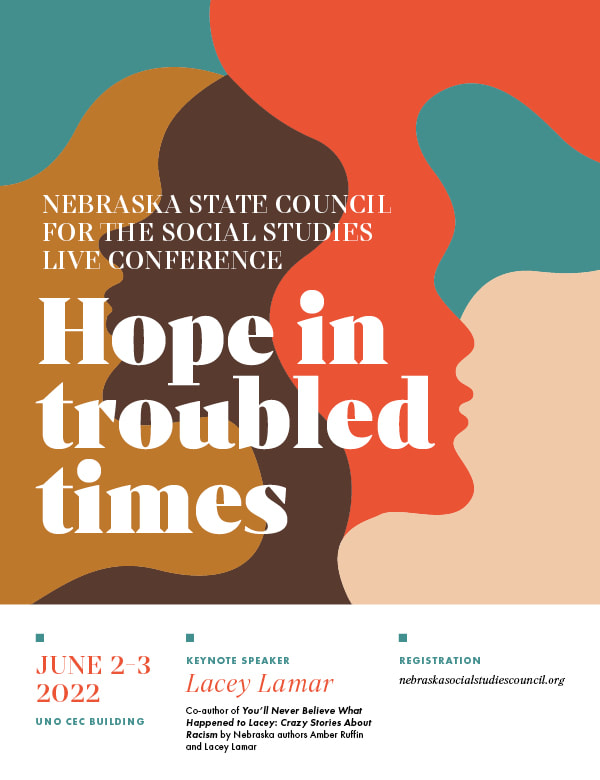
The posted deadline is March 11. We appreciate your help with this endeavor. Social studies teachers are encouraged to attend the annual conference at the UNO Center for Community Engagement (pre-conference workshops June 2, conference June 3).
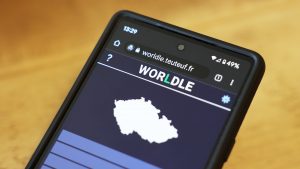
Teachers, are you interested in a way to incorporate more geography into your classroom? This app, inspired by Wordle, presents a new and entertaining way to introduce students to different countries around the world!
Worldle was inspired by Wordle, according to its creator, Antoine Teuf, a 31-year-old Web and video game developer who lives in Montpellier, France — but it is not the same game.
Wordle and Worldle are, of course, similarly named, which has some social media users confused. But Teuf, in an interview with The Washington Post, said he doesn’t want Worldle to be seen as “a copy of the original Wordle game” but rather a “tribute” to it.
Where Wordle gives players six chances to guess a daily word, Worldle users have six tries in which to guess one country or territory based on an outline of its shape alone.
When Worldle players guess a country that is not correct, they are told how far and in which direction it is from the correct country on a map.
Worldle users can make the game more challenging by choosing to either hide the image of the country or territory, or to rotate the image in a random direction.
Like Wordle, Worldle can be played once a day, and users can share their results on social media in little green, yellow and black square emoji that symbolize how quickly they got the correct answer.
Players from around the world have shared their Worldle results on Twitter under the hashtag #worldle, showing the game’s global reach, along with jokes and memes comparing the two games.
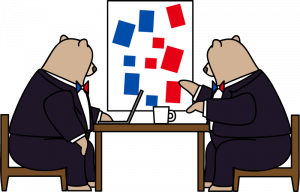
The Flip Side is on a mission to help bridge the gap between liberals and conservatives.
We’re a one-stop shop for smart, concise summaries of political analysis from both conservative and liberal media. Our goal is to become a news source for liberals, moderates, independents, conservatives, and even the apolitical.
It’s hard to convince liberals to watch Fox or conservatives to watch MSNBC. But if everyone takes 5 minutes a day to read The Flip Side, we’ll have a starting point when talking to our friends and neighbors.
I know this newsletter is sent to secondary social studies teachers, but if you know an excellent educator in grades K-3, please share this amazing opportunity with them! Application deadline is March 15, 2022.
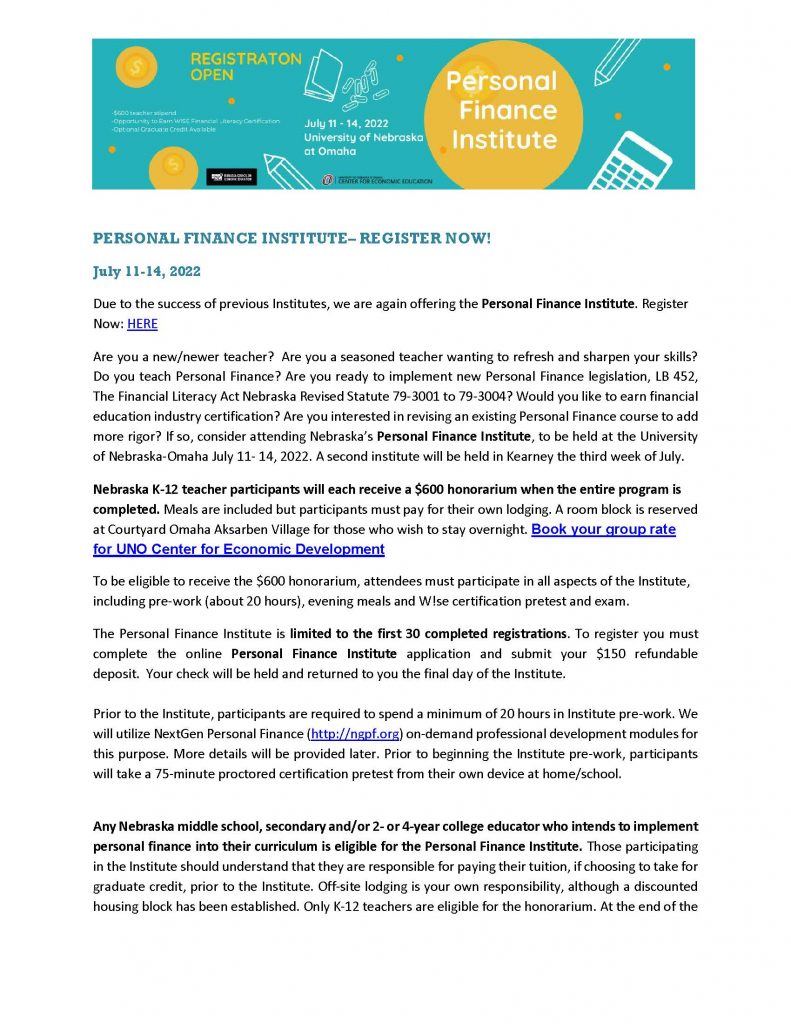
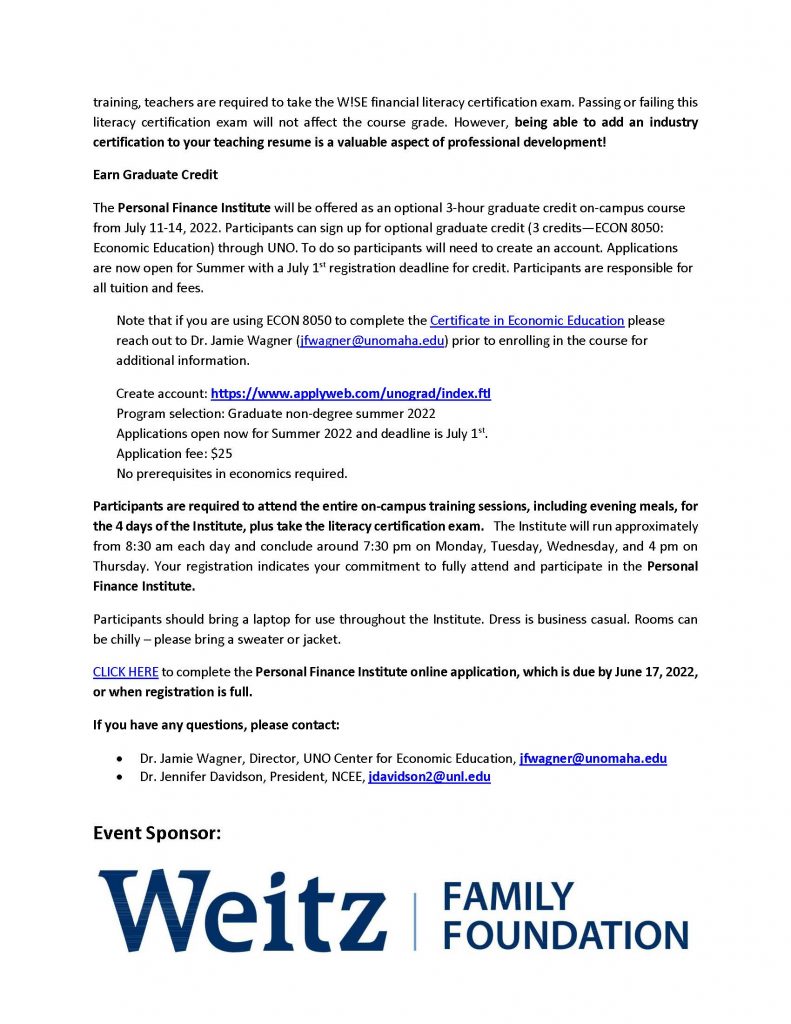
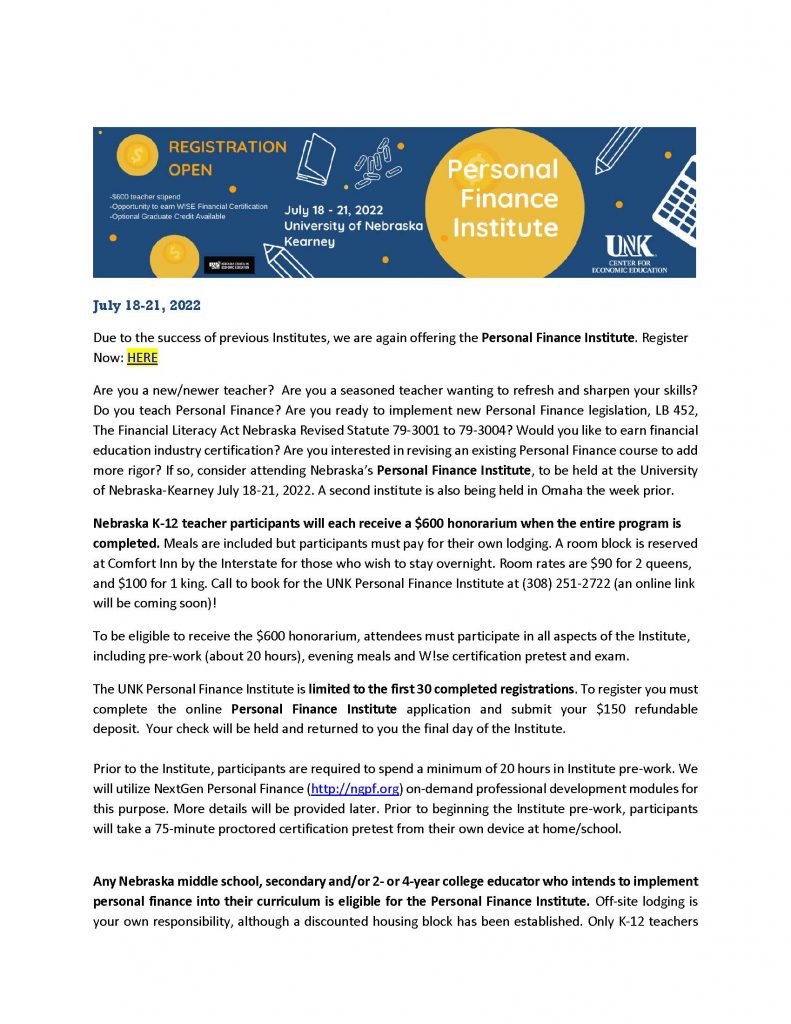
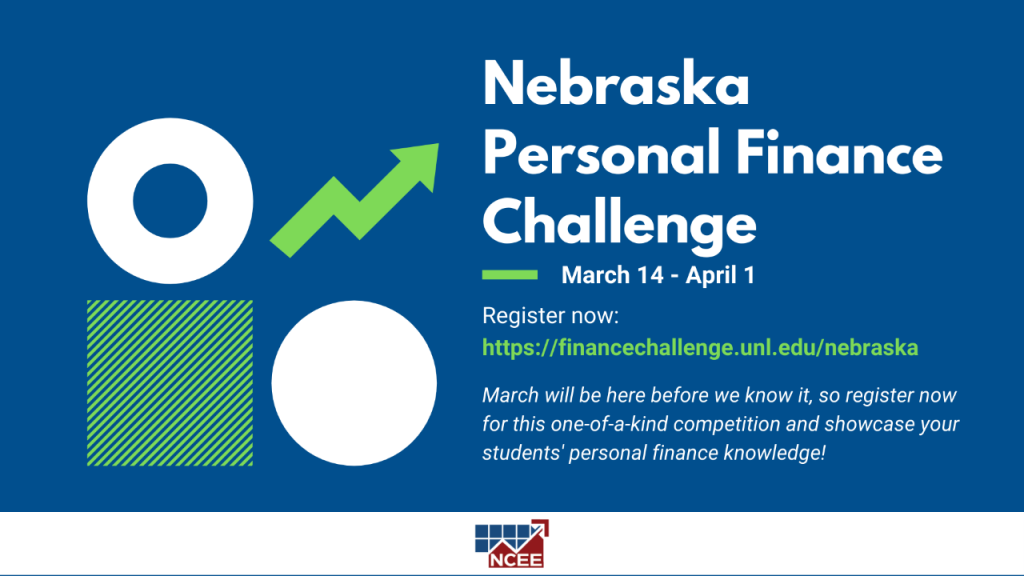
Personal Finance Institute Opportunity for Teachers (2 Locations)
Any full-time educator of grades K–12 who teaches American history (including state and local history) is eligible for consideration. American history may be taught as an individual subject or as part of other subjects, such as social studies, reading, or language arts.
The 2022 award will honor exceptional elementary and secondary school teachers. Eligible generalist and specialist teachers in each of the 50 states, the District of Columbia, Department of Defense schools, and US Territories are encouraged to apply.
IMPORTANT CALENDAR DATES:
Deadline for 2022 nominations: April 30, 2022
Deadline for 2022 nominees to submit supporting materials: May 30, 2022
Admissions are Now Open!
The FPA is proud to announce that the 14th annual Great Decisions Teacher Training Institute is now accepting applications from teachers across North America.
If you apply today, you will have the opportunity to join a top-tier group of fellow educators for one week of intensive international affairs workshops with policy makers and experts in New York City.
Participants will receive travel stipends and free hotel accommodation during the institute, as well as visits such as the Metropolitan Museum of Art, The Federal Reserve, and the United Nations.
If you or educators you know are looking for a way to integrate new techniques, materials, and perspectives into the classroom, do not pass up this opportunity to join the Great Decisions Teacher Training Institute!
Register or by emailing teachers@fpa.org and requesting an application form.
Applications are due Friday, March 11th, 2022.
LAW-RELATED EDUCATION TEACHER OF THE YEAR $3,000 AWARD
For the past sixty years, the American Lawyers Alliance has been active in its support of public education, citizenship awareness and various service programs. Recognizing the vital role that teachers play in law-related education, the ALA began in 1985 to sponsor Law-Related Education Teacher of the Year Awards.
PURPOSE:
The purpose of these four awards is to honor public and private High School teachers who have made significant contributions in law-related education and have developed programs that meet the following criteria.
Furthered the understanding of the role of the courts, law enforcement agencies and the legal profession
Helped students recognize their responsibilities as well as their rights
Encouraged effective law-related education programs in their schools and communities
Increased communication among students, educators and those involved professionally in the legal system
NOMINATIONS:
Nominations for the 2022 Law-Related Education Teacher of the Year Awards may be submitted by the applicant, school administrators, other teachers, students, lawyers, judges, professional members of the community, or any other interested parties by March 15, 2022.
The American Lawyers Alliance is a charitable, educational and nonprofit organization whose mission is to promote understanding and appreciation of the law and the American legal system.
Visit the ALA website for an application and information about this award, including information about previous winners.
MyImpact Challenge is a civic engagement contest hosted by the Bill of Rights Institute. Our goal is simple: foster a robust understanding of citizenship and get students active in their communities now!
Submission is open to US citizens and US based young people between the ages of 13 and 19 years old on January 1, 2021. Submission must be received by 11:59 pm PT on Sunday, May 1, 2022. Only submissions entered through MyImpact Challenge’s online portal will be accepted for the contest. The contest is designed for one student per entry, but groups of up to five students may submit as a single group entry. Prizes awarded to group entries will be split evenly between entrants.
Each submission must include the following:
An essay of up to 1,200 words expressing the student’s a) understanding of the ideal of “E Pluribus Unum” and how their project furthers that ideal in their community b) How their project furthers at least one Civic Virtue and one of Founding Principle as defined in the Bill of Rights Institutes “Principles and Virtues.”
A report of up to 2,000 words detailing a student’s completed or in-progress civic engagement project. Report must include the following components.
The inspiration for the project.
The project plan.
Details of the project’s execution
At least two examples of the project’s demonstrated impact on the community.
How the student(s) grew in understanding of the role of Civic virtue, knowledge of their communities, and their ability to support or impact them.
Visual documentation of the student’s project and its results in one of the following formats:
Photographic Only: No fewer than ten and no more than twenty high-resolution still photographs, submitted in either JPEG or PNG format.
Video Only: One video of no more than five minutes, submitted in MP4 format
Mixed Photographic and Video: No fewer than five and no more than seven high-resolution still photographs as well as one video of no more than two minutes. Photographs must be in either JPEG or PNG format, and video must be in MP4 format.
This document was compiled by the Council of State Social Studies Supervisors as a way to communicate the wealth of professional development opportunities available to social studies educators. A special thanks to all of the organizations who helped contribute to this work and to the many organizations who are offering high quality social studies professional development for social studies teachers across the country. Many of the opportunities below are offered free or low cost, but some opportunities do have a cost. When opportunities are highlighted in yellow, it means there are not yet 2022 updates for that particular program. The document will be updated through the spring of 2022. Please email Stefanie Wager at stefanie.rosenbergwager@gmail.com with any questions, comments, or to add programs to this list.
Historical scholarship and perspective to help make a better world.
The Lepage Center brings historical scholarship and historical perspective to bear on contemporary global issues and has created different activities and funding opportunities to promote the importance of historical scholarship, methods, and inquiry for the public interest.
Our 2021-22 essay competition invites students to reflect upon the following question:
How can the study of history help us understand contemporary challenges we face in the world today, such as COVID-19, migration, and climate change?
What are the essay requirements?
The essay should be a maximum of 500 words.
The essay should be framed by an argument and supported by evidence.
All sources (including internet-based sources) must be cited appropriately
How to submit an essay?
Participating teachers will collect essays from their students and submit them to lepage@villanova.edu by May 1st, 2022. The best essays will receive an award.
For patients at Novovolynsk Hospital in western Ukraine, the sound of air raid sirens has suddenly become a common reality amid the military offensive in the country. Patients must move from a modern facility above ground to a 1950s-era underground bomb shelter with a rudimentary set-up that can fit up to 300 people.
“In one day, the air raid sirens went off at 5 separate times. Our patients are mostly the elderly and some are on crutches and facing acute health needs. They cannot keep travelling down to the bunker,” says Mr Oleh Shypelyk, Head of the Hospital.
The Hospital is equipped with 3 operating rooms. An emergency department provides regular medical care and 6 teams tend to the wounded. Each hospital building is equipped with a generator to ensure a continuous supply of electricity.
Health workers are preparing for a range of scenarios should the Hospital become a target in the military offensive. “The main needs are additional generators to ensure electricity supply to the ward with COVID-19 patients – they should stay separate from others – and to the maternity hospital, as women have to give birth regardless of whether there is a war or COVID-19,” explains Mr Shypelyk.
“We also need to provide at least 2 generators to the shelter, because in case of bombing, we will not be able to transfer all equipment to the shelter. We also need additional surgical equipment. If hospitals are to be shelled, we must be prepared for that.”
“Health workers must be protected in order to continue to save lives,” says Dr Jarno Habicht, WHO Representative to Ukraine. “Similarly, health facilities must be protected and remain functional, safe and accessible to all who need essential medical services.”
The oxygen supply situation, meanwhile, is also at a very dangerous point in Ukraine. Trucks are unable to transport oxygen shipments from plants to hospitals across the country, including in the capital Kyiv.
Despite the challenges posed by the current situation, WHO is actively looking at solutions to increase supplies. This will likely include the importation of oxygen (liquid and cylinders) from regional networks. These supplies will need safe transit, including via a logistics corridor through Poland. WHO is also working to ensure a supply of oxygen-related medical devices and trauma treatment supplies.
The WHO Director-General has announced the release of a further US$ 3.5 million from WHO’s Contingency Fund for Emergencies (CFE) to purchase and deliver urgent medical supplies. WHO’s humanitarian health support is expected to increase following further needs assessments. This assistance complements the trauma care and medical supplies which WHO helped to pre-position in health facilities.
“We will continue to deliver care and support people across Ukraine affected by this military offensive,” concludes Dr Habicht. “Health for all, in all circumstances, lies at the heart of our mission and mandate.”
Rockets have been “raining down” on Ukraine’s cities and hundreds of people have been killed or injured since the Russian military offensive began, the UN Secretary-General said on Tuesday, at the launch of a $1.7 billion flash appeal to provide urgently-needed assistance.
António Guterres’s comments came as latest UN data indicated that 677,000 people have fled Ukraine since 24 February.
Today, we are launching two plans to help people across Ukraine and beyond – including funds to boost medicine & health supplies, safe drinking water, shelter & protection.
I urge the international community to respond to these life-saving appeals. https://t.co/h7n7UshBxA
— António Guterres (@antonioguterres) March 1, 2022
“United Nations agencies and our partners are now working 24-7 to assess humanitarian needs and scale up aid, particularly to women, children, older people and those with disabilities,” Mr. Guterres said, before thanking Member States that have kept their borders open to people fleeing the violence.
“We must help Ukrainians help each other through this terrible time,” the UN chief insisted, adding that electricity and water supplies have been disrupted, roads have been “damaged or destroyed by bombs” and food and medicine were in short supply in some areas.
Broad reach
In Geneva, UN emergency relief chief Martin Griffiths, explained that the purpose of the call for immediate humanitarian funding was to help people inside Ukraine – including those internally displaced – as well as those seeking shelter beyond its borders.
An estimated $1.1 billion is needed for the response inside Ukraine for three months, to help six million of the most vulnerable in Ukraine, as the escalating conflict has triggered an immediate and steep rise in demand for lifesaving aid. But essential supplies and services are being disrupted, as civilians flee for their lives.
$1.5 billion pledged, in rapid response
At the end of the launch event in Geneva, Mr. Griffiths announced that $1.5 billion had been pledged for the humanitarian appeals. The UN Spokesperson, Stephane Dujarric, welcomed the “outpouring of support” speaking to journalists in New York shortly afterwards.
“This is among the fastest and most generous responses a humanitarian flash appeal has ever received“, he said.
Refugee spike
Also briefing journalists, High Commissioner for Refugees, Filippo Grandi, appealed for “$550 million for the refugee agency and 12 partner agencies”. Noting that 520,000 people were estimated to have been displaced by the Ukraine crisis just last night, Mr. Grandi said that this had already risen sharply, in the space of just a few hours: “677,000 refugees have now fled Ukraine to neighboring countries in the past six days,” he said. “That is 150,000 more, in less than 24 hours.”
The UN estimates that 12 million people inside Ukraine will need relief and protection, while more than four million refugees may need protection and assistance in neighboring countries in the coming months.
On 27 February 2022, as military operations continue, people fleeing Ukraine walk along vehicles lining up to cross the border from Ukraine into Poland.
‘Third class citizens’
Reacting to reports that third-country refugees have been ill-treated at border crossings and inside Ukraine as they try to seek shelter, the UN refugee chief insisted that “there should be absolutely no discrimination between Ukrainians and non-Ukrainians. Europeans and non-Europeans. Everybody is fleeing from the same risks.”
While the European Union is discussing the possibility of giving temporary protection status to refugees from Ukraine, the tragedy is “likely to introduce a new dimension to the many years of debate on asylum status, responsibility sharing and so forth”, said Mr. Grandi.
The UN refugee agency, UNHCR, has already received more than $40 million in private contributions from individuals or companies, an “unprecedented” feat, he added. “I’ve never seen it and I think it’s positive.
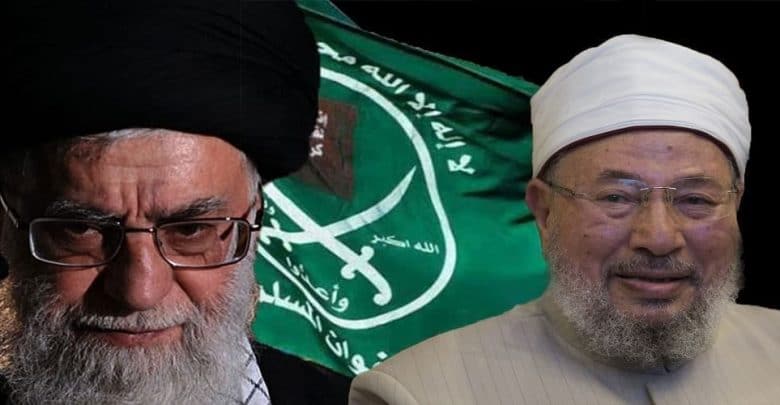
Many years before the Khomeini revolution, there were continuous meetings between the Iranian leadership and Hassan Al-Banna, the founder of the Muslim Brotherhood.
Al-Banna lays the foundation stone for the Brotherhood’s relations with the Shiites
He was the first to lay the foundation stone of the “Brotherhood-Shiite Convergence” in 1947 in an effort to bring Sunnis and Shiites closer together, through his famous saying that he delivered during a visit of an Iranian Shiite delegation to the headquarters of the General Centre of the Muslim Brotherhood and included the Shiite jurist “Muhammad Taqi al-Qummy.” He said, Know that Sunnis and Shiites are Muslims who are united by the word “There is no god but God, Muhammad is the Messenger of God.”
Sayyid Qutb and the Shiite revolution
As for Sayyid Qutb, who enjoys great love and popularity in Iran, this prompted her to try to intervene to lift the gallows from his neck after a death sentence was passed in the case known as the 1965 Special Organisation, which planned terrorist operations, led by Qutb Islam and considered him the basis for the theory of the establishment of the Islamic State and the nature of Muslim society, as previously there had been strong contacts and relations between the Iranians and Sayyid Qutb.
Moreover, Sayyid Qattat’s books, especially “In the Shadow of the Quran”, were the most widely distributed books in Iran after the revolution. This was not the first time that “Milestones on the Road” went to Iran while pressing its feet. On the contrary, it went there after 1966, when it was completed. The book was printed in Beirut, and this book was very popular among the Shiites, so no one knew of a book published by a Sunni writer that was so widespread and so widespread.
Popular in a Shiite state, just like Khomeini, in his idea of the guardianship of the jurist, and in his book “The Islamic Government” was touched by Sayyid Qutb’s idea of “governance”, and in 1966, Sayyid Ali Khamenei, the leader of the Iranian Republic, a disciple of Khomeini, who was also an outstanding student of Nawab Safavi, who was known for his close ties to the Brotherhood, Khamenei translated Sayyid Qutb’s book “The Future of this Religion” into Persian.
He wrote an introduction to the translation dripping with intense sentiment, in which he described Sayyid Qutb as a mujahid thinker, and the Egyptian regime had executed Qutb on charges of forming an organisation targeting the assassination of Gamal Abdel Nasser and the overthrow of the regime by force, which Qutb admitted to in a letter he wrote before his hanging entitled “Why did they execute me? That religion is a way of life, and that its rituals are not useful unless they express its truths, has been proven in a wonderful and objective way that the world will move towards our message and the future of this religion.
Brotherhood support for the Khomeinist revolution
The Brotherhood strongly supported the Khomeinist revolution in Iran and mobilised demonstrations against the late President Anwar Sadat’s reception of the Shah of Iran, and sided with Iran in its war against Iraq.”
While the Muslim Brotherhood saw the Islamic Republic in 1979 as a victory for their vision and the first Islamic government since the collapse of the Ottoman Caliphate, the Muslim Brotherhood has supported the Islamic Revolution in Iran since its inception because it was against the Shah’s regime. Reza Pahlavi, who was aligned with the Zionist enemy. Iran also considers the export of the revolution by the Muslim Brotherhood as a success.
After Khomeini came to power in Iran on 11 February 1979, one of the first planes to arrive at Tehran airport carried a delegation representing the leadership of the worldwide Muslim Brotherhood organisation: Al-Alsun spread among the Syrian opposition once the delegation offered Khomeini allegiance to him as Caliph of the Muslims if he accepted a published statement saying “that the dispute over the Imamate at the time of the Companions is a political matter, not a faith”. Khomeini waited and promised them an answer later, and when the new constitution of the Islamic Republic of Iran was promulgated, which says that “the Ja’fari doctrine is an official doctrine… and the guardianship of the jurist is a representative of the secret Imam”, Khomeini’s answer was clear.
Despite this, the Muslim Brotherhood in Egypt continued to support the new Iranian regime and organised large demonstrations against President Sadat’s hosting of the Shah of Iran in Egypt, then supported Iran in its war against Iraq and in the issue of Crescent magazine. The group’s general guide, Omar al-Telmisani, says: “I don’t know of anyone from the Muslim Brotherhood in the world who attacks Iran. An exception to this was the Syrian Brotherhood branch, which had just emerged from a bitter confrontation (1979-1982) with the Iranian-allied Syrian regime, although it was not official, but in the words of one of the Brotherhood’s leaders in Syria, Sheikh Saeed Hawa.
When Khomeini died on 4 June 1989, the General Guide of the Muslim Brotherhood, Hamid Abu Al-Nasr, published an obituary that included the following words: ‘The Muslim Brotherhood counts the death of Islam, Imam Khomeini, the leader who exploded the Islamic revolution against tyrants with God. During the time of Ali Khamenei, who became “Leader” after Khomeini’s death, Sayyid Qutb’s theories were taught in the ideological training schools of the (Iranian Revolutionary Guards), and the influence of religious authorities such as Ayatollah Mesbah Yazdi , Ahmadinejad’s spiritual teacher, also emerged. She hides her admiration for Sayyid Qutb and her influence on him.
The ideological similarity between the Brotherhood and the Shiites
The intellectual approach is similar between the Brotherhood and the leaders of the Khomeinist revolution, hence the belief in the universality of the message of monotheism. That Islam is the only way to a happy life and the belief in the plurality of opinions and the plurality of parties on the basis of freedom of thought and expression in Islam. Both sides share a view of the effects of the Western military onslaught on the Islamic world, and that it has not only led to military, political and economic control over Islamic countries, but has also produced strong tendencies in Islamic societies towards Westernisation of thought, culture, social life and fundamentalism, which sees that there is a starting point which is the origin, and time has been a process of deviation from it, and Muslims have to return to it. A materialistic and spiritually backward civilisation.
As for differences, they are limited to differences between them on the content of Islam, which is Sunni, the content is according to Al-Banna, the content is Shiite in Khomeini, and there is progressivism in achieving the goal according to Al-Banna The Muslim Brotherhood does not share Khomeini’s view that the American West is the Great Satan in relation to the Soviet Union, although they agree in their hostility towards both.
The scholar Dr. Ishaq Musa Al-Husseini, who was a member of the Arabic Language Academy in Cairo until his death in 1990, and was also a member of the Iraqi Scientific Academy, in addition to a member of the Islamic Research Academy, wrote this great scholar in his famous book “The Muslim Brotherhood. The Greatest Movement. Modern Islam” stated that the friendship was mutual between the Muslim Brotherhood and the Shiites. Indeed, the Shiites considered the Muslim Brotherhood as a branch of their branches and spokesman of their language among the Sunni nation, and what he said in this regard was “Some Shiite students who were studying in Egypt joined the Muslim Brotherhood, and it is known. The ranks of the Muslim Brotherhood in Iraq included many Twelver Imami Shiites.” When the Safavi representatives went to Syria and met with Dr Mustafa al-Sibai, the Muslim Brotherhood’s general observer there, he complained to him that some young Shiites were joining the secular and nationalist movements, so the representatives went to one of the pulpits. He said to a crowd of Shiite and Sunni youth: “Whoever wants to be a true Jaafari should join the Muslim Brotherhood.
Muslim Brotherhood offers Egypt to Iran after takeover
In the wake of the January revolution, which the Iranians saw as a new model of the Islamic revolution, especially with the rise of the political ideology of Islam, to the detriment of national identity, and the rise to power of the Brotherhood, the Iranians tried to strengthen their relationship with the Brotherhood, and during the Brotherhood’s rule, Qassem Soleimani, commander of the Al-Quds Force in the Guards, visited the Iranian revolutionary in Egypt and met with many Brotherhood leaders for rapprochement between the Brotherhood and Iran.
After the Muslim Brotherhood came to power with the victory of deposed President Mohamed Morsi in the 2012 elections, the group began a series of re-establishing rapprochement and relations with Iran. Morsi took advantage of the Non-Aligned Movement summit in August 2012, after a 35-year break in official Iranian relations, amidst extreme Iranian warmth towards the Muslim Brotherhood president and a warm embrace between Morsi Ahmadinejad, but the Muslim Brotherhood’s fears of popular anger at Iranian Shiites worried them.
It is also interesting to note that the Muslim Brotherhood tried to benefit from the expertise of the Iranian Revolutionary Guards and set an example in Egypt to protect the deposed president Mohamed Morsi, but they backed down amidst great popular discontent and rejected the idea completely.
What is happening today between Qatar and Iran is not insignificant, knowing that Qatar has always supported and financed the Muslim Brotherhood, especially in Europe.
European Commission Press release Brussels, 01 Mar 2022 The resolution of these banks was approved under the EU’s bank recovery and resolution framework – through the sale-of-business tool – to Hrvatska Poštanska Banka d.d. and Nova Ljubljanska Bank d.d, respectively.
We had, with the President, a very good and important meeting. You know that we are facing extremely difficult challenges. The EU has a very clear, very firm and very united position, and we are convinced that it is important to cooperate very closely with our friends and our partners. You know my personal engagement to your country, to Georgia.
I’ve tried to do my best over the last months to support all the positive efforts for stability, for economic reforms, and for democratic reforms in Georgia. And we are very clear, together with the European Commission and the European Parliament – we want to demonstrate our clear and concrete support to maintain all the efforts, to strengthen the ties between Georgia and the EU.
We have identified the important priorities on which we should work together, and we will be totally committed because in these extremely difficult times, it is very important to stick together, to express a very clear message of support for international law, the rules-based international order, the multilateral approach and full respect for the UN Charter. These are important principles. And we understand very well that it is important to make concrete progress to make sure that the strong ties between Georgia and the EU are very visible and tangible for the people in Georgia.
In the aftermath of Russia’s invasion of Ukraine, MEPs demand tougher sanctions on Russia and new efforts to grant Ukraine EU candidate status.
In a resolution adopted on Tuesday, Parliament condemns in the strongest possible terms Russia’s illegal invasion of Ukraine and demands that the Kremlin end all military activities in the country. It also denounces the role of Belarusian dictator Aliaksandr Lukashenka in the assault.
MEPs categorically reject the Russian “rhetoric hinting at the possible resort to weapons of mass destruction”, while reminding Russia of its international obligations and warning of the dangers of a nuclear escalation of the conflict.
They also call on the European Commission and EU countries to provide further emergency humanitarian assistance to Ukraine, in cooperation with UN humanitarian agencies and other international partner organisations.
The text was approved by 637 votes in favour, 13 against with 26 abstentions.
Working towards EU candidate status for Ukraine
The resolution calls on the EU institutions to work towards granting the country EU candidate status. Any such procedure should be in line with Article 49 of the Treaty on European Union and based on merit, the text says. In the meantime, the EU should continue to work towards Ukraine’s integration into the EU single market along the lines of the existing EU-Ukraine Association Agreement.
Stronger sanctions against Russia
While welcoming the swift adoption of EU sanctions, MEPs want to see broader restrictive measures aimed at strategically weakening the Russian economy and industrial base.
In particular, imports of the most important Russian export goods, such as oil and gas should be restricted, they say. New EU investment in Russia and new Russian investment in the EU should be banned. All Russian banks should be blocked from the European financial system and Russia should be banned from the SWIFT system.
A range of sanctions, including the SWIFT ban, should be extended to Belarus based on its direct support of the Russian invasion of Ukraine.
Weapon deliveries, refugee protection
In addition, the text calls on EU countries to provide Ukraine with defensive weapons more swiftly, in line with Article 51 of the UN Charter, which allows for individual and collective self-defence. It also favours increased EU intelligence cooperation with Ukraine regarding the ongoing aggression.
Parliament also welcomes the EU’s commitment to activate its Temporary Protection Directive, in order to provide all Ukrainians fleeing war with immediate access to protection. The responsibility for receiving the refugees arriving at the EU’s external borders should be shared equally among EU countries.
Targeted sanctions against individuals, no more “golden visas” for wealthy Russians
Targeted sanctions against individuals responsible for high-level corruption in Russia and Belarus as well as oligarchs and officials close to the countries’ leadership should be adopted swiftly, MEPs demand.
EU and allied countries with residence by investment schemes (so-called “golden visas”) should review all beneficiaries of such residence status and revoke those attributed to Russian high-net-worth individuals and their families, in particular those linked to sanctioned individuals and companies, says the text.




 The Flip Side is on a mission to help bridge the gap between liberals and conservatives.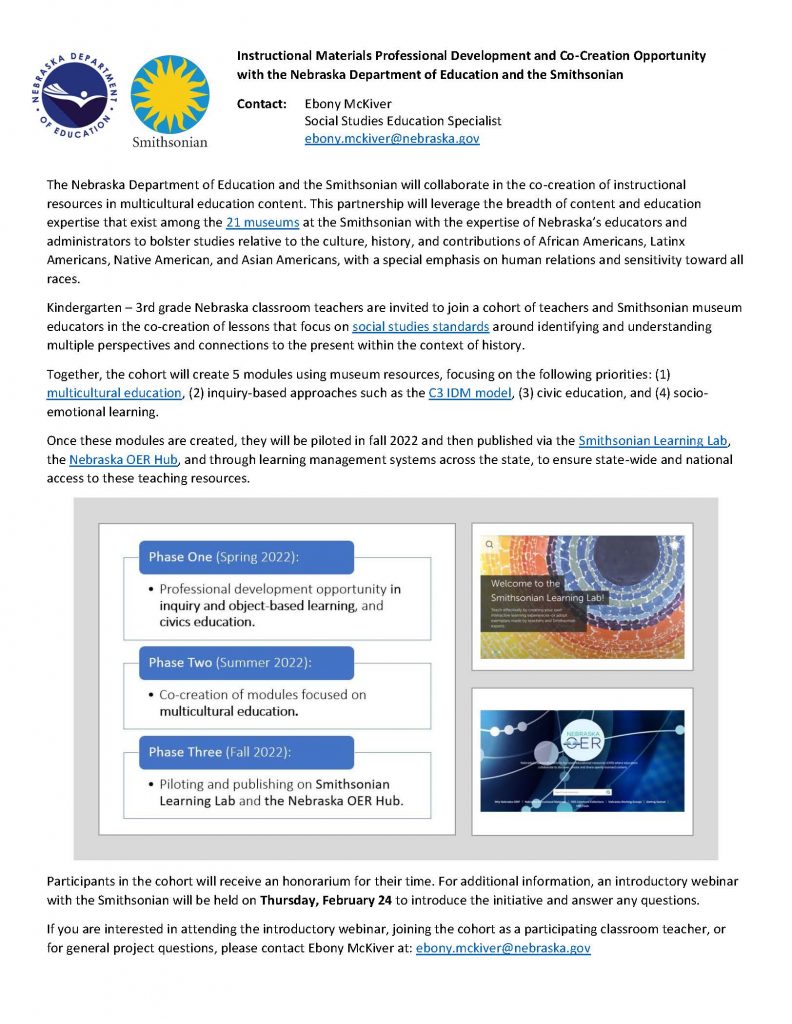

 Admissions are Now Open!
 MyImpact Challenge is a civic engagement contest hosted by the Bill of Rights Institute. Our goal is simple: foster a robust understanding of citizenship and get students active in their communities now!
 Historical scholarship and perspective to help make a better world.