Sunday, September 20, 2026
Home Blog Page 116

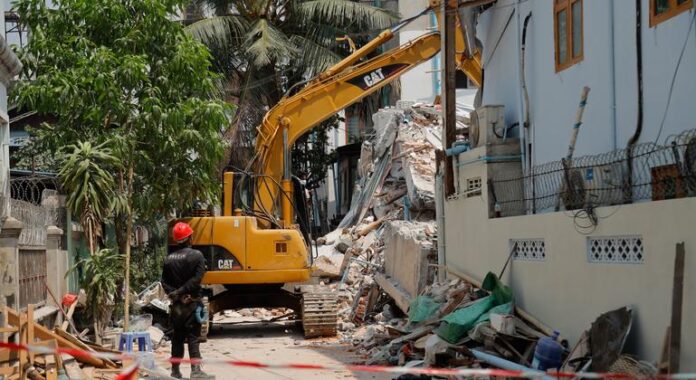
Myanmar: WFP reports fragile recovery one year after deadly earthquake

0
Myanmar: WFP reports fragile recovery one year after deadly earthquake

The World Food Programme’s (WFP) latest monitoring shows a fragile recovery from the disaster.  

In the affected regions of Sagaing and Mandalay, one in six households continue to face moderate to severe food insecurity, whilst half of all families remain only marginally food secure, making them exceptionally vulnerable to even the smallest shock. 

“People who survived the earthquake have barely begun to stand again, and now another blow is knocking them back down,” said WFP Country Director Michael Dunford.

Middle East conflict increasing prices 

The conflict in the Middle East is disrupting transportation and driving fuel shortages across Myanmar.

Rising fuel prices are pushing up the cost of moving food and agricultural goods, placing additional strain on households already struggling to afford essentials.

The crisis is also striking Myanmar’s farmers as they prepare for monsoon crops. With fertilizer demand expected to rise over the next three months, fuel shortages and rising input costs are threatening to push production expenses to double last year’s levels.  

Earthquake and conflict areas hardest hit 

These compounding shocks are expected to hit hardest in conflict and earthquake affected areas, such as Chin, Kachin, Kayah, Rakhine, Sagaing and Shan, worsening the food insecurity in a country where 12.4 million people – nearly one quarter of the population – are already facing acute hunger. 

Over the past year, WFP reached half a million earthquake survivors with relief and recovery support. However, the organisation has now transitioned from emergency relief to restoring community infrastructure that provides long-term stability. 

Funding needs  

WFP needs $150 million to assist 1.5 million people across the country this year with life-saving assistance and resilience support.  

Without sufficient funding, the agency will be forced to prioritize the most urgent life-saving needs, potentially scaling back recovery efforts that help earthquake survivors rebuild livelihoods and reduce long-term dependence on aid.

“The people of Myanmar have endured shock after shock – conflict, climate disasters, the devastating earthquake, and now a global fuel crisis,” Mr. Dunford said. 

“We must stand with them now. One year after the earthquake, they cannot afford another fall.” 

Source link

Small modular reactors gain competitive edge with new digital twin

0


Advanced nuclear is within reach — and a new digital twin reveals how smarter plant operations can enhance

Source link

How Does Endpoint Security Protect IoT Devices In Hybrid Workforces

0


Hybrid work allows people to do their jobs from home and from the office. This work style depends

Source link

Ukraine: danger is only increasing, warns UN human rights office

0
Ukraine: danger is only increasing, warns UN human rights office

“During the first two months of this year, 60 per cent of all civilian casualties were in frontline regions (and) almost half of those killed were older persons,” said Deputy High Commissioner for Human Rights, Nada Al-Nashif. 

In a scheduled update on the war to the Human Rights Council in Geneva, Ms. Al-Nashif noted that the leading cause of death and injury was “attacks involving short-range drones” in both Ukrainian government-controlled areas and territory occupied by Russia. 

UN data shows that in 2025, at least 580 civilians were killed and 3,000 injured in such attacks. But in just the first two months of this year, 107 civilians were killed and 430 injured, representing a near-doubling of the casualty rate. 

A full 95 per cent of casualties were caused by short-range drones targeting Government-controlled territory, the Deputy High Commissioner added.

Frontline victims

Danger is ever-present in frontline areas occupied by Russia too, including Oleshky district in Kherson region, where residents describe “frequent drone attacks”, ambassadors heard.

Together with landmines along roads… evacuation (is) extremely difficult and dangerous, leaving many people trapped close to the frontline,” Ms. Al-Nashif maintained, describing food shortages and other critical humanitarian needs.

Turning to repeated attacks by Russian forces on Ukraine’s energy infrastructure, the Deputy High Commissioner noted that these have intensified this winter, “including strikes on systems that heat residential buildings, causing severe hardship for civilians”. 

Today, Ukraine has lost more than half its capacity to generate electricity, causing power outages across the country “of up to 22 hours a day in some areas”, Ms. Al-Nashif explained. 

“Hundreds of thousands of civilians were left without heating, some for weeks and even months, in temperatures that often fell below minus 15°C,” she continued, before citing reports that could not be confirmed of attacks on energy facilities in Russian-controlled areas, too.

Echoing those concerns, the UN Children’s Fund, UNICEF, warned that youngsters have endured “the toughest winter” of the war so far, caused by attacks on energy and water infrastructure that have disrupted electricity, heating and water and sanitation amid freezing temperatures.

“Children lost an estimated 79 to 88 per cent of effective learning time between mid-January and mid-February,” said the agency’s Anne Grandjean, Programme Specialist.

Plight of captured soldiers

The Deputy High Commissioner also highlighted longstanding concerns of Russia’s “widespread” and continuing ill-treatment of captured soldiers.

Over 96 per cent of the Ukrainian prisoners of war that we interviewed said they were subjected to torture and ill-treatment during their captivity” since Russia’s full-scale invasion in February 2022, Ms. Al-Nashif explained.

In a call to Russia “to stop this war”, the senior UN human rights official also urged Moscow to “halt extrajudicial executions, torture, ill-treatment and other violations against prisoners of war and civilian detainees…In short, to meet in full their obligations under international law”. 

The Deputy High Commissioner also called on Ukraine “to safeguard prisoners of war from torture and ill-treatment” and end discrimination against people often left with no choice but to leave territory occupied by Russia. 

Right to reply

Responding to those comments, Ukraine’s Permanent Representative to the UN in Geneva, Yevhenii Tsymbaliuk, underscored the widespread impact of the war in uprooting thousands of civilians in Donetsk, Luhansk, Kherson, Zaporizhzhia and Crimea – “a deliberate strategy by Russia to terrorise civilians, suppress dissent and punish those who refuse to abandon their homes or comply with Russia’s illegal policies”. 

Dismissing the UN Deputy High Commissioner’s update on the war, the Russian delegation urged her to “stop upholding the Kyiv regime” alleging a “war on dissenters, bloggers, journalists, enemies of Zelensky”. 

Many of the UN Human Rights Council’s 47 Member States also spoke at the oral update on the Ukraine war, which has been a regular feature of its work since Russia’s illegal annexation of Crimea in 2014. 

“We are appalled by Russia’s increased targeting of civilian life, instilling fear and trauma,” Germany’s delegation said. “Widespread and systematic missile and drone attacks have killed and injured ever more civilians in recent months.”

Taking the floor, China’s delegation stressed its country’s commitment “to promoting talks for peace and advancing political settlement of the Ukraine crisis”. 

Source link

Europe’s FoRB Envoys: Few Posts, Many Offices

0
Europe’s FoRB Envoys: Few Posts, Many Offices

As of 27 March 2026, Europe has only a small number of clearly named freedom of religion or belief envoys or commissioners. But across the European Union, most governments still manage relations with religious communities through ministries, commissions and administrative offices rather than through high-profile FoRB mandates.

Europe’s institutional map on freedom of religion or belief is more developed than it may first appear, but it is also highly uneven. At the supranational level, the most visible European Union role is once again the European Commission’s Special Envoy for freedom of religion or belief outside the EU, a role the Commission said on 26 March 2026 would now be held by Mairead McGuinness.

The appointment, also covered by The European Times, restored a post that had been vacant for 480 days and had become a recurring point of concern for civil society groups, MEPs and religious-freedom advocates.

But Brussels is not the whole picture. In Strasbourg, the Council of Europe had already moved months earlier to create its own high-level post dealing with religious intolerance. On 5 December 2025, the Council of Europe announced that Irene Kitsou-Milonas had begun her mandate as Secretary General Alain Berset’s Special Representative on antisemitism, anti-Muslim hatred and all forms of religious intolerance, having assumed duties on 1 December.

As The European Times reported in February, that decision gave the Council of Europe a more visible institutional focal point for defending religious minorities at a time when the European Union still had not filled its 480-day FoRB envoy vacancy.

The distinction is important. The Council of Europe role is not a classic FoRB envoy in name. Its mandate is framed more broadly around antisemitism, anti-Muslim hatred and all forms of religious intolerance. Yet in practical terms it is one of the most relevant Europe-level posts for the defence of religious minorities, interreligious dialogue and the wider protection of belief-related rights across the continent.

At national level, clearly named envoy-style posts remain rare. Germany is one of the clearest examples, with Thomas Rachel serving as Federal Government Commissioner for Freedom of Religion or Belief. The Netherlands also stands out, with official Dutch government material identifying Paul Bekkers as Special Envoy for Religion and Belief. The Czech Republic should now be counted in that small group as well: the Czech Foreign Ministry’s current Special Envoys page lists Robert Řehák as Special Envoy for Holocaust Issues, Combating Antisemitism and Freedom of Religion or Belief, with a term beginning on 20 January 2026.

Outside the EU, the United Kingdom likewise continues to maintain a named role, with David Smith listed by the British government as UK Special Envoy for Freedom of Religion or Belief.

Across most of the European Union, however, governments have chosen a different model. Instead of appointing envoys, they rely on domestic structures: directorates for religious freedom, offices for religious affairs, church-state liaison bodies, ministries of ecclesiastical affairs, or commissions dealing with religious recognition and relations with faith communities. These institutions can be influential, but they are not quite the same as a public envoy with an explicitly rights-based mandate.

A three-level European picture

Seen as a whole, Europe’s religious-freedom architecture now operates on three different levels.

First, there is the European Union level, where the Commission has restored its Special Envoy for freedom of religion or belief outside the EU through the 26 March 2026 Commission announcement.

Second, there is the Council of Europe level, where Alain Berset’s Special Representative provides a Strasbourg-based focal point for responding to antisemitism, anti-Muslim hatred and wider religious intolerance across the organisation’s member states, as outlined in the Council of Europe notice on Irene Kitsou-Milonas.

Third, there is the national level, where only a few EU countries maintain clear FoRB envoy-style posts, while most rely on ministries, commissions or administrative departments to handle religion-state relations internally.

That three-level structure matters because it shows that Europe does have institutions dealing with religion and belief, but it does not have a broad, coherent network of named FoRB envoys. The continent’s approach remains split between diplomacy, minority protection and administrative management.

Country by country in the European Union

Austria: No dedicated FoRB envoy was identified in current official material, but Austria has an Office of Religious Affairs in the Federal Chancellery.

Belgium: No dedicated FoRB envoy was identified. Religious matters are handled through the federal justice administration’s service for recognised religions and non-confessional philosophical organisations.

Bulgaria: No dedicated FoRB envoy was identified. Current state material continues to show a functioning Religious Denominations Directorate.

Croatia: No FoRB envoy was identified. Croatia maintains an Office of the Committee for Relations with Religious Communities.

Cyprus: No clearly named FoRB envoy was identified in the official material reviewed for this article. Publicly visible liaison with religious communities appears to remain embedded in broader governmental and presidential channels, including the work of the Presidential Commissioner on issues affecting the island’s recognised religious groups.

Czech Republic: Yes. The Czech Foreign Ministry currently lists Robert Řehák as Special Envoy for Holocaust Issues, Combating Antisemitism and Freedom of Religion or Belief.

Denmark: No FoRB envoy was identified. Denmark instead retains a dedicated Ministry for Ecclesiastical Affairs.

Estonia: No dedicated FoRB envoy was identified. Religious-community matters appear to remain within the interior administration and the legal framework on churches and congregations, including material published by the Ministry of the Interior.

Finland: No FoRB envoy was identified. The Ministry of Education and Culture says it administers matters relating to churches and other religious communities.

France: No FoRB envoy was identified. France continues to rely on the Interior Ministry’s Bureau central des cultes.

Germany: Yes. Germany currently has a Federal Government Commissioner for Freedom of Religion or Belief, Thomas Rachel.

Greece: No separate FoRB envoy was identified, but Greece has a Secretary General for Religious Affairs within the Ministry of Education, Religious Affairs and Sports.

Hungary: No dedicated FoRB envoy was identified. Church relations remain linked to government structures, including the state-secretary level responsible for church and nationality relations.

Ireland: No dedicated FoRB envoy was identified. Ireland instead appears to be moving through a renewed structured dialogue with faith and non-confessional groups rather than through a named envoy role.

Italy: No FoRB envoy was identified. Italy manages relations with religious denominations through structures within the Presidency of the Council of Ministers, including the service for relations with religious denominations.

Latvia: No dedicated FoRB envoy was identified. Religious-law issues remain tied to the justice administration, whose competences are outlined by the Ministry of Justice.

Lithuania: No FoRB envoy was identified. The Ministry of Justice handles matters related to religious communities, including recognition procedures.

Luxembourg: No dedicated FoRB envoy was identified. Relations with religious communities continue through state conventions and ministerial responsibility for cult matters, reflected in official government material on agreements with religious communities.

Malta: No FoRB envoy was identified. Malta maintains a visible church-state liaison mechanism through the Joint Office.

Netherlands: Yes. Official Dutch material identifies Paul Bekkers as Special Envoy for Religion and Belief.

Poland: No FoRB envoy was identified. Poland has a Department for Religious Denominations and National and Ethnic Minorities in the Ministry of the Interior and Administration.

Portugal: No dedicated FoRB envoy was identified, but Portugal has a longstanding Comissão da Liberdade Religiosa.

Romania: No separate FoRB envoy was identified. Romania maintains a State Secretariat for Religious Affairs.

Slovakia: No FoRB envoy was identified. Churches and religious societies remain under the Ministry of Culture.

Slovenia: No FoRB envoy was identified. Religious-freedom matters are currently presented through the Ministry of Culture’s religious-freedom framework and related official structures, including the Cultural Diversity, Human Rights and Religious Freedom Service, rather than through a named envoy role.

Spain: No national FoRB envoy was identified. Spain has one of the clearest internal structures in the EU: a Directorate-General for Religious Freedom within the Ministry of the Presidency, Justice and Relations with the Cortes.

Sweden: No dedicated FoRB envoy was identified in the material reviewed. Registration and related administrative matters continue through state institutions such as Kammarkollegiet rather than a named envoy role.

Human rights, minority protection and administration

The picture is therefore more nuanced than a simple tally of envoys. Europe has, at present, a small number of high-level figures dealing directly with freedom of religion, belief or religious intolerance. The European Commission now has one. The Council of Europe has one in a related but not identical format. Germany, the Netherlands and the Czech Republic have national examples within the EU. But most EU member states still approach the subject through administrative governance rather than envoy diplomacy.

For religious minorities, newer communities and non-belief groups, that difference can matter. A ministry can regulate, register and consult. An envoy can also signal public priority, visibility and political commitment. As Europe continues to debate how seriously it protects freedom of religion or belief both abroad and at home, that distinction is likely to remain part of the conversation.

Source link

Iran War Escalates as Europe Seeks Common Line

0
Iran War Escalates as Europe Seeks Common Line

Fresh Israeli strikes on Iran on Friday have pushed the Middle East war back to the centre of the global news cycle, but for Europe the story is not only military. It is about shipping through the Strait of Hormuz, rising energy anxiety, the credibility of transatlantic coordination, and the fear that yet another crisis could weaken focus on Ukraine.

Israel’s latest wave of strikes on Iran has forced European governments into a more urgent balancing act. On one side, they are trying to prevent a wider regional war and defend freedom of navigation through one of the world’s most sensitive maritime chokepoints. On the other, they are trying to preserve a working relationship with Washington at a moment when many European officials still appear uncertain about the exact objectives, legal basis and endgame of the conflict.

What changed on Friday

Early on Friday, Israel launched a new wave of strikes on Iran as the United Nations Security Council prepared to discuss attacks on Iranian civilian infrastructure. The timing mattered. It came as G7 foreign ministers were gathering in France, where the war in Iran was already overshadowing discussions that were also meant to address Ukraine, economic uncertainty and the state of the Western alliance.

For Europe, the immediate challenge is no longer theoretical. The conflict is already affecting diplomatic priorities, market confidence and security planning. European officials want clarity from the United States about what comes next, but they also want room to avoid being pulled into a war they did not choose.

Europe’s position: concerned, involved, but cautious

The European Union had already set out the dilemma in unusually direct language earlier this month. As EU foreign policy chief Kaja Kallas put it, “This is not Europe’s war, but Europe’s interests are directly at stake”. That formulation now looks even more relevant. Europe’s priority is to protect its citizens, support de-escalation, and keep trade and energy routes open without becoming a combatant.

The EU has also argued that the only sustainable exit remains a ceasefire and a return to diplomacy. That line matters not just as rhetoric. It reflects a deeper European concern that military escalation without a credible political endpoint could destabilise the region for years while exposing Europe to the economic aftershocks.

At the same time, Brussels is trying to keep a human-rights lens in view. EU ministers have stressed support for Iranian civil society and continued engagement with regional partners, while also adopting additional sanctions earlier this month over serious human-rights violations in Iran.

The G7 in France has turned into a stress test

The G7 meeting in France was always going to be difficult. It has now become a test of whether Europe and the United States still speak the same strategic language. Reuters reported that European powers planned to press Washington over accusations that Russia is helping Iran with intelligence and drones, linking the Middle East conflict more directly to the war in Ukraine. Kallas has said plainly that these wars are interconnected.

That linkage is politically important in Brussels, Paris, Berlin and other capitals. European governments do not want Iran to become a separate theatre that drains attention and resources from Ukraine. The concern is not abstract. If Moscow benefits from Western distraction, Europe may face a longer and more dangerous strategic overlap between its eastern and southern crises.

The atmosphere has been made more tense by recent U.S. criticism of NATO allies. That leaves European diplomats in the awkward position of trying to keep channels open with Washington while also signalling that alliance management cannot be replaced by surprise, pressure or public insults.

Hormuz, oil and the new European anxiety

If the battlefield is in the Middle East, one of the most immediate risks is economic. The Strait of Hormuz remains central to world energy flows, and even the prospect of prolonged disruption is enough to unsettle governments and markets. France has already approached dozens of countries about a possible future mission to help reopen the strait once hostilities subside, describing the initiative as strictly defensive.

That planning tells its own story. Europe is preparing for the possibility that even if the war cools militarily, commercial shipping may not quickly return to normal. For import-dependent economies, that matters deeply. Higher energy costs would arrive at a moment when many households and industries are still adjusting to years of inflation, security shocks and supply-chain strain.

Recent reporting has also suggested that Europe may be forced into uncomfortable trade-offs between climate ambition and energy security if the disruption lasts. That would be politically sensitive across the EU, where governments are already under pressure to reconcile decarbonisation targets with affordability and industrial competitiveness.

A wider security debate is taking shape

The broader context is also changing. NATO said this week that European allies and Canada increased defence spending by 20% in 2025 compared with 2024, and that all allies met or exceeded the long-standing 2% of GDP benchmark. Those figures strengthen Europe’s argument that it is taking more responsibility for its own security, even as the transatlantic relationship grows more volatile.

Yet more spending does not automatically solve the political problem. Europe still needs coherence: on Iran, on Russia, on maritime security, and on how to avoid being split between theatres. That is why Friday’s story is larger than one more round of strikes. It is about whether Europe can act as a strategic power in a crisis shaped by others.

What comes next

In the coming days, the central questions will be whether diplomacy can regain any ground, whether shipping through Hormuz can be protected without a broader military spiral, and whether Europe can keep Ukraine at the top of its security agenda while managing the fallout from Iran.

That dilemma had already been outlined in an earlier European Times analysis of the strategic choices facing Europe. Friday’s escalation has made those choices sharper. The old assumption that Europe could treat the Middle East as a distant crisis is no longer sustainable. The war may not be Europe’s, but its consequences already are.

Source link

World News in Brief, Cuba blockade hits healthcare, Haiti’s ‘vortex of violence’, deadly Djibouti shipwreck

0
World News in Brief, Cuba blockade hits healthcare, Haiti’s ‘vortex of violence’, deadly Djibouti shipwreck

In an alert, the UN World Health Organization, WHO, warned that Cuban hospitals have been struggling to maintain emergency and intensive care services.

“Thousands of surgeries have been postponed during the last month and people needing care…have been put at risk” from the lack of available power for medical equipment, said WHO Director-General, Tedros Adhanom Ghebreyesus.

Healthcare must be protected

He insisted that “health should be protected at all costs and never be at the mercies of geopolitics, energy blockades and power outages”.

This latest crisis for Cuba follows Hurricane Melissa last October, which affected more than 2.2 million people across the island nation.

UN aid coordination office, OCHA, has launched a revised $94 million Plan of Action to address the worsening humanitarian impact of severe fuel shortages.

Since January, reduced fuel imports have disrupted essential services. The updated plan aims to support two million people – around one in five Cubans – and now covers nearly half the country. So far, $26 million has been secured, leaving a funding gap of $68 million.

The response prioritises maintaining essential services and sustaining life-saving supply chains, with a focus on health, water, food security and education, alongside alternative energy solutions. Access to fuel remains critical for implementation.

Haiti’s ‘vortex of violence’ now at disastrous levels

The Human Rights Council on Thursday examined the spiralling crisis in Haiti, as gangs starve and extort the Caribbean island’s people, according to the UN.

Data from the UN human rights office, OHCHR, shows that at least 5,500 people were killed and 2,600 injured in gang-related violence between 1 March 2025 and 15 January 2026. 

In an update, the Council heard that 65 per cent of these casualties happened during operations by security forces against gang members. More than one in five victims – including children – were struck by stray bullets in their homes or on the street.

Latest indications are that gangs control most of the capital, Port-au-Prince, and they are expanding into its outskirts and moving north, into the Artibonite and Centre departments.

People displaced by violence in Haiti wait in line at an aid distribution site.

Weapons-fuelled disaster

The emergency is “fuelled by weapons”, said Deputy High Commissioner, Ms. Al-Nashif, who described a “vortex of violence” and urged all governments to implement the Security Council’s arms embargo in full and stop firearms and ammunition reaching Haiti.

Gangs “kill, kidnap, beat and burn the bodies of anyone who gets in their way. This includes people who resist extortion and those they perceived as collaborating with the police,” Ms. Al-Nashif said. 

She highlighted disturbing evidence that gangs coerce children into committing targeted killings, sexual violence and kidnapping, as well as monitoring security forces and collecting extortion payments.

The violence has internally displaced more than one million people; thousands more have been displaced in recent weeks.

Deadly Djibouti shipwreck leaves dozens missing

At least nine migrants have died and 45 remain missing after a boat capsized off the coast of Djibouti, the UN migration agency, IOM, reported on Thursday.

The vessel, believed to have been carrying more than 300 people, sank on 24 March as it attempted to cross the Bab el-Mandeb Strait towards Yemen. Survivors said many on board were Ethiopian nationals seeking better opportunities in Gulf countries.

“Every life lost at sea is one too many,” said Tanja Pacifico, IOM Chief of Mission in Djibouti, warning that the tragedy could be “the first of many incidents this year” as harsher seasonal winds and rough seas set in.

So far, the bodies of six men and three women have been recovered, while more than 120 survivors are receiving assistance at a migrant response centre in Obock. Support includes food, shelter, healthcare and psychosocial services.

Search and rescue operations led by Djibouti authorities are ongoing.

Refugees and migrants, essential contributors’

UN health agency WHO on Thursday published a new report highlighting that refugees and migrants are more than just recipients of care, “they are essential contributors to our health systems and our societies.”

WHO added that when their health and inclusion is supported by host societies, we can all build stronger, fairer and more resilient communities. Find out more here

Source link

New rules to address bank failures protecting taxpayers and depositors

0
New rules to address bank failures protecting taxpayers and depositors

  • The cost of bank failures should primarily be borne by shareholders, creditors and industry-funded safety nets
  • More banks will fall under resolution measures, and industry-funded deposit guarantee funds can be used in the resolution of a failing bank
  • Retail customers and micro-, small-, and medium-sized enterprises will be better protected from incurring losses

On Thursday, MEPs adopted new rules to expand the coverage of EU rules on the orderly resolution of failed banks to minimise economic disruption and protect depositors.

The new rules broaden the scope of banks covered by the EU’s legislation on bank failure, better protecting taxpayer money. They also empower authorities to manage potential bank failures more effectively and harmonise depositor protection across the EU.

Stronger protection for depositors and better access to resolution funding

In insolvency or resolution proceedings, the deposit guarantee scheme (DGS) — the industry-funded system that protects deposits under its scope up to €100,000 and then recovers those funds as a privileged creditor — is given the highest priority in the repayment hierarchy. Retail depositors and micro-, small- and medium-sized enterprises form the second tier, followed by small public authorities such as municipalities and regional governments in the third tier, provided none of these are professional investors.

Beyond the standard EU guarantee of €100,000 per depositor per bank, certain deposits linked to real estate transactions will also be protected, ranging from €500,000 up to €2,500,000 depending on the circumstances.

Resolution of smaller banks

The resolution framework — used by governments and regulators to restructure or wind up failing banks safely while protecting depositors and financial stability — will also cover small and medium-sized banks, where this is deemed to be in the public interest.

To access external funds, a failing bank’s own investors and creditors must first absorb losses equivalent to at least 8% of the bank’s total liabilities and own funds (TLOF). The so-called “bridge the gap” mechanism allows DGS funds to help meet this 8% minimum loss-sharing requirement when a deposit-funded bank does not have sufficient loss-absorbing capacity. This facilitates a smoother transfer of the bank’s business and ensures an orderly market exit.

MEPs insisted that the conditions for using this mechanism be simplified, to keep it as a viable option for smaller banks. Member states may also allow DGS funds to be used for preventive or alternative measures — either to prevent a bank from failing or to ensure depositors can access their funds in the event of insolvency.

Quotes

Luděk Niedermayer (EPP, CZ), responsible for the BRRD said: This was a very complex file, both economically and politically. However, it makes the EU crisis management framework stronger and more coherent. It broadens the resolution system, in particular for small and medium-sized banks, improves predictability, and harmonises the use of tools across the Union. It improves safeguards for citizens, SMEs, and municipalities by clarifying how their funds will be treated in the event of a bank failure.

One of the key objectives was to reduce reliance on taxpayers’ money by promoting market-based solutions and private funding mechanisms. This was a hard-won compromise, after long and difficult negotiations. More importantly, this file will enable more agile progress towards the completion of the banking union, which is a very important part of the EU’s key agenda to improve the functioning of the single market.

Irene Tinagli (S&D, IT), responsible for the SRMR, said: The reform of bank crisis management and deposit insurance framework marks a decisive improvement, making resolution more credible and accessible for small and medium-sized banks, while preserving a prudent framework with loss-absorbing capacity as the first line of defence. At the same time, the agreement strengthens the effective use of industry-funded instruments within a clear and robust framework. It also safeguards the integrity and independence of European governance, ensuring consistency, legal certainty, and greater harmonisation across the banking union. This represents a clear step forward in reinforcing financial stability and integration, while underlining the need for further progress towards a fully-fledged European deposit insurance scheme (EDIS) to complete the banking union.

Kira Marie Peter-Hansen (Greens/EFA, DK) responsible for the DGSD, said: In today’s volatile geopolitical and economic environment, it is more important than ever to have a robust and resilient regulatory framework that enables banks to continue to finance the real economy throughout the economic cycle. The adoption of the crisis management and deposit insurance (CMDI) review, and in particular of the Deposit Guarantee Scheme Directive, is an important first step in that direction and towards the completion of banking union. The main objectives of this review have been achieved. The scope of the resolution has been expanded, while still providing sufficient safeguards to ensure that deposit guarantee schemes remain sufficiently funded. At the same time, we have harmonised the deposit guarantee scheme toolbox, moving towards a more integrated European banking sector. Nonetheless, these are targeted reforms. More ambitious action will be needed to finally complete the banking union, including a fully-fledged European deposit insurance scheme.

Background

The package comprises three legislative files: the Bank Recovery and Resolution Directive (BRRD), the Single Resolution Mechanism Regulation (SRMR), and the Deposit Guarantee Schemes Directive (DGSD).

Next steps

The new rules enter into force on the twentieth day following the publication in the Official Journal of the European Union and will apply (with some exceptions) from 24 months from entry into force.

Source link

Modernising our approach to tackling the rising wildfire threat

0
Modernising our approach to tackling the rising wildfire threat

2025 was the worst wildfire season in Europe since records began. With climate change, the risk of wildfires is increasing, both in terms of intensity and frequency. The Commission has put forward a new approach to wildfire risk management, with a strategy that provides guidance on how to better prevent, prepare for, respond and recover from wildfires. This will enhance Europe’s resilience to wildfires and help protect both people and the environment.

Restoring Europe’s nature is key, since healthy and well-managed ecosystems can reduce the risk and impacts of extreme events. This is where the emphasis on prevention comes in, and why the Commission is

  • providing advice on how to approach climate adaptation on Natura 2000 sites, and how to promote resilient landscape planning
  • explaining how EU countries can manage Natura 2000 sites in case of emergency situations
  • proposing EU countries integrate wildfire prevention and preparedness into spatial planning 

To help prepare, the Commission will also 

  • assist EU countries in their long-term planning with updated risk assessment guidelines
  • look to involve citizens in wildfires preparedness in line with the preparedness union strategy
  • continue to pre-position firefighters in risk areas and promote the exchange of firefighting experts
  • further develop the European Forest Fire Information System, to improve its early warning and fire monitoring tools
  • build European risk modelling , including prioritising AI-assisted wildfire modelling tools

Better planning will of course also help to better respond to wildfires. To further support response efforts, the rescEU firefighting fleet will be expanded with the procurement of 12 firefighting planes, as well as five helicopters. 

In terms of recovery after wildfires, the Commission proposes to collect data to better understand the long-term health risks firefighters face, due to dangerous conditions and toxic substances. It will also work to share best practices for post-fire recovery methods, and support post-disaster restoration towards more climate-resilient ecosystems.

To implement all of these measures, the Commission will work closely with EU countries, regions, the civil protection community, land managers and other stakeholders. Progress will be regularly reviewed and reported to the relevant EU institutions.

Source link

COMECE congratulates Mairead McGuinness on appointment as EU Special Envoy for FoRB

0

Mairead McGuinness during Rethinking Europe in 2017. (Photo: COMECE)

PRESS RELEASE // COMECE // The Commission of the Bishops’ Conferences of the European Union (COMECE) congratulates Mairead McGuinness on her appointment as EU Special Envoy for the Promotion of Freedom of Religion or Belief outside the European Union, announced today, Thursday 26 March 2026.

“COMECE knows Ms McGuinness well and has had the privilege of working closely with her during her time as a Member of the European Parliament, including in her capacity as First Vice-President responsible for the implementation of the dialogue with Churches and religious communities, as provided for in Article 17 TFEU,” stated the President of COMECE, H.E. Mgr Mariano Crociata.

A former European Commissioner (2020–2024), Ms McGuinness brings extensive political experience and a strong commitment to European values to this role.

COMECE also welcomes the fact that this important position has now been filled after a prolonged vacancy following the end of the previous mandate in late 2024. The appointment follows sustained calls from Members of the European Parliament, Churches, and civil society actors to ensure continuity in this crucial function.

“This role is a key component of the EU’s external action and is essential for advancing the protection and promotion of freedom of religion or belief worldwide,” Mgr Crociata explained.

According to COMECE, the presence of a dedicated Special Envoy is more necessary than ever in today’s global context, marked by increasing discrimination and persecution affecting individuals, religious minorities, and faith communities in many regions, the majority of whom are Christians.

To ensure the effectiveness of the Envoy’s mission and to make full use of Ms McGuinness’s expertise, Mgr Crociata reiterated COMECE’s call to “endow the position, without further delay, with a strong mandate and to provide it with adequate human and financial resources.”

In recent years, COMECE has consistently advocated for the reappointment of the EU Special Envoy and the strengthening of its mandate, including through a letter addressed by the Bishops of the COMECE Assembly to the President of the European Commission, Ursula von der Leyen, in October 2025.

COMECE stands ready to continue its constructive cooperation with the newly appointed Special Envoy in promoting and defending freedom of religion or belief worldwide.

Source link