Breaking News! White smoke for Mairead McGuinness. – Human Rights Without Frontiers hails this appointment
Breaking News! White smoke for Mairead McGuinness. – Human Rights Without Frontiers hails this appointment
Human Rights Without Frontiers // PRESS RELEASE // This Thursday 26 March at lunch-time, the office of MEP Bert-Jan Ruissen has just published on the name of the European Parliament’s Intergroup on Freedom of Religion or Belief a press release announcing the appointment of a new EU Special Envoy on FoRB.
Human Rights Without Frontiers hails the appointment of a new EU Special Envoy for FoRB outside the EU and welcomes the choice of Mairead McGuinness, a highly qualified person for this mission. The function falls under the remit of Magnus Brunner, the current commissioner for internal affairs.
McGuinness is an Irish politician who served as the European Commissioner for Financial Stability and Financial Services from 2020 to 2024.
She previously served as Member of the European Parliament from 2004 to 2020, sitting with the European People’s Party (EPP), and as First Vice-President of the European Parliament from 2017 to 2020.
In this capacity, she had responsibility for the implementation of Article 17 of the Lisbon Treaty, which governs dialogue between EU institutions and churches, religious associations and non-confessional organizations.
McGuinness also highlighted the European Parliament’s role in shaping EU Guidelines on Freedom of Religion or Belief, including consultation during their drafting. She supported greater awareness and implementation of these guidelines globally. This document was adopted on 24 June 2013.
End of June 2023, Human Rights Without Frontiers celebrated the 10th Anniversary of the Guidelines with an international conference organized at the European Parliament under the auspices of MEP Peter van Dalen and MEP Carlo Fidanza, co-chairs of the Intergroup on Freedom of Religion or Belief.
Since the end of the full mandate of the very first EU Special Envoy, Jan Figel, on 30 November 2019, the European Commission has only appointed two Special Envoys for short periods: Christos Stylianides (Cyprus), who left after 4 months, and BaronFrans van Daele (Belgium), a retired diplomat, for 2 years.
KINGNEWSWIRE // PRESS RELEASE // March 20 event in Madrid brought together 54 participants and representatives of at least four associations to present social-betterment campaigns focused on drug prevention, human rights education and ethical values
Over 50 local leaders attended the meeting, which was organized to make these initiatives known to people of all beliefs and conditions, to place educational materials at their disposal, and to encourage cooperation so that more and more people may be reached through what organizers described as a chain of help in which everyone can participate for the benefit of society.
The event also included the participation of representatives and members from at least four associations, reflecting the intention to create practical bridges among civil society groups, faith communities and individuals interested in contributing to the common good. Those present included people from different religious and philosophical traditions from varied backgrounds.
By linking the gathering to the International Day of Happiness, organizers sought to underline that social well-being cannot be separated from responsibility, dignity and solidarity. In that sense, the event presented happiness not as a superficial concept, but as something tied to healthier communities, stronger moral reference points and cooperative efforts to confront social harm.
The campaigns presented during the event are directed at some of the gravest problems affecting society today, especially those that undermine young people, families and neighbourhood life. Rather than serving as a forum for doctrinal debate, the meeting focused on practical initiatives and educational tools that can be used by people from many backgrounds who share the desire to improve conditions in society.
Among the campaigns introduced were The Truth About Drugs, Youth for Human Rights, and The Way to Happiness, each presented as a practical response to specific social needs. Together, they formed a broader picture of humanitarian action based on prevention, education and ethical conduct.
The Truth About Drugs campaign was presented as an informational tool intended to help young people and communities better understand the harmful effects of drug abuse. Its materials, including booklets and audiovisual resources, have been used internationally in schools, community groups and prevention activities with the aim of helping individuals make informed choices before addiction and its consequences take hold.
Youth for Human Rights was introduced as an educational programme based on the principles of the Universal Declaration of Human Rights. Through booklets, lesson plans and awareness materials, the initiative seeks to help children, students and communities better understand both rights and the responsibilities that accompany them. Organizers stressed that education in human rights remains essential at a time when intolerance, discrimination and social division continue to affect many societies.
Special attention was also given to The Way to Happiness, the nonreligious moral code written by Scientology founder L. Ron Hubbard. First published in 1981, the work sets out 21 precepts grounded in common-sense ethical principles, including honesty, self-respect, care for others and respect for the religious beliefs of others. Organizers noted that the text’s emphasis on peaceful coexistence and personal responsibility made it especially relevant to an event marked by multi-faith and multi-association participation.
Fundación Mejora Secretary General Isabel Ayuso-Puente explained that the purpose of presenting these campaigns together was to show that effective social betterment often begins when useful tools are shared beyond a single institution or community. In that sense, the March 20 gathering aimed not only to inform, but also to open space for cooperation among associations, believers, non-believers and citizens willing to take part in practical responses to social problems.
The inclusion of at least four associations gave the event a broader civic dimension. It demonstrated that concern for issues such as addiction, human rights awareness and ethical education is not confined to one organization or one religious tradition, but can be shared across diverse sectors of society. Monica Muñoz, Programs Director for Fundacion Mejora and Church of Scientology in Madrid said this plural participation strengthened the central idea behind the meeting: that lasting social improvement depends on collective engagement.
The theme of the International Day of Happiness provided a fitting context for that message. In a period marked across Europe by concern over social fragmentation, rising hostility in public discourse, drug-related harm and a weakening of shared ethical reference points, the Madrid event proposed a more constructive model. It suggested that happiness at a social level is linked to responsibility, education, mutual respect and the willingness to help others.
Participants were therefore invited to see the campaigns not merely as informational programmes, but as resources that can help create better conditions in everyday life. Whether through drug prevention efforts, human rights education or the promotion of moral values, the event’s message was that happier communities are built when people work together to reduce harm and strengthen trust.
This emphasis on collaboration is consistent with Fundación Mejora’s broader work in the fields of education, culture and social improvement. By creating opportunities for dialogue and cooperation, the foundation has sought to make constructive materials available to a wider public and to encourage a more participatory form of civic responsibility.
Ivan Arjona, representative of the Church of Scientology to the European Union, the OSCE, the Council of Europe and the United Nations, said the Madrid event illustrated the importance of linking humanitarian action with shared values.
“The International Day of Happiness is a meaningful occasion to remember that real happiness in society is connected to dignity, mutual respect and the willingness to help others,” Arjona said. “When people from different beliefs, backgrounds and associations come together to address problems such as drugs, human rights ignorance and moral decline, they are contributing in a practical way to a healthier and more stable society.”
He added that cooperation among associations and communities is particularly important in the European context. “Europe’s strength has long rested on the idea that people with different convictions can still work together for the common good,” Arjona said. “Initiatives like this one show that humanitarian tools can unite rather than divide, and that civic responsibility becomes stronger when more people are invited to take part.”
That was one of the clearest outcomes of the March 20 event. By convening people from different religious and philosophical traditions, alongside at least four associations, “the gathering showed that it is possible to move beyond difference and focus on practical solutions to shared concerns”. That, they said, is the beginning of the chain of help they hope to expand: one in which awareness leads to participation, participation leads to service, and service contributes to the well-being of society as a whole.
The event at the Church of Scientology Spain was thus presented as both a local observance of the International Day of Happiness and a broader expression of civic collaboration. By placing humanitarian campaigns in the hands of a diverse audience, Fundación Mejora sought to reinforce the idea that social happiness is not built by rhetoric alone, but by education, prevention, ethical action and cooperation among people willing to contribute.
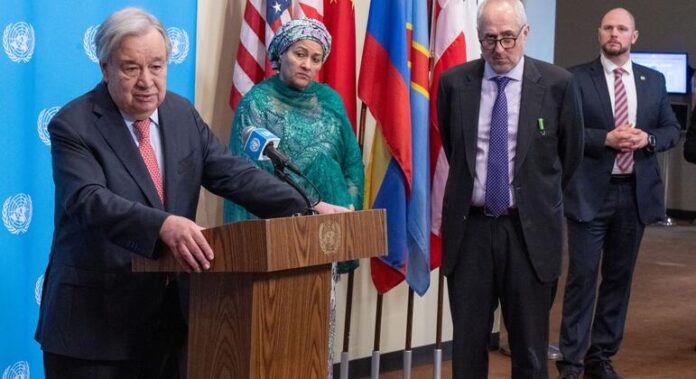
Speaking outside the UN Security Council in New York to journalists on Wednesday, Mr. Guterres said the conflict had spiralled far beyond what leaders had anticipated.
“The world is staring down the barrel of a wider war, a rising tide of human suffering, and a deeper global economic shock,” he said, adding bluntly: “This has gone too far.”
Envoy to work ‘directly on the ground’
The Secretary-General confirmed he has appointed veteran diplomat Jean Arnault as his Personal Envoy to lead UN efforts to end the conflict which has upended the entire region with shockwaves spreading worldwide – especially impacting energy markets reliant on the crucial Strait of Hormuz chokepoint.
The envoy will work “more directly on the ground… to support all the efforts for mediation, all the efforts for peace”, engaging with all parties and assessing the conflict’s far-reaching impacts.
Mr. Guterres delivered stark messages to key actors. He urged the United States and Israel that “it is high time to end the war”, while calling on Iran “to stop attacking their neighbours that are not parties to the conflict”.
He also stressed that freedom of navigation, particularly through the Strait of Hormuz, must be respected, warning that its prolonged disruption is choking vital supplies of oil, gas and fertiliser.
Humanitarian toll will worsen
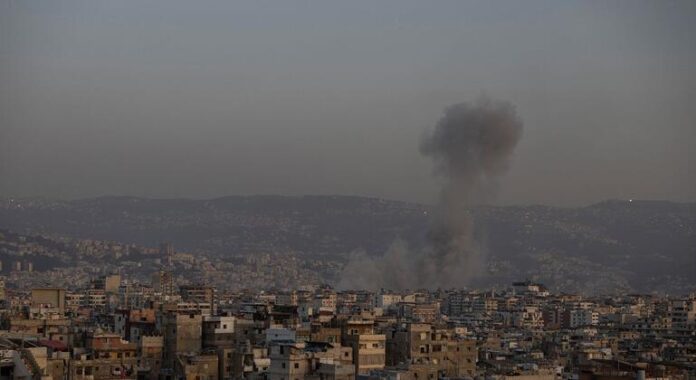
Highlighting the humanitarian toll, he said civilians across the region were “enduring serious harm and living under profound insecurity”. Referring to Lebanon, he insisted that “the war must stop”, calling on Hezbollah to halt attacks into Israel and on Israel to cease strikes that are “hitting civilians the hardest”.
The Secretary-General also cautioned against the broader global fallout, noting that markets are “in turmoil” and humanitarian operations constrained.
The economic shock, he said, is hitting the most vulnerable hardest, particularly in developing countries already struggling with debt and rising costs.
Aid is distributed to displaced families in northern Lebanon.
Hunger tomorrow
He pointed to the disruption of fertiliser supplies as a looming threat to global food security. “Without fertilisers today, we might have hunger tomorrow,” he warned, adding that soaring energy prices risk fuelling inflation and deepening poverty worldwide.
Despite mounting tensions and continued military escalation, Mr. Guterres insisted there remains a path forward. “Diplomacy must prevail,” he said. “War is not the answer… We need a way out of this disaster.”
“Diplomacy is the way out. Full respect of international law is the way out. Peace is the way out.”
Marking the International Day for Remembrance of the Victims of Slavery and the Transatlantic Slave Trade, the European Union used the UN General Assembly platform on 25 March to pair historical remembrance with a renewed call to confront modern slavery, forced labour and racial discrimination. The statement, delivered in New York on behalf of the […]
It’s day 26 of war in the Middle East. The UN chief says with the conflict now totally out of control, diplomacy must prevail. Ongoing strikes in Israel and Iran have included intensifying Israeli attacks against Hezbollah targets in Lebanon, while some US troops are heading to the region, the Pentagon has confirmed. Meanwhile, Iran has told the UN maritime agency that the Strait of Hormuz remains open to “non-hostile” ships not associated with the US and Israel. UN News app users can follow coverage here.
Mairead McGuinness is reportedly set to become the European Union’s next Special Envoy on freedom of religion or belief, ending a politically awkward vacancy that, over the past year, drew mounting pressure from MEPs, bishops, advocacy organisations and commentators who warned that Brussels was weakening its own human-rights credibility by leaving the post unfilled.
The post is not a ceremonial one. Under the Commission’s published mandate for the special envoy, the office is meant to engage national authorities and civil society in countries where violations occur, support interreligious dialogue, contribute to deradicalisation work, promote tolerance in education, and coordinate with the EU Special Representative for Human Rights. In other words, it is one of the Union’s clearest external instruments for turning its FoRB principles into diplomatic practice.
Yet when the second von der Leyen Commission took office on 1 December 2024, the envoy role was left vacant. That absence soon turned into a recurring point of criticism. In April 2025, the European Parliament’s Intergroup on Freedom of Religion, Belief and Conscience renewed its appeal to Commission President Ursula von der Leyen and Commissioner Magnus Brunner, calling for the urgent appointment of a qualified envoy with proper resources and autonomy. The letter of 4 April 2025, signed by the intergroup’s co-chairs and supported by a broader cross-party group of MEPs, argued that the worsening situation for believers and non-believers abroad required a timely, credible and fully backed appointment.
A month later, the intergroup published von der Leyen’s response, saying she remained committed to the role and intended to renew it. But the reassurance did not settle the matter. By the summer, frustration had deepened. On 22 August 2025, ECR MEPs Bert-Jan Ruissen and Carlo Fidanza publicly urged the Commission to fill the post immediately, saying it had been vacant since December 2024 and linking the delay to the EU’s wider response to religiously motivated violence and persecution.
Pressure widened further in autumn. In October 2025, the bishops of the European Union, gathered under COMECE, wrote to von der Leyen to say that one year into the mandate of the von der Leyen II Commission, the envoy was still missing. Their argument was not only moral but geopolitical: in a world marked by instability, the bishops said, the EU needed a visible and effective instrument to defend freedom of religion or belief as part of its external action.
By the end of 2025, the debate had also broadened beyond whether the envoy should be appointed to the kind of person the EU should choose. In December, Humanists International published a letter from 18 cross-party MEPs warning that the next envoy should not use the mandate in ways that undermine the rights of women, LGBTIQ+ people or non-believers. That intervention added a second layer to the discussion: not only speed, but also the universality and consistency of the human-rights framework the envoy is expected to uphold.
Human Rights Without Frontiers pushed the criticism further. In a series of reports during 2025 and early 2026, including a January 2026 assessment, the Brussels-based NGO argued that the Commission had allowed the office to lapse again without transparency, and criticised the absence of a public call for candidates. HRWF also framed the problem as structural, saying the envoy role has repeatedly suffered from long interruptions rather than stable continuity.
The timing has been especially awkward for Brussels because the EU continues to present itself internationally as a defender of FoRB. Earlier this month, the EU Delegation in Geneva marked the 40th anniversary of the UN Special Rapporteur on freedom of religion or belief, stressing that the EU has long supported the mandate and sees FoRB as foundational for human dignity and social cohesion. That message sits uneasily beside the long vacancy in the Union’s own envoy post.
If McGuinness is confirmed, Brussels will be choosing a figure with deep institutional experience. According to her official Commission biography, she served as European Commissioner for financial services from 2020 to 2024, was First Vice-President of the European Parliament from 2017 to 2020, and had previously spent 16 years as an MEP. Official biographies of her earlier parliamentary work also note that she led Parliament’s dialogue with religious and philosophical organisations under Article 17, giving her familiarity with one of the EU’s most sensitive church-state interfaces.
That background may help explain why her name has circulated in Brussels for weeks. Dutch daily Reformatorisch Dagblad had already reported in early March that McGuinness was being considered for the FoRB brief, before EURACTIV published its exclusive on Tuesday. Several Brussels observers saw her as a plausible choice precisely because she combines political seniority, knowledge of the institutions and prior experience with religion-related dialogue inside the Parliament.
Still, any appointment is unlikely to end the debate entirely. Those who campaigned for the role’s reinstatement will want to see whether the envoy receives meaningful backing, staff and political access rather than a largely symbolic title. Rights organisations that warned against a selective reading of FoRB will also be watching closely. The deeper question raised over the past year has not only been whether the EU wants an envoy, but whether it wants one with enough independence, clarity and institutional support to matter.
That is why the reported nomination of McGuinness matters beyond personnel. It could close a damaging gap in the EU’s human-rights architecture. But it will only count as a real reset if Brussels now turns an overdue appointment into a durable and credible policy instrument.
Rosemary DiCarlo described the conflict as “nearly 1,500 days of death, destruction and despair” and reiterated the UN’s long-standing call for a ceasefire.
Since the war began, 15,364 civilians have been killed, including 775 children, and more than 42,000 others injured, though actual numbers are likely to be higher.
“The suffering and destruction caused by the war in Ukraine can never be justified. The longer the war exists, the deadlier it becomes, with growing risks to regional and international security,” she said.
Rising death toll, energy sector hit
Ms. DiCarlo reported that at least 188 civilians were killed in February, and 757 injured – a 45 per cent increase over the same period last year.
Attacks have continued this month, including deadly assaults in Kharkiv, Kyiv, Donestk, Kherson and Zaporizhzhia, while reports point to an increase in strikes targeting railroads and other transport infrastructure.
“Over the winter, damage to Ukraine’s energy infrastructure brought the country’s energy grid to the brink of total collapse,” she told ambassadors.
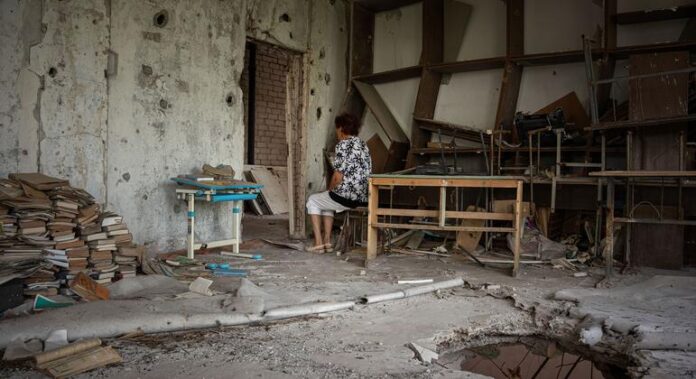
Some 60 per cent of gas production capacity has been destroyed and all power stations are damaged, according to the authorities, which has caused persistent disruption in electricity, heating and water supply across the country.
In the southern city of Odesa, energy, industrial and port infrastructure have been damaged. The latest attack took place on 19 March when drones hit apartment buildings. Four people were reportedly injured.
Ukrainian drone attacks
Meanwhile, Russia has reported Ukrainian attacks that have impacted civilians and civilian infrastructure in its territory.
They include the largest drone attack targeting the capital, Moscow, to date, which occurred over the weekend from 14 to 16 March when at least 250 drones were reportedly shot down. No civilian casualties were reported.
“In Russian regions bordering Ukraine – Kursk, Belgorod and Bryansk, as well as the southern Krasnodar region – local officials have reported civilian casualties and damage to infrastructure from alleged strikes,” she said, although the UN is unable to verify these reports.
Nuclear risks
At the same time, military activity near Ukraine’s nuclear sites continues “with potentially devastating consequences” and recent developments also underscore the serious regional impact of the war.
“Damage to the Novodnistrovsk hydroelectric plant in the south of Ukraine on 7 March led to an oil spill and widespread water pollution of the Nistru River in neighbouring Moldova,” she said.
The crisis prompted “a 15-day environmental alert,” among other impacts. Furthermore, Moldavan airspace has repeatedly been violated by drones, according to officials.
US diplomatic efforts welcomed
Before concluding her remarks, Ms. DiCarlo underscored that a full, immediate and unconditional ceasefire is imperative. She welcomed diplomatic efforts led by the United States over the past year to advance peace.
“As the most significant initiative to date to help restore momentum towards a peaceful resolution, these efforts require sustained commitment and support,” she said.
She stressed that “the aim must be a just, lasting and comprehensive peace in line with the UN Charter, international law and relevant UN resolutions,” while Ukraine’s sovereignty, independence, and territorial integrity must be upheld.
‘Sustained pattern’
UN Emergency Relief Coordinator Tom Fletcher, who also briefed the Council, warned against the rising bloodshed and the strikes on energy and other vital infrastructure.
“These attacks reflect a sustained pattern of damage to the systems on which civilians depend to survive, with humanitarian aid increasingly stepping in to fill the gaps left by the deterioration of essential services,” he said.
He noted that the conflict “is increasingly characterised by the use of advanced technologies” and called for an investigation into the 20 March drone strike on a national non-governmental organization (NGO). The humanitarians were evacuating older people in Donetsk oblast when their clearly marked van came under fire, killing two women and injuring two evacuees.
Support humanitarians
Mr. Fletcher also reported positive news, including that the UN and partners reached nearly one million people in January, providing food, cash assistance, medical care, shelter and protection.
He ended by making three “asks” to the Council, urging members to insist that international law must be upheld to protect civilians and the infrastructure they rely on.
The Council must also ensure rapid, safe and unimpeded humanitarian access to all civilians in need.
His third request was for greater financial support for the $2 billion humanitarian plan to assist 3.6 million people this year.
“Nearly three quarters of that plan is still unfunded, so please fund the response so that we can deliver life-saving aid at the scale and the speed needed,” he said.
As the war continues to roil the Middle East and compound suffering for civilians across the region, the economic ramifications of the emergency are still playing out, with the Strait of Hormuz the focus of global attention with crude oil prices surging over $100 a barrel again. Meanwhile, settler attacks have escalated dramatically against Palestinians in the occupied West Bank, a topic that we’ll be across today also, with aid updates and live reporting from the Security Council. UN News app users can follow coverage here.