
NASA will provide live coverage of the launch and docking of a Roscosmos cargo spacecraft carrying about three
NASA to Cover Progress 94 Spacecraft Launch, Space Station Docking
How Open NASA Data on Comet 3I/ATLAS Will Power Tomorrow’s Discoveries
The interstellar comet 3I/ATLAS will soon leave our solar system, never to return, but the observations of the
Russians Destroyed a Sea Drone, but Whose Was It?
Ukrainian naval drones have inflicted serious losses on the Russian fleet, sinking several military vessels and striking port
Dignity, agency and justice for women on the move

In Colombia too, the LWF accompanies thousands of Venezuelan women and children seeking access to basic services such as protection, education and healthcare, said Johanna Morales, coordinator of the Migrant Pastoral office of the Evangelical Lutheran Church of Colombia. She noted that her country is home to one of the major migration routes across the American continent, currently hosting up to 3 million Venezuelan refugees.
Reflecting on the meaning of justice for women, she told the story of one young, pregnant mother with two small children who left Venezuela with her husband but was separated from him when they were stopped by one of the many armed groups in Colombia. Desperate to find him again, she accepted a lift from a truck driver, but during the upheaval she suffered a hemorrhage and had to stop at a health center where she lost the baby she was expecting.
By the time she arrived at the church office, Morales recalled, she was traumatized, unable to speak and unwilling to trust anyone. Recounting the support that her office provided – food, care for the children, a safe space to rest, non-judgmental listening and advice – Morales affirmed that “justice for women on the move is not just about laws and institutional perspectives.” Instead, “it means recognizing her dignity, listening to her stories, guaranteeing her protection and opportunities to rebuild her life, so that no woman on the move feels invisible or alone on her journey.”
Challenging anti-immigrant narratives in the United States
Kathy Parsons, Program Director of migration policy at the Evangelical Lutheran Church in America (ELCA) shared statistics on the sharp decline in numbers of refugees that the U.S. government is accepting – from around 100,000 in 2024 to just 7,500 in the current fiscal year. Refugee women who have already received resettled status in the U.S. are also not safe, she noted, as in recent months, many have been threatened with a “re-interviewing” process, alongside harassment, detention and even deportation back to the places from where they had escaped.
On a broader scale, she continued, “we’re seeing rhetoric from the highest levels of government that dehumanizes migrants and uses them as a scapegoat for all of society’s problems.” In the face of this ongoing erosion of the rights of migrants and refugees, Parsons said the ELCA has made “a whole church commitment to accompany vulnerable migrants and all who’ve been forcibly displaced.” This work is led by the AMMPARO program which provides protection, advocacy, representation, and opportunities for people on the move, at home and abroad in 19 countries around the globe.
In the U.S, she shared how this program partners with 277 congregations across the country that offer welcome, support and advocacy for migrants’ rights, enabling those congregations “to build alliances and connections within the faith community.” Alongside the practical, financial or legal support, she said the church is “working hard to challenge anti-immigrant narratives” and provide Bible– based resources focusing on the God-given dignity of every human being.
The panel also heard from Paddy Siyanga Knudsen, Lead Coordinator of the African Non-State Actors Platform on Migration and Development, which works to ensure that the voices of vulnerable women remain at the center of all migration policies. She shared many of the difficulties around intersectionality and the challenges of collecting accurate, detailed data about migrants, especially migrant women and children. “Identities are key,” she pointed out, “but labels are not everything,” as people’s identities may shift from refugee, to migrant, to permanent resident, to citizen and member of the diaspora in a new country.
In conclusion, moderator Batool Al-Taher, advocacy officer for LWF Jordan, reminded participants that “addressing legal barriers is not only about reforming laws or improving procedures. It is about ensuring dignity, agency and justice for all women whose lives are shaped by displacement and mobility.”
UK Faces Strategic Dilemma Amid US-Iran Tensions

The escalating conflict involving the United States and Israel against Iran has reached a critical juncture, with significant implications for international diplomacy and security. Recent provocations, including Israel’s strike on Iran’s South Pars gas field, have heightened tensions, drawing global attention to the potential for further escalation. Amidst these developments, there are calls for the UK to resist deeper involvement in what is increasingly seen as a conflict initiated by US President Donald Trump and Israeli Prime Minister Benjamin Netanyahu.
The current crisis stems from a series of aggressive actions by the US and Israel aimed at curbing what they perceive as Iran’s imminent nuclear threat. The situation intensified following Israel’s recent military strike on a key Iranian gas field, an act interpreted as a deliberate provocation to elicit a strong response from Iran. This move has not only escalated military tensions but also placed additional strain on diplomatic relations in the region.
US President Donald Trump has amassed what is described as one of the largest aggressive forces in modern history, yet finds himself isolated in his efforts to rally international support. Despite claiming victory in the conflict, Trump’s calls for allied support indicate a desire for validation and assistance in managing the fallout. Meanwhile, Israeli Prime Minister Benjamin Netanyahu remains steadfast in his military strategy against Iran.
Amidst these developments, Britain’s involvement has come under scrutiny. Historically, the UK has been drawn into conflicts alongside its allies, often with significant political and human costs. Critics argue that Britain’s security interests are not directly threatened by this conflict and that involvement could lead to unintended consequences.
Despite these warnings, there are reports of senior British military planners being dispatched to Washington to aid in strategizing the reopening of the Strait of Hormuz—a critical chokepoint for global oil shipments—should diplomatic efforts fail. Additionally, British bases have been made available to US bombers under the guise of defensive purposes.
The term “strategic seduction” has been used to describe how nations like Britain can become entangled in foreign conflicts through gradual commitments and diplomatic pressures. This pattern mirrors past instances where Britain found itself deeply involved in conflicts such as those in Afghanistan and Iraq, often with limited strategic benefit and substantial human cost.
Trump’s rhetoric emphasizes a supposed debt owed by Britain for America’s role in NATO’s deterrence of Soviet Russia—a narrative used to justify current military alliances. However, this rationale is increasingly viewed as outdated and misaligned with contemporary security needs. Critics highlight that aerial bombardment and military aggression offer no sustainable solution to modern terrorism or regional instability.
The current situation presents a complex challenge for British foreign policy. Engaging further in this conflict risks repeating historical mistakes while potentially straining relations with other international partners who may view unilateral military actions unfavorably. Moreover, it raises questions about Britain’s role on the global stage—whether it will continue to follow allied powers into contentious conflicts or pursue an independent path prioritizing diplomatic resolutions.
The decision facing British leadership is not merely about immediate military strategy but also concerns broader geopolitical dynamics and Britain’s long-term strategic interests. As tensions continue to rise, it becomes imperative for Britain to weigh its options carefully, considering both historical lessons and future implications.
The unfolding crisis between the US-Israel alliance and Iran underscores the need for careful diplomatic engagement rather than hasty military action. For Britain, this moment serves as an opportunity to reassess its foreign policy priorities and commitments. By advocating for restraint and seeking peaceful resolutions through international dialogue, Britain can help de-escalate tensions while reaffirming its commitment to global stability and security.
As the situation evolves, all eyes will be on Britain’s next moves—whether it will heed calls for caution or risk deeper entanglement in a conflict not of its making. The coming weeks will be crucial in determining Britain’s stance on international military engagements and its role within the broader geopolitical landscape.
What to Do If You Need Healthcare Abroad in Europe

You’re on holiday, a work trip, or visiting family abroad — and suddenly something goes wrong. A sharp pain, an unexpected injury, or a medical emergency sends you looking for help in a country where you may not speak the language or understand the system.
In that moment, one question becomes urgent: Will I be treated — and who will pay for it?
Across the European Union, citizens are protected by a framework of cross-border healthcare rights. Whether you hold a European Health Insurance Card (EHIC) or need planned treatment abroad, EU law ensures access to necessary care — but the steps you take matter.
This is what to do if you need healthcare while in another European country.Data snapshot
* Over 200 million Europeans hold a European Health Insurance Card (EHIC).
* The EHIC covers medically necessary public healthcare during temporary stays in EU/EEA countries and Switzerland.
* Cross-border planned care is regulated under Directive 2011/24/EU.
* Patients can seek information and assistance through National Contact Points for cross-border healthcare.
Step 1: Use your EHIC for immediate care
If you need treatment during a temporary stay, present your European Health Insurance Card (EHIC) at a public healthcare provider.
This allows you to receive treatment under the same conditions and costs as residents of that country. In some countries, this means free care; in others, you may need to pay part of the cost.
If you do not have your card with you, you can request a Provisional Replacement Certificate from your national health authority.
Step 2: Understand what “medically necessary” means
The EHIC covers treatment that becomes necessary during your stay — not planned care. This includes:
- emergency treatment (accidents, urgent illness)
- treatment for chronic conditions (e.g. dialysis)
- care related to pregnancy or existing medical needs
Healthcare providers decide what is “medically necessary” based on your condition and the length of your stay.
Step 3: Keep receipts and documentation
In some countries, you may be asked to pay upfront. If this happens, keep all receipts, prescriptions, and medical reports.
You can later request reimbursement from your national health authority. Reimbursement is usually based on the cost of treatment in your home country.
Proper documentation is essential — without it, reimbursement may be delayed or refused.
Step 4: Know your rights for planned treatment abroad
If you travel specifically to receive medical treatment, different rules apply under EU law.
Under the Cross-Border Healthcare Directive, you may be entitled to:
- seek treatment in another EU country
- be reimbursed up to the cost of that treatment at home
- receive prior authorisation for certain hospital or specialised treatments
Each country has its own procedures, so it is important to check in advance.
Step 5: Contact support if something goes wrong
If you encounter problems — such as refusal of treatment, unexpected costs, or lack of information — you can contact your country’s National Contact Point.
These bodies are required under EU law to provide information about your rights and help resolve issues.
You may also find broader guidance in our article on healthcare access and rights for vulnerable groups in Europe, which explores how systems respond across borders.
The bottom line
Needing healthcare abroad can feel overwhelming, especially when you are far from home. But across Europe, your right to treatment does not stop at the border.
With the EHIC, cross-border healthcare rules, and national support systems, the framework is there — but it depends on knowing how to use it. Acting quickly, keeping records, and understanding your entitlements can make all the difference when it matters most.
World News in Brief: Rafah crossing reopens, gender inequality worsens global water crisis, rights defenders in Colombia
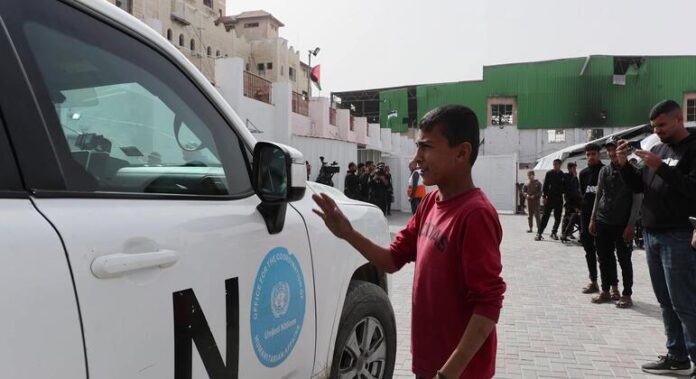
The World Health Organization (WHO) and its partners supported the medical evacuation of nine adult patients, most with trauma injuries, for treatment unavailable in Gaza.
OCHA said 18,000 patients in Gaza still urgently need treatment, while UN teams are preparing support for people returning through Egypt.
‘Major bottleneck’ in delivery of humanitarian supplies
“We need to be able to have rapid, safe and sustained and unimpeded access to be able to deliver assistance at scale and be able to scale up faster than we are doing,” OCHA Spokesperson Olga Cherevko said.
Aid officials also warned that Kerem Shalom remains the only operational crossing for incoming humanitarian and commercial supplies, creating a major bottleneck.
On Wednesday, three planned UN convoys were cancelled after Israeli authorities said only fuel would be allowed in, forcing agencies to leave food, fodder and other items behind.
Meanwhile, strikes reportedly hit residential areas in Gaza and the West Bank, causing casualties, according to UN humanitarian workers.
Gender inequality deepens global water crisis
A new UN report released on Thursday warns that the global water crisis is being made worse by deep-rooted gender inequality.
Across the world, women are responsible for collecting water in more than 70 per cent of rural households without a reliable supply, according to the report published by UN educational and cultural agency UNESCO ahead of World Water Day on 22 March.
“Water inequality has a strong gender dimension,” UNESCO Representative Bhanu Neupane told journalists at the United Nations in New York.
Climate change adding to inequalities
Across the world, women and girls spend an estimated 250 million hours every day fetching water. That is time they are prevented from going to school, paid work and other opportunities.
The report also highlights the impact of poor sanitation. In many places, women and girls still lack access to safe toilets and menstrual hygiene facilities, exposing them to shame, health risks and missed days of school or work.
The UN says climate change, water scarcity and disasters are making these inequalities worse. It is calling for urgent action to remove barriers to women’s equal access to water, land and services, and to ensure they are fully included in water governance and solutions.
Human rights defenders in Colombia face persistent deadly violence
Meanwhile in Colombia, human rights defenders have faced relentless violence over the past decade, with nearly 100 killed on average each year, according to a new report from the UN human rights office, OHCHR.
High Commissioner Volker Türk said it was “heartbreaking” that it remains one of the world’s deadliest countries for those defending human rights.
He acknowledged efforts by the current Government, including dialogue with civil society and work on a national protection policy, but warned that far more is needed.
Indigenous defenders disproportionately affected
The report says that between 2016 and 2025, the UN documented 972 killings of rights defenders. From 2022 to 2025 alone, 410 were killed, while more than 2,000 threats and attacks were recorded.
It links the violence to the continued presence of non-State armed groups, criminal networks involved in drug trafficking, illegal mining and logging, and weak state institutions. More than 70 per cent of perpetrators were believed to be non-State armed actors.
Indigenous defenders were disproportionately affected, accounting for 23 per cent of victims, despite making up less than five per cent of Colombia’s population.
The UN is urging urgent reforms to strengthen prevention, protection and criminal investigations, while warning that funding cuts have reduced its own ability to monitor abuses in high-risk areas.
The Countries Where Bingo Is Most Popular
Bingo has become a global entertainment staple, enjoyed for its simplicity, sociability and versatility. While the game’s origins
Budapest Interfaith Dialogue Highlights Ethics, Faith and Social Media

KINGNEWSWIRE // PRESS RELEASE // Discussion hosted at the Church of Scientology in Budapest explored online hate, moral responsibility and how faith communities can regain credibility through conduct, with themes that echo principles found in The Way to Happiness
BUDAPEST, Hungary — March 19, 2026 — In a period marked by online hostility, polarized debate and growing concern over the social effects of digital communication, a March 11 interfaith roundtable hosted at the Church of Scientology Budapest examined whether people of faith can be expected to uphold a higher moral standard in the digital sphere and how religion can once again become meaningful, credible and even attractive in the 21st century.
Held as the 11th Interfaith Dialogue under the title “A Vision in an Age of Hate: How Can We Make Faith Cool Again?”, the event brought together theologians, clergy, church leaders and religious thinkers for a discussion that moved beyond formal doctrine and focused on something more immediate: conduct. In particular, participants considered how believers respond to anger, provocation and division in an environment where social media algorithms often amplify extremes rather than reflection.
One of the opening references was to a recent online initiative by a Catholic professor who called on believers to stand against hate speech and offer a better example in public discourse. That reference set the tone for the evening’s central question: whether faith should be visible not only in ritual or identity, but in the way people communicate, disagree and exercise restraint in difficult public conversations.
Participants agreed that social media has created moral pressures and behavioral temptations that previous generations did not have to navigate in the same way. One Catholic theologian noted that modern societies do not always share a common moral foundation, even though freedom of expression remains a fundamental value. In that context, he used the image of “gardening” to describe personal responsibility online: individuals should moderate their own digital space, remove what is destructive and refuse to cultivate environments where contempt and aggression flourish unchecked.
A religious scholar and philosopher added that the architecture of social media often works against consensus, since algorithms tend to reward emotional intensity and reinforce echo chambers. In such an environment, he suggested, religion could still play a constructive role as a moral community capable of countering radicalization, reducing hostility and encouraging a more human response to disagreement.
The Scientology minister participating in the discussion reportedly stressed that not all hatred should be understood as proof of an inherently bad person. In many cases, he suggested, bitterness, disappointment and accumulated painful experiences are what speak through hostile behavior. From that perspective, he argued, spiritual understanding should help people rise above immediate reaction and take responsibility for the tone and consequences of their actions, especially in digital environments where harmful language can spread rapidly and widely.
While the Budapest event was not specifically centered on The Way to Happiness, the concepts discussed during the evening closely reflect several of the ethical principles set out in that text, written by Scientology founder L. Ron Hubbard. Described on its official website as a nonreligious moral code made up of 21 precepts for better living, The Way to Happiness includes such principles as “Set a Good Example,” “Seek To Live With The Truth,” and “Respect the Religious Beliefs of Others.” These ideas resonate clearly with the concerns raised in Budapest: truthfulness in public speech, restraint in conflict, and respect across religious and ideological lines.
This distinction is important. The significance of the Budapest dialogue lies not in presenting The Way to Happiness as the formal theme of the event, but in showing how the ethical concerns voiced by participants can be understood through a framework long promoted by Scientology in its moral and social outreach. In that sense, the discussion illustrated a broader interfaith reality in Europe today: communities with different beliefs can still find common ground in practical ethics, peaceful coexistence and the importance of example.
The second major theme of the evening concerned the changing role of religion in contemporary society. Participants reportedly observed that although formal religiosity has declined in parts of Western Europe, individual spiritual searching remains strong. The issue, then, is not simply whether religion can become fashionable again, but whether it can show itself to be morally serious, socially useful and capable of speaking in language people recognize as authentic.
One theologian reportedly argued that religious communities must learn to communicate differently depending on the audience, using forms of language that can reach both intellectual circles and ordinary readers. Another participant emphasized common ground, universal love and practical cooperation among churches, rather than mutual condemnation. The Scientology contribution to the discussion reportedly aligned with that view, stressing that the most persuasive witness religion can offer today is not argument alone, but visible action: demonstrating that people of different faiths are capable of working together in peace while respecting one another.
That emphasis also corresponds with how the Church of Scientology Budapest presents itself locally: not only as a place where Scientologists gather for worship and religious services, but as a community space intended to foster dialogue and cooperation. Situated at Váci út 169 in Budapest, the church has served as a venue for events and encounters involving broader civic and interfaith participation.
Ivan Arjona, representative of the Church of Scientology to the EU, OSCE, Council of Europe and UN, said: “The Budapest dialogue reflects a challenge facing all European societies: how to preserve dignity, truth and mutual respect in spaces that often reward the opposite. What emerged from the discussion is that ethical conduct still matters deeply. When people choose responsibility over reaction, and respect over contempt, they strengthen not only their own communities but the civic culture on which peaceful coexistence depends.”
What emerged from the March 11 roundtable was a message extending well beyond one denomination. If faith is to regain credibility in a digital age, participants suggested, it will do so not through slogans or confrontation, but through conduct: through honesty, self-restraint, respectful dialogue and what several speakers described, in different ways, as love expressed in action. In that respect, the Budapest event offered a practical reminder that religion remains socially relevant when it helps people live together more decently, even amid disagreement.
The Church of Scientology, its churches, missions, groups and members are present across Europe with a continent-wide presence through more than 140 churches, missions and affiliated groups in at least 27 European nations, alongside thousands of community-based social betterment and reform initiatives focused on education, prevention and neighbourhood-level support, inspired by the work of Scientology founder L. Ron Hubbard.
Within Europe’s diverse national frameworks for religion, the Church’s recognitions continue to expand, with administrative and judicial authorities in Spain, Portugal, Sweden, the Netherlands, Italy, Germany Slovakia and others, as well as the European Court of Human Rights, having addressed and acknowledged Scientology communities as protected by the national and international provisions of Freedom of Religion or belief.
Father’s Day in Europe: Traditions, Change, and Meaning

Celebrated today in parts of Europe and on different dates elsewhere, Father’s Day offers a moment not only for gratitude, but also for reflection on how fatherhood is evolving across societies shaped by tradition, policy and changing family life.
Across Europe today, families in countries such as Spain, Portugal and Italy are marking Father’s Day on March 19, a date rooted in the feast of Saint Joseph. In homes, schools and communities, children offer handmade gifts, families gather around shared meals, and social networks fill with quiet tributes to fathers and parental figures. While often less visible in the public sphere than other celebrations, the day carries a deep cultural resonance.
At the same time, across the rest of the continent — from France and Ireland to Germany, the Netherlands and the Nordic countries — Father’s Day will be celebrated later in the year, typically on the third Sunday of June or, in some cases, on entirely distinct dates shaped by local customs. This diversity reflects Europe’s layered history, where religious heritage, national traditions and modern influences coexist.
Saint Joseph and the origins of March 19
The choice of March 19 in Southern Europe is closely tied to Saint Joseph, a central figure in Christian tradition who is widely regarded as a model of fatherhood: protective, patient and quietly devoted. In countries like Spain and Italy, the day has long held both religious and social importance, blending spiritual symbolism with family celebration.
In Spain, “Día del Padre” gained wider recognition in the 20th century, supported by educators and cultural initiatives that sought to complement Mother’s Day. Today, it is firmly embedded in the national calendar. In Italy, “Festa del Papà” often includes traditional sweets such as zeppole, linking family life with culinary heritage. In Portugal, similar customs bring together generations in modest but meaningful gatherings.
Beyond these countries, the influence of Saint Joseph can also be felt in parts of Belgium and France with Catholic traditions, even if the official celebration follows a different date.
A mosaic of European traditions
Father’s Day in Europe is far from uniform. In Germany, for example, “Vatertag” is celebrated on Ascension Day, which varies each year and often includes outdoor gatherings, hiking trips and social events. In Austria and parts of Switzerland, similar traditions apply, combining family recognition with public festivities.
In France and Belgium, Father’s Day typically takes place in June, where it is marked with family meals and small tokens of appreciation. In the United Kingdom and Ireland, the third Sunday of June aligns with the global observance, often accompanied by cards, gifts and time spent together.
Nordic countries such as Sweden, Norway and Finland celebrate later in the year, usually in November. These observances tend to be more understated, reflecting cultural norms that favour simplicity and intimacy over large-scale celebration.
Eastern European countries also present diverse approaches. Poland celebrates Father’s Day on June 23, while in countries like Hungary and Romania, the June tradition has been increasingly adopted in recent decades. These evolving practices illustrate how global cultural exchanges continue to shape local traditions.
The evolving role of fathers
Beyond tradition, Father’s Day in Europe increasingly reflects a broader societal shift in how fatherhood is understood. The image of the father as primarily a provider has gradually expanded to include emotional presence, caregiving and shared responsibility in raising children.
Across the European Union, this transformation has been supported by policy developments. The Work-Life Balance Directive, adopted in 2019, introduced minimum standards for paternity leave and strengthened rights for parents and carers. As a result, more fathers are taking time off work following the birth of a child, contributing to early bonding and more balanced family dynamics.
Countries such as Sweden and Norway have long been at the forefront of this shift, offering generous parental leave schemes that encourage fathers’ participation. Spain has also made significant progress in recent years by equalising maternity and paternity leave, sending a strong signal about shared responsibilities.
However, the picture remains uneven. In some parts of Europe, cultural expectations and workplace practices still limit fathers’ involvement in caregiving. Experts note that while legislation has opened doors, social norms and economic realities continue to influence how these rights are exercised.
Fatherhood in a changing society
Modern European societies are also characterised by increasingly diverse family structures. Father figures today may include biological fathers, stepfathers, adoptive parents, same-sex parents and other caregivers who play a paternal role. Father’s Day, therefore, is gradually becoming more inclusive, recognising a wider range of experiences and relationships.
At the same time, public conversations around fatherhood are expanding to include mental health, work-life balance and the challenges faced by fathers navigating economic pressures and changing expectations. Research across Europe suggests that active paternal involvement contributes positively to children’s development, reinforcing the importance of supporting fathers in their roles.
A day of gratitude—and reflection
For many, Father’s Day is a simple and joyful occasion: a phone call, a shared meal, a small gesture of appreciation. Yet it can also be a moment of reflection. For those who have lost a father, or whose relationships are complex, the day may carry mixed emotions. Increasingly, this diversity of experiences is acknowledged in public discourse, encouraging a more nuanced understanding of family life.
In recent years, institutions, schools and community organisations across Europe have also used the occasion to highlight positive models of fatherhood, promote parental engagement and foster dialogue about equality in caregiving.
An enduring European tradition
Whether celebrated today in Madrid, Rome and Lisbon, in June in Paris, Dublin and Berlin, or later in the year in Stockholm and Helsinki, Father’s Day remains a quiet but enduring part of Europe’s cultural fabric.
Its strength lies not in grand public ceremonies, but in its personal nature — in the everyday relationships it honours and the values it represents: care, responsibility, guidance and presence. As Europe continues to evolve, Father’s Day stands as both a tribute to tradition and a reflection of change, recognising the many ways in which fatherhood shapes lives across generations.
