Sunday, September 20, 2026
Home Blog Page 118

EuroLeague’s €3.2bn Moment Meets NBA Pressure

0
EuroLeague’s €3.2bn Moment Meets NBA Pressure

European basketball’s biggest story today is not only on the court. Fresh reporting on Tuesday says the EuroLeague and its licensed clubs are now valued at more than €3.2 billion, a figure that lands at a sensitive moment for the sport. With the NBA and FIBA still exploring a new European competition, the valuation reads as more than a financial update. It is also a statement that Europe’s existing elite club structure sees itself as a major sports property that does not intend to be sidelined.

According to reporting published today by AS and Palco23, and reflected in material from the EuroLeague Media Centre, a valuation study by JB Capital places the combined enterprise value of the league and its licensed clubs above €3.2 billion. The reports value the league itself at about €1.41 billion for the 2025-26 season, while the licensed clubs together are valued at roughly €1.8 billion.

More than a balance-sheet update

The figures matter because they point to a larger restructuring of the sport. Today’s reporting says individual club valuations range from more than €60 million to more than €320 million, and that the combined value of the league and its clubs could rise to €4.3 billion by the 2026-27 season if the current 10-year licensing framework evolves into a system of permanent franchises. In European sport, terms such as “license” and “franchise” are not merely technical. They signal different ideas about access, permanence and control.

Earlier this month, EuroLeague shareholders approved what the competition described as a transformational strategic roadmap. Business reporting said the plan includes evaluating a possible €1.5 billion capital raise to support growth initiatives, along with an additional €1 billion commercial vehicle focused on arena development and modernization. The same reporting linked the roadmap to permanent licenses, team expansion, digital acceleration, geographical growth and governance reform.

The NBA factor behind the timing

The valuation story lands in the middle of a wider struggle over who will shape elite basketball in Europe. In January, Reuters reported that NBA commissioner Adam Silver said a new Europe-wide competition could launch within the next two years, with the league hoping to tap the depth of supporter culture already seen around European football. The Financial Times also reported earlier this year that the NBA was preparing to present financial plans for a possible European league to prospective investors.

Seen in that context, today’s €3.2 billion figure looks like more than a business headline. It looks like a strategic message. EuroLeague is effectively telling clubs, investors and partners that it already has scale, commercial weight and long-term growth potential. The timing of the valuation, coming alongside the league’s new roadmap and the continuing NBA-FIBA interest in reshaping the market, gives the announcement significance well beyond sport finance.

A European sports question, not only a basketball one

For Europe, the issue goes beyond basketball finance. It touches on the wider European sports model, where club identity is often tied to cities, supporter communities and domestic competitions rather than to closed commercial systems. A move toward more permanent franchises may bring investment and stability, but it also raises familiar questions about merit, access and the relationship between continental competition and national leagues.

That broader background helps explain why basketball has become such a serious continental issue. As The European Times noted in an earlier feature on the rise of the sport across the continent, Europe’s basketball culture was not built only through commercial expansion, but through schools, municipal halls, historic clubs and deeply rooted fan communities. Today’s valuation does not erase that story. It shows that the old basketball map now sits inside a far larger investment battle.

For now, the same-day headline is clear: Europe’s top basketball competition has been valued at more than €3.2 billion, and that figure arrives just as the fight over the future of the sport is becoming more explicit. The next stage will show whether European basketball can modernise on its own terms, or whether outside capital and new league models will redraw the court entirely.

Source link

Italy’s Justice Referendum: A Crucial Test for Giorgia Meloni’s Government

0
Italy’s Justice Referendum: A Crucial Test for Giorgia Meloni’s Government

As Italy embarks on a pivotal two-day referendum on judicial reform, the outcome is poised to significantly impact Prime Minister Giorgia Meloni’s political standing. With voter turnout reaching unprecedented levels, the nation is divided over a proposal to restructure the judiciary, a decision that could redefine Meloni’s leadership and influence upcoming national elections.

Polling stations across Italy have opened for a crucial two-day referendum on judicial reform, marking a significant political moment for Prime Minister Giorgia Meloni‘s government. The vote centers on a proposal that aims to overhaul the judiciary by creating distinct career paths for judges and prosecutors. This change has not only polarized the political landscape but also united the centre-left opposition against the reform.

The proposed judicial reform, which passed through parliament last October without securing the necessary two-thirds majority to avoid a popular vote, has become a litmus test for Meloni’s leadership. The referendum requires voters to decide between confirming or rejecting the reform through a simple “Yes” or “No” vote on their ballot papers. Recent polling suggests a neck-and-neck race, with the “No” camp gaining momentum in the final days leading up to the vote.

High Voter Turnout Signals Intense Interest

According to data from the Interior Ministry’s Eligendo portal, voter turnout reached 14.88% by midday on Sunday, doubling the turnout rate of last year’s citizenship referendum and marking the highest engagement for any referendum in over two decades. This heightened participation underscores the high stakes involved and reflects the public’s vested interest in reshaping Italy’s judicial framework.

The current system allows judges and prosecutors to belong to the same professional body, with opportunities to switch roles throughout their careers after passing a unified entrance exam. The reform seeks to dismantle this structure by establishing separate career tracks for each role. Moreover, it proposes splitting the governing Superior Council of the Magistracy into two distinct councils—one for judges and another for prosecutors—each chaired by the Italian president and composed of members selected by lottery.

Political Ramifications for Meloni

The referendum is widely viewed as a barometer for Meloni’s government as national elections loom next year. Initially cautious about associating her image with the contentious reform, Meloni has recently embraced the “Yes” campaign more openly. In her campaign rhetoric, she has painted a stark picture of potential consequences should the reform fail.

“If the reform doesn’t pass this time, we will probably not have another chance,” Meloni declared at a campaign event last week. She argued that failure to implement these changes would result in “even more powerful factions” within the judiciary and raise public safety concerns due to lenient sentences.

Implications of a “No” Vote

A political analyst suggests that a victory for the “No” camp would deal a blow to Meloni’s perceived invincibility and invigorate opposition forces by highlighting an alternative governance path. Such an outcome could potentially weaken her domestic authority and complicate her international standing as she navigates through her tenure.

The referendum has not only tested Meloni’s policy agenda but also her ability to unify her party and rally public support amid growing political divisions. The centre-left opposition has capitalized on these divisions, positioning itself as a counterbalance to Meloni’s administration.

Looking Ahead

As Italians cast their votes, the outcome remains uncertain but undeniably critical for shaping Italy’s judicial landscape and its broader political future. A successful “Yes” vote would empower Meloni’s government to enact substantial reforms that could redefine judicial operations in Italy. Conversely, a “No” outcome could signal significant challenges ahead for her leadership.

With national elections on the horizon next year, this referendum serves as an early indicator of public sentiment and may influence electoral strategies across Italy’s political spectrum. As polling stations prepare to close after two days of voting, all eyes will be on Italy as it stands at this pivotal crossroads.

Source link

European Political Landscape Shifts as Slovenia’s Liberals Claim Victory and Italy Awaits Referendum Results

0
European Political Landscape Shifts as Slovenia’s Liberals Claim Victory and Italy Awaits Referendum Results

Slovenia’s liberal leader Robert Golob narrowly wins parliamentary elections, offering relief to EU diplomats. Meanwhile, Italy braces for the outcome of a critical referendum on judiciary reforms, seen as a confidence vote on the current government.

The political dynamics within Europe are witnessing significant shifts as Slovenia’s liberal leader Robert Golob secured a narrow victory in the recent parliamentary elections. This development comes at a crucial time as Italy is on the brink of concluding a pivotal referendum that could reshape its judiciary system. Both events hold substantial implications for the European Union’s political landscape.

Slovenia’s Liberals Secure Narrow Victory

In Slovenia, the incumbent liberal leader Robert Golob emerged victorious in the parliamentary elections held over the weekend. With 99.85% of the votes counted, Golob’s party, Gibanje Svoboda (The Freedom Movement), garnered 28.62% of the vote, slightly edging out the populist conservatives led by Janez Janša, who received 27.95%. This result translates into 29 seats for Golob’s party compared to Janša’s 28 seats, according to AFP.

The outcome is seen as a relief for Brussels due to Golob’s pro-EU stance. His victory positions him to lead exploratory talks to form the next government—a task that promises to be challenging given the close results and diverse political landscape in Slovenia. Addressing his supporters after the results were announced in Ljubljana, Golob expressed gratitude for the public’s confidence and extended an invitation to other parties to join discussions on forming a coalition government. “Since we have received the (people’s) confidence, now we can think about going forward under a free sun,” he stated.

Italy’s Referendum: A Test for Current Government

Meanwhile, Italy is in the final hours of a national referendum focused on amendments to its post-fascism constitution that aim to overhaul the judiciary system. The polling stations are set to close at 2 pm UK time (3 pm local), marking the end of what has been perceived as not just a technical vote but a de facto confidence measure on the current administration.

The referendum seeks public approval for changes that would significantly alter how justice is administered in Italy. Despite being a complex and technical ballot issue, it has taken on broader political significance as an indicator of support for the current government ahead of general elections scheduled for 2027. Early voter turnout reports indicate that over 46% of eligible voters had cast their ballots by Sunday evening, with preliminary suggestions hinting at potential support for the “yes” campaign.

Broader Implications Across Europe

The outcomes in Slovenia and Italy are part of a broader tapestry of political activity across Europe. In France, Socialist Emmanuel Grégoire was elected mayor of Paris as Marine Le Pen’s far-right National Rally failed to capture key cities during the second round of local elections. Similarly, in Germany, Chancellor Friedrich Merz’s Christian Democrats claimed victory in Rhineland-Palatinate, wresting control from their coalition partners, the Social Democrats.

These developments underscore shifting allegiances and evolving political sentiments across Europe. The Slovenian election results may bolster pro-EU sentiments within the bloc amidst rising populist movements. Meanwhile, Italy’s referendum could either consolidate or challenge the current government’s position.

As these electoral outcomes unfold, they will likely influence policy directions at both national and EU levels. Slovenia’s potential coalition negotiations will be closely monitored by EU diplomats eager to maintain stability and continuity within member states. In Italy, the referendum results will be pivotal in determining not only judicial reforms but also setting the tone for future political debates leading up to the next general election.

With Denmark also heading to polls tomorrow and other European nations preparing for various local and national elections throughout the year, 2026 promises to be a year of significant political realignment across Europe. These developments will undoubtedly shape discussions around EU integration, sovereignty issues, and responses to global challenges such as economic recovery and security concerns.

Source link

Sudan: Hospital strike highlights surge in drone attacks on civilians

0
Sudan: Hospital strike highlights surge in drone attacks on civilians

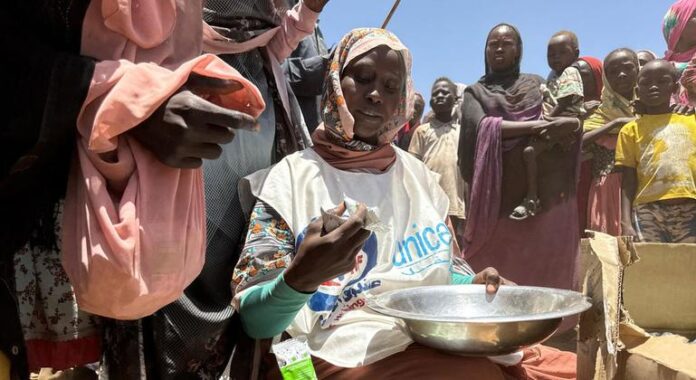
The Teaching Hospital in East Darfur’s capital, Al Deain, was struck late Friday, a new low in the brutal conflict between the Sudanese Armed Forces (SAF) and the paramilitary Rapid Support Forces (RSF) that erupted in April 2023.

According to the UN World Health Organization (WHO), the number of people killed has risen to 70, including seven women and 13 children, following search efforts.

Health workers – one doctor and two nurses – were also among those killed, while injuries have increased to 146 people, including patients and family members accompanying them.

Health care a frequent target

Since the start of the conflict, the total number of fatalities linked to attacks on health facilities has surpassed 2,000 according to WHO.

“An attack on a hospital is not only an attack on a building, it’s an attack on people seeking care, on health workers risking their lives to save others, and on the very possibility of survival at times of crisis,” said WHO Deputy Representative to Sudan, Dr Hala Khudari.

“Sudan is approaching its third year of armed conflict, but the attacks on healthcare continue,” she deplored, stressing that health facilities, ambulances, health workers and patients have been “repeatedly targeted”.

The attack on the teaching hospital has effectively closed it and patients “may have to travel over 160 kilometers to reach the next referral hospital, which for patients requiring specialized services, is very difficult”, the UN health agency official said.

She stressed that Al Deain served as a referral hospital for over two million people in the city as well as nine other localities in the East Darfur state.

Perpetrator hunt

Asked who was responsible for the Al Deain attack, UN Human Rights Office (OHCHR) spokesperson Marta Hurtado said that while the perpetrators have not been identified, both parties to the conflict use drones extensively.

“Our call is for both parties to stop immediately using this type of weaponry,” she said.

Ms. Hurtado warned of a surge in the use of drones to conduct airstrikes this year in Sudan, which “underlines the devastating impact of high tech and relatively cheap weapons in populated areas”.

More than 500 civilians were killed in such strikes from 1 January to 15 March, she said, the vast majority in three states in the Kordofan region.

The deadly attacks continued in the past week, culminating with the Al Deain attack as the month of Ramadan came to a close on Eid Al-Fitr.

Chad strike condemned

The UN Human Rights office spokesperson also said that “widening drone attacks are spiralling across Sudan[’s] borders, with serious risk of further escalation, carrying regional consequences”.

She mentioned deadly drone strikes last week on the town of At Tina close to the Sudan-Chad border and in the border locality of Tine in Chad, “after earlier ground offenses by the RSF”.

“Continued patterns of such attacks striking civilians and destroying civilian infrastructures raise serious concerns about compliance with international humanitarian laws, fundamental principles of distinction, proportionality and precaution, and may amount to war crimes,” Ms. Hurtado concluded, calling for an end to “arms transfers that are feeding the conflict”.

Source link

The Cultural Power of Lucky Numbers in Today’s Online Entertainment

0


Source: Freepik  Most people have a lucky number. It can be a birthday, an important date, a cultural

Source link

Alibaba Unveils 5nm RISC-V Chip Built for the Age of AI Agents

0


Alibaba has pulled the wraps off the XuanTie C950, a 5-nanometer processor purpose-built for agentic AI workloads, and

Source link

SECURITY COUNCIL LIVE: Ukraine in spotlight as Russian strikes surge

0
SECURITY COUNCIL LIVE: Ukraine in spotlight as Russian strikes surge

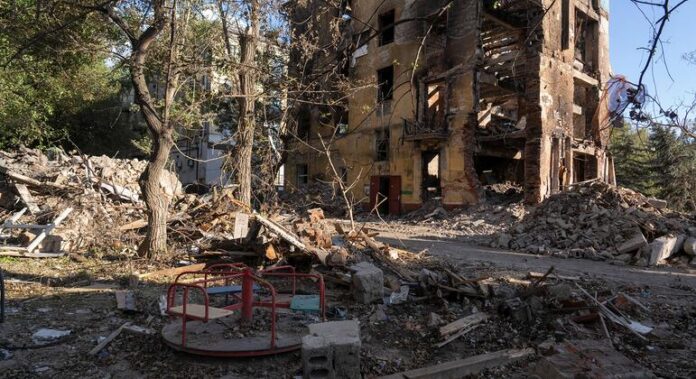
The Security Council is met for an open briefing on Ukraine, requested by European members following Kyiv’s 18 March letter citing a surge in Russian strikes. Inside the country, attacks continue to take a heavy toll: since 19 March, at least 25 civilians have reportedly been killed and more than 130 injured, including children, particularly in Donetsk, Sumy and Zaporizhzhia. We’ll have live coverage below, app users can follow here – and for all our key meetings coverage each day, go here

Source link

MIDDLE EAST LIVE 23 March: Civilians bear brunt of ongoing war

0
MIDDLE EAST LIVE 23 March: Civilians bear brunt of ongoing war

The war in the Middle East is well into its fourth week and the humanitarian emergency it has sparked continues to be the focus of international attention, along with the energy crisis caused by attacks on shipping in key Strait of Hormuz and other oil and gas infrastructure in the Gulf region. Stay with us for live updates from across the UN system. App users can follow coverage here.

Source link

Toward a common liturgical celebration of the Feast of Creation

0
Toward a common liturgical celebration of the Feast of Creation

Church representatives discuss how September 1 observance can be elevated to a shared ecumenical commitment 

(LWI) – Christian World Communions, ecumenical bodies, national churches and congregations have taken a major step in advancing a shared vision for elevating the annual Feast of Creation of 1 September to a liturgical feast. A recent webinar “A New Liturgical Feast, a Gift for the Third Millennium,” highlighted the significance of a unified observance of this feast for greater unity in Christian worship and ecological commitment. 

Convened by an International Steering Committee, chaired by the World Council of Churches (WCC) and representing different church bodies, including The Lutheran World Federation (LWF), the 18 and 19 March webinar, brought together around 400 registered participants. The event provided a space to reflect on theological foundations, share practical experiences, and discern next steps toward establishing a common day of celebration. 

The Feast of Creation has its roots in ancient Christian tradition, particularly within Orthodox churches, where September 1 has long been observed as a day marking the beginning of creation. In recent decades, at the invitation of the Orthodox Church, this tradition has expanded ecumenically, gaining recognition as the starting point of the annual Season of Creation, which runs until 4 October.  

Since 2016, churches worldwide have increasingly embraced this broader season, supported by grassroots movements, theological reflection, and international dialogue. The current initiative seeks to deepen this momentum by encouraging churches to adopt a shared Feast of Creation—either on September 1 or on the nearest Sunday—so that Christians globally can celebrate together. 

A range of materials was presented to support churches in adopting the Feast of Creation, including theological papers, liturgical guidance, and practical recommendations to assist churches at all levels—from global communions to local congregations—in integrating the feast into their liturgical calendars and common life. These included a joint letter signed by leaders of the LWF, Anglican Communion, World Communion of Reformed Churches, World Methodist Council, the WCC and the Middle East Council Churches presenting proposals from their ecumenical dialogues convened in Assisi since 2024. Inspired by the 2025 ecumenical celebration of the 1,700th anniversary of the Council of Nicaea, they described the possibility of a common liturgical feast of creation “as a precious opportunity for Christians of the new millennium to honor the Triune God as Creator and celebrate the great mystery of the creation of all things through Christ.”

Source link

How Fast Are Ukrainian Interceptor Drones, Now Defending the Middle East?

0


When the US and Israel attacked Iran at the end of February, Iran immediately retaliated by launching hundreds

Source link