Friday, June 26, 2026
Home Blog Page 137

First person: Felipe Paullier, the youngest senior UN official, responsible for giving a voice to young people around the world

0

“When you study history in high school, you learn about the origins of the United Nations, and it’s always been the organization I’ve been exposed to, in terms of the values ​​it promotes. However, I never thought I would have a direct role in the organization.

During my time working with the Uruguayan government, I had extensive contact with the United Nations system in the country, including agencies such as the United Nations Population Fund (UNFPA), United Nations children’s agency (UNICEF), and the United Nations Development Program (UNDP). We had quite a few initiatives in common, including a national project on issues related to the mental health and well-being of adolescents and young people. It was through these lines of cooperation that I began to understand how the UN works.

I was still studying a master’s degree in administration at the University of Florida when I ran to lead the first United Nations Youth Office. My goal was to help the organization maintain the best possible connection with young people, not only by listening to them but also by involving them in collaboration and participation. Eight months later, I received a call from Amina Mohamedthe Deputy Secretary General of the UN, telling me that I had been selected for this position and that I would start in 15 days!

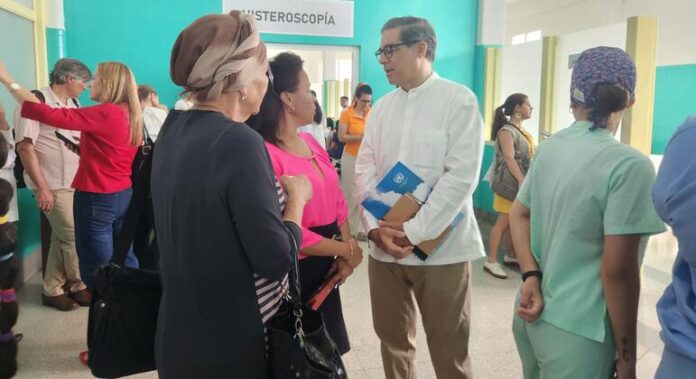
Secretary-General meets Assistant Secretary-General for Youth Affairs

The first year focused on understanding the challenges, building the team, identifying how to add value to the work of youth organizations and states, positioning the office as a space to raise awareness on various issues. I believe the purpose of the Youth Bureau is to collaborate, disseminate information and raise awareness of the interests and concerns of all young people around the world.

The three youth agendas of the United Nations Youth Office

Talking about the youth agenda means understanding and supporting a very broad movement that we approach from three central dimensions.

The first is the participation program. It is urgent that new generations be taken into account in decision-making spheres. We are linked to the various efforts being made to connect civil society with the United Nations, creating innovative scenarios in which young people feel represented, part of spaces of power, and where their concerns are taken into account and taken into account.

The second is the peace and security program. In the current global situation, with the highest number of active conflicts since World War II, we have seen young people taking the lead in promoting the peace agenda and demanding that governments end wars.

Felipe Paullier, Under-Secretary-General for Youth, with a group of young activists in Thailand.

The third issue that stands out among the priorities is mental health and well-being. Millions of young people around the world face a silent crisis that affects every dimension of their lives: despair about the future; a digital culture marked by hate speech; lack of education, employment and housing opportunities; the climate crisis; and the absence of spaces for care and connection. All this generates anxiety, depression and, in the most severe cases, loss of meaning and suicide.

This is why we are promoting a Global Initiative for Youth Mental Health and Well-being, which has already brought together in just a few months more than 600 youth-led organizations in more than 80 countries, reaching more than 13 million people (81% of whom are young people).

This initiative combines youth empowerment with links to international mental health networks and international organizations working in the field, such as the World Health Organization (WHO), UNICEF and the United Nations agency for education, science and culture (UNESCO). At the same time, it advances policy advocacy so that more states recognize youth mental health as a priority and develop policies that address this urgent need.

© UN India/Shachi Chaturvedi

Young participants reflected on their personal journeys, challenges and motivations as changemakers, entrepreneurs and advocates.

Mental health in the age of social media

The focus is on how we interact with technology in a rapidly changing world. What can we do in a world where we are more interconnected than ever but at the same time much more isolated? This is the dichotomy we experience in our time. Social media poses a huge challenge because it ends up creating bubbles in which people only connect with other like-minded people.

The way these networks’ algorithms are designed often leads to more polarized discourse, but also allows people to benefit from anonymity when spreading aggressive messages. Hence the need for more meeting spaces to promote dialogue between people, because in these digital spaces, dialogue does not exist; there are only positions, and people do not listen to each other; they confront each other.

When we look for answers, we will surely find them by returning to the Charter of the United Nations, which describes the essence of the organization: dialogue, the celebration of diversity and international cooperation. Young people are already doing their part. Small individual changes, when added together, are what ultimately determine global agendas. »

Originally published at Almouwatin.com

€50 million to Comau for research and development in robotics, advanced automation and digital technologies for various industrial sectors

0
€50 million to Comau for research and development in robotics, advanced automation and digital technologies for various industrial sectors

Comau
  • Financing in support of Comau’s R&D activities
  • Investments in Italy at Comau’s facilities in Turin and Bari, to boost Europe’s industrial competitiveness
  • The operation is being backed by InvestEU and is in line with TechEU, the EIB Group’s initiative aiming to mobilise €250 billion over the next three years to foster innovation in Europe.

The European Investment Bank (EIB) and Comau have signed a €50 million finance contract to support the Turin company’s research, development and innovation activities in the fields of robotics, advanced automation solutions, machine tools development, and digitalisation for various industrial sectors: from batteries, both automotive and stationary, to aerospace, construction, renewable energy and logistics. The agreement was announced today by EIB Vice-President Gelsomina Vigliotti and Comau CEO Pietro Gorlier.

The operation is supported by InvestEU, the European Union’s investment programme, through which the EIB has already unlocked more than €4 billion in Italy under the umbrella of TechEU, the EIB Group’s €70 billion programme to accelerate innovation in Europe through equity, quasi-equity, loan and guarantee investments.

“Supporting Europe’s industrial innovation and transition to a more digital, sustainable and competitive production model is a priority at the heart of the InvestEU programme, of which the EIB Group is the main implementing partner. Investing in advanced robotics, automation and e-mobility will boost Europe’s leadership in technology, contribute to the creation of skilled jobs and support European companies in the major industrial transformations currently taking place,” said EIB Vice-President Gelsomina Vigliotti.

The interventions will be concentrated mainly in Italy (Turin and Bari),. The investments are designed to develop automation solutions for various industrial sectors, strengthening the know-how of one of Europe’s leading advanced industrial automation and robotics companies and supporting the competitiveness of Europe’s value chain in advanced manufacturing technologies.

“Comau constantly invests in the development of innovative competencies and technologies. These are a key driver for the growth of the European manufacturing system, enabling companies to compete globally in sectors of particular importance to the present and future of industry, such as batteries, aerospace, construction, logistics and renewable energy,” noted Pietro Gorlier, CEO of Comau. “The support of the European Investment Bank gives us greater strength to pursue our sustainable development strategy, aimed at designing and producing advanced automation solutions that enable us to meet the challenges of a market marked by profound uncertainty and rapid technological transformation.”

A key element of the investments is the expansion of Comau’s applications in the renewable energy and hydrogen fuel cell sectors. In parallel, the funds made available by the EIB are intended to support the reorientation of activities in the automotive sector towards advanced manufacturing automation solutions for batteries and battery recycling.

Thanks to this EIB financing, Comau will also benefit from greater diversification of funding sources, longer maturities, thus speeding up implementation of the business plan.

Background information

The European Investment Bank (ElB) is the long-term lending institution of the European Union, owned by its Member States. Built around eight key priorities, we finance investments that contribute to EU policy objectives by bolstering climate action and the environment, digitalisation and technological innovation, security and defence, cohesion, agriculture and bioeconomy, social infrastructure, the capital markets union, and a stronger Europe in a more peaceful and prosperous world.  The EIB Group, which also includes the European Investment Fund (EIF), signed nearly €89 billion in new financing for over 900 high-impact projects in 2024, boosting Europe’s competitiveness and security. All projects financed by the EIB Group are in line with the Paris Climate Agreement, as pledged in our Climate Bank Roadmap. Almost 60% of the EIB Group’s annual financing supports projects directly contributing to climate change mitigation, adaptation, and a healthier environment. Fostering market integration and mobilising investment, the funds made available by the Group unlocked over €100 billion in new investment for Europe’s energy security in 2024 and mobilised a further €110 billion for startups and scale-ups. Around half of the EIB’s financing within the European Union is directed towards cohesion regions, where per capita income is lower than the EU average.

High-quality, up-to-date photos of EIB headquarters for media use are available here.

The InvestEU programme provides the European Union with long-term funding by leveraging substantial private and public funds in support of a sustainable recovery. It also helps to crowd in private investment for the European Union’s strategic priorities such as the European Green Deal and the digital transition. InvestEU brings all EU financial instruments previously available for supporting investments within the European Union together under one roof, making funding for investment projects in Europe simpler, more efficient and more flexible. The programme consists of three components: the InvestEU Fund, the InvestEU Advisory Hub, and the InvestEU Portal. The InvestEU Fund is deployed through implementing partners that will invest in projects using the EU budget guarantee of €26.2 billion. The entire budget guarantee will back the investment projects of the implementing partners, increase their risk-bearing capacity and thus mobilise at least €372 billion in additional investment.

Comau is a worldwide leader in delivering advanced automation solutions across diverse industries. Together with Automha, a fully owned company specializing in global intralogistics and warehousing automation, Comau is enabling companies of all sizes in almost any industry to unlock the full potential of automation, robotics, and digital technologies – and to increase their efficiency, flexibility, and competitiveness in rapidly growing markets. 

Comau’s portfolio includes products and systems for vehicle manufacturing, with a strong presence in e-Mobility, as well as cutting-edge  robotics and digital solutions for a variety of industrial sectors, such as shipyards, food&beverage, logistics, pharma, and renewable energies. Comau also offers project management and consultancy services and has an internationally recognized training Academy. Automha develops intelligent, high-performance automated storage and retrieval handling systems that optimize efficiency and reliability across diverse industries. Headquartered in Turin, Italy, Comau has an international network of 7 innovation centers and 11 manufacturing plants that span 11 countries and employ 3,800 people. Automha, headquartered in Bergamo, Italy, has 4 subsidiaries and manufacturing facilities in both Italy and China, which employ a total of 280 people.

www.comau.com | www.automha.com

Source link

Viva la Faba: from lockdown experiment to award-winning vegan cheese

0
Viva la Faba: from lockdown experiment to award-winning vegan cheese

Forget everything you know about vegan cheese!

Viva la Faba is transforming plant-based dairy with Europe’s first organic faba bean cheese, combining bold sustainability credentials with authentic taste, and a melt to please even the most hardcore cheese enthusiast.

Curd Your Emissions with Viva la Faba

In the middle of a pandemic lockdown, two bioeconomy students turned their shared kitchen flat into a test lab, armed with nothing but curiosity, corn by-products, and a stubborn belief that sustainable food should and could taste better.  

That late-night experiment became Viva la Faba, a German startup now leading the charge on plant-based dairy innovation. With a proprietary process that unlocked the full potential of regeneratively grown faba beans, they’ve created an award-winning brand, is proving that small ideas can have a big impact. 

From Pitch to Pulse

Since its founding in 2021, Viva la Faba has moved fast and made it count. They have developed Europe’s first organic certified vegan cheese made from regeneratively grown faba beans, tackling one of the most environmentally intensive foods in the modern diet. In partnership with the University of Hohenheim, a 2024 study confirmed that their cheese-cut submissions reduced emissions by up to 75% compared to traditional dairy, a massive reduction with the potential to reshape the carbon footprint of cheese lovers’ diets across Europe.

They’ve already been recognised with major prizes, including the PETA Vegan Food Award for Best Vegan Cheese, and the 2024 Baden-Württemberg Bioeconomy Prize. 

No Whey, Just Results

At the heart of the company’s mission is a belief that sustainability must be local, inclusive, and rooted in real relationships. That’s why they partnered with former dairy farmers in southern Germany to help convert land for organic faba bean production, ensuring their work is not about replacing farmers but giving them a future in a changing food economy. The shift is already tangible: beans now grow where cows once grazed, and new supply chains are being built to prioritise biodiversity, fair pay and regional resilience. 

Every decision the team makes, from using organic ingredients to investing in local suppliers, feeds into a bigger goal: helping consumers eat better without putting more pressure on the planet or the people who grow their food. In doing so, Viva la Faba is building a community around their renovation, one that connects farmers to consumers, science to flavour, and sustainability to something you actually want to put on toast. 

At their current capacity, Viva la Faba could help mitigate up to 8 850 tonnes of CO2 equivalent per year, which is the same as taking over 4 000 petrol cars off the road or powering nearly 1 800 homes. For every kilo sold, the climate wins, and for a product as culturally beloved and nutritionally dense as cheese, that’s a rare and powerful kind of impact. 

EIT Community Support

From the outset, Viva la Faba’s Journey is closely connected with the EIT Food ecosystem. The founders entered the 2020 Food Solutions programme which proved to be the springboard for late-night lockdown innovations. The programme offered funding, industry mentoring, R&D support, and access to the EIT Food Network, all of which Viva la Faba points to as indispensable in turning their prototype into a launch-ready product. 

Alumni ventures like Viva la Faba are examples of how EIT Food’s education and entrepreneurship pathways (including master’s and PhD programmes, upskilling academies, venture coaching) help startups scale. 

The Food Solutions programme opened so many doors for us. It gave us access to funding, industry connections, R&D support, and, most importantly, an amazing network through EIT Food. That network really helped turn our idea into something tangible.

Ariana Alva Ferrari, Co-Founder of Viva la Faba

Discover more!

Source link

Honduras: Statement by the Spokesperson on the general elections

0
Honduras:  Statement by the Spokesperson on the general elections

Honduras: Statement by the Spokesperson on the general elections

Source link

Honduras: Statement by the Spokesperson on the general elections

0
Honduras:  Statement by the Spokesperson on the general elections

Honduras: Statement by the Spokesperson on the general elections Source link

Source link

Industrialization without destruction: a UN project for the future

0

But it doesn’t have to be that way. The United Nations Industrial Development Organization (UNIDO), a technical agency established in 1966 to help countries in the Global South develop and industrialize, is today committed to moving countries forward in a way that benefits all of us, as well as the planet itself.

At the Global Industry Summit in Riyadh, Saudi Arabia, Fatou Haidara, Director General of Global Partnerships and External Relations at UNIDO, spoke with Conor Lennon about UN News look back at the agency’s changing priorities and why it is needed more than ever as it approaches its 60th anniversary.th year.

This interview has been edited for clarity and length

Industrialization without destruction: a UN project for the future

Fatou Haïdara: When UNIDO was created, industry was considered a polluter. Industrial policy is not a good term and the environment is not a big concern. Meanwhile, we have seen that industrialization is not just about manufacturing; it is a whole process that goes from politics to the strengthening of institutions, including the competitiveness of small and medium-sized businesses.

If you put all these elements together, you realize that no one can tackle them alone. Therefore, for us the crucial element is partnerships with governments, the second important partner being the private sector. We must help the government prepare the appropriate space for industries or the private sector to invest in the technologies needed today.

We must protect the planet, but we must lift as many people out of poverty as possible; this is what motivates our work.

UN News: You support countries even when they are in the middle of conflicts. When a member state like Sudan is at war, what can really be achieved?

Fatou Haïdara: I think UNIDO is one of the few institutions that has decided to continue its activities. We believe that this is precisely When Countries are in difficult situations and need support.

We are very cautious in continuing our activities, but we stand with the government to support them, and this has happened in Sudan and other conflict zones. We are preparing the ground, we are starting to work on industrial strategies with the government and for that you do not need to be physically in the conflict zone.

© ILO/Nguyễn ViệtThanh

The United States is a major export destination for the clothing and apparel industries in many developing countries.

UN Info: How important are environmental concerns in your work at UNIDO?

Fatou Haïdara: We have different categories of Member States and we have dedicated strategies for each of them. For some countries, it is about access to energy. For others, it is about decarbonizing large polluting industries or energy efficiency. We have all these different approaches depending on the level and sectors in which we work. In all these strategies, climate is present, but it is not a universal policy.

UN News: What would you say to those who think we no longer need UNIDO or the UN?

Fatou Haïdara: The United Nations is more necessary than ever because we live in a rapidly changing world facing many crises. The UN is a neutral intermediary. It’s multilateral: we are all members of the UN and it’s a place where we can all talk to each other. We bring everyone together.

UNIDO supports a more inclusive approach to development. We have extensive expertise that helps us integrate the social, environmental and economic aspects. Our 60 years of experience have helped us accumulate best practices from all parts of the world for the benefit of all countries.

We are not a humanitarian institution, but we remain alongside the populations.

Originally published at Almouwatin.com

Bandage-like device brings texture to touchscreens

0
Bandage-like device brings texture to touchscreens

Northwestern University engineers have developed the first haptic device that achieves “human resolution,” meaning it accurately matches the sensing abilities of the human fingertip.

Called VoxeLite, the new ultra-thin, lightweight, flexible, wearable device recreates touch sensations with the same clarity, detail and speed that skin naturally detects. Image credit: Northwestern University

Called VoxeLite, the ultra-thin, lightweight, flexible, wearable device recreates touch sensations with the same clarity, detail and speed that skin naturally detects. Similar to a bandage, the device gently wraps around a fingertip to give digital touch the same realism people now expect from today’s screens and speakers.

By combining high spatial resolution with a comfortable, wearable form factor, VoxeLite could transform how people interact with digital environments, including more immersive virtual reality systems, assistive technologies for people with vision impairments, human-robot interfaces and enhanced touchscreens.

The study was published in the journal Science Advances.

“Touch is the last major sense without a true digital interface,” said Northwestern’s Sylvia Tan, who led the study. “We have technologies that make things look and sound real. Now, we want to make textures and tactile sensations feel real. Our device is moving the field toward that goal. We also designed it to be comfortable, so people can wear it for long periods of time without needing to remove it to perform other tasks. It’s like how people wear glasses all day and don’t even think about them.”

“This work represents a major scientific breakthrough in the field of haptics by introducing, for the first time, a technology that achieves ‘human resolution,’” said Northwestern’s J. Edward Colgate, a haptics pioneer and senior author of the study. “It has the ability to present haptic information to the skin with both the spatial and temporal resolution of the sensory system.”

Colgate is the Walter P. Murphy Professor of Mechanical Engineering at Northwestern’s McCormick School of Engineering and director of the National Science Foundation Engineering Research Center on Human AugmentatioN via Dexterity (HAND). Colgate and co-senior author Michael Peshkin, the Allen K. and Johnnie Cordell Breed Senior Professor of Design and professor of mechanical engineering at McCormick, are longtime collaborators and pioneers in the field of haptics technology. Tan is a Ph.D. student at Northwestern’s Center for Robotics and Biosystems, where she is advised by Colgate and Peshkin.

Unsolved problems in haptics

Despite decades of progress in high-definition video and true-to-life audio, digital touch has stubbornly lagged behind. Today’s haptic feedback — mostly simple smartphone vibrations — cannot convey the rich, detailed information the fingertips naturally perceive. This is partially because the skin’s spatial and temporal resolution is notoriously difficult to simulate.

“Think of very old motion pictures when the number of frames per second was really low, so movements looked jerky. That’s due to low temporal resolution,” Colgate said. “Or think of early computer displays where images were pixelated. That’s low spatial resolution. Nowadays, both problems are solved for graphical displays. For tactile displays, however, they have been far from solved. In fact, very few researchers have even attempted to tackle both of them together.”

Individual pixels of touch

With VoxeLite, Tan, Colgate and Peshkin bring the field much closer to solving these issues. The device features an array of tiny, individually controlled nodes embedded into a paper-thin, stretchable sheet of latex. These soft nodes function like pixels of touch, each capable of pressing into the skin at high speeds and in precise patterns.

Each node comprises a soft rubber dome, conductive outer layer and hidden inner electrode. When a slight voltage is applied, it generates electroadhesion — the same principle that causes a balloon to stick to a wall after being rubbed. In their previously developed TanvasTouch technology, Colgate and Peshkin harnessed electroadhesion to modulate friction between a fingertip and a smooth touchscreen surface. In those devices, an applied electric field alters friction to create the illusion of texture, but it does not involve any moving parts.

VoxeLite moves this concept forward. The new technology applies electrostatic forces in a precise, controlled way to make each tiny node “grip” a surface and tilt to press into skin. This generates a highly localized mechanical force, so each “pixel” of touch pushes the skin on a fingertip. Higher voltages increase friction during movement, producing more pronounced tactile cues to simulate the feeling of a rough surface. On the other hand, lower voltages create less friction and, therefore, the sensation of a slipperier surface.

“When swiped across an electrically grounded surface, the device controls the friction on each node, leading to controllable indentation on the skin,” Colgate said. “Past attempts to generate haptic effects have been big, unwieldy, complex devices. VoxeLite weighs less than a gram.”

Reaching human resolution

To create the human-resolution sensations, Tan packed the nodes closely together. In the densest version of the device, nodes are spaced about 1 millimeter apart. In user testing, Tan used a version with 1.6 millimeters of spacing among the nodes.

“The density of the nodes really matters for matching human acuity,” Tan said. “The nodes need to be far enough apart that your body can tell them apart. If two nodes are less than one millimeter apart, your fingertips only sense one node instead of two. But if nodes are too far apart, they cannot recreate fine details. To make sensations that feel real, we wanted to match that human acuity.”

VoxeLite operates in two modes: active and passive. In active mode, the device generates virtual tactile sensations by rapidly tilting and indenting individual nodes as a user moves across a smooth surface, such as the screen of a smartphone or tablet. The nodes can move up to 800 times per second, covering nearly the full frequency range of human touch receptors.

Recognizing virtual textures

In a series of experiments, study participants wearing the device accurately and reliably recognized virtual textures, patterns and directional cues. People wearing VoxeLite identified those directions patterns — up, down, left and right — with up to 87% accuracy. They also identified real fabrics, including leather, corduroy and terry cloth, with 81% accuracy.

In passive mode, the device essentially disappears. Because it is extremely thin, soft and conforms to the skin, VoxeLite does not interfere with real-world tasks or block the natural sense of touch. Then, wearers can move seamlessly between real and digital experiences.

For future iterations of the device, the Northwestern team envisions a technology that can be paired with smartphones and tablets. Just like earbuds use Bluetooth to interact with our devices, VoxeLite could someday perhaps sync with devices to transform flat, smooth screens into textured interfaces. That potentially could lead to more lifelike online shopping experiences, where shoppers can feel textiles and fabrics before making a purchase. It also could lead to tactile maps for people with vision impairments or more interactive games, where players can feel the stretch of a rubber band or the bumpy rocks on a cliff.

“What makes this most exciting is combining spatial and temporal resolution with wearability,” Tan said. “People tend to focus on one of these three aspects because each one is such a difficult challenge. Our lab already solved temporal resolution with electroadhesion. Then, my challenge was to make it spatially distributed and wearable. It did take a while to get here. Now, we’re running studies to understand how humans actually receive and perceive this tactile information.”

Source link

Bandage-like device brings texture to touchscreens

0
Bandage-like device brings texture to touchscreens


Northwestern University engineers have developed the first haptic device that achieves “human resolution,” meaning it accurately matches the sensing abilities of the human fingertip.

Called VoxeLite, the new ultra-thin, lightweight, flexible, wearable device recreates touch sensations with the same clarity, detail and speed that skin naturally detects.

Called VoxeLite, the new ultra-thin, lightweight, flexible, wearable device recreates touch sensations with the same clarity, detail and speed that skin naturally detects. Image credit: Northwestern University

Called VoxeLite, the ultra-thin, lightweight, flexible, wearable device recreates touch sensations with the same clarity, detail and speed that skin naturally detects. Similar to a bandage, the device gently wraps around a fingertip to give digital touch the same realism people now expect from today’s screens and speakers.

By combining high spatial resolution with a comfortable, wearable form factor, VoxeLite could transform how people interact with digital environments, including more immersive virtual reality systems, assistive technologies for people with vision impairments, human-robot interfaces and enhanced touchscreens.

The study was published in the journal Science Advances.

“Touch is the last major sense without a true digital interface,” said Northwestern’s Sylvia Tan, who led the study. “We have technologies that make things look and sound real. Now, we want to make textures and tactile sensations feel real. Our device is moving the field toward that goal. We also designed it to be comfortable, so people can wear it for long periods of time without needing to remove it to perform other tasks. It’s like how people wear glasses all day and don’t even think about them.”

“This work represents a major scientific breakthrough in the field of haptics by introducing, for the first time, a technology that achieves ‘human resolution,’” said Northwestern’s J. Edward Colgate, a haptics pioneer and senior author of the study. “It has the ability to present haptic information to the skin with both the spatial and temporal resolution of the sensory system.”

Colgate is the Walter P. Murphy Professor of Mechanical Engineering at Northwestern’s McCormick School of Engineering and director of the National Science Foundation Engineering Research Center on Human AugmentatioN via Dexterity (HAND). Colgate and co-senior author Michael Peshkin, the Allen K. and Johnnie Cordell Breed Senior Professor of Design and professor of mechanical engineering at McCormick, are longtime collaborators and pioneers in the field of haptics technology. Tan is a Ph.D. student at Northwestern’s Center for Robotics and Biosystems, where she is advised by Colgate and Peshkin.

Unsolved problems in haptics

Despite decades of progress in high-definition video and true-to-life audio, digital touch has stubbornly lagged behind. Today’s haptic feedback — mostly simple smartphone vibrations — cannot convey the rich, detailed information the fingertips naturally perceive. This is partially because the skin’s spatial and temporal resolution is notoriously difficult to simulate.

“Think of very old motion pictures when the number of frames per second was really low, so movements looked jerky. That’s due to low temporal resolution,” Colgate said. “Or think of early computer displays where images were pixelated. That’s low spatial resolution. Nowadays, both problems are solved for graphical displays. For tactile displays, however, they have been far from solved. In fact, very few researchers have even attempted to tackle both of them together.”

Individual pixels of touch

With VoxeLite, Tan, Colgate and Peshkin bring the field much closer to solving these issues. The device features an array of tiny, individually controlled nodes embedded into a paper-thin, stretchable sheet of latex. These soft nodes function like pixels of touch, each capable of pressing into the skin at high speeds and in precise patterns.

Each node comprises a soft rubber dome, conductive outer layer and hidden inner electrode. When a slight voltage is applied, it generates electroadhesion — the same principle that causes a balloon to stick to a wall after being rubbed. In their previously developed TanvasTouch technology, Colgate and Peshkin harnessed electroadhesion to modulate friction between a fingertip and a smooth touchscreen surface. In those devices, an applied electric field alters friction to create the illusion of texture, but it does not involve any moving parts.

VoxeLite moves this concept forward. The new technology applies electrostatic forces in a precise, controlled way to make each tiny node “grip” a surface and tilt to press into skin. This generates a highly localized mechanical force, so each “pixel” of touch pushes the skin on a fingertip. Higher voltages increase friction during movement, producing more pronounced tactile cues to simulate the feeling of a rough surface. On the other hand, lower voltages create less friction and, therefore, the sensation of a slipperier surface.

“When swiped across an electrically grounded surface, the device controls the friction on each node, leading to controllable indentation on the skin,” Colgate said. “Past attempts to generate haptic effects have been big, unwieldy, complex devices. VoxeLite weighs less than a gram.”

Reaching human resolution

To create the human-resolution sensations, Tan packed the nodes closely together. In the densest version of the device, nodes are spaced about 1 millimeter apart. In user testing, Tan used a version with 1.6 millimeters of spacing among the nodes.

“The density of the nodes really matters for matching human acuity,” Tan said. “The nodes need to be far enough apart that your body can tell them apart. If two nodes are less than one millimeter apart, your fingertips only sense one node instead of two. But if nodes are too far apart, they cannot recreate fine details. To make sensations that feel real, we wanted to match that human acuity.”

VoxeLite operates in two modes: active and passive. In active mode, the device generates virtual tactile sensations by rapidly tilting and indenting individual nodes as a user moves across a smooth surface, such as the screen of a smartphone or tablet. The nodes can move up to 800 times per second, covering nearly the full frequency range of human touch receptors.

Recognizing virtual textures

In a series of experiments, study participants wearing the device accurately and reliably recognized virtual textures, patterns and directional cues. People wearing VoxeLite identified those directions patterns — up, down, left and right — with up to 87% accuracy. They also identified real fabrics, including leather, corduroy and terry cloth, with 81% accuracy.

In passive mode, the device essentially disappears. Because it is extremely thin, soft and conforms to the skin, VoxeLite does not interfere with real-world tasks or block the natural sense of touch. Then, wearers can move seamlessly between real and digital experiences.

For future iterations of the device, the Northwestern team envisions a technology that can be paired with smartphones and tablets. Just like earbuds use Bluetooth to interact with our devices, VoxeLite could someday perhaps sync with devices to transform flat, smooth screens into textured interfaces. That potentially could lead to more lifelike online shopping experiences, where shoppers can feel textiles and fabrics before making a purchase. It also could lead to tactile maps for people with vision impairments or more interactive games, where players can feel the stretch of a rubber band or the bumpy rocks on a cliff.

“What makes this most exciting is combining spatial and temporal resolution with wearability,” Tan said. “People tend to focus on one of these three aspects because each one is such a difficult challenge. Our lab already solved temporal resolution with electroadhesion. Then, my challenge was to make it spatially distributed and wearable. It did take a while to get here. Now, we’re running studies to understand how humans actually receive and perceive this tactile information.”

Source: Northwestern University


Source link

Gaza: Humanitarian response ongoing despite restrictions

0
Deep concerns for Palestinians amid intense Israeli raids in occupied West Bank

“As part of these efforts, the UN and its partners offload more essential supplies at crossings around Gaza every day,” it said

On Monday, humanitarians offloaded nearly 4,000 pallets of aid at two border crossings – Kerem Shalom/Karem Abu Salem in the southern Strip and Zikim in the north. 

Food, water and other supplies 

Around 65 per cent of the pallets contained food supplies, while 12 per cent carried shelter items. Another 12 per cent were water, sanitation and hygiene items, and 7 per cent comprised health and nutrition supplies. 

The UN also attempted to coordinate five humanitarian movements with the Israeli authorities on Tuesday. While three were facilitated, one was initially approved but never received clearance to proceed, and another was cancelled by the organisers. 

“As a result, teams could redeploy staff and carry out some of the planned collection of food and health supplies from Kerem Shalom crossing, alongside other missions in areas where coordination with the Israeli authorities was not required,” OCHA said. 

Winter kits for children 

On the education front, partners distributed more than 2,000 winterization kits to children aged 12 to 14 years, as well as deploying and distributing 58 specialized tents across 16 learning centres.   

The move aims to expand classroom space and is expected to accommodate nearly 25,000 children. 

Other partners working in mine action continue inspecting key areas for potential explosive hazards. In this regard, two assessments were to support the removal of rubble in Deir al Balah and Gaza city were carried out on Monday. 

© Agricultural Development Association – PARC

Olive harvest season in the occupied West Bank, Oct 2025.

West Bank: Farming families need support 

Meanwhile, more than 72,000 families in the West Bank who grow crops or raise animals require urgent emergency assistance, according to a survey by the UN Food and Agriculture Organization (FAO). 

It finds that around 90 per cent of agricultural families have recently lost income, mainly due to sharp declines in both crop and livestock production as well as sales. 

FAO stressed that supporting farmers and herders in the West Bank is critical to produce food, sustain livestock and avert a deeper crisis. 

“Agricultural families urgently need assistance – both cash and in-kind – to mitigate the impacts of widespread settler violence, a deepening economic crisis and near-ubiquitous loss of income,” said Rein Paulsen, Director of FAO’s Office of Emergencies and Resilience. 

Conflict, rising costs and other challenges 

Agriculture remains a vital lifeline in the West Bank. Of the approximately 700,000 families there, around 115,000 depend on agriculture for their livelihoods, highlighting the sector’s importance to food security and income. 

The Data in Emergencies (DIEM) survey also reveals the mounting pressures facing agricultural families. Nearly 9 in 10, or about 100,000 households, have recently experienced at least one acute “shock” such as conflict and violence, rising living costs, and job loss. 

Other challenges they face include limited access to water, movement restrictions and land access constraints, as well as high fuel and transport costs. 

The survey was conducted between July and August, marking the second time it was carried out this year. 

Source link

Impact Stories from the EIT Community NEB: Innovation and Community Impact Across Europe

0

The Delivering the New European Bauhaus – EIT Community NEB Impact Report 2025 highlights how the EIT Community New European Bauhaus (NEB) is delivering real transformation across Europe.

The NEB is the European Union’s creative and cultural dimension of the European Green Deal, merging sustainability, inclusion, and beauty to reimagine how people live together. As one of its core implementation partners, the EIT Community NEB turns this vision into practice, empowering citizens, innovators, and cities to co-create more sustainable, inclusive, and beautiful places. 

Among the many initiatives showcased in the report, the following six stand out for their clear impact and replicability. These examples represent a selection of the many impact stories featured. 

Remonda (Spain): Turning Orange Peel Waste into Regenerative Biomaterials 

Remonda embodies the full NEB innovation pathway. Beginning as an Ignite NEB idea in Seville, the team moved through Grow NEB prototyping and ultimately registered their circular startup. The team transforms orange peel waste into regenerative biomaterials and recently showcased their work to President Ursula von der Leyen during the EU Joint Research Centre inauguration in Seville, demonstrating how citizen creativity, science, and design converge to turn local waste into European opportunity. 

Naviblind (Denmark): Enabling Inclusive Urban Mobility Through AI 

Naviblind is pioneering an AI-powered navigation system for blind and visually impaired citizens. With support from Catalyse NEB, the startup piloted its solution in Berlin in collaboration with the municipalityand regional transport authority, and presented its innovation at the 2025 EU Research & Innovation Days. Naviblind shows how accessible design can directly influence urban mobility systems.  

Ekotekt (Finland): Scaling Sustainable Construction with HempCon 3D Panels 

Ekotekt is revolutionising the construction industry with its HempCon 3D panels – a biocomposite solution offering exceptional thermal comfort, sound reduction, and fire resistance, while using 70 percent less concretetoring 14 kg of CO₂ pe and achieving up to 90 percent waste reduction. Through Catalyse NEB, the startup has expanded rapidly – opening a 3D printing facility in Estonia, securing patents in Finland and the United States, and earning multiple European awards. Ekotekt demonstrates how NEB values can guide industrial innovation at scale.  

Boldr (United Kingdom): Smarter Energy Use in Every Home 

Boldr is bringing user-friendly energy efficiency into households through intelligent home energy systems. Since joining Catalyse NEB, the company has raised $3.2 million in a seed round that exceeded investor demand, expanded into North America, and launched Boldr ProPack – the first smart thermostat designed for heating, ventilation, and air conditioning contractors working with ductless units. Its inclusion in the 250 list of Europe’s fastest-growing startups and the Sifted 100 for the UK & Ireland (2025), underscores its rapid growth.  

Mobilissimus (Hungary): Cooling Cities with Community-Led Design 

Born in Budapest’s Losonci neighbourhood, CoolCo’s began as a community-led intervention tackling urban heat. Through Co-create NEB, Mobilissimus co-designed a shaded cooling corner with residents – a modular space that reduced surface temperatures by up to 19°C. Building on its success, the project scaled through Enhance NEB, replicating the concept in Poland and showing how simple, low-cost design can deliver practical climate resilience. By engaging elderly residents, families, and marginalised groups, CoolCo’s strengthened trust, inclusion, and collaboration between communities and municipalities. 

FishArt (Italy): Revitalising a Coastal Harbour Through Art and Participation 

In Anzio, FishArt is transforming the city’s harbour into a vibrant, inclusive public space where art and sustainability meet. Led by the University of Turin under Co-create NEB, the project engaged fishermen, artists, schools, and residents to reimagine the harbour as a shared cultural and ecological landmark. Through participatory workshops and environmental education, the community co-created 22 artistic installations and hosted a public event celebrating marine conservation and local identity. FishArt strengthened social cohesion, fostered pride of place, and showed how creativity can anchor sustainable transformation. 

A Growing European Movement 

These initiatives are a glimpse of the wider impact detailed in the EIT Community NEB Impact Report 2025. Between 2021 and 2025, the EIT Community NEB deployed 227 activities across 35+ countries, with 60 percent in Regional Innovation Scheme regions, and €5.9 million sub-granted across seven programmes. A total of 92 NEB-aligned start-ups have been accelerated to market, and over half of all project leads are women, with most projects integrating inclusive design and accessibility principles. 

Together, these achievements reflect a vibrant, citizen-driven movement shaping sustainable, inclusive, and beautiful places across Europe – one project, one startup, and one community at a time.

Read the report

Source link