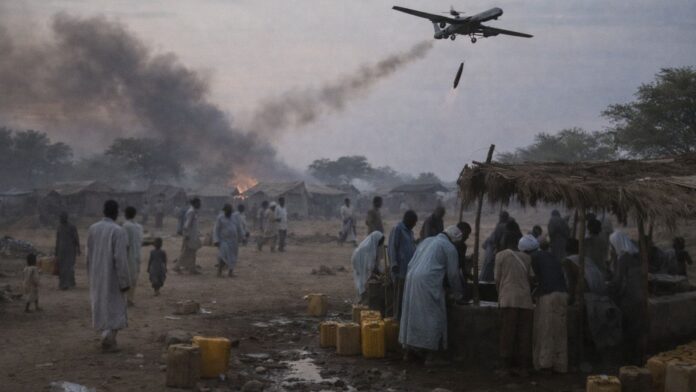
In the space of a week, Sudan’s Kordofan region has witnessed a devastating wave of drone strikes and indiscriminate attacks on civilians that multiple sources have attributed to the Sudanese Armed Forces (SAF). At least fifty‑seven people were killed in just two days, according to United Nations human rights officials, with many of the victims […]
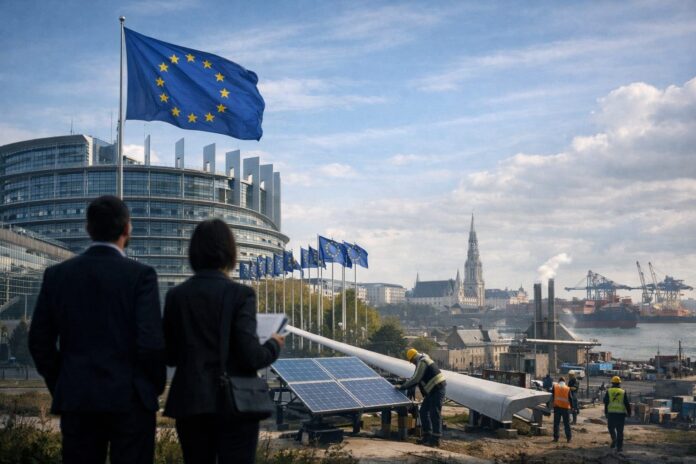
Brussels prepares a major procurement shift as industry cheers—and lawyers warn of trade and competition risks The EU is moving toward a “Buy European” approach to public spending, aiming to channel taxpayer money into EU-made strategic technologies. Supporters say it could shore up jobs and supply chains; critics warn it may raise costs, trigger trade […]
Brussels prepares a major procurement shift as industry cheers—and lawyers warn of trade and competition risks
The EU is moving toward a “Buy European” approach to public spending, aiming to channel taxpayer money into EU-made strategic technologies. Supporters say it could shore up jobs and supply chains; critics warn it may raise costs, trigger trade disputes, and strain the single market’s own rules.
Brussels is preparing a new push to prioritise European-made goods in public procurement and subsidy-linked purchases, part of a broader industrial policy drive that EU officials frame as necessary for resilience, security, and competitiveness. But as debate intensifies, the central question is whether the EU can “buy European” at scale without undermining the open-market principles and trade commitments that helped build the bloc’s prosperity.
In a deep dive published on 26 February 2026, Euronews reported that the European Commission is expected to table a sweeping “One Europe, One Market” action plan at the March 2026 EU summit, with “Buy European” at its core—politically simple in slogan form, but legally and economically complex in execution.
What Brussels is considering
At the heart of the emerging plan is the idea that when public money supports “strategic” technologies—think clean tech, advanced manufacturing, critical infrastructure, and other sensitive supply chains—EU funding should come with conditions favouring European production. A Reuters explainer published this month outlined the Commission’s draft concept for a “made in Europe” approach, describing requirements that a minimum share of certain subsidised products be manufactured in the EU when public support is involved. (See: What is in the EU’s draft “made in Europe” law?.)
While exact thresholds and sectors remain politically contested, the direction of travel is clear: procurement, state aid, and EU-level programmes would be used more explicitly as industrial policy tools—an approach often justified by the need to reduce dependencies and strengthen Europe’s manufacturing base.
Why it’s controversial
EU procurement law is designed to ensure competition, prevent discrimination, and deliver value for money—principles that also matter for trust in public spending. Critics argue that blanket “buy local” conditions can backfire, narrowing supplier pools and raising prices for public services and infrastructure projects.
There is also the external dimension: the EU is bound by international trade commitments, and any shift that looks like systematic discrimination against non-EU suppliers risks disputes or retaliation. Even within Europe, member states do not always agree on how far “strategic autonomy” should go—especially when national industries compete for the same subsidies and contracts.
Some of the sharpest questions are practical: What counts as “European-made” in a world of complex supply chains? How should components be treated? And how will the Commission enforce rules without generating heavy administrative burdens—particularly for smaller companies and local authorities?
A UK angle—and a sign of the plan’s reach
The debate is already influencing partners outside the EU. In a Brussels visit reported by The Guardian, the UK’s business secretary said British voters want deeper economic ties with the EU as London seeks pragmatic cooperation. The same report noted UK interest in engaging with a forthcoming “Made in Europe” procurement scheme—an indicator that the EU’s choices could ripple beyond its borders. (See: The Guardian’s Brussels report, 25 February 2026.)
What this means for cohesion, regions, and public trust
Procurement fights rarely stay technical for long. If “Buy European” rules apply across EU-funded programmes, cohesion-policy regions may face new constraints on how quickly they can deliver projects—and on what terms. That is one reason cohesion ministers meeting in Brussels today are also discussing the future shape of cohesion policy and lessons for the next budget cycle, according to the Council’s forward agenda. (See: Council “Forward look”, 23 February–8 March 2026.)
For public confidence, the risk is not only cost: it is perceived fairness. Procurement is where EU rules touch daily life—transport, hospitals, schools, energy upgrades—and any system that looks designed for insiders can quickly erode legitimacy. That concern is not theoretical: procurement compliance is increasingly linked to broader EU governance, including rights and accountability safeguards in spending programmes.
At the same time, EU policymakers argue that without a stronger industrial base, Europe’s climate goals and economic security become harder to achieve. The challenge is balancing strategic investment with open competition and clear, enforceable rules. As Europe debates how to decarbonise heavy industry, for example, the question is not only how to cut emissions, but how to sustain the industrial ecosystems that make the transition possible—an issue also highlighted in a recent European Environment Agency-based briefing covered by The European Times.
Expect three flashpoints in the coming weeks: (1) the Commission’s detailed legal design—especially how it defines “European-made”; (2) member-state divisions over how protectionist the instrument should be; and (3) reactions from major trading partners, particularly if the new approach is seen as closing markets.
If Brussels wants a “Buy European” policy that survives court challenges and avoids trade blowback, it will need transparent definitions, narrow and defensible scope, and safeguards that keep public procurement competitive—otherwise the slogan may prove easier to sell than to implement.
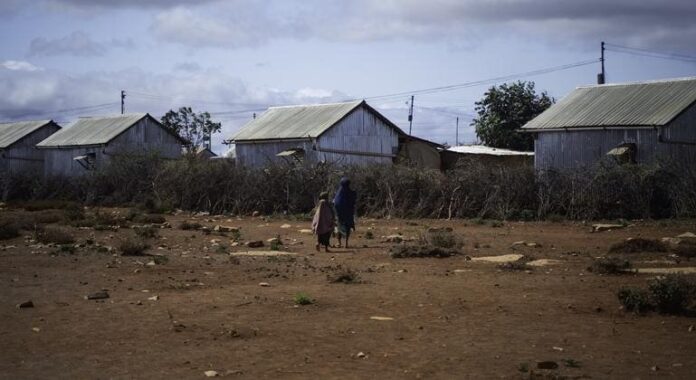
More than 1.8 million children under the age of five are also at risk of suffering from acute malnutrition by June, according to the latest analysis published Tuesday by food security monitoring platform IPC (see our UN News explainer on the platform here). This worrying development comes after the period from October to December Deyr […]
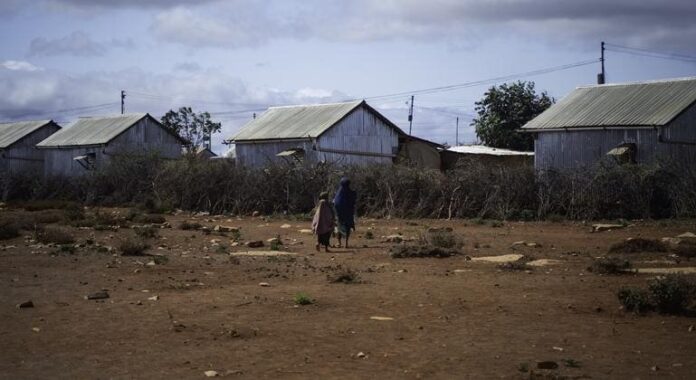
More than 1.8 million children under five are also at risk of acute malnutrition between now and June, according to latest analysis published on Tuesday by the IPC food security monitoring platform (see our UN News explainer on the platform here). The worrying development comes after the October to December Deyr season rains failed and crop production fell. Those most impacted are poor farmers, pastoralists, and internally displaced people. Drought, displacement, aid shortfalls In Somalia, drought, insecurity and conflict in the center, […]
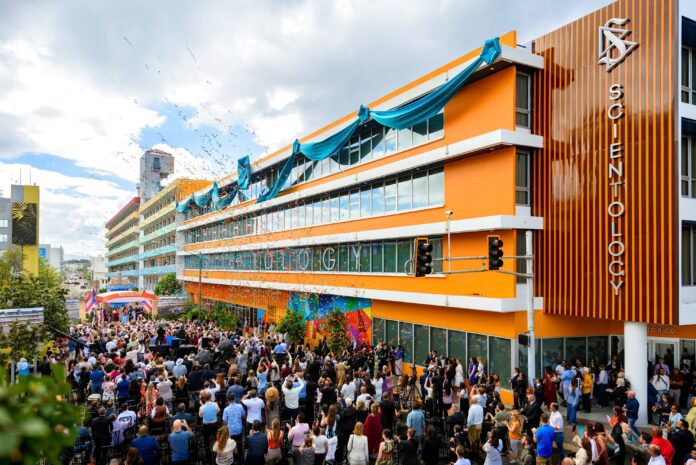
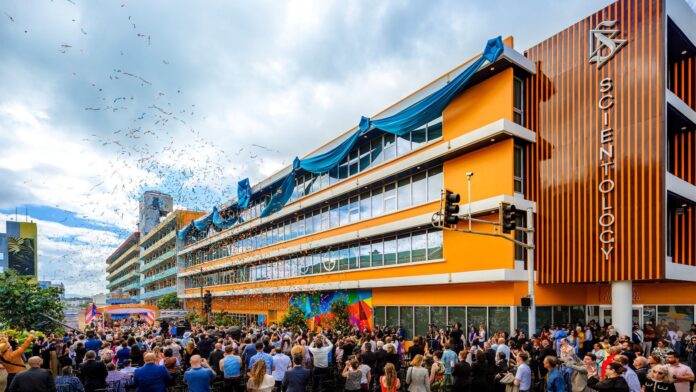
A massive Sunday crowd convenes to honor the latest addition to the lively center of San Juan—a new Church of Scientology, located along Juan Ponce de León Avenue, among the city’s busiest thoroughfares.
KINGNEWSWIRE // PRESS RELEASE // New facility in downtown San Juan highlights interfaith cooperation, community programmes and humanitarian outreach as dignitaries mark a milestone for the island’s religious landscape
BRUSSELS / SAN JUAN, Puerto Rico — 24 February 2026 — The Church of Scientology inaugurated its new Ideal Church of Scientology of Puerto Rico on Sunday, 22 February 2026, with a public Grand Opening celebration in downtown San Juan. It is the first Ideal Org in the Caribbean and a new community hub intended to support religious services alongside local social initiatives.
The new church is located along Avenida Juan Ponce de León in the Santurce area—an artery among San Juan’s busiest thoroughfares—and at 1208 Avenida Juan Ponce de León, San Juan, PR 00907.
As published by Scientology Today, the Grand Opening brought together parishioners, guests and local representatives for a ribbon-cutting and tours of the church’s facilities, including public-facing information areas and spaces intended for introductory services and community engagement.
Mr. David Miscavige with (from left): Ms. Zorimar Betancourt, President, San Juan Violence Prevention and Support Network; Mr. Anibal Heredia Burgos, San Juan Faith-Based Coordinator and Advisor to the City Mayor; Ms. Mery Dacosta, President, Human Rights Coalition, Puerto Rico; and Lt. Hector Ayala, Director, Police Athletic League, Puerto Rico Police Bureau.
A public celebration with civic and interfaith participants
In remarks cited by the Church, Mr. David Miscavige, ecclesiastical leader of the Scientology religion, addressed the crowd and linked the opening to the island’s identity and civic pride: “Who can deny the magnetism of these waters surrounding your Isle of Enchantment,” “An island that moves to its own rhythm, an island that generates its own current—for the true power of Puerto Rico is her people. And just like your beloved coquí, you are unmistakable, you are indomitable, you are impossible to silence. And here stands the living proof: your new Ideal Church of Scientology of Puerto Rico!”
Local speakers highlighted collaboration between faith communities and public institutions. Mr. Anibal Heredia Burgos, San Juan’s Faith-Based Coordinator and an advisor to the city mayor, emphasized the building’s intended role for shared community aims: “Today we are gaining more than just a building, because here is a place where our communities can come and reach their full potential… With this new Church of Scientology now opening to the community, we are going to make Puerto Rico a model of interfaith and government partnership everywhere.”
Next guest speaker, Lt. Hector Ayala, a Puerto Rico Police Bureau veteran and Director of the Police Athletic League, referred to drug-prevention education and cooperation with Drug-Free World materials. 22 officers earned educator kits as Drug-Free World lecturers—presented as part of a prevention-through-information approach.
Facilities described as designed for both religious and community use
The San Juan report outlines the features typical of an “Ideal Org” in Scientology, describing such churches as facilities aimed at supporting the delivery of religious services for Scientologists and also function as a meeting ground for cooperative initiatives in the wider community.
Among the areas described is a Public Information Center offering “more than 1,000 films” introducing the beliefs and practices of Scientology, the life and legacy of founder L. Ron Hubbard, and Church-supported humanitarian and community outreach programmes. The site narrative also references spaces for introductory courses and seminars, evening and weekend services that provide an overview of Dianetics and Scientology principles and their application in daily life.
In keeping with the tradition described by the Church for its churches worldwide, the building includes an Office of L. Ron Hubbard, presented as a symbolic reminder of the Church’s alignment with Mr Hubbard’s writings and ideals.
Historical references connecting Puerto Rico and L. Ron Hubbard
The Church links the Puerto Rico opening to historical references regarding L. Ron Hubbard’s time on the island. It states that Mr Hubbard led what it describes as the first complete mineral survey of Puerto Rico under US jurisdiction in 1932–1933, a survey that served as a reference for decades. The Puerto Rico House of Representatives later recognized Mr Hubbard’s work, calling it “commendable and meritorious” and “serving the best interests” of Puerto Rico.
As read in the official website of the church Mr Hubbard worked with the Red Cross in hurricane relief before the survey began and conducted ethnological research on the island’s rural jíbaro culture during that period, presenting these as elements of humanitarian interest alongside scientific work.
A milestone in a broader international pattern, including Europe
The Puerto Rico opening is part of a broader pattern of Ideal Churches openings internationally. The Church lists major cities where Ideal Organizations have opened, including multiple European locations such as Brussels, Paris, Rome, Berlin, Hamburg, Stuttgart, Copenhagen, Amsterdam, Basel, Madrid and others.
From a European perspective, that international footprint has often been described by Scientology representatives as a practical, community-facing complement to civic and human-rights frameworks—especially where education, prevention and volunteering contribute to social resilience.
Ivan Arjona, the Church of Scientology’s representative to the EU, OSCE, Council of Europe and UN, recently framed that approach in the context of civic responsibility and the daily practice of shared values: “Europe’s values become real when they are understood and practised in daily life… [people] are better equipped to act responsibly, resolve disputes lawfully, and protect dignity and freedom—both for themselves and for others.”
Applied to the Puerto Rico milestone, Arjona added that community institutions—religious and civil alike—tend to be most effective when they are transparent, open to dialogue, and focused on practical initiatives that strengthen dignity, responsibility, and cooperation across differences—principles that align with long-standing European priorities around civic participation and human rights.
The Church of Scientology, its churches, missions, groups and members are present across the European continent. “There is a continent-wide presence through more than 140 churches, missions and affiliated groups in at least all the 27 European nations, alongside thousands of community-based social betterment and reform initiatives focused on education, prevention and neighbourhood-level support, inspired by the work of Scientology founder L. Ron Hubbard” said Ivan Arjona.
Within Europe’s diverse national frameworks for religion, the Church’s recognitions continue to expand, with administrative and judicial authorities in Spain, Portugal, Sweden, the Netherlands, Italy, Germany Slovakia and others, as well as the European Court of Human Rights, having addressed and acknowledged Scientology communities as protected by the national and international provisions of Freedom of Religion or belief.
KINGNEWSWIRE // PRESS RELEASE // New facility in downtown San Juan highlights interfaith cooperation, community programmes and humanitarian outreach as dignitaries mark a milestone for the island’s religious landscape
BRUSSELS / SAN JUAN, Puerto Rico — 24 February 2026 — The Church of Scientology inaugurated its new Ideal Church of Scientology of Puerto Rico on Sunday, 22 February 2026, with a public Grand Opening celebration in downtown San Juan. It is the first Ideal Org in the Caribbean and a new community hub intended to support religious services alongside local social initiatives.
The new church is located along Avenida Juan Ponce de León in the Santurce area—an artery among San Juan’s busiest thoroughfares—and at 1208 Avenida Juan Ponce de León, San Juan, PR 00907.
As published by Scientology Today, the Grand Opening brought together parishioners, guests and local representatives for a ribbon-cutting and tours of the church’s facilities, including public-facing information areas and spaces intended for introductory services and community engagement.
Mr. David Miscavige with (from left): Ms. Zorimar Betancourt, President, San Juan Violence Prevention and Support Network; Mr. Anibal Heredia Burgos, San Juan Faith-Based Coordinator and Advisor to the City Mayor; Ms. Mery Dacosta, President, Human Rights Coalition, Puerto Rico; and Lt. Hector Ayala, Director, Police Athletic League, Puerto Rico Police Bureau.
A public celebration with civic and interfaith participants
In remarks cited by the Church, Mr. David Miscavige, ecclesiastical leader of the Scientology religion, addressed the crowd and linked the opening to the island’s identity and civic pride: “Who can deny the magnetism of these waters surrounding your Isle of Enchantment,” “An island that moves to its own rhythm, an island that generates its own current—for the true power of Puerto Rico is her people. And just like your beloved coquí, you are unmistakable, you are indomitable, you are impossible to silence. And here stands the living proof: your new Ideal Church of Scientology of Puerto Rico!”
Local speakers highlighted collaboration between faith communities and public institutions. Mr. Anibal Heredia Burgos, San Juan’s Faith-Based Coordinator and an advisor to the city mayor, emphasized the building’s intended role for shared community aims: “Today we are gaining more than just a building, because here is a place where our communities can come and reach their full potential… With this new Church of Scientology now opening to the community, we are going to make Puerto Rico a model of interfaith and government partnership everywhere.”
Next guest speaker, Lt. Hector Ayala, a Puerto Rico Police Bureau veteran and Director of the Police Athletic League, referred to drug-prevention education and cooperation with Drug-Free World materials. 22 officers earned educator kits as Drug-Free World lecturers—presented as part of a prevention-through-information approach.
Facilities described as designed for both religious and community use
The San Juan report outlines the features typical of an “Ideal Org” in Scientology, describing such churches as facilities aimed at supporting the delivery of religious services for Scientologists and also function as a meeting ground for cooperative initiatives in the wider community.
Among the areas described is a Public Information Center offering “more than 1,000 films” introducing the beliefs and practices of Scientology, the life and legacy of founder L. Ron Hubbard, and Church-supported humanitarian and community outreach programmes. The site narrative also references spaces for introductory courses and seminars, evening and weekend services that provide an overview of Dianetics and Scientology principles and their application in daily life.
In keeping with the tradition described by the Church for its churches worldwide, the building includes an Office of L. Ron Hubbard, presented as a symbolic reminder of the Church’s alignment with Mr Hubbard’s writings and ideals.
Historical references connecting Puerto Rico and L. Ron Hubbard
The Church links the Puerto Rico opening to historical references regarding L. Ron Hubbard’s time on the island. It states that Mr Hubbard led what it describes as the first complete mineral survey of Puerto Rico under US jurisdiction in 1932–1933, a survey that served as a reference for decades. The Puerto Rico House of Representatives later recognized Mr Hubbard’s work, calling it “commendable and meritorious” and “serving the best interests” of Puerto Rico.
As read in the official website of the church Mr Hubbard worked with the Red Cross in hurricane relief before the survey began and conducted ethnological research on the island’s rural jíbaro culture during that period, presenting these as elements of humanitarian interest alongside scientific work.
A milestone in a broader international pattern, including Europe
The Puerto Rico opening is part of a broader pattern of Ideal Churches openings internationally. The Church lists major cities where Ideal Organizations have opened, including multiple European locations such as Brussels, Paris, Rome, Berlin, Hamburg, Stuttgart, Copenhagen, Amsterdam, Basel, Madrid and others.
From a European perspective, that international footprint has often been described by Scientology representatives as a practical, community-facing complement to civic and human-rights frameworks—especially where education, prevention and volunteering contribute to social resilience.
Ivan Arjona, the Church of Scientology’s representative to the EU, OSCE, Council of Europe and UN, recently framed that approach in the context of civic responsibility and the daily practice of shared values: “Europe’s values become real when they are understood and practised in daily life… [people] are better equipped to act responsibly, resolve disputes lawfully, and protect dignity and freedom—both for themselves and for others.”
Applied to the Puerto Rico milestone, Arjona added that community institutions—religious and civil alike—tend to be most effective when they are transparent, open to dialogue, and focused on practical initiatives that strengthen dignity, responsibility, and cooperation across differences—principles that align with long-standing European priorities around civic participation and human rights.
The Church of Scientology, its churches, missions, groups and members are present across the European continent. “There is a continent-wide presence through more than 140 churches, missions and affiliated groups in at least all the 27 European nations, alongside thousands of community-based social betterment and reform initiatives focused on education, prevention and neighbourhood-level support, inspired by the work of Scientology founder L. Ron Hubbard” said Ivan Arjona.
Within Europe’s diverse national frameworks for religion, the Church’s recognitions continue to expand, with administrative and judicial authorities in Spain, Portugal, Sweden, the Netherlands, Italy, Germany Slovakia and others, as well as the European Court of Human Rights, having addressed and acknowledged Scientology communities as protected by the national and international provisions of Freedom of Religion or belief.
KINGNEWSWIRE // PRESS RELEASE // New facility in downtown San Juan highlights interfaith cooperation, community programs and humanitarian action, as dignitaries mark milestone in island’s religious landscape
BRUSSELS / SAN JUAN, Puerto Rico — February 24, 2026 – L’Church of Scientology inaugurated its new Ideal Church of Scientology of Puerto Rico THE Sunday February 22, 2026during a large public ceremony held in the downtown San Juan. This is the first ideal Caribbean Org and a new community center to support religious services as well as local social initiatives.
The new Church is located along theAvenida Juan Ponce de Leonin the Santurce district, one of the busiest streets in San Juan, 1208 Avenida Juan Ponce de Leon, San Juan, PR 00907.
As published by Scientology Todaythe dedication brought together parishioners, guests and local officials for a ribbon cutting ceremony and tours of the church facilities, including public information areas and spaces for introductory services and community engagement.
Mr. David Miscavige with (from left to right): Ms. Zorimar Betancourt, President of the San Juan Violence Prevention and Support Network; Mr. Anibal Heredia Burgos, denominational coordinator of San Juan and advisor to the city mayor; Ms. Mery Dacosta, President of the Puerto Rico Human Rights Coalition; and Lt. Hector Ayala, Police Athletic League Director, Puerto Rico Police Bureau.
A public celebration with civic and interfaith participants
In remarks cited by the Church, Mr. David Miscavigeecclesiastical leader of the Scientology religion, addressed the crowd and linked the openness to the island’s identity and civic pride: “ Who can deny the magnetism of these waters which surround your enchanted island? “An island that lives at its own pace, an island that generates its own current, because the true power of Puerto Rico lies in its people. And just like your dear coquí, you are unique, you are indomitable, you are impossible to silence. And here is the living proof: your new ideal Church of Scientology in Puerto Rico! »
Local speakers highlighted the collaboration between religious communities and public institutions. Mr. Anibal Heredia Burgoscoordinator of the religious communities of San Juan and advisor to the mayor of the city, highlighted the role that the building is called to play for the common objectives of the community: “ Today we gain more than just a building, because it is a place where our communities can come and realize their full potential… With this new Church of Scientology now opening to the community, we will make Puerto Rico a model of interfaith and governmental partnership around the world. »
The next speaker, Lieutenant Hector Ayalaveteran of the Puerto Rico Police Bureau and director of the Police Athletic League, discussed drug prevention education and cooperation with supports Drug-Free World. 22 agents received educational kits as Drug-Free World speakers, as part of an information-based prevention approach.
Facilities designed for both religious and community use
The San Juan report outlines the typical characteristics of an “ideal Org” in Scientology, describing these churches as facilities intended to support the provision of religious services for Scientologists and also serving as a meeting place for cooperative initiatives in the broader community.
Among the spaces described is a public information center offering “more than 1,000 films” showcasing the beliefs and practices of Scientology, the life and legacy of its founder, L. Ron Hubbardas well as humanitarian and community programs supported by the Church. The site description also mentions spaces for introductory courses and seminars, as well as evening and weekend services that offer an overview of the principles of Dianetics and Scientology and their application in daily life.
In keeping with the tradition outlined by the Church for its churches around the world, the building includes a office of L. Ron Hubbardpresented as a symbolic reminder of the Church’s alignment with Mr. Hubbard’s writings and ideals.
Historical references linking Puerto Rico and L. Ron Hubbard
The Church connects the opening of Puerto Rico to historical references regarding the stay of L. Ron Hubbard on the island. She claims that Mr. Hubbard led what she describes as the first comprehensive mineralogical survey of Puerto Rico under American jurisdiction in 1932-1933a study that has served as a benchmark for decades. There Puerto Rico House of Representatives later recognized Mr. Hubbard’s work, calling it “commendable and meritorious” and “serving the best interests” of Puerto Rico.
As noted on the Church’s official website, Mr. Hubbard worked with the Red Cross in hurricane relief before the study began and conducted ethnological research on the island’s rural Jíbaro culture during this period, presenting this as a matter of humanitarian interest alongside his scientific work.
An important step in a broader international movement, including Europe
The opening in Puerto Rico is part of a broader movement to open ideal churches internationally. The Church lists major cities where ideal organizations have been opened, including several European cities such as Brussels, Paris, Rome, Berlin, Hamburg, Stuttgart, Copenhagen, Amsterdam, Basel, Madrid and others.
From a European perspective, this international footprint has often been described by Scientology representatives as a practical, community-oriented complement to civic and human rights frameworks, particularly where education, prevention and volunteerism contribute to social resilience.
Ivan Arjonarepresentative of the Church of Scientology to theEU, OSCE, Council of Europe and UNrecently presented this approach in the context of civic responsibility and the daily practice of common values: “ European values become real when they are understood and put into practice in daily life… [les gens] are better equipped to act responsibly, resolve conflicts legally, and protect dignity and freedom, both for themselves and others. »
Applied to the important step taken in Puerto Rico, Mr. Arjona added that community institutions, both religious and civil, tend to be most effective when they are transparent, open to dialogue and focused on practical initiatives that strengthen dignity, responsibility and cooperation across differences, principles which align with long-standing European priorities on civic participation and human rights.
The Church of Scientology, its churches, missions, groups and members are present throughout the European continent. “It has a continent-wide presence through more than 140 churches, missions and affiliated groups in at least 27 European countries, as well as thousands of community-based social improvement and reform initiatives focused on education, prevention and neighborhood-level support, inspired by the work of Scientology founder L. Ron Hubbard,” said Ivan Arjona.
Within the various European national frameworks on religion, recognition of the Church continues to expand, with administrative and judicial authorities in Spain, Portugal, Sweden, the Netherlands, Italy, Germany, Slovakia and other countries, as well as the European Court of Human Rights, having addressed and recognized Scientology communities as protected by national and international provisions relating to freedom of religion or belief.
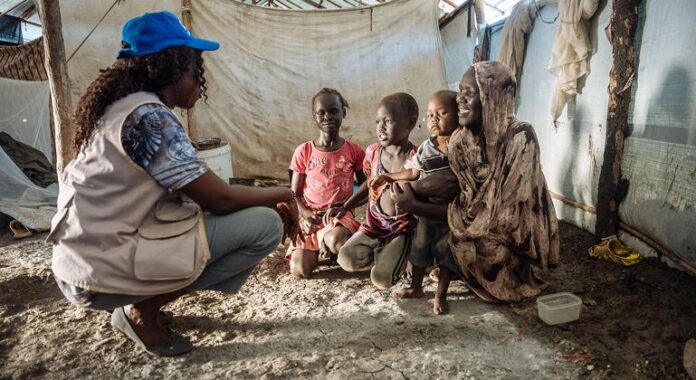
The warning comes as the world’s youngest nation remains among the top displacement crises, with nearly 10 million people in need of humanitarian assistance including returnees fleeing the war in neighbouring Sudan.
IOMrequires just over $131 million for operations in South Sudan this year but faces a $29 million funding gap.
‘An extraordinary burden’
The UN agency and partners are supporting the authorities with piloting government-led solutions under the UN Secretary-General’s Action Agenda on Internal Displacement whose goals include ensuring effective protection and assistance for those who have been uprooted, and preventing new displacement crises from emerging.
“South Sudan is carrying an extraordinary burden, and funding shortfalls risk undermining progress toward durable solutions for millions,” said IOM Deputy Director General for Operations, Ugochi Daniels, who is currently visiting the country.
“Displaced families and host communities are trying to rebuild their lives, but the strain is real. Without sustained support and progress toward peace, these communities could face renewed instability and displacement.”
Conflict within and beyond borders
Millions of people remain displaced within South Sudan and across borders due to years of conflict, flooding and instability.
Major aid cuts are constraining the delivery of life-saving assistance and slowing progress toward longer-term recovery.
South Sudan is also grappling with new arrivals fleeing the war between rival militaries in Sudan which erupted in April 2023. Since then, more than 1.3 million people have crossed the border. The majority, 67 per cent, are South Sudanese returnees.
The situation is placing immense pressure on border communities, overstretched services, and fragile infrastructure.
Bentiu Protection of Civilians site in South Sudan, one of the largest displacement sites in the country, hosts tens of thousands of internally displaced persons.
Ease the burden
The northern town of Renk is among the main entry points for people escaping from war-ravaged Sudan, and humanitarian needs remain acute.
“Emergency assistance, health screening, protection support, and onward transportation remain critical to stabilizing new arrivals and easing the burden on host communities already facing limited resources,” IOM said.
Ms. Daniels travelled to the city of Bentiu where families are returning home and rebuilding after years of displacement and floods.
“Dikes, drainage, and water pumping, make this possible, but lasting recovery depends on security and continued investment in basic services and livelihoods,” she wrote in a tweet.
In response to the overall situation, IOM stressed the need for strong coordination and leadership grounded in close partnership with the South Sudanese authorities, reliable humanitarian access to people in need, and security for humanitarian workers.

 Brussels prepares a major procurement shift as industry cheers—and lawyers warn of trade and competition risks The EU is moving toward a “Buy European” approach to public spending, aiming to channel taxpayer money into EU-made strategic technologies. Supporters say it could shore up jobs and supply chains; critics warn it may raise costs, trigger trade […]
 More than 1.8 million children under the age of five are also at risk of suffering from acute malnutrition by June, according to the latest analysis published Tuesday by food security monitoring platform IPC (see our UN News explainer on the platform here). This worrying development comes after the period from October to December Deyr […]