Friday, June 26, 2026
Home Blog Page 141

Mar Leal and When Faith Meets Law: A Landmark Study on Patient Autonomy and Religious Freedom in Spanish Healthcare

0
Mar Leal and When Faith Meets Law: A Landmark Study on Patient Autonomy and Religious Freedom in Spanish Healthcare

In a comprehensive analysis recently published in Religions, University of Seville legal scholar Mar Leal-Adorna has produced a meticulously researched examination of one of contemporary law’s most profound ethical dilemmas: the right of Jehovah’s Witnesses to refuse blood transfusions, even when such refusals threaten their lives.

The research stands out for its intellectual rigor, methodological sophistication, and its unflinching analysis of tensions within Europe’s most advanced legal protections for patient autonomy. The study arrives at a critical moment, following a 2024 European Court of Human Rights (ECHR) decision that fundamentally reshapes how European healthcare systems must balance the sanctity of life against the equally fundamental right to self-determination.

What makes Leal-Adorna’s work particularly valuable is her systematic deconstruction of what appears to be a straightforward conflict—patient autonomy versus medical duty—into its constituent legal, ethical, and procedural components. She traces the evolution of Spanish healthcare law from its paternalistic foundations (where physicians unilaterally determined treatment) through its transformation into an autonomy-centered framework.

This historical narrative is not merely decorative. By mapping the legal transitions through the General Health Law of 1986 and the landmark Basic Law Regulating Patient Autonomy (Law 41/2002), Leal-Adorna demonstrates that patient rights did not emerge from philosophical abstraction but from hard-won legal battles and institutional reform. The research shows that Spanish courts, acting as constitutional custodians, were protecting patient autonomy before legislation mandated it—a fact that underscores the organic development of human rights protections.

The author’s analysis of informed consent deserves particular commendation. She identifies a critical procedural vulnerability: Spanish informed consent documents are often written at reading levels that exclude much of the general population. This observation—that legal formality can mask substantive denial of comprehension—represents precisely the kind of institutional critique that elevates legal scholarship beyond doctrinal commentary.

A Framework Grounded in Medical Ethics

Rather than treating blood transfusion refusals as purely legal questions, Leal-Adorna integrates the four foundational principles of biomedics (Beauchamp & Childress): non-maleficence, beneficence, justice, and autonomy. This framework permits her to demonstrate how modern medical ethics itself has undergone philosophical transformation. She documents the shift from a paternalistic beneficence model—where physicians imposed their conception of “good”—to one where beneficence itself requires respect for patient values and autonomy.

This reframing is intellectually elegant and practically consequential. It shows that respecting a patient’s refusal is not merely deferential; it is ethically constitutive of good medical care. For Jehovah’s Witnesses, this distinction matters profoundly: receiving a transfusion is not simply a medical intervention they prefer to avoid. It represents, in their faith tradition, a violation of divine command that affects their eternal salvation. Leal-Adorna recognizes this spiritual dimension—the psychological consequences of forced intervention extend beyond bodily harm to existential harm.

The ECHR’s Landmark Intervention

The research’s most significant contribution may be its detailed examination of the European Court of Human Rights’ recent jurisprudence, particularly the 2024 Pindo Mulla v. Spain case. Here, Leal-Adorna provides an invaluable service: a careful translation and analysis of a decision that has “fundamentally restructured” Spanish healthcare protocols.

The Pindo Mulla case presents a dramatic fact pattern. Rosa Edelmira Pindo Mulla, an Ecuadorian Jehovah’s Witness, meticulously documented her refusal through three separate legal instruments: an advance directive, a lasting power of attorney, and a signed informed consent form. Despite this documentation, when she arrived at Madrid’s La Paz Hospital with life-threatening internal bleeding, the emergency medical team and duty judge authorized transfusions without consulting the national advance directive registry and without accurately representing her wishes to the judge.

What distinguishes Leal-Adorna’s analysis is her forensic examination of the procedural failures. The medical team told the judge that Pindo Mulla had “verbally” expressed refusal—a mischaracterization, since her refusal was comprehensively documented in writing. They omitted mention of her formal, registered advance directives. They failed to notify the patient, who was conscious and competent at the time.

The ECHR, ruling unanimously, found a violation of the European Convention’s Articles 8 and 9 (privacy and religious freedom). But the Court’s reasoning—as Leal-Adorna carefully explains—turned not primarily on substantive rights but on procedural integrity. Even in emergencies, the judge must make reasonable efforts to verify the patient’s documented wishes. The inability of emergency personnel to quickly access the advance directive registry, and the failure of the medical team to provide accurate information, constituted a violation not despite the emergency but precisely because procedural safeguards become more important when time pressure might otherwise override careful deliberation.

Leal-Adorna’s analysis here reveals something profound about modern human rights law: protecting autonomy is not opposed to emergency medicine; rather, procedural diligence is the mechanism through which autonomy is protected even in crisis.

The Tension That Remains

What elevates this research beyond celebratory appraisal of patient rights is Leal-Adorna’s unflinching acknowledgment of a subsequent ECHR decision—Lindholm and Others v. Denmark—that introduces significant ambiguity into the protections established by Pindo Mulla.

In the Danish case, the Court permitted a wider “margin of appreciation” for national governments, allowing Denmark to require that refusals of blood be made “in the context of the current course of the illness.” Leal-Adorna’s critique of this standard is incisive: Jehovah’s Witnesses cannot predict which illness will befall them. They can only express their general conviction that blood transfusion violates their faith, regardless of the specific medical context. A legal requirement that refusals be contextualized to a particular illness effectively renders advance directives nugatory in unexpected emergencies—precisely the situations advance directives are designed to address.

This analysis reveals both the sophistication and the limitation of human rights law. The ECHR has established that patient autonomy must be respected, but its jurisprudence has not yet resolved whether advance directives constitute a sufficient manifestation of autonomy or whether states can demand contemporaneous, context-specific reaffirmation even when a patient cannot provide it.

Conclusions with Intellectual Honesty

The study concludes that Spain’s legal architecture is “well structured,” but that implementation and inter-institutional coordination remain vulnerable. The fragmentation of advance directive regulation among Spain’s 17 autonomous communities creates inconsistencies. Emergency personnel may not know how to access registries. Procedural safeguards, however well-intentioned, may fail under pressure.

Leal-Adorna does not retreat to false comfort. Rather, she identifies a genuine risk: that the Lindholm precedent could erode the protections established in Pindo Mulla, introducing legal uncertainty that would disproportionately affect religious minorities whose advance directives may not be consulted in emergencies.

Significance Beyond Spain

While the research focuses on Spanish law, its implications extend throughout Europe and beyond. The ECHR jurisprudence is binding across 46 countries. The tensions Leal-Adorna identifies—between procedural safeguards and substantive rights, between emergency medicine and patient autonomy, between state protection of life and individual self-determination—confront every healthcare system.

The research is also significant for religious freedom advocacy. By grounding the right to refuse blood transfusions not primarily in religious accommodation (a framework that often treats religious practice as an exception requiring justification) but in the fundamental rights to bodily autonomy and self-determination, Leal-Adorna demonstrates that religious freedom is not a special pleading but an expression of universal human rights principles.

The methodological sophistication deserves recognition. Leal-Adorna integrates statutory law (national and regional), constitutional jurisprudence, ECHR precedent, bioethical principles, and medical practice into a coherent analytical framework. She cites 90+ sources, demonstrating exhaustive research. Importantly, she acknowledges limitations—the study focuses on competent adults, not minors, recognizing that pediatric refusals involve distinct ethical and legal questions.

The writing itself is clarity itself. In an academic discipline often characterized by doctrinal density, Leal-Adorna’s prose remains accessible without sacrificing precision. The reader understands not only what Spanish law says but why it says it, what alternatives existed, and what tensions remain unresolved.

Implications for Healthcare Practice

The practical implications are substantial. Healthcare administrators and medical professionals now understand that respect for advance directives is not merely ethically praiseworthy—it is legally mandatory and procedurally enforceable. The failure to consult registries, the failure to accurately represent a patient’s wishes to judicial authorities, and the failure to notify a conscious patient of emergency interventions can expose healthcare systems to ECHR conviction.

Conversely, the research also clarifies the genuine dilemma faced by emergency physicians. The study does not simply celebrate patient autonomy; it grapples with the tragic conflict between respecting self-determination and preventing death. By emphasizing procedural safeguards rather than absolutizing either life or autonomy, the research offers healthcare systems a framework for navigating these conflicts with both ethical rigor and legal compliance.

A Contribution to Religious Freedom Discourse

In an era of increasing religious pluralism and growing tension between secular state authority and religious conscience, this research provides a legally grounded, empirically detailed model for how constitutional democracies can protect religious freedom without creating chaos or abandoning state responsibilities.

The study demonstrates that respecting religious belief is not inimical to state interests in health, life, and medical practice. Rather, clear legal frameworks, transparent procedures, and documented patient wishes allow these values to coexist. The problem is not that religious conscience and medical science are irreconcilable; the problem is when procedural safeguards fail.

Conclusion: A Necessary Intervention

Leal-Adorna’s research arrives at a critical juncture in European human rights law. The Pindo Mulla decision promised clarity; the subsequent Lindholm ruling reintroduced ambiguity. This study provides European courts, medical administrators, and legislators with the doctrinal clarity needed to navigate between these precedents.

Beyond its technical legal contributions, the research models a kind of legal scholarship increasingly rare: work that takes both law and ethics seriously, that respects religious traditions without subordinating them, that acknowledges institutional vulnerabilities while proposing constructive solutions, and that integrates international jurisprudence, national legislation, and local practice into a comprehensive framework.

In an age when patient autonomy is celebrated but often sacrificed to institutional convenience, when religious freedom is affirmed but frequently subordinated to majority preferences, and when procedural justice is theoretically acknowledged but practically neglected, this study serves as both diagnosis and prescription.

For healthcare professionals navigating end-of-life decisions, for judicial authorities adjudicating medical conflicts, for legislators designing healthcare law, and for religious communities seeking to assert their convictions within secular legal frameworks, Leal-Adorna’s work provides rigorous, nuanced, and practically applicable guidance.

It is scholarship of the kind that reminds us why the legal protection of human rights matters: not as abstract philosophy, but as the mechanism through which vulnerable minorities can assert their dignity, their conscience, and their fundamental humanity within modern states.

Source link

Hungary truckers vow to continue toll protests

0
Hungary truckers vow to continue toll protests

Budapest | 23 December 2025 – Hungarian lorry drivers have kept up slow-moving convoys in and around Budapest to protest planned road-toll increases for 2026. Organisers say they will not stop until the government revisits the toll framework and holds substantive talks, arguing that higher charges will filter through to consumer prices and strain smaller hauliers.

Convoys around the capital

Traffic around Budapest has been repeatedly disrupted this week as truck drivers mobilised against higher road charges. The Hungarian news outlet Kárpátmedence reported that the demonstration began on Monday, 22 December, with organisers expecting hundreds of vehicles and possibly up to around 2,000 trucks taking part.

Hungarian news site Telex described kilometre-long congestion near the M3–M0 junction as vehicles moved toward the city, while police communications and live updates pointed to knock-on effects across parts of the ring road network.

“We won’t back down,” organiser says

At the centre of the protest is Tibor Orosz, described in Hungarian reporting as a lead organiser and spokesperson for the action. In an interview published by Index, he argued that truckers would keep protesting until there is a meaningful agreement, including a reconsideration of the toll law and direct talks with the Ministry of Construction and Transport.

Participation estimates differ across reports. Orosz told Index that even a cautious estimate was difficult, suggesting figures in the low thousands, while other accounts cited higher numbers circulating among drivers and observers.

What sparked the protest

According to Kárpátmedence, the immediate trigger was a government decree issued on 1 December that would substantially reshape 2026 toll levels—especially for heavy vehicles using main roads—after many transport contracts for next year had already been negotiated. The same reporting says planned motorway increases would be smaller than the rises affecting lorries on main routes.

The ministry’s public argument, as cited by Kárpátmedence, is that the goal is not simply revenue but to steer heavy traffic toward motorways, easing pressure on smaller towns and villages where trucks often choose cheaper secondary roads.

Costs, contracts and consumer prices

Hauliers warn that toll increases can land fast and unevenly. For operators, tolls are a daily operating cost, while freight invoices are often paid weeks later—an imbalance that can hit smaller firms hardest.

Protest organisers also argue that the wider public will feel the impact. Their claim is straightforward: higher transport costs tend to be incorporated into the price of goods, particularly in food and fuel distribution. How quickly those costs pass through depends on market competition and contract terms, but the sector says the direction of travel is clear.

A European debate in miniature

The dispute also echoes a broader EU challenge: how to pay for road infrastructure while shaping freight traffic in ways that reduce local pollution, congestion and safety risks. The European Parliament has repeatedly debated rules on how countries charge heavy vehicles for road use—an issue summarised in The European Times’ coverage of EU road-charging discussions.

For now, organisers say the protest will continue without a substantive policy rethink and direct engagement with the ministry. With 2026 changes approaching, both sides face a narrowing window: the government must defend the policy’s aims while containing disruption, and hauliers must decide whether negotiations can deliver relief—or whether further convoys will become a recurring feature on Hungary’s busiest roads.

Source link

Scientists reveal how organics emerged in deep freeze of early solar system

0
Scientists reveal how organics emerged in deep freeze of early solar system


Some 4.5 billion years ago, just as the first planetesimals formed in our solar system, a hodgepodge world of rock and various ices orbited the nascent Sun. This tiny world was so cold that even the carbon dioxide (CO2) and ammonia (NH3) hidden deep within were frozen solid.

Zack Gainsforth at the Lawrence Berkeley National Laboratory’s Advanced Light Source (Credit: UC Berkeley SSL, Alan Toth)

Zack Gainsforth at the Lawrence Berkeley National Laboratory’s Advanced Light Source (Credit: UC Berkeley SSL, Alan Toth)

Though the Sun was too far away to provide much warmth, radioactive elements within the world’s core began to generate enough heat to melt the CO2 and NH3, which sublimed into gasses that coursed through pores and crevices and gradually polymerized into a thin organic film that adhered to rock surfaces.

One of the main challenges in understanding the early solar system is finding any pristine material from the period to examine—conditions that emerged as the solar system evolved altered much of what came before. Material collected from asteroid Bennu has allowed scientists at the UC Berkeley Space Sciences Lab (SSL), Lawrence Berkeley National Lab (Berkeley Lab) and NASA to examine this early period for the first time. In a paper published today in Nature Astronomy, they identified nitrogen-rich compounds that were not previously known to occur in nature, and they’ve shown how the emergence of the molecular ingredients thought necessary for life may have begun in cryogenic environments during the infancy of our solar system.

The material that yielded these findings was collected by NASA’s Origins, Spectral Interpretation, Resource Identification, and Security–Regolith Explorer (OSIRIS-REx), which passed by Earth and released a sample return capsule containing 121.6 grams of rock and dust from asteroid Bennu in September of 2023. In a previous study published early this year in the journal Nature, Gainsforth and colleagues at Berkeley Lab described how an examination of that material with the Advanced Light Source synchrotron revealed evidence that a saltwater environment once existed within Bennu.

“This is the first evidence of organics forming on an asteroid in that brief period after the asteroids were first assembled but before they got hot enough for water to melt,” said Zack Gainsforth, a research scientist at SSL and co-author of the study.

Publication of the saltwater research coincided with a study published by the OSIRIS-REx team in the journal Nature Astronomy in which mass spectrometry revealed that Bennu samples contained 14 of 20 amino acids found in Earth biology as well as all five nucleobases found in DNA and RNA. Though amino acids and nucleobases are thought of as the basic ingredients of life, they assemble into complex molecules that are anything but simple and were unlikely to have spontaneously assembled themselves all at once. Gainsforth, along with co-authors Scott A. Sandford and Michel Nuevo of NASA’s Ames Research Center, wanted to understand how exactly these prebiotic molecules emerged.

Previous analysis confirmed that asteroid Bennu is a so-called rubble pile asteroid—an agglomeration of debris from the destruction of several different parent bodies. The oldest material from asteroid Bennu appeared to be from a parent body that also had irregular composition. This proved an essential factor in the preservation of chemical markers that Gainsforth and Sandford hoped to find. Using infrared microscopy, they found particles associated with organic nitrogen. Using X-ray and electron microscopy, they discovered that these rare particles contained sheet-like material only a few micrometers thick but with several distinct layers sandwiched together. The combined analysis confirmed that each layer had a specific chemical composition and relationship to the surrounding asteroid material that suggested a particular series of events within the parent body of Bennu. Strikingly, the organic has a very high concentration of amines and amides—compounds important to life.

“It was amazing,” said Sandford. “By studying microscopic grains of material, we were able to understand things that happened billions of years ago on a remote asteroid.”

As the parent body warmed, CO2 and NHreacted to form a compound called ammonium carbamate. This compound adhered to the surfaces of ice and mineral grains and polymerized, eventually forming an organic layer. At some point, impacts or other events generated enough heat to melt water ice, which melted and absorbed remaining ammonia and any unpolymerized carbamate. If not for the polymer layer, all evidence of primordial NH3 reactions might have been lost. Fortunately, the polymerized carbamate was water-insoluble and thus resistant to destruction. As water eroded rock, it left behind other markers on the polymer—carbonate crystals for instance—as evidence of further transformation.

Thanks to these thin films, Gainsforth, Sandford, and Nuevo were able to see how CO2 and NH3 could combine within a frozen environment and eventually become amines and amide polymers (some of the chemical components of amino acids). If not for the unusual composition of the layered films, and their unique physical structure, it would have been very difficult to understand the multitude of steps involved in their formation and evolution. For Gainsforth, the extremely complex chemical process that produced the material is matched only by the incredible effort necessary to acquire it. 

“We had to travel billions of miles to get this stuff, and we went to extraordinary lengths to preserve and analyze it,” said Gainsforth. “If humanity is able to do this, then there’s nothing we can’t accomplish.”

Source: UC Berkeley


Source link

Somalia: Funding cuts impact assistance to millions affected by drought

0
Somalia: Funding cuts impact assistance to millions affected by drought

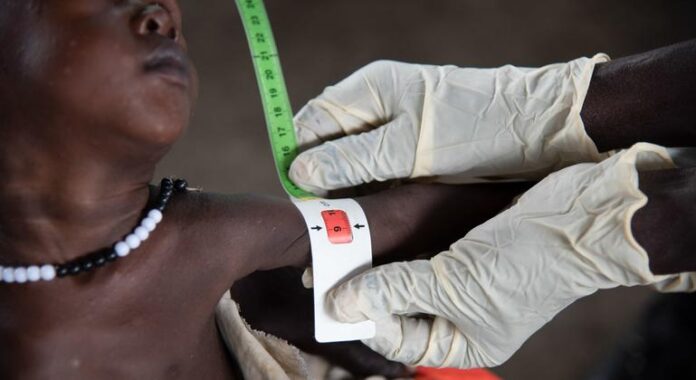
More than 4.6 million people across the country, roughly a quarter of the population, are impacted, according to local authorities. 

“Partners indicate that at least 120,000 people were displaced between September and December, as water prices soar, food becomes increasingly scarce, livestock die and livelihoods collapse,” OCHA said in an update

Additionally, more than 75,000 students nationwide have been forced to drop out of school. 

Conditions expected to worsen 

The upcoming dry season from January to March is expected to worsen drought conditions, OCHA said, warning of impacts such as increased water scarcity, more livestock deaths, and the potential for greater food insecurity in many parts of the country. 

“Authorities are appealing for urgent assistance to avert a possible collapse of pastoral and farming livelihoods and to prevent avoidable loss of life. They warn that the next four months will be critical, as the next rainy season is not expected until April 2026,” the update said. 

OCHA stressed that the UN and partners are mobilized – “supporting assessments, mapping available supply stocks, and coordinating emergency responses across water, food, nutrition, health and shelter sectors.” 

Humanitarians are also providing cash assistance, animal fodder and rehabilitating boreholes, while visiting field locations to assess the severity of the situation and reviewing resources for early action.  

However, their efforts are severely constrained by significant funding shortfalls. 

Last month, UN Emergency Relief Coordinator Tom Fletcher allocated $10 million from the Central Emergency Response Fund (CERF) – which provides timely assistance when conflict and climate-related disasters strike – “but substantially more support is urgently needed,” OCHA said. 

As 2025 draws to a close, the $1.4 billion humanitarian response plan for Somalia has received only about $370 million, roughly a quarter of the required funding, leaving critical gaps across lifesaving programmes. 

Source link

AMLA Takes Major Step in Preparing for Direct Supervision

0
AMLA Takes Major Step in Preparing for Direct Supervision

Throughout the Road Show, the Chair held roundtable discussions with key stakeholders in each Member State. These roundtables were designed to encourage open dialogue and enable Financial Intelligence Units (FIUs), financial and non-financial supervisors, and the private sector to share their views. They exchanged perspectives on the new AML system, national risk landscapes, expectations, and perceived challenges, as well as trends in money laundering and terrorist financing. 

Completing this Road Show was a strategic priority,” said Bruna Szego. “These conversations help ensure AMLA’s foundations are built on strong cooperation, mutual understanding, and practical insight. I thank every participant for offering their insights which will inform AMLA’s way forward.”

With the Road Show now complete, AMLA looks forward to continued engagement with each Member State in working together to realise an effective and robust AML/CFT system in Europe. 

For media queries, please contact mediaamla [dot] europa [dot] eu (media[at]amla[dot]europa[dot]eu)

Download the PDF version of the press release here.

Source link

UN warns Sudan war enters deadlier phase as fighting spreads to Kordofan

0

Briefing of Security Council Senior UN political and humanitarian officials on Monday described a sharply deteriorated security and humanitarian situation, marked by indiscriminate attacks, expanding territorial gains by the Rapid Support Forces (RSF) and escalating dangers for civilians, aid workers and peacekeepers.

THE the conflict broke out in April 2023 amid a power struggle between the Sudanese Armed Forces (SAF) and the RSF. Since then, fighting has spread across the country, devastating cities, displacing millions of people and plunging parts of the country – including parts of Darfur – into famine conditions.

Under-Secretary-General for Political Affairs Khaled Khiari said fears that the dry season would lead to increased fighting had been confirmed.

Each passing day brings staggering levels of violence and destruction,“, Mr. Khiari told the ambassadors.Civilians are enduring immense and unimaginable suffering, with no end in sight.»

Kordofan emerges as a new hot spot

In recent weeks, the conflict has focused on the Kordofan region, where the RSF has made significant territorial gains, capturing Babanusa in Western Kordofan on December 1, followed a week later by the seizure of Heglig in Southern Kordofan – a key oil field and processing hub for South Sudan’s crude exports.

Kadugli and Dilling, both in Southern Kordofan, are now under increasingly strict siege conditions, with continued bombings and drone strikes. Reports indicate that SAF personnel withdrew from some areas to South Sudan, while South Sudanese forces moved into Sudan to protect Heglig’s oil infrastructure.

These developments reflect the increasingly complex nature of the conflict and its growing regional dimensions,Mr Khiari warned, warning that Sudan’s neighbors could be drawn into a wider war if the situation is not resolved.

Broadcast of the Security Council meeting.

Deadly drone strikes, peacekeepers killed

A particularly alarming trend, according to UN officials, is the increasing use of drones by both sides. On December 4, a kindergarten in Kalogi, South Kordofan, was struck, followed by an attack on the hospital treating the victims.

More than 100 people were killed in this despicable attack, including 63 children,» said Mr. Khiari.

Drone attacks have also directly targeted UN personnel. On December 13, strikes hit a United Nations logistics base in Kadugli, killing six Bangladeshi peacekeepers serving in the United Nations Interim Security Force for Abyei (UNISFA) and injuring nine others.

UNISFA has launched an investigation amid difficult security conditions, while all UN personnel have been evacuated from Kadugli until further notice. Mr. Khiari stressed that attacks on peacekeepers “may constitute war crimes” and demanded accountability.

The crisis in Sudan at a glance

  • Increased travel: Hundreds of people have fled villages in Southern Kordofan in recent days; more than 15,000 people have arrived in White Nile State since the end of October.
  • Exodus from Darfur: More than 107,000 people were displaced from El Fasher and surrounding areas between late October and early December.
  • What’s new: At least 2,500 displaced people reached the town of Sheria in South Darfur last week, in urgent need of food, health care and relief.
  • Deadly drone strikes: More than 100 civilians killed in drone attacks between December 4 and 16 in South Kordofan – a kindergarten and a hospital were hit. Separate drone strikes hit a UN base and market in Al Malha, North Darfur, killing peacekeepers and civilians.
  • Healthcare under attack: Sixty-five attacks on health facilities this year, killing more than 1,600 people.

For more information, visit our Focus section of UN News on the conflict in Sudan

The humanitarian crisis worsens

Edem Wosornu, director of crisis response at the United Nations Office for the Coordination of Humanitarian Affairs (OCHA), says civilian suffering spread across multiple fronts, with Kordofan becoming a new epicenter of humanitarian needs.

As well as targeting civilians, aid workers and convoys have also been struck – injuring aid workers, seriously affecting rescue programs and forcing UN agencies and NGOs to move staff from several locations due to insecurity.

Meanwhile, the situation in Darfur remains catastrophic. The UN continues to receive reports of massacres and sexual violence following RSF’s takeover of El Fasher earlier this year, including atrocities committed during the April offensive against the Zamzam IDP camp.

Calls for protection, access and peace

As the conflict approaches 1,000 days, the two officials urged the Council to act decisively to protect civilians, ensure humanitarian access and press for an immediate cessation of hostilities.

The Council must send a strong and unequivocal message,” Ms Wosornu said: “that attacks against civilians and violations of international humanitarian law will not be tolerated.»

Mr. Khiari echoed the call, urging international donors on both sides to use their influence to end the fighting and support a Sudanese-led political process.

The UN is fully engaged,” he said, “work with all international actors to end the violence – in the interests of the Sudanese people and regional stability.»

Originally published at Almouwatin.com

Winter aid delivery continues in Gaza

0

This has caused casualties and disrupted aid operations over the past 24 hours, UN spokesman Stephane Dujarric told reporters at Headquarters in New York.

Yet efforts to provide assistance to the most vulnerable families continue during the cold and wet winter season, although a rescue mission to reach an injured person in Gaza City was turned away.

Lack of shelter

“Faced with a severe lack of shelter in the Gaza Strip, people remain in partially or largely damaged buildings as they try to protect their families from the elements,” he said.

Several buildings collapsed over the weekend due to stormy conditions, causing casualties, according to humanitarian partners.

Additionally, three-quarters of female-headed households are in urgent need of shelter, and two-thirds are in desperate need of clothing.

Dujarric said UN partners continue to work to improve access to dignified shelter for the estimated 1.3 million people in Gaza.

Lift restrictions on entry of aid

Over the past week, some 3,500 families affected by storms or living in flood-prone areas have received tents, bedding sets, mattresses and blankets, while more than 250,000 children have received winter clothing.

“However, our partners estimate that 630,000 adolescents across the Gaza Strip still need assistance with winter clothing,” he added.

“We and our partners are once again calling for the lifting of all restrictions on the entry of aid into Gaza, including shelter materials, as these constraints obviously hamper humanitarian efforts to reach populations, particularly in this winter and cold season. »

Meanwhile, humanitarians continue to coordinate aid missions in Gaza, and half of the attempts Sunday were facilitated by Israeli authorities.

Teams collected six tanker trucks full of fuel, more than 270 pallets of medical supplies and other essential food items from the Kerem Shalom/Karem Abu Salem crossing, as well as the Zikim crossing.

Originally published at Almouwatin.com

Weekend attacks in Ukraine claim more lives and damage infrastructure

0

Between Friday and Monday morning, Ukrainian authorities said that more a dozen civilians were killed and more than 70 others injured, including two children. Disruptions to basic services were reported in more than 270 cities and towns.

These attacks occur in a harsh winter context in Ukraine and in a context of growing humanitarian needs. attacks last week also disrupted services and caused several deaths.

Almost daily attacks

The Odessa region is particularly affected and suffers almost daily attacks, according to OCHA. On Friday, a nighttime attack targeting port infrastructure killed eight civilians and injured 27 others. Repeated strikes have also cut power, affecting tens of thousands of people.

Additionally, Dnipro, Kharkiv and Mykolaiv saw their energy infrastructure hit, affecting hundreds of thousands of people. A health facility and a school were also damaged during the attacks. Donetsk, Kherson and Zaporizhzhia also suffered losses.

Ukrainian authorities told OCHA that a warehouse storing humanitarian aid was damaged in the Mykolaiv region.

Half-funded appeal for help

In the Sumy region, around 40 people have been evacuated to safer areas over the past three days, OCHA said. Meanwhile, in the Donetsk region, almost 330 civilians, including 50 children, were evacuated.

In total, since June, nearly 150,000 people have been evacuated from front-line areas, including more than 16,500 children and more than 5,000 people with reduced mobility.

Aid workers have managed to reach more than 700,000 people near the front lines this year. However, funding gaps persist, leaving more than a million people without clean water and limiting access to protection and gender-based violence services.

$2.6 billion this year call for Ukraine it is only half financeat nearly $1.4 billion.

Originally published at Almouwatin.com

UN warns Sudan war entering deadlier phase as fighting spreads in Kordofan

0
UN warns Sudan war entering deadlier phase as fighting spreads in Kordofan

Briefing the Security Council on Monday, senior UN political and humanitarian officials described a sharply deteriorating security and humanitarian situation marked by indiscriminate attacks, expanding territorial gains by the Rapid Support Forces (RSF), and escalating dangers for civilians, aid workers and peacekeepers.

The conflict erupted in April 2023 amid a power struggle between the Sudanese Armed Forces (SAF) and the RSF. Since then, fighting has spread nationwide, devastating cities, displacing millions and pushing parts of the country – including areas of Darfur – into famine conditions.

Assistant Secretary-General for Political Affairs Khaled Khiari said fears that the dry season would bring intensified fighting had been confirmed.

Each passing day brings staggering levels of violence and destruction,” Mr. Khiari told ambassadors. “Civilians are enduring immense, unimaginable suffering, with no end in sight.

Kordofan emerges as new flashpoint

In recent weeks, the conflict has centred on the Kordofan region, where the RSF has made significant territorial gains, capturing Babanusa in West Kordofan on 1 December, followed a week later by the seizure of Heglig in South Kordofan – a key oil field and processing hub for South Sudanese crude exports.

Kadugli and Dilling, both in South Kordofan, are now under tightening siege conditions, with shelling and drone strikes continuing. Reports indicate that SAF personnel withdrew from some areas into South Sudan, while South Sudanese forces moved into Sudan to protect the Heglig oil infrastructure.

These developments reflect the increasingly complex nature of the conflict and its expanding regional dimensions,” Mr. Khiari warned, cautioning that Sudan’s neighbours could be drawn into a wider war if the situation remains unaddressed.

Broadcast of the Security Council meeting.

Deadly drone strikes, peacekeepers killed

A particularly alarming trend, UN officials said, is the growing use of drones by both sides. On 4 December, a kindergarten in in Kalogi, South Kordofan was struck, followed by an attack on the hospital treating the victims.

More than 100 people were killed in this despicable attack, including 63 children,” Mr. Khiari said.

Drone attacks have also directly targeted UN personnel. On 13 December, strikes hit a UN logistics base in Kadugli, killing six Bangladeshi peacekeepers serving with the UN Interim Security Force for Abyei (UNISFA) and injuring nine others.

UNISFA has launched an investigation under difficult security conditions, while all UN personnel have been evacuated from Kadugli until further notice. Mr. Khiari stressed that attacks against peacekeepers “may constitute war crimes” and demanded accountability.

Sudan crisis at a glance

  • Displacement surging: Hundreds flee villages in South Kordofan in recent days; more than 15,000 have arrived in White Nile state since late October.
  • Darfur exodus: Over 107,000 people displaced from El Fasher and surrounding areas between late October and early December.
  • New arrivals: At least 2,500 displaced people reached South Darfur’s Sheria locality last week, needing urgent food, health and relief support.
  • Deadly drone strikes: Over 100 civilians killed in drone attacks between 4-16 December in South Kordofan – a kindergarten and a hospital struck. Separate drone strikes hit a UN base and a market in Al Malha, North Darfur, killing peacekeepers and civilians.
  • Healthcare under attack: Sixty-five attacks on healthcare facilities this year, killing over 1,600 people.

For more information, visit our UN News In Focus section on Syria

Humanitarian crisis deepens

Edem Wosornu, Director of Crisis Response at the UN Office for the Coordination of Humanitarian Affairs (OCHA), said civilian suffering was expanding across multiple fronts, with Kordofan emerging as a new epicentre of humanitarian need.

In addition to targeting civilians, aid workers and convoys were also struck – injuring humanitarians, severely affecting lifesaving programmes, and forcing UN agencies and NGOs to relocate staff from several locations due to insecurity.

Meanwhile, conditions in Darfur remain catastrophic. The UN continues to receive reports of mass killings and sexual violence following the RSF’s takeover of El Fasher earlier this year, including atrocities committed during an April offensive on the Zamzam displacement camp.

Calls for protection, access and peace

As the conflict approaches 1,000 days, both officials urged the Council to act decisively to protect civilians, ensure humanitarian access and push for an immediate cessation of hostilities.

The Council must send a strong, unequivocal message,” Ms. Wosornu said, “that attacks directed against civilians and violations of international humanitarian law will not be tolerated.

Mr. Khiari echoed the call, urging international backers of both sides to use their influence to halt the fighting and support a Sudanese-led political process.

The United Nations is fully committed,” he said, “to working with all international actors to end the violence – for the sake of the people of Sudan and regional stability.

Source link

LIVE: Security Council meets on escalating violence in Sudan

0

Senior UN political and humanitarian officials are due to brief the Security Council this afternoon as members meet to discuss the rapidly deteriorating situation in Sudan, where intensifying fighting – including in the Kordofan region – has led to civilian damage and mass displacement. The region has seen sharp escalation, including a deadly drone attack on a U.N. peacekeeping base that killed six Bangladeshi peacekeepers. The meeting was requested by Sudan and transitional Prime Minister Kamil Eltayeb Idris is expected to attend. Follow live below and UN News app users can Click here.

Originally published at Almouwatin.com