Friday, June 26, 2026
Home Blog Page 140

DR Congo: Displaced people in South Kivu are on the verge of “total despair”, according to the WFP

0

This is according to the United Nations World Food Program (PAM), which announcement On Tuesday, it stepped up efforts to provide aid to more than 210,000 people displaced by violence after a new offensive by the armed group M23 restarted hostilities earlier this month.

“This food crisis risks worsening without urgent action,” said Cynthia Jones, WFP director for the DRC.

She added that even families who sheltered those who were forced to flee are already living in emergency levels of food insecurity, “sharing their last food with displaced neighbors, pushing them all closer to total despair.”

Deprived of water and medicine

Since violence broke out in South Kivu, health facilities have been looted, medicines are unavailable and schools remain closed. Affected communities are deprived of clean water, medical care and livelihoods. Education has been severely disrupted, with more than 391,000 children out of school, according to the WFP.

As a result, many have also fled to neighboring countries in search of food and shelter. The teams support 71,000 new arrivals from the DRC in Burundi and 1,000 in Rwanda, with hot meals.

Underfunding threatens aid

WFP is trying to reach the most vulnerable displaced families and host communities in South Kivu with a survival package of cereals, legumes, vegetable oil, iodized salt and specialized nutrition to prevent malnutrition in young children and pregnant or lactating women.

Although food is already prepositioned in the conflict zone, the agency says it is urgently seeking $67 million to continue aid for three months to those forced to flee the DRC and $350 million to maintain operations of all programs in the country.

“Without urgent support and additional funding, we cannot respond to a crisis that is on the brink of a food catastrophe,” Ms Jones said.

Originally published at Almouwatin.com

Vienna Volunteers Bring “Truth About Drugs” Education to Youth Before Dealers Do

0

KINGNEWSWIRE // PRESS RELEASE // “Sag NEIN zu Drogen – Österreich” expands street-level prevention outreach in Austria’s capital, combining community events, school interest and online learning resources with a fact-based approach.

VIENNA, Austria — In Vienna’s public squares, parks and cultural gathering points, volunteers with the Vienna-based association Sag NEIN zu Drogen – Österreich have been strengthening a simple prevention idea: reach young people early, with clear information, before dealers and misinformation do.

The initiative focuses on youth, parents, educators, artists and sports communities—groups that often see the first signs of risk, but do not always have practical tools at hand. Volunteers describe their outreach as conversation-driven and non-confrontational, built around short exchanges that help people understand what commonly abused substances are, how they affect the body and mind, and why early experimentation can become difficult to reverse.

Gabriele Toker, president of the chapter in Vienna, has spoken publicly about why the effort matters at family level: drug education, she argues, is most effective when it equips parents and teachers with usable facts rather than fear or moral lectures. That emphasis has helped the group connect with educators exploring prevention resources that can be adapted to classrooms and youth settings.

Vienna’s cultural calendar provides recurring opportunities for that kind of contact. At major public events such as the Donauinselfest, volunteers have used interactive activities—music, movement, and family-friendly engagement—to create a welcoming setting for brief conversations about real-world pressures and the realities behind common myths. Organisers say this approach is intended to meet young people where they are, without dramatization, and to encourage responsible choices through understanding rather than instruction.

The timing of prevention has gained renewed relevance as drug markets evolve and as health authorities continue to highlight the scale of use. In June 2025, the UN Office on Drugs and Crime’s World Drug Report 2025 estimated that 316 million people used drugs in 2023, noting that instability and organised trafficking continue to compound social, economic and security costs. In the European context, the EU Drugs Agency’s 2025 assessment of cannabis again describes cannabis as Europe’s most widely consumed illicit drug, while warning that markets and products are changing rapidly.

Austria’s own youth data underscores why many prevention programmes prioritise early engagement. The national ESPAD Austria 2024 report found that 18% of surveyed students had tried cannabis at least once, 14% had used it in the last 12 months and 7% in the last 30 days. For the Vienna volunteers of Drug Free World, those figures reinforce a practical point: prevention conversations do not start “too early” in the teenage years, because the first offers and first risks can appear sooner than adults expect.

In their day-to-day outreach, volunteers report meeting a wide range of people—students in health-related fields, parents seeking clarity about substances discussed online, and teachers looking for age-appropriate materials that allow guided discussion without stigma. The group also points to the role of local role models. Collaborations with artists and sports communities, they say, help amplify a message that healthy performance and creativity do not depend on drugs—an argument that can resonate strongly with adolescents navigating identity, peer acceptance and pressure to experiment.

Feedback the foundation has received from community members in other countries illustrates the tone it aims to maintain. A shop owner in Belgium, commenting on the materials, noted: “This leaflet is effective because it is informative and fact-based and doesn’t give moral lectures.” A breakdance dancer in France similarly reflected: “We all have our creativity naturally and we don’t need drugs to feel good… I get my ‘high’ with dance and music, not drugs.” Such reactions, organisers say, reflect the value of prevention tools that respect the audience and rely on factual explanation.

The Vienna initiative uses materials associated with the global “Truth About Drugs” campaign distributed by the Foundation for a Drug-Free World, which describes itself as a nonprofit drug education programme sponsored by the Church of Scientology and Scientologists. The content is available in multiple formats, including printed booklets and structured classroom resources. The foundation also offers an online learning pathway through its Truth About Drugs e-courses, designed to let individuals work through information at their own pace using videos and lesson modules.

In parallel, the Church of Scientology describes its support for drug education through the Truth About Drugs campaign as a secular prevention initiative intended to help communities reduce harm through education. The programme’s origins are linked, in Church materials, to the emphasis placed by Scientology founder L. Ron Hubbard on addressing social problems with practical solutions and on countering drug abuse through awareness and prevention.

Ivan Arjona, Church of Scientology representative to the EU, OSCE, Council of Europe and the United Nations, said:

“Drug prevention in Europe works best when it treats young people with respect—by providing verified information early, in plain language, and in settings that feel safe to ask questions. When parents, teachers and community volunteers cooperate on that basis, they strengthen public health while also reinforcing the civic responsibility and human dignity that European societies depend on.”

Organisers in Vienna stress that the goal is not a single event but steady continuity: being present in public life often enough that drug education becomes normal, accessible and practical. For them, success is measured in small but concrete outcomes—students who take information home, teachers who feel better equipped to address difficult questions, and parents who leave a conversation with clearer facts and less uncertainty.

About the Church of Scientology in Europe
The Church of Scientology, its missions, groups and members are present throughout the European continent and support a range of community programmes focused on education, prevention and social betterment. Recognition of Scientology as a charitable and bona fide religion continues to grow in various jurisdictions, alongside engagement in initiatives intended to contribute to community well-being and informed civic participation.

Source link

Weekend attacks in Ukraine bring more casualties, damage infrastructure

0
Weekend attacks in Ukraine bring more casualties, damage infrastructure

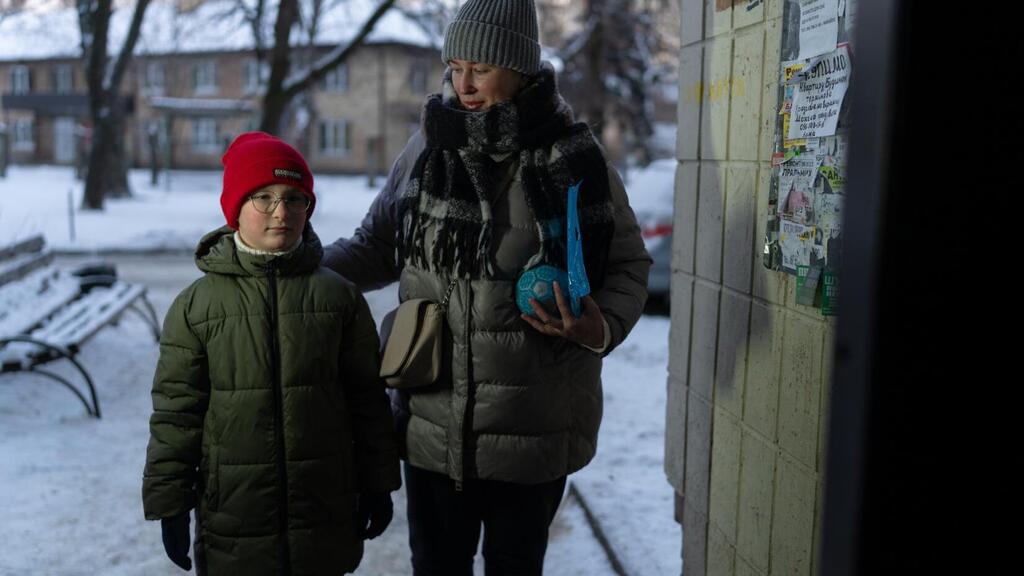
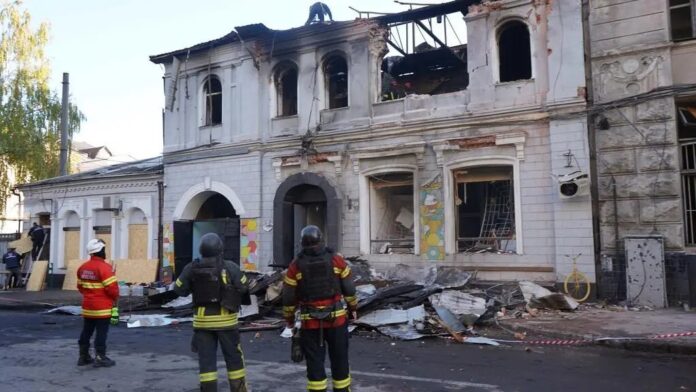
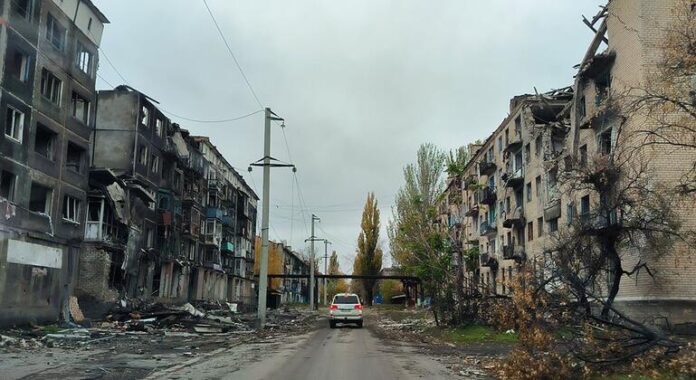
Between Friday and early morning Monday, Ukrainian authorities said that over a dozen civilians were killed and more than 70 others injured, including two children. Basic service disruptions were reported in over 270 towns and villages.  

The attacks come amid harsh winter conditions in Ukraine and increasing humanitarian needs as attacks last week also disrupted services and led to several fatalities.  

Near-daily attacks 

The region of Odesa is particularly hit and is experiencing near-daily attacks, according to OCHA. On Friday an overnight attack targeting port infrastructure killed eight civilians and injured 27 others. Repeated strikes also knocked out power, affecting tens of thousands of people. 

In addition, Dnipro, Kharkiv and Mykolaiv saw their energy infrastructure hit, with hundreds of thousands of people affected. A health facility and a school were also damaged in the attacks. Donetsk, Kherson and Zaporizhzhia also suffered casualties. 

Ukrainian authorities told OCHA that a warehouse storing humanitarian aid was damaged in the Mykolaiv region. 

Aid appeal half funded  

In the Sumy region, some 40 people were evacuated to safer areas over the last three days, OCHA said. Meanwhile, in the Donetsk region, nearly 330 civilians, including 50 children, were evacuated.  

All in all, since June, nearly 150,000 people have been evacuated from front-line areas, including more than 16,500 children and over 5,000 people with limited mobility.  

Humanitarian workers have managed to reach more than 700,000 people near the front line with aid this year. However, funding gaps persist, leaving more than one million people without safe water and limiting access to protection and gender-based violence services. 

This year’s $2.6 billion appeal for Ukraine is only half funded, at nearly $1.4 billion. 

Source link

LIVE: Security Council meets on Somalia and Iran

0

Senior UN political and humanitarian officials are due to brief the Security Council this afternoon as members meet to discuss the rapidly deteriorating situation in Sudan, where intensifying fighting – including in the Kordofan region – has led to civilian damage and mass displacement. The region has seen sharp escalation, including a deadly drone attack on a U.N. peacekeeping base that killed six Bangladeshi peacekeepers. The meeting was requested by Sudan and transitional Prime Minister Kamil Eltayeb Idris is expected to attend. Follow live below and UN News app users can Click here.

Originally published at Almouwatin.com

Stronger toy safety rules enter into force

0
boy sitting on white cloth surrounded by toys
Photo by Yuri Li on Unsplash

The new Toy Safety Regulation will enter into force on 1 January 2026, following its adoption by the European Parliament and the Council. It strengthens children’s protection from harmful chemicals in toys and improves enforcement of EU toy safety rules.

Under the regulation, substances will be banned from toys as soon as they are identified as hazardous, including chemicals that disrupt hormones, harm the lungs, cause skin allergies, or damage specific organs. The ban also covers per- and polyfluoroalkyl substances (PFAS) and bisphenols. The new rules also strengthen the existing ban on substances that can cause cancer, genetic damage or harm reproduction (carcinogenic, mutagenic or reprotoxic substances).

Enforcement will be enhanced through digital tools. All toys placed on the EU market will be required to have a digital product passport containing safety and compliance information, accessible to consumers online via a QR code or other data carrier. For toys sold online and imported into the EU, customs authorities will be able to check the product passport.

The new rules will apply from 1 August 2030.

Source link

Winter aid delivery continues in Gaza

0
Winter aid delivery continues in Gaza

This has resulted in casualties and disruptions to aid operations over the past 24 hours, UN Spokesperson Stéphane Dujarric told journalists at Headquarters, in New York. 

Still, efforts to deliver assistance to the most vulnerable families continue during the cold and wet winter season, although a rescue mission to reach an injured person in Gaza City was denied. 

Lack of shelter 

“Amid the severe lack of shelter across the Strip, people are staying in buildings that are either partially or mostly damaged as they try to protect their families from the elements,” he said.

Several buildings collapsed over the weekend due to stormy conditions, with casualties reported, according to humanitarian partners. 

Additionally, three quarters of women-headed households urgently need shelter support, and two thirds desperately need clothing.

Mr. Dujarric said that UN partners continue to work to improve access to dignified shelter for the estimated 1.3 million people in Gaza.

Lift restrictions on aid entry 

In the past week, some 3,500 families affected by storms or living in flood-prone areas received tents, bedding sets, mattresses and blankets, while more than 250,000 children were provided with winter clothing.   

“However, our partners estimate that 630,000 adolescents across the Strip still need winter clothing assistance,” he added.

“We and our partners call once again for the lifting of all restrictions on the entry of aid into Gaza, including shelter material, as these obviously constraint hinder humanitarian efforts to reach people especially in this winter and cold season.” 

Meanwhile, humanitarians continue to coordinate aid missions within Gaza, and half of attempts on Sunday were facilitated by the Israeli authorities. 

The teams collected six full tankers of fuel, more than 270 pallets of medical supplies, and other essential food items from the Kerem Shalom/Karem Abu Salem crossing, as well as the Zikim crossing. 

Source link

EIOPA reappoints two Management Board members for a second term

0
EIOPA reappoints two Management Board members for a second term

The Board of Supervisors of the European Insurance and Occupational Pensions Authority (EIOPA) has reappointed Ante Žigman, President of the Board of the Croatian Financial Services Supervisory Agency (Hrvatska agencija za nadzor financijskih usluga – HANFA)  and Teija Korpiaho, Chief Advisor of Insurance Supervision at the Finnish Financial Supervisory Authority (Finanssivalvonta – FIN-FSA) to EIOPA’s Management Board for a second term of two and a half years.

Mr Žigman and Ms Korpiaho have served on EIOPA’s Management Board since summer 2023. Their second and final terms will conclude on 22 June 2028 and 30 July 2028, respectively.

Background

EIOPA’s Management Board consists of EIOPA’s Chairperson, six representatives of national supervisory authorities and a representative from the European Commission. Its role is to ensure that EIOPA accomplishes its mission and fulfils the tasks assigned to it.

Source link

ICPA receives EUR 5 million to continue investigations into crime of aggression against Ukraine

0
ICPA receives EUR 5 million to continue investigations into crime of aggression against Ukraine

The International Centre for the Prosecution of the Crime of Aggression against Ukraine (ICPA), hosted at Eurojust, has received EUR 5 million from the European Commission to continue supporting the national investigations into the crime of aggression related to the war in Ukraine. The continuation of the ICPA will ensure that the foundation is laid for the upcoming Special Tribunal for the Crime of Aggression against Ukraine.

Source link

AI Browsers Face Permanent Prompt Injection Security Risk

0

OpenAI has officially acknowledged a worrying reality: their Atlas AI browser, like all AI-powered browsers, will never be completely safe from prompt injection attacks. Most likely.

Example of how a prompt injection attack text could look like. Image credit: OpenAI

Key Takeaways:

  • Prompt injection attacks against AI browsers cannot be fully eliminated, only managed through continuous defense updates
  • OpenAI developed an AI-powered attacker bot using reinforcement learning to discover vulnerabilities before hackers exploit them
  • Current AI browsers pose significant risks due to their access to sensitive data like emails and payment systems, outweighing practical benefits for most users

These attacks trick AI agents into executing hidden commands embedded in websites or emails, and the company now says this vulnerability is essentially permanent.

“Prompt injection, much like scams and social engineering on the web, is unlikely to ever be fully ‘solved,’” OpenAI stated in a Monday blog post. The company admitted that “agent mode” in ChatGPT Atlas “expands the security threat surface.”

Atlas launched in October, and security researchers immediately demonstrated its flaws. Within hours, they showed how simple text hidden in Google Docs could hijack the browser’s behavior. Brave’s security team published findings the same day, explaining that indirect prompt injection poses systematic challenges for all AI browsers, including Perplexity’s Comet.

The UK’s National Cyber Security Centre issued a warning earlier this month confirming that prompt injection attacks against generative AI applications “may never be totally mitigated.” The agency advised cybersecurity professionals to focus on reducing impact rather than expecting complete prevention.

Fighting an Endless Battle

OpenAI describes prompt injection as “a long-term AI security challenge” requiring continuous defense strengthening. The company’s strategy involves what it calls a “proactive, rapid-response cycle” designed to identify attack methods internally before hackers discover them.

This approach mirrors tactics from Anthropic and Google, which emphasize layered defenses and constant stress-testing. Google’s recent work concentrates on architectural and policy-level controls for agentic systems.

OpenAI’s distinctive contribution is its “LLM-based automated attacker”—an AI bot trained through reinforcement learning to act as a hacker seeking ways to inject malicious instructions into AI agents.

The bot tests attacks in simulation environments, observing how the target AI processes and responds to each attempt. It analyzes the AI’s internal reasoning, adjusts the attack, and repeats the process. This inside access to reasoning patterns gives OpenAI’s bot advantages external attackers lack, theoretically enabling faster vulnerability discovery.

“Our [reinforcement learning]-trained attacker can steer an agent into executing sophisticated, long-horizon harmful workflows that unfold over tens (or even hundreds) of steps,” OpenAI wrote. “We also observed novel attack strategies that did not appear in our human red teaming campaign or external reports.”

Real-World Exploitation Examples

OpenAI demonstrated how its automated attacker inserted a malicious email into a test inbox. When the AI agent scanned emails, it followed hidden instructions and sent a resignation message instead of creating an out-of-office reply. After security updates, “agent mode” successfully detected the injection attempt and alerted the user.

The company emphasizes that large-scale testing and faster patch cycles can strengthen systems before real-world attacks occur. However, an OpenAI spokesperson declined to share whether security updates have produced measurable reductions in successful injections. The spokesperson noted that OpenAI has collaborated with third parties to strengthen Atlas against prompt injection since before launch.

The Risk-Benefit Calculation

Rami McCarthy, principal security researcher at cybersecurity firm Wiz, describes reinforcement learning as valuable for adapting to attacker behavior but insufficient alone.

“A useful way to reason about risk in AI systems is autonomy multiplied by access,” McCarthy explained.

“Agentic browsers tend to sit in a challenging part of that space: moderate autonomy combined with very high access,” McCarthy said. “Many current recommendations reflect that trade-off. Limiting logged-in access primarily reduces exposure, while requiring review of confirmation requests constrains autonomy.”

OpenAI recommends users reduce their risk by limiting AI agent access and requiring confirmation before actions like sending messages or making payments. Atlas receives training to request user approval for these sensitive operations. The company also advises giving agents specific instructions rather than broad permissions with vague directives like “take whatever action is needed.”

“Wide latitude makes it easier for hidden or malicious content to influence the agent, even when safeguards are in place,” OpenAI noted.

Despite OpenAI prioritizing Atlas protection against prompt injections, McCarthy questions whether the benefits justify the risks.

“For most everyday use cases, agentic browsers don’t yet deliver enough value to justify their current risk profile,” McCarthy said. “The risk is high given their access to sensitive data like email and payment information, even though that access is also what makes them powerful. That balance will evolve, but today the trade-offs are still very real.”


Written by Alius Noreika

Source link

Mar Leal and When Faith Meets Law: A Landmark Study on Patient Autonomy and Religious Freedom in Spanish Healthcare

0
Mar Leal and When Faith Meets Law: A Landmark Study on Patient Autonomy and Religious Freedom in Spanish Healthcare

In a comprehensive analysis recently published in Religions, University of Seville legal scholar Mar Leal-Adorna has produced a meticulously researched examination of one of contemporary law’s most profound ethical dilemmas: the right of Jehovah’s Witnesses to refuse blood transfusions, even when such refusals threaten their lives.

The research stands out for its intellectual rigor, methodological sophistication, and its unflinching analysis of tensions within Europe’s most advanced legal protections for patient autonomy. The study arrives at a critical moment, following a 2024 European Court of Human Rights (ECHR) decision that fundamentally reshapes how European healthcare systems must balance the sanctity of life against the equally fundamental right to self-determination.

What makes Leal-Adorna’s work particularly valuable is her systematic deconstruction of what appears to be a straightforward conflict—patient autonomy versus medical duty—into its constituent legal, ethical, and procedural components. She traces the evolution of Spanish healthcare law from its paternalistic foundations (where physicians unilaterally determined treatment) through its transformation into an autonomy-centered framework.

This historical narrative is not merely decorative. By mapping the legal transitions through the General Health Law of 1986 and the landmark Basic Law Regulating Patient Autonomy (Law 41/2002), Leal-Adorna demonstrates that patient rights did not emerge from philosophical abstraction but from hard-won legal battles and institutional reform. The research shows that Spanish courts, acting as constitutional custodians, were protecting patient autonomy before legislation mandated it—a fact that underscores the organic development of human rights protections.

The author’s analysis of informed consent deserves particular commendation. She identifies a critical procedural vulnerability: Spanish informed consent documents are often written at reading levels that exclude much of the general population. This observation—that legal formality can mask substantive denial of comprehension—represents precisely the kind of institutional critique that elevates legal scholarship beyond doctrinal commentary.

A Framework Grounded in Medical Ethics

Rather than treating blood transfusion refusals as purely legal questions, Leal-Adorna integrates the four foundational principles of biomedics (Beauchamp & Childress): non-maleficence, beneficence, justice, and autonomy. This framework permits her to demonstrate how modern medical ethics itself has undergone philosophical transformation. She documents the shift from a paternalistic beneficence model—where physicians imposed their conception of “good”—to one where beneficence itself requires respect for patient values and autonomy.

This reframing is intellectually elegant and practically consequential. It shows that respecting a patient’s refusal is not merely deferential; it is ethically constitutive of good medical care. For Jehovah’s Witnesses, this distinction matters profoundly: receiving a transfusion is not simply a medical intervention they prefer to avoid. It represents, in their faith tradition, a violation of divine command that affects their eternal salvation. Leal-Adorna recognizes this spiritual dimension—the psychological consequences of forced intervention extend beyond bodily harm to existential harm.

The ECHR’s Landmark Intervention

The research’s most significant contribution may be its detailed examination of the European Court of Human Rights’ recent jurisprudence, particularly the 2024 Pindo Mulla v. Spain case. Here, Leal-Adorna provides an invaluable service: a careful translation and analysis of a decision that has “fundamentally restructured” Spanish healthcare protocols.

The Pindo Mulla case presents a dramatic fact pattern. Rosa Edelmira Pindo Mulla, an Ecuadorian Jehovah’s Witness, meticulously documented her refusal through three separate legal instruments: an advance directive, a lasting power of attorney, and a signed informed consent form. Despite this documentation, when she arrived at Madrid’s La Paz Hospital with life-threatening internal bleeding, the emergency medical team and duty judge authorized transfusions without consulting the national advance directive registry and without accurately representing her wishes to the judge.

What distinguishes Leal-Adorna’s analysis is her forensic examination of the procedural failures. The medical team told the judge that Pindo Mulla had “verbally” expressed refusal—a mischaracterization, since her refusal was comprehensively documented in writing. They omitted mention of her formal, registered advance directives. They failed to notify the patient, who was conscious and competent at the time.

The ECHR, ruling unanimously, found a violation of the European Convention’s Articles 8 and 9 (privacy and religious freedom). But the Court’s reasoning—as Leal-Adorna carefully explains—turned not primarily on substantive rights but on procedural integrity. Even in emergencies, the judge must make reasonable efforts to verify the patient’s documented wishes. The inability of emergency personnel to quickly access the advance directive registry, and the failure of the medical team to provide accurate information, constituted a violation not despite the emergency but precisely because procedural safeguards become more important when time pressure might otherwise override careful deliberation.

Leal-Adorna’s analysis here reveals something profound about modern human rights law: protecting autonomy is not opposed to emergency medicine; rather, procedural diligence is the mechanism through which autonomy is protected even in crisis.

The Tension That Remains

What elevates this research beyond celebratory appraisal of patient rights is Leal-Adorna’s unflinching acknowledgment of a subsequent ECHR decision—Lindholm and Others v. Denmark—that introduces significant ambiguity into the protections established by Pindo Mulla.

In the Danish case, the Court permitted a wider “margin of appreciation” for national governments, allowing Denmark to require that refusals of blood be made “in the context of the current course of the illness.” Leal-Adorna’s critique of this standard is incisive: Jehovah’s Witnesses cannot predict which illness will befall them. They can only express their general conviction that blood transfusion violates their faith, regardless of the specific medical context. A legal requirement that refusals be contextualized to a particular illness effectively renders advance directives nugatory in unexpected emergencies—precisely the situations advance directives are designed to address.

This analysis reveals both the sophistication and the limitation of human rights law. The ECHR has established that patient autonomy must be respected, but its jurisprudence has not yet resolved whether advance directives constitute a sufficient manifestation of autonomy or whether states can demand contemporaneous, context-specific reaffirmation even when a patient cannot provide it.

Conclusions with Intellectual Honesty

The study concludes that Spain’s legal architecture is “well structured,” but that implementation and inter-institutional coordination remain vulnerable. The fragmentation of advance directive regulation among Spain’s 17 autonomous communities creates inconsistencies. Emergency personnel may not know how to access registries. Procedural safeguards, however well-intentioned, may fail under pressure.

Leal-Adorna does not retreat to false comfort. Rather, she identifies a genuine risk: that the Lindholm precedent could erode the protections established in Pindo Mulla, introducing legal uncertainty that would disproportionately affect religious minorities whose advance directives may not be consulted in emergencies.

Significance Beyond Spain

While the research focuses on Spanish law, its implications extend throughout Europe and beyond. The ECHR jurisprudence is binding across 46 countries. The tensions Leal-Adorna identifies—between procedural safeguards and substantive rights, between emergency medicine and patient autonomy, between state protection of life and individual self-determination—confront every healthcare system.

The research is also significant for religious freedom advocacy. By grounding the right to refuse blood transfusions not primarily in religious accommodation (a framework that often treats religious practice as an exception requiring justification) but in the fundamental rights to bodily autonomy and self-determination, Leal-Adorna demonstrates that religious freedom is not a special pleading but an expression of universal human rights principles.

The methodological sophistication deserves recognition. Leal-Adorna integrates statutory law (national and regional), constitutional jurisprudence, ECHR precedent, bioethical principles, and medical practice into a coherent analytical framework. She cites 90+ sources, demonstrating exhaustive research. Importantly, she acknowledges limitations—the study focuses on competent adults, not minors, recognizing that pediatric refusals involve distinct ethical and legal questions.

The writing itself is clarity itself. In an academic discipline often characterized by doctrinal density, Leal-Adorna’s prose remains accessible without sacrificing precision. The reader understands not only what Spanish law says but why it says it, what alternatives existed, and what tensions remain unresolved.

Implications for Healthcare Practice

The practical implications are substantial. Healthcare administrators and medical professionals now understand that respect for advance directives is not merely ethically praiseworthy—it is legally mandatory and procedurally enforceable. The failure to consult registries, the failure to accurately represent a patient’s wishes to judicial authorities, and the failure to notify a conscious patient of emergency interventions can expose healthcare systems to ECHR conviction.

Conversely, the research also clarifies the genuine dilemma faced by emergency physicians. The study does not simply celebrate patient autonomy; it grapples with the tragic conflict between respecting self-determination and preventing death. By emphasizing procedural safeguards rather than absolutizing either life or autonomy, the research offers healthcare systems a framework for navigating these conflicts with both ethical rigor and legal compliance.

A Contribution to Religious Freedom Discourse

In an era of increasing religious pluralism and growing tension between secular state authority and religious conscience, this research provides a legally grounded, empirically detailed model for how constitutional democracies can protect religious freedom without creating chaos or abandoning state responsibilities.

The study demonstrates that respecting religious belief is not inimical to state interests in health, life, and medical practice. Rather, clear legal frameworks, transparent procedures, and documented patient wishes allow these values to coexist. The problem is not that religious conscience and medical science are irreconcilable; the problem is when procedural safeguards fail.

Conclusion: A Necessary Intervention

Leal-Adorna’s research arrives at a critical juncture in European human rights law. The Pindo Mulla decision promised clarity; the subsequent Lindholm ruling reintroduced ambiguity. This study provides European courts, medical administrators, and legislators with the doctrinal clarity needed to navigate between these precedents.

Beyond its technical legal contributions, the research models a kind of legal scholarship increasingly rare: work that takes both law and ethics seriously, that respects religious traditions without subordinating them, that acknowledges institutional vulnerabilities while proposing constructive solutions, and that integrates international jurisprudence, national legislation, and local practice into a comprehensive framework.

In an age when patient autonomy is celebrated but often sacrificed to institutional convenience, when religious freedom is affirmed but frequently subordinated to majority preferences, and when procedural justice is theoretically acknowledged but practically neglected, this study serves as both diagnosis and prescription.

For healthcare professionals navigating end-of-life decisions, for judicial authorities adjudicating medical conflicts, for legislators designing healthcare law, and for religious communities seeking to assert their convictions within secular legal frameworks, Leal-Adorna’s work provides rigorous, nuanced, and practically applicable guidance.

It is scholarship of the kind that reminds us why the legal protection of human rights matters: not as abstract philosophy, but as the mechanism through which vulnerable minorities can assert their dignity, their conscience, and their fundamental humanity within modern states.

Source link