Saturday, March 28, 2026
Home Blog Page 143

Security Council LIVE: Ambassadors meet in emergency session on Sudan

0

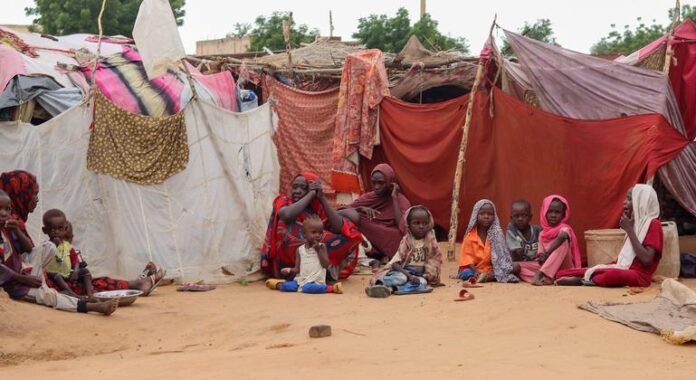
Reports of mass atrocities in and around the newly captured Darfur town of El Fasher mark a new low point in Sudan’s brutal civil war and the Security Council is meeting in an emergency session Thursday morning in New York to address the rapidly deteriorating situation. Civilians face starvation and mass displacement as the UN continues to provide lifesaving aid across the country. Hospitals, schools and camps for displaced people are attacked, and entire neighborhoods have been emptied as families flee the RSF militias. Follow our in-depth live coverage; UN News app users can go here.

Originally published at Almouwatin.com

Customs seize 2,858 kg of cocaine

0

On Tuesday October 28, Customs seized 2,858 kg of cocaine on quay 730 in the port of Antwerp. The cargo was hidden in a container from Costa Rica which contained pineapples. The drugs will be destroyed. Source link

Originally published at Almouwatin.com

Born in 2007? #DiscoverEU with a free travel pass

0
Born in 2007? #DiscoverEU with a free travel pass


Are you turning 18 this year, living in one of the EU or Erasmus+ countries, and want to travel and discover Europe? This is your chance! 

The EU will award selected young people with a travel pass to explore the EU and countries associated with Erasmus+. This year, we celebrate 40 years of the Schengen Agreement, the foundation of border-free travel. On this occasion, the EU is offering 40 000 DiscoverEU travel passes. Applications are now open – apply before 13 November 2025 (midday, Brussels time). You can travel with a group of friends if they meet the eligibility criteria and you submit the application together.

If you are selected, you will receive a travel pass for the most environmentally friendly means of transport, such as trains (or other modes of transport in specific cases). You can travel for only 1 day and up to 30 days during the travel period, which is planned to start on 1 March 2026. You will also receive a DiscoverEU discount card offering numerous discounts on accommodation, culture, sports, local transport, and other services.

If you have a disability or a health problem that makes your travel challenging, you can get assistance and support.

Supporting young people is one of the Commission’s key priorities. DiscoverEU is part of the Erasmus+ programme. It offers 18-year-olds the opportunity to travel and explore Europe’s diversity, learn about its cultural heritage and history, and connect with people from all over the continent. 

For more information

DiscoverEU – apply now!

European social fairness

Feature story European Youth: Dream big. Act now.

Source link

Reported massacre at hospital in Sudan’s El Fasher leaves 460 dead

0
Reported massacre at hospital in Sudan’s El Fasher leaves 460 dead

The World Health Organization says it’s appalled and deeply shocked by reports that 460 patients and their companions have been killed at Saudi Maternity Hospital in the city.

Director-General Tedros Adhanom Ghebreyesus said that prior to this latest attack, WHO has verified 285 attacks on healthcare in Sudan with at least 1,204 deaths and over 400 injuries of health workers and patients, since the start of the conflict.

The once allied RSF and forces of the military government began fighting in and around the capital Khartoum in April 2023 – a conflict which has since engulfed the entire country.

All attacks on healthcare must stop immediately and unconditionally,” said Tedros demanding protection for all health workers and civilians under international law.

Many civilians fleeing the RSF takeover have sought safety in Tawila some 60 kilometres from the regional capital of El Fasher, which until a few days ago was the last remaining government-controlled city which had been holding out against the RSF for over 500 days.

Many have arrived in Tawila “dehydrated, injured and traumatized,” said the UN aid coordination office, OCHA, on social media. “The UN and aid organizations are providing life-saving support, but the violence must stop.”

‘No child is safe’

“No child is safe,” said UNICEF chief Catherine Russell. “While the full scale of the impact remains unclear due to widespread communications blackouts, the estimated 130,000 children in El Fasher are at a high risk of grave rights violations, with reports of abduction, killing and maiming, and sexual violence.”

There are also reports of humanitarian workers being detained or killed.

UNICEF is calling for an immediate ceasefire to stop the violence, safe, unimpeded humanitarian access, the protection of civilians – especially children – and guaranteed safe passage for families seeking refuge, in line with international humanitarian law.

She said all those responsible for violations must be held accountable.

Red Cross workers killed

The International Committee of the Red Cross (ICRC) on Wednesday expressed deep sorrow over the killing of five local staff working as volunteers in Bara, North Kordofan state.

“We received this news with profound shock and outrage and we condemn in the strongest possible terms this horrific and senseless act,” a statement read.

ICRC pledged to support the ongoing humanitarian work across Sudan “striving to uphold the safety, dignity and protection of all people and communities” impacted by the violence.

UN’s head of humanitarian operations in Sudan, Denise Brown, told UN News after recently visiting the Darfur region before the fall of the city this week, that it’s proving hard to verify information from the stricken city, but all atrocities needed to be accounted for so that “justice can be served”.

Listen to the full interview with Denise Brown:


Source link

Your EU – Your projects in Latvia: advancing wind energy

0
Your EU – Your projects in Latvia: advancing wind energy

As Europe moves towards a cleaner and more sustainable energy future, wind is becoming one of the main ways to cut carbon emissions, foster a greener approach, and make energy prices more affordable for both companies and citizens. The European Union is at the forefront of this transformation by supporting wind projects across its Member States. A notable example is Latvia, where the wind sector is growing fast. Work is under way to prepare new offshore wind farms and to improve how wind turbines are maintained so they can produce more energy, more efficiently, and for longer. Several EU-funded projects are already contributing to this effort, turning ambition into reality. 

ELWIND: preparing a joint offshore wind farm zone between Latvia and Estonia 

ELWIND is a cross-border project led by Latvia and Estonia aiming to develop offshore wind farms in the Baltic Sea. With a grant of €18.7 million from the Connecting Europe Facility for Energy (CEF Energy), the project is carrying out preparatory studies that will lay the groundwork for future construction of the wind farms.  

This early-stage support helps both countries efficiently plan a shared offshore area, reduce risks for future investors and accelerate the integration of new renewable generation into the regional electricity system. By working together, the two countries aim to raise energy independence in the region by increasing production of green energy and improving transnational electricity connectivity. 

RoboticRepair: first-of-a-kind robots for faster blade repair 

Supported by the Innovation Fund with a grant of €4.4 million, RoboticRepair is developing 30 first-of-a-kind robots that can repair rotor-blades of wind turbines much faster than it currently is the case. These robots, produced in Europe, aim to reduce the risk of blade failure – the blades being both the most expensive and most vulnerable component of a turbine.  

The robots can perform repair tasks up to 67% faster, with the same or even better-quality standards. This means that turbines spend less time switched off for maintenance and can produce more clean energy. Over ten years, the 30 robots are expected to save up to 145 years of combined turbine downtime, and generate about 918,320 MWh of additional renewable energy.  

The project will also create skilled jobs and make the wind energy sector safer by reducing risky manual work at height. 
 

Aerones: adapting onshore robotics for offshore maintenance 

Aerones, supported by the European Maritime and Fisheries Fund (EMFF) with a grant of €1.7 million, is developing a robotic system to inspect and maintain offshore wind turbines without requiring access by human technicians. The technology builds on the company’s existing onshore robots, adapting them for use at sea.  

The prototype can deliver inspection and maintenance over 3 times faster than conventional methods, reducing the need for vessels, cutting costs, and allowing turbines to work longer without interruptions. The system can also be operated remotely, improving worker safety and enabling more frequent preventive maintenance.  
 
The technology is expected to significantly reduce CO2 emissions (up to 6.4 million tonnes per year) and marine pollution (up to 37% in 5 years), while protecting the blue economy.  

Conclusion 

Together, these projects show how EU funding supports Latvia’s wind sector at every stage – from planning new offshore wind farms to using cutting-edge technology that keeps turbines running safely and efficiently for longer, saving money during the process.   

The result is a more reliable electricity system, more affordable renewable energy and new opportunities for skilled jobs in a growing green economy. 

These projects highlight the transformative impact of European support on local and regional energy landscapes, bringing Latvia closer to energy independence and a greener future, while setting a benchmark for other Member States. 

Your EU – Your projects: where EU support makes a difference

These examples show how EU programmes managed by CINEA (the European Climate, Infrastructure and Environment Executive Agency) translate ambitions into concrete results and impact. By combining funding with expert advice and cross-border cooperation, the EU helps innovative projects scale up, deliver benefits for citizens and businesses, and support a more sustainable, resilient Europe. Discover more stories in other countries!

Source link

Myanmar at a crossroads: A choice between impunity and justice

0
Myanmar at a crossroads: A choice between impunity and justice

Nicholas Koumjian, head of the Independent Investigative Mechanism for Myanmar (IIMM), told the UN General Assembly’s Third Committee that “the frequency and severity of international crimes in Myanmar have escalated.”

Warning that civilians of all ethnicities are bearing the brunt, he said: “We have amassed evidence that persons detained by the military authorities have been tortured and subjected to various forms of sexual violence.”

“We have evidence of the identity of the perpetrators and their commanders.”

Mr. Koumjian added that his team has also documented summary executions and attacks on schools, hospitals, and places of worship as the military increasingly relies on airstrikes.

He noted that in Rakhine state, where the Arakan Army (an ethnic armed group fighting against Myanmar’s military junta) has seized most territory, the military’s brutal response has left civilians destitute and starving. 

“[We are] gathering evidence of several alleged atrocities, including drone attacks targeting civilians, executions, rape, torture, and the obstruction of humanitarian aid to a population facing starvation,” he said.

In Mandalay, a teacher stands amid the ruins of the classroom where he once taught English and Science – now destroyed by the March earthquakes.

An invisible crisis

Tom Andrews, UN Special Rapporteur on the Human Rights situation in Myanmar, said the situation in has worsened dramatically, with nearly 22 million people now requiring aid and 16.7 million facing acute food insecurity.

March earthquakes in central Myanmar left roughly 200,000 people homeless, damaged 157,000 buildings, and caused an estimated $11 billion in losses.

“The military junta took this natural disaster and turned it into a humanitarian catastrophe,” Mr. Andrews said. “They blocked systematically the delivery of humanitarian aid, harassed and threatened relief workers, looted homes and medical supplies, and forcibly conscripted young people into the military.”

Airstrikes on civilian targets surged in the aftermath, surpassing pre-earthquake levels. The health system was also targeted, with 169 attacks on medical facilities and personnel in the first eight months of 2025, while food shortages in central Rakhine state worsened sharply, leaving 58 per cent of families unable to meet basic needs.

“The crisis is getting worse every day,” he warned. “This is not only a national tragedy; it is affecting the entire region and beyond.”

Lack of funds imperilling efforts

Mr. Koumjian also warned that a funding shortfall could soon force the Mechanism to lose one-third of its staff – including experts on gender-based crimes and crimes against children – undermining accountability efforts.

“Pursuing justice for the crimes committed in Myanmar sends an important message,” he said, “that the international community will not stand by when civilians are targeted and international law ignored.”

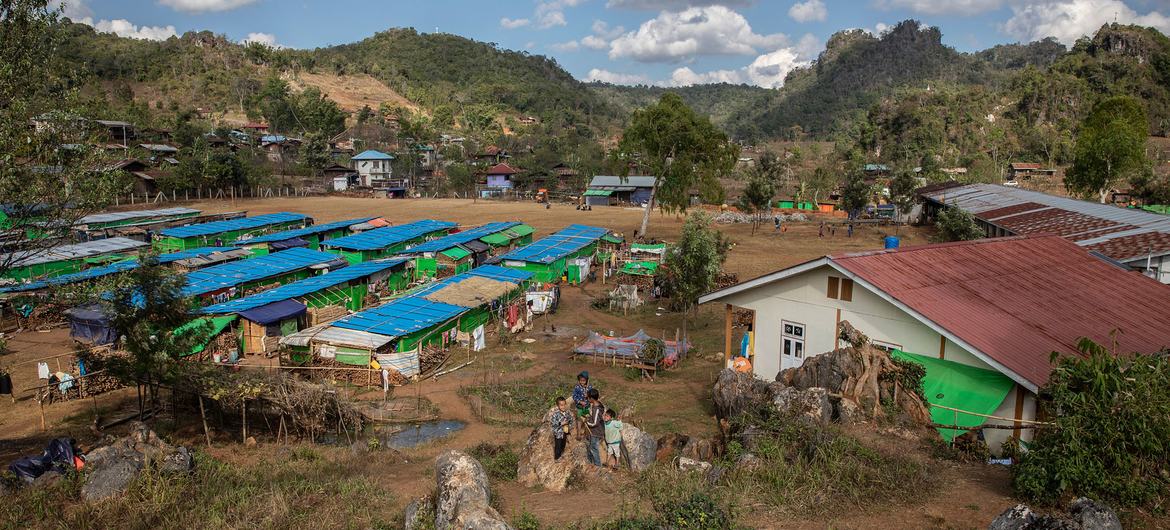
A general view shows an IDP camp in eastern Myanmar.

© UNOCHA/Siegfried Modola

A general view shows an IDP camp in eastern Myanmar.

‘Time is slipping away’

Julie Bishop, the Secretary-General’s Special Envoy on Myanmar, echoed those concerns, urging renewed diplomatic engagement as “time is slipping away.”

She described a “deeply disturbing pattern of indiscriminate attacks on civilians” and said Myanmar’s planned elections risk “deepening violence and instability” as opposition groups reject them as illegitimate.

She warned that those who support these elections “should consider potential consequences…no elections should risk human lives.”

Independent experts

The Independent Investigative Mechanism for Myanmar (IIMM) and the Special Rapporteur on the human rights situation in the country are both mandated by the UN Human Rights Council to monitor abuses and pursue accountability.

The IIMM is tasked with collecting and preserving evidence of international crimes for future judicial proceedings.

The Special Rapporteur is an independent expert, not a UN staff member, who reports impartially on human rights conditions.

Source link

A ‘global perspective’ is key to advancing humanity in space

0

This role contributes to a better understanding of the transformative potential of space technology to address global challenges, including climate change, disaster management and sustainable development.

Professor Cox said UN News that “we must operate in certain areas as one planet; space is one of the best examples,” adding that it “does not respect international borders, which is why you need organizations like the United Nations.”

The United Nations Space Champion is designated by the United Nations Office for Outer Space Affairs (UNOOSA), the United Nations entity based in Vienna responsible for promoting international cooperation in the peaceful use and exploration of outer space.

“Professor Cox has inspired millions of people around the world with his passion for science and his ability to communicate complex ideas in an accessible and engaging way,” said Aarti Holla-Maini, Director of UNOOSA.

“His commitment to public understanding of science and his deep belief in the power of space to improve life on Earth align perfectly with our mission at UNOOSA.” »

This honorary position follows the tradition of enlisting the support of eminent individuals to draw attention to UN activities and highlight priority issues. Previous space champions have included astronaut Scott Kelly, named in 2016.

“I am proud and honored to support the United Nations Office for Outer Space Affairs in raising awareness of how space solutions can advance progress for all of us,” said Professor Cox.

“Their work is a powerful reminder that space is about more than curiosity-driven exploration of the cosmos; it’s about creating a stronger, more sustainable global economy for everyone on Earth and moving humanity forward, together.”

Listen to the full interview here:

Originally published at Almouwatin.com

Myanmar at a crossroads: a choice between impunity and justice

0

Nicolas Koumjian, head of Independent Investigative Mechanism for Myanmar (IIMM), told the Third Committee of the United Nations General Assembly that “the frequency and severity of international crimes in Myanmar have intensified.”

Warning that civilians of all ethnicities are bearing the brunt, he said: “We have gathered evidence that those detained by military authorities have been tortured and subjected to various forms of sexual violence. »

“We have evidence of the identity of the perpetrators and their commanders.”

Koumjian added that his team also documented summary executions and attacks on schools, hospitals and places of worship, with the army increasingly relying on airstrikes.

He noted that in Rakhine State, where the Arakan Army (an armed ethnic group fighting against Myanmar’s military junta) has seized most of the territory, the military’s brutal response has left civilians destitute and hungry.

“[We are] “to gather evidence of several alleged atrocities, including drone attacks targeting civilians, executions, rapes, torture and the obstruction of humanitarian aid to a population facing starvation,” he said.

In Mandalay, a teacher stands amid the ruins of the classroom where he once taught English and science, now destroyed by March’s earthquakes.

An invisible crisis

Tom Andrews, UN special rapporteur on the human rights situation in Myanmar, said the situation has worsened significantly, with almost 22 million people now in need of assistance and 16.7 million facing acute food insecurity.

The March earthquakes in central Myanmar left around 200,000 people homeless, damaged 157,000 buildings and caused losses estimated at $11 billion.

“The military junta has turned this natural disaster into a humanitarian catastrophe,” Mr Andrews said. “They systematically blocked the delivery of humanitarian aid, harassed and threatened aid workers, looted homes and medical supplies, and forcibly conscripted young people into the army. »

Airstrikes against civilian targets increased in the aftermath, surpassing pre-earthquake levels. The health system has also been targeted, with 169 attacks on medical facilities and personnel in the first eight months of 2025, while food shortages in central Rakhine state have sharply worsened, leaving 58 percent of families unable to meet their basic needs.

“The crisis is getting worse every day,” he warned. “This is not just a national tragedy; it affects the entire region and beyond. »

Lack of funds jeopardizes efforts

Mr. Koumjian also warned that a funding gap could soon force the Mechanism to lose a third of its staff – including experts on gender-based crimes and crimes against children – undermining accountability efforts.

“Securing justice for crimes committed in Myanmar sends an important message,” he said, “that the international community will not stand idly by when civilians are targeted and international law is ignored.”

© ONUCHA/Siegfried Modola

A general view shows a camp for displaced people in eastern Myanmar.

“Time passes”

Julie Bishop, Special Envoy of the Secretary-General for Myanmar, echoed these concerns, calling for renewed diplomatic engagement as “time passes.”

She described a “deeply worrying trend of indiscriminate attacks on civilians” and said planned elections in Myanmar risk “escalating violence and instability,” with opposition groups viewing them as illegitimate.

She warned that those supporting these elections “should consider the potential consequences…no election should put human lives at risk.”

Independent experts

The Independent Investigative Mechanism for Myanmar (IIMM) and the Special Rapporteur on the situation of human rights in the country are both mandated by the UN. Human Rights Council to monitor abuse and demand accountability.

The IIMM is responsible for collecting and preserving evidence of international crimes for future legal proceedings.

The Special Rapporteur is an independent expert, not a UN staff member, who reports impartially on the human rights situation.

Originally published at Almouwatin.com

UN chief condemns Gaza killings, urges full respect for ceasefire

0
UN chief condemns Gaza killings, urges full respect for ceasefire

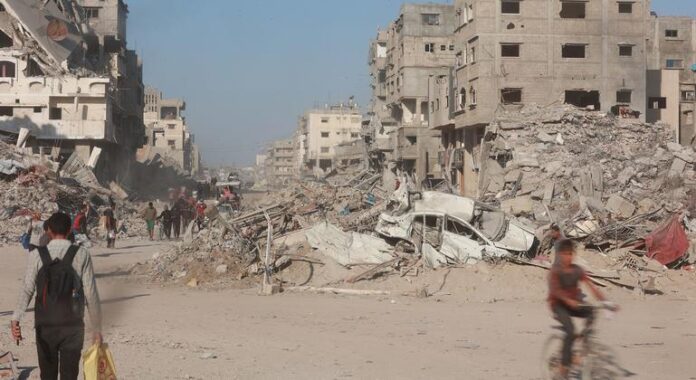
“The Secretary-General strongly condemns the killings due to Israeli airstrikes of civilians in Gaza yesterday, including many children,” UN Spokesperson Stéphane Dujarric told correspondents in New York.

“He condemns all actions that undermine the ceasefire and endanger civilian lives.”

Reassurances given

Mr. Dujarric said António Guterres noted “the importance of the parties’ renewed assurances to implement the ceasefire” and stressed that “these commitments must be upheld in full.”

He added that any act that harms civilians or obstructs humanitarian operations “must be avoided.”

The Secretary-General once again praised the mediation efforts of Egypt, Qatar, Türkiye and the United States, describing their engagement as “critical in sustaining the agreement, preventing further escalation, and enabling increased humanitarian access.”

UN human rights chief Volker Türk condemned the killings adding that the rules of war are clear on the “paramount importance” of protecting civilians and civilian infrastructure.

“We must not allow this opportunity for peace and a path towards a more just and secure future to slip from our grasp,” Mr Türk added.

Around 350 dead and injured

Despite the ceasefire, violence has continued. According to the UN aid coordination office (OCHA), Israeli airstrikes across the Gaza Strip on Monday and overnight left more than 100 people dead and 250 injured.

At the same time, humanitarian agencies are racing to scale up life-saving aid.

UN child protection partners reached 1,500 children and 700 caregivers this week with psychosocial and mental health support, while food security teams are producing around 130,000 two-kilogramme bread bundles daily.

Free bread, but little protein

Community kitchens and shelters continue to distribute bread for free, though access to fresh produce and protein remains extremely limited.

Most families are subsisting on cereals, pulses and small amounts of dairy, according to UN partners.

The UN Office for Project Services (UNOPS) distributed more than 200,000 litres of fuel Tuesday to support essential operations, from health and sanitation to food distribution and communications.

OCHA said that while aid delivery is increasing, “impediments remain.” For the 60-day humanitarian plan to succeed, “we need the ceasefire to hold,” Mr. Dujarric said, adding that more border crossings, safe routes inside Gaza, and unimpeded access for aid workers are essential.

Source link

South Sudan at risk of return to war, UN investigators warn

0
South Sudan at risk of return to war, UN investigators warn

Addressing the UN General Assembly, the Commission on Human Rights in South Sudan highlighted escalating armed clashes, political detentions, and widespread human rights violations, calling for coordinated efforts to safeguard civilians and uphold justice.

South Sudan’s political transition is falling apart,” Commissioner Barney Afako told the Assembly. “The ceasefire is not holding, political detentions have become a tool of repression, the peace agreement’s key provisions are being systematically violated, and the Government forces are using aerial bombardments in civilian areas. All indicators point to a slide back toward another deadly war.”

Fighting intensifies

The Commission noted that fighting has intensified since March, displacing over 370,000 civilians internally and driving many more to neighbouring countries.

Across South Sudan, nearly 2.6 million people remain displaced, in addition to some 600,000 refugees, mostly from Sudan.

“The suffering of South Sudan’s people is not collateral damage – it is the direct consequence of political failure,” said commission chair, Yasmin Sooka.

Once again, civilians are being bombarded, women are being raped, children are being displaced and forcefully recruited into combat roles, and entire communities are living in fear – all of this is a tragic repetition of South Sudan’s painful past. This war on the people of South Sudan is man-made and preventable.”

Investigators highlighted the growing complexity of the conflict, with political power struggles intertwined with ethnic tensions and local grievances.

Government reshuffles and partisan appointments have deepened mistrust between signatories to the 2018 Revitalized Peace Agreement, while localised fighting is being exploited for political and military gain.

Billions extracted, ‘while the population starves’

Commissioner Carlos Castresana Fernández linked the crisis to corruption: “Billions in oil revenues have been siphoned off while the population starves. Hospitals have no medicines, schools have no teachers, and soldiers go unpaid while elites enrich themselves through opaque contracts and off-budget deals. Corruption is not a side effect of the conflict — it is one of its engines,” he said.

The Commission’s report also details ongoing sexual violence, forced recruitment of children, and extrajudicial killings, with national authorities complicit in some cases.

Rule of law institutions remain underfunded and promises to reform detention powers have largely gone unfulfilled.

The investigators called on the UN, African Union, and regional partners to ensure accountability, expedite the establishment of the Hybrid Court for South Sudan, and engage the political class in an inclusive process.

Handshakes not enough

Peace will not come through words or handshakes,” Sooka said. “It will come through concrete actions — ending impunity, protecting civilians, and building institutions that serve people, not power. Justice and accountability must not remain deferred promises. The international community must move beyond expressions of concern to concrete, coordinated action. Otherwise, the suffering will only intensify.”

The Commission on Human Rights in South Sudan, established by the UN Human Rights Council in 2016, is an independent body tasked with investigating human rights violations in the country. Its mandate has been renewed annually, and its members serve without receiving any salary.

Source link