Friday, June 26, 2026
Home Blog Page 144

Sudan war: Kordofan’s El-Obeid ‘one or two steps’ away from being attacked

0
Sudan war: Kordofan’s El-Obeid ‘one or two steps’ away from being attacked

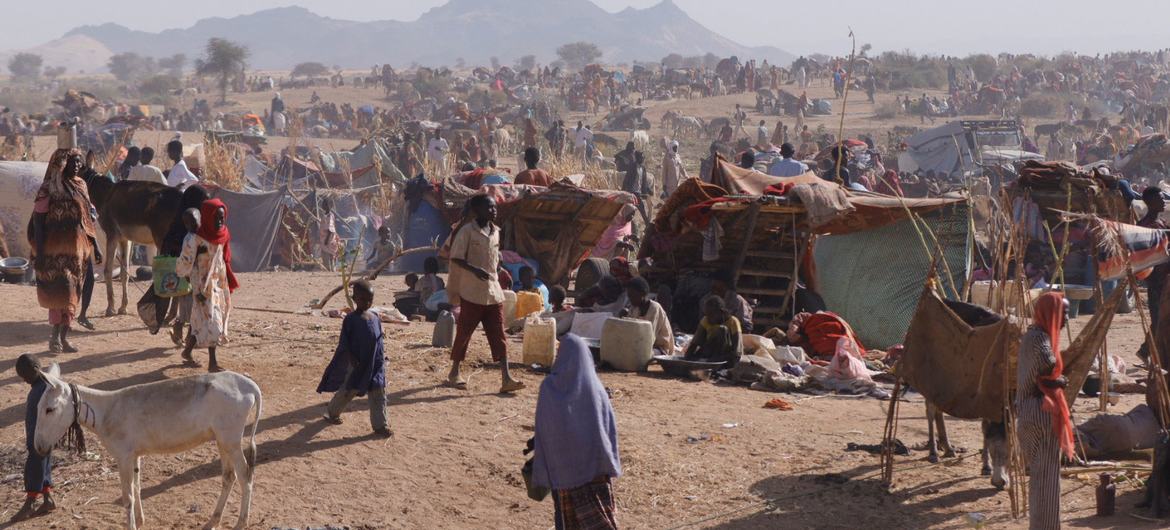
“People in Sudan are not moving by choice, they are running just to find safety,” said Mohamed Refaat, IOM Chief of Mission in Sudan.

Speaking from Port Sudan to journalists in Geneva, he urged all Member States and “everyone who can provide support” for Sudan’s people, to ensure their protection.

Heavy shelling alert

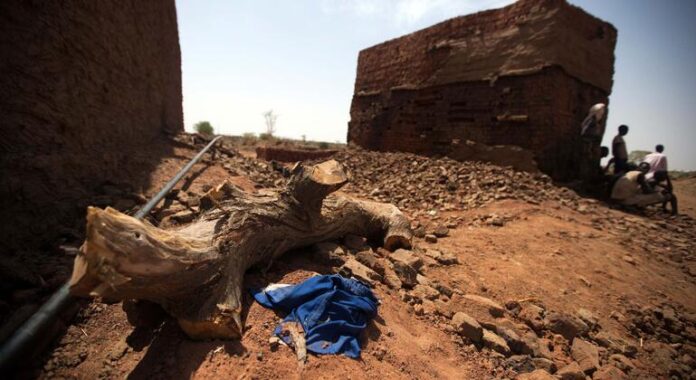
Latest reports from the wartorn country indicate that the paramilitary Rapid Support Forces (RSF) along with allies in the Sudan People’s Liberation Movement-North (SPLM-N) shelled residential buildings in Dilling, South Kordofan in the last 48 hours. 

The RSF have been at war with the Sudanese army since April 2023 following a breakdown in transition to civilian rule. On 26 October, the paramilitary force overran El Fasher – the regional capital of North Darfur – after a 500-day siege, prompting further mass displacement. Deep concerns persist for those believed to still be trapped inside the city who had to eat peanut shells and animal feed to survive the ordeal. 

‘People are scared’

“Those displacements from Kordofan are not happening sporadically, they are happening because people are scared,” IOM’s Mr. Refaat said. He noted that people were now fleeing from Babanusa, Kadugli and El-Obeid.  

Highlighting deep concerns for vulnerable individuals on the move, the veteran humanitarian official noted that “only women and children” are arriving in White Nile and Gedaref to the east. 

Deep insecurity and violence persist across Sudan, increasing protection risks for civilians and hampering safe humanitarian access. 

There are growing concerns over the rapidly deteriorating situation in Kadugli, the capital city of South Kordofan state where six peacekeepers from Bangladesh were killed in drone attacks last Saturday. The UN blue helmets were at a logistics base in the city, deployed with the UN force in Abyei, the disputed region on the border with South Sudan.

Hundreds of thousands at risk

“In the town of Kadugli, we estimate that there are around 90,000 to 100,000 people in this area who will be displaced if something happened if the fighting continued, if they get access to leaving the city,” Mr. Refaat said. He added that El-Obeid – the capital of North Kordofan – appeared to be just “one or two steps from being the next city under attack…we estimate more than half a million are already going to be impacted.”

Returning to the crisis in El Fasher, the IOM official noted that the UN agency’s displacement tracking matrix had recorded more than 109,000 people who had managed to flee the city and its surrounding villages since it fell in late October to the RSF. 

“Many of them are still stuck in the neighbouring villages not able to move further because of logistics [and] security issues” he said, fuelling concerns for those trying to survive when the essentials for survival have been “completely obliterated”, UN aid teams warned one week ago.

Asked about the impact of severe funding cuts for aid work in the UN and beyond, the IOM chief of mission explained that the agency had lost $83 million worth of resources this year alone. This has forced aid teams to reduce its footprint “massively”, Mr. Refaat explained.

“Because of those cuts, we have to choose which lives we can save and which support we have to stop. So, we would go crossing places where we know that people are absolutely in dire need, but we will leave them and not be able to help them because we have to prioritize those who are absolutely dying.”

Source link

Gaza famine pushed back, but millions still face hunger and malnutrition, UN says

0
Gaza famine pushed back, but millions still face hunger and malnutrition, UN says

According to the latest IPC report – a global tracking of malnutrition and food insecurity – no areas of Gaza are currently classified as being in famine (IPC Phase 5), following improved humanitarian and commercial access after the 10 October ceasefire.  

However, nearly the entire Gaza Strip remains in emergency (IPC Phase 4), with hundreds of thousands of people still experiencing very high acute malnutrition rates.

Between mid-October and the end of November, around 1.6 million people – roughly 77 per cent of the population analysed – faced crisis-level hunger (Phase 3) or worse. This included more than 500,000 people in emergency (Phase 4) and over 100,000 people in catastrophe (Phase 5), the report said.

Gains ‘perilously fragile’

UN Secretary-General António Guterres said the latest findings show progress, but warned that the gains remain “fragile – perilously so.”

“Famine has been pushed back. Far more people are able to access the food they need to survive,” he told reporters at UN Headquarters, in New York

He added, however, that 1.6 million people in Gaza – more than 75 per cent of the population – “are projected to face extreme levels of acute food insecurity and critical malnutrition risks.”

The IPC analysis projects that through mid-April 2026, around 571,000 people will remain in emergency conditions, while approximately 1,900 people are expected to continue facing catastrophe-level hunger. Under a worst-case scenario – including renewed hostilities or a halt in humanitarian and commercial inflows – the entire Gaza Strip could again face famine.

Malnutrition major concern

Malnutrition remains a major concern, particularly among children and pregnant and breastfeeding women.  

Nearly 101,000 children aged six to 59 months are expected to suffer from acute malnutrition through mid-October 2026, including more than 31,000 severe cases. An estimated 37,000 pregnant and breastfeeding women are also projected to require treatment.

While food aid has increased, the report stresses that assistance is largely meeting only basic survival needs. Health services, water and sanitation systems, housing and livelihoods remain badly damaged, leaving families vulnerable – particularly during winter.

Source: IPC (Issue 142, December 2025)

Projected acute food insecurity and acute malnutrition in the Gaza Strip.

Click here for the report.

‘Truly durable’ ceasefire needed

“Families are enduring the unendurable,” Mr. Guterres said, describing children sleeping in flooded tents and buildings collapsing under heavy rain and wind.

He said humanitarian teams are preparing more than 1.5 million hot meals daily, reopening nutrition centres and restoring water and health services, but warned that needs continue to grow faster than aid delivery.

We need a truly durable ceasefire,” he said, calling for more crossings into Gaza, fewer restrictions on critical supplies, safe routes within the Strip, sustained funding and unimpeded humanitarian access.

The IPC report underscores that without sustained and expanded access, continued aid and the rebuilding of essential infrastructure, Gaza’s food security situation could rapidly deteriorate again, with long-lasting consequences for an already traumatized population.

Source link

Challenging outlook for meeting the EU’s long-term environment and climate objectives

0

Despite progress in key areas, the European Union (EU) remains likely off track for most 2030 environmental goals, according to the European Environment Agency’s (EEA) new 8th EAP assessment. Rising climate risks, slow transitions in production and consumption system and weakening enabling conditions highlight the urgent need for stronger, better financed and faster policy implementation. […]

Source link

Flaring black hole whips up ultra-fast winds

0
Flaring black hole whips up ultra-fast winds

Artist’s impression of the flaring, windy supermassive black hole in spiral galaxy NGC 3783

The gigantic black hole lurks within NGC 3783, a beautiful spiral galaxy imaged recently by the NASA/ESA Hubble Space Telescope. Astronomers spotted a bright X-ray flare erupt from the black hole before swiftly fading away. As it faded, fast winds emerged, raging at one-fifth of the speed of light.

“We’ve not watched a black hole create winds this speedily before,” says lead researcher Liyi Gu at Space Research Organisation Netherlands (SRON). “For the first time, we’ve seen how a rapid burst of X-ray light from a black hole immediately triggers ultra-fast winds, with these winds forming in just a single day.”

Devouring material

To study NGC 3783 and its black hole, Gu and colleagues simultaneously used the European Space Agency’s XMM-Newton and the X-Ray Imaging and Spectroscopy Mission (XRISM), a JAXA-led mission with ESA and NASA participation.

The black hole in question is as massive as 30 million Suns. As it feasts on nearby material, it powers an extremely bright and active region at the heart of the spiral galaxy. This region, known as an Active Galactic Nucleus (AGN), blazes in all kinds of light, and throws powerful jets and winds out into the cosmos.

“AGNs are really fascinating and intense regions, and key targets for both XMM-Newton and XRISM,” adds Matteo Guainazzi, ESA XRISM Project Scientist and co-author of the discovery.

“The winds around this black hole seem to have been created as the AGN’s tangled magnetic field suddenly ‘untwisted’ – similar to the flares that erupt from the Sun, but on a scale almost too big to imagine.”

A little less alien

The winds from the black hole resemble large solar eruptions of material known as coronal mass ejections, which form as the Sun hurls streams of superheated material into space. In this way, the study shows that supermassive black holes sometimes act like our own star, making these mysterious objects seem a little less alien.

In fact, a coronal mass ejection following an intense flare was spotted at the Sun as recently as 11 November, with the winds associated with this event thrown out at initial speeds of 1500 km per second.

“Windy AGNs also play a big role in how their host galaxies evolve over time, and how they form new stars,” adds Camille Diez, a team member and ESA Research Fellow.

“Because they’re so influential, knowing more about the magnetism of AGNs, and how they whip up winds such as these, is key to understanding the history of galaxies throughout the Universe.”

A joint discovery

XMM-NewtonXMM-Newton

XMM-Newton

XMM-Newton has been a pioneering explorer of the hot and extreme Universe for over 25 years, while XRISM has been working to answer key open questions about how matter and energy move through the cosmos since it launched in September 2023.

The two X-ray space telescopes worked together to uncover this unique event and understand the black hole’s flare and winds. XMM-Newton tracked the evolution of the initial flare with its Optical Monitor, and assessed the extent of the winds using its European Photon Imaging Camera (EPIC). XRISM spotted the flare and winds using its Resolve instrument, also studying the winds’ speed, structure, and figuring out how they were launched into space.

“Their discovery stems from successful collaboration, something that’s a core part of all ESA missions,” says ESA XMM-Newton Project Scientist Erik Kuulkers.

XRISM spacecraftXRISM spacecraft

XRISM spacecraft

“By zeroing in on an active supermassive black hole, the two telescopes have found something we’ve not seen before: rapid, ultra-fast, flare-triggered winds reminiscent of those that form at the Sun. Excitingly, this suggests that solar and high-energy physics may work in surprisingly familiar ways throughout the Universe.”

Source: European Space Agency

Source link

Flaring black hole whips up ultra-fast winds

0
Flaring black hole whips up ultra-fast winds


Leading X-ray space telescopes XMM-Newton and XRISM have spotted an extraordinary blast from a supermassive black hole. In a matter of hours, the gravitational monster whipped up powerful winds, flinging material out into space at eye-watering speeds of 60 000 km per second.

Flaring black hole whips up ultra-fast winds

Artist’s impression of the flaring, windy supermassive black hole in spiral galaxy NGC 3783

The gigantic black hole lurks within NGC 3783, a beautiful spiral galaxy imaged recently by the NASA/ESA Hubble Space Telescope. Astronomers spotted a bright X-ray flare erupt from the black hole before swiftly fading away. As it faded, fast winds emerged, raging at one-fifth of the speed of light.

“We’ve not watched a black hole create winds this speedily before,” says lead researcher Liyi Gu at Space Research Organisation Netherlands (SRON). “For the first time, we’ve seen how a rapid burst of X-ray light from a black hole immediately triggers ultra-fast winds, with these winds forming in just a single day.”

Devouring material

To study NGC 3783 and its black hole, Gu and colleagues simultaneously used the European Space Agency’s XMM-Newton and the X-Ray Imaging and Spectroscopy Mission (XRISM), a JAXA-led mission with ESA and NASA participation.

The black hole in question is as massive as 30 million Suns. As it feasts on nearby material, it powers an extremely bright and active region at the heart of the spiral galaxy. This region, known as an Active Galactic Nucleus (AGN), blazes in all kinds of light, and throws powerful jets and winds out into the cosmos.

“AGNs are really fascinating and intense regions, and key targets for both XMM-Newton and XRISM,” adds Matteo Guainazzi, ESA XRISM Project Scientist and co-author of the discovery.

“The winds around this black hole seem to have been created as the AGN’s tangled magnetic field suddenly ‘untwisted’ – similar to the flares that erupt from the Sun, but on a scale almost too big to imagine.”

A little less alien

The winds from the black hole resemble large solar eruptions of material known as coronal mass ejections, which form as the Sun hurls streams of superheated material into space. In this way, the study shows that supermassive black holes sometimes act like our own star, making these mysterious objects seem a little less alien.

In fact, a coronal mass ejection following an intense flare was spotted at the Sun as recently as 11 November, with the winds associated with this event thrown out at initial speeds of 1500 km per second.

“Windy AGNs also play a big role in how their host galaxies evolve over time, and how they form new stars,” adds Camille Diez, a team member and ESA Research Fellow.

“Because they’re so influential, knowing more about the magnetism of AGNs, and how they whip up winds such as these, is key to understanding the history of galaxies throughout the Universe.”

A joint discovery

XMM-NewtonXMM-Newton

XMM-Newton

XMM-Newton has been a pioneering explorer of the hot and extreme Universe for over 25 years, while XRISM has been working to answer key open questions about how matter and energy move through the cosmos since it launched in September 2023.

The two X-ray space telescopes worked together to uncover this unique event and understand the black hole’s flare and winds. XMM-Newton tracked the evolution of the initial flare with its Optical Monitor, and assessed the extent of the winds using its European Photon Imaging Camera (EPIC). XRISM spotted the flare and winds using its Resolve instrument, also studying the winds’ speed, structure, and figuring out how they were launched into space.

“Their discovery stems from successful collaboration, something that’s a core part of all ESA missions,” says ESA XMM-Newton Project Scientist Erik Kuulkers.

XRISM spacecraftXRISM spacecraft

XRISM spacecraft

“By zeroing in on an active supermassive black hole, the two telescopes have found something we’ve not seen before: rapid, ultra-fast, flare-triggered winds reminiscent of those that form at the Sun. Excitingly, this suggests that solar and high-energy physics may work in surprisingly familiar ways throughout the Universe.”

Source: European Space Agency


Source link

UN urges calm in Bangladesh after killing of protest leader sparks unrest

0
UN urges calm in Bangladesh after killing of protest leader sparks unrest


The United Nations has urged calm in Bangladesh after the killing of a prominent youth protest leader sparked fresh unrest, raising concerns about political violence and the safety of civic space as the country prepares for elections early next year.

Source link

Grant Assurance Officer (AD6) | EIT

0

The EIT is now organising a call for expressions of interest with a view to establishing a reserve list for Temporary Staff (TA) for the profile of Grant Assurance Officer. The place of employment will be Budapest, where the EIT seat is located.

Reporting to the Head of Unit Grant Implementation, the Grant Assurance Officer will be responsible for ensuring a high level of assurance in the implementation of EIT financed programmes through grants provided to the Knowledge and Innovation Communities (KICs) in line with the strategic objectives set in the EIT’s Strategic Innovation Agenda and Single Programming Document.

TASKS

In particular, the tasks of the Grant Assurance Officer will include the following:

  • Supporting the Head of Section in financial management, including coordination of the financial aspects within the grant cycle management processes, implementation of contracts, operational initiation/ verification, financial verification of grants, reporting;
  • Financial control and monitoring of EIT grant agreements;
  • Cost-related assessment of grants within the entire grant cycle management, e.g. at proposal/ amendment/ reporting stages;
  • Providing guidance to KICs in relation to financial aspects of grants and regular implementation of the grant agreements;
  • Evaluation, monitoring and supporting the improvement of the audit and control mechanisms of the KICs;
  • Initiating procurement procedures, managing experts/ procurement contracts, operational initiation/ verification and reporting;
  • Analysis of financial data.

The jobholder may be asked to carry out any other tasks as deemed necessary in the interest of the service.

Deadline for applications: 28 January 2026 (12:00 PM Budapest time)


Source link

World news in brief: More detentions of UN staff in Yemen, peacekeepers killed in Sudan sent home and attacks in Ukraine

0

This latest incident, which occurred on Thursday, brings to 69 the total number of UN personnel currently detained by the Houthis.

These detentions have made the delivery of humanitarian aid into Houthi-controlled areas untenable, directly affecting millions of people in need and limiting their access to life-saving aid, said UN spokesperson Stéphane Dujarric. said in a statement.

“The Secretary-General calls for the immediate and unconditional release of all arbitrarily detained personnel of the United Nations, but also of non-governmental organizations (NGOs), civil society and diplomatic missions,” he said.

“Mr Guterres calls on the Houthis to rescind the referral to UN personnel for prosecution,” he added, further calling for respect for international law, including the privileges and immunities of the UN and its personnel, “which are essential to enable humanitarian action in a secure and principled environment.”

The Secretary-General and the United Nations will continue their sustained efforts with Member States and with the Security Councilas well as through direct engagement with the Houthis, to secure the release of all detained UN colleagues.

Bodies of Bangladeshi peacekeepers killed in Sudan attack repatriated

The bodies of six UN peacekeepers killed last weekend in a drone attack on their camp in Kadugli, South Kordofan, Sudan, were flown to their home country of Bangladesh on Friday.

Peacekeepers serving with the United Nations Interim Security Force for Abyei (UNISFA), included Corporal Muhammed Masud Rana (37), Private Muhammed Sabuj Mia (29), Private Muhammed Jahangir Alam (29), Private Santo Mondol (26), Private Shamin Reza (28) and Private Muhammed Mominul Islam (35).

“We once again send our deepest condolences to their families, their colleagues, the government and the people of Bangladesh,” UN spokesman Dujarric told reporters in New York.

He reiterated that attacks on UN peacekeepers “are not only unacceptable, but may constitute a war crime,” stressing that accountability in this and all other cases must prevail.

Mr. Dujarric further noted that eight of the nine injured peacekeepers are receiving medical treatment in Nairobi, Kenya, and one was released after receiving treatment at the Mission’s medical center in Abyei.

World news in brief: More detentions of UN staff in Yemen, peacekeepers killed in Sudan sent home and attacks in Ukraine

Humanitarian organizations are supporting those affected by deadly nighttime attacks in Ternopil, western Ukraine.

Attacks disrupt essential services in Ukraine

A new wave of Russian attacks has seriously disrupted essential services in Ukraine, worsening humanitarian needs in a harsh winter, the UN aid coordination office said (OCHA) reported.

Between Thursday and Friday morning, several deaths and more than 30 people were injured, according to Ukrainian authorities.

A bridge and a train station were hit in Odessa, where a woman was reportedly killed, while her three children and several other civilians were injured. In the same region, attacks on energy infrastructure left some 270,000 customers without water, around 85,000 without heat and 75,000 without electricity.

As of October, humanitarian organizations, including the UN, had helped 4.4 million people, according to OCHA. Humanitarians have also deployed emergency teams to provide first aid to those affected by the recent attacks.

A humanitarian convoy delivered seven tons of medicine, hygiene products and other essential goods to a frontline community in Kherson on Friday. So far this year, OCHA and partners have sent 29 humanitarian convoys to the region, reaching more than 30,000 residents.

Burundi sees its situation deteriorate in the face of the influx of refugees

More than 84,000 people have crossed into Burundi from South Kivu in the Democratic Republic of Congo (DRC) since the start of the month, bringing the total number of Congolese refugees and asylum seekers in the country to more than 200,000.

Citing reports from the United Nations High Commissioner for Refugees (UNHCR), Mr. Dujarric said transit centers and informal sites hosting new arrivals have exceeded their capacity – in some cases by more than 200 percent.

“Local resources, as you can imagine, have been overwhelmed,” he added.

Across the border, violence in South Kivu has forced more than 500,000 Congolese to leave their homes. Where access allows, the UN refugee agency and its partners continue to provide protection monitoring and assistance.

UNHCR is seeking $47 million over the next four months to help 500,000 internally displaced people in the DRC and up to 166,000 refugees in Burundi, Rwanda and other neighboring countries to whom Congolese men, women and children have sought refuge.

Originally published at Almouwatin.com

The Security Council renews its peacekeeping mission in the DRC in the context of the resumption of M23 offensives in the east

0

Resolution 2808 (2025) extends the mandate of the United Nations Organization Stabilization Mission in the DRC (MONUSCO) until December 20, 2026, maintaining an authorized personnel ceiling of 11,500 military personnel, 600 military observers and staff officers, 443 police officers and 1,270 members of formed police units.

According to the resolution, MONUSCO’s main area of ​​operations remains North Kivu and Ituri, with any deployment related to monitoring the ceasefire in South Kivu being subject to security conditions and prior notification to the Council.

The mission force intervention brigade was also renewed on an “exceptional” basis, with the Council emphasizing that a precedent had been created. The specialized force was created in 2013 and tasked with disrupting and disarming armed groups.

The resolution also highlights what it calls a “rapidly deteriorating security and humanitarian crisis” in eastern DRC due to the M23 armed group (March 23 Movement) offensive in North Kivu and South Kivu “with the support and direct participation of the Rwandan Defense Forces”.

It further condemns the group’s capture of Uvira, a strategic town in South Kivu on the shores of Lake Tanganyika, warning that it risks destabilizing the region as a whole.

What MONUSCO is responsible for

  • Protect civilians under threat of physical violence, in particular through a proactive attitude, early warning, community engagement and local mediation.
  • Use “all necessary measures” to prevent, deter and stop attacks against civiliansincluding in and around displacement and refugee sites.
  • Neutralize armed groups through targeted offensive operations by the Force Intervention Brigade, acting alone or jointly with the Congolese forces.
  • Support a permanent ceasefireincluding helping to implement and monitor the Doha Ceasefire Monitoring and Verification Mechanism and supporting regional verification efforts.
  • Assisting in disarmament, demobilization and reintegrationsecurity sector reform, as well as monitoring and reporting violations of human rights and international humanitarian law.
  • Help monitor the arms embargoincluding by observing and reporting cross-border flows of arms and related materiel to Group of experts established by resolution 1533.

Read the full text of the resolution here.

National Perspectives

France, responsible for the file, said the council negotiated the project in “unusual circumstances” as the M23 continued its offensive in South Kivu.

“Given the seriousness and urgency of the situation, and following this resolution, France calls on all parties to honor their commitments to achieve lasting peace in the east of the DRC and in the Great Lakes region,” declared Ambassador Jérôme Bonnafont, presenting the text.

The United States said negotiations had been “once again disrupted” by advances by the M23 “backed by the Rwandan Defense Forces,” and urged the group to meet its Doha commitments.

“The M23 must immediately withdraw at least 75 km from Uvira and re-comply with all its obligations undertaken in the framework agreement,” said Jennifer Locetta, Ambassador and Alternative Representative for Special Political Affairs.

China and Russia, while supporting the renewal, stressed that the mandate was the product of difficult compromises and warned against politicization of the mission.

Sun Lei, ambassador and deputy permanent representative of China, said the council should respect the “independence, neutrality and authority” of the operation.

He stressed that China “firmly supports” the sovereignty, independence and territorial integrity of the DRC, adding that “all countries outside the region should remain truly committed to peace in eastern DRC and stop taking advantage of the situation and seeking economic resources and other selfish interests.”

Speaking on behalf of Russia, Anna Evstigneeva, Ambassador and Deputy Permanent Representative, said her country expected detailed proposals on the modalities of MONUSCO’s role in monitoring the ceasefire by March 1, 2026, while also calling on all parties to comply with their obligations under Council resolutions.

“We call on the parties to ceasefire, to honor their obligations to implement Security Council Resolution 2773, which sets out key solutions to resolve this conflict for the benefit of the millions of inhabitants of the DRC and other countries in the region,” she said.

Broadcast of the Security Council meeting.

Originally published at Almouwatin.com

World News in Brief: Progress on hunger in Asia-Pacific, key Gaza pipeline repaired, flu hits Europe hard

0
World News in Brief: Progress on hunger in Asia-Pacific, key Gaza pipeline repaired, flu hits Europe hard

The prevalence of undernourishment in the region declined to 6.4 per cent in 2024, down from seven per cent in 2023, marking a significant improvement, according to the report.

This progress translates into 25 million people escaping hunger in just one year.

Progress is uneven, however, with nearly 80 per cent of people living in South Asia at risk. Overall, Asia and the Pacific region still account for nearly 40 per cent of the world’s hungry.

Cost is the culprit

In 2024, 24.4 per cent of children under five were stunted, with South Asia recording the highest prevalence. On the other hand, adult obesity continues to rise, particularly in Oceania (Australia, New Zealand and the South Pacific)

The report finds that the cost of a healthy diet in the region averaged higher than the global average last year, at $4.77 per person per day on Purchasing Power Parity (PPP).

Among other key recommendations, the report calls on countries to strengthen multi sector policies addressing food insecurity and nutrition.

Key Gaza water pipeline repaired, but miserable conditions remain

In Gaza, a key water pipeline in the south is back up and running, after a repair team was granted access to the site by Israeli authorities.

The UN aid coordination office (OCHA) reported a week ago that the main water line running from Israel into Khan Younis in southern Gaza had sustained damage and was out of service – representing a key concern for the enclave’s 2.1 million people.

A request to reach the site and make repairs was denied at the time.

Preparing for winter

Meanwhile, amid cold winter temperatures, UN agencies and partners continue to work to help Gazans stay warm.

This includes UNICEF, which welcomed support from Sweden for winterisation supplies, sanitation, nutrition and humanitarian cash transfers for children and families.

The UN Development Programme (UNDP) also highlighted the critical need for safe and sturdy shelters.

With assistance from the Republic of Korea, the agency has replaced more than 800 worn-out tents for displaced Gazans, but it’s only a start, UNDP insisted.

New influenza strain circulates in Europe, says WHO

The early arrival of seasonal influenza has continued sweeping across Europe, with at least 27 European countries reporting “high or very high” flu activity as of Wednesday.

In six countries – Ireland, Kyrgyzstan, Montenegro, Serbia, Slovenia, and the UK – more than one in two patients with influenza-like symptoms tested positive for the virus, according to the World Health Organization (WHO).

New variant dominates

The UN agency confirmed that a new influenza variant called A (H3N2) now accounts for up to 90 per cent of all confirmed cases in the European region.

“It shows how just a small genetic variation in the flu virus can place enormous pressure on our health systems because people don’t have built-up immunity against it,” said Dr. Hans Kluge, WHO Regional Director for Europe.

He also emphasized the importance of getting vaccinated quickly.

As in previous episodes of influenza, school-aged children are the primary drivers of community spread. But adults aged at least 65 are usually most at risk, constituting the majority of severe cases that require hospitalisation.

Source link