Friday, June 26, 2026
Home Blog Page 143

LIFE projects transform waste and pollution into new business opportunities

0
LIFE projects transform waste and pollution into new business opportunities

The bioeconomy covers the activities that provide sustainable solutions using biological resources to generate added value. In the EU, it currently generates up to EUR 2.7 trillion and employs 17.1 million people, yet much of its potential remains untapped. The European Commission estimates that the EU bioeconomy could grow 18% per year – with the right support. 

The newly published EU Bioeconomy Strategy aims to be the catalyst that realises this potential growth by enabling the innovation needed for new and existing markets – all of which require tested, bio-based materials and technological solutions. 

Several LIFE-funded projects are already putting these objectives into practice, converting underused biomass and industrial by-products into valuable materials, energy and services. 

One example is the GR4SS project, which targets an often-overlooked biomass: grass cut from roadsides. Instead of being discarded, these clippings are collected and fed into anaerobic digesters to produce green biomethane, digestate fibres and soil-substitute materials. The Dutch project has shown that this unused biomass can become a lucrative alternative to fossil fuels while also generating new revenue streams in rural areas. In the Netherlands alone, deploying ten of GR4SS’ digestors could produce 25 billion litres of green gas and reduce carbon dioxide emissions by 125 800 tonnes. 

Similarly, ZEBRA‑LIFE in Spain is turning another overlooked industrial by-product into a potential green business. By extracting bio-aromatic compounds from ‘black liquor’, a pulp and paper by-product usually burnt for energy recovery, the project produces renewable antioxidants and UV-filter additives. The resulting products can match or exceed the performance of conventional synthetic additives, making them a sustainable alternative for several sectors, including cosmetics, rubber, fuels, lubricants and polymers – demonstrating how industrial waste can supply circular value chains. 

Elsewhere in Europe, MySOIL illustrates another way the bioeconomy creates value by restoring damaged environments. In France, Italy and Spain, the LIFE project uses fungal-based bioremediation to remediate soils contaminated with total petroleum hydrocarbons (TPHs), a broad group of oil-derived pollutants from fuels and industrial activities, and can remove up to 90 % of TPHs to make the land usable again. Across Europe, an estimated 2.5 million sites may be affected by TPH contamination – representing a large area with limited environmental, economic or social value. However, MySOIL demonstrates that a cost-effective, bio-based solution exists – rather than relying on conventional, energy-intensive remediation methods, such as thermal desorption or incineration. 

Together, ZEBRA-LIFE, GR4SS and MySOIL show how bio-based innovation can turn overlooked resources and degraded land into viable business opportunities. Their real-world data on performance, costs, and environmental impact also strengthen the case for scaling these solutions, helping Europe’s bioeconomy continue to grow.  

These projects are fully aligned with the objectives of the European Green Deal, the EU Chemicals Strategy for Sustainability, the Renewable Energy Directive and the EU Soil Strategy for 2030

Source link

ChatGPT Personality Controls Now Available to Users

0
ChatGPT Personality Controls Now Available to Users


OpenAI introduced much more detailed controls that let users adjust how ChatGPT communicates. The new settings allow people to dial up or down the chatbot’s warmth, enthusiasm, and emoji usage through a Personalization menu.

Using ChatGPT for coding tasks - illustrative photo. Image credit: Freepik, free license
Using ChatGPT for coding tasks – illustrative photo. Image credit: Freepik, free license

Key takeaways:

  • Users can now toggle warmth, enthusiasm, emoji frequency, headers, and lists between More, Less, or Default settings
  • These controls build on existing style options like Professional, Candid, and Quirky that launched in November
  • The changes address ongoing criticism about chatbot tone affecting user behavior and mental wellbeing

Each setting offers three positions. Want fewer heart emojis and exclamation points? Switch enthusiasm to Less. Prefer minimal formatting? Turn down headers and lists. The additions expand customization beyond the base style options OpenAI introduced two months ago.

chatgpt enthusiasm personality levels4 ChatGPT Personality Controls Now Available to Userschatgpt enthusiasm personality levels4 ChatGPT Personality Controls Now Available to Users

The company has struggled to find the right tone throughout the year. Engineers pulled back one update after users called it excessively flattering. Then GPT-5 arrived, and complaints flipped—people found the newer model too distant and mechanical. OpenAI responded by making it warmer.

These tonal adjustments aren’t just about preference. Some researchers and AI ethics experts have raised concerns about chatbots that constantly praise users and validate their ideas. They argue these behaviors function as dark patterns—design choices that manipulate people into forming dependencies. The worry extends to potential mental health impacts when AI systems reinforce beliefs without critical pushback.

The new controls give users more agency over how ChatGPT interacts with them. Someone seeking straightforward information can minimize enthusiasm and warmth. Another person wanting a more conversational experience can increase both. OpenAI’s approach acknowledges that one tone doesn’t work for everyone.

The features appear in the Personalization section of ChatGPT’s settings. Users access them alongside other customization options that shape how the AI responds across different conversations. The adjustments apply globally rather than requiring changes for each chat session.


Written by Alius Noreika


Source link

Astronomers see fireworks from violent collisions around nearby star

0
Astronomers see fireworks from violent collisions around nearby star

Young star systems are a place of violent collisions. Rocks, comets, asteroids and larger objects carom off one another and coalesce, gradually turning the primordial dust and ice of a stellar nebula into planets and moons. The largest of these collisions, however, are expected to be rare over the hundreds of millions of years it takes to form a planetary system — perhaps one every 100,000 years.

An artist’s rendition of a collision between two planetesimals in the debris disk around a young star. Collisions like these occur over hundreds of millions of years as gas and dust slowly coalesce into planets and moons. Image credit: Thomas Müller (MPIA/HdA)

Now, astronomers have seen the aftermath of two powerful collisions within a 20-year period around a nearby star called Fomalhaut. These are either lucky observations or a sign that collisions are more frequent than predicted during planet formation.

The events — the first was detected in 2004 and the second in 2023 — are the first collisions between large objects directly imaged in any solar system outside our own.

“We just witnessed the collision of two planetesimals and the dust cloud that gets spewed out of that violent event, which begins reflecting light from the host star,” said Paul Kalas, adjunct professor of astronomy at the University of California, Berkeley, and first author of the report. “We do not directly see the two objects that crashed into each other, but we can spot the aftermath of this enormous impact.”

Over tens of thousands of years, he said, the dust around Fomalhaut would be “sparkling with these collisions” — like twinkling holiday lights.

Kalas first started searching for a dusty disk around Fomalhaut in 1993, hoping to see for the first time the debris left over after planet formation. Only 25 light-years from Earth, the star is young — about 440 million years old — and a proxy for what our solar system looked like in its formative years. Thanks to NASA’s Hubble Space Telescope (HST), he eventually found such a disk around the star and, in 2008, reported finding a bright spot near the disk that was likely a planet, the first to be imaged directly at visible wavelengths. He called it Fomalhaut b, per the naming convention for exoplanets.

That planet discovery has now turned to dust. What he thought was a planet was likely the dust cloud kicked up by the collision of planetesimals.

“This is a new phenomenon, a point source that appears in a planetary system and then over 10 years or more slowly disappears,” he said. “It’s masquerading as a planet because planets also look like tiny dots orbiting nearby stars.”

Based on the brightness of both the 2004 and 2023 events, the colliding objects are at least 60 kilometers (37 miles) across — at least four times larger than the object that collided with Earth 66 million years ago and killed off the dinosaurs. Objects of this size are referred to as planetesimals — objects similar in size to many of the asteroids and comets in our solar system but much smaller than a dwarf planet like Pluto.

“Fomalhaut is much younger than the solar system, but when our solar system was 440 million years old, it was littered with planetesimals crashing into each other,” Kalas said. “That’s the time period that we are seeing, when small worlds are being cratered with these violent collisions or even being destroyed and reassembled into different objects. It’s like looking back in time in a sense, to that violent period of our solar system when it was less than a billion years old.”

The 2023 Fomalhaut observations are discussed in a paper posted online Dec. 18 in the journal Science.

“The Fomalhaut system is a natural laboratory to probe how planetesimals behave when undergoing collisions, which in turn tells us about what they are made of and how they formed,” said Kalas’s colleague, Mark Wyatt, a theorist and professor of astronomy at the University of Cambridge in the United Kingdom. “The exciting aspect of this observation is that it allows us to estimate both the size of the colliding bodies and how many of them there are in the disk, information which it is almost impossible to get by any other means.”

He estimates that there are about 300 million objects around Fomalhaut the size of the ones that collided to generate these bright clouds of dust. Previous observations of the star detected the presence of carbon monoxide gas, which indicates that these planetesimals are volatile-rich and therefore very similar in composition to the icy comets in our solar system, he said.

Dust clouds masquerading as exoplanets

Fomalhaut, located within the southern constellation Piscis Austrinus, is 16 times more luminous than our sun and one of the brightest stars in the sky. After Kalas began observing it with HST in 2004, he discovered a large belt of dusty debris at a distance of 133 astronomical units (AU) from the star, more than three times the distance from the star as the Kuiper Belt is from the sun in our solar system. An AU is the average distance between the Earth and the sun, or 93 million miles.

A composite Hubble Space Telescope image of the dust belt around the bright star Fomalhaut (obscured at center) showing the locations of bright spots detected in multiple images from 2004 to 2013 (cs1) and in two images in 2023 and 2024 (cs2). In the inset, dust cloud cs1, imaged in 2012, is pictured with dust cloud cs2, imaged in 2023. Astronomers now think these were caused by collisions of large objects that produced a dust cloud that reflects starlight.A composite Hubble Space Telescope image of the dust belt around the bright star Fomalhaut (obscured at center) showing the locations of bright spots detected in multiple images from 2004 to 2013 (cs1) and in two images in 2023 and 2024 (cs2). In the inset, dust cloud cs1, imaged in 2012, is pictured with dust cloud cs2, imaged in 2023. Astronomers now think these were caused by collisions of large objects that produced a dust cloud that reflects starlight.

A composite Hubble Space Telescope image of the dust belt around the bright star Fomalhaut (obscured at center) showing the locations of bright spots detected in multiple images from 2004 to 2013 (cs1) and in two images in 2023 and 2024 (cs2). In the inset, dust cloud cs1, imaged in 2012, is pictured with dust cloud cs2, imaged in 2023. Astronomers now think these were caused by collisions of large objects that produced a dust cloud that reflects starlight. Image credit:
NASA, ESA, Paul Kalas/UC Berkeley

To Kalas, the belt’s sharp inner edge suggested that it had been sculpted by planets. After a second observation in 2006, he concluded that a bright spot in the outer belt visible in both the 2004 and 2006 images was, in fact, a planet. He acknowledged at the time that it could be a very bright dust cloud caused by a collision in the disk, but the likelihood of that seemed very low.

Kalas was able to schedule four follow-up HST observations of Fomalhaut, in 2010, 2012, 2013 and 2014. In the last, however, Fomalhaut b was nowhere to be seen. Nine years later, after three failed attempts to image Fomalhaut with HST, he obtained a new image that revealed another bright spot not far from the first, which is now referred to as Fomalhaut cs1, for circumstellar source 1. Based on its location, however, the new spot, dubbed Fomalhaut cs2, could not be a reappearance of Fomalhaut cs1. Because of the nine-year hiatus between the observations in 2014 and 2023, it’s unclear when Fomalhaut cs2 appeared.

In the new paper, Kalas and an international team of astronomers analyzed the 2023 image of Fomalhaut and a subsequent, though poor image obtained in 2024, and concluded that it could only be light reflected from a dust cloud produced by the collision of two planetesimals.

Kalas noted that at first, Fomalhaut cs1 moved like an exoplanet, but by 2013 its path had curved away from the star. This type of motion would be possible for very small particles being pushed outward by the radiation pressure of starlight. The appearance of cs2 supports the idea that cs1 was in fact a dust cloud.

Kalas compares these events to the dust cloud generated in 2022 when NASA’s DART (Double Asteroid Redirection Test) mission slammed into the moonlet Dimorphos, which was orbiting the asteroid Didemos. The cloud around Fomalhaut is about a billion times larger, the team estimated.

Kalas has been awarded time over the next three years to use the James Webb Space Telescope’s Near-Infrared Camera (NIRCam) and the HST to observe Fomalhaut and track the evolution of the cloud to see if it expands in size and determine its orbit. It is already 30% brighter than Fomalhaut cs1. Additional observations in August 2025 confirmed that cs2 is still visible.

In anticipation of future space missions to directly image exoplanets, Kalas cautioned astronomers to be on the lookout for dust clouds masquerading as planets.

“These collisions that produce dust clouds happen in every planetary system,” he said. “Once we start probing stars with sensitive future telescopes such as the Habitable Worlds Observatory, which aims to directly image an Earth-like exoplanet, we have to be cautious because these faint points of light orbiting a star may not be planets.”

Source: UC Berkeley

Source link

Chikungunya virus disease worldwide overview

0
Chikungunya virus disease worldwide overview

Since the previous update on 14 November 2025 and as of 12 December 2025 (data collection period), 26 818 Chikungunya virus disease (CHIKVD) cases have been detected, including 83 associated deaths, from 12 countries (data available until 30 November). Cases reported in November have decreased by 39.4% compared to October, when 44 295 were reported. Deaths have increased in November when compared to the previous month, when one death was reported.

New countries reporting cases 

Mexico has reported CHIKVD cases in November and for the first time in 2025. Ongoing CHIKVD outbreaks worldwide Currently, 14 countries have ongoing CHIKV outbreaks (time window of last 60 days). Of these, the majority are in the Americas and Asia. 

The Americas

Argentina: CHIKVD cases are reported through the year in the country. Most of the cases located in the Central, North-Eastern and Nort-Western departments of the country, while nearly no cases are reported in the Southern departments. During epidemiological weeks 31 to 48, the departments reporting the highest number of cases are Cordoba (Central), Salta (North-East), and Chaco (North-West). CHIKVD cases in Argentina have increased during the period October-November when compared to August-September 2025.

Barbados: The country continues to report sporadic cases of CHIKVD in 2025. The first cases were reported between January and March (six), while cases were later reported in September (three) and November (two), bringing the total number of CHIKVD cases in 2025 to 11. Case numbers reported in 2025 are similar to 2024. 

Bolivia: CHIKVD cases have been reported in six out of nine departments: Santa Cruz, Beni, Pando, Cochabamba, Chuquisaca, and Tarija. These departments are located in the eastern side of Bolivia, in the Andean region. Santa Cruz continues to be the most affected department, reporting most of CHIKVD cases in Bolivia, as well as all CHIKVD associated deaths. Guillain-Barre syndrome cases associated to CHIKVD have been reported in Bolivia. 

Brazil: CHIKVD cases continue to be reported in all regions (Centro-Oeste, Nordeste, Norte, Sudeste and Sul) and in most federal units of the country. The Centro-Oeste, Nordeste, and Sudeste regions account for the highest number of cases in the last four reported epidemiological weeks (45-48), where Mato Grosso Do Sul, Minas Gerais, and Sao Paulo are the most affected federal units. During the last three months (July-November), CHIKVD cases have continuously declined. Even though previous years’ trends (2023 and 2024) suggested CHIKVD cases would start increasing by November, reported CHIKVD cases in November 2025 suggest the opposite, where CHIKVD cases continue to be at similar levels as in August-September 2025. This year, most of the cases have been reported among females (60%), being the 20 to 29 years age group the most affected one. 

Colombia: CHIKVD cases are sporadically reported in Colombia. In 2025, 45 CHIKVD cases have been reported until 30 November, which is a decrease in the number of cases when compared with the same period from previous years (2022-2024). CHIKVD laboratory confirmed cases have been reported from Antioquia and Atlantico departments. 

Cuba: The current CHIKVD outbreak in Cuba continues affecting all 14 provinces of the island. The most affected provinces are Matanzas, La Habana, Camaguey, Cienfuegos, Artemia, and Villa Clara. These provinces have accounted for most of the reported cases in Cuba in previous months. During November, the first CHIKVD associated deaths have been reported this year in the country.

El Salvador: CHIKVD cases have been sporadically reported in the country during 2025. In November 2025, seven new CHIKVD cases have been reported, bringing the total to 23. So far, no CHIKVD associated deaths have been reported in 2025. This is the lowest number of CHIKVD cases reported for the same period since 2021. 

Guatemala: CHIKVD cases have been sporadically reported in the country during 2025, reaching a total of 24 cases reported by November. This is a decrease of CHIKVD cases reported in the country when compared to the same period since 2021. 

Honduras: CHIKVD cases have been sporadically reported in the country during 2025, reaching a total of 12 cases reported by November. This is an increase of CHIKVD cases reported in the country when compared to to the same period since 2023. 

Mexico: Locally acquired CHIKVD cases have been sporadically reported in the country in 2025, reaching a total of six cases. Of these, two were reported in November from Chiapas and Quintana Roo States. In 2025, CHIKVD cases have been reported from Chiapas (1), Quintana Roo (4), and Yucatan (1). No deaths have been reported in 2025. In 2024, no CHIKVD cases were reported, while in 2023 two cases were reported from Bahia California Sur and Chiapas

Uruguay: CHIKVD cases have been sporadically reported in the country during 2025, reaching a total of eight cases reported by November. This is an increase of CHIKVD cases reported in the country when compared with 2024. CHIKVD cases notifications have decreased in the country since the national scale outbreak of 2023, which is considered the largest outbreak ever documented in the country mainly affecting Central, Asuncion, and Alto Parana departments. 

In 2025, there have been 291 066 CHIKVD disease cases and 201 associated deaths reported in the region. This is a decrease of 29.4% compared to the same period of the previous year. The most affected subcontinental region is South America, with Brazil reporting the highest number of cases in 2025.

Asia

China: CHIKVD cases continue to be reported in Guangdong province, following the first notified case in July 2025. Most of the cases are now reported from Shenzhen, Jiangmen, and Shantou cities. Weekly number of cases reported in Guangdong province show a decreasing trend (epidemiological weeks 45-48), reaching the lowest number of cases reported since the start of the outbreak. Outside of Guangdong province, CHIKVD cases have been also reported from the Special Administrative Region of Hong Kong and Guangxi province. Initial cases have been associated with imported cases from Guangdong province. 

Pakistan: CHIKVD cases are reported throughout the year in Pakistan, concentrated in Baluchistan, Khyber Pakhtunkhwa, and Sindh provinces. These provinces are located in the Southwest of the country. Of these provinces, the highest number of CHIKVD cases is reported from Sindh, a province bordering with India. In November 2025, CHIKVD cases continued to be reported from Khyber Pakhtunkhwa, and Sindh provinces at lower levels when compared to previous four months (JulyOctober). 

Singapore: CHIKVD cases have been reported in the country since early August. Cases continued to be reported in September and October. No new CHIKVD cases were reported in November. The initial outbreak reported in August has been associated with travellers returning from Guangdong province, China

In 2025, there have been 136 747 CHIKVD cases and no associated deaths in the region. This is a decrease of 31.8% compared to the same period of the previous year. The most affected subcontinental region is Southeast Asia, with India reporting the highest number of cases in 2025.

Africa

In 2025, there have been 2 197 CHIKVD cases and no associated deaths in the region. This is an increase compared to the same period of the previous year. The most affected subcontinental region is East Africa, with Mauritius reporting the highest number of cases in 2025.

Europe

For CHIKVD cases reported in mainland EU/EEA, please refer to the dedicated ECDC webpage. CHIKVD cases have been reported from the French outermost regions of Réunion and Mayotte

Other countries reporting CHIKV disease cases in 2025 

Other countries have also reported CHIKVD cases in 2025; however no new cases have been notified in the last two months, these countries are: Comoros, Costa Rica, India, Kenya, Mauritius, Paraguay, Peru, Senegal, and Sri Lanka.

Global overview 

In 2025, there have been 485 908 CHIKVD cases and 229 associated deaths reported worldwide, including cases reported in the EU/EEA and outermost regions. Cases have increased when compared to the same period in 2024.

Source link

Chikungunya virus disease worldwide overview

0
Chikungunya virus disease worldwide overview

Since the previous update on 14 November 2025 and as of 12 December 2025 (data collection period), 26 818 Chikungunya virus disease (CHIKVD) cases have been detected, including 83 associated deaths, from 12 countries (data available until 30 November). Cases reported in November have decreased by 39.4% compared to October, when 44 295 were reported. Deaths have increased in November when compared to the previous month, when one death was reported.

New countries reporting cases 

Mexico has reported CHIKVD cases in November and for the first time in 2025. Ongoing CHIKVD outbreaks worldwide Currently, 14 countries have ongoing CHIKV outbreaks (time window of last 60 days). Of these, the majority are in the Americas and Asia. 

The Americas

Argentina: CHIKVD cases are reported through the year in the country. Most of the cases located in the Central, North-Eastern and Nort-Western departments of the country, while nearly no cases are reported in the Southern departments. During epidemiological weeks 31 to 48, the departments reporting the highest number of cases are Cordoba (Central), Salta (North-East), and Chaco (North-West). CHIKVD cases in Argentina have increased during the period October-November when compared to August-September 2025.

Barbados: The country continues to report sporadic cases of CHIKVD in 2025. The first cases were reported between January and March (six), while cases were later reported in September (three) and November (two), bringing the total number of CHIKVD cases in 2025 to 11. Case numbers reported in 2025 are similar to 2024. 

Bolivia: CHIKVD cases have been reported in six out of nine departments: Santa Cruz, Beni, Pando, Cochabamba, Chuquisaca, and Tarija. These departments are located in the eastern side of Bolivia, in the Andean region. Santa Cruz continues to be the most affected department, reporting most of CHIKVD cases in Bolivia, as well as all CHIKVD associated deaths. Guillain-Barre syndrome cases associated to CHIKVD have been reported in Bolivia. 

Brazil: CHIKVD cases continue to be reported in all regions (Centro-Oeste, Nordeste, Norte, Sudeste and Sul) and in most federal units of the country. The Centro-Oeste, Nordeste, and Sudeste regions account for the highest number of cases in the last four reported epidemiological weeks (45-48), where Mato Grosso Do Sul, Minas Gerais, and Sao Paulo are the most affected federal units. During the last three months (July-November), CHIKVD cases have continuously declined. Even though previous years’ trends (2023 and 2024) suggested CHIKVD cases would start increasing by November, reported CHIKVD cases in November 2025 suggest the opposite, where CHIKVD cases continue to be at similar levels as in August-September 2025. This year, most of the cases have been reported among females (60%), being the 20 to 29 years age group the most affected one. 

Colombia: CHIKVD cases are sporadically reported in Colombia. In 2025, 45 CHIKVD cases have been reported until 30 November, which is a decrease in the number of cases when compared with the same period from previous years (2022-2024). CHIKVD laboratory confirmed cases have been reported from Antioquia and Atlantico departments. 

Cuba: The current CHIKVD outbreak in Cuba continues affecting all 14 provinces of the island. The most affected provinces are Matanzas, La Habana, Camaguey, Cienfuegos, Artemia, and Villa Clara. These provinces have accounted for most of the reported cases in Cuba in previous months. During November, the first CHIKVD associated deaths have been reported this year in the country.

El Salvador: CHIKVD cases have been sporadically reported in the country during 2025. In November 2025, seven new CHIKVD cases have been reported, bringing the total to 23. So far, no CHIKVD associated deaths have been reported in 2025. This is the lowest number of CHIKVD cases reported for the same period since 2021. 

Guatemala: CHIKVD cases have been sporadically reported in the country during 2025, reaching a total of 24 cases reported by November. This is a decrease of CHIKVD cases reported in the country when compared to the same period since 2021. 

Honduras: CHIKVD cases have been sporadically reported in the country during 2025, reaching a total of 12 cases reported by November. This is an increase of CHIKVD cases reported in the country when compared to to the same period since 2023. 

Mexico: Locally acquired CHIKVD cases have been sporadically reported in the country in 2025, reaching a total of six cases. Of these, two were reported in November from Chiapas and Quintana Roo States. In 2025, CHIKVD cases have been reported from Chiapas (1), Quintana Roo (4), and Yucatan (1). No deaths have been reported in 2025. In 2024, no CHIKVD cases were reported, while in 2023 two cases were reported from Bahia California Sur and Chiapas

Uruguay: CHIKVD cases have been sporadically reported in the country during 2025, reaching a total of eight cases reported by November. This is an increase of CHIKVD cases reported in the country when compared with 2024. CHIKVD cases notifications have decreased in the country since the national scale outbreak of 2023, which is considered the largest outbreak ever documented in the country mainly affecting Central, Asuncion, and Alto Parana departments. 

In 2025, there have been 291 066 CHIKVD disease cases and 201 associated deaths reported in the region. This is a decrease of 29.4% compared to the same period of the previous year. The most affected subcontinental region is South America, with Brazil reporting the highest number of cases in 2025.

Asia

China: CHIKVD cases continue to be reported in Guangdong province, following the first notified case in July 2025. Most of the cases are now reported from Shenzhen, Jiangmen, and Shantou cities. Weekly number of cases reported in Guangdong province show a decreasing trend (epidemiological weeks 45-48), reaching the lowest number of cases reported since the start of the outbreak. Outside of Guangdong province, CHIKVD cases have been also reported from the Special Administrative Region of Hong Kong and Guangxi province. Initial cases have been associated with imported cases from Guangdong province. 

Pakistan: CHIKVD cases are reported throughout the year in Pakistan, concentrated in Baluchistan, Khyber Pakhtunkhwa, and Sindh provinces. These provinces are located in the Southwest of the country. Of these provinces, the highest number of CHIKVD cases is reported from Sindh, a province bordering with India. In November 2025, CHIKVD cases continued to be reported from Khyber Pakhtunkhwa, and Sindh provinces at lower levels when compared to previous four months (JulyOctober). 

Singapore: CHIKVD cases have been reported in the country since early August. Cases continued to be reported in September and October. No new CHIKVD cases were reported in November. The initial outbreak reported in August has been associated with travellers returning from Guangdong province, China

In 2025, there have been 136 747 CHIKVD cases and no associated deaths in the region. This is a decrease of 31.8% compared to the same period of the previous year. The most affected subcontinental region is Southeast Asia, with India reporting the highest number of cases in 2025.

Africa

In 2025, there have been 2 197 CHIKVD cases and no associated deaths in the region. This is an increase compared to the same period of the previous year. The most affected subcontinental region is East Africa, with Mauritius reporting the highest number of cases in 2025.

Europe

For CHIKVD cases reported in mainland EU/EEA, please refer to the dedicated ECDC webpage. CHIKVD cases have been reported from the French outermost regions of Réunion and Mayotte

Other countries reporting CHIKV disease cases in 2025 

Other countries have also reported CHIKVD cases in 2025; however no new cases have been notified in the last two months, these countries are: Comoros, Costa Rica, India, Kenya, Mauritius, Paraguay, Peru, Senegal, and Sri Lanka.

Global overview 

In 2025, there have been 485 908 CHIKVD cases and 229 associated deaths reported worldwide, including cases reported in the EU/EEA and outermost regions. Cases have increased when compared to the same period in 2024.

Source link

Savings and investment union: Council agrees position on revitalising the EU’s securitisation market

0
Savings and investment union: Council agrees position on revitalising the EU’s securitisation market

The Council today agreed on its position on revitalising the EU’s securitisation framework, in support of EU competitiveness.

Source link

Head of Communication Section (AD8)

0
Head of Communication Section (AD8)

The EIT is now organising a call for expressions of interest with a view to establishing a reserve list for Temporary Staff (TA) for the profile of Head of Communication Section. The place of employment will be Budapest, where the EIT seat is located. The Head of Communication Section will contribute to and manage external […]

Source link

Single currency: Council agrees position on the digital euro and on strengthening the role of cash

0
Savings and investment union: Council agrees position on revitalising the EU’s securitisation market

The Council today agreed on its negotiating position on key proposals to strengthen the euro currency and, in turn, improve the EU’s strategic autonomy, economic security and resilience.

Source link

SAFE: member states endorse agreement on the participation of Canada

0
Savings and investment union: Council agrees position on revitalising the EU’s securitisation market

Council endorsed the agreement for the participation of Canada in SAFE to further strengthen their joint defence cooperation.

Source link

Security Council takes note of diminishing electoral prospects in Libya

0

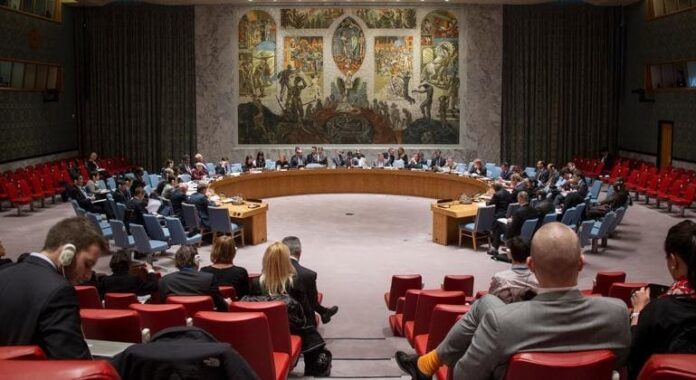
Hannah S. Tetteh, who also heads the United Nations Support Mission in Libya (MANUL), stressed the need to overcome delays in the implementation of the political roadmap this paves the way for presidential and legislative elections, a new unified government and a structured dialogue on crucial issues of governance, economy, security and reconciliation.

Since the overthrow of Muammar Gaddafi in 2011, Libya has been divided between the internationally recognized Government of National Accord (GNA) based in the capital Tripoli in the west and a rival administration in Benghazi in the east.

Lack of confidence

Ms. Tetteh collaborated with stakeholders on the implementation of the roadmap she presented to the Council in August.

However, the first two steps – the formation of a board of directors of the High National Electoral Commission (HNEC) and the adoption of the constitutional and legal amendments necessary for the elections – have not been achieved.

“We believe that the delays are a manifestation of the lack of trust between the two institutions, their own internal divisions and their inability to overcome their differences and agree on the way forward from the current impasse,” she said.

The two institutions she referred to are the two Libyan parliaments: the High Council of State (HCS) in Tripoli and the House of Representatives (HoR) in Benghazi. Although the HNEC board currently has enough members to conduct its business, the East is not represented. Despite this, municipal elections were able to be held in October.

“It would be desirable for the HNEC to have a fully constituted board of directors to manage the process of conducting what would be the most important elections in the history of the country,” she said.

Following simultaneous protests in five cities last month, House Speaker Aguila Saleh called for presidential elections. The HNEC also said it was ready to begin preparations for presidential and parliamentary elections starting in April, and GNA Prime Minister Abdulhamid Dbeibeh echoed these calls.

On the issue of constitutional and legal amendments needed for the elections, Ms Tetteh said the HCS had dissolved its delegation to the “6+6 Committee” – tasked with proposing new electoral laws to govern voting – as early as 2023. The reconstituted delegation was only announced on December 17 this year following internal conflicts.

A structured dialogue begins

This month also saw the launch in Tripoli of the inaugural meeting of the Structured Dialogue, with UNSMIL bringing together 124 representatives from key sovereign institutions, civil society, political parties, academia and the cultural world.

“This is the first process of this scale to take place on Libyan soil,” she said, and the plan is to facilitate meetings of the four thematic working groups across the country, as well as online.

The process “should help facilitate the creation of the political conditions necessary for a peaceful electoral process to take place, and also contribute to maintaining peace and stability in the aftermath of the elections.”

Economic fragility and rights violations

Meanwhile, Libya continues to make do with a weak economy. In November, delegates from the House of Representatives and the HCS signed an agreement on a common framework for development spending. The UN Mission welcomed this as a step in the right direction “provided it is implemented with transparency, effective monitoring and alignment with Libyan law and international public financial management standards”.

Addressing the human rights situation, Ms. Tetteh expressed deep concern over violations, including violence against women, migrants and minorities, and deaths in custody. She said the assassination of blogger Khansa Al-Moujahed in Tripoli last month “sends a frightening message to women about their participation in public life and risks silencing them at a time when their contribution is most needed.”

UNSMIL has also verified the deaths of 25 people in custody since March 2024, which “raises serious concerns about broader patterns of arbitrary detention, ill-treatment and lack of accountability.”

Rise above differences

Concluding her speech, Ms. Tetteh insisted that “the political process must not be held hostage by the inaction of the main political actors who, voluntarily or not, maintain the status quo.”

She highlighted that Libyans will celebrate Independence Day on December 24, when national elections are due to take place in 2021.

“Four years later, the country’s path to elections remains fraught with challenges that are difficult but can be overcome,” she said.

“I call on all Libyan leaders to respond to the demands of the Libyan people and overcome their differences in the interest of the unity and integrity of the Libyan state and to advance the well-being of the Libyan people.”

Originally published at Almouwatin.com