Sunday, March 29, 2026
Home Blog Page 147

Hurricane Melissa: Caribbean braces for destructive winds and ‘catastrophic rain’

0

“Destructive winds, dangerous storm surges and catastrophic rainfall” are expected to hit the region, UN spokesperson Stéphane Dujarric warned.

Continuing to work closely with resident coordinators and UN country teams, the UN is expected to deploy additional staff to Cuba and Jamaica this week, as part of broader efforts to strengthen emergency preparedness and coordinate response operations on the ground.

In an article on OCHA said preparations had been strengthened in Cuba, including:

  • More than 100 tonnes of rice for the east of the country
  • Hygiene kits for 6,500 people
  • Fuel Bonds
  • Ongoing prevention messages

In addition, the UN allocated approximately $4 million for Cuba. Central Emergency Response Fund (DEER) before the storm.

Additionally, special attention is given to Haiti, a country already struggling with gang violence, disease and gender-based violence. OCHA and its partners are helping national authorities strengthen preparedness and mitigate the potential impacts of the hurricane.

The country’s authorities said priority needs included emergency shelter, essential household items, hygiene and cleaning kits, clean water and additional logistical support to reach isolated areas.

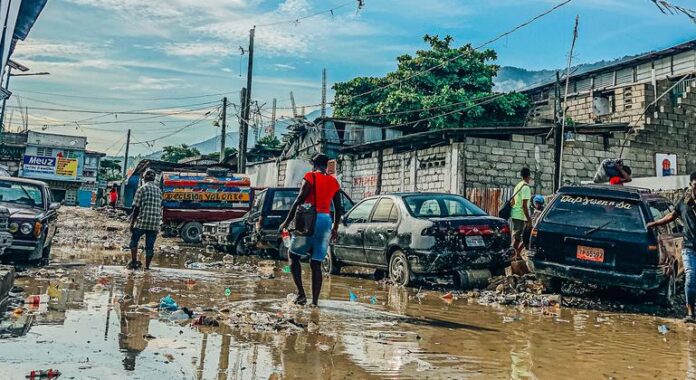
A neighborhood in Cap-Haitien, in the north of Haiti, is flooded following heavy rains. (deposit)

Coordinated efforts

The World Food Program is providing logistical support, generators and food aid to families in Jamaica – which could experience the most powerful storm on record – while the United Nations Children’s Fund (UNICEF) has pre-positioned water, sanitation and child protection supplies.

At the same time, the Pan American Health Organization is strengthening its health emergency operations, the International Organization for Migration (IOM) is preparing shelter support, and other UN partners are mobilizing for relief operations.

“Latin America and the Caribbean is the second most disaster-prone region in the world and children are among the most at risk. » according to UNICEF.

Originally published at Almouwatin.com

Risk of large-scale atrocities in Sudan’s El Fasher grows ‘by the day’

0
Risk of large-scale atrocities in Sudan’s El Fasher grows ‘by the day’

The agency has received reports of summary executions of civilians trying to escape what was the last Sudanese military government stronghold of El Fasher – with indications of ethnic motivations for killings – and of former combatants who have put down their weapons, which is prohibited under humanitarian law.

The risk of further large-scale, ethnically motivated violations and atrocities in El Fasher is mounting by the day,” warned UN human rights chief Volker Türk.

‘Urgent and concrete action’

“Urgent and concrete action needs to be taken to ensure the protection of civilians in El Fasher and safe passage for those trying to reach relative safety.”

The alarming reports come as the humanitarian situation in Sudan continues to deteriorate since the outbreak of the conflict in 2023. With more than 12 million people displaced or stateless and over 24 million hungry, Sudan’s crisis is considered to be one of the world’s most severe.

Hundreds of people have reportedly been detained while trying to flee, including a journalist, OHCHR said. There were also reports of numerous civilian deaths, including local humanitarian volunteers, due to heavy artillery shelling last week.

‘External interference’

The UN Secretary-General António Guterres told reporters while in Southeast Asia on Monday that the development marked a “terrible escalation” to the conflict, stressing that it was time for the international community to call out countries which are interfering in the war and “providing weapons” to the warring parties, urging them to agree a ceasefire.

Mr. Guterres noted that the problem is not only the fighting between the army and the RSF, but also the growing “external interference” that undermines prospects for a ceasefire and a political solution.

Malnourished and traumatised

“Civilians escaping, fleeing El Fasher are often held for ransom along the road, part of the road being controlled by militia,” said Denise Brown, UN humanitarian coordinator for Sudan, at Monday’s press briefing.

She said humanitarian organizations have been receiving adults and children who are “dehydrated, malnourished, some injured and all traumatised.”

According to reports received by the OHCHR, five men were executed by the RSF for attempting to bring food supplies into the city, which has been under a blockade by the RSF militia – vying for power during a brutal civil war with the military – for 18 months.

Ms. Brown said that some of the RSF’s victims were supposedly accused of supporting the Sudanese Armed Forces (SAF), and that the information received suggests dozens of civilians have been killed.

She highlighted that the dire funding situation, only 27 per cent of the ask, has not allowed the UN to response to the needs of people who are ‘traumatised, raped and starving.’

Humanitarian workers at risk

Nearly 130 aid workers have been killed since the conflict erupted in April 2023, and there have been reports of volunteers being killed in El Fasher, Ms. Brown said.

These people are the backbone of the humanitarian response in the most difficult areas and they are also protected under international humanitarian law,” she added.

Mr. Türk reiterated that the RSF commanders have an obligation under international law to protect civilians and ensure the safe passage of humanitarian assistance.

Source link

Children at risk as winter looms amid renewed strikes in Ukraine

0
Children at risk as winter looms amid renewed strikes in Ukraine

Dozens of civilian casualties were reported over the weekend and into Monday, with children among the injured, according to UN Spokesperson Stéphane Dujarric.

The hardest-hit areas include Dnipro, Donetsk, Kharkiv, Kherson, Kyiv, Sumy and Zaporizhzhia.

“Meanwhile, our humanitarian colleagues tell us that evacuations of civilians continue from frontline communities in the Donetsk region,” Mr. Dujarric told journalists in New York on Monday.

Between 24 and 26 October, more than 900 people were evacuated, he added, noting also that the Ukraine Humanitarian Fund has released $13 million since May to support local and national NGOs in the Kharkiv region, aiding nearly 76,000 residents.

Roughly half of those reached are women and girls. Assistance has included cash transfers, shelter, health services, water, sanitation, hygiene support and measures to prevent gender-based violence.

‘You can’t see anything’

Winterisation – providing lifesaving aid to vulnerable populations to protect them from cold weather and harsh conditions – is a major concern, the UN Children’s Fund (UNICEF) warns.

Kenan Madi, Chief of Field Operations UNICEF Ukraine, told UN News that families along the frontlines urgently need heating, warm clothing and other essential supplies.

The attacks on infrastructure are impacting basic services – from hospitals to water utilities to district heating – making everyday life extremely difficult for children,” he said.

“I just had a colleague who came back from Chernihiv,” he continued, adding: “The only thing he told me was, ‘It’s really dark — you can’t see anything.’ Some rural areas are in total blackout. That’s what children are living through in Ukraine right now.

UN response

Amid these conditions, UN agencies continue their efforts to reach communities with aid. UNICEF has provided access to safe drinking water for 300,000 people in September alone and more than three million nationwide so far this year.

Education remains disrupted: approximately 350,000 children in frontline regions attend school in person, while over 400,000 follow a blended schedule and around 280,000 continue fully online.

To mitigate these disruptions, the agency supports over 150 learning centres offering catch-up classes, social-emotional support and safe learning spaces. It has also rehabilitated more than 100 schools and kindergartens since 2022, with 42 additional facilities under repair this year.

Mental health a priority

Mental health services are also a priority. Last month, UNICEF reached 16,000 children and 25,000 caregivers in frontline areas with psychosocial support and over 300,000 people have received mental health assistance throughout 2025.

Mr. Madi highlighted the human toll, referring to the challenges faced by a mother of twins who have autism.

“She deserves to get the help she needs, but this is not the story of one person alone. There are many households who are struggling with their daily lives. There are many stories on the front lines and unfortunately year after year it is becoming harder for the people, especially children, and this is something which is very worrying for us.”

Source link

EIB lends €40 million for the energy transition of Conad supermarkets managed by ‘Commercianti Indipendenti Associati’

0
EIB lends €40 million for the energy transition of Conad supermarkets managed by ‘Commercianti Indipendenti Associati’

CIA
  • This is the first EIB loan in Italy dedicated to the large-scale retail and cooperative enterprise sectors
  • The EIB green loan will promote energy efficiency and the development of renewable energy in supermarkets in central and northern Italy
  • The EIB financing covers up to 75% of the total project cost as it will support REPowerEU objectives
  • The operation was structured with the support of Banca Finint S.p.A. acting as arranger

The European Investment Bank (EIB) and ‘Commercianti Indipendenti Associati (CIA), (independent cooperative enterprises), which are members of the Conad national consortium, have signed a €40 million finance contract to decarbonise its supermarkets in central and northern Italy.

This Green Loan[1] is the EIB’s first loan in Italy in the large-scale retail sector. This will mainly concern CIA-Conad supermarkets in central and northern Italy, aimed at improving the energy efficiency of existing buildings, enhancing renewable energy by installing roof photovoltaic systems, and upgrading food refrigeration systems.

“This loan shows how sustainable finance can drive the energy transition in key economic sectors, including retail. It will boost energy efficiency, promote renewable energy, reduce the environmental impact of supermarkets, cut costs and foster sustainability in this sector,” said EIB Vice-President Gelsomina Vigliotti.

The agreement supports total investments of around €54 million, with the EIB loan covering up to €40 million, thus exceeding the traditional limit of 50% of the project’s total cost. This is possible thanks to the project’s full contribution to the REPowerEU objectives, which allows the EIB to finance up to 75% of the total project cost, in line with the Bank’s Energy Lending Policy.

“We are delighted with this operation, which underpins the sustainability path that our cooperative launched several years ago. Investing in energy efficiency and renewable sources helps safeguard the environment and well-being of the communities in which we operate, which also has a positive impact for our businesses and customers,” said CIA-Conad CEO Luca Panzavolta.

The EIB credit line has a flexible long-term financial structure designed to facilitate the progressive implementation of investment in line with the business plan of cooperative enterprises. The operation was structured with the support of Banca Finint S.p.A. acting as arranger, through its Investment Banking division.

“We are proud to support this financing operation, a good example of how sustainable finance can promote the competitiveness of companies and regional growth. With the recent opening of our offices in Bologna, we are strengthening Banca Finint’s presence in Emilia-Romagna and our commitment to supporting projects that promote energy efficiency and innovation. Working with the EIB confirms Banca Finint’s role as a key partner for high value-added operations, combining financial strength with positive environmental impact,” said Head of Investment Banking Corporate at Banca Finint Alberto Nobili.

Background information

The European Investment Bank (ElB) is the long-term lending institution of the European Union, owned by its Member States. It finances investments that contribute to EU policy objectives. EIB projects add to competitiveness, drive innovation, promote sustainable development, enhance social and territorial cohesion, and support a just and swift transition to climate neutrality. In the last five years, the EIB Group has provided more than €58 billion in financing for projects in Italy. All projects financed by the EIB Group are in line with the Paris Climate Agreement. The EIB Group does not fund investments in fossil fuels. We are on track to deliver on our commitment to support €1 trillion in climate and environmental sustainability investment in the decade to 2030 as pledged in our Climate Bank Roadmap. Over half of the EIB Group’s annual financing supports projects directly contributing to climate change mitigation and adaptation, and a healthier environment. Around half of the EIB’s financing within the European Union is directed towards cohesion regions, where per capita income is lower.

Commercianti Indipendenti Associati, made up of independent retail businesses, is one of five Conad cooperative enterprises. There are outlets in Emilia-Romagna (in the provinces of Forlì-Cesena, Ravenna and Rimini), the Republic of San Marino, Marche (provinces of Ancona and Pesaro-Urbino), Friuli-Venezia Giulia, Veneto (including the Dao cooperative), Milan and certain provinces in Lombardy. Turnover in 2024 amounted to €3.2 billion, higher than in 2023. The cooperative’s multi-channel network comprised 257 outlets as of 31/12/2024, with more than 11 000 employees (sales outlets, corporate and cooperative staff).

Banca Finint Group is active in the Italian corporate and investment banking, structured asset management finance and private banking markets. Founded in late 2014, Banca Finint is the culmination of the more than 40 years of financial sector experience of the Finanziaria Internazionale Group, which was founded in 1980 by Enrico Marchi. Banca Finint Group was formed in 2016, with Banca Finint as parent company. Banca Finint specialises primarily in debt capital markets (minibonds and specialised lending), structuring and management of securitisation, covered bond and structured finance transactions, advisory for extraordinary finance transactions, supporting local companies and the real economy where it operates. The group is based in Conegliano (Treviso) and has offices in Milan, Rome and Trento.


[1] EIB green loan status is granted where 100% of the financing supports the Bank’s climate action and environmental sustainability goals, in line with the Green Loan Principles.

Source link

Tesla’s ‘Mad Max’ Feature Lets Cars Speed and Weave—Feds Want Answers

0


U.S. Federal safety officials have reached out to Tesla about a controversial new driving feature called ‘Mad Max’

Source link

Hurricane Melissa: Caribbean braces for destructive winds and ‘catastrophic rainfall’

0
Hurricane Melissa: Caribbean braces for destructive winds and ‘catastrophic rainfall’

“Destructive winds, dangerous storm surge, and catastrophic rainfall” are due to hit the region, warned UN Spokesperson Stéphane Dujarric.

Continuing to work closely with Resident Coordinators and UN Country Teams, the UN is due to deploy additional staff to Cuba and Jamaica this week, as part of wider efforts to bolster emergency preparedness and coordinate response operations on the ground.

In a post on X, OCHA said preparations had been strengthened in Cuba, including:

  • More than 100 tons of rice for the eastern part of the country
  • Hygiene kits for 6,500 people
  • Fuel bonds
  • Ongoing prevention messages

In addition, the UN has allocated around $4 million for Cuba from the UN Central Emergency Response Fund (CERF) ahead of the storm.

Moreover, special focus is being placed on Haiti, a nation already grappling with gang violence, disease, and gender-based violence. OCHA and its partners are assisting national authorities in strengthening preparedness and mitigating the hurricane’s potential impacts.

Authorities in the country reported that priority needs included emergency shelter, essential household items, hygiene and cleaning kits, safe water, and additional logistical support to reach isolated areas.

A neighbourhood in Cap Haitien in northern Haiti is flooded following heavy rains. (file)

Coordinated efforts 

The World Food Programme is providing logistical support, generators, and food assistance to families in Jamaica – which could experience its most powerful storm on record – while the UN Children’s Fund (UNICEF) has pre-positioned water, sanitation, and child protection supplies.

Meanwhile, the Pan American Health Organization is reinforcing health emergency operations, the International Organization for Migration (IOM) is preparing shelter support, and other UN partners are mobilising for relief operations.

“Latin America and the Caribbean is the second most disaster-prone region in the world and children are among the most at risk,” according to UNICEF. 
 

Source link

Latest News – European Maritime Safety Conference: Safety First – EMSA

0
Latest News – European Maritime Safety Conference: Safety First – EMSA

On 8 December 2025, EMSA hosts the  European Maritime Safety Conference at our headquarters in Lisbon.

The event, which will be streamed online, brings together key maritime stakeholders for debate and discussion.

Our expert speakers and panellists will explore the most important safety challenges and opportunities for the maritime sector in the EU, both now and in the years to come.

A key highlight of the conference will be the presentation of the second edition of the European Maritime Safety Report, the most comprehensive overview of maritime safety in the European Union.

Produced by EMSA, the report brings together up-to-date facts, information, and data – including from EMSA’s own databases – bringing together a set of key technical data related to the safety of ships and their operation in the EU.

Join our LinkedIn event here

More information, including the conference agenda, is available here.

Source link

World News in Brief: Funding cuts curb development, human rights in Belarus update, Ebola and mpox in Africa

0
World News in Brief: Funding cuts curb development, human rights in Belarus update, Ebola and mpox in Africa

Speaking in Geneva, she said the world was facing “declining respect for human rights and multilateralism”, with conflicts, debt, and shrinking development assistance threatening to reverse hard-won gains.

The 38-member economic cooperation organization, OECD, projects a nine to 17 per cent fall in aid next year, and up to 25 per cent for the least-developed countries bloc, while military spending has soared to record highs.

“The results speak for themselves: poverty reduction has stalled, and virtually all SDGs are off track,” Ms. Al Nashif said, citing the World Bank’s warning of a “lost decade for development.”

Way forward

Despite the bleak outlook, she said the right to development offered a practical path forward — by reshaping fiscal policies, strengthening social protection, and aligning global finance with human rights principles.

Nearly 40 years after the UN Declaration on the Right to Development, Ms. Al Nashif urged governments to “move from words to action”, noting new momentum through initiatives such as the Sevilla Commitment and renewed global solidarity voiced at the 80th UN General Assembly.

UN independent expert: Belarus is no ‘paradise’ for workers

“Belarus is not the worker’s paradise authorities say it is, despite their proclaimed commitment to economic and social rights,” said UN independent human rights expert on Belarus, Nils Muižnieks, addressing the UN General Assembly Monday.

In his capacity as a Human Rights Council-appointed expert, Mr. Muižnieks presented his latest report, which revealed pervasive politically-motivated discrimination and harassment in both the Belarusian public and private sectors.

Forced labour

He also found unjustified restrictions on access to jobs based on political grounds – and the use of forced labour for little or no pay as a form of punishment for persons unjustly incarcerated.

The report follows a two-year engagement under the International Labour Organization (ILO), which has put Belarus under enhanced scrutiny due to violations of trade unions’ rights.

Mr. Muižnieks – who is not a UN staffer and who receives no salary for his work – recalled that over 1,100 people continue to be detained arbitrarily in the country and that some of those released have been deported and had their passports confiscated, leaving them at risk of statelessness and afraid of returning back home.

IOM steps up Ebola and mpox preparedness across Africa

The International Organization for Migration (IOM) is scaling up its health response across Africa, responding swiftly to the Ebola outbreak in the Democratic Republic of the Congo (DRC) this past September and supporting mpox preparedness in several African countries.

The agency’s priority is to make fully operational all points of entry and screening to prevent disease in areas where there is human movement. 

“These measures help prevent the spread of disease and keep both travellers and border communities safe,” said Frantz Celestin, IOM’s regional director for East, Horn and Southern Africa.

Border communities face heightened risk due to high mobility and limited access to health services, but thanks to operational screening points, over 169,000 screenings have been conducted.

Improved mpox response 

The agency is also supporting national mpox responses in several countries. In Uganda and Ethiopia, health authorities are using IOM’s mobility data for public health planning and outbreak preparedness.

In Malawi and South Sudan, IOM is enhancing surveillance, contact tracing and access to vaccination at key border points.  

Source link

Lebanon: Statement by the Spokesperson on Israeli strikes on UNIFIL

0
Lebanon: Statement by the Spokesperson on Israeli strikes on UNIFIL

Lebanon: Statement by the Spokesperson on Israeli strikes on UNIFIL

Source link

Pakistan’s “Iron Lady” leads the fight for a fairer future for all

0

At the age of 21, Ms. Mazari was seriously injured in a car accident that left her paralyzed from the waist down. Despite immense challenges, she became a leading artist – her work has been exhibited in many prestigious galleries across the world – a global motivational speaker, humanitarian, disability rights advocate, Pakistan’s first wheelchair-bound television host, model and Pakistan’s Goodwill Ambassador. UN Women Pakistan.

In an interview with Hareem Ahmed of UN NewsMs. Mazari shared her extraordinary journey of resilience and determination, her refusal to let her disability define her, and her vision for a truly inclusive society.

Muniba Mazari: I have learned that if you have the courage to face challenges head on and if you are persistent and constantly try to make a difference for yourself and the people around you, obstacles turn into bridges and adversities turn into opportunities.

My appointment as an SDG Advocate is a huge honor because, as a woman who has used a wheelchair for 17 years, I know exactly what it feels like to be discriminated against, to be underestimated, to be questioned, and then later to be told that you are not good enough.

I realized that if you have the passion to do things, people open doors for you and accept you with your courage and passion. I have always done this and will continue to be the voice of those who are left behind, not because they don’t have a voice, but because they don’t have the right platform to say what they need to say.

People with disabilities around the world face these problems and prejudices. They are often left behind. They are often invisible and ignored, whether in classrooms, workplaces, leadership positions and, unfortunately, even homes. As an advocate for the SDGs, it is my responsibility to represent them.

UN News: You have said that inclusion is a fundamental human right, not charity. What do you think a truly inclusive society looks like and what barriers still need to be removed?

Muniba Mazari: Many people think that inclusion means sympathy for people with different abilities. We must understand that an inclusive society must have an inclusive mindset, free from prejudices, labels and judgments. An inclusive society is impossible if we judge people by their appearance. To me, inclusion is about accepting people for who they are and what they believe in, respecting them and ensuring that no one feels left out.

Ideally, an inclusive society would be one in which people are not labeled simply because they are different and unique, and a place where everyone feels seen, heard and welcomed. I hope one day we will realize this dream.

UN News: You have highlighted the importance of male allies in the fight for gender equality. What kind of support do you think men can offer?

Muniba Mazari Men cannot succeed without women, and women cannot succeed without men. We can’t fight. We must fight for each other and work together as a team.

My son knows his mother doesn’t cook, but she works all day and is passionate about her work, which has helped many people over time. If we really want to see a difference, we need to raise our children in an inclusive environment.

When we talk about giving women rights, it’s as if we are asking men to give us their rights so that we can flourish. This is not the case. We are not taking away men’s rights and giving them to women. The problem is that men are not obliged to demand their basic rights. We just want men to stand with us, unlearn a lot of things they have been taught, relearn and understand that men and women must work together to grow and excel.

Young boys and a man using crutches walk through flooded streets in Nowshera Kalan, one of the worst-affected areas in Khyber Pakhtunkhwa province, Pakistan.

UN News: How do you use art and storytelling as tools for social change?

Muniba Mazari: Creative expression is very important, especially when there is so much sadness, darkness and suffering all around. Art has the power to heal and transform people, and it is the best way to connect with people on a deeper human level.

In my personal journey, art has been my savior, a safe space where I can simply be myself and express what I am experiencing. We need more artists in the world because we need more healing.

UN News: What are the biggest challenges to achieving gender equality in Pakistan today and how can we overcome them?

Muniba Mazari: We must raise our children equally. Prejudices are so deeply ingrained that we don’t even think of them as prejudices. Cooking and cleaning are basic life skills, not gender roles, but if a man does laundry, people make fun of him. My brother does it at my place, in my house. He cooks when he wants. I don’t cook because I don’t want to. For my son, this is completely normal.

We’ve done an incredible job raising strong girls, and we know how to find a way and take the lead. But what about guys who don’t know what to do when they see a woman blossoming? They are intimidated, they feel threatened.

I think it’s important for us to raise strong men. My definition of a strong man is very simple: he is a man who does not feel intimidated when he sees a girl or woman flourishing and excelling in her career.

© UNICEF/UN0701839/Zaidi

A health worker performs blood pressure tests in rural India.

UN News: What are the most pressing gaps you see in disability rights and accessibility?

Muniba Mazari: A lack of acceptability and a lack of accessibility.

I remember when I started my journey as an artist, as a TV presenter, I was told, “You’re a woman in a wheelchair in Pakistan and things are going to be difficult”. You will be the first to do all this. And I remember saying, I may be the first, but I won’t be the last, because what I’m doing right now is creating a path for many people who will come after me.

I saw mentalities change; It’s been a long road and there’s still a long way to go, but let’s start by accepting people as they are and giving them the right to go out and live their lives to the fullest.


Originally published at Almouwatin.com