
Astronomers at the University of Warwick have discovered that black holes don’t just consume matter—they manage it, choosing
The Cosmic Seesaw: Black holes eject material as winds or jets, but not both at once
Guterres tells AU summit: ‘It’s 2026 – not 1946’ to promote reforms

 In a world marked by division and mistrust, he declared, the African Union (AU) constitutes a “standard bearer of multilateralism”. addressed the 39th African Union Summit in Addis Ababa. Mr. Guterres praised Africa’s global leadership in “the fight for justice and equality”, noting that the UN-AU partnership […]
Originally published at Almouwatin.com
Syria transition gains ground with Kurdish deal, but violence and humanitarian strain persist
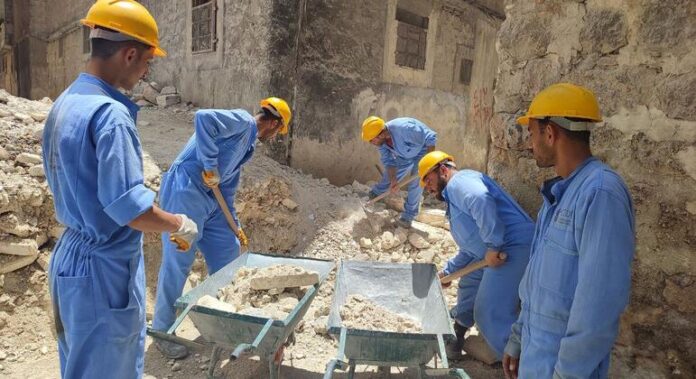
Briefing ambassadors for the first time as Deputy Special Envoy, Claudio Cordone pointed to the 30 January ceasefire and integration agreement between the Syrian Government and the Syrian Democratic Forces (SDF) as a potentially transformative development.
The deal provides for a phased military and administrative integration of northeast Syria and includes provisions on the return of displaced people and the protection of Kurdish civil and educational rights, building on Presidential Decree 13 on linguistic, cultural and citizenship rights.
“Hostilities have ended and work on an implementation plan has been progressing in a positive manner,” Mr. Cordone said, noting deployments of Ministry of Interior forces in Al-Hasakeh and Qamishli, and discussions on local governance and political appointments.
The Secretary-General on 30 January welcomed the agreement, appealing for all sides “to work swiftly to ensure its implementation, especially in terms of the peaceful integration of northeast Syria, the rights of Syrian Kurds, the safe, dignified and voluntary return of the displaced.”
In a presidential statement issued on Thursday, Council members likewise welcomed the “comprehensive agreement” and stressed the need to adhere to it to “minimize civilian suffering” and prevent any “security vacuum” around ISIL (Da’esh) detention facilities.
What is the UN doing in Syria now?
The UN is supporting Syria’s political transition while continuing large-scale humanitarian operations across the country.
The Office of the Special Envoy is engaging with the Government and a broad range of stakeholders to help advance the political process, including implementation of the recent agreement on northeast Syria, support for inclusive governance, and the protection and promotion of human rights.
At the same time, humanitarian agencies are delivering life-saving assistance to millions of Syrians.
UN teams and partners are providing food, water, medical supplies, shelter and protection services, while supporting mine action, restoring basic services and helping create conditions for safe, dignified and voluntary returns.
Visit the UN News Focus on Syria section to read more about UN’s work in and engagement with Syria.
Situation remains sensitive
The evolving situation around those facilities remains sensitive.
Mr. Cordone said the UN is closely following transfers of Syrian and non-Syrian Da’esh suspects to Iraq, adding that Iraqi proceedings must “fully respect fair trial standards” and urging Member States to repatriate their nationals “as swiftly as possible.”
While the northeast has seen relative stabilization, tensions persist elsewhere.
In Sweida, renewed clashes between Government forces and local armed groups have caused damage and electricity outages. Protests calling for self-determination have resurfaced, and the UN reiterated calls for confidence-building measures within “the full respect of Syria’s sovereignty and territorial integrity.”
In southern Syria, Israeli incursions and search operations have continued, alongside reports of aerial herbicide spraying damaging crops. The UN envoy called for “full respect for international law” and urged Israel to withdraw from areas it occupies “in violation of the 1974 Disengagement of Forces Agreement,” while supporting “mutually acceptable security arrangements between Israel and Syria.”
Humanitarian challenges persist
Humanitarian conditions remain severe despite modest improvements.
Lisa Doughten, Director of Financing at the UN Office for the Coordination of Humanitarian Affairs (OCHA), said recent clashes displaced tens of thousands; although many have returned, about 130,000 people remain uprooted across Al-Hasakeh, Ar-Raqqa and Aleppo governorates. More than 90 per cent are women and girls, with many sheltering in overcrowded camps or with host families already under strain.
Heavy flooding this week in Idleb and northern Latakia killed two children and damaged or destroyed some 2,000 tents, affecting over 5,000 displaced people.
Still, access and basic services are gradually improving in parts of the northeast. UN teams have reached 200,000 people and organized more than 170 truck movements. In Ain al-Arab (Kobane), electricity supply has reportedly resumed after repairs.
Participants at a UN workshop on recovery priorities, challenges and response planning.
Meaningful representation of all Syrians crucial
Politically, the next milestone in the transition is the formation of the People’s Assembly. Voting for most elected seats took place in October 2025 – with additional seats, including in Raqqa, due to be filled. Confirmation is awaited on the appointment of 70 members by President Ahmed al-Sharaa, as well as of the date of the opening session.
Mr. Cordone reiterated the importance of meaningful representation of Syria’s regions and diverse groups, stressing that “the protection and promotion of human rights – including addressing the issue of the missing and transitional justice – are fundamental elements for a credible and successful political transition.”
‘Extraordinary role’ of Syrian women
He highlighted the “extraordinary role” of Syrian women and civil society over the decade-long conflict, saying women’s political participation at all levels is “a pillar for a state committed to plurality, inclusion and opportunity for all.”
“I salute the Syrian people for their determination in overcoming decades of oppression and brutal conflict. I look forward to strengthening the UN’s partnership with Syria in pursuit of a stable, peaceful and prosperous future,” he said in Arabic as he concluded his briefing.
Global Entrepreneurs and Investment Forum places women at the heart of economic transformation

 This was the central message of the Manama Declaration, released late last year. The World Entrepreneurs and Investment Forum (WEIF) held this week in Bahrain. The declaration places women at the heart of economic transformation, emphasizing that empowering them within business ecosystems […]
Originally published at Almouwatin.com
Madagascar: “overwhelming” destruction and growing needs after consecutive cyclones – WFP
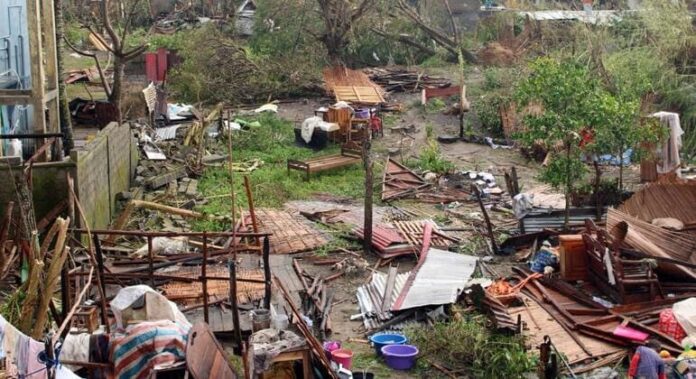
 Speaking to reporters in Madagascar’s capital Antananarivo, WFP country director Tania Goossens said some 400,000 people are facing acute humanitarian needs after the island was hit by back-to-back cyclones in the space of three weeks. Ms. Goossens recently returned from a mission to the port city of […]
Originally published at Almouwatin.com
Gaza: Lifesaving aid operations continue despite restrictions
The United Nations said that its teams attempted to coordinate eight humanitarian missions on Friday and five were fully facilitated.
The remaining three – which included a mission to reach a water treatment plant in Khan Younis – were denied by Israel.
Saving lives, beating famine
The successful missions collected food and medical supplies from the Kerem Shalom/Karem Abu Salem crossing. Teams also monitored humanitarian cargo at the Kissufim and Kerem Shalom loading platforms.
Speaking in New York, UN Spokesperson Stéphane Dujarric noted that four months have passed since the ceasefire agreement came into effect in Gaza, and the humanitarian scale-up has saved countless lives and pushed back famine.
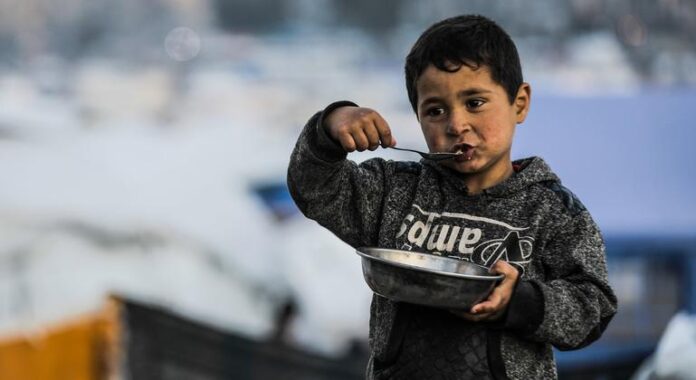
Yet many people are still “living in extremely harsh conditions, and the humanitarian response continues to face significant obstacles, especially to the entry of goods and the ability of humanitarian partners to operate,” he added.
Durable housing solutions needed
Almost 1.5 million people – or two in three Palestinians in Gaza – are staying in 1,000 displacement sites across the Strip and in tents.
Hundreds of families also have sheltered in damaged buildings, which are at risk of collapse.
Humanitarians continue to provide the population with tents, tarpaulins, mattresses, clothes and other items – reaching more than 85,000 families alone in January.
“But these items offer limited protection and their lifespan is short,” Mr. Dujarric said.
“To provide more durable solutions, restrictions on the entry of essential construction materials and equipment must be lifted.”
Rail offers a major opportunity for Europe to cut transport emissions, as road transport still dominates
Transport remains Europe’s most persistent climate challenge. While rail offers a low-emission alternative for moving people and goods, Europe’s continued reliance on road transport is keeping greenhouse gas and pollutant emissions high, according to a report published today by the European Environment Agency.
Elder Gilbert-Newest Apostle-Meets the Media
“There’s a mix of trepidation and joy, two feelings that don’t usually coincide,” said Elder Clark G. Gilbert, the newest member of the Quorum of the Twelve Apostles, as he settles into his new role in the second-highest governing body of The Church of Jesus Christ of Latter-day Saints.
Downloadable B-roll & SOTs
Elder Gilbert, the Church’s education commissioner, was called to fill a vacancy in the Quorum on Wednesday, February 11, 2026, following the recent passing of President Jeffrey R. Holland. He was ordained on Thursday, February 12, by President Dallin H. Oaks and the other members of the First Presidency and the Quorum of the Twelve Apostles.
Gilbert, 55, said he has received more than 1,000 text messages on his phone since his new calling was announced.
Elder Gilbert Talks to Journalists
Members of the news media had their first opportunity to speak with Elder Gilbert on Friday, February 13, in the Joseph Smith Memorial Building on Temple Square.
Elder Gilbert says he is already receiving spiritual inspiration from the Lord during the first two days of his service as an Apostle.
“I feel the mantle strengthening me,” he said. “It is sometimes described as a burden and a weight, but it’s also a protection and a shield and a strength.”
“[The Lord has] planted feelings in my heart already in these last two days, feelings to get up and send a message to someone or to make a call in the middle of such a busy moment,” Elder Gilbert said. “I think the Lord’s telling me to keep reaching out to the one, and especially to the one who struggles.”
“I feel a measure of His love, concern and empathy for those He is worried about, and I have a feeling if the last two days are anything like the future service I’ll be asked to give, that ministering to the one will be a big part of that,” the Apostle said.
Elder Gilbert said his wife, Christine, has also given him the confidence to move forward in this calling and in other pivotal moments in his life.
“Her confidence [and] conviction anchored me and pushed me to be who the Lord needed me to be,” he said.
Among the hundreds of messages the Gilberts received about this new role was one from a former inner-city youth they had once served in Boston, who is now a father of five.
Elder Gilbert said, “He called her, not me. And he said,’ Christine, I just wanted you to know this wouldn’t have happened without you.’ And he’s right. What a tender expression of that last night for both of us.”
Sister Gilbert said she also receives inspiration from her husband. The two are the parents of eight children.
“He’s a builder of people and has been a builder of me for 32 years now and has made me a better version of myself by being with him,” she said. “He’s such a joyful, happy person, so positive and enthusiastic.”
Elder Gilbert said he has much to learn in his calling as an Apostle.
“We teach that education is a religious responsibility. And if that’s true, involve the Lord in your learning, and he’ll take you places you never thought possible,” he added.
Education has been an integral part of his life. He taught at Harvard and served as president of Brigham Young University–Idaho. He was also the inaugural president of BYU–Pathway Worldwide, the global online offering.
He continued, “God loves us. He loves all His children. And He wants us to serve in the kingdom and grow in our testimonies. And to do that, He needs us to be able to provide for our temporal self-reliance, even as we’re building our spiritual self-reliance.”
Elder Gilbert is humbled and excited to serve in his new role as the Church’s newest Apostle.
“What an opportunity it is to wear out my life in service of the Lord Jesus Christ and in testifying of Him to all the world,” Elder Gilbert said. “Jesus Christ lives, that through Him we can find peace and joy, that in a chaotic, polarized, conflicted world we can find peace and comfort in the Savior Jesus Christ.”
Data from one billion phones reveals hidden divide in coping with heatwaves
A new study tracking the movements of one billion mobile phone devices has exposed how wealth and age
Ukraine ‘Four Years of Resistance’ films at EESC in Brussels

A two-day programme of documentary and feature-film screenings, expert panels, and filmmakers’ testimonies will take place at the European Economic and Social Committee (EESC) in Brussels on 24–25 February 2026, bringing Ukrainian civil society and European partners together to reflect on resilience and sustain public attention on the war.
Brussels will host a two-day international event titled “Four Years of Resistance” on 24–25 February 2026 at the European Economic and Social Committee (EESC), the EU’s advisory body that serves as a bridge to organised civil society. The meeting is convened by the civil society organisation vzw Ukraine EU and is presented as a space for dialogue and solidarity, using cinema as the entry point for wider discussion.
According to the organisers’ published invitation, the programme combines screenings of documentaries and feature films with panel discussions involving researchers, experts, and civil-society representatives, as well as first-hand accounts from directors and producers about how the films were made.
What is planned
- Dates: 24–25 February 2026
- Venue: European Economic and Social Committee (EESC), Jacques Delors building, Rue Belliard/Belliardstraat 99–101, 1040 Brussels (European Quarter)
- Format: Film screenings, panel discussions, and filmmaker testimonies
Programme highlights
The organisers list several “landmark films” centred on Ukrainian resistance, including Cyborgs, Mariupol: Chronicle of Hell, Peaceful 21, and Small People Who Started a Big War, alongside additional titles.
As outlined in the published schedule, Day 1 includes a screening of Cyborgs followed by remarks from director Akhtem Seitablaiev, and a later screening of Mariupol: Chronicle of Hell, before a panel discussion on “achievements and losses.” Day 2 features a panel on “the phenomenon of Ukrainian resilience,” a book presentation by physician and veteran Yevhen Dubrovskyi, and a screening of Peaceful 21.
Why this matters
The dates align with the fourth anniversary of Russia’s full-scale invasion of Ukraine on 24 February 2022—a milestone increasingly marked in European institutions and civil society. By pairing films with expert panels and testimony from filmmakers, the organisers aim to keep attention on civilian experience, the documentation of events, and the role of cultural work in sustaining international engagement.
How to attend
Registration is handled via an online form: Register here.
Venue information: The EESC’s headquarters are in the Jacques Delors (JDE) building at Rue Belliard/Belliardstraat 99–101, 1040 Brussels. Practical directions are available via the EESC’s visitor guidance page: How to get to the EESC.
Partners
The invitation lists the following event partners:
- European Economic and Social Committee (EESC), Brussels
- European Association of Ukrainian Women
- Research Institute of Ukrainian Studies (Taras Shevchenko National University of Kyiv)
- Taras Shevchenko National University of Kyiv
- “Crimean Khata Media”
- “TRO — Media”
- “Ukrainians of Ghent”
- Popular science publication “Ambassador”
- NGO “Democratic Youth Initiatives”
- NGO “International Diplomatic Alliance”
- Ukrainian Civil Society Hub
Related reading
For context on the Brussels venue and its role in EU public life, see The European Times’ coverage of the EESC here: EESC coverage and analysis.
