
Monday, September 21, 2026
Home Blog Page 151

World News in Brief: Deadly strikes in Sudan, health systems in South Sudan near the brink, Guterres calls for unity ahead of Ramadan.

0
World News in Brief: Deadly strikes in Sudan, health systems in South Sudan near the brink, Guterres calls for unity ahead of Ramadan.

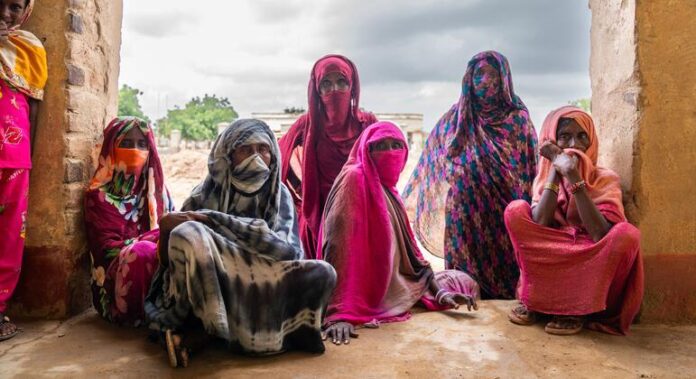
Over the past week, North Kordofan state recorded more than a dozen attacks in and around the towns of El Obeid, Bara, Rahad and Um Rawaba.  

In South Kordofan, suspected drone strikes hit health facilities in the state capital, Kadugli, and in Kuweik town, reportedly killing four medical workers, injuring more than 20 people. 

Concerns over the conflict continue to deepen after a report today from the UN Human Rights Office revealed the “sustained” and “systematic attacks” to civilians in the neighbouring Darfur region in late 2025 that may “amount to crimes against humanity”. 

Growing humanitarian concerns 

“The violence is triggering a new wave of displacement, with reports of many fleeing homes, in need food, health care and protection,” warned the Spokesperson for the Secretary-General Stéphane Dujarric on Friday. 

While the humanitarian situation in Dilling and Kadugli continues to deteriorate, he emphasised that “rapid, safe, unhindered and sustained humanitarian access is essential for us to scale up our response.” 

Commercial vehicles, telecommunications infrastructure and key transport routes have been affected the drone strikes, disrupting humanitarian movements and supply chains. 

Mr. Dujarric called for “the protection of humanitarian infrastructure, in line with international humanitarian law” and urged for more funding through UN aid coordination office OCHA to support displaced families across Sudan. 

Violence pushes South Sudan’s health system to the brink 

Since late December 2025, a devasting escalation of violence has swept across northern and central parts of South Sudan, the UN children’s agency (UNICEF) said on Friday. 

In Jonglei state alone, at least 280,000 people have been displaced – the majority being women and children.

“They fled with nothing. They are sleeping in displacement camps left over from the not-so-distant civil war – camps where there are barely any services. Others are out in the open, in remote locations, with nothing at all,” said UNICEF’s representative in South Sudan, Obia Acheng. 

Children were believed to make up 53 percent of those displaced.

“These children face killing and maiming. Recruitment into armed groups. Separation from their families. Gender-based violence. And profound psychological distress that will mark them for years,” Mr. Acheng emphasised.

Delivering for children

South Sudan’s health system is on the verge of collapse, with 11 health facilities attacked or looted since fighting intensified and many nutrition centres forced to close, UNICEF said.

Cholera cases have surged to 479 nationwide, with treatment centres overwhelmed and resources running low.

Around 825,000 children across Jonglei, Unity, and Eastern Equatoria states are now at risk of acute malnutrition — conditions that make children 12 times more likely to die without treatment.

Pregnant and nursing mothers are increasingly cut off from care, and humanitarian infrastructure is under assault.

Despite these grim numbers, UNICEF continues to run primary healthcare, nutrition, water and sanitation, and child protection programmes across the country. 

The UN Security Council also issued a statement expressing grave concern about the escalating violence in Jonglei, Eastern Equatoria, and throughout South Sudan. 

Members strongly called on all parties to de-escalate and immediately cease renewed hostilities and to resolve issues through peaceful dialogue.  

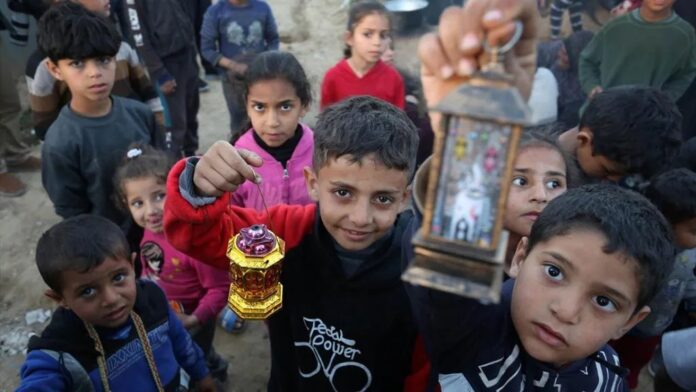
Children in Gaza hold lanterns to celebrate the advent of Ramadan. (file)

UN chief calls for unity and compassion ahead of Ramadan 

UN Secretary-General António Guterres has urged people worldwide to embrace the spirit of peace, compassion and solidarity as Muslims prepare to observe the holy month of Ramadan.  

“For Muslims around the world, the holy month of Ramadan is a sacred period of reflection and prayer. Ramadan also represents a noble vision of hope and peace.” Mr. Guterres said in a message ahead of the start on Tuesday.  

He noted, however, that for many — from Afghanistan to Yemen, Gaza, and Sudan — this vision of hope and unity remained distant amid conflict, hunger, and displacement. 

The UN chief called on the global community to bridge divides, deliver aid to those in need, and uphold human rights and dignity for all. 

“May this Holy Month inspire us to work as one to build a more peaceful, generous and just world for all people,” he said. 

Source link

Syrian transition gains ground with Kurdish deal, but violence and humanitarian tensions persist

0
Syrian transition gains ground with Kurdish deal, but violence and humanitarian tensions persist

Syrian transition gains ground with Kurdish deal, but violence and humanitarian tensions persistAddressing ambassadors for the first time as Deputy Special Envoy, Claudio Cordone highlighted the January 30 ceasefire and integration agreement between the Syrian government and the Syrian Democratic Forces (SDF) as a potentially transformative development. The agreement provides for gradual military and administrative integration of northeastern Syria and includes […]
Originally published at Almouwatin.com

World news in brief: Deadly strikes in Sudan, health systems in South Sudan on the brink, Guterres calls for unity before Ramadan.

0
World news in brief: Deadly strikes in Sudan, health systems in South Sudan on the brink, Guterres calls for unity before Ramadan.

World news in brief: Deadly strikes in Sudan, health systems in South Sudan on the brink, Guterres calls for unity before Ramadan.Over the past week, North Kordofan state has recorded more than a dozen attacks in and around the towns of El Obeid, Bara, Rahad and Um Rawaba. In Southern Kordofan, suspected drone strikes hit health facilities in the state capital Kadugli and the town of Kuweik, killing […]


Originally published at Almouwatin.com

Madagascar: ‘Overwhelming’ destruction, surging needs after back-to-back cyclones – WFP

0
Madagascar: ‘Overwhelming’ destruction, surging needs after back-to-back cyclones – WFP

Speaking to reporters from Madagascar’s capital Antananarivo, WFP Country Director Tania Goossens said some 400,000 people are facing acute humanitarian needs after the island was hit by back-to-back cyclones in the space of three weeks.

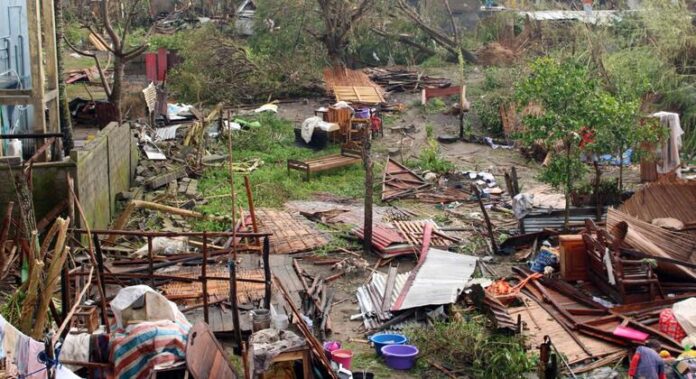
Ms. Goossens recently returned from a mission to the port city Toamasina (also known as Tamatave), the country’s second largest urban centre, where Gezani made landfall on Tuesday evening with wind gusts of up to 250 kilometres per hour.

“The scale of the destruction is really overwhelming,” Ms. Goossens insisted.

Nearly 40 deaths

She said that according to the authorities, 80 per cent of the city has suffered damage and that it is “running on roughly five per cent electricity at the moment.”

“There’s no water and one of WFP’s warehouses and our office was also completely destroyed during the cyclone,” she added.

Assessments are ongoing but to date the authorities report 38 deaths and 374 people injured.

Families left with nothing

The UN food agency official said that many families have left their homes and that there was “severe” damage to buildings, businesses, schools and the city’s hospital.

“During my visit, I saw families trying to recover the little that was left of their home,” she recounted. “Many are spending the night in homes where the roofs have been torn off.”

Uprooted trees and debris across the city are blocking streets, Ms. Goossens said, and fuel is difficult to come by.

“Families are telling us that they have lost everything,” she stressed. “Many are sheltering in damaged homes or temporary sites and uncertain about how they can access their next meal.”

Rising needs

In addition to the urgent need for food Ms. Goossens highlighted humanitarians’ concerns about water, sanitation and hygiene conditions, as a lack of clean water and damaged infrastructure raise the risk of disease outbreaks.

She also mentioned “rising protection concerns for vulnerable groups” such as women, children, the elderly and persons with disabilities.

Mobilising support

In anticipation of the shock WFP and partners have been providing cash assistance to the most vulnerable households allowing them to purchase some food and better prepare before the storm struck.

The UN food agency is now mobilising its “last food stocks,” which will be distributed in coordination with national disaster relief teams, Ms. Goossens explained.

However, the needs on the ground exceed WFP’s capacity and the agency is calling for urgent donor support.

The latest disaster “comes on top of an already very critical food security situation,” Ms. Goossens said, as already before the back-to-back cyclones 1.57 million people across the country were food insecure, including 84,000 facing emergency levels of hunger, according to the latest data from the IPC, a UN-backed global food security monitoring system.

“We’re also in the peak of the lean season here in Madagascar and funding shortfalls remain alarming… Our lean season response as well as cyclone response faces a $18 million gap over the next six months,” the WFP official warned.

“We will need… sustained support over the coming months to help people recover, to rebuild and strengthen their resilience against further shocks,” she added. “In fact, we are in at the start of the cyclone season. So, we are also concerned that this is only just the beginning.”

Source link

Dimitar Borumov and the series “Hidden from the Economy”

0
Dimitar Borumov and the series “Hidden from the Economy”

Dimitar Borumov and the series “Hidden from the Economy”Dimitar Borumov, a political economist based in The Hague, joins The European Epoch as author of Series – Hidden from the Economy, a new contribution that examines what the standard economic debate often neglects: from care and social reproduction to the environment-economy relationship. From Leiden to The Hague: a political economy perspective Borumov […]

Originally published at Almouwatin.com

Dimitar Borumov and the series “Hidden from the Economy”

0
Dimitar Borumov and the series “Hidden from the Economy”

Dimitar Borumov, a political economist based in The Hague, is joining The European Times as the author of Series – Hidden from the Economy, a new contribution that examines what standard economic debate often overlooks—from care and social reproduction to the environment–economy relationship.

From Leiden to The Hague: a political economy lens

Borumov holds a Bachelor’s degree in International Studies (BA) at Leiden University, where he specialised in the Politics and Economics of the Middle East. He later completed the International Relations (MA), specialisation Global Political Economy, also at Leiden University. Across his academic work, he focused on three broad areas: economies in transition; the political economy of care and social reproduction; and critiques of modern capitalism—especially at the intersection of environment and economy.

What “Hidden from the Economy” sets out to do

In his opening pieces, Borumov argues that many forces that sustain economic life are treated as “external” until they can be priced, traded, or exploited. His first article, The Economy beyond the Orthodox Understanding, introduces the logic he wants to challenge: “no money – no importance.” His follow-up, The Environment-Economy Nexus – a Historical Perspective, traces how environmental exploitation shifted over centuries—from survival to extraction and, eventually, to the imperatives of market expansion.

For readers, the promise of the series is both practical and political: to connect everyday realities—care work, ecological limits, uneven development—to the big questions shaping Europe’s debates on sustainability, inequality, and economic resilience.

Teaching, environmental awareness, and dialogue

Outside publishing, Borumov works in education—both formal and informal—on environmental awareness and on the relationship between ecology and economy. He also teaches Bulgarian History, Geography and Economy at the Bulgarian school “St. St. Cyril and Methodius” in The Hague, which has been referenced in official communications by Bulgaria’s Ministry of Foreign Affairs in the Netherlands context.

He is additionally involved in interfaith and civic dialogue as a youth leader with BRIDGES – Eastern European Forum for Dialogue, a cooperation circle of the United Religions Initiative.

A guiding principle: start with the roots

Borumov summarises his approach to public problems in a simple maxim:

“In order to address a problem as good as possible, we need to understand the roots of it; only then can we devise sustainable solutions.”

That method—diagnosis before slogans—fits the intent of The European Times: to make complex public debates readable, grounded, and accountable to lived realities.

Read Dimitar Borumov’s series

Source link

Winter Olympics 2026: Anticipation Builds as Great Britain Eyes Skeleton Medal

0
Winter Olympics 2026: Anticipation Builds as Great Britain Eyes Skeleton Medal

As the Winter Olympics 2026 continue in Milano Cortina, Great Britain’s Matt Weston aims to break the nation’s medal drought in the skeleton event. The day is filled with anticipation as athletes vie for Olympic glory.

The Winter Olympics 2026 in Milano Cortina are underway, captivating audiences with thrilling competitions. Among the key stories is Great Britain’s Matt Weston, who is poised to end the nation’s medal drought at these Games in the skeleton event.

British fans are focused on Matt Weston, who holds a promising lead of 0.30 seconds over his nearest rival heading into the final two runs of the skeleton competition. Scheduled for this evening at 18:30 and 20:05 GMT, Weston’s performance could make history as he aims to become Britain’s first male Olympic skeleton champion.

A victory for Weston would not only be a personal triumph but also a significant milestone for British winter sports. Despite his strong position, the pressure remains high as he competes against some of the best athletes in the world. The anticipation surrounding his potential win highlights both the challenges and excitement inherent in Olympic competition.

As events unfold at the Winter Olympics 2026, athletes like Matt Weston embody both the spirit of competition and resilience. With Weston’s quest for gold, these Games continue to deliver unforgettable moments that captivate audiences worldwide.

The coming days promise further excitement as more athletes vie for their place on the podium. As fans watch with bated breath, one thing is certain: the spirit of the Olympics remains as vibrant and inspiring as ever.

Original source: The Guardian

Source link

Hungary election jolted by Magyar’s warning of illicit 2024 video

0
Hungary election jolted by Magyar’s warning of illicit 2024 video

Hungarian opposition leader Peter Magyar has accused his political rivals of planning to blackmail him with a sex tape from 2024, just weeks before the upcoming election in Hungary.

Photo by <a href=”https://unsplash.com/@ballaschottner?utm_source=instant-images&utm_medium=referral” target=”_blank” rel=”noopener noreferrer”>Bence Balla-Schottner</a> on <a href=”https://unsplash.com” target=”_blank” rel=”noopener noreferrer”>Unsplash</a>

Hungarian opposition leader Péter Magyar says an illicitly recorded intimate video from 2024 may be used to damage him ahead of Hungary’s 12 April 2026 election, a claim he has taken to police as the campaign intensifies and polling signals a highly competitive race.

Hungary’s election campaign has been shaken by allegations from opposition leader Péter Magyar, who says he expects a smear attempt involving a secretly recorded intimate video from 2024 as the country heads toward parliamentary elections on 12 April 2026. Reporting on the episode, Reuters noted that the controversy is landing in an already tense political climate, with rival camps treating the vote as pivotal for Hungary’s direction in Europe.

Magyar, leader of the Tisza Party, said online material hinted at an impending release connected to the date 3 August 2024. He has said the encounter would have been consensual and that he has not committed wrongdoing, while warning that the episode may be weaponised as part of a political attack. As of mid-February, reporting said no video had been made public.

On 13 February, Magyar filed a police report alleging unlawful secret information gathering and the unauthorised use of concealed recording equipment, and also raising concerns about the misuse of his personal data. He has blamed the government for orchestrating a “honey trap” designed to undermine his credibility.

The government and the ruling Fidesz party have not offered detailed rebuttals. A Fidesz representative told Reuters the party had no knowledge of the video or the images being circulated, and senior officials said they were unaware of the website that raised the allegation.

The controversy comes as polling remains contested. Some surveys have shown Tisza leading Fidesz, while pro-government polling has put Fidesz ahead, underscoring that the outcome is far from settled.

International attention has also sharpened. U.S. President Donald Trump has publicly backed Prime Minister Viktor Orbán, praising him as a “truly strong and powerful leader,” adding another layer to a campaign already marked by high polarisation and intense messaging.

Source link

Marco Rubio’s Warning to Europe: Navigating a New Geopolitical Era

0
Marco Rubio’s Warning to Europe: Navigating a New Geopolitical Era

US Secretary of State Marco Rubio issues a cautionary message to Europe ahead of a key speech at a transatlantic meeting, amidst heightened tensions following President Trump’s Greenland annexation threat.

U.S. Secretary of State Marco Rubio is expected to address the Munich Security Conference this weekend, using the Munich gathering to argue that transatlantic partners are entering a “new era” in geopolitics and that the relationship is at a defining moment.

His appearance comes amid heightened European unease over the Trump administration’s increasingly confrontational posture toward allies — including renewed pressure over Greenland. In January, President Donald Trump threatened escalating tariffs on several European countries tied to demands for U.S. ownership of Greenland, amplifying fears about the durability of longstanding alliance assumptions.

Context and background

The conference is one of the first major opportunities in 2026 for senior U.S. and European officials to engage in a single high-level forum as frictions over trade, security burdens, and Greenland’s status spill into the open. Reuters reported ahead of the conference that Rubio is expected to deliver a speech on Saturday, after last year’s Munich meeting was marked by unusually sharp U.S. criticism of European partners.

Beyond the public program, Rubio has also used the Munich sidelines for diplomacy with major powers, including a closed-door meeting with China’s top diplomat, reflecting how the U.S. is balancing European security issues with broader strategic competition.

Analysis and implications

Rubio is likely to frame the moment as one requiring closer coordination among Western partners, while also signalling that Washington expects Europe to take on more responsibility — a theme that has intensified as Europeans debate how to reduce vulnerabilities exposed by U.S. policy volatility. In Munich, European leaders have openly warned that the old assumptions underpinning the post-Cold War order no longer hold, even as they stress that NATO remains central.

At the same time, Europe’s internal disagreements on issues such as trade and defence industrial policy complicate efforts to present a unified position when facing U.S. pressure — particularly in disputes that directly touch a NATO ally like Denmark and its autonomous territory Greenland.

Rubio’s Munich speech is best understood not as a response to a one-off, historical “Greenland purchase idea,” but as part of a broader 2026 context: renewed U.S. pressure and unpredictability on trade and alliance issues, alongside intensifying great-power rivalry. The Munich forum will test whether Washington and Europe can stabilise cooperation while recalibrating expectations in a fast-changing security environment.

Source link

Researchers trial rapid test for winter respiratory infections

0


Southampton researchers are trialling a new test that could cut the time to diagnose winter respiratory viral infections

Source link
