Monday, September 21, 2026
Home Blog Page 153

Why does the world still not trust Saudi Arabia?

0
Why does the world still not trust Saudi Arabia?

Why does the world still not trust Saudi Arabia?We must recognize one thing: Saudi Arabia impresses. Arriving in Riyadh today, you no longer see the same country that existed fifteen years ago. Construction sites are everywhere. Giant screens display visions of futuristic cities. International conferences follow one another. World leaders come and go. CEO […]

Originally published at Almouwatin.com

Milano Cortina 2026: the Winter Olympics so far

0
Milano Cortina 2026: the Winter Olympics so far

Summary: One week into the Milano Cortina 2026 Winter Olympics (6–22 February), the Games have already delivered tight medal races, breakout champions, and a distinctive “spread-out” Italian geography—moving the spotlight between Milan’s arenas and the alpine venues of the Dolomites and beyond. Norway has set an early pace on golds, Switzerland has surged through alpine events, and host nation Italy has stayed firmly in the mix—while several headline moments, from record-setting speed skating to decisive biathlon shooting, have framed the first phase of competition.

A Games stretched across Italy—and built around movement

Milano Cortina 2026 is not a single-city Olympics in the classic sense. Competition is distributed across clusters in northern Italy, linking urban arenas with high-mountain courses and long-established winter-sport venues. That design has been both the event’s signature and its daily operational test: athletes and teams have navigated travel routines that feel closer to a championship tour than a compact Olympic village rhythm.

For a snapshot of the atmosphere at the start of the Games, The European Times’ early take on the opening days captured the contrast between Milan’s metropolitan stage and the mountain backdrop that defines much of the sporting programme.

Medal picture: early leaders and a crowded chase

As of 12 February, the medal table remains fluid, but the early contours are clear. Norway has led on gold medals so far, while Switzerland and the United States have been close enough to keep the overall rankings competitive. Italy, as host, has stayed within striking distance—helped by strong early results across multiple disciplines.

  • Norway: 7 gold, 2 silver, 4 bronze (13 total)
  • Switzerland: 4 gold, 1 silver, 2 bronze (7 total)
  • United States: 3 gold, 5 silver, 2 bronze (10 total)
  • Italy: 2 gold, 2 silver, 7 bronze (11 total)

Note: Medal counts can change quickly as events conclude each day. For the official daily schedule and results hub, see Milano Cortina 2026 Schedule & Results.

Early defining moments: precision, speed, and alpine margins

Several performances have come to symbolise the “so far” of these Games—where medals have often turned on one clean shooting series, one late surge, or one fast line through a technical section of course.

  • Biathlon’s fine margins: France’s Julia Simon underlined how biathlon can reward composure as much as pace, delivering a gold built on near-perfect shooting in the women’s 15km individual.
  • A record statement on ice: American speed skater Jordan Stolz converted pre-Games expectation into an Olympic title in the men’s 1,000m, setting an Olympic record in the process.
  • Swiss surge in Alpine skiing: Switzerland’s Franjo von Allmen has been one of the early faces of the Games, adding a super-G title to a growing medal haul and reinforcing Switzerland’s broader strength in speed events.

Those results—across very different sports—share a theme: the first week has rewarded athletes able to manage pressure late in runs, late in laps, or late in shooting sequences, where mistakes are punished immediately.

Italy’s host-nation storyline: present and competitive

Host nations often carry a double burden: expectation and attention. Italy’s early return has been less about a single dominant sport and more about breadth—staying visible across disciplines and keeping local crowds engaged across multiple venues. With so much of the schedule still to come, the host storyline remains open: whether Italy can convert depth into golds, or whether the Games will settle into the familiar pattern of Norway’s endurance power and Switzerland’s alpine efficiency.

What to watch next

The next phase of Milano Cortina 2026 will likely sharpen three questions:

  • Can Norway maintain its gold pace as the schedule shifts and pressure accumulates?
  • Will Switzerland keep converting alpine strength into a sustained medal climb?
  • Can Italy turn consistent podium appearances into a late surge of top-step finishes as the home stretch approaches?

With the Games running through 22 February, the story is still being written—by athletes chasing fractions of a second, by teams calibrating travel and recovery across a wide geography, and by the daily unpredictability that remains the Winter Olympics’ most reliable feature.

Source link

300 Scientology Volunteers Distribute 500,000 Drug-Prevention Booklets during Winter Olympics

0
300 Scientology Volunteers Distribute 500,000 Drug-Prevention Booklets during Winter Olympics

KINGNEWSWIRE / PRESS RELEASE / MILAN, Italy — 12 February 2026 — A volunteer network of around 300 people (and increasing) has been active since January in a nationwide drug-prevention initiative in Italy, distributing educational materials titled “The Truth About Drugs”. Reports show that more than 500,000 informational booklets have already been handed out, with Milan leading the effort and additional Italian cities increasingly involved.

The outreach is supported by the European Office of the Church of Scientology as part of its long-running backing for community-based drug education and prevention initiatives inspired by L. Ron Hubbard.

The campaign is a prevention-through-information effort: providing clear, accessible explanations of commonly abused substances, their short- and long-term effects, and the risks to physical and mental health. The aim is to place fact-based information in everyday settings—streets, public areas and community environments—so that teenagers and families can recognise risks early and make informed choices before a first “experiment” becomes a habit.

The booklets, published under the “Truth About Drugs” programme, describe different substances in circulation and the harms they can cause. Many volunteers have witnessed that the materials are written to be understood without specialist knowledge and are used as conversation starters—particularly where young people may face peer pressure or encounter misleading narratives that minimise risk.

Across Europe, prevention is frequently discussed not only as a health policy issue but also as a social one: drug markets often thrive by targeting vulnerability, normalising first use, and drawing adolescents into cycles of dependence and exploitation. In this context, organisers argue that community-level distribution of verified information supports youth safeguarding and strengthens social resilience—especially when it helps teenagers identify manipulation and resist pressure.

Athletes and prevention messaging: sport as a symbol of healthy choices

Organisers also point to growing athlete participation in the outreach. Julie Delvaux, a Belgian volunteer who has been helping, stated that more than 100 athletes connected to the Milano Cortina 2026 Winter Olympics have signed the Foundation for a Drug-Free World’s Honorary Register, signalling support for drug-prevention messaging aimed at youth.

In a broader policy context, European Parliament Vice-President Antonella Sberna highlighted the importance of sustained investment in grassroots sport and civic participation during a European Parliament debate in Strasbourg on 6 October 2025: “European policies must continue to invest in local sports infrastructure, volunteering and the participation of young people and women.(English translation)” Organisers say the campaign’s reliance on local volunteers and youth engagement reflects that same emphasis on community-level involvement.

In the organisers’ framing, sport provides a natural platform for prevention conversations because it is closely associated with discipline, performance, recovery, mental focus and long-term wellbeing. Volunteers add that athletes’ willingness to be publicly associated with prevention messaging can help counter the idea that drug use is “normal” or consequence-free—particularly for young people who look to elite sport as a reference point for healthy living.

One of the most intensive distribution days took place on 6 February 2026, the date of the Milano Cortina 2026 Olympic Opening Ceremony. Around 100 volunteers gathered and distributed over 100,000 booklets in a single day, leveraging the concentration of visitors and public attention in the city.

Distribution launched in January and has now surpassed 500,000 booklets. This as the early phase of a longer-term programme that will continue over the coming months, with volunteers maintaining a presence in multiple cities and expanding into additional neighbourhoods as local capacity grows.

Recent reporting underscores why prevention remains a persistent policy concern. A Reuters report (25 June 2024), based on an annual government report to Italy’s Parliament, stated that 39% of Italians aged 15 to 19 had consumed illegal substances at least once. The same report noted figures on youth exposure to cocaine and cannabis-related products and described trends returning toward pre-pandemic levels.

For readers seeking original documentation, Italy’s official reporting on the drug phenomenon is published through the national anti-drug policy structures; an English-language version of the annual report to Parliament includes data and context on youth patterns and substance categories.

At the European level, wider monitoring points to shifting patterns among younger teenagers, even as risks remain significant and uneven across countries. The EU Drugs Agency (EUDA) overview of the latest ESPAD survey results highlights longer-term trends among 15–16-year-old students across participating European countries, illustrating how prevention strategies must adapt to changing behaviours and new risks.

Organisers’ perspective: prevention as disruption of the first step

In statements circulated in connection with the Italian campaign, Foundation for a Drug-Free World Executive Director Jessica Hochman argues that drug markets depend on first use becoming normalised and repeatable. She frames prevention as the most direct way to disrupt that pathway: when young people understand what drugs do to the body, she says, curiosity often diminishes. (See: the campaign statement distributed via PR Newswire.)

The focus is not on moralising, but on making information available in a form that young people will read. The objective is to reduce the space in which myths thrive—particularly myths that portray drugs as a harmless experiment rather than a pathway into health damage, dependency and, in some cases, criminal exploitation.

The initiative is prompted by the Foundation for a Drug-Free World, a non-profit public benefit organisation (recognized the UN ECOSOC with consultative status) that produces and distributes factual drug-education materials. In its published programme description, the Foundation states that, through a worldwide network of volunteers, 100 million drug prevention booklets have been distributed, with drug awareness events held in some 180 countries, and public service announcements aired by numerous broadcasters.

Organisers of the Italian outreach say that this infrastructure—standardised materials, translations and volunteer coordination—supports rapid scaling when local communities decide to prioritise prevention. They also emphasise that the Italian effort is designed to be practical: short, repeatable distribution activities, paired with materials that can be used by families, educators and community groups as reference points.

The support from the Church of Scientology has helped make the educational materials widely available. Within Scientology’s public accounts of its community work, drug education is visible as part of a broader set of social and humanitarian initiatives inspired by L. Ron Hubbard, the founder of Scientology.

In that framework, local volunteer distributions are presented as one element of ongoing community activity—alongside other prevention and education initiatives—intended to strengthen neighbourhood-level support systems and reduce the harms associated with illicit markets.

Public health, youth safeguarding and social resilience: a European civic lens

According to church representative Ivan Arjona, “drug prevention is not simply a matter of individual behaviour but also one of social environment. Illicit drug markets frequently intersect with violence, recruitment, intimidation and forms of coercion that can pull teenagers into harmful networks”. In that context, “accessible information is a protective tool: it supports informed choice, reduces the likelihood of first use, and can help communities limit the space in which exploitation takes root”.

Arjona, the Church of Scientology’s representative to the European Union, OSCE, the Council of Europe and the United Nations, connected the initiative to European civic priorities such as protecting young people, strengthening social cohesion, and resisting criminal exploitation:

“Across Europe, protecting young people is not only a health objective but a civic duty. Drug markets thrive where vulnerability can be exploited and where misinformation lowers the perceived risk of ‘trying’. Providing verified, understandable information strengthens autonomy and informed choice, and it helps communities reduce the social space in which criminal networks operate.”

Distributions will continue in additional Italian cities over the weeks ahead, with volunteers maintaining a focus on public spaces and community settings where young people can be reached with straightforward, factual materials.

The Church of Scientology, its churches, missions, groups and members are present across the European continent. Scientology has a continent-wide presence through more than 140 churches, missions and affiliated groups in all the 27 European Union nations and more, alongside thousands of community-based social betterment and reform initiatives focused on education, prevention and neighbourhood-level support, inspired by the work of Scientology founder L. Ron Hubbard.

Within Europe’s diverse national frameworks for religion, the Church’s recognitions continue to expand, with administrative and judicial authorities in Spain, Portugal, Sweden, the Netherlands, Italy, Germany Slovakia and others, as well as the European Court of Human Rights, having addressed and acknowledged Scientology communities as protected by the national and international provisions of Freedom of Religion or belief.

Source link

Why relying on AI may lead to poor decision making

0


Guidance based on Artificial Intelligence (AI) may be uniquely placed to foster biases in humans, leading to less

Source link

Measles cases will fall in 2025 in Europe and Central Asia, but epidemic risks remain

0
Measles cases will fall in 2025 in Europe and Central Asia, but epidemic risks remain

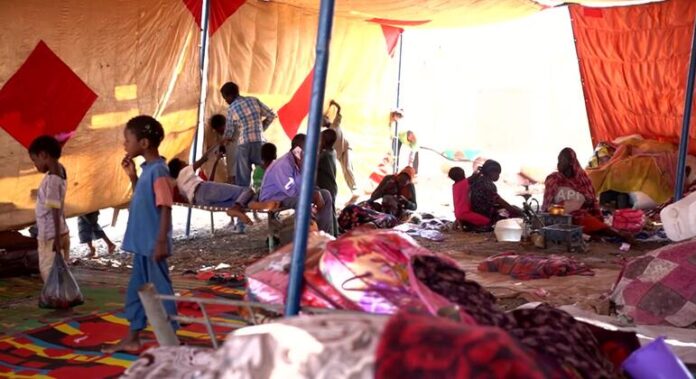
Measles cases will fall in 2025 in Europe and Central Asia, but epidemic risks remain“Even though cases have declined, the conditions that led to the resurgence of this deadly disease in recent years remain and must be addressed,” said Regina De Dominicis, United Nations Children’s Fund (UNICEF) regional director for Europe and Central Asia. Fifty-three countries in Europe and Central Asia have reported 33,998 cases […]

Originally published at Almouwatin.com

Civilians and aid operations under fire as Sudan airstrikes intensify

0
Civilians and aid operations under fire as Sudan airstrikes intensify

Two children were reportedly killed and 13 others injured in a drone strike on a mosque in Al-Rahad, North Kordofan, where all the victims were students at the adjoining school. The attack came just hours after a primary school in Dilling, South Kordofan, was hit, with further injuries reported. 

WFP warehouse hit 

The warehouse of the UN World Food Programme (WFP) in the South Kordofan capital, Kadugli, also was struck by suspected rockets, significantly damaging buildings and mobile storage units.  

Recent days have also seen drone strikes reported in other parts of South Kordofan, North Kordofan and West Kordofan states, UN Spokesperson Stéphane Dujarric told journalists in New York. 

Strikes have occurred close to key supply routes linking the city of El Obeid in North Kordofan to Dilling and Kadugli in South Kordofan, and this is endangering civilians, including humanitarian workers. 

Not a target 

The fact that we have to reiterate almost every day that civilians and civilian infrastructure, places of worship, schools and hospitals cannot and should not be targeted is a tragedy into itself,” he said. 

“Yet, we have to remind the parties of this almost every day and that they need to respect international humanitarian law.”  

Meanwhile, the UN and partners continue their efforts to provide humanitarian assistance to the Sudanese people. 

The war between the national army and former allies-turned-rivals the Rapid Support Forces (RSF) – which erupted in April 2023 – has sparked the world’s worst humanitarian crisis, with some 30 million people in need of assistance. 

Aid convoy breakthrough 

Mr. Dujarric said a multi-agency UN convoy made up of 41 trucks carrying nearly 800 metric tonnes of food and other essential supplies departed El Obeid for Kadugli on Tuesday, marking a significant breakthrough along a previously closed route. 

In South Kordofan, humanitarians have distributed nearly 600 metric tonnes of food to nearly 70,000 people, but the continued arrival of families fleeing their homes is depleting what limited stocks are available.  

More than 115,000 people have been displaced across the Kordofan region since late October, according to the International Organization for Migration (IOM). 

Diplomatic concern 

The UN and four other organizations working to promote political dialogue in Sudan voiced grave concern at the continued escalation of the conflict in a statement issued on Wednesday. 

The Quintet – which comprises the African Union (AU), East African bloc IGAD, the League of Arab States (LAS), the European Union (EU) and the UN – expressed particular alarm over the rapidly deteriorating situation in the Kordofan region and Blue Nile state. 

The statement highlighted the urgent need for action, citing: 
• Deadly drone strikes and tightening sieges around population centres 
• Attacks on hospitals, schools and humanitarian assets 
• Widespread displacement and severe constraints on humanitarian access 
• Direct attacks on humanitarian aid convoys 

Protect civilians, allow aid access 

The Quintet recalled the horrors that occurred in El Fasher, capital of North Darfur state, “and the repeated warnings issued ahead of those atrocities that went unheeded with devastating consequences for civilians”. 

The city was under siege by the RSF for more than a year during which crimes such as rapes, executions, mass killings, attacks on displacement were committed. 

The Quintet insists that civilians must no longer bear the cost of ongoing hostilities,” the statement said. 

“Civilians and civilian infrastructure must be protected, international humanitarian law must be respected, and safe, rapid and unhindered humanitarian access to all areas in need must be ensured.” 

Ramadan plea 

The partners also emphasised the need for coordinated international efforts to de-escalate the conflict and halt the flow of weapons and fighters sustaining the violence. 

Ahead of Islam’s holy month of Ramadan, they urged all concerned “to seize the opportunity presented by ongoing efforts to broker a humanitarian truce and to immediately deescalate hostilities, to prevent further loss of life and enable life-saving assistance.” 

Source link

Traveling in Europe: what you need to know in 2026

0
Traveling in Europe: what you need to know in 2026

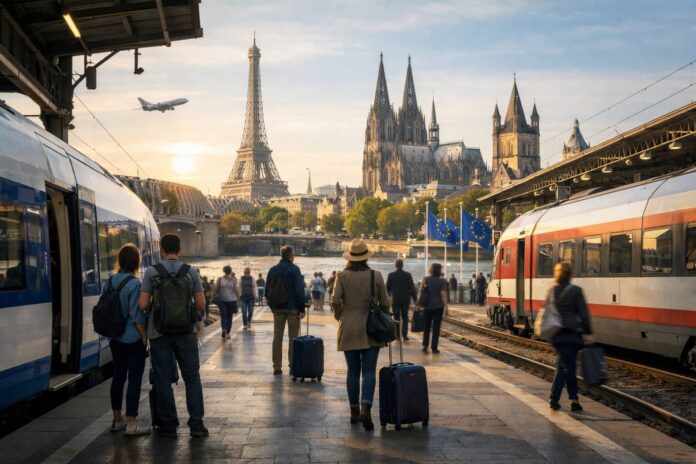
Traveling in Europe: what you need to know in 2026Europe remains one of the easiest parts of the world to explore across borders, especially by train, but ‘simple’ travel still depends on smart planning: entry rules, new EU border systems, seat reservations, passenger rights and increasing pressure on cities in peak season. A continent built […]

Originally published at Almouwatin.com

Traveling in Europe: what you need to know in 2026

0
Traveling in Europe: what you need to know in 2026

Traveling in Europe: what you need to know in 2026Europe remains one of the easiest parts of the world to explore across borders, especially by train, but ‘simple’ travel still depends on smart planning: entry rules, new EU border systems, seat reservations, passenger rights and increasing pressure on cities in peak season. A continent built […]

Originally published at Almouwatin.com

Travelling in Europe: What to Know in 2026

0
Travelling in Europe: What to Know in 2026

Europe remains one of the world’s easiest regions to explore across borders—especially by rail—but the “simple” trip still depends on smart planning: entry rules, new EU border systems, seat reservations, passenger rights, and rising pressure on peak-season cities.

A continent built for fast connections—if you plan around the pinch points

From the Atlantic to the Baltics, Europe’s appeal is its density: big cities, small towns, coastlines and mountains often sit a few hours apart. That proximity is also what makes Europe vulnerable to its own popularity. In summer, the same railway corridors, airports and historic centres can become bottlenecks—meaning your experience hinges less on “where” you go than on how and when you move.

The good news is that travellers have more tools than ever: integrated rail planning, night-train revivals, budget airlines, and increasingly clear consumer protections. The less comfortable news is that border and identity checks are becoming more digital and biometric for many non-EU travellers—changes that can affect queue times and documentation habits even for short trips.

Border reality check: Schengen is easy—until it isn’t

If you are an EU/EEA/Swiss citizen, most travel is straightforward: freedom of movement, minimal formalities, and no routine internal border checks in most cases. For many non-EU travellers, Europe is still relatively open—especially for short stays—but rules are tightening in how they are recorded and enforced.

  • 90/180 rule: Many visa-free visitors may stay up to 90 days in any 180-day period across the Schengen area, not “90 days per country.” The European Commission explains the Schengen visa policy framework here.
  • EES and ETIAS: The EU is rolling out the Entry/Exit System (EES) for biometric border recording for many non-EU short-stay travellers, and plans for ETIAS to start operations in the last quarter of 2026 (the EU says the exact start date will be confirmed later). These are not “visas” in the classic sense, but they do change what is checked, stored, and how quickly you may pass a border.

Practical takeaway: even if you have travelled to Europe many times, plan for new border routines—carry documentation, arrive earlier for flights and international trains, and expect more scanning and biometric steps at certain crossings.

Europe by train: the romance is real, but reservations can bite

Rail travel is often Europe’s most reliable long-distance option, especially between major cities. But rail is not one system: it’s a patchwork of national operators, pricing rules, and reservation requirements.

  • Interrail/Eurail: Passes can be cost-effective—especially if you’ll take several long trips—yet some high-demand routes require seat reservations on top of the pass. Interrail explains how the pass works and where reservations apply here.
  • Regional vs high-speed: High-speed trains can be fast and comfortable, but regional trains often reach the places tourists remember most—small towns, lakes, and secondary cities—sometimes with fewer reservation headaches.

If you want a no-drama approach, use a “hub-and-spoke” plan: base yourself in one city for 3–5 nights, do short day trips by regional train, then move on. For more on transport habits and basics, see our guide: Top Tips for Navigating Europe’s Public Transportation Systems.

Budgeting: Europe can be affordable—if you avoid the obvious traps

“Europe is expensive” is often shorthand for “Europe’s most famous squares are expensive in July.” Prices vary sharply by neighbourhood, by season, and by how much your trip depends on last-minute decisions.

  • Go shoulder-season: Late March–May and September–early November often deliver better prices, shorter lines, and calmer cities.
  • Split your itinerary: Pair a headline city with a second-tier city nearby. You often get similar architecture, museums, and food culture with fewer crowds and lower costs.
  • Cook sometimes: Even one grocery-and-kitchen night every few days can meaningfully reduce spending—especially for families.

Know your rights: EU passenger protections matter when things go wrong

Europe’s travel network is dense—but disruptions are normal: strikes, storms, aircraft rotations, overbooked flights, and missed connections. When this happens, consumer protections can be the difference between a ruined trip and a managed delay.

The EU’s “Your Europe” portal lays out when air passenger rights apply, including delays, cancellations, denied boarding and baggage issues: EU air passenger rights. Keep receipts, save emails and screenshots, and complain first to the airline or operator in writing. Documentation often determines whether you get compensation or assistance.

Culture and crowd pressure: travel respectfully, or travel elsewhere

In many European cities, tourism is now a political issue as much as an economic one. Residents increasingly debate housing pressure, noise, and overuse of public space. Travellers can reduce friction with small choices: stay in registered accommodation, follow local rules on waste and noise, avoid “hotspot” streets at peak hours, and spread your spending beyond the most photographed districts.

For travellers who want the social side of Europe—without turning the trip into a queue—build your itinerary around community life: markets, public parks, neighbourhood cafés, local festivals, and smaller venues. (If festivals are your anchor, our overview of major seasonal events can help you time a trip: Summer Festivals in Europe.)

A youth lens: free rail passes and the EU’s “travel as education” idea

Europe’s institutions also promote travel as civic experience. The EU’s DiscoverEU programme (part of Erasmus+) offers selected 18-year-olds the chance to explore Europe mainly by rail—an explicit attempt to turn mobility into shared European literacy, not just leisure.

The bottom line

Travelling in Europe is still defined by freedom: short distances, high-quality public spaces, and a sense that history is never far away. But the trip is increasingly shaped by systems—digital borders, reservation requirements, passenger-rights procedures, and city-level crowd management. The best itineraries in 2026 are not necessarily the most ambitious; they are the most realistic, designed around time buffers, alternative routes, and respect for the places people actually live.

Source link

South Sudan’s surge in violence puts civilians at risk and peacekeepers are stretched thin

0
South Sudan’s surge in violence puts civilians at risk and peacekeepers are stretched thin

South Sudan's surge in violence puts civilians at risk and peacekeepers are stretched thinBriefing ambassadors in the Security Council on Tuesday, UN peacekeeping chief Jean-Pierre Lacroix said instability has increased sharply in recent weeks, due to political impasse among the deal’s signatories. Revitalized 2018 peace agreement and a dangerous escalation into armed clashes. The fights […]

Originally published at Almouwatin.com