Monday, March 30, 2026
Home Blog Page 170

In Africa’s Sahel, conflict and climate change force millions from their homes

0
In Africa’s Sahel, conflict and climate change force millions from their homes

The figure represents a two-thirds increase in displacement over the past five years, with Burkina Faso, Mali and Niger at the epicentre of overlapping humanitarian emergencies.

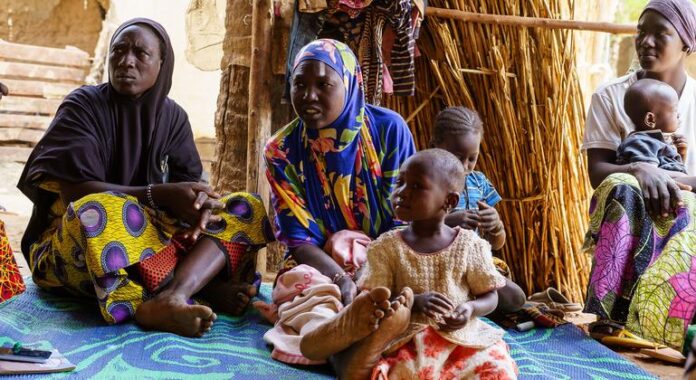
Across the central Sahel, people are being driven from their homes by violence, insecurity, and the devastating effects of climate change,said Abdouraouf Gnon-Kondé, Regional Director for West and Central Africa at the UN refugee agency (UNHCR).

“Women and children make up 80 per cent of the displaced population, and the protection risks they face – from gender-based violence to trafficking and forced recruitment – are worsening.”

UN reports from the region note that entire communities having been emptied in Burkina Faso, northern Mali and western Niger as violence between armed groups, intercommunal clashes and military activity spreads. 

Rising insecurity and shrinking access

Most displaced families remain within their countries, but cross-border movements are becoming increasingly frequent as insecurity spreads and livelihoods collapse.

These onward movements highlight the urgent need to expand assistance and enable people to remain closer to home,” Mr. Gnon-Kondé said, warning that families are under increasing pressure as basic services buckle.

Insecurity, he warned, has forced the closure of more than 14,800 schools across the region, leaving three million children without access to learning or safe spaces.

Over 900 health facilities have also shut down, cutting off millions from essential care.

© WFP/Adamou Sani Dan Salaou

Communities across the Sahel are facing acute food insecurity due to extreme weather. Pictured here, farmers in Niger attempt to reclaim degraded land.

Hunger driving displacement

Food insecurity has become a growing driver of flight, with the proportion of displaced people citing hunger as a primary reason for leaving doubling in recent years.

The situation has been described by humanitarians as a chronic hunger emergency. Estimates indicate that more than 32 million people across the wider Sahel require humanitarian assistance and protection – many of them urgent food and nutrition interventions.

Farming and cattle rearing have also been affected by families constantly on the move and harsh weather conditions.

“Climate-related shocks further amplify risks, intensifying competition over scarce natural resources such as land and water,” Mr. Gnon-Kondé said.

This is not only fuelling new displacement but also straining social cohesion.

Funding gap threatens critical services

UNHCR said humanitarian access and funding have reached breaking point. Its 2025 appeal for $409.7 million to cover needs in the Sahel is only 32 per cent funded, forcing cuts to registration, shelter, education and health programmes.

The broader $2.1 billion humanitarian appeal for Mali, Burkina Faso and Niger – which encompasses all sectors – tells a similar story, just 19 per cent funded so far.

UNHCR called for a “renewed international commitment” to the region, warning that the crisis will only worsen without sustained support.

“Protecting millions of displaced families and securing a safer future demands more than words,” Mr. Gnon-Kondé said. “It requires unified, sustained action and true solidarity with the Sahel.”

Source link

In the African Sahel, conflicts and climate change force millions of people from their homes

0

This figure represents a two-thirds increase in displacement over the past five years, with Burkina Faso, Mali and Niger the epicenter of overlapping humanitarian crises.

Across the central Sahel, people are being driven from their homes by violence, insecurity and the devastating effects of climate change.» said Abdouraouf Gnon-Kondé, regional director for West and Central Africa at the United Nations refugee agency (UNHCR).

“Women and children make up 80 percent of the displaced population, and the protection risks they face – from gender-based violence to trafficking and forced recruitment – ​​are worsening. »

U.N. reports on the region note that entire communities have been emptied in Burkina Faso, northern Mali and western Niger as violence between armed groups, intercommunal clashes and military activity spread.

Growing insecurity and restricted access

Most displaced families remain in their countries, but cross-border movements are becoming more frequent as insecurity spreads and livelihoods collapse.

These subsequent moves highlight the urgent need to expand assistance and allow people to stay closer to home,» said Mr Gnon-Kondé, warning that families are under increasing pressure as basic services collapse.

Insecurity, he warned, has forced the closure of more than 14,800 schools across the region, leaving three million children without access to learning or safe spaces.

More than 900 health facilities have also closed their doors, depriving millions of people of essential care.

© PAM/Adamou Sani Dan Salaou

Communities in the Sahel face acute food insecurity due to extreme weather conditions. Pictured here, farmers in Niger are trying to reclaim degraded land.

Hunger drives displacement

Food insecurity has become a growing driver of flight, with the proportion of displaced people citing hunger as the main reason for their departure doubling in recent years.

The situation has been described by humanitarians as a chronic food emergency. Estimates indicate that more than 32 million people across the Sahel need humanitarian assistance and protection – many of these are urgent food and nutritional interventions.

Agriculture and livestock breeding have also been affected by the constant displacement of families and harsh climatic conditions.

“Climate-related shocks further amplify risks, intensifying competition for scarce natural resources such as land and water,” said Mr. Gnon-Kondé.

This not only fuels further displacement, but also strains social cohesion.

Funding gap threatens essential services

The UNHCR said humanitarian access and funding have reached a breaking point. Its appeal for $409.7 million for 2025 to cover the needs of the Sahel is only 32 percent funded, forcing cuts to registration, accommodation, education and health programs.

The broader $2.1 billion humanitarian appeal for Mali, Burkina Faso and Niger – which encompasses all sectors – tells a similar story, with only 19 percent funded so far.

The UNHCR called for “renewed international engagement” in the region, warning that the crisis will only worsen without sustained support.

“Protecting millions of displaced families and ensuring a more secure future requires more than words,” said Mr. Gnon-Kondé. “This requires unified and sustained action and true solidarity with the Sahel. »

Originally published at Almouwatin.com

In Ukraine, civilians face death and injury following new attacks

0

Civilian casualties were 31 percent higher between January and September 2025 compared to the same period last year, according to the HRMMU. monthly report published Thursday.

“Last month’s high civilian casualties confirm the worrying pattern of intense violence in Ukraine this year, as shown Virtually no day goes by without civilians dying or being injured, especially in frontline communities.said HRMMU leader Danielle Bell.

Frontline danger

Sixty-nine percent of September’s casualties occurred near the front line, with particularly high numbers in the Donetsk and Kherson regions of eastern Ukraine. Nearly 30 percent of all casualties were caused by short-range drone attacks.

On Thursday, in the Donetsk region, a bomb hit near a postal vehicle while elderly people were receiving their pensions.

Twenty-one of those killed and 13 of the injured were over 60 years old.. Elderly people are often among the last residents to evacuate their community, HRMMU explains; at least 87 of them were killed last month.

Critical infrastructure at stake

Compared to August, September saw a 15 percent increase of attacks affecting energy infrastructure compared to August 2025. Thirty-one attacks have been documented.

The United Nations Aid Coordination Office (OCHA) reported This weekend’s attacks left some 70,000 people without power and disrupted gas and water supplies.

Humanitarians have warned that as winter approaches, strikes on critical infrastructure will exacerbate civilian needs.

HRMMU said that on Thursday evening, another massive nationwide strike targeting energy facilities caused power outages in several areas, including the capital, and reportedly killed a seven-year-old boy.

“Before, we had a feeling of security at home, but not anymore. Drones buzz like bees and fly non-stop. We cannot sleep at night or during the day. We are exhausted“, said a man evacuated from Kostiantynivka, a town in eastern Ukraine.

Since February 2022, when Russia launched its full-scale invasion of Ukraine, HRMMU has documented at least 14,383 civilians killed, including 738 children, and 37,541 injured, including 2,318 children.

Originally published at Almouwatin.com

Gaza: humanitarian teams reiterate their calls for unhindered access to the disaster-stricken enclave

0

There is little information available on the details or how the agreement will be implemented. However, we call for all crossing points into Gaza to be opened immediately so that humanitarian supplies can flow to this war-torn enclave.“said Juliette Touma, communications director of the United Nations agency for the Palestinians, UNRWA.

His comments come as Israeli forces reportedly withdrew from parts of Gaza in accordance with an agreement between Israel and Hamas, negotiated this week in Egypt by US mediators and representatives from Qatar and Turkey.

Beating back starvation

“This UNRWA food is essential to prevent and control famine,” Ms. Touma stressed, while the United Nations Children’s Fund (UNICEF) identified 50,000 young people “at risk” suffering from acute malnutrition.

“They need to be treated immediately… with the ceasefire we hope we can get the therapeutic treatment they desperately need,” spokesman Ricardo Pires said.

Top UN aid official Tom Fletcher insisted On Thursday, “the entire UN humanitarian family” is mobilized to deliver aid to Gaza.

Speaking to journalists, he highlighted UNRWA’s “indispensable role” in distributing humanitarian supplies across the Gaza Strip, while emphasizing the central role assigned to the UN in US President Donald Trump’s 20-point plan, now being adopted.

Ongoing active conflict

Humanitarian teams still working in the enclave said the ceasefire had not come into effect as of Friday morning.

Nonetheless, vital humanitarian work continues, including a UNICEF mission to Gaza City on Thursday.to save two babies who were in incubators fighting for their lives“, said Mr. Pires.

“Thankfully, thanks to the hard work of colleagues and health workers on the ground, they survived and were reunited with their families today.”

The UNICEF spokesperson explained that the mission had to wait 15 hours to access Gaza City because “the situation on the ground was still very, very unstable and there was kinetic activity – a lot of violence.”

Echoing that assessment, UNRWA’s Touma noted that her colleagues in the enclave reported ongoing airstrikes on Friday morning.

Thousands of people are on the move following the ceasefire agreement in Gaza.

The UN agency spokesperson also noted that more than 370 UNRWA personnel were killed during the conflict sparked by Hamas-led terrorist attacks in southern Israel on October 7, 2023. “This is the highest death toll in the United Nations since its creation,” she added.

Joining the call for “unhindered” access to aid through “all possible routes”, the UN health agency (WHOSpokesman Christian Lindmeier stressed the need to resume urgent medical evacuations from Gaza to the West Bank, including East Jerusalem, as well as flexible funding “to boost the recovery.”

UN agencies have 170,000 tonnes of food, medicine and other supplies ready for delivery to Gaza.

The aim is to increase food provision in Gaza to reach 2.1 million people and some 500,000 people in need of nutritional support.

Originally published at Almouwatin.com

Nobel Peace Prize winner Machado’s values represent best hopes of Venezuelans: UN rights office

0
Nobel Peace Prize winner Machado’s values represent best hopes of Venezuelans: UN rights office

“We congratulate Maria Corina Machado on being announced as the winner of the Nobel Peace Prize,” said OHCHR spokesperson Thameen Al-Kheetan.

“This recognition reflects the clear aspirations of the people of Venezuela for free and fair elections, for civil and political rights and for the rule of law. The High Commissioner has consistently spoken out in support of these values.”

The 58-year-old activist who was barred from running in last year’s presidential elections, lives in hiding inside Venezuela and was briefly detained after attending an opposition rally in January. She was rapidly released reportedly following international pressure.

Ms. Machado thanked the Nobel committee for the honour saying it was the “achievement of a whole society…I am just one person. I certainly do not deserve this.”

Opposition figures held incommunicado

Strong evidence of serious restrictions on civic freedoms in Venezuela has been documented in numerous reports mandated by the Human Rights Council.

Earlier this year, independent human rights investigators reporting to the Council in Geneva urged the authorities to stop the reported practice of holding political opponents incommunicado.

They insisted that these “targeted detentions” were illegal and amounted to enforced disappearance, a major human rights violation if proved and potentially an international crime.

The High Commissioner for Human Rights, Volker Türk, has also consistently expressed concerns about alleged abuses in the Latin American nation.

In December 2024, Mr. Türk highlighted the “disproportionate use of force and violence” during post-electoral protests earlier in the year, “including by armed individuals supporting the government” that resulted in at least 28 deaths.

In July, the Venezuelan National Assembly declared Mr. Türk and OHCHR staff persona non grata, effectively barring UN human rights work there.

Universal rights

Speaking to journalists in Geneva, Mr. Al-Kheetan stressed that OHCHR sought to engage with the Government of Venezuela and all other stakeholders. 

“We remain firmly committed to continue working to defend and protect the human rights of all Venezuelans, whether they are in Venezuela or abroad, and based of course on information and with the victims at the centre of our work,” he said.

“The bottom line here is that we need more engagement with the authorities,” he continued, noting that the National Assembly of Venezuela had regretfully voted in favour of declaring the High Commissioner persona non grata.

More to follow on this story…

Source link

Nobel Peace Prize winner Machado’s values ​​represent Venezuelans’ best hopes, says UN Human Rights Office

0

“We congratulate Maria Corina Machado on being announced as the winner of the Nobel Peace Prize,” said OHCHR spokesperson Thameen Al-Kheetan.

“This recognition reflects the clear aspirations of the Venezuelan people for free and fair elections, civil and political rights and the rule of law. The High Commissioner has always spoken out in favor of these values.”

The 58-year-old activist, who was unable to run in last year’s presidential elections, has been living in hiding in Venezuela and was briefly detained after attending an opposition rally in January. She was quickly released, apparently following international pressure.

Ms. Machado thanked the Nobel committee for the honor, saying it was “the accomplishment of an entire society…I’m just one person. I certainly don’t deserve this.”

Opposition figures held incommunicado

Strong evidence of serious restrictions on civil liberties in Venezuela has been documented in numerous reports commissioned by the Human Rights Council.

Earlier this year, independent human rights investigators reported to the Council in Geneva exhorted authorities to end the reported practice of holding political opponents incommunicado.

They insisted that these “targeted detentions» were illegal and amounted to enforced disappearance, a major human rights violation if proven and potentially an international crime.

High Commissioner for Human Rights Volker Türk has also consistently expressed concerns over allegations of abuse in the Latin American nation.

In December 2024, Mr. Türk highlighted the “disproportionate use of force and violence» during the post-election demonstrations at the beginning of the year, “in particular by armed individuals supporting the government” which left at least 28 dead.

In July, the Venezuelan National Assembly declared Mr. Türk and OHCHR staff persona non grata, banning UN human rights work in that country.

Universal rights

Speaking to journalists in Geneva, Mr. Al-Kheetan stressed that OHCHR seeks to engage with the Government of Venezuela and all other stakeholders.

“We remain firmly committed to continuing to work to defend and protect the human rights of all Venezuelans, whether in Venezuela or abroad, and of course based on information and placing victims at the center of our work,” he said.

“The main thing here is that we need more engagement with the authorities“, he continued, noting that the National Assembly of Venezuela had reluctantly voted in favor of the High Commissioner’s declaration persona non grata.

The rest follows this story…

Originally published at Almouwatin.com

Pope Leo XIV Calls for Global Defence of Religious Freedom

0
Pope Leo XIV Calls for Global Defence of Religious Freedom

Rome, 10 October 2025 – In the golden light of an autumn morning, the Hall of Popes fell silent as Pope Leo XIV rose to speak. A delegation from Aid to the Church in Need—bearing stories of suffering, of displacement, of quiet martyrdom—had come to Rome in this Jubilee of Hope, and the Holy Father received them with solemnity and urgency.

He began with a benediction and then, leaning forward, he launched into a paean to courage and conscience—not in theological abstractions, but in human flesh.

A wounded world, still longing

“Every human being carries within his or her heart a profound longing for truth, for meaning, and for communion with others and with God.”

Pope Leo XIV

These words cut to the marrow of the human condition. To deny that longing is to deny what it is to be human. The Pope reminded his listeners—many of whom daily embed themselves in perilous frontiers of faith—that religious freedom is not optional but essential, rooted in the dignity of each person, “created in God’s image and endowed with reason and free will.”

For Leo, this is not rhetoric. When that freedom is suppressed, he warned, the very fabric of society begins to unravel: “trust gives way to fear, suspicion replaces dialogue, and oppression breeds violence.”

He invoked his predecessor’s warning—Francis, speaking “Urbi et Orbi” in April 2025:

“There can be no peace without freedom of religion, freedom of thought, freedom of expression and respect for the views of others.”

Pope Francis

Leo’s echo is plain: freedom of faith is no isolated domain. It underpins freedom of conscience, speech, and social harmony.

The Church’s duty is not passive

From the pulpit, the Pope did not merely theorize: he traced the lineage of the Church’s own courage. He recalled Dignitatis Humanae—the Second Vatican Council’s affirmation that religious freedom “must be recognized in the legal and institutional life of every nation.” Thus, he said, the defense of religious freedom “cannot remain abstract; it must be lived, protected and promoted in the daily lives of individuals and communities.” (Vaticano)

It was this conviction, he said, that gave birth to Aid to the Church in Need. Since 1947—born in the ruins and trauma of the postwar world—it has stood, according to Leo, as a living witness: not only offering material aid, but a voice, a presence, a proclamation of fraternity. (Church in Need)

He praised their Religious Freedom in the World Report, more than a dry document: “it bears witness, gives voice to the voiceless, and reveals the hidden suffering of many.” (Vaticano) And when ACN rebuilds a chapel, supports a religious sister, or provides a radio station—these are not peripheral acts: they are stitches in the fragile moral fabric of societies.

From the margins, peacemakers arise

Leo did not pretend the path is easy. He spoke of Christians in contexts of persecution and fragility—Burkina Faso, the Central African Republic, Mozambique—places where aid is not charity but lifeline. He affirmed that in such places the local Church becomes a living sign of social harmony and fraternity, showing that “a different world is possible.” (Vaticano)

This is not a message of triumphalism, but of perseverance. “Do not grow weary of doing good” (Galatians 6:9), he urged. The Pope knows that the small flame of faith often flickers under wind. Yet it endures—and sometimes becomes a blaze that illumines others.

In his closing, he invoked the consolation of the Holy Spirit and the protective presence of Mary, “Mother of Hope.” And with deep affection, he imparted his Apostolic Blessing—a pledge, he said, “of grace and peace in Jesus Christ our Lord.” (Vaticano)

The echoes and the cost

In a pontificate still in its early months, Leo XIV has already shown a distinctive tenor: direct, grave, unapologetically prophetic. In his speeches to journalists earlier this year, he insisted that “only informed individuals… can make free decisions.” (ZENIT – English) He has demanded the release of imprisoned journalists and called journalism a sacred vocation. (USCCB)

This morning’s address, though delivered not to writers but to those serving impoverished and persecuted communities, moves in the same current: truth, freedom, solidarity. Leo’s words seem to reach beyond ecclesial halls into the corridors of governments, courts, and public conscience.

It is a summons: to recognize that religious freedom is not a niche debate, but an axis of human dignity. To trust that mercy and justice are not antithetical. To walk with those for whom faith is a burden borne under threat, not a comfortable calling.

Yet, the cost is real. Aid workers return to lands of uncertainty. Bishops must weigh advocacy against reprisal. Governments must decide whether they will protect difference or suppress it. The Pope knows this cost. But he holds before us a clarion: where one member suffers, all suffer together (1 Corinthians 12:26).

He offers not illusion, but hope. Hope rooted in memory and solidarity. In communion and courage. In the promise that faith, even battered and beleaguered, still speaks to the core of human aspiration.

In the silence that followed, the delegation from Aid to the Church in Need did not merely depart with blessings—they carried a mandate: to stay close to suffering, to tell hidden stories, to insist that no one’s conscience be shrouded in fear. In a world ever more fragmented, Pope Leo’s words remain a summons: to peace, but a peace that begins in freedom.

Source link

New rules on paid political advertising come into effect

0
New rules on paid political advertising come into effect

New rules on political advertisements in the EU come into effect on 10 October. They make it easier for you to recognise political advertisements, understand who is paying for them and whether you were targeted to receive the ad. This will help you make more informed choices.

Source link

Europe’s health system comes under strain as doctors and nurses face mental health crisis

0

The landmark investigationfinanced under WHO/The Europe project with the European Commission – which coincides with World Mental Health Day – analyzed almost 100,000 responses from 29 countries, from October 2024 to April this year.

The main finding is that doctors and nurses work in conditions that harm their mental health and well-being, which also impacts patients.

“Ultimately, the mental health crisis among our health workers is a health security crisis, threatening the integrity of our health systemssaid Hans Henri P. Kluge, WHO Director for Europe.

Working conditions fueling anxiety and depression

The numbers reveal systemic problems. One in four doctors work more than 50 hours a week and a third are on temporary employment contracts – a situation strongly linked to growing concerns about job security.

Meanwhile, doctors and nurses show twice the prevalence of suicidal thoughts compared to the general population.

One in ten people said they had thought about “being better off dead” or “harming themselves” in the past two weeks, according to the WHO analysis.

Such dangerous work is directly linked to poor mental health.

For one in three doctors and nurses who experience violence, and for others who regularly work long hours, depression, anxiety and suicidal thoughts are common.

We have chosen the path of humanity, but that does not mean we stop being human ourselves“, said Mélanie Debarreix, a radiology resident in France.

Despite these worrying numbers, three-quarters of all doctors and two in three nurses expressed a strong sense of purpose and meaning resulting from their work.

“Unbearable pressure”

The survey shows that 11 to 34 percent of health workers are considering quitting. This exposes patients to longer waiting times and reduced quality of care, WHO said.

A WHO/Europe past report found that already in 2022, the recruitment of health and care workers was not keeping pace with growing demand, putting unbearable pressure on the entire system.

According to Dr Kluge, Europe is expected to have a shortage of 940,000 health workers by 2030.

“Their well-being is not just a moral obligation: it is the foundation of safe, high-quality care for every patient,” he said.

The report outlines concrete steps that can be taken to address the crisis, including zero tolerance for workplace violence, reforming working hours and ensuring access to high-quality mental health support.

Originally published at Almouwatin.com

Commission publishes Terms and Conditions for the first pilot auction for industrial heat decarbonisation with a budget of €1 billion

0
Commission publishes Terms and Conditions for the first pilot auction for industrial heat decarbonisation with a budget of €1 billion

On 10 October 2025, the Commission published the final Terms and Conditions (T&Cs) for its first European-wide auction for decarbonising industrial process heat (IF25 Heat Auction). Process heat refers to the energy used to generate high temperatures for manufacturing activities in sectors such as chemicals, steel, or cement. Implemented via the Innovation Fund and announced in the Clean Industrial Deal, this auction aims to support the market uptake of electrified and direct renewable heat technologies in industrial process heating, advancing the decarbonisation of the European industry.  

Funded by revenues from the EU Emissions Trading System, the auction has a budget of €1 billion to support innovative projects that electrify industrial process heat using technologies such as heat pumps, boilers, plasma torches, resistance heating and induction heating. It can also back projects harnessing direct renewable heat – for example solar thermal or geothermal – as well as hybrid projects that combine different electrification and direct renewable heat technologies. 

Building on the success of the Innovation Fund auctions for renewable hydrogen production, under the European Hydrogen Bank, the final T&Cs were prepared following collaborative public consultations with industry and stakeholders. The auction’s budget may also be topped up by national contributions via Auction-as-a-Service, an approach that has already proven successful in previous hydrogen auctions.  

The new pilot auction is expected to open to bidders in early December 2025. The publication of the final T&Cs provides the opportunity for interested applicants to review the requirements and prepare their bids ahead of the opening of the bidding window. Any questions on the final T&C can be sent to CLIMA-AUCTIONSec [dot] europa [dot] eu (CLIMA-AUCTIONS[at]ec[dot]europa[dot]eu)   

Principal features outlined in the Terms and Conditions include:  

  • Fixed premium subsidy: Successful bidders will receive a fixed premium subsidy that is linked and proportional to each tonne of direct CO2 emissions abated for a maximum period of five years.
  • Wide scope: The IF25 Heat Auction is open to projects of all sizes from every industrial sector across the European Economic Area.  
  • Focus: It serves projects that use continuous industrial processes but also incentivises extra flexibility solutions to avoid electricity consumption in peak hours. 

Why industrial process heat?  

This auction targets  one of the biggest sources of EU industrial CO2 emissions: process heating. This refers to the heat used to transform raw materials into products; from melting plastics and metals to driving chemical reactions. Today, these processes are largely powered by fossil fuels. All industrial sectors have such processes and can bid in the pilot auction. 

The IF25 Heat Auction aims to close the cost gap between direct renewable heat or electrification solutions and fossil fuel-based alternatives. By de-risking these innovative projects, it not only enhances the competitiveness of clean industries in Europe, but also reduces greenhouse gas emissions, boosts energy independence and security, improves energy price affordability, and brings our continent closer to achieving its climate neutrality goals by 2050. With this auction, the Commission continues to deliver on the Clean Industrial Deal and takes a key step toward establishing the Industrial Decarbonisation Bank

Kurt Vandenberghe, Director-General, Directorate-General for Climate Action, said:

This auction is a crucial stepping stone toward the establishment of the Industrial Decarbonisation Bank. It opens the door to scaling investments in industrial electrification technologies driving industrial decarbonisation. I call on industry leaders to join us in tapping into the vast potential for cost-effective emission reductions through electrification and prepare their bids for the auction that will open early December.”

Background

The Innovation Fund is one of the world’s largest funding programmes for commercialising and deploying innovative low-carbon and net-zero technologies. Financed by revenues from the EU Emissions Trading System, it helps businesses invest in clean energy and bring market-ready solutions to scale – driving industrial decarbonisation and strengthening European competitiveness. The Fund has already allocated around €12 billion to around 200 innovative projects across the European Economic Area. 

The IF25 Heat Auction follows the announcement made in the Clean Industrial Deal of a pilot Innovation Fund auction under the Industrial Decarbonisation Bank. The bank is a new initiative which aims to provide €100 billion in funding for industrial decarbonisation.  

Source link