The Council has agreed its position on a proposed regulation that broadens the scope of the European Globalisation Adjustment Fund to include support for workers at imminent risk of displacement.
Cyclone Ditwah brings worst flooding in decades to Sri Lanka, killing hundreds
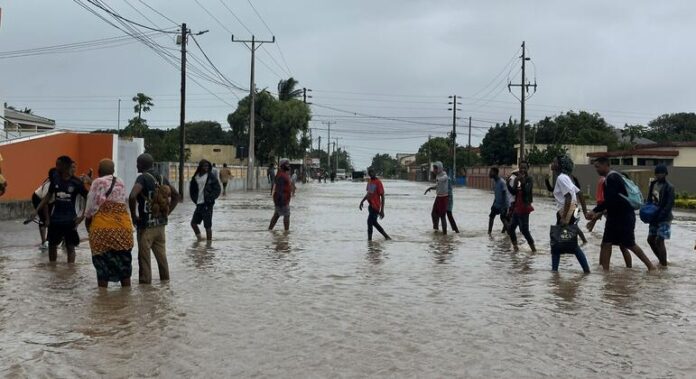
According to the UN relief coordination office, OCHA, 998,918 people across all 25 districts have now been affected, with 212 deaths reported and 218 people missing. More than 180,000 people from over 51,000 families are sheltering in 1,094 government-run safety centres as search and rescue efforts continue.
Cyclone Ditwah made landfall on 28 November before moving back over the Bay of Bengal, triggering some of the most severe flooding Sri Lanka has seen since the early 2000s.
The hardest-hit districts include Gampaha, Colombo, Puttalam and Mannar, as well as Trincomalee and Batticaloa, while deadly landslides in the central hill country have devastated Kandy, Badulla and Matale.
Homes destroyed, infrastructure shattered
Initial assessments indicate that more than 15,000 homes have been destroyed. Over 200 roads remain impassable, at least 10 bridges have been damaged, and sections of the rail network and national power grid affected.
Flooding along the Kelani River, which runs through Colombo and surrounding low-lying areas, continues to hamper access and disrupt information flow from affected communities, complicating rescue and relief operations.
Severe disruption to electricity, mobile and communications, and transport networks are reported in northern districts such as Jaffna, with entire villages isolated.
Access to clean water also remains a major concern, with several areas reporting little or no supply.
Health system under strain, food insecurity looms
Sri Lanka’s already fragile health system is under severe pressure, OCHA said. Several district hospitals remain flooded and are receiving only limited supplies, with critically ill patients being airlifted to functioning facilities.
Response is further hindered by recurring landslides and the breach of multiple tank bunds (embankments or barriers), including at Mavilaaru, heightening risks in Trincomalee and Batticaloa.
Authorities have also warned of rising food insecurity, as submerged farmland, damaged storage facilities and severed supply routes threaten shortages and price increases in the weeks ahead.
The World Health Organization (WHO) warned that floods significantly raise the risk of vector-borne, food-borne and water-borne diseases, urging communities to prevent mosquito bites, ensure food safety and use safe drinking water wherever possible.
Floodwaters have entered several hospitals across Sri Lanka, further straining the health system.
UN mobilises coordinated response
The United Nations in Sri Lanka activated its emergency coordination system on Sunday to scale up a unified response with government agencies and humanitarian organizations.
Sector coordination has been set up across food security, health, water and sanitation (WASH), education, protection, shelter and early recovery, while a multi-sector needs assessment is under way with disaster management authorities to identify the most urgent gaps.
“The UN in Sri Lanka is mobilising its teams across the system to support national rescue and early recovery efforts, in coordination with authorities. We stand in solidarity with all affected communities,” said UN Resident Coordinator Marc-André Franche.
Despite access challenges, the UN Children’s Fund (UNICEF) has delivered portable water to 25 safety centres in Badulla in the central hills, which had been cut off from the rest of the country by floods and infrastructure damage.
To support government-led efforts, India and Pakistan have deployed emergency teams to work alongside Sri Lanka’s armed forces in the worst-hit districts.
Meanwhile, in the wider Asian region
Severe monsoon flooding continues across Thailand and Malaysia, affecting more than two million people in southern Thailand alone and displacing nearly 25,000 people in Malaysia, according to OCHA. People have been evacuated in several hard-hit Thai provinces, while the rainfall is expected to ease in coming days.
In Indonesia, media reports cite at least 440 deaths from floods and landslides, with more than 400 people missing, particularly in parts of Sumatra, where thousands remain stranded without access to food and water.
Air quality improving, but just over 180,000 deaths still attributable to air pollution in EU
Just over 180,000 deaths in the European Union were attributable to exposure to fine particulate matter (PM 2.5 ) concentrations above World Health Organization WHO guideline levels in 2023, according to the latest European Environment Agency (EEA) air quality health impact assessment published today.
‘Every step a struggle:’ Nigerian woman with disabilities leads push for dignity and inclusion
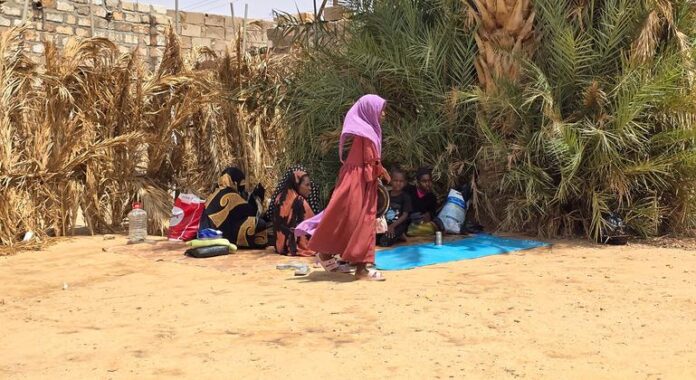
“Sometimes, it feels like the world isn’t made for people like me,” said Shiminenge, her voice steady despite the weight of the words. In Gbajimba, north-central Nigeria, the 32-year-old navigates daily life in a camp for displaced people that offers little space, safety, or accessibility for people living with disabilities.
Around her, tents stretch across dry, uneven ground. Paths turn muddy and difficult when it rains. Toilets and water points sit farther than she can reach without help. Yet every morning, she pushes through the same obstacles, determined not to disappear in a place that was never designed for her.
Shiminenge is one of more than 480,000 people displaced by intercommunal conflict in Benue State.
She fled her village in Guma in 2018 and has since lived in a camp for internally displaced persons in Gbajimba. Like many others, she left with little more than the hope of finding safety.
But her journey began long before displacement.
Shiminenge (right) has received support from the IOM and other humanitarian agencies.
At just nine months old, her parents were told she would never be able to walk after a diagnosis that shaped the course of her life. Growing up with a mobility impairment meant constant adjustments and an early understanding of what it means to move through the world without accessible support.
Today, life in the camp has added another layer of daily challenge: poor shelter conditions, no accessible sanitation, and a landscape that is nearly impossible to navigate.
Speaking ahead of the International Day of Persons with Disabilities marked annually on 3 December, she said: “In the camp, every step outside my tent was a struggle.” It’s not just the physical obstacles; it’s the feeling of being invisible, of being forgotten in a place where survival is already so hard.”
Barriers to services and dignity
The sense of invisibility that Shiminenge describes is shared by many people with disabilities in displacement settings. They are often among the most marginalized within internally displaced populations, facing unique barriers to shelter, healthcare, sanitation, and essential services.
In these environments, inaccessible infrastructure and limited targeted support can heighten risks of neglect, exclusion, and abuse. As these barriers add up, they make displacement even more difficult and put the rights and dignity of people with disabilities at greater risk.
Despite these limitations, Shiminenge refused to give up. Resourceful and determined, she began selling mosquito repellent in the camp, earning a small income while also helping protect other camp residents from malaria.
Her resilience soon grew into advocacy. She helped form a disability association in Gbajimba, bringing together 18 other people living with disabilities to push for mobility aids, fair access to resources, and more inclusive facilities.
Camp upgrade
In August 2024, a team with the International Organization for Migration (IOM) visited the camp to assess the living conditions of displaced persons. After years of feeling unseen in a crowded place, the visit felt different. “For the first time here, I felt someone was listening,” she said.
Responding to the association’s requests, IOM with the support of the Benue State Emergency Management Agency, led a total camp redesign to ensure that the specific needs of people living with disabilities were addressed with dignity and respect.
As part of this redesign, nearly 4,000 upgraded emergency shelters were constructed in Gbajimba, each built to withstand the region’s seasonal rains and offer safer living conditions for displaced families.
The redesign also introduced a dedicated section for people living with disabilities, offering disability-friendly toilets, accessible water points, and kitchens designed for ease of use.
Throughout the area, gently sloped ramps and communal social spaces were added, allowing residents to move independently and participate more fully in daily camp life.
“These changes mean more than convenience; they give us a sense of dignity and belonging,” she said.
Air quality improving, but just over 180,000 deaths still attributable to air pollution in EU
Just over 180,000 deaths in the European Union were attributable to exposure to fine particulate matter (PM 2.5 ) concentrations above World Health Organization WHO guideline levels in 2023, according to the latest European Environment Agency (EEA) air quality health impact assessment published today. Source link
Air quality improving, but just over 180,000 deaths still attributable to air pollution in EU | Press releases
Just over 180,000 deaths in the European Union were attributable to exposure to fine particulate matter (PM2.5) concentrations above World Health Organization WHO guideline levels in 2023, according to the latest European Environment Agency (EEA) air quality health impact assessment published today.
The EEA briefing ‘Harm to human health from air pollution in Europe: burden of disease status, 2025’ confirms the nineteen-year trend that the estimated impact on health attributable to long-term exposure to three key air pollutants (fine particulate matter, nitrogen dioxide and ozone) continues to drop. However, almost everyone living in European cities (95%) is exposed to air pollution levels considerably above recommended WHO levels.
Premature deaths attributable to fine particulate matter fell by 57% in the EU between 2005 and 2023. This indicates that the EU’s zero-pollution action plan’s target of a 55% reduction in impact, was achieved for 2023.
This year’s assessment is being published to coincide with the EU Clean Air Forum being held on 1-2 December in Bonn, Germany. The event draws policymakers, scientists, and civil society from across Europe to discuss efforts to improve air quality.
Premature deaths can be avoided
Reducing air pollution to WHO guideline levels could have prevented 182,000 deaths attributable to fine particulate matter exposure, 63,000 to ozone (O3) exposure and 34,000 to nitrogen dioxide (NO2) exposure in the EU in 2023, according to EEA estimates.
Eastern and south-eastern European countries suffer the most significant health impacts from air pollution due to high pollution levels.
Key information for each country is included in a separate factsheet annex to this press release, including information on national level health impacts.
Quality of life suffers significantly
In addition to premature deaths, the impacts from living with diseases related to air pollution are significant. For some diseases caused and/or aggravated by air pollution, such as asthma, the main impact is poorer health. For others, such as ischemic heart disease and lung cancer, it is premature death. New evidence suggests that air pollution may also cause dementia. Dementia’s disease burden is estimated to be higher than that of other relevant diseases, the EEA briefing says.
New EU air quality rules in place
The revised ambient air quality directive, which entered into force last year, brings the EU air quality standards closer to the WHO recommendations, supporting further reductions in the health impacts of air pollution over the coming years. Still, air pollution continues to be the top environmental health risk to Europeans (followed by other factors such as exposure to noise, chemicals and the increasing effects of climate-related heatwaves on health), causing chronic illness and attributable deaths, especially in cities and urban areas.
Background
The EEA analysis covers 41 European countries, including the 27 EU Member States, other EEA member and cooperating countries and additional European microstates. Türkiye is not included in the PM2.5 estimations as the number of background monitoring stations from which data are available was too low to produce concentration maps for fine particulate matter. Consequently, PM2.5 estimations were made for 40 countries.
The EEA has been estimating number of deaths attributable to exposure to air pollution since 2014. The EEA uses the recommendations for health impacts set out in the 2021 WHO air quality guidelines. As with previous years, the health impacts of different air pollutants should not be added together to avoid double counting due to some overlaps in data. This is the case for both mortality and illness.
Our latest press releases
‘Every step is a fight’: Disabled Nigerian leads campaign for dignity and inclusion
“Sometimes I feel like the world isn’t made for people like me,” Shiminenge says, his voice firm despite the weight of the words. In Gbajimba, in north-central Nigeria, the 32-year-old lives daily in a camp for internally displaced people that offers little space, security or accessibility for people with disabilities.
Around her, tents stretch out on dry, uneven ground. The paths become muddy and difficult when it rains. Toilets and water points are further away than she can reach without help. Yet, every morning, she overcomes the same obstacles, determined not to disappear into a place that was never designed for her.
Shiminenge is one of the most 480,000 people displaced by intercommunal conflict in Benue State.
She fled her village of Guma in 2018 and has since lived in a displaced persons camp in Gbajimba. Like many others, she left with little more than the hope of finding safety.
But his journey began long before the trip.
Shiminenge (right) received support from IOM and other humanitarian agencies.
At just nine months old, her parents were told she would never be able to walk after a diagnosis that shaped the course of her life. Growing up with limited mobility meant constant adjustments and an early understanding of what it means to move through the world without accessible support.
Today, life in the camp adds another layer of daily challenges: poor housing conditions, no accessible sanitation, and a landscape that is almost impossible to navigate.
Speaking before the International Day of Persons with Disabilities celebrated every year on December 3, she said: “In the camp, every step out of my tent was a struggle. » It’s not just about physical obstacles; it’s the feeling of being invisible, of being forgotten in a place where surviving is already so difficult.
Barriers to services and dignity
The feeling of invisibility described by Shiminenge is shared by many people with disabilities in displacement contexts. They are often among the most marginalized among internally displaced populations, facing unique barriers to shelter, health care, sanitation and essential services.
In these environments, inaccessible infrastructure and limited targeted support can increase the risks of neglect, exclusion and abuse. As these barriers accumulate, they make movement even more difficult and further endanger the rights and dignity of people with disabilities.
Despite these limitations, Shiminenge refused to give up. Resourceful and determined, she began selling mosquito repellent in the camp, earning a small income while helping to protect other camp residents from malaria.
Her resilience quickly turned into advocacy. She helped create a disability association in Gbajimba, bringing together 18 other disabled people to lobby for mobility aids, equitable access to resources and more inclusive facilities.
Camp upgrade
In August 2024, a team from the International Organization for Migration (IOM) visited the camp to assess the living conditions of the displaced people. After years of feeling invisible in a crowded place, the visit was different. “For the first time here, I felt like someone was listening,” she said.
In response to the association’s requests, IOM, with the support of the Benue State Emergency Management Agency, carried out a total overhaul of the camp to ensure that the specific needs of persons with disabilities are met with dignity and respect.
As part of the overhaul, nearly 4,000 improved emergency shelters were constructed in Gbajimba, each built to withstand the region’s seasonal rains and provide safer living conditions for displaced families.
The revamp also introduced a dedicated disabled section, offering disabled-friendly toilets, accessible water points and kitchens designed to be easy to use.
Throughout the area, gently sloping ramps and common social spaces have been added, allowing residents to move around independently and participate more fully in daily camp life.
“These changes mean more than just practicality; they give us a sense of dignity and belonging,” she said.
Originally published at Almouwatin.com
The Wealth of Perspective: A Comparison of Wages, Taxes, and Purchasing Power in Belgium and Spain
When Europeans consider relocating for work, Belgium and Spain often appear as opposite poles of the same Union: a high-wage, high-tax, high-price economy in the north, and a lower-wage but lower-cost lifestyle in the south. But how large are these differences once taxes and prices are taken into account? And which country actually offers greater real purchasing power for workers and their families?
Drawing on official figures from Belgium’s statistical office Statbel, Spain’s Instituto Nacional de Estadística (INE), Eurostat and the OECD, this article compares average and minimum salaries, taxation, price levels and overall purchasing power in both countries.
Average salaries: Belgium clearly ahead on paper
On headline figures, Belgium is a clear high-wage economy. According to Statbel’s earnings survey, full-time employees received an average gross monthly salary of €4,076 in 2022, with a median salary of €3,728. These data are summarised in Statbel’s news release “The average gross monthly salary is 4,076 euros”, based on information from more than 184,000 employees.
Annualised, this corresponds to roughly €48,900 a year in gross wages for a typical full-time worker, excluding bonuses such as a 13th month or double holiday pay. The Belgian figures underline a high overall level of pay, but also significant dispersion: half of employees earn less than the median.
In Spain, the latest official data come from the INE’s Encuesta Anual de Estructura Salarial for 2023. According to this survey, the average annual gross salary was €28,049.94 per worker, 4.1% more than in 2022. The same note highlights strong sectoral differences, with energy workers at the top of the scale and hospitality workers at the bottom. A more detailed breakdown is available in the INE’s statistical series on wages and labour costs in INEbase.
In practice, this Spanish average corresponds to around €2,337 per month if salaries are expressed in 12 equal payments, although many employment contracts in Spain still use 14 payments (12 monthly salaries plus two extra “pagas”).
Purely in nominal terms, then, the average full-time worker in Belgium earns roughly 70–75% more gross pay than the average worker in Spain. Eurostat’s pan-European data on average gross annual earnings of full-time employees confirm that Belgium is above the EU average while Spain sits slightly below it.
Minimum wages: different legal floors
Average pay only tells part of the story; minimum wages reveal how each state protects its lowest-paid workers.
Spain sets a unified national minimum wage, the Salario Mínimo Interprofesional (SMI). For 2025, the Spanish government fixed the SMI at €1,184 per month in 14 payments, or €16,576 per year. This is explained in detail in the Ministry of Labour’s note on the SMI published by the government’s communication service La Moncloa and in the information sheet of the public employment service SEPE.
Belgium, by contrast, does not rely on a single national minimum wage. Instead, it applies a Guaranteed Average Minimum Monthly Income (GAMMI), supplemented by sector-specific minima negotiated collectively. Eurostat’s overview of minimum wage statistics and its 2025 news release “Now available: first 2025 data for minimum wages” place Belgium among the EU member states with minimum wages above €2,000 per month for a full-time worker, while Spain lies in the group between €1,000 and €1,500.
At the very bottom of the wage ladder, then, Belgian workers benefit from a higher legal or collectively guaranteed pay floor than their Spanish counterparts. However, this nominal advantage must still pass through the filter of taxation and prices.
Taxation and social security: Belgium’s heavy “tax wedge”
Belgium is well known for its heavy tax burden on labour income. The OECD’s comparative study Taxing Wages 2025 shows that, in 2024, Belgium recorded the highest tax wedge in the OECD for a single worker without children earning the average wage, at 52.6% of total labour costs. The figures are also summarised in the OECD press release “Labour taxes edge up in the OECD as real wages recover in 2024”.
The tax wedge measures all compulsory deductions on labour (personal income tax plus employee and employer social contributions, minus family benefits) as a share of total labour cost. Put simply, it shows how much of what an employer spends on a worker is absorbed by the tax and social security system.
Spain’s tax wedge for the same type of worker is much lower. The OECD’s country data indicate a figure of around 40.6%, placing Spain close to the OECD average and far below Belgium. Although Spain combines a progressive personal income tax with substantial social security contributions, its overall burden on labour income remains significantly lighter than that of Belgium.
For individual workers this means that a Belgian employee loses a much larger portion of each euro of gross salary to taxes and social contributions than a comparable Spanish employee. As a result, the impressive difference in gross wages is trimmed back considerably when looking at net pay.
Cost of living: Spain’s price advantage
Net salary still does not tell the whole story, because price levels for goods and services differ widely between member states. To compare what a salary actually buys, economists adjust incomes using purchasing power parities and price level indices.
Eurostat’s news article on household consumption price levels in 2024 summarises the latest results for household expenditure across the EU. The underlying data are presented in the Statistics Explained article on comparative price levels and in the database table with the code prc_ppp_ind.
These Eurostat materials show that Belgium is among the relatively expensive EU member states, with overall price levels for household consumption above the EU-27 average. Spain, by contrast, is in the group of countries where prices are below the EU average.
Independent cost-of-living comparisons support this pattern. The crowd-sourced database Numbeo estimates that the general cost of living in Belgium is more than 30% higher than in Spain (excluding rent), and still substantially higher even when rent is included. While such tools are not official statistics, they provide a useful sense of everyday price gaps faced by consumers.
Purchasing power: how far does a salary go?
Putting these elements together – nominal wages, tax wedges and price levels – allows a more realistic comparison of living standards.
-
- On paper, Belgium pays much more: the average full-time gross salary is roughly 70–75% higher than in Spain.
-
- After taxes and social contributions, the gap narrows: Belgium’s very high tax wedge means that its workers keep a smaller share of their gross income than Spanish workers.
-
- After adjusting for prices, Spain closes the gap further: lower consumer prices and cheaper housing give Spanish salaries more purchasing power than the raw numbers suggest.
For a worker on an average salary, a Belgian job will usually still yield higher real income, but the advantage is far smaller than a simple comparison of €4,076 versus €2,337 per month might imply. High taxes and high prices eat into Belgium’s lead.
Around the minimum wage, the situation is more nuanced. Spain’s SMI has risen very rapidly over the last decade, but Eurostat’s overview of minimum wage statistics shows that Spain is still in the mid-range of the EU in nominal terms, with a relatively large proportion of workers paid at or near the minimum. Belgium’s higher minimum wage and dense system of sectoral collective agreements may reduce in-work poverty, but they also contribute to higher labour costs and strong incentives for automation or offshoring in low-productivity sectors.
Internal disparities within each country
National averages also hide large internal disparities.
Statbel’s data on Belgian wages and salaries show that workers in Brussels and certain Flemish provinces enjoy significantly higher salaries than those in many Walloon districts. Sectoral differences are particularly pronounced: petrochemicals, finance and head-office activities sit at the top of the wage scale, while hospitality, care services and retail tend to lag behind.
In Spain, the INE press release on the 2023 wage structure surveys highlights similarly strong regional and sectoral contrasts. Autonomous communities such as Madrid, the Basque Country and Navarre register substantially higher wages than the national average, while others remain well below. High-paid sectors include energy and financial services, whereas hospitality and personal services remain at the bottom despite increases in the SMI.
For highly qualified professionals, these differences matter as much as national averages. An IT specialist or engineer in Brussels, Antwerp, Madrid or Bilbao may experience very different salary levels and living costs from the average worker in their country.
Beyond salaries: quality of life and broader context
Even after adjusting for taxes and prices, many workers base their choices on broader quality-of-life factors: climate, language, work-life balance, housing conditions and the perceived quality of public services.
Spain’s milder climate, outdoor lifestyle and relatively affordable housing – especially outside Madrid and Barcelona – attract workers from across Europe, including remote professionals paid according to international rather than local salary scales. Belgium, by contrast, offers proximity to EU institutions, dense transport connections at the heart of the Single Market, and robust social protections, but at the price of high taxes and expensive urban life.
These trade-offs fit into a wider European debate about wages, productivity and resilience. Recent analysis of labour-market dynamics, such as the European Central Bank speech “Beyond hysteresis: resilience in Europe’s labour market”, examines how real wages, employment and participation have evolved in response to energy shocks and inflation. Reporting in The European Times has also underlined how these macro trends translate into everyday realities for workers across the continent.
Conclusion: high wages versus high prices
The comparison between Belgium and Spain shows why it is misleading to focus on gross salary figures alone. Belgium is clearly a high-wage economy, with average and minimum salaries well above Spain’s. Yet this advantage is moderated by one of the heaviest tax wedges in the OECD and by consumer prices that are significantly higher than the EU average.
Spain, meanwhile, remains a medium-wage economy within the EU, but one where average and minimum wages have risen substantially in recent years. Combined with lower taxes on labour and a noticeably cheaper cost of living, this gives Spanish workers more purchasing power than the headline salary gap might suggest, especially in regions where housing remains affordable.
For policymakers, the lesson is clear: Belgium faces the challenge of lowering the tax burden on work while preserving a strong welfare state, whereas Spain needs to continue improving productivity and wage levels without sacrificing its cost-of-living advantage. For workers and companies, the message is equally straightforward: gross salary is only the starting point. Net pay, local prices, sectoral opportunities and quality-of-life factors all play a decisive role in determining where a euro goes furthest.