Monday, March 30, 2026
Home Blog Page 171

World Mental Health Day – EU-funded projects strengthening mental health support for displaced Ukrainians and vulnerable groups across Europe

0
World Mental Health Day – EU-funded projects strengthening mental health support for displaced Ukrainians and vulnerable groups across Europe

10 October marks World Mental Health Day. With this year’s theme being focused on mental health in humanitarian emergencies, we look at the European Commission’s swift action to address the mental health needs of Ukrainian people displaced by Russia’s aggression against Ukraine.  

In 2022, four projects were selected for funding under the EU4Health programme to deliver targeted psychological support and community-based interventions across ten EU Member States: MESUR, U-RISE, Well-U, and Peace of Mind

With a total EU contribution of €3 million, these projects have provided mental health and psychosocial support to more than 5,000 displaced Ukrainians, including 2,000 children and 3,000 professionals. Activities have included direct psychological interventions, training for health and social care workers, and digital support tools aimed at building long-term resilience and capacity building. The online network ‘community of practice’ for 7,000 professionals in Ukrainian language based in the EU and in Ukraine is still developing.  

These projects have worked closely with the International Federation of Red Cross and Red Crescent Societies (IFRC), ensuring complementarity, sharing best practices and organising joint activities such as trainings and webinars.  

Building on their findings, the projects have presented a series of recommendations aimed at enhancing the integration and effectiveness of Mental Health and Psychosocial Support (MHPSS) systems across Europe. These include: 

  1. Integrating MHPSS into national healthcare and education frameworks to reinforce crisis preparedness and ensure systemic support.
  2. Strengthening collaboration between governments and stakeholders by establishing supervision and peer-support structures for MHPSS providers, alongside evaluation tools to monitor training effectiveness and workload impact.
  3. Standardising training for healthcare professionals, social workers, and educators in trauma-informed care, psychological first aid and crisis intervention, using evidence-based models such as WHO’s Problem Management Plus (PM+) and Self-Help Plus (SH+).
  4. Expanding training-of-trainers (ToT) and initiatives for lay professional across multiple sectors.
  5. Enhancing synergies between EU-funded projects to amplify impact, ensure sustainability, and share best practices across EU countries. 

To further enhance these achievements, a new Joint Action has recently been launched. With a total budget of €6 million, JA PRISM will work to alleviate the burden of mental health illnesses with specific vulnerable groups, including migrants and refugees. The JA brings together 18 EU countries and two associated countries (Moldova and Bosnia Herzegovina), aiming to share, adapt and pilot three best practices supporting mental health promotion, suicide prevention and enhancing well-being, thus fighting loneliness and stigmatisation. 

Relevant links 

European Mental Health Week 2025: Discover EU-funded projects safeguarding mental health for all 

World Mental Health Day 2024: EU4Health projects WELL-U and ImpleMENTAL 

Mental health support during crises: Lessons from the Red Cross response to the conflict in Ukraine 

Background 

EU4Health is the fourth and largest of the EU health programmes. The EU4Health programme goes beyond an ambitious response to the COVID-19 crisis to address the resilience of European healthcare systems. The programme provides funding to national authorities, health organisations and other bodies through grants and public procurement, contributing to a healthier Europe. HaDEA manages the vast majority of the total EU4Health budget and implements the programme by managing calls for proposals and calls for tenders from 2021 to 2027.   

Source link

Commission takes further action to promote a safe environment for minors

0
Commission takes further action to promote a safe environment for minors

Ensuring a safe online space, where minors can learn, play, and socialise safely, is a priority for the European Union.

The Commission has taken further steps to shield children and teenagers from online risk actions while upholding their rights online.

First, the Commission has sent information requests to Snapchat, YouTube, Apple App Store and Google Play to understand the measures these companies have in place to protect minors on their services. This is the first investigatory step following the adoption of the Guidelines on the Protection of Minors in July 2025.

At the same time, the European Board for Digital Services’ Working Group for the protection of minors, has agreed to take action to ensure compliance with the DSA by smaller online platforms, in coordination with the competent authorities. These actions will include identifying those platforms which pose the greatest risk for children and checking platforms’ compliance with the required high level of child safety under the DSA. The Working Group will also develop and share common tools for investigatory and enforcement steps to ensure consistency across the EU.

To enhance awareness of the Guidelines across the EU, they are available in all 24 official languages of the EU. Moreover, a user-friendly version in English is now accessible, with further translations available by the Safer Internet Forum on 4 December 2025. This simplified version illustrates the main takeaways of the guidelines in a more accessible way to children, families, educators, and stakeholders across Europe, helping to spark conversations in homes and schools about how to ensure minors thrive online.

These actions are accompanied by the publication of the second blueprint for an EU age verification solution, which introduces the use of passports and identity cards as onboarding methods, as well as support for the Digital Credentials API.

Finally, as set out by President von der Leyen in her SOTEU speech, the Commission is also setting up an advisory panel tasked with exploring the best approach for the European Union regarding safe  online experience for minors on social media services.

Source link

Media advisory – Justice and Home Affairs Council of 13 and 14 October 2025

0
Media advisory – Justice and Home Affairs Council of 13 and 14 October 2025

Main agenda items, approximate timing, public sessions and press opportunities.

Source link

Why Gold Just Hit $4,000 While AI Stocks Soar—Experts Explain

0


Gold crossed $4,000 per ounce this week, posting a 53% gain in 2025—its strongest performance since 1979. The

Source link

Jubilation in Gaza as news of possible ceasefire deal sinks in

0
Jubilation in Gaza as news of possible ceasefire deal sinks in

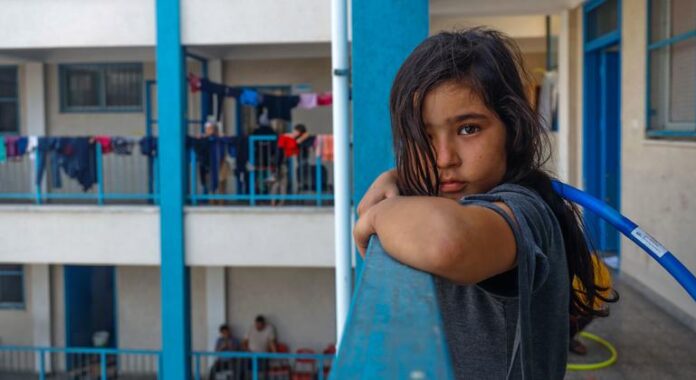
“There is a very positive, jubilant mood in Gaza this morning and there was overnight,” said Olga Cherevko from the UN aid coordination office, OCHA. “There were people whistling and partying and celebrating.”

Speaking to UN News from the devastated enclave, Ms. Cherevko stressed that immediate humanitarian priorities remain unchanged: “to reach the most vulnerable with the assistance that we need to be entering now at adequate volumes and to be able to deliver it to the people in need…Obviously no amount of humanitarian aid will ever be able to take the place of peace. So, this deal is more important than ever.”

UN humanitarians have some 170,000 metric tons of food, shelter, medicine and other critical items waiting in storage outside Gaza. 

These can be loaded onto trucks and enter the Strip as soon as a ceasefire is implemented, the aid worker explained, adding that fighting had not stopped on Thursday morning. 

“We are looking forward to seeing what our role will be down the line and how to quickly and efficiently get this aid to the people now who of course need it desperately.”

US plan progress

The development follows the announcement by US President Donald Trump on Wednesday evening that Israel and Hamas had “signed off” on the first phase of his 20-point peace plan, following days of intensive indirect negotiations in Egypt.

President Trump published the news on social media that Hamas had agreed to release all hostages, later adding that that this could happen on Monday. 

His comments came at the end of a third day of indirect talks between Hamas and Israel in Egypt, where in addition to US mediators, representatives from Qatar and Turkey also steered the talks.

During the Hamas-led terror attacks on Israel that triggered the war on 7 October 2025, 251 people were taken hostage. Reports indicate that 48 of them are still being held in Gaza and around 20 are still alive.

Other elements of the reported deal include the withdrawal of Israeli military forces to “an agreed upon line”, Mr. Trump noted.

In reportedly confirming the deal, Hamas political leaders called on the international community to ensure that Israel abides by its terms, which include the release of Palestinian prisoners.

Israeli Prime Minister Benjamin Netanyahu hailed a “great day for Israel”, ahead of a meeting of his security cabinet on Thursday afternoon to approve the first phase of the deal – including an immediate ceasefire which would begin immediately, according to news reports.

Guterres encouragement

“I welcome the announcement of an agreement to secure a ceasefire and hostage release in Gaza, based on the proposal put forward by President Donald J. Trump,” said UN chief António Guterres in a statement.

Echoing those comments and welcoming the development, UN aid chief Tom Fletcher echo issuing an appeal to “get the hostages out and surge aid in – fast”. 

He added: “Our teams are fully mobilised to get the trucks moving at scale and save lives. They need safe access.”

Philippe Lazzarini, head of the UN agency for Palestinians, UNRWA, described the “huge relief” felt by all those impacted by the war, which has killed tens of thousands of Gazans, in addition to the nearly 1,200 Israelis murdered by Hamas in their unprecedented attack across southern Israel two years ago.

The agreement to finally secure a ceasefire in #Gaza and release the hostages is a huge relief,” Mr. Lazzarini said in an online post. “It will bring respite to people who survived the worst bombardment, displacement, loss and grief for two long years. After their excruciating ordeal, hostages and Palestinian detainees will finally join their families.” 

WHO stands ready: Tedros

Also welcoming the announcement of a deal, head of the UN World Health Organization (WHO), Tedros Adhanom Ghebreyesus highlighted the still “dire” needs of patients across Gaza and said that the agency “stands ready to scale up its work…to support rehabilitation of the destroyed health system”.

From the UN World Food Programme (WFP), Executive Director Cindy McCain supported the UN chief’s call for an immediate ceasefire in Gaza and stressed the need to “move NOW” to get aid in.

“Unrestricted humanitarian access is urgently needed to deliver life-saving food & assistance,” she said. “WFP is on the ground and ready to scale up operations, but we need to move NOW – there is no time to waste.”


Source link

‘Never be afraid to ask for help’: War-scarred Ukrainians find space to heal

0

“I saw people fleeing, so I joined them,” recalls Yuri, 88, thinking back to the day he left Ukraine. “I arrived in Moldova alone, without family or children to turn to. »

Most days, Yuri spends time in the courtyard of a community mental health center in Chișinău, participating in therapeutic activities that help him deal with his emotions and loneliness.

“I feel good here, but everything is new for me in Moldova,” he says. “Sometimes it’s fun at the center. I also talk with the people who stay here, but I don’t really have any friends. Maybe it’s because I’m already old.”

© Proliska Humanitarian Mission/Jose Colon

Attacks on Ukraine continue to intensify, devastating civilian infrastructure.

Not far from Yuri, Ana, 73, often sits with her friend Alla, 79. Originally from Moldova, Ana lived in Odessa before the war, where she worked as a cleaner at the university.

“I loved cleaning,” she says. “When I was a child, I always helped my mother because she needed support to take care of my younger brother. »

When the war broke out, Ana’s family urged her to return to Chișinău. Although she was reunited with her loved ones, she struggled with sadness, anxiety and depression and eventually agreed to counseling.

Admitted in July 2023 with severe anxiety, insomnia and agitation, Ana gradually improved through counseling, art therapy, walks and group activities.

“I found my home here,” she said. “Now I’m not afraid anymore.”

Ana (center) sits alongside other elderly women who sought support in the center of Chișinău.

Also at the center is 25-year-old Marharyta, known as Margo. Originally from Ukraine, she arrived in Moldova a year ago and has struggled with eating disorders since the age of 15.

When her condition worsened a few months ago, she realized she could no longer manage on her own and sought help.

In Ukraine, Margo earned a degree in applied mathematics, then taught children and worked as an analyst. The war forced her to abandon her family and her job, leaving her uncertain about her future.

“I never wanted to ask my family for help because I thought I was strong enough,” she says. “I was wrong. When I got here, I realized there were people willing to support me. Never be afraid to ask for help.”

The Chișinău center offers Margo a safe place to share her experiences and find support.

Since the start of the war in February 2022, Moldova has been affected by thousands of Ukrainians crossing the border in search of safety.

Speaking ahead of World Mental Health Day celebrated annually on October 10, Arkady Astrakhan, director of the Chișinău Community Mental Health Center, said that “authorities mobilized across different sectors to coordinate the country’s response. This included the establishment of mental health services.”

Since 2023, the International Organization for Migration (IOM) supports the center by developing specialized mental health and psychosocial support services (MHPSS) for Ukrainians, including mobile teams, counselling, social activities, art therapy, housing for vulnerable groups and a drug treatment programme.

IOM provides almost 90% of the center’s services, providing care for people with complex needs, supported by staff training in burnout prevention and psychosocial support.

Elderly people uprooted by the war in Ukraine access counseling services in Chișinău, Moldova.

“Even though new measures have been introduced to provide medical care to people displaced from Ukraine, those suffering from chronic or severe mental health problems still face serious gaps in services.

IOM has played an important role in filling these gaps,” says Astrakhan. “Supporting people with such complex needs can be challenging, but it is also deeply meaningful.”

An hour from Chișinău, IOM’s renovated mental health center in Orhei offers tailored support to people suffering from serious mental health problems.

Since the start of the war, 1,080 Ukrainians in Moldova have received specialized mental health support from IOM, through peer-to-peer initiatives led by health mediators who connected them with timely care.

In Moldova’s community centers, resilience takes many forms. For Yuri, it’s in small conversations that he feels less alone. For others, it’s therapy sessions or the quiet reassurance that support is nearby.

Together, their stories remind us that even in the shadow of war, healing is possible.

Originally published at Almouwatin.com

Middle East LIVE: Israel-Hamas deal paves way for ceasefire, hostage release

0
Middle East LIVE: Israel-Hamas deal paves way for ceasefire, hostage release

Middle East LIVE: Israel-Hamas deal paves way for ceasefire, hostage release

Source link

World news in brief: Deadly attacks in Ukraine, Zaporizhzhya nuclear power plant update, first humanitarian flight for Syrians in Libya

0

Substations, power plants and oil depots were damaged in Chernihiv, Kharkiv, Odessa and Donetsk, temporarily cutting power to hundreds of thousands of homes and businesses in these regions.

“As colder weather sets in, strikes on critical infrastructure are worsening humanitarian needs. » warned Mr. Dujarric. “Despite the growing challenges, we continue, with our humanitarian partners, to support the response. »

In the first half of this year, UN partners provided essential care to almost a million people, while food and livelihood programs supported more than 1.1 million displaced and vulnerable families in the country.

Ukraine: off-site power to be restored to nuclear power plant

Meanwhile, following intensive consultations with the Russian Federation, a process has begun to restore external electricity to the Zaporizhzhya Nuclear Power Plant (ZNPP) in Ukraine, the International Atomic Energy Agency said (IAEA) director Rafael Mariano Grossi announced Thursday in a update.

On September 23, the ZNPP connection lost for the 10th time since Russia’s large-scale invasion of the country began in February 2022. Both sides blamed military activities for the damage.

Since then, ZNPP has been forced to rely on backup diesel generators to power its cooling pumps, challenging an already dangerous nuclear safety and security situation at the site.

Following the incident, Mr Grossi engaged with both parties on concrete proposals to enable the plant to receive the off-site energy needed to cool its six shutdown reactors and spent fuel.

“Although it will still be some time before the grid connection of the Zaporizhzhya nuclear power plant is restored, both sides have engaged with us constructively to achieve this important goal in the interests of nuclear safety and security,” he said. “No one stands to gain from further deterioration in this regard. »

The IAEA team on site continues to confirm that there has been no increase in temperature in the reactor coolant or spent fuel pools.

Syrian migrants in Libya begin their journey back to Syria.

First voluntary humanitarian return flight for Syrian migrants in Libya

The International Organization for Migration (IOM) facilitated the voluntary return of 152 vulnerable Syrians from Libya to Damascus.

“IOM is expanding its operations and services in Syria with the primary objective of supporting the country’s recovery after years of conflict and ensuring a dignified and sustainable return of Syrians, whether internally displaced or returning from abroad. » said Othman Belbeisi, regional office director for the Middle East and North Africa.

Marking the first Voluntary Humanitarian Return (VHR) flight to Syria organized by IOM in 2025, the Tripoli-Damascus flight was organized at the request of the Syrian Ministry of Foreign Affairs and helped support families who had been living in Libya for more than a decade.

Strengthened presence

Since 2015, IOM Libya has helped more than 105,000 migrants return safely to their countries of origin.

“This flight demonstrates IOM’s continued commitment to voluntary, safe, dignified and sustainable returns of the most vulnerable Syrian migrants,” said Eleonora Servino, the agency’s acting head of mission in Syria.

In July, IOM received approval from the Syrian Ministry of Foreign Affairs to re-establish its presence in Damascus and expand its operations nationally.

Active in northwest Syria since 2014, IOM continues to provide vital assistance and support programs, including displacement monitoring, protection, mental health and psychological support (MHPSS), shelter and relief.

Originally published at Almouwatin.com

Middle East LIVE: Israel-Hamas deal paves way for ceasefire, hostage release

0
Middle East LIVE: Israel-Hamas deal paves way for ceasefire, hostage release


As people celebrated across Gaza and Israel at the news of an agreement that could hasten the end of the two-year war, UN aid teams on Thursday insisted that they were ready to deliver humanitarian relief supplies into the shattered enclave at scale. We’ll be covering all news developments across the UN system throughout the day. UN News app users can follow live coverage here.

Source link

Sudan: attacks on El Fasher mosque and hospital kill at least 20 people

0

On Thursday, the UN office of humanitarian affairs, OCHAreported that the Rapid Support Forces (RSF) paramilitary group allegedly opened fire on Tuesday and Wednesday on the Saudi hospital and a local mosque, where displaced families had sought shelter.

The Saudi hospital “is the city’s last functioning medical facility, serving thousands of war-affected people“, the agency said in a tweet.

Healthcare under attack

OCHA “strongly condemned” attacks and others carried out recently by the RSF in El Fasher – the last bastion under the control of the Khartoum government in the region, where famine was declared last year.

“Civilians must never be attacked,” OCHA said. “We once again echo the UN Secretary-General’s call for an immediate cessation of hostilities.”

The United Nations agency for reproductive health, UNFPA, said Tuesday’s attack targeted the maternity ward, killing 12 people and injuring many others, including patients and health workers.

This is the third attack on the hospital in a week“, UNFPA said, calling for “an immediate end to hostilities, protection of civilians and health facilities, and safe and unhindered humanitarian access to provide life-saving assistance to those in desperate need.”

The inhabitants of El Fasher “are trapped, terrified and cut off from help, and their last lifeline to medical care is under threat“, declared UN spokesperson, Stéphane Dujarric, during the daily press briefing from New York.

“And it goes without saying that targeting hospitals must be condemned and never acceptable. »

City under siege

El Fasher has been under siege for more than a year.

In recent months, the RSF – formerly the Janjaweed militias responsible for atrocities against non-Arab communities in Darfur in the early 2000s – have stepped up artillery bombardments and drone attacks in a bid to capture the city.

Beyond Darfur, Sudan remains mired in a civil war that has raged since April 2023. It has created one of the world’s worst humanitarian crises, with more than 30 million people in need of assistance.

Around 12 million people have been displaced, with more than four million fleeing to neighboring countries like Chad, the Central African Republic and beyond.

Conflicts, clashes and displacements

The fighting is now aggravated by community clashes. On October 7 and 8, field teams from the International Organization for Migration (IOM) recorded some 250 people displaced from the town of Kernoi, near the border with Chad, following an intra-communal conflict between members of the Zaghawa tribe, one of the four main non-Arab communities in the region.

Civilians continue to flee El Fasher and the neighboring Zamzam camp, where the population has fallen by 70 percent in the past six months.

Humanitarians estimate that the number of people residing in the area fell from 700,000 in March to 200,000 in September.

Thousands of families have fled to neighboring towns like Tawila, which is now home to some 600,000 displaced people.

While the UN and its partners remain committed to supporting the people of El Fasher and across Sudan, Mr. Dujarric stressed the need for safe humanitarian access, greater protection of civilians and an immediate humanitarian pause in and around the city.

Originally published at Almouwatin.com