Leonardo, Italy’s aerospace giant, rolled out designs for the Michelangelo Dome on Thursday—a sophisticated air defense network that
Italy Launches “Michelangelo Dome” to Shield Against Hypersonic Weapons and Drone Swarms
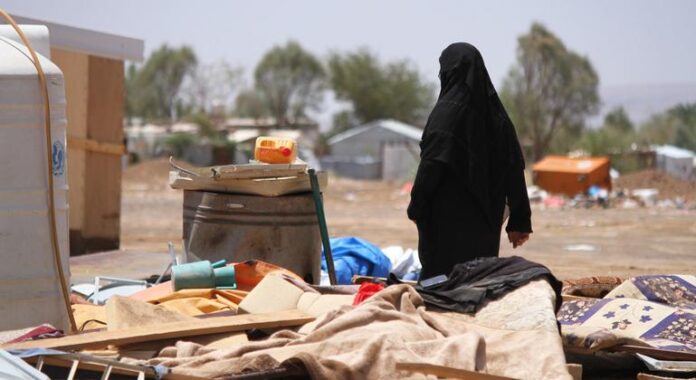
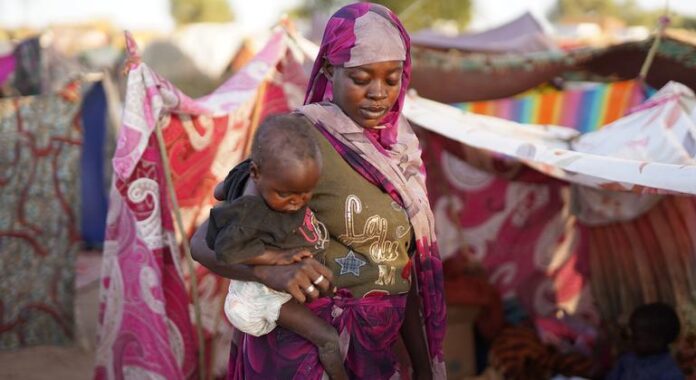
Mass displacement, trafficking fears deepen crisis in Sudan’s El Fasher
UN agencies say conditions are deteriorating further across North Darfur and neighbouring Kordofan, while independent human rights experts on Thursday warned that the collapse of protection following the city’s fall has sharply increased the risks facing women and children.
The Rapid Support Forces (RSF) seized control of El Fasher – the capital of Sudan’s North Darfur state – on 26 October after an 18-month siege that cut residents off from food, medicine and other critical supplies. The city had been the government’s last major stronghold in the Darfur region.
According to the UN World Food Programme (WFP), families who fled the fighting are now scattered across five locations surrounding El Fasher, including Tawila, while others have reached more distant areas such as Dabbah in Northern State and even the national capital, Khartoum.
Currently, 1,485 metric tons of food and nutrition supplies – enough for about 130,000 people – are en route to Tawila through the Dabbah Crossing, adding to ongoing assistance for those displaced earlier this year.
Renewed fighting in Kordofan
Meanwhile, renewed fighting in the Kordofan region is driving further large-scale displacement.
The International Organization for Migration (IOM) reported that more than 1,800 people were displaced in South Kordofan on Tuesday alone, while in North Kordofan nearly 40,000 people were uprooted between 25 October and 18 November.
Sudan’s war erupted in April 2023 following a power struggle between the RSF and the national Sudanese Armed Forces (SAF). It quickly devolved into one of the world’s worst humanitarian crises, marked by famine, mass displacement and widespread atrocities.
Trafficking concerns
Against this backdrop, independent human rights experts expressed alarm on Thursday at reports of trafficking of women and girls for sexual exploitation and sexual slavery, and the recruitment of children as fighters, particularly since the RSF takeover of El Fasher.
“We are deeply concerned at the alarming reports of human trafficking since the takeover of El Fasher and surrounding areas by the Rapid Support Forces (RSF),” the experts said.
“Women and girls have been abducted in RSF-controlled areas, and women, unaccompanied and separated children are at elevated risk of sexual violence and sexual exploitation.”
Since the siege of El Fasher began in May 2024, more than 470,000 people have been displaced multiple times from camps including Shagra, Zamzam and Abu Shouk. Across Sudan, nearly 12 million people – about half of them children – are now forcibly displaced or have fled to neighbouring countries, with sexual violence reported in conflict zones nationwide.
The experts – who are mandated and appointed by the Geneva-based Human Rights Council and are not UN staff – cited multiple incidents of rape and sexual abuse near RSF checkpoints and at sites sheltering displaced people, including the reported gang-rape of 25 women near El Fasher University.
They urged all parties to immediately halt violations against civilians and called on Member States to take urgent action following the Human Rights Council’s recent special session on the situation in and around El Fasher.
UN envoy to press for dialogue
Meanwhile, the UN Secretary-General’s Personal Envoy for Sudan, Ramtane Lamamra, is preparing to travel to Port Sudan and Addis Ababa next week to press for renewed political dialogue. He is expected to focus on the urgent need for civilian protection and unhindered humanitarian access across Darfur and Kordofan.
“A language that everyone understands”: a Jordanian cartoonist speaks of art as hope
Based in the Jordanian capital, Abdallat has spent years using art to spark conversations about human rights, tolerance and social change. Thanks to his Free pen initiative, he runs workshops with young people, particularly in communities affected by displacement, helping them express their experiences and hopes through drawing.
Collaborations with UNESCO to counter hate speech, to win the United Nations Development Program (UNDP) Social Entrepreneurship Summit Price in 2021, Abdallat is dedicated to supporting youth engagement in civic life.
Omar Abdallat takes a selfie with the participants of one of his cartoon workshops.
UN News spoke with Abdallat about his journey into cartooning, the role of art in crisis situations, and why he believes even the smallest drawing can spark a global conversation.
This interview has been edited for clarity and brevity.
UN News: What first attracted you to caricature? And what does this mean for you?
Omar Abdallat: I started drawing as a child, copying cartoon characters from TV and comic books, but it was at university that I realized it could be something more.
I started drawing my teachers, then I started sharing my drawings online on Arab cartoonist sites. It was great for people to see my work, react to it and get feedback.
Eventually, it became my job – but more than that, it became a lifestyle.
Cartoons make me think of the people around me, of my society. I sometimes say that drawing is my religion because I believe it makes me a better human being.
UN News: When did you first realize that your cartoons could reach people far beyond your own community?
Omar Abdallat: I studied cartoons on my own and what I learned from other artists was the importance of simplicity. So I try to draw complex problems as if I were drawing them for children.
When I started sharing my work on Facebook, that’s when it clicked: people from all over the world were responding and reacting. That’s when I realized that cartoons are a language that everyone understands.
UN Info: Could you tell us about one of your specific works?
Omar Abdallat: For example, one of my most recent works is inspired by classic paintings depicting leaders from Europe and other parts of the world.
The scene depicts the wolf, like a sovereign, celebrating its domination over the enclosure and the sheep, while one of the sheep seems fascinated by the wolf’s charisma.
In countries where there is no real transfer of power, the very notion of homeland is distorted. Leadership is reduced to domination and loyalty is transformed from a collective principle into blind obedience.
UN News: This is a very striking image that really reflects your activism, which you have developed both through your caricatures and your initiatives. You have worked in many different settings, from public spaces to refugee communities and international forums. In which spaces do you find the most meaningful to work?
Omar Abdallat: I find my work with children and young people particularly meaningful – particularly those who are going through difficulties. It’s like we’re not just drawing, but empowering them through cartoons, to help them believe in their own stories again.
It’s very meaningful to offer them this safe space where they can talk about themselves, draw and gain confidence.
I always start by telling them the history of cartoons – where it came from, what it means. Then I teach them to draw step by step. Once they have the basics, we start talking about deeper things like their rights, the environment, how they imagine the future.
My dream is to make this a global movement, to bring cartoons to every child who might need them, especially in places like Gaza, where being a child can be so difficult.
UN News: Do they ever surprise you with their views?
Omar Abdallat: Some children are very talented. Through their cartoons, you will be able to better understand their culture, their background and sometimes their issues.
They talk about racism, poverty and hate speech. In return, I do my best to improve their understanding of these topics.
UN News: Do you see the cartoons as a kind of healing?
Omar Abdallat: I believe in cartoons as a lifestyle. It’s the air we breathe. This is how we understand things.
When the Charlie Hebdo tragedy occurred ten years ago, I remember thinking: We need a humanitarian version of this spirit – a platform that unites rather than divides.
This idea became the seed of something I am still working on today: a “Cartoon Lab” – a network of academies where children and adults can safely express themselves through art.
UN News: As you explained, caricatures can address sensitive subjects. Have you ever encountered difficulties or resistance in your work?
Omar Abdallat: Challenge is my middle name! I used to hide it, but now I say it out loud. Some of them are due to the Middle Eastern environment, others to technology.
In the Middle East, you may fear for your life and that of your children. It’s not easy to be a designer here in general.
UN News: How do you keep your hope alive?
Omar Abdallat: One of the things I learned from my late father, who was a doctor, was that he never let any patient go until they were fighting for their life. This is our duty in life, to help the people around us become better.
I want people who see my work to be themselves and give their best to the world, to put aside their differences and believe in our common humanity.
When night falls, the sun always rises. Every winter has a spring. It’s part of nature. You just have to hold the time to see it.
Originally published at Almouwatin.com
Access to aid and operation of hospitals remain limited in Gaza
Briefing journalists Wednesday in New York, UN spokesperson Stéphane Dujarric said Hostilities in parts of the Gaza Strip continue to cause casualties and repeatedly disrupt humanitarian operations.
On Tuesday, the UN and its partners coordinated eight planned humanitarian movements inside Gaza with Israeli authorities. Of these, only one movement was facilitated, while the other seven were hindered, refused or canceled.
Despite the difficulties, UN teams managed to recover more than 200 pallets of medicine and five tanker trucks of fuel at the Kerem Shalom/Kerem Abu Salem border post. Additional tents were also collected at the Kissufim crossing.
“Every delivery to Gaza makes a significant difference,” Mr. Dujarric said.
The health system barely works
The spokesperson stressed that Gaza’s health system remains in a state of extreme fragility.
“Not a single hospital in Gaza is fully functional,” he said, noting that only 18 of the Strip’s 36 hospitals are currently partially operational.
On Monday, teams from the UN World Health Organization (WHO) facilitated the medical evacuation of 33 Palestinians requiring intensive care, as well as more than 100 accompanying people. However, the scale of unmet medical needs remains overwhelming.
“There are still more than 16,500 patients who need to receive medical care outside Gaza,” Dujarric said.
WHO continues to call for safe access to all evacuation routes, particularly to the West Bank, including East Jerusalem, and to expedite medical evacuation convoys at crossing points.
Maintain education
Meanwhile, UN agencies continue their efforts to maintain essential civilian services. The United Nations agency helping Palestinian refugees (UNRWA) maintains learning activities for displaced children across Gaza.
As of Sunday, UNRWA was operating nearly 350 temporary learning spaces in 64 shelters, providing in-person education to more than 47,000 boys and girls.
Humanitarians also continue to provide other essential support.
Call for unfettered access
Mr Dujarric said the United Nations and its partners were ready to scale up operations if restrictions were eased.
“We are once again calling for unhindered humanitarian access so that teams can reach everyone they need,” he said.
“We and our partners can do much more as soon as restrictions on essential items and humanitarian groups are lifted. »
Originally published at Almouwatin.com
A turning point: putting global industry on a fairer, greener path to economic growth
The world is inexorably industrializing, increasing prospects for better jobs and livelihoods for many of the planet’s poorest. But to truly benefit the world’s population and the planet as a whole, international trade and industry must go hand in hand with healthier communities, reduced emissions and cleaner air.
In the past this has not always been the case, but the United Nations Industrial Organization UNIDO) is committed to achieving this. “We know the challenges and the problems, but we are here to offer solutions,” says Manuel Mattiat, UNIDO Chief of Staff. “Everything is possible with the knowledge we have, the technologies available and the money available. »
Investing in countries of the South
Manuel Mattiat, Chief of Staff of UNIDO
Mr Mattiat spoke to UN News on the last day of the UNIDO meeting Global Industry Summitwhich covered a wide range of issues related to industrial development in the Global South, from youth entrepreneurship to empowering women entrepreneurs (full UN News coverage here).
With the UN facing unprecedented scrutiny, the Riyadh conference showcases the expertise and knowledge that the world’s largest multilateral organization has to offer investors and businesses, as well as a series of concrete solutions aimed at lifting the world’s most vulnerable people out of poverty.
“We are here to build bridges,” explains Mr. Mattiat. Many developed and industrialized countries, rich in resources and development, are ready to invest, but they have not yet found the right entry points. This is exactly the purpose of our presence here in Riyadh: to mobilize investments in favor of the least developed countries.
Put people first
On Thursday, representatives of UNIDO Member States, from the developed to the developing world, adopted the Riyadh Declaration, which calls for closer cooperation between governments, businesses and civil society to ensure that industrialization leads to greener economies, equitable opportunities and better livelihoods.
Focusing on youth and women, the Declaration aims to expand access to skills and employment and highlights the importance of innovation and digital transformation, ensuring that developing countries can benefit from new technologies and compete in global markets.
The adoption of the Declaration is seen as a turning point in global industrial policy, providing a framework for governments and international partners to mobilize resources and deliver tangible benefits to communities around the world.
Originally published at Almouwatin.com
Ukraine’s children enter fourth school year under invasion as 4.6 million face education barriers
Since Russian forces invaded Ukraine in 2022, children have continued to bear the brunt of the crisis – unable to attend school regularly, learn safely or experience a sense of normalcy.
Air raid alarms disrupt classes. Many schools, especially in frontline areas, remain closed because of hostilities or the lack of adequate shelters, forcing almost one million children to study online, according to the UN Children’s Fund (UNICEF).
In 2025 alone, more than 340 educational facilities were damaged or destroyed, further disrupting children’s lives and their right to education. Since the start of the full-scale invasion, the UN has verified that around 2,800 schools have been damaged, though the actual number is likely much higher.
“Schools must be protected spaces where children can learn safely, even during war. In times of crises, education provides a lifeline and sense of normalcy to children,” said Munir Mammadzade, UNICEF Representative in Ukraine.
A critical lifeline
“Despite the challenges, children in Ukraine are determined to continue learning – whether in school or online, in classrooms or in shelters. They are hopeful for a future where they can achieve their dreams,” he added.
UNICEF’s response, alongside government and local partners, has enabled more than half a million children to access inclusive formal or non-formal education, including in-person safe learning, helping them catch up on lost learning through remedial education.
As Ukraine enters another winter of war, UNICEF continues to provide vital cash assistance to help families prepare for the cold months. In October alone, 22,557 households received winter cash support. So far in the 2024–2025 winter season, UNICEF has assisted a total of 43,337 households — reaching 140,234 people, including 63,416 children, 30,738 of them girls.
Protecting schools and children’s right to education is not optional during war – it is imperative, UNICEF stressed, urging international partners to continue supporting Ukraine’s education sector as a “non-negotiable investment” in children and the country’s future.
Europe’s hidden HIV crisis – Half of all people living with HIV in Europe are diagnosed late, threatening to undermine the fight against AIDS
According to the annual HIV/AIDS surveillance report, 105 922 HIV diagnoses were made in the WHO European Region in 2024, covering 53 countries in Europe and Central Asia. While overall reported numbers show a slight decrease compared to 2023, the available data suggest that testing and diagnosis gaps remain. The high proportion of late diagnoses means that many people are not accessing life-saving antiretroviral treatment and healthcare early enough, which increases the risk of developing AIDS, the risk of death and onward HIV transmission.
In the European Union and European Economic Area (EU/EEA), 24 164 HIV diagnoses were reported, representing a rate of 5.3 per 100 000 people. Key findings from the 2024 data show that 48% of HIV diagnoses in the EU/EEA were late. Sex between men remains the most common mode of transmission in the EU/EEA (48%), but diagnoses attributed to heterosexual transmission are rising, accounting for nearly 46% of the HIV diagnoses reported.
Dr Pamela Rendi-Wagner, ECDC Director, said: “In the EU/EEA, nearly half of all diagnoses are made late. We must urgently innovate our testing strategies, embrace community-based testing and self-testing, and ensure rapid linkage to care. We can only end AIDS if people know their status.”
Across the WHO European Region, 54% of diagnoses were late; this proportion was highest among people who acquired the virus through heterosexual transmission (especially men) and people who inject drugs. Nearly one in three HIV diagnoses in 2024 were among people born outside the country where they were diagnosed. In the EU/EEA, this group accounted for more than half of new diagnoses, highlighting the need for tailored, accessible, and culturally competent prevention and testing services.
Dr. Hans Henri P. Kluge, WHO Regional Director for Europe, said: “Our data paints a mixed picture. Since 2020, HIV testing across the European Region has rebounded, resulting in a higher volume of reported tests and a corresponding rise in HIV diagnoses in 11 countries in 2024. In 2024 alone, 105,922 people were diagnosed with HIV, with an overall 2.68 million diagnoses reported since 1980s. However, the number of people living with undiagnosed HIV is growing, a silent crisis that’s fueling transmission. We are not doing enough to remove the deadly barriers of stigma and discrimination that prevent people from seeking out a simple test. An early diagnosis is not a privilege but a gateway to a long, healthy life and the key to stopping HIV in its tracks.”
ECDC and WHO/Europe are calling for urgent efforts to routinise, normalise and scale up testing, including providing wider access to self-testing and community-based options, which can reach people who do not access facility-based healthcare services. The 2030 goal to end AIDS as a public health threat is within reach, but only if the European region acts now to eliminate the testing gap.
16.6 million packages of fake and harmful toys taken off EU markets – Counterfeits worth EUR 36.8 million seized and 555 individuals reported to judicial and health authorities in two major operations
You need to enable JavaScript to run this app.
Loading application.
Please wait.
Payment services deal: More protection from online fraud and hidden fees | News
On Thursday morning, Parliament and Council negotiators agreed on the Payment Services Regulation (PSR) and the Third Payment Services Directive (PSD3).
The regulation aims to harmonise payment services and strengthen fraud prevention across the EU. It applies to payment services provided by banks, post-office giro and payment institutions, as well as technical service providers supporting payment services, and in some cases electronic communications providers and online platforms. The directive seeks to ensure fair competition among payment service providers (PSPs), by addressing authorisation and supervisory powers, and to improve access to cash, particularly in remote areas.
Protecting customers from fraud
If a PSP fails to implement appropriate fraud prevention mechanisms, it will be liable for covering customers’ losses. PSPs will be required to check that a payee’s name and unique identifier match. In cases of discrepancies, the PSP will have to refuse the payment order and inform the payer. PSPs will also have to ensure strong customer authentication and conduct a risk assessment.
MEPs confirmed that PSPs have to offer spending limits and blocking measures to reduce the risks of fraud.
If a fraudster initiates or changes a transaction, it will be treated as unauthorised transaction and the PSP will be liable for the full fraudulent amount. Additionally, the receiving PSP will have to freeze any transaction it finds suspicious.
To protect customers from impersonation fraud, where a scammer pretends to be a PSP employee and tricks the customer into approving a payment, the PSP must refund the full amount as long as the customer reports the fraud to the police and informs their PSP.
Online platforms will be liable to PSPs who have reimbursed defrauded customers if they are informed of fraudulent content on their platform and fail to remove it. This builds on and adds to the protection in the Digital Services Act.
In addition, advertisers of financial services must show very large online platforms and search engines that they are legally allowed (or officially exempt) in the relevant country to offer those services, or that they are advertising on behalf of someone who is.
MEPs also ensured that users must have access to human customer support (not only chatbots) and that public resources should be devoted to educating people on how to avoid fraud.
Transparent charges
Customers should be properly informed about all charges prior to the initiation of a payment. They should receive, for example, information about currency conversion charges or any fixed fees for cash withdrawal at automatic telling machines, regardless of who operates them.
Better access to cash
To ensure better access to cash, especially in remote and rural areas, retail stores will be able to provide cash withdrawals of maximum €150 but minimum €100, without the customer having to buy anything.
Improving competition
The negotiators agreed to reduce market barriers for “open banking services” (account information and payment initiation services) and to prevent account-servicing payment service providers (ASPSP) (usually a bank or other financial institution) from discriminating against them. Authorised open banking providers must be able to access payment account data and the legislation includes a list of prohibited obstacles to data access. Furthermore, payment service users will be given a dashboard to monitor and manage the permissions they have given to access their data. Banks will have to provide payment institutions with access to payment accounts on a non-discriminatory basis.
Manufacturers of mobile devices and electronic service providers will have to allow front-end service providers (such as apps or user interfaces) to store and transfer data needed to process payments, on fair, reasonable, and non-discriminatory terms.
Simplified authorisation
The negotiators also agreed to simplify the authorisation procedure for payment institutions. Authorisation should be subject to strong prudential and capital requirements, accurate own-funds calculations, reliable budget forecasts, and harmonised timelines, with initial capital scaled to the provider’s risk level and to the payment services provided. Crypto asset service providers already authorised under Regulation on Markets in Crypto-assets, would be subject to a streamlined procedure while keeping appropriate risk controls and providing only services specified in the application.
Quick dispute resolution
The Parliament’s negotiators insisted on requiring all PSPs to participate in alternative dispute resolution procedures if a consumer chooses it.
Quotes
René Repasi (S&D, DE), rapporteur for the regulation said: “Consumers will benefit from new harmonized rules on the payment services regulation. Mandatory fraud preventive measures will be applied and lead to less payment fraud. Banks have to share more of the burden if they fail to do their part.”
“Today’s deal is a win for the Parliament by establishing a liability provision for online platforms where fraud started. In certain cases, they now have to reimburse banks who have reimbursed defrauded customers.”
Morten Løkkegaard (Renew, DK), rapporteur for the directive said: “This deal is a significant step toward a more open and resilient single market for payments. By updating outdated rules, we ensure Europe stays competitive in a rapidly evolving financial sector.”
“With today’s deal, we have secured better access to cash for citizens across Europe. Besides ATMs, people will now be able to withdraw money in a shop without being forced to make a purchase, ensuring cash remains a genuine and convenient payment option.”
Next steps
The deal needs to be formally adopted by Parliament and Council before it can come into force.
Aid access and hospital operations remain constrained in Gaza
Briefing reporters in New York on Wednesday, UN Spokesperson Stéphane Dujarric said hostilities in parts of the Gaza Strip are still resulting in casualties and repeated disruptions to humanitarian operations.
On Tuesday, the UN and its partners coordinated eight planned humanitarian movements inside Gaza with Israeli authorities. Of those, only one movement was facilitated, while the remaining seven were impeded, denied or cancelled.
Despite the challenges, UN teams managed to collect more than 200 pallets of medicine and five tankers of fuel from the Kerem Shalom/Kerem Abu Salem crossing. Additional tents were also retrieved from the Kissufim crossing.
“Every delivery into Gaza makes a significant difference,” Mr. Dujarric said.
Health system barely functioning
The Spokesperson stressed that Gaza’s health system remains in a state of extreme fragility.
“Not a single hospital in Gaza is fully functional,” he said, noting that only 18 out of the Strip’s 36 hospitals are currently partially operational.
On Monday, teams from the UN World Health Organization (WHO) facilitated the medical evacuation of 33 Palestinians in need of critical care, along with more than 100 companions. However, the scale of unmet medical need remains overwhelming.
“There are still more than 16,500 patients who need to receive medical care outside of Gaza,” Mr. Dujarric said.
WHO continues to call for safe access through all evacuation routes, particularly to the West Bank, including East Jerusalem, and for medical evacuation convoys to be expedited at crossings.
Maintaining education
Meanwhile, UN agencies continue efforts to sustain essential civilian services. The UN agency assisting Palestine refugees (UNRWA) is maintaining learning activities for displaced children across Gaza.
As of Sunday, UNRWA was operating nearly 350 temporary learning spaces in 64 shelters, providing in-person education for more than 47,000 boys and girls.
Humanitarians also continue to deliver other critical support.
Call for unimpeded access
Mr. Dujarric said the United Nations and its partners stand ready to scale up operations if restrictions are eased.
“We once again call for unimpeded humanitarian access so that teams can reach everyone they need,” he said.
“We and our partners can do much more as soon as restrictions on relief items and aid groups are lifted.”