Sunday, June 28, 2026
Home Blog Page 174

China Tells Humanoid Robot Makers: Stop Copying Each Other

0


The National Development and Reform Commission delivered an unusual warning to China’s booming humanoid robotics sector: prevent flooding

Source link

‘A language everyone understands’: Jordanian cartoonist on art as hope

0
‘A language everyone understands’: Jordanian cartoonist on art as hope

Based in the capital of Jordan, Abdallat has spent years using art to spark conversations on human rights, tolerance and social change. Through his Free Pen initiative, he leads workshops with young people, especially in communities affected by displacement, helping them express their experiences and hopes through drawing.

From collaborations with UNESCO to counter hate speech, to winning the UN Development Programme (UNDP) Social Entrepreneurship Summit Award in 2021, Abdallat is dedicated to supporting youth engagement in civic life.

Omar Abdallat takes a selfie with the participants of one of his cartoon workshops.

UN News spoke with Abdallat about his journey into cartooning, the role of art in crisis settings and why he believes even the smallest drawing can spark a global conversation.

This interview has been edited for clarity and brevity.

UN News: What first drew you to cartooning? And what does it mean to you?

Omar Abdallat: I first started drawing as a kid, copying characters from cartoon shows on television and comic books, but it was at university that I realised it could be something more.

I began sketching my professors, then started sharing my cartoons online on websites for Arab cartoonists. It was great for people to see my work, respond to it and get feedback.

Eventually, it became my profession – but more than that, it became a lifestyle.

Cartoons make me think about the people around me, about my society. I sometimes say cartooning is my religion because I believe it makes me a better human being.

UN News: When did you first realise your cartoons could reach people far beyond your own community?

Omar Abdallat: I studied cartoons by myself and what I learnt from other artists is the importance of simplicity. So, I try to draw complex issues as if I was drawing them for children.

When I started sharing my work on Facebook is when it clicked: people from across the world were responding and reacting. That’s when I understood that cartoons are a language everyone understands.

UN News: Could you share about a particular work of yours?

Omar Abdallat: For instance, one of my most recent works is inspired by classical paintings portraying leaders from Europe and other parts of the world.

The scene depicts the wolf, in the image of a ruler, celebrating his dominance over the pen and the sheep, while one of the sheep appears fascinated by the wolf’s charisma.

In countries where there is no genuine transfer of power, the very notion of the homeland becomes distorted. Leadership is reduced to domination and loyalty transforms from a collective principle into blind obedience.

UN News: That’s a very striking image and really reflects your activism, which you’ve developed both through your cartoons and your initiatives. You’ve worked in many different settings, from public spaces to refugee communities and international forums. What spaces do you find most meaningful to work in?

Omar Abdallat: I find my work with children and young people especially meaningful – particularly with those going through challenges. It feels like we’re not just drawing but empowering them through cartoons, to help them believe in their own stories again.

It’s very meaningful to give them this safe space where they can talk about themselves, draw and gain some confidence.

I always begin by telling them the story of cartoons – where it came from, what it means. Then I teach them to draw step by step. Once they have the basics, we start talking about deeper things like their rights, the environment, the way they imagine the future.

My dream is to turn this into a global movement, to bring cartoons to every child that might need it, especially in places like Gaza where being a child can be so hard.

UN News: Do they ever surprise you with their perspectives?

Omar Abdallat: Some kids are very talented. Through their cartoons, you can better understand their culture, their background and sometimes their problems.

They share about racism, poverty and hate speech. In return, I do my best to improve their understanding of these topics.

UN News: Do you see cartoons as a kind of healing?

Omar Abdallat: I believe in cartoons as a lifestyle. It’s the air we breathe. It’s the way we understand things.

When the Charlie Hebdo tragedy happened ten years ago, I remember thinking: we need a humanitarian version of that spirit – a platform that unites rather than divides.

That idea became the seed for something I’m still working on today: a “Cartoon Lab” – a network of academies where children and adults can express themselves safely through art.

UN News: As you’ve explained, cartoons can touch on sensitive topics. Have you ever faced challenges or resistance to your work?

Omar Abdallat: Challenge is my middle name! I used to hide this but now I say it out loud. Some of them are due to the environment of the Middle East, some because of technology.

In the Middle East, you can feel afraid for your life and the life of your children. It’s not easy to be a cartoonist here in general.

UN News: How do you keep your hope alive?

Omar Abdallat: One of the things I learned from my late father who was a doctor is that he never let any patient go until he fought for their life. That’s our duty in life, to help people around us become better.

I want people who see my work to be themselves and to give the best of themselves to the world, to put aside their differences and believe in our common humanity.

When darkness comes around, the sun still rises. Every winter has a spring. It’s part of nature. You just have to hold on long enough to see it.

Source link

‘A language everyone understands’: Jordanian cartoonist on art as hope

0
‘A language everyone understands’: Jordanian cartoonist on art as hope

Based in the capital of Jordan, Abdallat has spent years using art to spark conversations on human rights, tolerance and social change. Through his Free Pen initiative, he leads workshops with young people, especially in communities affected by displacement, helping them express their experiences and hopes through drawing.

From collaborations with UNESCO to counter hate speech, to winning the UN Development Programme (UNDP) Social Entrepreneurship Summit Award in 2021, Abdallat is dedicated to supporting youth engagement in civic life.

Omar Abdallat takes a selfie with the participants of one of his cartoon workshops.

UN News spoke with Abdallat about his journey into cartooning, the role of art in crisis settings and why he believes even the smallest drawing can spark a global conversation.

This interview has been edited for clarity and brevity.

UN News: What first drew you to cartooning? And what does it mean to you?

Omar Abdallat: I first started drawing as a kid, copying characters from cartoon shows on television and comic books, but it was at university that I realised it could be something more.

I began sketching my professors, then started sharing my cartoons online on websites for Arab cartoonists. It was great for people to see my work, respond to it and get feedback.

Eventually, it became my profession – but more than that, it became a lifestyle.

Cartoons make me think about the people around me, about my society. I sometimes say cartooning is my religion because I believe it makes me a better human being.

UN News: When did you first realise your cartoons could reach people far beyond your own community?

Omar Abdallat: I studied cartoons by myself and what I learnt from other artists is the importance of simplicity. So, I try to draw complex issues as if I was drawing them for children.

When I started sharing my work on Facebook is when it clicked: people from across the world were responding and reacting. That’s when I understood that cartoons are a language everyone understands.

UN News: Could you share about a particular work of yours?

Omar Abdallat: For instance, one of my most recent works is inspired by classical paintings portraying leaders from Europe and other parts of the world.

The scene depicts the wolf, in the image of a ruler, celebrating his dominance over the pen and the sheep, while one of the sheep appears fascinated by the wolf’s charisma.

In countries where there is no genuine transfer of power, the very notion of the homeland becomes distorted. Leadership is reduced to domination and loyalty transforms from a collective principle into blind obedience.

UN News: That’s a very striking image and really reflects your activism, which you’ve developed both through your cartoons and your initiatives. You’ve worked in many different settings, from public spaces to refugee communities and international forums. What spaces do you find most meaningful to work in?

Omar Abdallat: I find my work with children and young people especially meaningful – particularly with those going through challenges. It feels like we’re not just drawing but empowering them through cartoons, to help them believe in their own stories again.

It’s very meaningful to give them this safe space where they can talk about themselves, draw and gain some confidence.

I always begin by telling them the story of cartoons – where it came from, what it means. Then I teach them to draw step by step. Once they have the basics, we start talking about deeper things like their rights, the environment, the way they imagine the future.

My dream is to turn this into a global movement, to bring cartoons to every child that might need it, especially in places like Gaza where being a child can be so hard.

UN News: Do they ever surprise you with their perspectives?

Omar Abdallat: Some kids are very talented. Through their cartoons, you can better understand their culture, their background and sometimes their problems.

They share about racism, poverty and hate speech. In return, I do my best to improve their understanding of these topics.

UN News: Do you see cartoons as a kind of healing?

Omar Abdallat: I believe in cartoons as a lifestyle. It’s the air we breathe. It’s the way we understand things.

When the Charlie Hebdo tragedy happened ten years ago, I remember thinking: we need a humanitarian version of that spirit – a platform that unites rather than divides.

That idea became the seed for something I’m still working on today: a “Cartoon Lab” – a network of academies where children and adults can express themselves safely through art.

UN News: As you’ve explained, cartoons can touch on sensitive topics. Have you ever faced challenges or resistance to your work?

Omar Abdallat: Challenge is my middle name! I used to hide this but now I say it out loud. Some of them are due to the environment of the Middle East, some because of technology.

In the Middle East, you can feel afraid for your life and the life of your children. It’s not easy to be a cartoonist here in general.

UN News: How do you keep your hope alive?

Omar Abdallat: One of the things I learned from my late father who was a doctor is that he never let any patient go until he fought for their life. That’s our duty in life, to help people around us become better.

I want people who see my work to be themselves and to give the best of themselves to the world, to put aside their differences and believe in our common humanity.

When darkness comes around, the sun still rises. Every winter has a spring. It’s part of nature. You just have to hold on long enough to see it.

Source link

Payment services: Council and Parliament agree to step up the fight against fraud and increase transparency

0
Payment services: Council and Parliament agree to step up the fight against fraud and increase transparency

Today, the Council and the European Parliament reached a provisional political agreement to bolster EU legislation on payment services to better fight payment fraud, boost transparency on fees, and increase consumer protection in this area.

Source link

Over 600 million children exposed to violence at home, UNICEF warns

0
Over 600 million children exposed to violence at home, UNICEF warns

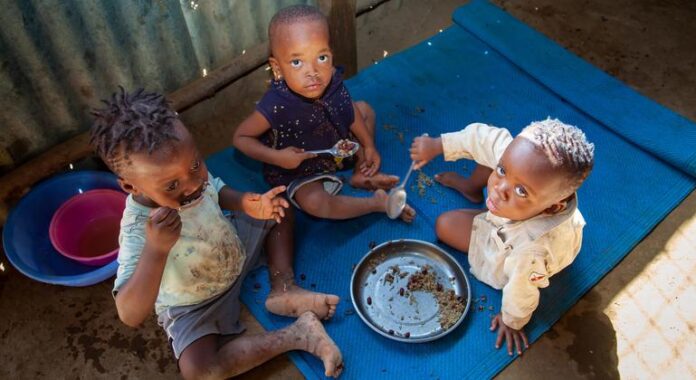
Children’s exposure to intimate partner violence is highest in Oceania, sub-Saharan Africa, and Central and Southern Asia, reflecting deep regional inequalities and widespread patterns of abuse experienced by women worldwide.

“Today, millions of women and children are living in homes where violence is a part of regular life,” said UNICEF Executive Director Catherine Russell. “Women’s safety and autonomy are paramount to children’s well-being.”

A human rights violation

The analysis comes in the wake of updated UN global estimates on violence against women, published by the World Health Organization (WHO) on behalf of the UN Violence Against Women Inter-Agency Working Group.

These estimates show that more than one in 10 adolescent girls and women aged 15 and older have experienced physical or sexual violence from an intimate partner in the past 12 months.

Violence against women – particularly intimate partner violence and sexual violence – is a major public and clinical health problem and a violation of women’s human rights. It is rooted in and perpetuates gender inequalities.

Globally, one in three women experiences physical and/or sexual violence in her lifetime, mostly by an intimate partner — a stark reminder of the scale of gender inequality and discrimination against women.

Where women and children are most at risk

For the first time, UNICEF’s regional data highlights where women and children are most at risk.

In Oceania, just over half of all children – around three million – live with a mother who has recently experienced intimate partner violence. Sub-Saharan Africa follows at 32 per cent, affecting 187 million children. Central and Southern Asia, while slightly lower at 29 per cent, account for the largest number globally, with 201 million affected children.

Other regional findings include:

  • Northern Africa and Western Asia: 26 per cent, or 52 million children
  • Eastern and South-Eastern Asia: 21 per cent, or 105 million children
  • Latin America and the Caribbean: 19 per cent, or 35 million children
  • Europe and Northern America: 13 per cent, or 28 million children
  • Australia and New Zealand: 5 per cent, or approximately 400,000 children

Long term consequences

Children living in homes where their mothers experience violence are at heightened risk of both direct and indirect harm, UNICEF warned.

Even if they are not physically abused themselves, witnessing violence can erode trust between children and caregivers, leave deep emotional scars, and cause trauma that often carries into adulthood.

Exposure to intimate partner violence also increases the likelihood that children will experience or perpetuate violence later in life, with long-term consequences for their safety, development, health, and education.

UNICEF is urging governments to take stronger action, calling for integrated strategies that tackle both violence against women and children, backed by support for women- and girl-led organisations.

It emphasises the need for wider access to survivor-centred services, greater investment in prevention – including parenting and school-based programmes – and efforts to challenge harmful social norms while elevating the voices of survivors and young people.

Source link

Defence industry: Council agrees position on simplification package to boost Europe’s defence industry and readiness

0
Payment services: Council and Parliament agree to step up the fight against fraud and increase transparency

Council agrees position on simplification package to boost Europe’s defence industry and readiness.

Source link

On International Day of Solidarity, UN urges greater support and aid for Palestinians

0
On International Day of Solidarity, UN urges greater support and aid for Palestinians

“At least 67 children have been killed since the ceasefire,” Annalena Baerbock, president of the UN General Assembly, said on Tuesday at an event to mark the International Day of Solidarity with the Palestinian People.

“The people in the occupied West Bank, including East Jerusalem, also endured unspeakable hardship amidst Israeli military operations, settler violence, settlement expansion, evictions, and demolition,” underscored Courtenay Rattray, Chef de Cabinet, speaking on behalf of the UN Secretary-General. 

The International Day is observed annually on 29 November – the day in 1947 that the UN General Assembly adopted a resolution on partitioning Palestine into two independent States, one Arab and one Jewish.

The UN stands by a simple truth: the Palestinian people have the right to dignity, justice, and self-determination, emphasised Mr. Rattray.  

Lifesaving humanitarian aid still needed

For millions of Palestinians, the UN agency that assists Palestinian refugees, UNRWA, “remains a lifeline,” he said.

The international community must continue to support it, as the UN strives to reach the $4 billion target set by the Flash Appeal for the Occupied Palestinian Territory, he added. 

The International Court of Justice and the UN General Assembly have both affirmed that the long-standing occupation of Palestinian territory is illegal.

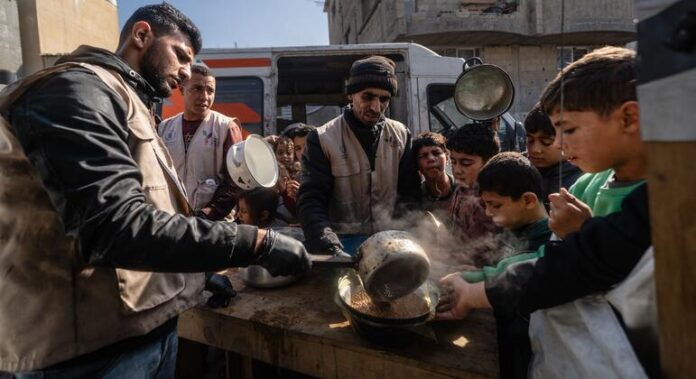
Gaza lies in ruins, with civilians — including children and women — among the dead and injured. Humanitarian workers and journalists have also been affected. Meanwhile, attacks are increasingly targeting Palestinian farmers in the West Bank as they attempt to harvest their olive crops.

“Hope can become a reality. Hope that two people — bound by history, geography, and humanity — will live side by side in peace.” said Mr. Rattray. 

“On this International Day of Solidarity, let us turn that hope into action, and help the olive tree grow once more.” 

Source link

Peacebuilding Fund Reaches $1 Billion Milestone Despite Funding Gap

0

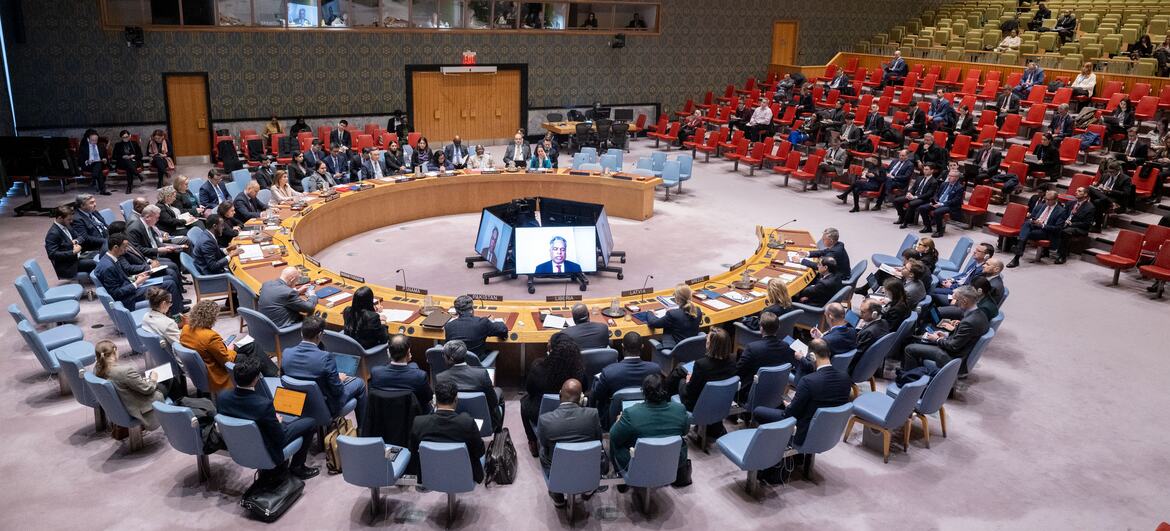
The Multi-Donor Trust Fund is the UN’s main instrument for supporting countries around the world emerging from or at risk of violent conflict. The fund sits alongside the Peacebuilding Commission and the Peacebuilding Support Office.

The announcement came as Security Council and the General Assembly adopted two resolutions in support of the UN peacebuilding body, providing a model for making it more impactful.

“A quantum leap”

Making the $1 billion announcement at a news conference in New York, head of peacebuilding support Elizabeth Spehar and chair of the fund’s advisory group, Macharia Kamau, said the funding milestone reflects the Secretary-General’s call for a “quantum leap” in funding.

Despite this success, the Fund faces a shortfall of $500 million compared to its target of $1.5 billion for the period 2020-2026.limiting its ability to meet growing demand from Member States for its essential support services.

The Fund currently supports more than 50 countries, three-quarters of which are in Africa.

Joint resolution

Earlier on Wednesday, the Security Council unanimously adopted a resolution in support of the UN’s comprehensive peacebuilding efforts, with the General Assembly adopting the same text shortly after. The coordinated approach endorsing the organization’s peacebuilding architecture first took place in 2005.

The resolution highlights the UN’s continued focus on preventing conflict and supporting lasting peace, emphasizing that real results come when development, human rights, peace and security work hand in hand.

Ms Spehar said the timing of the votes and the corresponding announcement of the $1 billion in funding was “very important”.

For more details on the vote and resolution, visit our meetings coverage page, here.

Originally published at Almouwatin.com

Ukrainian children enter fourth school year under invasion as 4.6 million face barriers to education

0

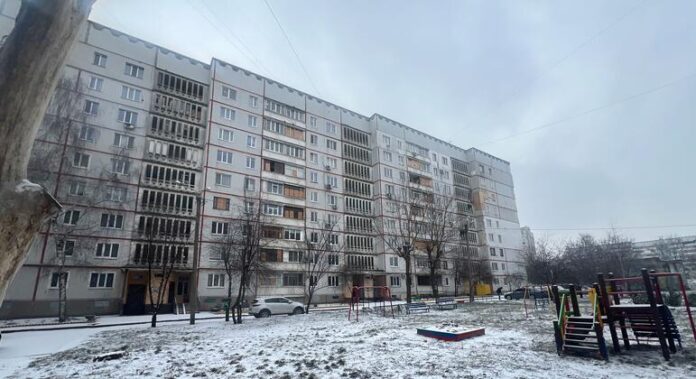
Since Russian forces invaded Ukraine in 2022, children continue to bear the brunt of the crisis – unable to attend school regularly, learn safely, or feel a sense of normalcy.

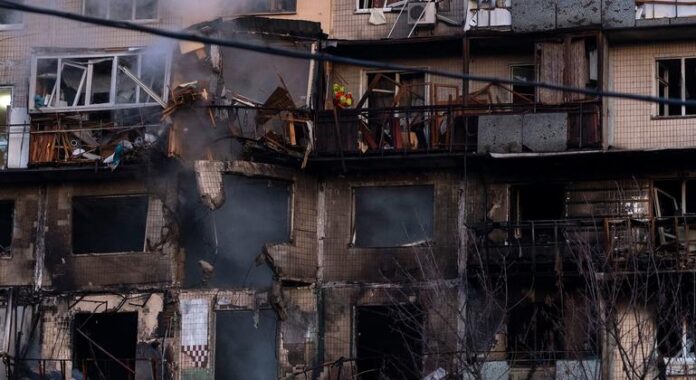
Air raid alarms disrupt classes. Many schools, particularly in frontline areas, remain closed due to hostilities or lack of adequate shelter, forcing nearly a million children to study online, according to the United Nations Children’s Fund (UNICEF).

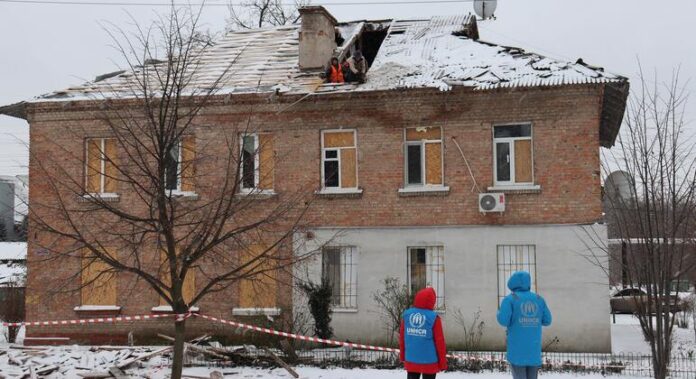
In 2025 alone, more than 340 educational institutions were damaged or destroyed, further disrupting children’s lives and their right to education. Since the start of the large-scale invasion, the UN has verified that around 2,800 schools have been damaged, although the real number is likely much higher.

“Schools must be protected spaces where children can learn safely, even in times of war. In times of crisis, education provides a lifeline and a sense of normalcy for children,” said Munir Mammadzade, UNICEF Representative in Ukraine.

An essential lifeline

“Despite the challenges, Ukrainian children are determined to continue learning, whether in school or online, in classrooms or in shelters. They are hopeful for a future where they can realize their dreams,” he added.

UNICEF’s response, alongside government and local partners, has enabled more than half a million children to access inclusive formal or non-formal education, including safe in-person learning, helping them catch up through remedial education.

As Ukraine enters another winter of war, UNICEF continues to provide vital financial assistance to help families prepare for the cold months. In October alone, 22,557 households received winter financial assistance. So far in the 2024-2025 winter season, UNICEF has assisted a total of 43,337 households, or 140,234 people, including 63,416 children, including 30,738 girls.

Protecting schools and children’s right to education is not optional in times of war: it is imperative, UNICEF stressed, urging international partners to continue supporting Ukraine’s education sector as a “non-negotiable investment” in children and the country’s future.

Originally published at Almouwatin.com

More than 600 million children exposed to domestic violence, warns UNICEF

0

Children’s exposure to domestic violence is highest in Oceania, sub-Saharan Africa, and Central and South Asia, reflecting deep regional inequalities and widespread patterns of abuse experienced by women worldwide.

“Today, millions of women and children live in homes where violence is a part of daily life,” said UNICEF Executive Director Catherine Russell. “The safety and autonomy of women are paramount to the well-being of children. »

A violation of human rights

The analysis follows an update UN global estimates on violence against womenpublished by the World Health Organization (WHO) on behalf of the United Nations Inter-Agency Working Group on Violence Against Women.

These estimates show that more than one in 10 adolescent girls and women aged 15 and over have experienced physical or sexual violence from an intimate partner in the past 12 months.

Violence against women – particularly domestic violence and sexual violence – is a major public health and clinical problem and a violation of women’s human rights. It is rooted in and perpetuates gender inequalities.

Globally, one in three women are victims of physical and/or sexual violence during their lifetimeprimarily by an intimate partner – a stark reminder of the extent of gender inequality and discrimination against women.

Where women and children are most at risk

For the first time, UNICEF regional data highlights where women and children are most at risk.

In Oceania, just over half of children – around three million – live with a mother who has recently experienced domestic violence. Sub-Saharan Africa follows with 32 percent, affecting 187 million children. Central and South Asia, although slightly lower at 29 percent, accounts for the largest number of affected children in the world, with 201 million children affected.

Other regional results include:

  • North Africa and West Asia: 26 percent, or 52 million children
  • East and Southeast Asia: 21 percent, or 105 million children
  • Latin America and the Caribbean: 19 percent, or 35 million children
  • Europe and North America: 13 percent, or 28 million children
  • Australia and New Zealand: 5 percent, or about 400,000 children

Long-term consequences

Children living in homes where their mothers are victims of violence are at increased risk of direct and indirect harm, UNICEF has warned.

Even if they are not physically abused themselvesWitnessing violence can erode trust between children and caregiversleave deep emotional scars and cause trauma that often lasts into adulthood.

Exposure to domestic violence also increases the likelihood that children will experience or perpetuate violence later in life, with long-term consequences for their safety, development, health and education.

UNICEF is urging governments to take stronger action, calling for integrated strategies that tackle both violence against women and children, underpinned by support for organizations led by women and girls.

It highlights the need for broader access to survivor-centered services, greater investment in prevention – including parenting and school programs – and efforts to challenge harmful social norms while elevating the voices of survivors and young people.

Originally published at Almouwatin.com