Wednesday, April 1, 2026
Home Blog Page 189

Gaza: UN rights office deplores deadly strikes on Palestinians gathering firewood

0
Gaza: UN rights office deplores deadly strikes on Palestinians gathering firewood

OHCHR in the Occupied Palestinian Territory expressed dismay that “the Israeli military is destroying Gaza City, forcing Palestinians to flee and then killing them when they seek shelter in Middle Gaza, especially in and around An Nuseirat Camp.” 

Amid the ongoing displacement and influx of internally displaced persons (IDPs), Israel intensified strikes on the northwestern part of Middle Gaza governorate, covering An Nuseirat and Az Zawaida areas.

Tents, homes and a busy market hit

Officials recorded at least 12 incidents there during the past five days which killed at least 89 Palestinians, most of whom appeared to be civilians – including many women and children. 

The incidents included strikes on IDP tents, homes and a crowded market in An Nuseirat Camp where at least 17 Palestinians were reportedly killed.

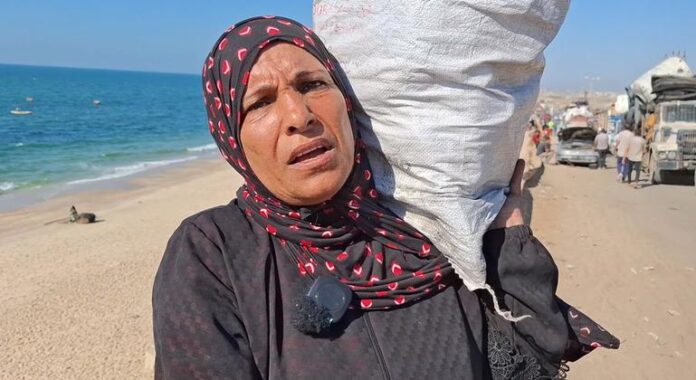
“In addition, the Israeli military has reportedly launched airstrikes from Unmanned Aerial Vehicles (UAVs), artillery shelling, and live gunfire against those gathering firewood, especially in northern Middle Gaza, causing dozens of casualties,” the statement continued. 

Between 1 August and 23 September, OHCHR recorded 14 such attacks which killed 21 Palestinians including at least one child

The Office recalled that “Israel has completely blocked the entry of cooking gas since 2 March 2025, forcing people to rely on wood, mostly derived from flammable debris from destroyed buildings and broken furniture, as the only available source of fuel for cooking.”

Civilians under attack

OHCHR emphasised that Israel is obliged to distinguish between civilians and combatants and to refrain from directing attacks against civilians.

“The strikes which kill many Palestinians, including children and women, as well as the use of live ammunition against Palestinians collecting firewood, appear to amount to attacks directed at civilians, demonstrably not directly participating in hostilities,” the office said. 

Supporting the hungry

Separately, the UN aid coordination office, OCHA, said that shelling and air strikes have continued across the Strip, with high-rise buildings reportedly hit in areas around Gaza City including Ar Rimal, Beach camp, and Tal al Hawa.

Teams are working to bring in aid to support bakeries and community kitchens.  On Sunday, partners prepared and delivered some 658,000 meals across the enclave

However, access to northern Gaza is especially complicated. Daily meals were reduced from 170,000 in mid-September to about 50,000 as aid partners relocated and scaled up their operations in the central and southern parts of the enclave.

“Humanitarian partners report that this week, about 50 communal ovens in Gaza City are operational, helping some 2,700 families bake their dough for free,” OCHA said.

The agency reminded that the UN and partners have not been allowed to bring any food aid from Zikim crossing into northern Gaza for more than two weeks.

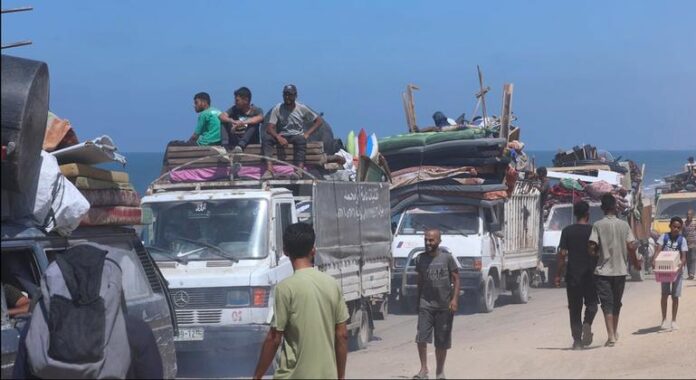
Although many remain in Gaza City and the north, others continue to flee southwards with 6,900 such displacements recorded on Sunday through four monitoring points. 

Overall, almost 453,000 displacements were recorded across Gaza since mid-August, with the majority originating from Gaza City. 
Source link

Gaza: UN rights office deplores deadly strikes on Palestinians gathering firewood

0
Gaza: UN rights office deplores deadly strikes on Palestinians gathering firewood

OHCHR in the Occupied Palestinian Territory expressed dismay that “the Israeli military is destroying Gaza City, forcing Palestinians to flee and then killing them when they seek shelter in Middle Gaza, especially in and around An Nuseirat Camp.” 

Amid the ongoing displacement and influx of internally displaced persons (IDPs), Israel intensified strikes on the northwestern part of Middle Gaza governorate, covering An Nuseirat and Az Zawaida areas.

Tents, homes and a busy market hit

Officials recorded at least 12 incidents there during the past five days which killed at least 89 Palestinians, most of whom appeared to be civilians – including many women and children. 

The incidents included strikes on IDP tents, homes and a crowded market in An Nuseirat Camp where at least 17 Palestinians were reportedly killed.

“In addition, the Israeli military has reportedly launched airstrikes from Unmanned Aerial Vehicles (UAVs), artillery shelling, and live gunfire against those gathering firewood, especially in northern Middle Gaza, causing dozens of casualties,” the statement continued. 

Between 1 August and 23 September, OHCHR recorded 14 such attacks which killed 21 Palestinians including at least one child

The Office recalled that “Israel has completely blocked the entry of cooking gas since 2 March 2025, forcing people to rely on wood, mostly derived from flammable debris from destroyed buildings and broken furniture, as the only available source of fuel for cooking.”

Civilians under attack

OHCHR emphasised that Israel is obliged to distinguish between civilians and combatants and to refrain from directing attacks against civilians.

“The strikes which kill many Palestinians, including children and women, as well as the use of live ammunition against Palestinians collecting firewood, appear to amount to attacks directed at civilians, demonstrably not directly participating in hostilities,” the office said. 

Supporting the hungry

Separately, the UN aid coordination office, OCHA, said that shelling and air strikes have continued across the Strip, with high-rise buildings reportedly hit in areas around Gaza City including Ar Rimal, Beach camp, and Tal al Hawa.

Teams are working to bring in aid to support bakeries and community kitchens.  On Sunday, partners prepared and delivered some 658,000 meals across the enclave

However, access to northern Gaza is especially complicated. Daily meals were reduced from 170,000 in mid-September to about 50,000 as aid partners relocated and scaled up their operations in the central and southern parts of the enclave.

“Humanitarian partners report that this week, about 50 communal ovens in Gaza City are operational, helping some 2,700 families bake their dough for free,” OCHA said.

The agency reminded that the UN and partners have not been allowed to bring any food aid from Zikim crossing into northern Gaza for more than two weeks.

Although many remain in Gaza City and the north, others continue to flee southwards with 6,900 such displacements recorded on Sunday through four monitoring points. 

Overall, almost 453,000 displacements were recorded across Gaza since mid-August, with the majority originating from Gaza City. 

Source link

From the crisis to community healing: a Haitian mother fights against cholera

0

When her 11-year-old daughter, Noel-Dina, was struck by unbearable fever and abdominal pain, Oriata did not hesitate.

She immediately took her child to the nearest hospital. “She couldn’t walk because she was so weak. I had to wear it on my back. I was terribly worried and I thought I was going to lose it, “said Oriata, eyes filled with tears.

That day, Noel-Dina received a diagnosis of cholera.

Oriata (Center) is participating in a community campaign against cholera.

Like many children in their rural district of Petit to the west of the Haitian capital Port-au-Prince, it lived without access to basic sanitation facilities. “We had no choice but to use the outdoors as a toilet. This is how the disease has entered our lives, ”explained Oriata.

Quarrel

Cholera has recently spread to Haiti. Until now this year, more than 3,100 cases suspected of cholera have been reported nationally.

A young child is treated for cholera in a hospital in Port-au-Prince, Haiti.

Between 21Only September 25, suspicious cases and three deaths were reported in Pétion-Ville, a lively suburb with numerous schools-a worrying development with the new academic year that should begin.

Young adults, who generally move a lot, explain most of the cases, fueling the concerns of the propagation of the disease.

UN spokesperson Stéphane Dujarric said that the United Nations Humanitarian Coordination Office, OchhaWorked “with the authorities and our partners to ensure that there is rigorous case surveillance and that health workers are quickly mobilized to reduce the risk of cholera spread”.

Community action

Noel-Dina, eleven, has survived thanks to medical care in a timely manner.

His painful experience was a turning point because thanks to the awareness campaigns in their region, his mother, Oriata, learned that the lack of latrines was one of the main reasons for the spread of cholera and other water diseases.

UNOCHA / CRICOOM

A health worker performs sanitation procedures when people enter a cholera establishment in Haiti.

Without waiting for external help, she began to dig a pit in her courtyard.

“I didn’t have a lot of resources, but I knew I had to do something not only for my daughter, but for all the children in the neighborhood,” she said.

Oriata did not stop there. After having seen her daughter resume gradually, she got involved in awareness -raising activities in her community, from home to house, to encourage other families to act.

His commitment sparked a wave of solidarity.

“When someone started to dig a pit and could not continue, we meet to help them and we made this house by house until it becomes a movement,” she recalls.

This mutual support transformed their neighborhood. Latrines have become the standard and hygiene practices such as systematic hand washing have been adopted by everyone.

“Today, when you walk here, you no longer feel bad odors because no one is relieving outside,” she said.

Dreamy

Sitting on her bed, her mathematical notebooks open in front of her, Noel-Dina smiled timidly. She dreams of becoming a nurse. Every day, she helps her mother at home and washed her hands carefully after using the toilets, actions that have become automatic.

“Before, I had to go out. Now we have a latrine at home, and I am happy that my mother is built. She did it for me and for everyone, ”she said.

Other communities also take measures with the support of the United Nations Children’s Fund, Unicefand local authorities.

Nearly 3,000 households now have access to safe and hygienic latrines and 30 hygiene clubs, 22 in schools and 8 in health centers, were created to encourage good practices in children, teachers and medical staff.

“Before, there were bacteria everywhere, and children often fell ill. Now, even when a child has a fever, it’s no longer because of dirt. They are healthier and happier, ”said Oriata.

Originally published at Almouwatin.com

Gaza: While the world is waiting for Hamas’s response to the American peace plan, aid teams call to stop the ceasefire

0

Winter is a quick supply and strong Israeli military operations in progress in Gaza City continues to drive mass trips.

“It is important that we obtain this ceasefire, then we get help not only to prevent famine which continues to move south, but also to ensure that children and families are safe”, UN children’s funds (Unicef) Ricardo Pires spokesman told journalists in Geneva.

Pires pointed out that the drop in temperatures in the devastated enclave will create “a whole range of problems”, including health challenges for children and their families.

Al Mawasi overload

He underlined the “massive” displacement that occurs while people flee from north to south. The conditions are disastrous in the colony of overcrowded coastal tents in Al-Mawasi which “simply cannot absorb the amount of people who move in”.

“We are talking about hundreds of thousands of people, or 400,000 displaced,” he insisted.

According to the United Nations Coordination Office (Ochha), only about 18% of the Gaza strip is not subject to travel orders or located in militarized areas.

People who have lost their houses desperately need shelter and UNICEF has 11,000 tents as well as tarpaulins “waiting to enter” at the strip, said Mr. Pires.

“We cannot obtain these supplies … This simply shows how the conditions in terms of logistics and facilitation of the aid continue to be very, very poor”, ” He said.

Echoing his comments, the OCHA spokesperson Jens Laerke stressed that the ability of the humanitarian workers to distribute Gaza aid is still compromised. Aid was able to enter, he said, stressing the fact that community kitchens were “restored to a certain extent”, with some 660,000 meals prepared and delivered in 137 kitchens through the enclave last Sunday.

Convoys have always refused access

But the ability to put help in the hands of people depends on the authorization of the humanitarian workers to collect and deliver it.

“Sometimes it works, sometimes this is not the case,” said Mr. Laerke, that is, because of non-available by the Israeli party or for other reasons.

The UN previously declared that on Sunday, more than 40% of the humanitarian missions which require coordination with the Israeli army have been refused.

“Much of the aid that came recently, which was picked up, has been removed from trucks by desperate people and in some cases by armed groups,” added Mr. Laerke d’Ocha.

He called the current “chaotic” situation and underlined the “absolute” need for a cease-fire as soon as possible so that the humanitarian workers can resume “a well coordinated and well coordinated help operation”.

Originally published at Almouwatin.com

World News in Brief: El Fasher siege latest, shock at Michigan church attack, violent crackdown on Madagascar protests

0
World News in Brief: El Fasher siege latest, shock at Michigan church attack, violent crackdown on Madagascar protests

Briefing reporters in New York on Monday, UN Deputy Spokesperson Farhan Haq said the RSF militia’s grip is tightening on the last government-held redoubt, with satellite imagery showing “large groups of people attempting to flee on foot” from peripheral areas.

“Local sources report that civilians trying to leave the city have faced violence, harassment and looting along insecure routes.”

Aid coordination office, OCHA, is calling for commanders of the rival militaries battling for control of Sudan to protect civilians in El Fasher as required by international humanitarian law.

Mr. Haq stressed safe passage must be given to those wanting to leave.

Malnutrition deaths

Meanwhile, a local Sudanese doctors’ association reports that more than 20 people in El Fasher – including children and pregnant women – have died of malnutrition this month alone.

“These tragic deaths highlight the urgent need for humanitarian access to reach the besieged population with life-saving assistance,” said Mr. Haq.

The humanitarian situation in the Kordofan region also remains dire. Ongoing conflict has restricted access to food, essential supplies, banking services and humanitarian aid, while damaging critical infrastructure.

UN chief expresses shock over deadly attack on Mormon church in Michigan

The UN Secretary-General has expressed his shock at the killing of four people in suburban Michigan over the weekend following an attack on a Church of Jesus Christ of Latter-day Saints meeting house.

According to news reports, the motive for the assault – in which the church was burnt to the ground while the lone gunman was killed in an exchange of gunfire with police – has yet to be determined.

Dozens of people have already been questioned as the Federal Bureau of Investigation (FBI) continues to work on the case which officials described as an “act of targeted violence.”

Michigan’s Governor Gretchen Whitmer speaking at a press conference asked for the “temperature of the rhetoric” to be lowered surrounding the case.

UN Deputy Spokesperson Farhan Haq said UN chief António Guterres “strongly condemns the attack and offers condolences and solidarity to the families of the victims and the people of Grand Blanc Township.”

‘Heinous attack’

The senior UN official whose office works to foster inter-religious and cultural dialogue worldwide, Ángel Moratinos, said he was alarmed “by the heinous attack.”

In a statement, the High Representative for the UN Alliance of Civilizations, Miguel Angel Moratinos, said that houses of worship are sacred sanctuaries where people find peace.

He reiterated that “such acts of hatred and violence are utterly rejected and are unjustifiable under any circumstances.”

Mr. Moratinos stressed the urgent need to protect all religious sites and communities, regardless of faith or denomination.

Madagascar: UN rights chief condemns ‘violent response’ from security forces

UN High Commissioner for Human Rights Volker Türk on Monday condemned the “violent response” from security forces over the weekend to peaceful protests in Madagascar.

At least 22 people have been killed and more than100 injured after demonstrators took to the streets over three days, protesting water and power cuts.

News reports said the Malagasy President had dissolved the government following the youth led protests which were reportedly inspired by the so-called ‘Gen-Z” protests in Nepal and Kenya.

The UN rights office, OHCHR, said that victims of the violent crackdown by security forces included both protesters and bystanders.

Others were killed in subsequent widespread violence and looting by individuals and gangs not associated with the protesters.

Shocked and saddened

“I am shocked and saddened by the killings and injuries in the protests over water and power cuts in Madagascar,” said Mr. Türk. “I urge the authorities to ensure respect for freedom of expression and peaceful assembly, consistent with their obligations under international human rights law.”

Peaceful protests began in the capital Antananarivo on 25 September, but the security forces intervened, lobbing teargas and beating and arresting protesters, said OHCHR. Some officers also used live ammunition.

Further demonstrations soon broke out in another eight major cities across the country.

The UN rights chief called for an end to the use of unnecessary and disproportionate force. He demanded the immediate release of all arbitrarily detained protesters.

Mr. Türk also urged the Malagasy authorities to institute prompt, thorough, independent and transparent investigations into the violence and to bring those responsible to justice.

Source link

EU to boost financial literacy and investment opportunities for citizens

0
EU to boost financial literacy and investment opportunities for citizens


The Commission is advancing the savings and investments union to deliver tangible benefits for all EU citizens. Two new proposals focus on improving financial literacy at all stages of life and introducing a blueprint for an easy and accessible investment tool.

Financial literacy strategy

Less than 20% of EU citizens have a high level of financial literacy, according to a recent survey. The new strategy aims to enhance citizens’ financial awareness and support EU countries in improving financial literacy, through

  • coordination and sharing of national and international best practices
  • communication and an EU-wide campaign to raise awareness   
  • EU funding for financial literacy initiatives and research
  • monitoring progress and assessing impact over time.

EU citizens have one of the highest savings rates in the world but often do not get the most out of their savings. With the right knowledge and skills, they can make sound financial decisions, budget better, avoid scams and fraud, save more efficiently and feel better equipped to invest for their future. 

Savings and investment accounts

Citizens also need simple and accessible investment opportunities. Savings and investment accounts (SIAs) are designed to provide them with an easy and user-friendly way to grow their wealth and achieve their personal financial goals.

SIAs are accounts provided by authorised financial services providers which enable retail investors to invest in capital markets. Thanks to tax incentives and simplified tax procedures, they’re an attractive option for citizens who want to invest. Through SIAs, citizens can achieve higher returns on their savings compared to keeping them in bank deposits and choose which financial products and economic sectors to invest in. By doing so, they also help finance EU businesses, driving economic growth and job creation across Europe.

SIAs already exist in some EU countries. The Commission is now recommending that all EU countries introduce them. SIAs should have these key features

  • a variety of providers: a wide range of authorised financial services providers (banks, investment firms, neobrokers) to boost competition and innovation
  • simplicity: simple, reliable and easily accessible user experience for retail investors (online and offline) to make the buying and selling of assets seamless
  • flexibility: retail investors should be allowed to open multiple accounts with different providers, without excessive fees or cumbersome processes when transferring their portfolios
  • broad investment opportunities: in various products such as shares, bonds and investment funds, allowing citizens to diversify their portfolios across asset classes, issuers, manufacturers, geographies and risk profiles
  • tax incentives: well-targeted and simple to understand and apply
  • simplified taxation process: streamlined tax procedures, including relying on SIA providers for tax declarations

The Commission will work closely with EU countries and stakeholders to implement these measures. Europe’s citizens should feel confident managing their money and savings, have better access to investment opportunities and thrive financially.  

For more information

Press release

Questions and answers

Factsheet

Competitiveness

Source link

Every Part of the Ocean Now Affected by Triple Planetary Crisis, Reveals Ninth Copernicus Ocean State Report

0
Every Part of the Ocean Now Affected by Triple Planetary Crisis, Reveals Ninth Copernicus Ocean State Report

Illustration of what the UN has termed the ‘triple planetary crisis’ of climate change, biodiversity loss and pollution across the global ocean. Adapted from: von Schuckmann et al, 2025. Copernicus Ocean State Report 9, Chapter 1.

The ocean absorbs 90% of the excess heat caused by human-induced greenhouse gas emissions. Since the 1960s, ocean warming has accelerated, indicating that the Earth’s system is dangerously out of balance due to climate change. The report also highlights that areas of marine biodiversity hotspots are acidifying faster than the global average, with multiple and rapid ocean change increasingly threatening endangered species. Plastic waste from every continent is polluting all ocean basins. 

  • The ocean is getting hotter, faster: The ocean is warming at an accelerated pace, with global sea surface temperatures hitting a new record in spring 2024 at 21°C. Global average sea surface temperature is slow to change, but even apparently small changes can have huge impacts on key components of the Earth system.

  • Record-breaking marine heatwaves in 2023 and 2024: Exceptionally intense and persistent marine heatwaves affected much of the ocean in 2023 and 2024, surpassing previous ocean surface temperature records such as in 2015 and 2016 by 0.25°C. Some Atlantic waters spent over 300 days out of 365 in marine heatwave conditions in 2023. These extreme events are known to negatively impact food production, marine ecosystems and coastal economies.

  • Sea level rise accelerates at record rates, raising concern for homes and cultural heritage: Global sea levels rose 228mm between 1901-2024. Sea level rise is increasing the risk of flooding and erosion in coastal areas — changes that occur in regions where around 200 million people live along Europe’s coasts. Many coastal UNESCO World Heritage sites in low-lying areas across Europe will be flooded in the coming centuries or millennia due to sea level rise. 

  • Marine life sustains pressures: Ocean warming and acidification are hitting marine ecosystems globally. A warming ocean is shifting key micronekton zones, causing their boundaries to move toward the poles. Simultaneously, 75% of countries emitting over 10,000 tonnes of plastic waste annually border already vulnerable coral reefs.

  • Invasive species harm fisheries: In summer 2023, the longest marine heatwave on record in the Mediterranean led to surface water temperatures 4.3°C above normal. This allowed invasive species to wreak havoc in Italy; Atlantic Blue Crabs caused a 75-100% collapse in clam production in the Po Delta, while Bearded Fireworms affected artisanal fisheries in Sicily.

  • Sea ice has been declining: The Arctic recorded four all-time lows between December 2024 and March 2025. In March 2025, there was 1.2 million km² less sea ice than the long-term winter average, an area more 4 times the size of Poland. The Antarctic experienced its third consecutive year of low sea ice extent in 2024, after setting an all-time record low in 2023. In February 2025, there were approximately 0.6 million km² less sea ice than the long-term average, an area twice the size of Italy.

The annual report brings together the knowledge of over 70 experts from Europe and around the world. The Copernicus Marine Service, implemented by Mercator Ocean on behalf of the European Commission, officially released the report on 30 September 2025.


Andrius Kubilius, EU Commissioner for Defence and Space: 

“The findings of the Ocean State Report are an alarming reminder of the pressing challenges facing our ocean. At the same time, as European, I am reassured that Europe has a leading role in observing and forecasting different ocean state parameters through the unique Union-owned Copernicus Earth observation system and its services, particularly the marine service. The report provides a comprehensive overview of the global ocean’s state, trends, and natural variations, while showcasing innovative monitoring tools that enable sustainable coexistence with marine ecosystems. This fully supports the European Ocean Pact priorities, making the report a substantial contribution to the European ambitions in stewarding our ocean.”


Pierre Bahurel, Director General of Mercator Ocean International: 

”The Ninth Copernicus Ocean State Report confirms that we are dangerously approaching planetary boundaries: every part of the ocean is now affected by the triple planetary crisis. In such a context, we need reliable science and operational tools more than ever. The Copernicus Marine Service – which Mercator Ocean has been implementing on behalf of the European commission for nearly a decade – provides this unique foundation. Its annual report turns cutting-edge science into actionable knowledge, helping Europe and the world strengthen resilience, safeguard security, and protect the ocean for future generations.”


Protecting the ocean’s vital role in sustaining life and livelihoods starts with understanding how and why it is changing. The latest Copernicus Ocean State Report reveals record-breaking events, accelerating trends, and growing impacts on marine ecosystems and societies – providing the science needed to inform effective, forward-looking decisions”

 said Dr. Karina von Schuckmann, Senior advisor at Mercator Ocean International and Chair of Copernicus Ocean State Report activities.


The science is unequivocal: the ocean is changing fast, with record extremes and mounting impacts. We know why, and we know what it means. This knowledge is not just a warning — it’s a blueprint for restoring balance between people and the ocean.”

  • Starfish Barometer added to the EU Copernicus Ocean State Report: On World Ocean Day 2025, during UNOC3, the research community committed to publishing the Starfish Barometer annually. The 2025 edition is now included in the Ocean State Report, complementing its comprehensive scientific data, and will be part of every future edition, further strengthening the OSR’s role as a trusted reference for ocean science and policy. More information about the Starfish Barometer

Source link

Gaza: As world waits for US peace plan news, aid teams call for ceasefire

0
Gaza: As world waits for US peace plan news, aid teams call for ceasefire

Winter is fast-approaching and heavy ongoing Israeli military operations in Gaza City continue to drive mass displacement.

“It’s important that we get that ceasefire and then we get aid flowing in not only to prevent the famine that continues to move to the south, but also to make sure that children and families are sheltered,” UN Children’s Fund (UNICEF) spokesperson Ricardo Pires told reporters in Geneva.

Mr. Pires stressed that falling temperatures in the devastated enclave will create “a whole different range of issues”, including health challenges for children and their families.

Al Mawasi overload

He highlighted the “massive” displacement happening as people flee from the north to the south. Conditions are dire in the overcrowded coastal tented settlement at Al-Mawasi which “can simply not absorb the quantity of people who are moving in”.

“We’re talking about hundreds of thousands of people, an estimated 400,000 displaced,” he insisted.

According to the UN aid coordination office (OCHA), only about 18 per cent of the Gaza Strip is not subject to displacement orders or located within militarized zones.

People who have lost their homes need shelter desperately and UNICEF has 11,000 tents as well as tarpaulin sheets “waiting to get in” to the Strip, Mr. Pires said.

“We’re not being able to get those supplies in… It just shows how the conditions in terms of logistics and facilitation of aid continue to be very, very poor,” he said.

Echoing his comments, OCHA spokesperson Jens Laerke stressed that humanitarians’ ability to distribute aid within Gaza is still compromised. Some aid has been able to enter, he said, highlighting the fact that community kitchens have been “resupplied to some extent”, with some 660,000 meals prepared and delivered through 137 kitchens across the enclave last Sunday.

Convoys still denied access

But the ability to get aid into people’s hands depends on humanitarians obtaining permission to collect and deliver it.

“Sometimes it works, sometimes it doesn’t,” Mr. Laerke explained, either because of non-facilitation by the Israeli side or for other reasons.

The UN previously said that on Sunday more than 40 per cent of the humanitarian missions that require coordination with the Israeli military were denied.

“A lot of the aid that has come in recently, that has been picked up, has been taken off the trucks by desperate people and in some cases by armed groups,” OCHA’s Mr. Laerke added.

He called the current situation “chaotic” and underscored the “absolute” need for a ceasefire as soon as possible so that humanitarians can resume “a proper and well-coordinated, well-supplied aid operation”.

Source link

RSV vaccines safe and effective, Cochrane review finds

0

The review demonstrates that vaccines for respiratory syncytial virus (RSV) are both safe and effective in protecting groups who are most at risk for serious illness, including older adults and infants. 

RSV is a common virus that causes coughs and colds but can also lead to life-threatening lung infections like pneumonia. Children under the age of two months are at the highest risk of severe RSV infection and death, with older adults also vulnerable to severe disease.  

An international group of researchers analysed 14 clinical trials with over 100 000 participants, including older adults, pregnant people , women of childbearing age, and children. Trials were conducted across a wide range of countries, spanning all continents. 

Protection for older adults and benefits for infants

Results showed strong evidence that the RSV prefusion vaccines in older adults reduce RSV-associated lower respiratory tract disease such as pneumonia and bronchitis by 77% and RSV-associated acute respiratory disease (e.g. a cold) by 67%. 

Vaccination of pregnant people with an RSV F protein-based vaccine reduced the risk of their children needing medical care for RSV-associated lower respiratory tract disease by 54%, reduced the babies’ chance of severe RSV-related disease by 74%, and lowered the risk of hospitalisation by 54%.

“From our review of clinical trials, we found high-certainty evidence that RSV vaccines protect older adults and strong evidence they benefit infants when mothers are vaccinated during pregnancy,” said Dr. KM Saif-Ur-Rahman, lead author and Senior Research Methodologist at Evidence Synthesis Ireland and Cochrane Ireland, University of Galway, Ireland. “That is encouraging news for two of the groups most at risk.”  

The review found little to no difference in serious side effects across all age groups between groups who are vaccinated and groups who are not vaccinated.  

The findings of this review are based on clinical trial data, as real-world evidence on effectiveness and safety was not yet available at the time of publication.  

“It’s important to be clear that our review is based on evidence from randomised trials, the strongest evidence available,” said Kate Olsson, author and ECDC vaccine expert. “Post authorisation, real-world studies are ongoing and data from those studies will continue to add to what we know about the safety and effectiveness of these RSV vaccines.”  

The systematic review will be complemented by two additional analyses on the efficacy, effectiveness, and safety of different RSV vaccines following search updates. ECDC will publish the first update with new data in the coming weeks.
  

Background

  • ‘Efficacy and safety of respiratory syncytial virus vaccines’ is published in the Cochrane Database of Systematic Reviews. Available from: https://doi.org/10.1002/14651858.CD016131. The review was commissioned and supported by the European Commission and the European Health and Digital Executive Agency on behalf of the European Centre for Disease Prevention and Control (ECDC).
  • RSV prefusion vaccines are a newer type of vaccine that target a specific form of the RSV’s surface protein (F protein) to prompt a person’s immune system to respond against the virus. With this immune response the aim is to prevent severe lower respiratory tract disease.
  • Vaccine efficacy is the degree to which a vaccine lowers the risk of getting the disease, under ideal and controlled circumstances in a clinical trial.
  • Vaccine effectiveness is the degree to which a vaccine lowers the risk of getting the disease in a population once the vaccine is used in real-life conditions. Effectiveness in the real world can differ from the efficacy measured in a clinical trial.

Source link

How AI Is Reshaping Workplace Tools — AI PPT Generator in Action

0


In fast-moving work environments, communication breakdowns aren’t just inconvenient—they’re expensive. As organizations scale and teams operate across time

Source link