
Friday, March 20, 2026
Home Blog Page 20

Ukraine wakes to more violence as Russia’s invasion enters fifth year

0
Ukraine wakes to more violence as Russia’s invasion enters fifth year

“Four years ago, people in Europe woke up in another world because generations like mine have always had the privilege to live a life in peace,” Ms. Baerbock told journalists in Geneva. “But this changed four years ago with the full invasion [by] Russia, of the neighbouring country of Ukraine.”

Echoing the UN Secretary-General’s assessment that the ongoing war “is a stain on our collective consciousness”, UN aid officials emphasised the immense human and economic toll of the conflict, while also appealing to the world to “never get used to war”.

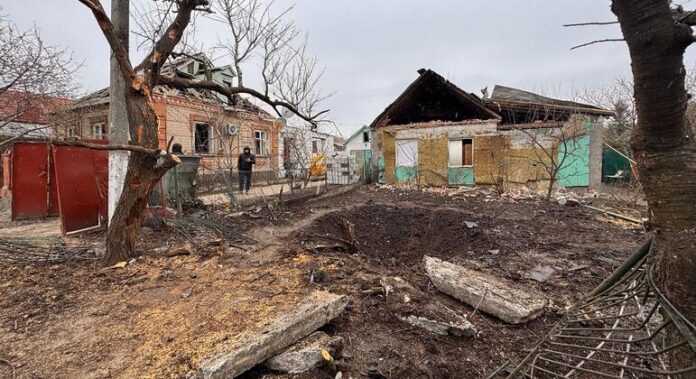
Reports on Tuesday indicated that Russian drone attacks injured at least five people in the frontline southeastern city of Zaporizhzhia, with apartment blocks and public facilities hit. 

“We are witnessing the devastating impact of systematic attacks on energy infrastructure that have disrupted electricity, heating and water supplies across the country, in some cases leaving entire towns without electricity and water supply for weeks,” said Matthias Schmale, UN Resident and Humanitarian Coordinator in Ukraine, speaking from Kyiv.

Deadliest year

According to Mr. Schmale, 2025 was the deadliest year for civilians since the start of the full-scale invasion in 2022. Data shows that at least 2,500 civilians were killed and more 12,000 injured last year, a more than 30 per cent increase compared with 2024.

His comments came ahead of an emergency special session of the General Assembly due to take place in New York later on Tuesday. 

Countries were expected to take action on a draft resolution including a ceasefire call and confidence-building measures such as the complete exchange of prisoners of war, the release of all unlawfully detained persons and the return of all internees and civilians forcibly transferred and deported, including children.

The UN Security Council was also due to meet over the ongoing war.

“This war needs to finally end… Any peace agreement must be grounded in the UN Charter, international law and General Assembly resolutions,” Ms. Baerbock said, highlighting the ever-present threat of death for civilians.

Killing time

“They told me count till 40 and if you’re still alive you obviously made it because with the rockets being shot over the border there is no time in many places to find a safer place,” Ms. Baerbock said, recounting the testimony of a teenage girl she met while visiting Kharkiv, 40 kilometres (25 miles) from Russian territory.

Calling on the international community to “work every day for peace” and amid reports of further peace talks between Russia, Ukraine and the United States in the Swiss city on Thursday, Ms. Baerbock reiterated the need for an “immediate, full and unconditional ceasefire” that respected the sovereignty, territorial integrity and independence of Ukraine.

Veterans’ challenge

Addressing the challenges which are part of the reconstruction and recovery process in Ukraine, Mr. Schmale said that there are up to one million veterans who need to be reintegrated into Ukrainian society, many of whom have suffered lifelong injuries, including amputations.

He also stressed that Ukraine is “among the most mined countries in the world”, with almost a quarter of its territory potentially contaminated by landmines.

Referring to a “rapid damage and needs report” launched on Monday by the UN in conjunction with the Ukrainian Government, the World Bank and the European Union, Mr. Schmale said that the estimated costs of recovery are “a staggering $590 billion over a 10-year horizon, which amounts to three times Ukraine’s GDP (gross domestic product) last year.”

What this kind of report fails to fully capture is “the destruction of the lives of human beings and their souls and mental well-being,” Mr. Schmale said.

Source link

Somalia: Number of people going hungry nearly doubles in a year

0
Somalia declares drought emergency as millions face hunger after failed rains

More than 1.8 million children under five are also at risk of acute malnutrition between now and June, according to latest analysis published on Tuesday by the IPC food security monitoring platform (see our UN News explainer on the platform here). 

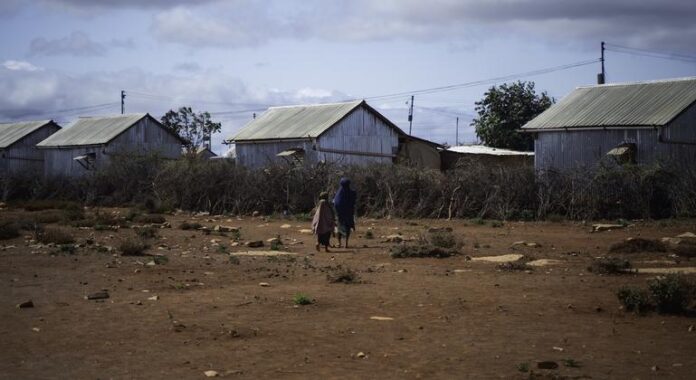
The worrying development comes after the October to December Deyr season rains failed and crop production fell. Those most impacted are poor farmers, pastoralists, and internally displaced people. 

Drought, displacement, aid shortfalls 

In Somalia, drought, insecurity and conflict in the centre, south and some parts of the north – driven by insurgency, competition over resources and other factors – have displaced people while also disrupting livelihoods and access to markets.  

The situation was further compounded by high local and imported food prices, alongside a reduction in humanitarian assistance. 

The IPC – a UN-backed initiative – uses a scale from one to five to measure the severity of food insecurity that helps governments and humanitarians to classify crises. 

Millions going hungry 

The experts estimated that a staggering 6.5 million Somalis are facing acute food insecurity, or IPC Phase 3 and above, compared to 3.4 million during the first quarter of 2025.  

Over two million are at emergency level, or Phase 4. 

“Most of the pastoral and agropastoral people in northern, central, and southern regions are classified in Phase 3,” they said.  

“These livelihoods face significant food consumption gaps, rising acute malnutrition, and are relying on crisis or emergency coping strategies just to meet basic food needs.”  

The IPC analysis revealed that this year, 1.84 million young children are suffering or will suffer from acute malnutrition, with 483,000 cases of severe acute malnutrition (SAM).  

The condition – also known as severe wasting – is the deadliest form of malnutrition, according to the UN Children’s Fund (UNICEF). 

Step up action 

Acute food insecurity in Somalia is expected to worsen through March during the dry Jilaal season, the hottest period of the year. 

Forecasts indicate that the Gu rainy season from April to June is likely to be average in most areas of the country which should lead to the gradual restoration of water and pasture resources.  

As a result, the number of people at IPC Phase 3 or above is likely to drop to 5.5 million, “however, acute food insecurity will remain widespread, and the slight improvements will be uneven across livelihood zones.” 

The IPC called for urgent scale-up of lifesaving humanitarian assistance to “hotspot” areas where high levels of acute food insecurity and acute malnutrition intersect. 

Other recommendations include ramping up aid in rural and underserved areas; strengthening coordination to facilitate integrated response combining food security, nutrition, health, and water, sanitation and hygiene (WASH) and other sectoral interventions, and improving targeting of humanitarian assistance to ensure it reaches those most in need. 

Source link

Germany’s New Crime-Fighting Partner Has No Badge — Just Algorithms

0


Germany is overhauling its security apparatus and bringing artificial intelligence into the fight against organized crime. The country’s

Source link

Ukraine: “Use all diplomatic tools to end this war,” top UN official tells Security Council

0

Ukraine: “Use all diplomatic tools to end this war,” top UN official tells Security CouncilRosemary DiCarlo, Under-Secretary-General for Political Affairs and Peacebuilding, delivered remarks on behalf of the Secretary-General asserting that “war remains a stain on our collective conscience.” It has “shattered lives, devastated communities and worsened regional and global instability,” she said. Deaths, displacements […]
Originally published at Almouwatin.com

Concerns over “coercive” repatriation of Burundian refugees from Tanzania

0

Concerns over “coercive” repatriation of Burundian refugees from TanzaniaAt the end of November 2025, there were more than 140,000 Burundian refugees in neighboring Tanzania, who fled after years of civil unrest in Burundi. As thousands continue to be ‘voluntarily repatriated’, a UN refugee agency (UNHCR) official says thousands could […]
Originally published at Almouwatin.com

Concerns raised about ‘coercive’ repatriation of Burundian refugees from Tanzania

0
Concerns raised about ‘coercive’ repatriation of Burundian refugees from Tanzania

As of the end of November 2025, there were over 140,000 Burundian refugees in neighbouring Tanzania, who have fled over years of civil unrest in Burundi.

While thousands continue to be “voluntarily repatriated”, an official with the UN refugee agency (UNHCR) says thousands may still need international protection in Tanzania.

Up to 17,000 say they are unable to return over fears for their safety or danger of political persecution. They include members of the political opposition and former military personnel.

There are increasing concerns from refugees on forced returns and coercive measures,” said UNHCR’s Bahia Egeh, who is based in Tanzania. “We also continue to advocate against any coercive measures for the refugees in the camps.”

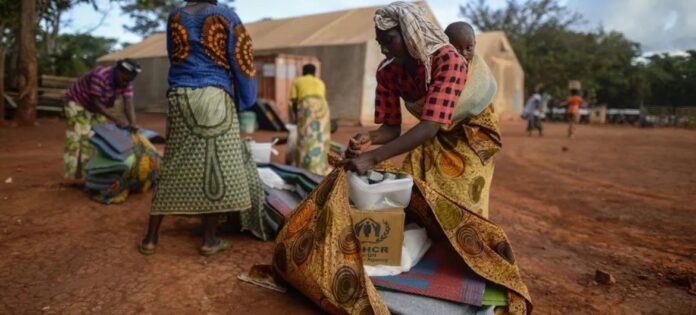
Adding to these concerns are reports that during the repatriation process in Tanzania, refugee shelters are being “demolished” and some Burundi refugees are being subject to “mistreatment”, UNHCR revealed on Tuesday. 

UNHCR’s official position on forced repatriations, known as refoulement, is clear and grounded in international refugee law: refugees and asylum-seekers must not be returned to a place where their lives or freedom would be at risk.

History of displacement

Many refugees in Tanzania have been refugees before, fleeing from the Burundian civil war in the 1990s and early 2000s, returning to Burundi, and then fleeing again in 2015 during a period of political unrest.

There are currently two refugee camps in the North-Western Kigoma region of the East African country, Nduta and Nyarugusu, which is the larger of the two. 

Many refugees are seeking to relocate to Nyarugusu after it was announced the Nduta camp is due to close in March.

Ms. Egeh said that the conditions in these camps are “challenging for the refugees” amid a reduction in UNHCR funding that has impacted services. 

UNHCR assisted voluntary returns of around 390,000 refugees from Tanzania between 2002 to 2009, while some 162,000 Burundian nationals were granted Tanzanian citizenship in 2014.

In 2015, there was a large increase in people fleeing from Burundi into Tanzania.

What is happening now?

In 2017, it was deemed safe for Burundian refugees to return home.

UNHCR made a tripartite agreement with the Burundi and Tanzania governments to voluntarily repatriate. Progress was initially good, however the COVID pandemic led to a decrease in repatriations for a few years. 

In recent months, repatriation efforts have been ramped up after a target of 3,000 refugees a week was agreed in late 2025 as part of an updated tripartite agreement. 

In this way, UNHCR shifted from facilitating to promoting and being more vocal with their support for voluntary returns to Burundi.

Uptick in 2026

In the first two months of 2026, more than 28,000 Burundian refugees have returned from Tanzania. 

With 8,000 returning in the past week – well exceedingly the weekly target – the total number of repatriations since the 2017 agreement is now over 180,000 refugees.

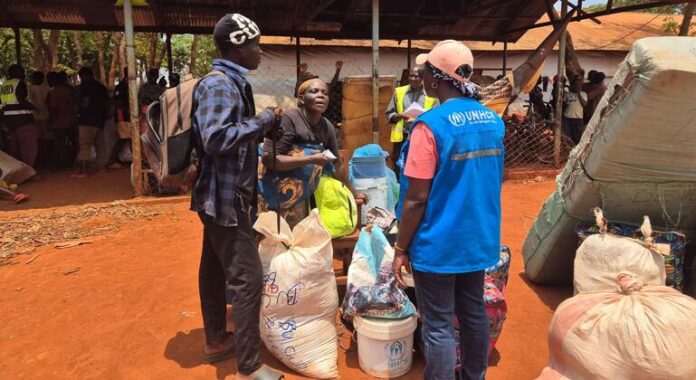
However, in a statement on Tuesday, UNHCR expressed concern that during these accelerated efforts “refugee shelters have been demolished, forcing people to take temporary refuge in already overcrowded departure centres and further straining conditions on the ground. Some refugees have also reportedly been subjected to mistreatment.”

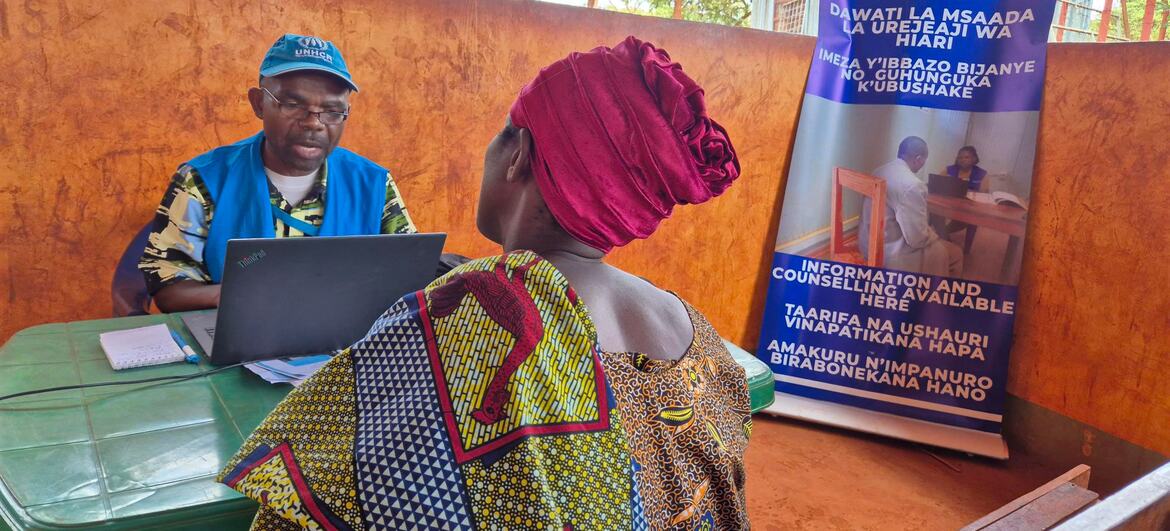
A woman consults with an UNHCR aid worker at a voluntary repatriation help desk in Tanzania, where information and counseling are provided for Burundian refugees.

© UNHCR/Maimuna Mtengela

A UNHCR staff member talks to a Burundian refugee in Nyarugusu Camp, Tanzania.

Ms. Egeh said “we continue to advocate with the Government to adhere to the tripartite agreement. This was agreed by all three parties that it should be in safety and dignity and respect the protection principles.”

An important part of the tripartite agreement is that people need to be treated with respect – returns must be based on free and informed choice rather than coercion.

To support at risk refugees, Ms Egeth said that UNHCR have a dedicated protection help desk where they can assess the willingness of refugees to return. This will ensure that “people who still need international protection in Tanzania are not part of the convoy that’s going.”

Funding cuts, reduced services

“When I arrived two years ago, there were 10 health facilities. But over the last couple of years, due to funding, due to the decrease in resources coming in, today there are actually two facilities out of the 10 that are open in Nyarugusu camp.” 

According to the statement from UNHCR “Capacity is also severely overstretched in Burundi’s reception and transit centres. Increased return pressures, reduced resources and limited staffing are straining operations on both sides of the border.”

Ms Egeth emphasised that for the refugees, some of whom have been displaced since the 1990s, the most effective way of support is to fund “the resettlement efforts” in Burundi. This will help bring a sustainable return and end the cycle of movement, so people can “start rebuilding their lives” after years of insecurity and uncertainty. 

UNHCR remains committed to protecting refugees who don’t want to go home and supporting refugees that do. 

“We will continue to support the governments of Burundi and Tanzania to uphold their commitments according to the Tripartite arrangements around voluntary repatriation, and particularly in ensuring that refugees and their needs remain front and centre at every step of the repatriation process.”

Source link

‘I dream of a safe life’: Gaza children share the future they want

0

'I dream of a safe life': Gaza children share the future they wantExpressing their hopes for peace in art, poetry and the models they made from the rubble created by war, thousands of young people across the enclave took part in the Gaza We Want initiative. With the support of the United Nations Children’s Fund (UNICEF), the initiative invited […]
Originally published at Almouwatin.com

Ukraine: $588 billion in reconstruction costs over the next 10 years

0

Ukraine: $588 billion in reconstruction costs over the next 10 yearsThe finding comes in the Rapid Joint Assessment of Damages and Needs (RDNA5) update released Monday by the government, the World Bank Group, the European Commission and the United Nations. It was released as the full-scale Russian invasion enters its fifth year on February 24, with […]
Originally published at Almouwatin.com

Unlike von der Leyen, Alain Berset appoints an envoy to defend Europe’s religious minorities

0

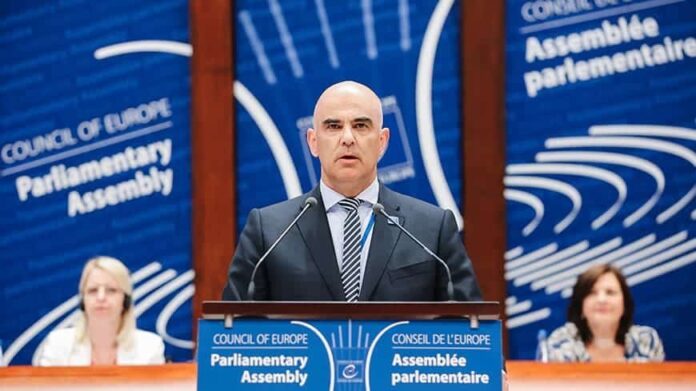
Unlike von der Leyen, Alain Berset appoints an envoy to defend Europe's religious minoritiesCouncil of Europe decision targets anti-Semitism, anti-Muslim hatred and broader religious intolerance As hate incidents and polarization cross borders, Council of Europe Secretary General Alain Berset has linked the protection of religious minorities to the organization’s core post-war promise of “never again […]

Originally published at Almouwatin.com

Unlike von der Leyen, Alain Berset names envoy to defend Europe’s religious minorities

0

Council of Europe move targets antisemitism, anti-Muslim hatred, and wider religious intolerance

As hate incidents and polarisation spill across borders, Council of Europe Secretary General Alain Berset has tied the protection of religious minorities to the organisation’s core post-war promise of “never again” — and to its day-to-day work on anti-discrimination and democratic resilience. The approach is both symbolic and institutional: from Holocaust remembrance and interreligious dialogue to the practical coordination of Council of Europe bodies that monitor racism, intolerance, and member states’ human-rights compliance. :contentReference

On 5 December 2025 in Strasbourg, the Council of Europe announced that Irene Kitsou-Milonas had begun her mandate as the Secretary General’s Special Representative on antisemitism, anti-Muslim hatred, and all forms of religious intolerance, having assumed duties on 1 December. In the announcement, Berset framed the post as a response to forces of hate that “weaken democracy and divide communities,” calling this work “fundamental” to protecting the Council of Europe’s “peace project.”

The appointment matters for religious minorities because it is designed as a coordination and influence role across the Council of Europe’s machinery — not just a one-off statement. The mandate includes building regular dialogue with religious leaders and communities, supporting Holocaust remembrance initiatives, and working closely with bodies such as the European Commission against Racism and Intolerance (ECRI) and the anti-discrimination steering committee CDADI.

That institutional emphasis became clearer again on 27 January 2026, during the Council of Europe’s Holocaust commemoration in Strasbourg. Berset warned that hatred targeting people “for their faith” persists, and argued that remembrance must translate into refusing “all forms of religious intolerance, here and now.”

Where “religious minorities” fits into the Council of Europe’s toolbox

Unlike the European Union, the Council of Europe’s leverage is grounded in human-rights standards and monitoring across 46 member states — most visibly through the European Convention on Human Rights system and the case-law of the European Court of Human Rights. In practice, religious-minority protection often intersects with wider issues the Council tracks: hate speech, discrimination in education or employment, security-driven restrictions, and unequal treatment by public authorities.

In addition, the Council’s minority-protection architecture includes the Framework Convention for the Protection of National Minorities, widely described in Council of Europe proceedings as a central legally binding instrument in this field. While the treaty is not limited to religion alone, it frequently overlaps with religious identity in minority communities and is part of the broader rights landscape Berset’s office operates in.

What changes now — and what to watch

The Special Representative’s mandate is not an enforcement power in itself; it is a political and administrative lever: setting priorities, keeping pressure on coordination, and shaping how the Council engages with member states and partners. The announcement explicitly points to cooperation with other international fora — including EU and OSCE platforms — and to producing strategy papers and proposals for Council of Europe action.

For minority communities, the test will be whether this role leads to measurable outcomes: stronger implementation of ECRI standards, more consistent follow-up when governments tolerate or minimise religiously motivated hate, and clearer public guidance on protecting freedom of religion or belief while safeguarding public order without discrimination.

In recent weeks, Berset has also been a visible figure in Council of Europe debates on Europe’s “democratic security” and the resilience of the continent’s legal framework — themes that, in practice, determine whether minority protections hold firm when politics hardens. For background, see The European Times’ earlier coverage of his address to the Parliamentary Assembly. Read more.

A contrast with Brussels: the EU’s FoRB envoy gaps

Berset’s decision to install a dedicated Special Representative at the Council of Europe also lands against a sensitive backdrop in Brussels: the European Union has, for long stretches, operated without a continuously active Special Envoy for the promotion of freedom of religion or belief outside the EU. In a series of briefings, Human Rights Without Frontiers director Willy Fautré argues that the post has repeatedly been left vacant or underpowered for extended periods, creating what he describes as a credibility gap between EU rhetoric and sustained diplomatic follow-through.

Fautré’s reporting points to long interruptions after the Juncker-era mandate ended in late 2019, a short-lived appointment in 2021, and renewed uncertainty after the two-year mandate of Frans van Daele (appointed in December 2022) concluded in late 2024. The European Commission’s own public page on its Article 17 dialogue still notes that van Daele was appointed in December 2022, while civil-society groups and some MEPs have pressed the Commission to clarify when — and how — a successor will be chosen.

  • Council of Europe: Berset’s office appoints a Special Representative on antisemitism, anti-Muslim hatred and all forms of religious intolerance, designed to coordinate work across Council of Europe monitoring and standards-setting.
  • European Union: According to Fautré’s compilation, the EU FoRB envoy function has faced repeated vacancies and limited continuity since 2019, prompting repeated calls from civil society and parts of the European Parliament for a transparent appointment process and regular public reporting.

The divergence matters for religious minorities because both institutions shape Europe’s wider “human-rights ecosystem”: Strasbourg through legally anchored standards and monitoring across member states, and Brussels through external action, trade leverage, and enlargement partnerships. Critics say prolonged EU gaps weaken sustained engagement on persecution and intolerance abroad; supporters of reform counter that any renewed EU envoy mandate should be tightly anchored to universal rights — including protection for non-believers and against discrimination justified in the name of religion — an argument echoed in public calls from MEPs and NGOs. Humanists International summarised one such cross-party letter urging stronger transparency and safeguards around the next appointment.

Sources

Source link