Monday, June 29, 2026
Home Blog Page 205

Doha Social Summit: the path to fairer societies begins in the classroom

0

The vast Qatar National Convention Center (QNCC), filled with delegations, students, civil society groups and policymakers from around the world, reflects the magnitude of the moment.

Nearly 14,000 participants are registered for the Summit, which brings together governments, international organizations and community stakeholders to shape a people-centered vision of social development over the next decade.

Education as a foundation

A high-level event, Education as the Foundation of the New Social Contract, set the tone for the day. Her Highness Sheikha Moza bint Nasser delivered a keynote address calling for a renewed commitment to education as a starting point for justice and opportunity.

Citing the 272 million children currently out of school, many because of conflict, she said progress is impossible if exclusion persists.

Education is not a luxury, nor a favor to be granted,“, she declared. “It is a right – and an existential question for the future of nations.”

UN Secretary-General António Guterres reinforced this message, describing education as “the best tool we have to combat poverty”. But he warned of widening inequality, chronic underinvestment and a global shortage of qualified teachers.

We must repair the “cracks in this vital foundation,” he said, calling for closing the digital divide, strengthening support for teachers and treating education not as a cost but as a strategic investment.

Later, during a press conferenceMr. Guterres stressed that rebuilding education systems will be essential in crisis situations, notably in Gaza and Sudan.

“Education must be a central pillar of any reconstruction project in Gaza,” he said.

Presidents of Kenya, Albania and Palau participate in high-level education event.

Dialogue of the presidents

The session also included a high-level dialogue with the The Presidents of Kenya, Albania and Palau, who stressed that education is an investment in human development and future growth.

Kenyan President William Ruto called for aligning education with labor market and digital needs; Albanian President Bajram Begaj stressed that education is a universal right; and President Surangel Whipps of Palau highlighted the importance of ensuring access in remote and island communities.

Solutions through the Summit

Throughout the venue, solution-focused sessions explored practical pathways to expanding opportunities and social protection.

In a flagship session on universal social protection, UN Deputy High Commissioner for Human Rights Nada Al-Nashif stressed that social protection is “not charity, but a human right”essential to equity and resilience.

She highlighted progress in extending coverage to informal workers and urged international financial reforms to protect public investments. “Practical solutions are within our reach,” she said. “Let’s transform our commitments into actions. »

UNESCAP/Balajimohankrishna Gatram

The women and children of a village go to fetch water from a well. Such tasks keep children out of class and prevent women from engaging in formal sectors.

New political approach to poverty

The United Nations Development Program (UNDP) introduces a new analysis urging governments to exceed traditional poverty lines.

Its policy brief proposes establishing “thresholds of prosperity” – ensuring that people can not only escape poverty, but also remain resilient in the face of shocks such as illness, job loss or climate-related disasters.

According to the analysis, 411 million people could move from poverty to basic security by 2030 if countries pursue job-intensive growth, adaptable social protection and policies that improve wages and working conditions.

“With decisive and integrated action, we can break the cycle of vulnerability and ensure lasting prosperity. The past 30 years have shown that progress is possible,” said Haoliang Xu, Acting Administrator of UNDP, referring to the 1995 Copenhagen Declaration, which was the first to set global commitments on social development.

Acting UNDP Administrator Xu speaks with UN News at the Summit.

Implementation time

From youth dialogues to discussions on digital inclusion, nutrition, disability rights, decent work and aging societies, participants returned to a common message: progress is possible, but it must be anchored in real-world needs.

The leaders who adopted the Doha Political Declarationattention is now focused on translating commitments into actions and investments.

UN News is on site in Dohaproviding ongoing reporting throughout the Summit.

Originally published at Almouwatin.com

Half of Jamaica’s population reeling from Hurricane Melissa

0

More than 130 roads have been blocked, power and communications networks disrupted, while health services remain under severe strain, according to the UN aid coordination office (OCHA).

“Up to 360,000 people could need food assistance,” said the World Food Program (PAM). Access to some western parishes remains difficult due to a lack of debris and fuel, OCHA said.

WFP has been “working around the clock,” developing joint plans and strategies with the government, said Brian Bogart, country director of WFP’s multi-country office in the Caribbean, during a briefing with journalists in New York via video link.

Jamaican Resilience

“The Jamaican people are resilient,” he said, “but they need urgent support to maintain that resilience.

Mr. Bogart reiterated that the urgent needs remain food, water, shelter and medicine for the hardest-hit communities.

Over the past two days, a ship from the French and Dutch navies loaded with relief items landed in Kingston harbor.

In the coming days, WFP plans to assist up to 200,000 people across the country with food assistance and cash transfers, which is essential as the country moves from an immediate humanitarian response to a longer-term recovery strategy.

Cuba and Haiti

Food distribution in Cuba has already reached 180,000 people in protection centers in the provinces of Granma, Santiago de Cuba and Guantanamo, reported WFP country director Etienne Labande.

Highlighting UN food agencies’ deep understanding of the local context and their ability to coordinate with authorities and communities, Mr. Labande stressed that WFP’s presence on the ground was “essential” to ensure a rapid and effective response.

Meanwhile, in Haiti, at least 30 people died during the extreme weather generated by Melissa, according to authorities.

A boy receives support from a UNICEF worker in St. Elizabeth, Jamaica.

“An estimated 1.25 million people were affected by the hurricane”said Cuba’s national director.

Worse, ongoing relief efforts and aid delivery are further complicated by the ongoing humanitarian crisis and security vacuum created by armed groups that control the vast majority of the capital, Port-au-Prince.

“Recovery is a marathon, not a sprint”underlined M. Labande.

Despite severe funding shortages, access difficulties and logistical constraints, the UN and its partners continue to assess the damage and scale up efforts to reach people in need.

$74 million is urgently needed to provide lifesaving assistance to 1.1 million people in the Caribbean following the Melissa disaster, and to coordinate emergency logistics and telecommunications.

Originally published at Almouwatin.com

Possible Gaza stabilization force must have Security Council approval (Guterres)

0

António Guterres spoke at a press conference during the second World Summit for Social Development in the Qatari capital.

He was asked about coordination with Israel and US President Donald Trump’s 20-point plan for Gaza, which includes the deployment of a temporary international stabilization force in the enclave, developed by US, Arab and international partners.

Increasing aid is essential

The Secretary-General declared that the United Nations is “actively engaged in ensuring that humanitarian aid increases significantly» in Gaza and reaches the entire population.

He added that the United States “has contributed to Israel at least gradually eliminating some of the obstacles and difficulties that remain” in this regard.

“On the other hand, we very actively support the principle that the ceasefire must be respected, all parties must respect the ceasefire, there must be a link between Gaza and the West Bank in how the next step will be implemented,” he continued.

“And that this must lead to a two-state solution and the recognition of an independent Palestinian state. »

The Secretary General stressed that the UN positions “have been very clear” and do not depend “on cooperation with this or that country”.

American draft resolution

He noted that the United States was developing a Security Council resolution on Gaza in consultation with other active members, but the UN Secretariat is not involved in the discussions.

“What we believe is that any entity created in Gaza should have the legitimacy of a Security Council mandate“, he said.

Asked if this included the international force, he replied that “that’s one of the things that was discussed” and “it would be important to have the training and education of a Palestinian police force.”

He said: “This transition must lead to a situation in which both parties [Gaza and the West Bank] are united and that the Palestinian Authority exercises its full authority.

Humanitarian efforts continue

Meanwhile, humanitarians continue to intensify their operations in the Gaza Strip, in line with the 60-day response plan, UN deputy spokesperson Farhan Haq told reporters in New York.

He said the UN and partners collected 80 truckloads of supplies on Sunday, including food, animal fodder, shelter materials, winter clothing and hygiene items. This total does not include bilateral and commercial deliveries.

“Our partners report that, based on preliminary data, they collected nearly 750 pallets of relief items in Kerem Shalom/Karem Abu Salem yesterday and transported them to Gaza City,” he said.

“Four other trucks delivered medicines and medical supplies. Traffic jams and heavy traffic continue to hamper collection efforts.”

Nearly a million fed

Since the resumption of general food distributions on October 13, nearly a million people, or half the population, have received assistance via 46 distribution points managed by humanitarian partners.

“We continue to try to expand this program so that this month families can receive two monthly food packages, compared to one in October,” he said.

Between mid-October and last Sunday, the UN and its partners collected more than 210 tonnes of animal fodder from the crossing points, and distribution to some 1,700 herders in Deir al-Balah is almost complete.

Partners providing nutrition services also collected more than 120,000 packets of fortified cereals, used to prevent acute malnutrition in children. This amount is enough to support a large number of children for a month.

Mr Haq said other partners providing water and sanitation services continue to scale up their interventions.

Humanitarians also helped local authorities rehabilitate three wells supplying neighborhoods in Gaza City.

Originally published at Almouwatin.com

Japan Has a New Missile System to Destroy Landing Craft

0


Among many countries in the world currently strengthening their armed forces, we would find Japan as well. Japan

Source link

Famine declared in two Sudanese towns isolated by war, fragile progress elsewhere

0

Although food security has started to improve in areas where fighting has eased, famine has set in in areas affected by conflict, cut off from aid or under siege, according to the latest UN-backed IPC food security analysis.

Famine conditions confirmed in El Fasher and Kadugli in Darfurwhere “people endured months without reliable access to food or medical care,” the Food and Agriculture Organization (FAO) said.FAO), the World Food Program (PAM) and the child rights agency UNICEF said in a joint outing.

Call for ceasefire

UN chief António Guterres called on Tuesday for an immediate ceasefire in Sudan, as disturbing images of apparent massacres in El Fasher and elsewhere continued to circulate online.

In a tweetMr. Guterres called on the Sudanese armed forces and rebel rapid support paramilitary forces “to come to the negotiating table to end this nightmare of violence.”

Heavy fighting broke out in Sudan in April 2023 between rival armies, causing a massive humanitarian catastrophe.

Last week saw the fall of El Fasher’s government after more than 500 days of siege by rebels.

Hundreds of civilians – including aid workers – are believed to have been killed, with many more trapped behind barricades.

Millions of people are still hungry

The IPC analysis confirmed that around 21.2 million people in Sudan – 45 percent of the population – face high levels of acute food insecurity, representing a slight improvement.

Furthermore, an estimated 3.4 million people no longer face critical levels of hunger.

The improvements follow a gradual stabilization since May in three states – Khartoum, Al Jazirah and Sennar – where the conflict has subsided and families are returning, among other events.

“But these gains are limited,” the UN agencies said. “The wider crisis has destroyed the economy and vital services, and much of the infrastructure that people depend on has been damaged or destroyed. »

“Flimsy improvements”

Favorable growing conditions are also expected after the harvest and over the next year, with famine levels improving to 19.3 million through January.

However, they warned that “these fragile improvements are very localized» because many families returning to Khartoum and Al Jazirah have lost everything and will struggle to enjoy the harvests.

At the same time, active conflict persists in the western regions, including North and South Darfur as well as West and South Kordofan.

At the same time, hunger is expected to worsen from February as food stocks run out and fighting continues.

Famine in besieged areas

The IPC Famine Review Committee (FRC) found that famine conditions prevail in El Fasher, the capital of North Darfur state, and Kadugli in South Kordofan, which have been largely isolated due to the conflict.

UN agencies noted that conditions in Dilling, South Kordofan, “are likely similar to those in Kadugli, but cannot be classified due to lack of reliable data – due to restricted humanitarian access and ongoing hostilities.”

In the western Nuba Mountains, the situation has improved slightly, but famine remains high unless humanitarian access improves.

The FRC forecasts a risk of famine in 20 additional areas in Greater Darfur and Greater Kordofan, including rural localities, IDP camps and several new sites in East Darfur and South Kordofan.

Furthermore, global acute malnutrition (GAM) rates are alarming, ranging from 38 to 75 percent in El Fasher and reaching almost 30 percent in Kadugli.

This is happening as outbreaks of cholera, malaria and measles continue to surge in areas where health, water and sanitation systems have collapsed.

Originally published at Almouwatin.com

Syria’s future threatened by serious funding shortfall

0

The development comes 11 months after the country’s devastating civil war ended with the overthrow of the Assad regime by opposition forces loyal to new President Ahmad Al-Sharaa.

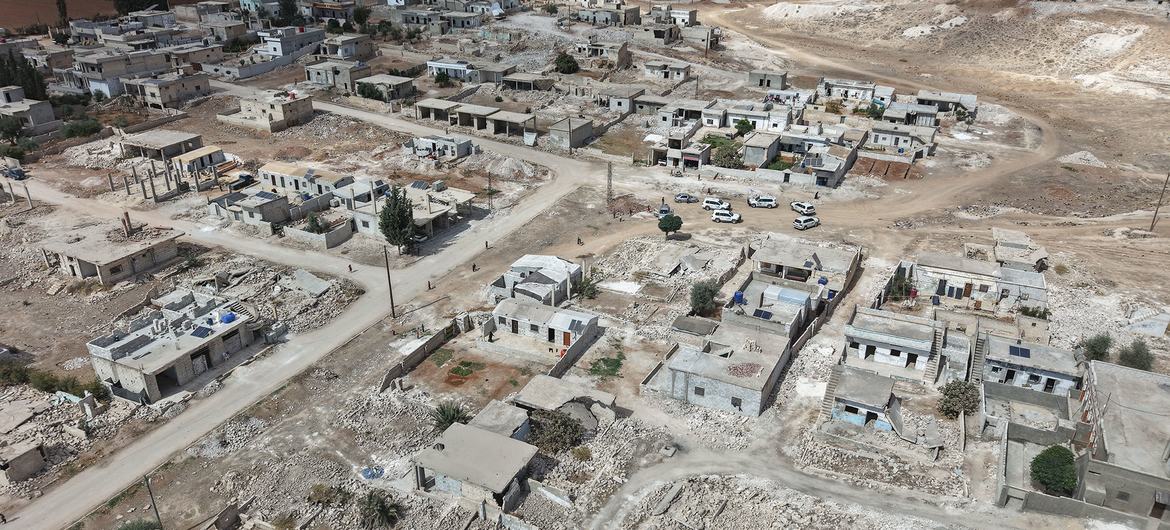
Today, as Syrians are returning home in increasing numbersthe broken country faces chronic shortages of foreign investment, medicine, electricity and equipment.

According to the WHOonly 58 percent of hospitals and 23 percent of primary health care centers are fully functional today.

“Services on the ground remain very fragile…health needs continue to increase. » warned the representative of the United Nations agency in Syria, Dr. Christina Bethke.

She said that since mid-year, more than 400 health facilities have been affected by funding reductions and 366 have suspended or reduced their services.

In total, 7.4 million people have seen their access to medicines and treatments reduced, according to the WHO.

In just two months, this made it possible to avoid 122,000 trauma consultations and allow 13,700 deliveries without qualified personnel.

“We continue to see shortages of health personnel and the conditions for the return of these qualified health professionals are still not necessarily in place,” Dr. Bethke told reporters in Geneva via video from Damascus.

More than a million return home

The latest UN data indicates that more than 1.16 million Syrians have returned to their country since the fall of the Assad regime.

The lack of available healthcare is a key factor deterring more people from returning home, in addition to the widespread destruction of housing and infrastructure, lack of jobs and the current volatile security situation.

According to the United Nations refugee agency, UNHCRmore than seven million Syrians remain internally displaced and more than 4.5 million still live abroad.

“Most people would prefer to come back with their families, so if you’re considering going back to your beloved Syria, you’ll want to know that there’s a school there, that there’s shelter there, that you have electricity and connectivity, that you have water,” explained WHO’s Dr. Bethke.

Looming hotspots

In northeast Syria, the Hassakeh National Hospital could see donor support run out next month.

It is the only comprehensive public hospital that can accommodate more than 300,000 people. If funding fails, key services likely to suffer will be the ambulance and referral system, as well as 24-hour primary care in several camps.

“We also received reports this week from partners that support to al-Kasrah General Hospital in Deir-ez-Zor has been suspended, forcing most departments to halt operations, with only dialysis and physiotherapy continuing – affecting more than 700,000 people,” Dr Bethke added.

To maintain health care in Syria, the UN and its health sector partners need $565.5 million.

Only about 20 percent of this sum has been received. Of the $141.5 million that WHO needs this year for its work and that of its partners, $77 million remained unfunded as of last month.

“Without predictable, multi-year support, the health system could collapse just when recovery is within reach,” insisted Dr. Bethke.

Originally published at Almouwatin.com

Famine tightens grip on Sudan, with civilians trapped and aid blocked

0
Famine tightens grip on Sudan, with civilians trapped and aid blocked

According to the latest IPC food security report, more than 21 million people across Sudan are facing high levels of acute food insecurity – the largest such crisis in the world.

Famine takes root

The analysis found that famine conditions are ongoing in El Fasher, North Darfur, and in Kadugli, South Kordofan, where families are trapped and surviving on leaves, animal feed and grass.

Around 375,000 people nationwide are facing “catastrophic” levels of hunger, meaning they are on the brink of starvation.

The IPC is a global system used by UN agencies and humanitarian partners to measure the severity of hunger: check out our explainer here.

It classifies food crises on a five-point scale, with Phase 5 – famine – representing extreme deprivation marked by starvation, acute malnutrition and rising deaths.

The latest findings for Sudan were reviewed and confirmed by the IPC’s independent Famine Review Committee.

El Fasher turning point

Conditions for civilians remain desperate. Following the Rapid Support Forces (RSF) militia’s takeover of El Fasher last week after more than 500 days of siege, the UN says hundreds of civilians – including humanitarian workers – have been killed, and many others are trapped behind barricades.

The city remains sealed off, with food, medicine and relief supplies blocked despite urgent appeals for access.

The UN’s humanitarian office, OCHA, has called this obstruction “unacceptable” and urged immediate, safe passage for aid convoys.

Nearly 71,000 people have fled El Fasher and surrounding areas since late October, according to the International Organization for Migration (IOM), many reporting killings, abductions and sexual violence along the way.

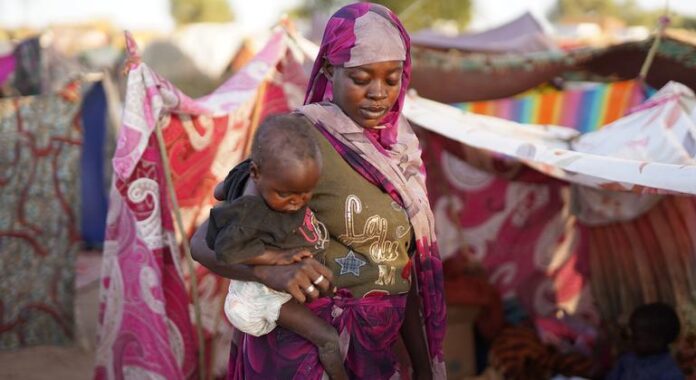
Conditions in Tawila around 70 kilometres away, where most have sought refuge, are dire: families are sleeping in the open, food stocks are depleted, and clean water is scarce.

In neighbouring Kordofan, violence has surged in recent days, driving tens of thousands from their homes.

Children’s agency, UNICEF, reported that missile strikes in Kadugli last Friday killed at least eight children sheltering in displacement sites.

Catastrophe for civilians

The UN’s Humanitarian Coordinator in Sudan, Denise Brown, described the situation as “catastrophic for civilians who are caught between frontlines, cut off from assistance and facing hunger on a massive scale”.

She again urged an immediate ceasefire, protection of civilians, and unimpeded humanitarian access.

With only 28 per cent of Sudan’s $4.16 billion humanitarian plan funded so far this year – amid an unprecedented fall off in aid expenditure by donor governments worldwide – the UN warned that critical life-saving operations remain at risk.

Without a halt to the fighting and a massive scale-up of aid, millions more could face starvation in the months ahead.

Source link

Gaza: humanitarian teams strive to fight hunger; one million food parcels delivered

0

Last month, hundreds of thousands of people returned to northern Gaza – where famine was declared in late August – but their access to food is “severely limited”, said Abeer Etefa, senior spokesperson for the World Food Program (WFP).PAM).

And while many returnees have found their homes in ruins, those displaced in the south “often live in tents and without access to food and services,” she warned.

Speaking from Cairo, Ms Etefa said that three and a half weeks into the fragile ceasefire, the WFP had distributed food parcels to around a million people across the Gaza Strip against a target of 1.6 million, as part of “the vast operation to reduce hunger in Gaza”.

“Supplies are still limited, so each family receives a reduced food ration, which corresponds to one parcel, or enough food for 10 days,” she explained.

To continue expanding our operations to the required level, “We really need more access, more border crossings opening and… more access to key routes inside Gaza”insisted the PAM spokesperson.

Humanitarian crossings still closed

UN Aid Coordination Office OCHA said Monday that no food aid convoys had reached the north via direct crossings since September 12.

“We still only have two operational border crossing points,” emphasized Ms. Etefa, referring to Kerem Shalom in the south of the enclave and Kissufim in central Gaza. “This significantly limits the amount of assistance that WFP and other agencies are able to provide to stabilize markets and meet the needs of the population,” she said, highlighting the fact that the continued closure of northern crossing points into the Gaza Strip means that aid convoys are forced to “follow a slow and difficult route from the south.”

The spokesperson for the UN food aid agency also said that some 700,000 people receive fresh bread daily through 17 WFP-supported bakeries, nine in southern and central Gaza and eight in the north, with the aim of reaching 25.

Speaking from Gaza, WFP communications manager Nour Hammad said that while witnessing “apocalyptic scenes” across the enclave, she also saw in people’s faces “the joy that the guns have fallen silent after all this time and the fear of whether the silence will last or not.”

She said Gaza residents compared the destruction caused by more than two years of war to “the aftermath of an earthquake.”

“This help is important”

“In all the distribution points I have visited in the Gaza Strip in recent days, people tell me one thing: this aid is important,” she said. After months spent “surviving on scraps, rationing food, spreading a meal over several days”, people finally have access to “fresh bread, food parcels, cash transfers, nutrition and support”.

“This is where the path to recovery begins,” she emphasized.

While 200,000 of the most vulnerable people now receive digital cash payments to “supplement food baskets with fresh produce” from local markets, prices there remain prohibitive.

“Food is slowly returning to the shelves, but prices remain out of reach for families, given that they have exhausted their resources to survive two years of war,” Ms. Hammad said. “Today, for example, I buy an apple at the price of a kilo before the war,” she explains.

The fragility of the ceasefire and aid flows are at the center of people’s concerns, Ms. Hammad said, recounting the story of a displaced mother she met in Gaza City. Even though the woman is receiving aid, she warned her children against eating the rations right away because “she cannot believe that tomorrow we will also bring food,” the WFP communicator said.

“Families invite us into their tents… exhausted from the cold of winter and the heat of summer, and they want to show us their reality. And their reality is that people need food. People need shelter, people need warm clothes because winter is coming and they need continued support,” she concluded.

Originally published at Almouwatin.com

Commission reports on the progress of aspiring EU members

0
Commission reports on the progress of aspiring EU members

Every year, the Commission assesses the state of play and the progress made by those that seek to join the European Union. It also provides guidance on key reform priorities for each country. Learn more about the 2025 reports.

Source link

Gaza: Food access improves in the south but food convoys fail to reach north directly

0
Gaza: Food access improves in the south but food convoys fail to reach north directly

One in two households surveyed reported better access because of increasing commercial and aid deliveries.

OCHA warned however that no food aid convoy has reached the north via any direct crossings since 12 September.

Despite ongoing dire conditions in northern Gaza, the UN agency said that around 90 per cent of the estimated 29,000 people who moved inside the Strip at the weekend were travelling from the south to the north.

Trucks and supplies

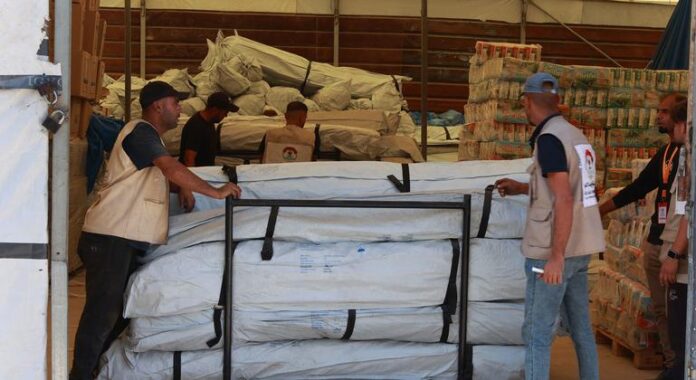
The UN and partners on Saturday collected nearly 200 truckloads of essential supplies from Israeli crossings along the perimeter fence that encircles Gaza.

Among the supplies were nearly 1,900 metric tonnes of different food items, wheat flour and over 100 pallets of food boxes.

The supplies also included over 1,000 pallets of mattresses, blankets, tents, tarpaulins and winter clothes; 300 pallets full of hygiene kits, buckets, water containers, and jerry cans; 50 pallets of fortified cereals; and some 200 pallets of dignity kits, menstrual health kits, and midwifery supplies.

On Sunday – based on initial data – UN teams collected nearly 1,000 pallets of blankets, tents, hygiene kits, water tanks, mats, winter clothes, tarpaulins and jerry cans, alongside one truckload of animal fodder.

“All of this data is preliminary, and it covers the UN and our partners but does not include bilateral donations and the commercial sector,” UN Deputy Spokesperson Farhan Haq told reporters in New York on Monday.

Meals and nutrition

The UN and partners are supporting 17 bakeries in Gaza – nine in the south and eight in the north – which produce 150,000 bread bundles every day, according to latest figures.

“We’re also supporting 180 kitchens serving nearly 1,160,000 meals every day,” Mr. Haq continued. “On the nutrition front, we are currently supporting 133 treatment sites, including 20 in Gaza City, where famine was confirmed in August.”

On Saturday and Sunday, teams also delivered 1,000 tarpaulins and 2,500 blankets to people in need.

Since the ceasefire, the UN reproductive health agency, UNFPA, has supported an estimated 90,000 women and girls with reproductive health and hygiene items.

Incubators

This includes the distribution of medical equipment and supplies to 13 health facilities across the Strip, including incubators and surgery equipment, Mr. Haq said

UNFPA has also distributed thousands of post-partum kits and dignity kits to women and girls.

Meanwhile, renovation is ongoing in four schools, and, over the past three days, the UN and our partners have supported the reopening of five temporary learning spaces in Gaza City.

Source link