Wednesday, April 8, 2026
Home Blog Page 215

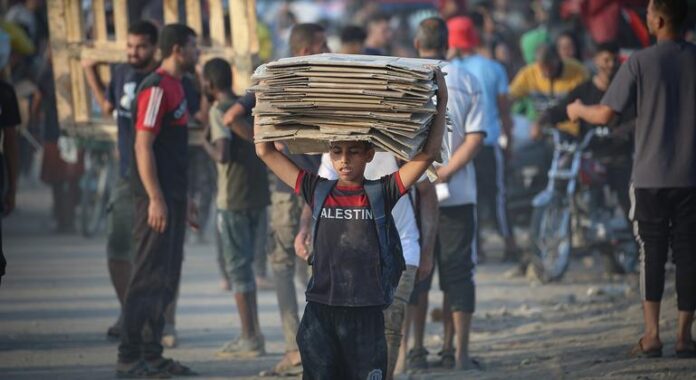
Live: Updates of the Middle East; UN independent investigators say ISRAEL has committed a genocide in Gaza

0

In the midst of the intensification of the bombing in the city of Gaza during the night, the Middle East crisis took the front of the stage at the UN on Tuesday, from the Genveva headquarters of the World Organization, where Israel rejected the allegations of genocide by an international panel of independent human rights investigators. Development was before an urgent debate to the Human Rights Council caused by Israeli strikes on the political leadership of Hamas last week in Doha.

Originally published at Almouwatin.com

F4E and CERN join forces in fusion energy and particle physics

0
F4E and CERN join forces in fusion energy and particle physics

Fusion for Energy (F4E) and CERN are joining forces to drive research and innovation forward for large scientific experiments. The Director of F4E, Marc Lachaise, and CERN’s Director for Accelerators and Technology, Mike Lamont, have signed an agreement that will foster collaboration in areas of common interest. The new framework will enable the two Big Science organisations to combine their expertise and capabilities, to address mutual challenges in the areas of fusion energy and particle physics.

Through this partnership they will accelerate progress in fields like superconducting magnets, cryogenics, or advanced materials, which feature in particle accelerators and fusion reactors. In the case of F4E, the know-how acquired is expected to feed directly into ITER and IFMIF- EVEDA, supporting the delivery of systems. In fact, the two parties have already launched a first project under the new framework, focusing on the development of high-field solenoids.

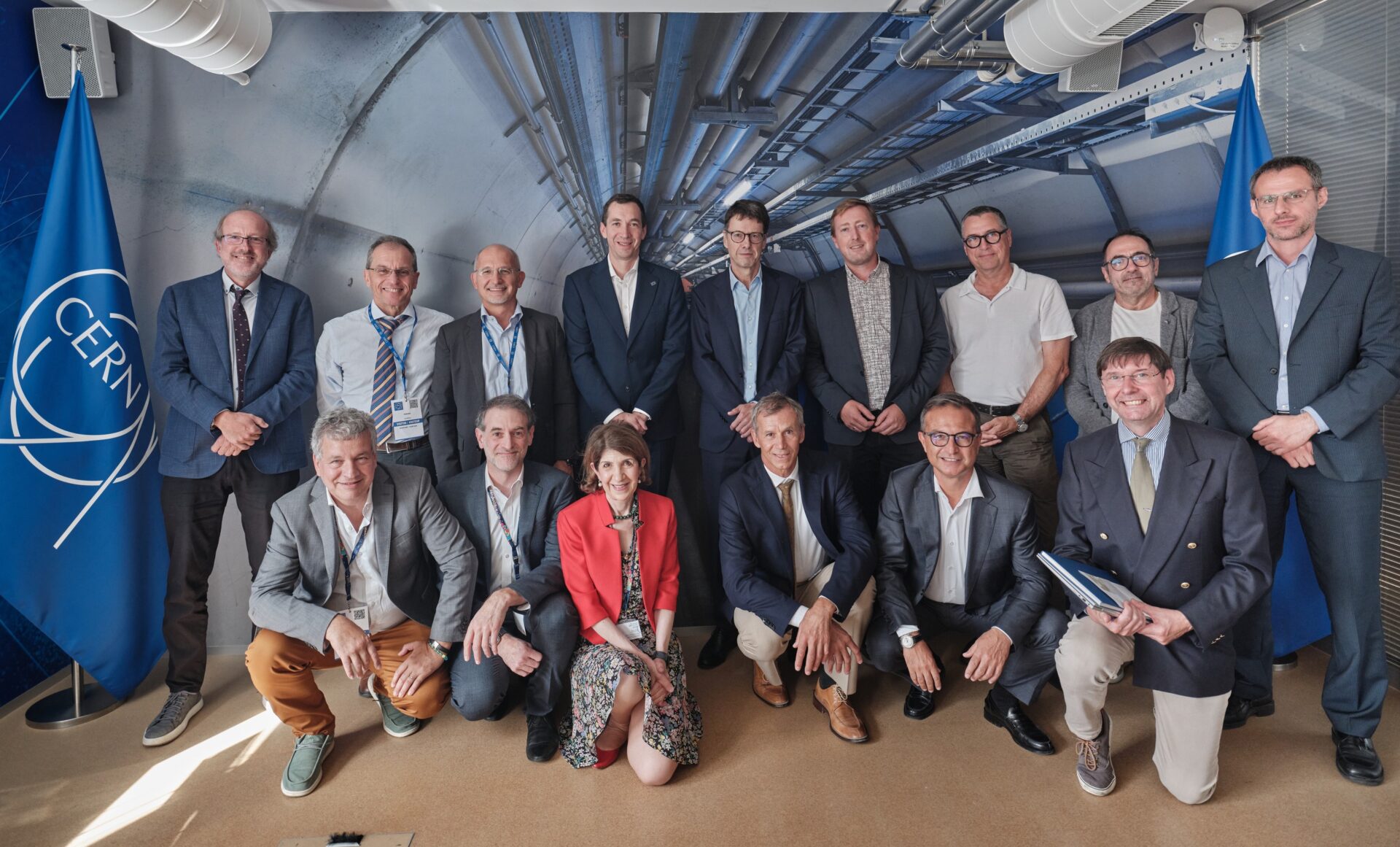
Fabiola Gianotti, CERN Director-General, Marc Lachaise, Director of Fusion for Energy (F4E), Mike Lamont, CERN Director for Accelerators and Technology, September 2025. ©CERN

CERN is a leading research centre located in Geneva, Switzerland, home of the largest and most powerful particle accelerator in the world. F4E is the EU’s organisation providing Europe’s contribution to ITER, the biggest fusion device to date, amongst other projects in the field. The size and nature of these experiments offer tremendous opportunities for synergies. The agreement is broad enough and includes collaboration in engineering design, material and component testing, project planning or R&D in physics and technology.

Both entities have worked together in the past through specific agreements in the fields of radiation damage and radio frequency couplers. This new partnership cements this trust and provides a legal and operational basis for more collaboration. F4E and CERN will be able to pool their world-class expertise via exchanges of personnel, knowledge and data.

Representatives of Fusion for Energy (F4E) and CERN involved in the implementation of the agreement, September 2025. ©CERN

“Through this cooperation agreement we will strengthen F4E’s capacity to deliver. In parallel, we will address and answer complex questions in the fields of fusion energy and particle physics. By working together, we will capitalise on the excellence, talent, and expertise resulting from large-scale international projects managed respectively by the two organisations. This collaboration is vital for the advancement of fusion energy together with that of science. It is a fantastic step in the right direction,” commented the Director of F4E, Marc Lachaise.

“In turbulent times, delivering large-scale scientific infrastructure calls for shared vision, technical synergy, and organisational resilience. CERN and F4E face many of the same challenges—from advanced magnet technologies to sustainable project execution over decades. This agreement reinforces a partnership built on mutual interests and long-term commitment. It was a pleasure to welcome Marc Lachaise and the F4E team to CERN, and to chart some steps forward together,” stated the Director for Accelerators and Technology at CERN, Mike Lamont.

Source link

Gaza: The best survey on independent rights alleges a genocide committed to Israel

0

In a new report published in the context of the intensification of Israeli military operations in Gaza City, the Independent International Commission for the Independent Survey in Occupied Palestinian territory, including East Jerusalem, and Israelurged Israel and all countries to fulfill their obligations under international law “to end the genocide” and to punish those responsible.

“The Commission concludes that Israel is responsible for the Gaza Genocide Commission,” insisted Navi Pillay, president of the committee. “It is clear that there is the intention of destroying the Palestinians in Gaza thanks to acts that meet the criteria set out in the genocide agreement.”

Israel’s ambassador to the UN in Geneva, Danny Meton, rejected the commission’s “picked” conclusions, arguing that the 70 -page report “promotes a story to the service of Hamas and his supporters while trying to delegitimize and demonize the state of Israel.

At a press conference in Geneva, the commission of the members of the Ms. Pillay and Chris Sidoti inquiry – who are not UN staff but appointed by the Human Rights CouncilThe 47 Member States – explained that their war investigations in Gaza starting with terrorist attacks led by Hamas in Israel on October 7, 2023 had led to the conclusion that the Israeli authorities and the security forces “committed four of the five genocidal acts defined by the 1948 Convention on the prevention and punishment of genocide crime».

These acts are:

  • murder,
  • causing serious bodily or mental damage,
  • deliberately inflicting the calculated living conditions to cause the destruction of the Palestinians, and
  • Imposing measures intended to prevent births.

Ms. Pillay argued that the responsibility for atrocity crimes “lies in the Israeli authorities in the highest levels”, in the midst of “explicit declarations” denigrating the Palestinians by Israeli civil and military authorities.

The Commission also analyzed the conduct of Israeli authorities and Israeli security forces in Gaza, “including the imposing famine and inhuman living conditions for Palestinians in Gaza … The genocidal intention was the only reasonable inference that could be concluded from the nature of their operations,” the panel said.

Methodical examination

The assertion of the Commission follows its examination of Israeli military operations in Gaza, “including death and the seriously harmful number of Palestinians” and the imposition of a “total seat, including a blockage of humanitarian aid leading to famine,” he said.

According to the wing of the United Nations coordination, Ochha,, Nearly a million people remain in Gaza City, the famine has been confirmed there and the residents are faced with daily bombing and “the access compromised to the means of survival after the Israeli army has placed the whole city under a trip”.

For his latest report, the panel also examined what he called “systematic destruction” of health care and education in Gaza and “systematic” acts of sexual violence and sex against the Palestinians.

Call of justice

In addition, the commission of inquiry examined the alleged “direct targeting” of children and “without taking Israel into account [of] the orders of International Court of Justicewhich made an order in March 2024 that Israel should take “all necessary and effective measures to guarantee … the unhindered provision on a large scale by all the concerns of the basic services and humanitarian assistance necessary for Palestinians through Gaza”.

“The international community cannot remain silent on the genocidal campaign launched by Israel against the Palestinian people in Gaza,” said Pillay.

“When clear signs and evidence of emerging genocide, the lack of action to stop it is equivalent to a complicity,” she added.

“All states are under a legal obligation to use all the means which are reasonably available to them to stop the genocide in Gaza.”

Qatari dimension

In a related development on Tuesday, the Human Rights Council mixed its schedule to make room for an urgent debate on the Israeli strike last week on the political leadership of Hamas in Qatar.

The strike has targeted a district of the Qatari capital, Doha, killing six people, including five members of Hamas and provoking a general conviction, notably Security advice and secretary general.

In a press release, António Guterres spoke about what he called a “blatant violation” of Qatari sovereignty and territorial integrity.

And at a meeting of the Security Council called in response to the strike, the UN Political Affairs Head told ambassadors that the attack on violation of Qatar sovereignty was a serious threat to regional peace and security. He also undermined international mediation efforts to end the war in Gaza and returning the hostages, said Rosemary Dicarlo.

Originally published at Almouwatin.com

UN condemns ‘deadly escalation’ in Gaza City

0
UN condemns ‘deadly escalation’ in Gaza City

The situation “is having an appalling impact on civilians enduring suffering and starvation,” he told journalists in New York.

“The United Nations condemns the deadly escalation of the Israeli military offensive which took place over the weekend across Gaza City, with scores of people reportedly killed or injured,” he said.

“We reiterate our call for the protection of civilians and humanitarian personnel and full respect for international law.” 

70,000 more uprooted

In a post on X on Sunday, the head of the UN agency for Palestine refugees, UNRWA, said that 10 of its buildings in Gaza City had been hit in the past four days alone, including seven schools and two clinics which were being used as shelters.

Almost 70,000 displaced people have headed south in the past few days, while UN partners counted 150,000 movements from north to south this past month.

Partners further reported that one third of malnutrition treatment facilities in Gaza City have shut down due to forced displacement orders, while the Ministry of Health today reported 425 deaths overall due to malnutrition and starvation in Gaza, about a third of which were children.

A call for ‘unimpeded humanitarian access’

Over the past few days, UN partners have managed to distribute 40,000 additional meals each day. As of Saturday, 558,000 daily meals were prepared and distributed by 20 UN partners to 116 kitchens.

“However, health services continue to be heavily constrained, since clinics have suspended their services due to insecurity and displacement orders,” warned Mr. Dujarric, adding that in Deir Al-Balah, only a few ambulances remain in order and are able to serve the thousands of people in need.

Additionally, 77 per cent of the road networks in Gaza have been damaged and according to UN aid coordination office OCHA, humanitarian aid continues to be obstructed.

On Sunday, only four of the 17 missions that the UN coordinated with the Israeli authorities were facilitated. Seven missions were denied, one of which was meant to deliver water tanks to the north, while another four were impeded in the field, and two were cancelled by the organisers.

Nevertheless, three humanitarian missions were accomplished, including the collection of fuel and food cargo from the Kerem Shalom/Karem Abu Salem crossing.

“Our humanitarian colleagues continue to call for unimpeded humanitarian access,” stressed Mr. Dujarric. “Aid should flow at scale through multiple crossings into and within Gaza, including the north.”

Source link

EU opens accession negotiations with Albania on green and sustainable connectivity policies

0
EU opens accession negotiations with Albania on green and sustainable connectivity policies

The sixth meeting of the Accession Conference with Albania was held today in Brussels opening negotiations on Cluster 4: Green agenda and sustainable connectivity.

Source link

EIB backs Sodiaal, France’s largest dairy cooperative

0
EIB backs Sodiaal, France’s largest dairy cooperative

Sodiaal
  • A €70 million EIB loan guaranteed by the InvestEU programme will support Sodiaal’s research and development investment and its more than 14 500 member farmers, helping to safeguard their business model and strengthen their competitiveness in a very fast-moving market.
  • The project will also help to make the dairy sector greener.
  • The EIB financing is part of its support for agriculture, but also for innovation via the TechEU initiative.

The European Investment Bank (EIB) has granted a €70 million loan to Sodiaal – the largest dairy cooperative in France and the third largest in Europe – enabling it to finance its research, development and innovation programmes from 2025 to 2028. With its more than 8 000-member dairy farms, and more than 14 500 member farmers, Sodiaal owns the Yoplait, Candia and Entremont brands. Its activities include the production of drinking milk, cheeses, butters, yogurts, infant dairy products, and dairy ingredients.

This financing is part of the EIB’s expanded assistance not only for agriculture and the bioeconomy, but also for innovation via its new TechEU programme. TechEU aims to provide large-scale support for research and development, the digital transformation and the adoption of new practices to strengthen the competitiveness of the European economy while also reducing its environmental impact. This loan is backed by a guarantee under the European Union’s InvestEU programme, which supports innovation, sustainability and competitiveness in strategic sectors of the European economy.

EIB Vice-President Ambroise Fayolle, who is responsible for the Bank’s operations in France, said: “The French and European agri-food industry is facing strong international competition – an issue that can be addressed by accelerating research and innovation. The EIB is proud to once again be helping Sodiaal to make major investments in new agricultural practices aiming to cut CO2 emissions, new products, and in the energy transition of the dairy sector.”

Sodiaal Cooperative Chairman and Loire Region Dairy Farmer Jean-Michel Javelle added: “The agricultural industry and the dairy sector are undergoing major transitions. Farmers have always been able to adapt to fulfil their key role of feeding the population. We will defend the French origin of our milk, our role in local communities and the generational renewal that is vital to ensuring that milk will still be available in the future. It is our responsibility to help our farmers to achieve competitive and more sustainable production. A lot of investment is needed. We are particularly grateful for the EIB’s support, which shows a shared commitment to French agriculture into the future.”

Sodiaal Managing Director Antoine Collette said: “Innovation in our sector is huge. We’re not only cutting carbon, reducing the use of plastic in our packaging and lowering water consumption on our sites, but also adapting to what consumers now expect from their food. Our Growing Together strategic plan puts profitability on the same level as sustainability. The two things cannot be separated. Sodiaal invests in and takes responsibility for its member farmers, employees, customers and consumers. EIB support is important for accelerating our projects.”

European Commissioner for Agriculture and Food Christophe Hansen said: “Farmers are more than producers – they are entrepreneurs and innovators. They are helping to make our agricultural sector more sustainable, competitive and resilient via the bioeconomy, smart resource management and the use of technologies like milking and feeding machines. Now more than ever, innovation must be at the heart of our policies to enable the agri-food sector – including cooperatives like those in the French dairy sector – to prosper. By actively backing investment in agricultural innovation, we promote more efficient, job-creating and future-oriented agriculture.”

This is the second time the EIB has provided financing to Sodiaal, with an initial €40 million loan for research, development and innovation granted in 2018. This new loan shows the stronger long-term partnership with the EIB and the cooperative’s positive efforts to continue to innovate and improve its environmental practices while preserving the economic stability of its members in the face of fluctuating commodity prices on the markets.

Background information

EIB

The European Investment Bank (EIB) is the long-term lending institution of the European Union, owned by its Member States. The EIB finances investments in eight core priorities that support EU policy objectives: climate action and the environment, digitalisation and technological innovation, security and defence, cohesion, agriculture and the bioeconomy, social infrastructure, a stronger Europe in a more peaceful and prosperous world and Europe’s capital markets union. The EIB Group, which also includes the European Investment Fund (EIF), signed nearly €89 billion in new financing for over 900 high-impact projects in 2024, boosting Europe’s competitiveness and security. In France, the EIB Group signed more than 100 agreements in 2024, totalling €12.6 billion. Almost 60% of annual EIB Group financing supports projects that contribute to climate change mitigation and adaptation, and a healthier environment.

Sodiaal

Sodiaal is France’s largest dairy cooperative, with 14 500 dairy farmers in 71 departments and 53 processing sites across the country. Commitment to the cooperative concept has enabled French dairy producers to pool their output and process it jointly. This commitment has created a “by farmers, for farmers” governance structure that redistributes 100% of profits. Sodiaal works to ensure fair income, support generational renewal and promote the green transition. Buying Yoplait, Candia or Entremont products supports French dairy and agriculture, and backs our mission to create a sustainable and responsible future for the entire dairy sector. The Sodiaal cooperative is led by its chairman, Jean-Michel Javelle, while Antoine Collette is its managing director. For more information, visit www.sodiaal.coop

InvestEU

The InvestEU programme provides the European Union with crucial long-term funding by leveraging substantial private and public funds in support of a sustainable recovery. It also helps to attract private investment for the European Union’s policy priorities, such as the European Green Deal and the digital transition. The InvestEU programme brings together under one roof the multitude of EU financial instruments currently available to support investment in the European Union, making funding for investment projects in Europe simpler, more efficient and more flexible. The programme has three components: The InvestEU Fund, the InvestEU Advisory Hub and the InvestEU Portal. The InvestEU Fund is implemented through financial partners that will invest in projects using the EU budget guarantee of €26.2 billion. The entire budget guarantee will back the investment projects of the implementing partners, increase their risk-bearing capacity and thus mobilise at least €372 billion in additional investment.

Source link

AI Chatbot Wrote Key Parts of Major Canadian Education Report Using Fake Sources

0

An embarrassing discovery has rocked Newfoundland and Labrador’s education establishment. The province’s flagship education reform document—which ironically advocates Source link

Source

Source link

Deadly attacks and collapsing services push Sudan closer to catastrophe

0
Deadly attacks and collapsing services push Sudan closer to catastrophe

According to local reports, heavy shelling and assaults late last week in El Fasher, the capital of North Darfur state, killed at least six civilians and injured scores more, triggering fresh displacement from the already besieged city.

Sudan has been embroiled in a brutal civil war between rival militaries – the Sudanese Armed Forces (SAF) and the paramilitary Rapid Support Forces (RSF) and affiliated militias. Thousands of civilians have been killed, villages and farmlands destroyed, and nearly 12 million people driven from their homes – over four million as refugees into neighbouring countries.

The country also risks becoming the world’s largest hunger crisis in recent history as infrastructure, trade routes and supply chains lie in ruins. Famine has already been confirmed in the Zamzam camp – which once sheltered hundreds of thousands of civilians – and many more areas are at risk.

Essential services collapsing

Humanitarians warn that essential services are breaking down. Water trucking to the only functioning hospital was suspended over the weekend and community kitchens shut down after running out of food.

Without urgent support, they warn that the most vulnerable people could face severe hunger within days.

Across Darfur, hospitals remain under immense strain.

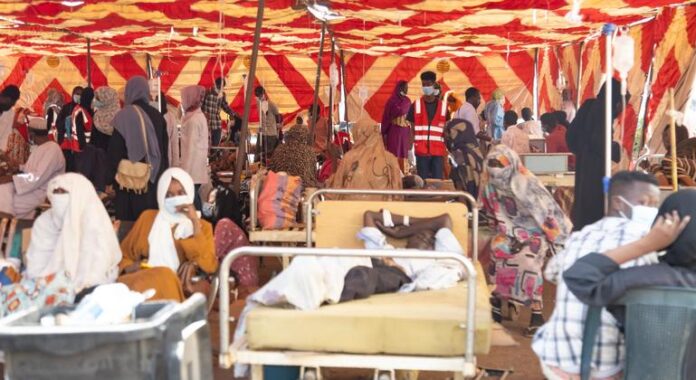
Nearly 100 wounded people, including women and children, were admitted to medical facilities in a single day last week, with several pronounced dead on arrival, according to reports from the medical charity Médecins Sans Frontières (MSF – Doctors Without Borders).

Survivors who managed to escape El Fasher described “unbearable” conditions in the city, which has endured more than a year of siege by the Rapid Support Forces (RSF) and allied groups.

Children sit beside makeshift tents in El Fasher, North Darfur, where intensified fighting has left thousands trapped.

Rising civilian toll

Drone strikes on 10 September hit multiple locations across Darfur, injuring scores.

A strike landed just four kilometres (about 2.5 miles) from an MSF-supported hospital in Central Darfur, forcing staff to activate a mass casualty plan. The following day, two more strikes struck Nyala in South Darfur, reportedly killing at least four people, including a child.

The fighting is not confined to Darfur. In Khartoum, RSF airstrikes on 9 September damaged a power station, causing a blackout in parts of the capital and disrupting critical hospital equipment and services.

Disasters add to misery

Meanwhile, Sudan is grappling with natural disasters on top of conflict.

A landslide triggered by heavy rains on 31 August in Sharg Aj Jabal, near the Central and South Darfur border, killed an estimated 400 people, half of them children, according to local reports.  

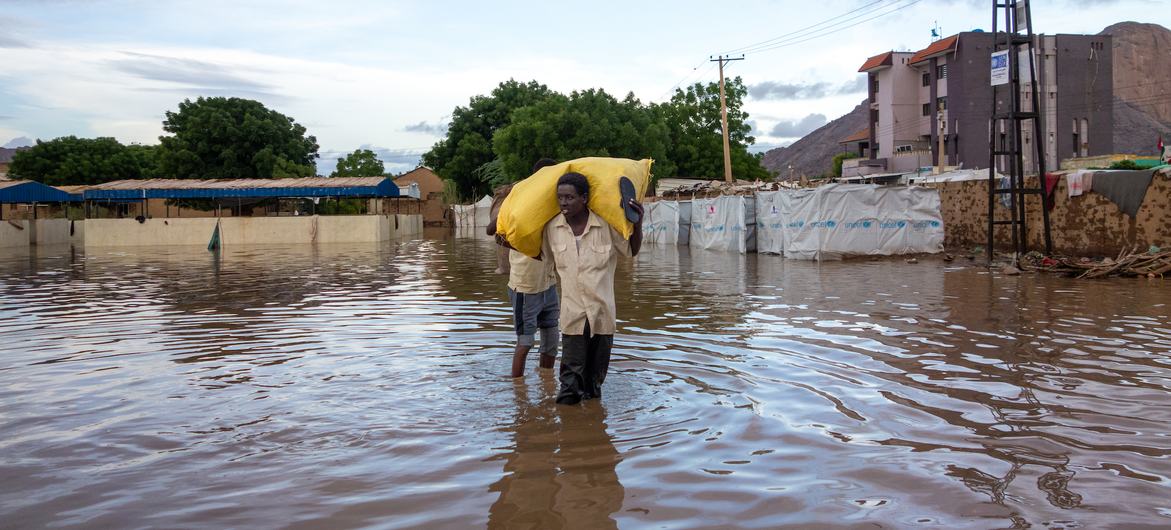
Furthermore, over 4,000 people were displaced and 550 homes destroyed in Aj Jazirah state in flash floods last week.

Every year, hundreds of thousands of people in Sudan are affected by heavy rains, flash floods and landslides.

Every year, hundreds of thousands of people in Sudan are affected by heavy rains, flash floods and landslides.

Call to action

The UN Office for the Coordination of Humanitarian Affairs (OCHA) stressed that civilians remain at the epicentre of the violence.

[We] once again call for an immediate cessation of hostilities, protection of civilians, safe and unimpeded humanitarian access, and increased international support to sustain life-saving operations across Sudan,” the Office said.

In Khartoum, OCHA reported some improvements in restoring basic services and security. Yet more than 800,000 people who have returned to the capital in recent months still urgently need assistance to rebuild their lives.

Political efforts

On the political front, the Secretary-General’s Personal Envoy for Sudan, Ramtane Lamamra, is currently in Port Sudan after concluding consultations in Nairobi.

According to UN Spokesperson Stéphane Dujarric, Mr. Lamamra has held “very constructive engagements” with Sudanese stakeholders across the spectrum as well as key international interlocutors.

These discussions will help lay the groundwork necessary to support an inclusive process that can deliver a sustainable solution that preserves Sudan’s sovereignty, its unity and its territorial integrity,” Mr. Dujarric said.

He added that the UN also looks forward to working closely with regional partners, including the African Union, the east African regional bloc Intergovernmental Authority on Development (IGAD), and the League of Arab States, to restart efforts toward an intra-Sudanese dialogue.


Source link

Media advisory – General Affairs Council and 6th Accession Conference with Albania, 16 September 2025

0
EU opens accession negotiations with Albania on green and sustainable connectivity policies

Main agenda items, approximate timing, public sessions and press opportunities.

Source link

The United Nations revise 2026 regular budget proposal, cutting costs with initial reform measures

0

The revised estimates, communicated Monday to the Advisory Committee for Administrative and Budgetary Questions (ACABQ), offer discounts of 15.1% of resources and 18.8% of positions in the regular budget compared to 2025. The support account for peacekeeping operations – which finances staff and services of the world around the world – is also subject to reductions in the period 2025/26.

The Acabq, a subsidiary body advising the general meeting, will examine the proposals before transmitting its recommendations to the fifth committee of the General Assembly, where the 193 Member States decide administrative and budgetary issues.

Targeted discounts

In a letter to the Member States, Secretary General António Guterres said the discounts followed an in -depth examination of how the mandates are delivered and allocated resources. While ensuring the balance between the three pillars of Charter of the United Nations – Peace and security, human rights and sustainable development – The secretarial entities have explored how to improve delivery to optimize the use of resources. Mr. Guterres stressed that the discounts have been carefully calibrated and are targeted, not in all areas.

Programs and activities directly supporting the Member States, in particular the least developed states, without coastline and the developing states of small islands, and advocacy for the development of Africa have been protected from reduction. Support for the Peace Construction Fund and the resident coordinator system has been maintained. Regional economic commissions will be faced with smaller adjustments, while the regular technical cooperation program will continue to grow, strengthening the support for capacity building for developing countries.

“Discounts of this magnitude will lead to compromises. Entities have identified probable impacts on deliverables – such as narrowed scope, adjusted deadlines or reduced frequency. We will also take attenuation measures to protect basic mandates and the quality of services, including by prioritizing high impact results, the pooling of expertise through entities and recourse on green terms and automation, “wrote the SECRETARY-GENON expertise.

The UN operates today in a world of increasing political and financial uncertainty. In this difficult environment, the UN80 initiative aims to create a stronger and more efficient United Nations. The revised estimates reflect this ambition and include proposals to improve the operation of the organization.

Reform measures

In this context, in parallel with reductions, the revised estimates also introduce the first set of proposals for the United Nations Secretariat as part of the workflow 1 of the UN80 initiative, focused on management and operations. The measures include the creation of new administrative centers in New York and Bangkok, by consolidating the payroll in a single world team in New York, Entebbe and Nairobi, and by moving certain functions of high -cost service stations such as New York and Geneva to service stations at lower cost.

Other savings are planned by real estate. The organization will cancel two buildings rented in New York by 2027, with annual savings planned from 2028. Collectively, these measures aim to reduce duplication, improve quality and protect the delivery of the mandate, while responding to the call of the Member States for greater efficiency.

The UN80 Initiative

Launched in March 2025, the initiative was built around three work components.

  • Work cromotor 1Proposals on efficiency and management improvements are reflected for the first time in these revised estimates, with additional reform proposals to follow later.
  • Work cromotor 2 On the examination of the implementation of the mandate, with a report presented in August now under study by a new ad hoc informal working group, which meets on September 16.
  • Record 3 WORK Focus on the exploration of possible structural and programmatic realignments via clusters at the system scale, the initial proposals which should be presented to the Member States later this week.

Together, the three work titles mark a significant reorientation of the UN operation, aimed at ensuring that the organization remains effective, credible and sustainable, said the secretary general.

Following steps and staff support

The revised estimates will first be examined by the Acabq, which should hold hearings from this week. The proposals will then go to the fifth committee of the General Assembly, where the 193 Member States negotiate and decide administrative and budgetary issues. A decision is expected by December.

If adopted, the changes would begin to take effect in 2026 with the progressive implementation. Other modifications resulting from the various rivers will be reflected in future budgetary submissions.

In a letter to the UN staff, Mr. Guterres acknowledged that changes would affect their daily work and their professional life, but assured them that they would not face them alone. “You will be fully committed and supported throughout the process,” he said, promising regular communication, consultation opportunities and practical advice at each stage.

The secretary general acknowledged that the choices involved in the revised budget had been difficult. He declared that the responsibility of the decisions began with him as secretary general, but also extended to managers and staff of the organization. He pointed out that changes must be made equity, empathy and professionalism, and that everyone has a role to play in maintaining the United Nations values ​​as the process advances.

Originally published at Almouwatin.com