Europol has coordinated the takedown of Cryptomixer, a cryptocurrency laundering platform that processed €1.3 billion in Bitcoin since its 2016 launch. The operation resulted in server seizures, data confiscation, and the platform’s permanent closure.
Operation Olympia logo screenshot. Image credit: Technology.org
Key takeaways:
Cryptomixer laundered €1.3 billion worth of Bitcoin since 2016, serving cybercriminals involved in drug trafficking, ransomware, and weapons sales
Authorities confiscated €25 million in Bitcoin, three servers, and 12 terabytes of data during the multi-agency operation
The platform used pooling and randomization techniques to break transaction trails on public blockchain ledgers
Law enforcement agencies announced the operation on Monday. The collaborative effort targeted what Europol described as a preferred service among criminals seeking to clean profits from illicit activities.
Cryptomixer functioned by accepting cryptocurrency deposits from multiple users, then holding these funds for varying durations. The platform redistributed the money to destination wallets at unpredictable intervals. This process broke the transaction chain visible on public blockchains.
The service appealed to criminals because Bitcoin and Ethereum transactions exist on transparent ledgers. Blockchain analysis companies like Chainalysis and Elliptic work with authorities to track cryptocurrency movements. Mixing services attempt to sever these connections.
The platform marketed its ability to prevent blockchain tracing. Europol noted the service attracted ransomware operators, underground forum users, and dark web marketplace vendors. These groups needed to obscure their cryptocurrency before converting it through legitimate exchanges.
After the mixing process, users could exchange their cryptocurrency for different digital currencies or traditional money. The anonymity layer helped criminals move funds without triggering blockchain surveillance systems.
Authorities seized the cryptomixer.io domain, which now displays a standard law enforcement notice. The 12 terabytes of confiscated data will likely support ongoing investigations into criminal networks.
This shutdown continues a pattern of enforcement actions against similar operations. Tornado Cash and ChipMixer faced government sanctions and closures in previous years. Each takedown temporarily disrupts criminal money flows before new services emerge.
More than 230,000 families – that’s around 1.15 million people – received monthly food parcels between 1 and 27 November, through 59 distribution points, including 21 in northern Gaza.
Shelter partners distributed over 8,800 blankets and more than 300 tents, with additional tarpaulins and mattresses arriving this week.
Flood risk
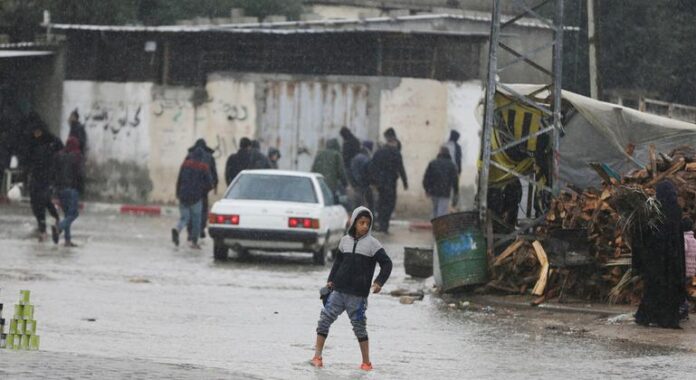
Site management teams warn that flooding remains a major risk. Sandbags have been deployed to 41 displacement sites, while cash-for-work teams have been reinforcing drainage and collect empty flour sacks to improve insulation.
On Friday, UN-coordinated aid entering Gaza included dignity kits, menstrual health items, medical supplies and adolescent kits – though road damage and limited transport continue to restrict access, especially in the north.
Protection partners say gender-based violence services reached 671 women and girls in one day last week, with new tents allowing safe spaces to reopen after flood damage.
Briefing reporters in New York on Monday, UN Spokesperson Stéphane Dujarric said humanitarian conditions remain extremely dire even as aid operations continue.
Humanitarian Coordinator for the Occupied Palestinian Territory, Ramiz Alakbarov, has just finished a fact-finding mission to Gaza, stressing the importance of unfettered humanitarian access.
“Meanwhile, our partners leading the health response report that they continue to restore services across the Strip – with 234 health service points now operational, compared to 197 before the ceasefire,” Mr. Dujarric added.
Shelter needs
Shelter needs are still high, with some 1.5 million people in need of urgent support.
Over the weekend, 160 high-performance tents arrived in Gaza for learning activities – the biggest influx so far. However, stationary and other school supplies are still not being allowed into Gaza, Mr. Dujarric warned, hampering efforts to scale up the response.
Around 123,000 families have received cash assistance since the fragile truce began – exceeding the target of 120,000 under the 60-day ceasefire plan.
The issue was in the spotlight at U.N. headquarters Monday during a forum focused on the dangers and complexities of reporting from the occupied Palestinian territory.
“This seminar invites us to reflect on how journalism in Israel and Palestine, particularly in Gaza and the West Bank, has become both a battleground and a lifeline,” she said.
“Unacceptable ban” on the foreign press, according to Guterres
Mrs. Fleming read a message of the UN Secretary-General António Guterres who said “journalists in Gaza face the same risks and realities as the people they cover – including displacement, starvation and death.”
Furthermore, the rules of war are clear: civilians and civilian infrastructure are not a target, and journalists must be able to carry out their essential work without interference, intimidation or harm.
“This includes the unacceptable ban preventing international journalists from accessing Gaza,” he said.
Fulfill their duty
Following the deadly attacks carried out by Hamas against Israel on October 7, 2023, Gaza was subjected to a complete siege.
Wael Al-Dahdouh, head of the Gaza bureau of the Al Jazeera network, recalled that the enclave was isolated and that the supply of water, electricity, communications and internet was cut.
Nevertheless, journalists continued to work despite bombings, deprivation, personal loss and displacement.
“We felt so much responsibility towards you, towards the whole world,” he said in a video message.
“Because we realized that if we do not fulfill our duty with our will, even if it costs us our lives, the world will not see what is happening to two million people in this region as a result of the Israeli genocide. »
Putting pressure on Israel (Mansour)
The Permanent Observer of the Observer State of Palestine, Riyad Mansour, praised “the courageous Palestinian journalists in Gaza” because “thanks to them, this genocide in Gaza has become the most documented in history”.
He called on participants to pressure Israel to allow entry to foreign journalists.
“We should ask ourselves why Israel does not allow foreign aid to Gaza. Do not accept their security excuse. Foreign journalists were allowed in all war zones except Gaza,” he said.
Protection, access and accountability
Jodie Ginsberg, executive director of the Committee to Protect Journalists (CPJ), stressed the need for protection and independent access to Gaza, as well as accountability.
She stressed that “allowing international access to Gaza is not a consequence for Palestinian journalists” but “a standard that we should insist on and support for these Palestinian journalists.”
Relatives also targeted
Nasser Abu Bakr, president of the Palestinian Journalists’ Union, reported that more than 255 journalists have been killed in Gaza, representing 18 percent of the total number of journalists in the strip.
More than 500 people were injured and Israel arrested more than 200 others who were subjected to extreme torture in prison. In addition, relatives of journalists have also been killed or targeted.
He said the union and the International Union of Journalists are ready to cooperate with the Secretary-General by submitting a report detailing the systemic crimes perpetrated against journalists in the Gaza Strip and the West Bank.
“We want this resolution to be implemented on the occupation, and for the people of the state of occupation to be held accountable for these crimes against our journalists,” he said in a video message.
Journalism is vital for peace
The Secretary-General’s message confirmed the UN’s unwavering commitment to a two-state solution between Israelis and Palestinians, and the work of journalists is essential to building the informed global consensus necessary to achieve this goal.
The UN chief expressed hope that the dialogue “will strengthen respect for press freedom and the protection and safety of journalists in the Middle East” and help lay the foundations for a just and lasting peace.
António Guterres told the Fifth Committee THE The UN faces its most fragile cash situation in yearsdespite the strong reductions already planned next year’s budget plans.
“Liquidity remains fragile and this challenge will persist regardless of the final approved budget,” he said. saidby designating the “unacceptable volume of arrears” owed by Member States.
The UN ended 2024 with $760 million in unpaid contributions, most still unpaid, and has yet to receive $877 million in contributions due for 2025 – bringing total arrears to approximately $1.586 billion.
Major contributors such as the United States and Russia have yet to pay what they owe, although China paid its contribution in full on October 29.
“I have repeatedly called on Member States to pay their contributions in full and on time,” the Secretary-General said, warning that cash shortfalls are forcing the organization to operate well below approved budget levels.
Strong spending cuts are already planned
The warning comes as delegations review revised UN regular budget estimates for 2026, which already reflect deep structural cuts under the UN80 reform initiative – a system-wide efficiency drive to modernize operations and reduce costs.
According to the revised proposal, the UN regular budget for 2026 would be $3.238 billion, a reduction of $577 million – or 15.1 percent – compared to 2025. Some 2,681 positions would be eliminateda reduction of 18.8 percent from current levels.
Special political missions would also face cuts of more than 21 percent compared to 2025 levels, largely due to mission closures and workforce rationalization.
Consolidated functions, outsourced jobs
As part of the savings campaign, the UN plans to consolidate payroll processing in a single global team spread across three duty stations and create shared administrative centers starting with New York and Bangkok.
The Secretariat also examines functions that can be moved to lower cost locations. Since 2017, lease terminations in New York have already saved $126 million, and an additional $24.5 million per year is expected to be saved through additional closures by 2028.
The plan includes one-time separation and relocation costs of $5.4 million as voluntary separation programs are used to limit involuntary job losses.
Broadcast of the session of the Fifth Committee.
Delegations intervene
The revised estimates were reviewed by the Advisory Committee on Administrative and Budgetary Questions (CCAQB) and are now before the Fifth Committee for negotiations for the approval of the end-of-year budget.
ACABQ President Juliana Gaspar Ruas said the body welcomed the reform push, warning that the revised estimates had been prepared under tight deadlines, limiting ACABQ’s ability to fully assess the rationale for some proposed reductions. While supporting consolidation and efficiency efforts, she also flagged inconsistent methodologies across departments and called for clearer criteria for relocating staff.
Member States welcomed the Secretary-General’s efforts to present the revised estimates, recognized the Organization’s ongoing liquidity challenges, and expressed support for a stronger and more agile United Nations.
Several delegations, however, echoed concerns about the tight schedule, warning that the late arrival of key documents hampers a thorough review. Some diplomats have warned that the proposed cuts would hit junior and general service staff more than senior positions, threatening both geographic balance and a rejuvenating workforce.
Others have warned that the proposed staff cuts appear uneven across the UN’s three pillars, with proportionately greater reductions in development-related programs.
The Secretary-General said he was “sincerely concerned” by this concern. He insisted that, generally speaking, the development pillar actually faces the smallest proportional reduction, with Africa-related programs largely protected and the biggest cuts falling on support and back-office functions rather than front-line delivery.
“Our commitment to development is absolutely fundamental and our commitment to the African continent is absolutely fundamental,” he said.
Final approval will require approval from the full General Assembly later this month.
Cash flow crisis is already affecting operations
Despite the planned cuts, Secretary-General Guterres said the UN had already been forced to underspend in 2025 because cash was simply not available.
“The vacant positions do not correspond to a strategic priority,” he said, “but simply by the fact that people left and we don’t have the money to pay for the replacement.»
To protect liquidity, the UN has proposed temporarily suspending the return of budget credits to countries – essentially delaying repayments until liquidity levels stabilize.
“It’s difficult to return money because we didn’t receive it,“, Mr. Guterres told the committee.
He warned that unless payments improve, financial stress will continue to hurt operations, regardless of the reduction in the approved budget.
More than 230,000 families, or around 1.15 million people, received food packages each month between November 1 and 27, via 59 distribution points, including 21 in northern Gaza.
Shelter partners have distributed more than 8,800 blankets and more than 300 tents, and additional tarps and mattresses arrived this week.
Flood risk
Site management teams warn that flooding remains a major risk. Sandbags were deployed at 41 displacement sites, while for-hire crews reinforced drainage and collected empty flour sacks to improve insulation.
UN-coordinated aid entering Gaza on Friday included dignity kits, menstrual health items, medical supplies and adolescent kits – although road damage and limited transport continue to restrict access, particularly in the north.
Protection partners say gender-based violence services reached 671 women and girls in one day last week, with new tents allowing safe spaces to reopen after flood damage.
Speaking to reporters in New York on Monday, UN spokesman Stéphane Dujarric said humanitarian conditions remained extremely dire, even as aid operations continued.
The humanitarian coordinator for the occupied Palestinian territory, Ramiz Alakbarov, has just completed a fact-finding mission to Gaza, emphasizing the importance of unhindered humanitarian access.
“Meanwhile, our partners leading the health response report that they continue to restore services throughout the Gaza Strip – with 234 health service points now operational, compared to 197 before the ceasefire», added Mr. Dujarric.
Shelter needs
Shelter needs are still high, with some 1.5 million people need urgent help.
Over the weekend, 160 performance tents arrived in Gaza for learning activities – the largest influx so far. However, school supplies and other school supplies are still not allowed into Gaza, Dujarric warned, hampering efforts to scale up the response.
About 123,000 families have received cash assistance since the start of the fragile truce, surpassing the target of 120,000 set by the 60-day ceasefire plan.
“Promise you will take your medicine for life,” Mishra told UN News in landmark message World AIDS Day Monday.
“Your medication is your greatest protection“, she added.
Yet the global HIV response for the more than 40 million people living with the disease is facing its biggest setback in decades, UNAIDS said last week – which is struggling to end the epidemic by 2030 – with budget cuts disrupting prevention and treatment.
About this year World AIDS Daythe World Health Organization (WHO) called on governments and partners to expand access to new WHO-approved tools, including lenacapavir (LEN), to reduce infections and counter disruption caused by foreign aid reductions.
Progress in prevention
“We face significant challenges, with reductions in international funding and a blockage of prevention.“, said Tedros Adhanom Ghebreyesus, Director-General of the WHO.
“At the same time, we have significant opportunities, with exciting new tools that could change the trajectory of the HIV epidemic. »
Despite dramatic setbacks in funding, the global HIV response gained momentum in 2025, according to WHO.
The organization shortlisted LEN, a highly effective twice-yearly injectable for HIV prevention, in October this year. This was followed by national regulatory approvals to increase access in South Africa, Zimbabwe and Zambia.
WHO is also working closely with partners to enable affordable access to LEN in countries.
“By combining these advances with decisive action, supporting communities and removing structural barriers, we can ensure that key and vulnerable populations have full access to life-saving services,” said Tereza Kasaeva, who heads the organization’s HIV and other diseases department.
Communities lead the HIV response
UNAIDS warned last week that the number of people starting treatment had fallen in 13 countries, while more than 60 percent of women-led organizations said they had been forced to suspend essential services.
The UN agency emphasizes that communities are the driving force in the HIV response, providing education and support to people living with AIDS and working with health workers and policy makers to advocate for access to treatment.
“The pain, fear and mental pressure that we ourselves have felt – through this experience – we know how important a role peer support plays in everyone’s life,” Ms Mishra told UN News of the importance of community.
Organizations like the one Ms. Mishra works for, the National Coalition of People Living with HIV in India (NCPI+), fight stigma and reach vulnerable populations to facilitate access to HIV treatment and prevention, among other services.
“We started this movement, but how to sustain it for a long time – that’s a very big question. Because until the network is strong, we won’t be able to provide services on the ground, or reach young people, or provide peer support,” she said.
The guidelines focus on GLP-1 therapies – drugs such as liraglutide, semaglutide and tirzepatide – and offer conditional recommendations on how they can be used safely as part of long-term treatment.
Living with obesity
More than a billion people worldwide live with obesity, responsible for 3.7 million deaths in 2024.
Without stronger action, WHO warns that the number of people affected could double by 2030putting immense pressure on healthcare systems and pushing global economic losses to around $3 trillion per year.
As the world’s leading public health authority, the WHO statement is expected to influence national policies, insurance coverage and clinical practice, especially as demand for effective weight loss treatments continues to increase.
“Obesity is a major global health challenge,” said Tedros Adhanom Ghebreyesus, WHO Director-General. “Our new guidelines recognize that obesity is a chronic disease that can be treated with comprehensive, lifelong care. Although drugs alone will not solve this global health crisis, GLP-1 therapies can help millions of people overcome obesity and reduce the harms associated with it..”
A complex disease
The WHO emphasizes that obesity is not simply the result of lifestyle choices, but a complex chronic disease involving genetics, environment, biology and social circumstances.
It is a major factor in heart disease, type 2 diabetes and certain cancers, and can also worsen the consequences of infectious diseases. For many people, losing weight and keeping it off is extremely difficult without medical support.
GLP-1 therapies work by mimicking a natural hormone that helps regulate appetite, blood sugar and digestion.
For obese people, these medications can lead to significant weight loss and improved health.
WHO added them to its list of essential medicines in 2025 for the management of type 2 diabetes in high-risk groups, and its new guidelines now recommend their long-term use for adults living with obesity, except during pregnancy.
The recommendation is conditional due to limited data on long-term safety, uncertainty about maintaining weight loss once treatment is stopped, high costs, and significant concerns about unequal access between countries.
Not a standalone solution
The WHO emphasizes that weight-loss drugs must be used with other media.
The most effective treatment combines medication with a healthier diet, increased physical activity and long-term advice from healthcare professionals.
The organization emphasizes that obesity cannot be solved by individuals alone and requires broad action from governments and industry to create healthier eating environments and ensure early intervention for those at risk.
Ensuring access and security
Demand for GLP-1 drugs already far exceeds supply. Even with increased production, the WHO estimates that less than 10 percent of eligible people will have access by 2030.
He warns that without deliberate policies, these treatments could increase existing health inequalities. The organization urges governments to consider tools such as group purchasing, fair pricing and voluntary licensing to expand access.
The WHO also warns of the increasing circulation of falsified or substandard GLP-1 products. fueled by global shortages. It highlights the need for regulated supply chains, qualified prescriptions and strict monitoring to protect patients.
The guidance was developed at the request of Member States and is based on scientific evidence, expert opinion and contributions from people living with obesity.
WHO plans to update its recommendations as new evidence emerges and will work with partners in 2026 to ensure that people with the most urgent needs are prioritized.
It documents 6,279 victims in 2024. Children remain particularly vulnerable, particularly in conflict-affected countries where displaced families return to heavily contaminated areas.
“Civilians accounted for 90 percent of casualties in 2024,” said Loren Persi, impact team lead for the report. “And children still made up a significant portion of all casualties, almost half… In Afghanistan, 77 percent, or more than three-quarters of all casualties, were children, which is horrific.”
The launch was led by the International Campaign to Ban Landmines (ICBL) and organized by the United Nations Institute for Disarmament Research (UNIDIR).
States withdrawing from the treaty
The report warns that THE Mine Ban Treaty of 1997 faces the most serious challenge in decadesseveral state parties taking actions that “concretely threaten the continued health of the convention,” said Yeshua Moser-Puangsuwan, editor-in-chief of Ban Policy.
Five European States Parties – Estonia, Finland, Latvia, Lithuania and Poland – are considering legally withdrawing, citing the significantly changed security conditions following Russia’s full-scale invasion of Ukraine in 2022.
Regarding Ukraine itself, Mr. Moser-Puangsuwan noted that the government claims it can “suspend” certain treaty obligations while fighting an international armed conflict – a position the Observatory disputes based on the treaty’s legal framework.
The report also cites indications that new Ukrainian mines would be used in 2024-2025, including devices apparently deployed by drones, although the scale remains unclear.
The Observatory confirms intensive use of mines by Burma and the Russian Federationand reports allegations of use by Cambodian forces along the Thai border. Thailand has presented evidence of recently laid mines injuring its soldiers.
An unexploded bomb is on display in Syria’s Raqqa governorate.
Spread of contamination
Antipersonnel mine contamination affects at least 57 States and other regions, including 32 States Parties. Seven remain “massively” contaminated: Afghanistan, Bosnia-Herzegovina, Cambodia, Ethiopia, Iraq, Turkey and Ukraine.
There has been some progress. Oman completed mine clearance in 2025, the first state party to do so since 2020, and more than half of affected state parties reduced contamination through survey and clearance efforts last year.
But the whole situation is troubling.
“Despite overall positive progress, the ambitious goal of completing mine clearance by 2025 remains far from being achieved,” said lead researcher Katrin Atkins.
“The vision of a mine-free world has not been matched by adequate resources and efforts on the ground.. 2030 seems to be the new 2025.”
Funding crisis
The growing funding gap is already undermining mine action programs.
Ruth Bottomley, head of mine action finance research at the Monitor, said heavy reliance on a few major donors – particularly the United States – had left the sector vulnerable.
“In 2025, the United States imposed a sector-wide funding freeze,” she said. “This blocked some mine action programs and terminated others…highlighting the vulnerability of mine action funding and its dependence on a few major donors.” »
Programs in Afghanistan, Iraq, Yemen, Colombia, Tajikistan and Zimbabwe have already closed. Help for victims has been particularly hard hit, with a decline in international support 23 percent. Health systems weakened by conflicts in countries like Ukraine And Palestine are struggling with a sharp increase in amputations.
Call for renewed commitment
Presenters warned that without greater funding, political will and compliance with standards, mine contamination will increase faster than humanitarian organizations can respond, putting millions of people at risk for decades.
From today, Europe’s glassblowers, potters, jewellers and other makers can register their product names under the EU’s new geographical indication scheme for craft and industrial goods. This protection will safeguard traditional skills and help you recognise genuine, high-quality European products. Source link
From today, Europe’s glassblowers, potters, jewellers and other makers can register their product names under the EU’s new geographical indication scheme for craft and industrial goods. This protection will safeguard traditional skills and help you recognise genuine, high-quality European products.