Wednesday, April 8, 2026
Home Blog Page 216

The United Nations revise 2026 regular budget proposal, cutting costs with initial reform measures

0

The revised estimates, communicated Monday to the Advisory Committee for Administrative and Budgetary Questions (ACABQ), offer discounts of 15.1% of resources and 18.8% of positions in the regular budget compared to 2025. The support account for peacekeeping operations – which finances staff and services of the world around the world – is also subject to reductions in the period 2025/26.

The Acabq, a subsidiary body advising the general meeting, will examine the proposals before transmitting its recommendations to the fifth committee of the General Assembly, where the 193 Member States decide administrative and budgetary issues.

Targeted discounts

In a letter to the Member States, Secretary General António Guterres said the discounts followed an in -depth examination of how the mandates are delivered and allocated resources. While ensuring the balance between the three pillars of Charter of the United Nations – Peace and security, human rights and sustainable development – The secretarial entities have explored how to improve delivery to optimize the use of resources. Mr. Guterres stressed that the discounts have been carefully calibrated and are targeted, not in all areas.

Programs and activities directly supporting the Member States, in particular the least developed states, without coastline and the developing states of small islands, and advocacy for the development of Africa have been protected from reduction. Support for the Peace Construction Fund and the resident coordinator system has been maintained. Regional economic commissions will be faced with smaller adjustments, while the regular technical cooperation program will continue to grow, strengthening the support for capacity building for developing countries.

“Discounts of this magnitude will lead to compromises. Entities have identified probable impacts on deliverables – such as narrowed scope, adjusted deadlines or reduced frequency. We will also take attenuation measures to protect basic mandates and the quality of services, including by prioritizing high impact results, the pooling of expertise through entities and recourse on green terms and automation, “wrote the SECRETARY-GENON expertise.

The UN operates today in a world of increasing political and financial uncertainty. In this difficult environment, the UN80 initiative aims to create a stronger and more efficient United Nations. The revised estimates reflect this ambition and include proposals to improve the operation of the organization.

Reform measures

In this context, in parallel with reductions, the revised estimates also introduce the first set of proposals for the United Nations Secretariat as part of the workflow 1 of the UN80 initiative, focused on management and operations. The measures include the creation of new administrative centers in New York and Bangkok, by consolidating the payroll in a single world team in New York, Entebbe and Nairobi, and by moving certain functions of high -cost service stations such as New York and Geneva to service stations at lower cost.

Other savings are planned by real estate. The organization will cancel two buildings rented in New York by 2027, with annual savings planned from 2028. Collectively, these measures aim to reduce duplication, improve quality and protect the delivery of the mandate, while responding to the call of the Member States for greater efficiency.

The UN80 Initiative

Launched in March 2025, the initiative was built around three work components.

  • Work cromotor 1Proposals on efficiency and management improvements are reflected for the first time in these revised estimates, with additional reform proposals to follow later.
  • Work cromotor 2 On the examination of the implementation of the mandate, with a report presented in August now under study by a new ad hoc informal working group, which meets on September 16.
  • Record 3 WORK Focus on the exploration of possible structural and programmatic realignments via clusters at the system scale, the initial proposals which should be presented to the Member States later this week.

Together, the three work titles mark a significant reorientation of the UN operation, aimed at ensuring that the organization remains effective, credible and sustainable, said the secretary general.

Following steps and staff support

The revised estimates will first be examined by the Acabq, which should hold hearings from this week. The proposals will then go to the fifth committee of the General Assembly, where the 193 Member States negotiate and decide administrative and budgetary issues. A decision is expected by December.

If adopted, the changes would begin to take effect in 2026 with the progressive implementation. Other modifications resulting from the various rivers will be reflected in future budgetary submissions.

In a letter to the UN staff, Mr. Guterres acknowledged that changes would affect their daily work and their professional life, but assured them that they would not face them alone. “You will be fully committed and supported throughout the process,” he said, promising regular communication, consultation opportunities and practical advice at each stage.

The secretary general acknowledged that the choices involved in the revised budget had been difficult. He declared that the responsibility of the decisions began with him as secretary general, but also extended to managers and staff of the organization. He pointed out that changes must be made equity, empathy and professionalism, and that everyone has a role to play in maintaining the United Nations values ​​as the process advances.

Originally published at Almouwatin.com

The UN humanitarian work is `subfundence, overloaded and attacked ”

0

Speaking on Monday to journalists at the UN headquarters in New York, Tom Fletcher who heads the office for the coordination of humanitarian affairs (Ochha) said: “We only have 19% of what we need.”

The international community is currently facing several humanitarian crises around the world, including crises focused on conflicts in the Democratic Republic of Congo, Gaza, Sudan, Syria, Ukraine and Yemen.

The other hot stories include Afghanistan, Haiti, Myanmar and the Sahel.

THEGlobal humanitarian overview 2025 (GHO), which is an annual assessment World humanitarian needs and responses was launched last December and covers 180 million vulnerable people in 70 countries.

The GHO requires $ 44 billion, but the last figures show that Just under 15 billion dollars have received to date.

Until now, in 2025, three crises of the occupied Palestinian territory, from Ukraine and Sudan have received almost a quarter of any funding.

The five main donors according to the OCHA financial service were the European Commission, the United States and the United Kingdom, followed by Japan and Germany.

Help cuts

According to Mr. Fletcher, hundreds of aid organizations have closed their doors and the humanitarian sector contracted a third of its size 10 months ago.

Meanwhile, OCHA has lost 20-25% of its staff in the past year.

In June, Ocha launched a “hyper-primary” callFor $ 29 billion to redefine the humanitarian plans of individual countries with the aim of saving 114 million lives.

The 29 billion dollars represent only one percent of what the world should spend on the defense this year, according to Mr. Fletcher, who asked “What is that say of our collective priorities?” »»

© UNOCHA / Vincent TREMEAU

A man has food aid in the Kutalong refugee camp in Cox’s Bazar, Bangladesh.

Humanitarian needs grow

This year only this year, six million additional children are without school worldwide, according to the United Nations Fund for Children (Unicef), while managers of the United Nations High Commissioner Office for Refugees (Hcr) warned that 11 million refugees may no longer get the help they need.

In Gaza, more than half a million people are currently faced with extreme hunger, a figure which should exceed 640,000 by the end of the month, according to the latest classification report for the integrated food security phase (IPC). “We need a cease-fire now,” said the humanitarian chief.

Sudan, faced with the world’s largest humanitarian crisis, should be a major subject of discussion at the next UN world leader meeting from September 22. Haiti is also under the spotlight, where sexual violence and gangs remains widespread.

“Women took contraception in advance when achieving control points, anticipating acts of sexual violence,” said Fletcher.

Fight for what to be saved

The year 2025 also marks a record for assistance workers killed in the exercise of their duties, with more than 270 killed against 380 last year.

We must see “more anticipated, more preventive, more effective and more local approaches,” said Fletcher.

At a time when it was “old-fashioned to defend institutions, the defense of structures, hierarchies and order-the alternative is disorder and chaos,” he said.

“We have to cry what has happened, we have to fight for what to be saved, and we have to imagine what we can be in the future.”

Originally published at Almouwatin.com

Deadly attacks and collapse services bring Sudan closer to disaster

0

According to local reports, heavy bombing and attacks at the end of last week in El Fasher, the capital of the state of Darfur du Nord, killed at least six civilians and more wounded scores, triggering new trips from the already besieged city.

Sudan was shot in a brutal civil war Between the rival soldiers – the Sudanese armed forces and the paramilitary support forces (RSF) and the affiliated militias. Thousands of civilians have been killed, villages and agricultural land destroyed, and Nearly 12 million people driven out of their homes – More than four million refugees in neighboring countries.

The country too Risks become the greatest hunger crisis in the world In recent history as an infrastructure, commercial roads and supply chains are in ruins. Famine has already been confirmed in the Zamzam camp – which once housed hundreds of thousands of civilians – and many other areas are in danger.

Coloring of essential services

Humanitarian workers warn that essential services are decomposed. Water truck in the functional hospital alone was suspended during the weekend and community kitchens were closed after lacking food.

Without urgent support, they warn that the most vulnerable people could face severe hunger in a few days.

In the entire Darfur, hospitals remain under immense tension.

Nearly 100 injured, including women and children, were admitted to medical establishments in a single day last week, with several deaths pronounced when they arrived, according to reports from the medical charity doctors without borders (MSF – Doctors Without Borders).

The survivors who managed to escape El Fasher described “unbearable” conditions in the city, which endured more than a year of siege by the rapid support forces (RSF) and the Allied groups.

The children sit next to makeshift tents in El Fasher, in northern Darfur, where intensified fights have left thousands of people trapped.

The growing civil toll

The drone strikes on September 10 hit several locations through the Darfur, injuring the scores.

A strike landed just four kilometers (approximately 2.5 miles) from a hospital supported by the MSF in the center of Darfur, forcing the staff to activate a mass victim plan. The next day, two other strikes hit Nyala in southern Darfur, killing at least four people, including a child.

The fights are not limited to Darfur. In Khartoum, the RSF air strikes of September 9 damaged a power plant, causing a breakdown of failure in certain parts of the capital and disturbing the hospital equipment and services of the hospital.

Disasters add to misery

In the meantime, Sudan is struggling with natural disasters in addition to the conflict.

A landslide triggered by heavy rain On August 31 in Sharg Aj Jabal, near the central border and Darfur, killed around 400 people, half of the children, according to local reports.

In addition, more than 4,000 people have been moved and 550 houses destroyed in Aj Jazirah in sudden floods last week.

Each year, hundreds of thousands of people in Sudan are affected by heavy rain, sudden floods and landslides.

Appeal to action

The United Nations Office for Humanitarian Affairs Coordination (Ochha) stressed that civilians remain at the epicenter of violence.

“” [We] Once again, call for an immediate cessation of hostilities, to the protection of civilians, to safe and unhindered humanitarian access and to increased international support to maintain vital operations across Sudan,Said the office.

In Khartoum, Ocha reported some improvements in the restoration of basic services and security. However, more than 800,000 people who have returned to the capital in recent months have always needed help to rebuild their lives.

Political efforts

On the political level, the secretary general envoy for Sudan, Ramtane Lamamra, is currently in Port Sudan after having concluded consultations in Nairobi.

According to UN spokesperson Stéphane Dujarric, Mr. Lamamra held “very constructive commitments” with the Sudanese stakeholders through the spectrum as well as the main international interlocutors.

“” These discussions will help set the basics necessary to support an inclusive process which can provide a lasting solution which preserves the sovereignty of Sudan, its unity and its territorial integrity,“Said Mr. Dujarric.

He added that the UN is also looking forward to working in close collaboration with regional partners, in particular the African Union, the Regional Bloc of East African Authority on Development (IGAD) and the Arab States League, to restart efforts to an intra-Sudanese dialogue.

Originally published at Almouwatin.com

Not condemns “fatal escalation” in Gaza City

0

The situation “has a terrifying impact said journalists in New York.

“The United Nations condemn the deadly climbing of the Israeli military offensive which took place during the weekend of Gaza City, with dozens of people who have been killed or injured,” he said.

“We reiterate our call for the protection of civilians and humanitarian staff and and a full respect for international law.”

70,000 other uprooted

In a job On X Sunday, the head of the United Nations Agency for Palestine refugees, UNRWAsaid 10 of his buildings in Gaza City had been affected in the past four days only, including seven schools and two clinics that were used as shelters.

Nearly 70,000 displaced people have headed south in recent days, while UN partners have counted 150,000 movements from north to south last month.

The partners also indicated that a third of the malnutrition treatment facilities in Gaza City have closed due to forced displacement orders, while the Ministry of Health has reported 425 deaths today due to malnutrition and famine in Gaza, of which about a third were children.

A call for “without hindrance humanitarian access”

In recent days, the UN partners have managed to distribute 40,000 additional meals each day. On Saturday, 558,000 daily meals were prepared and distributed by 20 UN partners at 116 kitchens.

“However, health services continue to be highly limited, as clinics have suspended their services due to insecurity and displacement orders,” warned Mr. Dujarric, adding to Al-Balah, there are only a few ambulances and are able to serve the thousands of people in need.

In addition, 77% of road networks in Gaza have been damaged and according to the United Nations Coordination Office OchhaHumanitarian aid continues to be obstructed.

On Sunday, only four of the 17 missions that the UN coordinated with the Israeli authorities were facilitated. Seven missions have been refused, including one intended to deliver water tanks in the north, while four others were hampered on the ground, and two were canceled by the organizers.

However, three humanitarian missions have been accomplished, including fuel collection and food cargo from Kerem Shalom / Karem Abu Salem Crossing.

“Our humanitarian colleagues continue to request unhindered humanitarian access,” said Dujarric. “Help should flow on a large scale through several crossings in and inside Gaza, including the North.”

Originally published at Almouwatin.com

World News in Brief: Update of the pandemic treaty, response from Dr Congo Ebola, more victims in Ukraine

0

Tedros Adhanom Ghebreyesus was expressed at the start of a meeting of the intergovernmental working group on the WHO Pandemic agreement, which takes place in Geneva until Friday.

This occurs four months after the countries adopted the first pandemic treaty in the world, which he called “a generational achievement”.

Tetros said The next step “consists in carrying out this historic achievement” by finalizing the system of access to pathogens and services sharing (Pabs).

He urged countries to use this week to open the way to the development of the platform, with the ultimate goal of adoption next year.

“It is in the interest of each country that this process is no longer delayed. Because, as we all know, the next pandemic or the major global emergency is not a question of SI, but when, “he said.

Dr Congo: the UN and the partners support the Ebola response in the province of Kasai

The Democratic Republic of Congo (DRC) faces a Ebola The epidemic in the province of Kasai, located in the South West, with 35 confirmed cases, including 27 deaths.

The UN and the partners support the government in the response, the secretary general spokesman said Monday in New York.

Stéphane Dujarric told journalists that partners working in health had facilitated the delivery of more than 350 doses of the Ebola vaccine in the Bulape health zone, the epidery of the epidemic.

“We have also mobilized rapid response teams by focusing on detecting and monitoring cases, management of clinical cases, infections and prevention control, as well as risk communication and community commitment,” he added.

Meanwhile, health partners are mobilizing to contain the epidemic.

However, he warned that gaps in medical supplies and logistical capacity are hindering the response and that urgent funding is necessary.

Ukraine: dozens of victims reported in weekend hostilities

Hostilities continued during the weekend in Ukraine, with the particularly affected Donetsk region, the United Nations Office for the Coordination of Humanitarian Affairs (Ochha)) reported Monday.

Several civilians have been killed and 40 injured in the region since Friday, while local authorities have also documented damage to nearly 190 civil facilities, including houses, schools, a hospital and a pharmacy.

Other parts of Ukraine have also undergone hostilities that have damaged houses, agricultural land and other civil infrastructure. Nearly 5,000 people remain without electricity in the Zaporizhzhia region.

OCHA said that continuous violence had forced more than 2,700 people, including around 340 children, to flee their homes between September 12 and 14.

Originally published at Almouwatin.com

UN’s humanitarian work is ‘underfunded, overstretched, and under attack’

0
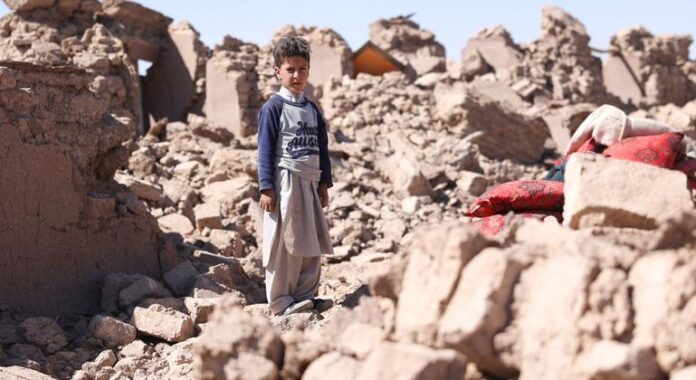
Aid effort underway after Afghanistan quake ‘wipes out’ villages

Speaking on Monday to journalists at UN Headquarters in New York, Tom Fletcher who heads up the Office for the Coordination of Humanitarian Affairs (OCHA), said “we have only 19 per cent of what we need.”

The international community is currently dealing with multiple humanitarian crises across the world, including conflict-driven crises in the Democratic Republic of the Congo, Gaza, Sudan, Syria, Ukraine and Yemen.

Other crisis hotspots include Afghanistan, Haiti, Myanmar and the Sahel.

The Global Humanitarian Overview 2025 (GHO), which is an annual assessment of global humanitarian needs and responses, was launched last December and covers 180 million vulnerable people across 70 countries.

The GHO calls for $44 billion, but latest figures show that just under $15 billion has received to date.

So far in 2025, three crises in the Occupied Palestinian Territory, Ukraine and Sudan have received almost a quarter of all funding.

The top five donors according to OCHA’s Financial Tracking Service have been the European Commission, the United States and the United Kingdom, followed by Japan and Germany.

Aid cuts

According to Mr. Fletcher, hundreds of aid organizations have shut down, and the humanitarian sector has contracted to just one-third of its size from 10 months ago.

Meanwhile, OCHA has lost 20-25 per cent of its staff over the past year.

In June, OCHA made a “hyper-prioritised” appeal for $29 billion to reprioritise individual country humanitarian plans with the the goal of saving 114 million lives.

The $29 billion represents just one per cent of what the world is projected to spend on defense this year, according to Mr. Fletcher, who asked “What does this say about our collective priorities?”

© UNOCHA/Vincent Tremeau

A man carries food aid through the Kutupalong refugee camp in Cox’s Bazar, Bangladesh.

Humanitarian needs grow

This year alone, six million more children are out of school globally, according to the UN Children’s Fund (UNICEF), while officials at the Office of the UN High Commissioner for Refugees (UNHCR), warned that 11 million refugees may no longer get the help they need.

In Gaza, over half a million people are currently facing extreme hunger, a figure expected to rise above 640,000 by the end of the month, according to the latest Integrated Food Security Phase Classification (IPC) report. “We need a ceasefire now,” said the humanitarian chief.

Sudan, facing the world’s largest humanitarian crisis, is expected to be a major topic of discussion at the forthcoming meeting of world leader at the UN from 22 September. Haiti is likewise under the spotlight, where sexual and gang violence remain widespread.

“Women were taking contraception in advance when getting to checkpoints, anticipating acts of sexual violence,” said Mr. Fletcher.

Fight for what must be saved

The year 2025 also marks a record for aid workers killed in the line of duty, with over 270 killed compared to 380 last year.

We need to see “more anticipatory, more preventive, more efficient, and more local approaches,” highlighted Mr. Fletcher.

At a time when it is “unfashionable to be defending institutions, defending structures, hierarchies, and order – the alternative is disorder and chaos,” he said.

“We must grieve for what has gone, we must fight for what must be saved, and we must imagine what we can be in the future.”

Source link

rethinking power in a connected world

0
rethinking power in a connected world

Speech by Christine Lagarde, President of the ECB, ‘Conversations pour demain’ on the occasion of the 25th anniversary of Institut Montaigne in Paris, France

Paris, 15 September 2025

It is a great honour to be invited to celebrate the 25th anniversary of the Institut Montaigne with you. For a quarter of a century, this institution has stood out for its independence of thought. That independence has given its work both credibility and influence.

As a central banker, independence has a special meaning for me. In this uncertain world, institutional independence is a key source of stability and trust.[1]

But the question of independence extends far beyond monetary policy. As Michel de Montaigne once wrote, “La plus grande chose du monde, c’est de savoir être à soi”. [The greatest thing in the world is to know how to belong to oneself.]

Today, Europe and its Member States are asking what it takes to “belong to oneself” in a world where the foundations of the international order are shifting.

Since the 17th century, independence has always been guaranteed by balance. Countries built systems of strategic balance to prevent the strong from dominating the weak.

From the Westphalian age until the first half of the 20th century, this balance rested on hard power: the ability to balance others through military force.

After 1945, it shifted towards soft power among Western states: balance was achieved through rules and norms to which all agreed.

Today, it rests on system power: the ability to manage the dependencies created by the infrastructures and technologies that bind us together.

Safeguarding independence in a world of system power is the defining challenge of our time.

And to succeed, Europe must transform – to restore strategic balance in this new era. Only then can we prevent interdependence from descending into cycles of coercion that would ultimately weaken us all.

The path to system power

In modern European history, three distinct paradigms of power stand out.

The first is hard power. For centuries, the independence of European states rested on military strength – the ability to defend oneself by force in a world of feudal and imperial hierarchies.

The Peace of Westphalia in 1648 marked a turning point in international relations. Under the Westphalian order, each state had the exclusive right to govern its territory without external interference.

This laid the groundwork for international law, or at least norms of coexistence. Yet in practice, balance of power still meant military competition, an equilibrium maintained as much by arms races as by agreements or marriages of convenience.

As a result, this system had its limits. When the equilibrium held, it provided peace. When it broke, escalation was swift and uncontrollable. Twice in the space of a few decades, Europe descended into catastrophe.

To avoid a return to the unstable balance-of-power dynamics, a second paradigm emerged after 1945 and gained momentum after the fall of the Berlin Wall: soft power.

Power was no longer exercised only through armies, but through the ability to create and enforce rules, norms and values. Multilateral frameworks and institutions were created that aligned national interests with collective stability.[2]

As long as countries complied with these rules and accepted enforcement, there was no need for an explicit balancing of military or economic capabilities. Independence was safeguarded by global institutions – and enhanced by the ability to shape those institutions in one’s favour.

This period coincided with a sevenfold rise in global GDP per capita. Over a billion people were lifted out of poverty. And the world experienced the longest stretch in modern history without direct war among major powers.

In this rules-based world, Europe thrived. It became a so-called “regulatory power”, able to project its influence not through armies but through markets.

As the leading trading partner for 72 countries, Europe exported not only goods but also standards, shaping corporate practices and laws worldwide – a phenomenon known as the “Brussels effect”.

But open markets and shared standards led to a third paradigm of power emerging: system power. Some countries embedded themselves in global trade and financial networks in ways that gave them leverage over others.

At the time, this shift went largely unnoticed. Many assumed globalisation and democratisation were permanent, and that trade partners would not become adversaries. And because economic interdependence had reached unprecedented levels, it was assumed that no country could coerce another without hurting itself.

Today, US-EU trade is worth around €1.5 trillion annually, EU-China trade about USD 900 billion, and US-China trade around USD 650 billion.

Is that sufficient? Probably not.

It is now clear that asymmetries matter.

A country that controls a raw material or a critical technology can hold “escalation dominance” even over partners with much larger markets. When the United States raised tariffs, China used its leverage and struck back at choke points in US supply chains.

Other forms of power have not disappeared – as Russia’s unjustifiable invasion of Ukraine, and now its violation of Polish and Romanian airspace, have brutally reminded us. But the recognition of system power is profoundly reshaping policymaking worldwide. Achieving primacy in complex networks – or disentangling oneself from them – has become a central goal.

We see some countries building alternative financial infrastructures, like China’s Cross-border Interbank Payment System (CIPS) and Russia’s financial messaging system SPFS, to shield themselves from US sanctions.

We see a new “great race” for mining resources and trade routes that secure access to metals and rare earths.

And we see a rapid turn towards state intervention: China is spending more than 4% of GDP[3] on industrial policy, and the United States – once the bastion of free market rules – is now taking direct government stakes in chip and mining companies.

Some look at these policies and lament their inefficiency. But efficiency is not the goal. The goal is to secure the foundations of economic and political primacy.

Here lies Europe’s challenge. It thrived in the rules-based era as a regulatory power. But it was not designed for a world of system power. And it failed to develop its military power on the grounds that regulatory power prevailed.

If Europe wants to preserve its independence in this new world, it must transform.

Operating in a world of system power

Europe’s overriding goal in this changing order is clear: to defend its values, without compromising its principles, and act with complete independence.

To do so, we need to uphold as much as possible, at the global level, a system based on the rule of law, which remains the aspiration of most nations.

But we must be realistic. If major powers, encouraged by military might, are turning away from multilateralism and embracing the logic of system power, we need to be prepared.

The aim cannot be to stoke global tensions. It cannot be to dominate others. It must be to restore balance by reducing asymmetric dependencies – so that coercion becomes self-defeating and people in sovereign countries can live in freedom.

Interdependence can then once again serve as a pillar of stability rather than a source of fragility.

For the EU, this requires three changes: pooling, coherence and coalitions.

First, pooling at European level.

The strategic autonomy agenda, launched in 2016, recognised that balance required developing autonomy in critical technologies.

Several initiatives, including the Chips Act, the Net-Zero Industry Act and the Critical Raw Materials Act, have taken shape and more – on artificial intelligence (AI), the cloud and other emerging technologies – are in the pipeline.

But these policies are still ultimately managed at the national level, demonstrating, unfortunately, that national frameworks cannot deliver true independence.

For example, the European Court of Auditors has judged it “very unlikely” that Europe will reach its semiconductor target of 20% of global production by 2030.[4] In batteries, the EU holds just 10% of global capacity, whereas China’s CATL alone controls 40%.[5] And in AI, US institutions produced 40 notable models in 2024, compared with Europe’s three.[6]

The fundamental problem is scale. National policies cannot produce globally competitive firms in sectors where the major issue is critical size. This leaves us at an impasse: either we are forced to rely on costly, second-rate domestic products that erode our competitiveness, or we remain captive to the very dependencies we are trying to reduce.

The only way out is a new European approach to economic policy, combined with a new way of taking decisions.

Enrico Letta and Mario Draghi have already said everything there is to say about the Internal Market and its current quixotic state, as well as its potential. And what are we doing?

Europe should extend qualified majority voting. As I have argued before, it is not a weakening of democracy. It is the only way to exercise it fully: by pooling our resources and our capacity to achieve the required scale in these strategic fields, we give citizens back their ability to shape events, and Europe its independence in a world of rival powers, where size and the scale effect are critical.[7] This is how decisions are taken at the ECB – and it works.

Second, coherence.

In this age of system power, weakness in one domain cannot be offset by strength in another, because dependencies now cut across sectors.

We saw this in 2018, when the United States threatened to cut European firms off from its financial system if they continued trading with Iran.

This dynamic was particularly evident when Russia invaded Ukraine: our reliance on Russian gas was used in an attempt to deter us from taking retaliatory measures. That failed – but Europe paid a heavy price: soaring energy costs and five quarters of lost growth.

And we saw another example in our recent trade negotiations with Washington, where concerns about maintaining US support for Ukraine appeared to influence the willingness of some Member State to intensify the economic stand-off – even if that meant settling for a weaker deal.

The lesson is simple: Europe cannot rely solely on its economic influence or regulatory leadership. Those strengths can be neutralised if there are chinks in the armour elsewhere. Europe needs the full range of instruments of a unified state.

Europe is working on this, albeit possibly too laboriously and too slowly. Defence spending is set to rise significantly. Reaching 5% of GDP by 2035 will mean more than €300 billion in additional funding each year.

Europe has already committed over $200 billion in support for Ukraine, making it the largest donor. In doing so, it is restructuring its defence industrial capacity – including through the “Build with Ukraine” initiative – and reducing reliance on external equipment.

Steps are also being taken to strengthen the international role of the euro. The digital euro, in particular, would offer a sovereign alternative to foreign payment systems and the potential to expand the euro’s reach in cross-border transactions.

But this progress is being hindered by indecision. The digital euro is still awaiting a legislative act. Energy prices remain tied to gas because investment in grids, interconnectors and clean baseload power is too slow. And defence procurement is still fragmented across the 27 Member States, undermining scale and interoperability.

Third, coalitions.

A world of system power demands a different approach to foreign economic policy. We cannot – and should not – reshore everything. Independence instead requires a layered strategy.

The best option is to keep global institutions at the centre by supporting the International Monetary Fund (IMF) and the World Trade Organization (WTO) as anchors of an open trading and financial system and helping them evolve to meet new challenges.

Just as nuclear deterrence relied on verification and dialogue, economic deterrence today requires frameworks for transparency and cooperation, even among rivals. The IMF and the WTO could take on this role, monitoring subsidies, restrictions and export controls, and offering platforms for dialogue in times of crisis.

In doing so, they would help ensure that interdependence becomes a stabilising factor – not a weapon.[8]

Where universal consensus is out of reach, we should form coalitions of the willing – at times even with rivals – when our interests converge, whether on climate change, migration, or other common challenges. [9]

And where vital security interests are at stake, we must rely on like-minded coalitions prepared to act together. Independence therefore requires us to build partnerships that share risks and create common stakes in stability.

That may mean forming coalitions to pool raw materials, secure access to advanced chips, or protect digital infrastructure. It may also require adopting a more realist approach to trade: one based less on universal values than on defending concrete interests.

This will require Europe to adapt, given our longstanding commitment to multilateral frameworks and international law. But we have a unique advantage. As the world’s largest trading network, we can leverage this position to forge new agreements and deepen strategic partnerships. And we still have many like-minded partners across the globe.

Conclusion

Jean Monnet once observed that “People only accept change when they are faced with necessity, and only recognise necessity when a crisis is upon them”.

The Westphalian order was born of the necessity to end 30 years of war. The post-war multilateral order was forged in the ruins of two world wars.

Today, we may again face such a moment of necessity, as power is exercised through the very systems on which we all depend, even at the risk of breaking them apart.

At stake is our independence. Europe must be stronger, more aligned, more realistic. Only then can unilateral disruption be made self-defeating.

Stability in this new age will not come from the domination of one over many, but from turning shared vulnerabilities into shared strengths – through a new concept of strategic balance.

Crisis has always driven reinvention. But perhaps this time, we can recognise necessity before it becomes tragedy and shape a balance that preserves independence in an interdependent world.

Source link

The head of the AIEA urges countries to mobilize in nuclear non-proliferation

0

He stressed that their support for the non-proliferation regime, the non-proliferation nuclear treaty (TNP) and Aieais crucial.

“I urge Member States to go to a system that has been one of the most important foundations of international peace, even during the most tense decades of our generation,” he said.

He noted that the conference occurs at a time when “acts of terrorism, multiple military conflicts and the erosion of nuclear standards all occur against an increasing gap between poverty and prosperity”.

Grossi then talked about the ways in which the IAEA endeavors to stop the spread of nuclear weapons and wins nuclear science, including for cancer treatment, food safety, monitoring of plastic pollution, detection of diseases and artificial intelligence.

Nuclear security in the world

Earlier this year, Syria agreed to cooperate with the AIEA, and last week, the agency concluded an agreement with Iran to resume the implementation of nuclear guarantees – technical measures used by the IAEA to ensure that if countries make progress in nuclear technology, they do it for peaceful purposes.

“When the IAEA confirms the peaceful use of a state’s nuclear matter, confidence in nuclear activities is established,” said Mr. Grosi.

Meanwhile, in Ukraine, where nuclear power plants are threatened with conflict, the IAEA sent more than 200 missions and is “present in the field on all sites”.

But there are still challenges. The Korean Democratic People’s Republic (RPDC) is continuing its nuclear weapons program, while the countries that respect the TNP, the historic international agreement intended to abolish nuclear weapons, debate them.

“Think a minute of a world where instead of a few, we would have 20 or 25 countries armed with nuclear weapons,” he warned.

Peaceful uses of nuclear science

Three years ago, the IAEA launched its flagship program, Rays of Hope, becoming a “catalyst for real substantial progress in cancer care”. Thanks to the initiative, concrete actions have been taken in 40 countries: hospitals have been built, bought radiotherapy machines and trained physicists.

In addition, the joint IAEA program with the United Nations Food and Agriculture Organization (Fao), Atoms4food, helps stimulate food security and reduce environmental tension resulting from agriculture.

“In a world of abundance, 700 million people should not have to sleep hungry every night,” he said.

Grossi has underlined more ways that the agency benefits people and the planet, including through its initiative supporting many countries to combat pollution and plastic waste, and another on improving global preparation for diseases.

An optimistic perspective

With powerful tools such as artificial intelligence and automatic learning, “the future is too exciting to miss.”

Nuclear energy can fuel artificial intelligence infrastructure, while artificial intelligence can improve nuclear technology. To further explore this mutually beneficial relationship, the AIEA will organize the very first symposium dedicated to this year’s December.

Fusion Energy, which progresses thanks to public and private capital, is another technological development which should soon take off.

“Each challenge is an opportunity,” concluded Mr. Grossi. “Peace is not just the lack of conflict. It’s dynamic and hopeful that I see in what we do around the world. ”

The 69th General Conference of IAEA will take place from September 15 to 19 in Vienna, Austria, where 3,000 Participants are registered to attend.

Originally published at Almouwatin.com

Gender equality: UN women call for political will and accelerated global action

0

The world withdraws from gender equality, and the cost is counted in life, rights and opportunities. Five years from Sustainable development objectives (SDGS) Deadline in 2030, none of the gender equality targets is on the right track.

It is according to this year ODD Gente In snub Launched Monday by United Nations And the United Nations Department of Economic and Social Affairs, which relies on more than 100 data sources to follow the progress between the 17 objectives.

World at a crossroads

2025 marks three major stages for women and girls: The 30th anniversary of the Beijing Declaration and Platform for ActionThe 25th anniversary of Resolution 1325 of the United Nations Security Council on women, peace and securityand the 80th United Nations anniversaryBut with the new data that gives to think, it is urgent to accelerate action and investment.

Other results of the report reveal that female poverty has barely changed in half-decade, wedged at around 10% since 2020. Most affected people live in sub-Saharan Africa and Central and South Asia.

© Unicef/ Ilvy Njiokiktjien

A two -year -old girl suffering from malnutrition is fed by her mother in their refuge in Cox’s Bazar, Bangladesh.

Conflict enlarging the crisis

Just in 2024, 676 million women and girls lived within the reach of a deadly conflict, the greatest number since the 1990s.

For people taken in war areas, the consequences extend far beyond the trip. Food insecurity, health risks and violence increases sharply, notes the report.

Violence against women and girls remains one of the most omnipresent threats. More than one woman in eight in the world has experienced physical or sexual violence in the hands of a partner in the past year, while almost one in five young women got married before the age of 18. Each year, around four million girls are undergoing female genital mutilation, with more than half before their fifth anniversary.

Prioritize gender equality

However, in the midst of dark statistics, the report highlights what is possible when countries favor gender equality. Maternal mortality has dropped almost 40% since 2000 and girls are now more likely than ever to finish school.

Talk to Not newS, Sarah Hendriks, director of the Policy Division among UN women, said that when she moved to Zimbabwe for the first time in 1997, “childbirth was in fact a question of life and death”.

“Today is no longer reality. And it is an incredible level of progress in 25, 30 years, ”she added.

Gender digital fracture fence

The technology is also promising. Today, 70% of men are online against 65% of women. Fill this gap, the Report estimatescould benefit 343.5 million women and girls by 2050, rising 30 million people from poverty and the addition of $ 1.5 billion to the world economy by 2030.

“When gender equality has been prioritized, it propelled societies and economies,” said Sima Bahous, executive director of UN women. “Investments targeted in gender equality have the power to transform societies and economies.”

At the same time, an unprecedented reaction to women’s rights, the narrowing of civic space and the growing financing of gender equality initiatives threaten hard gains.

According to UN women, without action, women remain “invisible” in data and the development of policies, with 25% less available gender data due to reductions in the funding for the survey.

A girl uses a tablet during her school lessons in Safi, in southern Niger.

“The gender snapshot 2025 shows that the costs of failure are immense, but the gains of gender equality too,” said Li Junhua, under-secretary general of the United Nations for economic and social affairs.

“Accelerated action and interventions focused on care, education, green economy, labor markets and social protection could reduce the number of women and girls in the extreme poverty by 110 million by 2050, releasing around $ 342 billions of cumulative economic returns.”

Urgent choice

But progress remains unequal and often painfully slow.

Women hold only 27.2% of parliamentary seats worldwide, and their representation in local governments is at a standstill at 35.5%. In management, women occupy only 30% of roles, and at this rate, real parity is almost a century.

Marking 30 years from the Beijing platform for action, the Frame 2025 report as a calculation moment.

“Gender equality is not an ideology,” he warns. “It is fundamental to peace, development and human rights”.

Before the United Nations high level week, the gender snapshot report clearly indicates that the choice is urgent: investing in women and girls now, or risks losing another generation of progress.

Ms. Hendriks shared the message of UN women for world leaders: “Change is absolutely possible, and a different path is before us, but it is not inevitable, and this requires political will, as well as the determined resolution of governments around the world to make gender equality, women’s rights and their empowerment once and for all”.

Anchored in the Beijing + 30 action agendaThe report identifies six priority areas where urgent and accelerated action is necessary to achieve gender equality for all women and girls by 2030, which include a digital revolution, freedom of poverty, zero violence, complete and equal decision -making power, peace and security and climate security.

Originally published at Almouwatin.com

Ukraine records the highest number of cluster ammunition for the third year of race

0

According to the latest cluster ammunition instructor, more than 1,200 people are known to have been killed or mutilated in Ukraine since the Russia’s large -scale invasion in February 2022. The real figure is probably much higher, But it could be years before a specific number was known, said Loren Persi, team leader for the cluster ammunition monitor report.

Citing conflicts in Syria and Yemen where it was clear that there were a high number of victims, “This came out [years] later “He said to journalists in Geneva.

Heritage lao

Likewise, in the People’s Democratic Republic of Lao, which Mr. Persi described as the country most contaminated by cluster ammunition, “it took decades” before surveys confirmed that several thousand people had been killed or injured by strikes from cluster ammunition, which are generally understood as a container from which the submises are dispersed.

The publication of civil society, supported by the United Nations Research Agency UnidiirNote the Israeli allegations according to which ammunition in clusters were used in a ballistic missile attack by Iran in June 2025, and of a reported but unbeknip use of weapons in Gaza and south of Lebanon.

The other results of the report note that the de facto The forces of Myanmar have used bombs in clusters “produced at the national level” since about 2022, in the middle of the current civil war.

“The schools were among the objectives in the areas held by the rebels,” said the research specialist on the instructor Michael Hart, stressing their use in Chin State, the state of Rakhine, the Saigon region and the state of Kachin, among others.

Toys

Submunitions-or bombs, as they are also known-cause victims and damage by the impact of the explosion, their incendiary effect and their fragmentation. According to Unidir, a single attack can involve thousands of individual explosive units which are generally distributed over hundreds of square meters.

“These ammunition can be delivered to the air or launched on the surface, and can be used against armor, equipment and staff,” said Unidir, although it is “very clear … that civilians continue to endure the weight” to suffer from the remains of cluster emission, insisted Mr. Persi.

As in previous years, children have represented a high proportion (42%) of weapons victims in 2024, “whether they often find interesting, think that they are toys or that the game or on school or when they work in fields,” continued Mr. Persi.

Impact of financing reductions

Reductions for financing humanitarian work have had a negative impact on countries affected by explosive weapons.

These include Afghanistan, Iraq and Lebanon, which had “made good progress” in the release of contaminated land, but which “now really fight with funding … to do the authorization, so they slow down,” said Katrin Atkins, principal researcher at Cluster Munitions Monitor.

The “whole programs” supported by the USAID in the past, including one in Lau, have been interrupted, noted Mr. Persi.

“For decades, [the programme] was essential to provide both first aid in remote areas where there are victims of bunch mines, which was clearly there to tackle the legacy of the bombings of the 1960s and 70s “, he explained. But also, the entire rehabilitation program, including prostheses … which has been cut and as much as we know, not restored in any way. “”

In the past 15 years since Cluster ammunition agreementOnly 10 countries have used weapons and “all of these states are not part of the international agreement”, the States of the cluster munition instructor.

Manufacturing stop

In total, 18 countries have now ceased the production of cluster ammunition. All former producers are now states parties to the Convention, apart from Argentina.

The report notes that 17 countries still produce ammunition in clusters or reserve the right to do so and that none is a part of the State to the Convention. These are: Brazil, China, Egypt, Greece, India, Iran, Israel, Myanmar, North Korea, Pakistan, Poland, Romania, Russia, Singapore, South Korea, Türkiye and the United States.

Originally published at Almouwatin.com