The EU is to invest in 235 cross-border energy projects to strengthen energy connectivity across the continent. More than 100 projects focus on electricity, offshore and smart electricity grids, another hundred on hydrogen and electrolysers and the remainder on carbon capture and smart gas grids.
The new Energy tracker app quantifies your carbon emissions from heating, electricity use and transport, and provides tailored recommendations on how to reduce your energy consumption. The EU-funded project, AURORA, developed the app which is available for Android and iOS systems.
Haiti is in the grip of a security crisis as gangs fight for control of territory in the capital and beyond while continuing to expand their criminal activities.
Insecurity has displaced hundreds of thousands of Haitians, worsening the humanitarian and economic crises facing the country.
There are fears that gangs are increasingly collaborating with international organized crime networks to traffic drugs.
What drugs were seized and where?
A record 1,045 kilograms of cocaine was seized in July 2025 near Haiti’s Tortue Island, off the northern coast of the Caribbean country, during a maritime operation led by Haitian authorities. It is the country’s largest anti-drug operation in more than 30 years.
Barely two weeks later, 426 kg of cannabis were confiscated in Petite-Anse, near Cap-Haïtien still in the north of the country.
Other seizures took place in larger areas. Two Haitian nationals were arrested in Jamaica, also in July, with more than 1,350 kg of cannabis.
Where are the medications shipped?
The cocaine seized in July came from South America and was intended, according to investigators, to be distributed in the Caribbean and the United States.
There is also recent evidence received by the United Nations Office on Drugs and Crime (UNODC) of medicines shipped to Europe. In August 2025, Belgian authorities seized 1,156 kg of cocaine in the port of Antwerp in a container coming from Haiti.
How are gangs in Haiti involved?
The largest gangs have entrenched themselves along strategic corridors in and out of the capital Port-au-Prince as well as along the border with the neighboring Dominican Republic, controlling key transit routes for drugs as well as other contraband, including weapons.
Control of national roads allows gangs not only to extort the local population, but also to transport drugs with impunity, much of which is destined for export.
Some gangs reportedly extort tolls from boats and engage in armed robbery at sea, thereby exerting some control over trade and trafficking routes.
Armed gang members cross a neighborhood in Port-au-Prince
Intelligence from Jamaica also links gun seizures to an arms-for-drugs trade involving Haitian gangs.
Why has Haiti become a drug transshipment point?
Much of the international drug trade has been concentrated around Turtle Island, which has long been a strategic point for transnational criminal operations, in part due to its considerable size and remoteness.
It has historically been exploited by pirates and, in recent decades, by organized criminal networks involved in drug trafficking, human trafficking and other illicit activities.
Its geographic position, which provides direct maritime access to the Bahamas and Jamaica, as well as the Turks and Caicos Islands, makes it an ideal logistics and storage platform for illicit shipments.
Weapons and ammunition are often transported to Haiti via the same routes as drugs.
Traffickers have been able to exploit Haiti’s difficulties to build a solid judicial and penal system, capable of confronting the expansion of criminal gangs and the illegal activities in which they engage.
What is the regional impact?
Haiti is quickly becoming a hub of a multinational trafficking network. The traffickers involved in the cocaine shipment were Bahamian and Jamaican nationals, highlighting the presence of regional actors collaborating with their Haitian counterparts.
Drug seizures in Haitian waters and in Europe indicate sophisticated, coordinated and established trafficking routes that require a robust regional response from law enforcement.
Newly established drug routes also overlap with migrant smuggling operations, in which Haitian nationals are increasingly involved.
At the same time, drug trafficking contributes to regional instability, undermines governance, disrupts economies and fuels violence.
Ports, trade routes and tourism sectors in affected countries face increased security challenges and reputational damage.
How is UNODC supporting Haiti’s efforts to combat drug trafficking?
UNODC enhances border security, strengthens maritime control, advances intelligence-led policing, and tackles the corruption and financial crime that enable trafficking networks to operate.
The agency’s work begins at the borders, where Haiti remains very vulnerable to illicit flows.
A national border management initiative aimed at increasing interception capacity at ports, airports and land borders was launched at the request of Haitian authorities.
The Haitian Coast Guard repatriates migrants who have fled the country through established trafficking routes.
At sea, UNODC’s Global Maritime Crime Program focuses on strengthening the Haitian Coast Guard, which plays a critical role in securing maritime routes heavily used for drug and human trafficking.
On land, UNODC strengthens the capacity of law enforcement to conduct intelligence-led operations against organized criminal groups involved in migrant smuggling, human trafficking and overlapping criminal activities. The exchange of information between Haiti and regional partners, essential for identifying and dismantling cross-border criminal networks, has also been intensified.
Recognizing that drug trafficking is facilitated by entrenched corruption and the laundering of the proceeds of crime, UNODC implements government initiatives aimed at strengthening institutional integrity and accountability.
Specialized courts are being established, capable of handling cases of financial crime, money laundering, gang-related offenses and other sensitive criminal matters, with the aim of reducing impunity and restoring confidence in the justice system.
Working with a website template – illustrative photo. Image credit: Michał Parzuchowski via Unsplash, free license
Building a website used to feel like a long journey with too many stops. You needed one tool for design, another for code, something else for SEO, and maybe five more to handle speed, hosting, content, and user experience. By the time everything came together, you were already tired.
Now things are changing. AI has completely reimagined the website-building experience. What once required multiple steps, constant back-and-forth, and endless revisions can now happen in a single flow. AI guides your choices, creates layouts, writes content, manages performance, and helps you publish your site faster than ever.
This shift isn’t just an upgrade. It’s a transformation. And platforms like Rocket.new, which operate as powerful parts of a broader Vibe Solution Platform, are leading this new generation of digital creation where everything feels simpler, smoother, and far more enjoyable.
Let’s explore how next-gen AI tools make website building easier for everyone, from beginners to experienced creators.
Why Website Building Was Tough Before AI
Think back to the traditional method of building a website. It demanded:
A sense of design
Knowledge of code
Understanding of SEO
Copywriting skills
Tools for responsiveness
Tools for performance
Tools for testing
Tools for analytics
Even simple websites took days or weeks. If you weren’t skilled in all of these areas, you either had to learn everything or hire multiple professionals. The process was slow, expensive, and filled with trial and error.
AI has taken this complicated structure and turned it into something far more human-friendly.
AI Turns Website Creation Into a Guided, Creative Experience
Instead of forcing you to master coding or design principles, AI tools act like intelligent collaborators. They understand your goals, generate ideas, build structure, and take over the hard parts. You stay focused on vision. AI handles execution.
This is the core of what platforms within this ecosystem aim to achieve. Everything you need lives inside one intelligent system. No juggling. No mess. No confusion. Just a smooth journey from idea to reality.
1. AI Helps You Start Faster With Clear Direction
The first step in website creation is often the hardest. AI solves this by understanding your concept in simple language.
You type something like:
“I need a modern website for my personal brand.”
Within seconds, the AI suggests:
A layout plan
A page structure
Color ideas
Components you might need
A design style that fits your personality
What used to take hours of brainstorming happens in minutes.
This early clarity is one of the biggest reasons people now look for the best AI website builder that offers creative guidance, not just templates.
2. AI Designs Beautiful Pages Instantly
Imagine asking an AI to create a clean, minimalist homepage with natural colors. And a few seconds later, you see several stunning layouts ready for use.
That’s how next-gen builders work.
AI handles:
Layout alignment
Spacing
Color balance
Typography
Button styles
Responsive versions
Visual consistency
The result looks professional without requiring you to have design expertise. What once took hours of dragging, resizing, and adjusting is now done instantly.
You can regenerate styles, swap sections, or adjust themes with no technical steps at all. Creativity flows freely because the heavy lifting isn’t on your shoulders anymore.
3. AI Writes Your Content and Keeps It On-Brand
Design gives your website structure, but content gives it personality. Writing content, however, is often the most time-consuming part of a website project.
AI solves this by:
Writing headlines
Creating product descriptions
Drafting meaningful calls-to-action
Suggesting blog ideas
Generating SEO copy
Improving readability
Fixing grammar
Matching your brand voice
You tell the AI your tone. It does the rest. Instead of staring at a blank page, you get solid content that you can polish or use as-is.
And because AI understands context, the content flows naturally with your website’s theme and goals.
4. AI Reduces Technical Complexity by Handling Code for You
Coding used to be the barrier that most people feared. Even experienced developers spend long hours writing repetitive code, fixing tiny bugs, or adjusting components to fit every screen size.
AI tools can now:
Generate clean code automatically
Fix errors instantly
Suggest improvements
Connect APIs
Build components
Maintain consistency across pages
Keep everything optimized
With AI, the barrier between idea and execution disappears. You spend more time imagining and less time debugging.
5. AI Makes Your Website Fast Without Extra Tools
A website’s speed affects user experience and search performance. Traditionally, optimizing speed demanded several steps:
Compressing images
Cleaning up code
Reducing scripts
Enabling caching
Testing across devices
AI platforms perform these optimizations without you having to do anything. They detect heavy elements, compress media, remove unused code, and automatically fix layout issues.
Your site feels light and fast right from the start.
6. SEO Is Built Into the AI Flow
Before AI, SEO was something you added after building a site. You needed plugins, research tools, audits, and manual improvements.
AI has simplified the entire process. Modern builders help you:
Choose relevant keywords
Write descriptive titles
Optimize images
Add meta tags
Structure content for readability
Create accessible designs
Generate schema markup
Improve overall clarity
Instead of wondering what to fix, you get real-time suggestions. Your site becomes search-friendly while you’re building it, not months later.
7. You Can Edit Anything Instantly Without Breaking the Layout
Traditional website builders often break when one adjustment affects another. AI tools solve this with intelligent layout understanding.
Want to switch an image? Done. Want to change the heading? Done. Want to add a new section? It appears perfectly aligned. Want to switch styles entirely? Everything updates at once.
AI treats your site like a connected system, not a collection of separate parts. This makes the editing experience fluid and relaxed.
8. A/B Testing Becomes Simple and Accessible
Most people want to try different headlines, button styles, or layouts to see what works best. But traditional A/B testing required external plugins or complex setup.
AI platforms make this process include:
Instant variation generation
Automatic tracking
Clear reports
Recommendations for improvement
You get actionable insights without having to handle the technical setup.
9. Visitors Get Personalized Experiences
AI can detect visitors’ preferences and adjust the site experience in real time.
For example:
New visitors see a welcome introduction
Returning visitors see updated offers
Users interested in certain categories see related sections
This subtle personalization increases engagement and helps visitors feel understood. And all of it happens through simple AI automation, not complex coding.
10. Launching Your Site Is Shockingly Easy Now
Publishing used to require hosting setup, security installations, CDN configurations, and technical adjustments.
AI builders simplify everything with a single click. The platform automatically:
Secures your site
Activates SSL
Sets up fast hosting
Connects a CDN
Prepares your website for global access
You focus on your content while the platform manages the infrastructure in the background.
11. AI Continues Improving Your Site Even After Launch
The beauty of AI is that it doesn’t stop working once your website is live.
It keeps studying:
Visitor behavior
Drop-offs
Slow sections
SEO gaps
User patterns
Performance issues
Then it recommends what to update next.
Your website keeps growing and improving as if it has a built-in strategist working 24/7. This ongoing support keeps your website modern and effective without manual effort.
Why AI Website Builders Are Becoming the New Normal
People want effortless creativity. AI builders offer that by:
Reducing complexity
Speeding up every step
Improving quality
Guiding decision-making
Ensuring consistency
Helping beginners and experts alike
As more creators discover the benefits, searches for the best AI website builder continue to grow. The goal is simple: build smarter, not harder.
AI builders are not replacing human ideas. They are helping people express those ideas more easily.
The Future of Website Building Is Human-Led and AI-Powered
What’s emerging now is a world where website creation feels natural. You think. You describe. AI builds. You adjust. AI enhances. You publish. AI optimizes.
This cycle blends human creativity with intelligent automation. The process becomes:
Conversational
Enjoyable
Clear
Fast
Accessible to all skill levels
Tools like Rocket.new show how this future becomes real when AI is combined with a connected, intelligent Vibe Solutions Platform.
You no longer start with templates. You start with ideas. You no longer spend hours fixing layout issues. AI does it. You no longer worry about SEO, speed, or code complexity. Everything is handled for you.
Closing Reflection: A New Creative Chapter for Everyone
Next-gen AI website builders have completely changed what it means to create an online presence. From planning and design to content, optimization, testing, and launch, AI simplifies every step.
You get clarity instead of confusion. You get speed instead of slow progress. You get creativity instead of technical barriers.
Whether you’re building a personal project, a brand website, or a digital product, today’s AI-powered tools give you the ability to launch confidently and quickly.
This is the new chapter of website building. A chapter shaped by simplicity, guided creation, and human imagination supported by intelligent AI.
I can also create a shorter promotional version, a landing-page copy, or a LinkedIn-friendly summary based on this article.
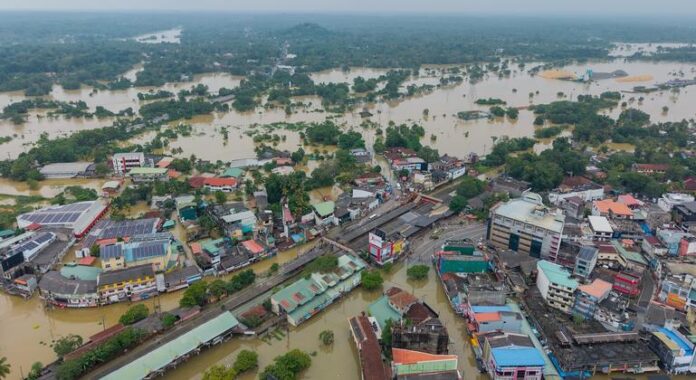
According to to the UN relief coordination office, OCHA998,918 people across the 25 districts have now been affected, with 212 deaths reported and 218 people missing. More than 180,000 people from more than 51,000 families have sheltered in 1,094 government-run security centers as search and rescue efforts continue.
Cyclone Ditwah made landfall on November 28 before returning to the Bay of Bengal, triggering some of the worst floods Sri Lanka has seen since the early 2000s.
The hardest hit districts are Gampaha, Colombo, Puttalam and Mannar, as well as Trincomalee and Batticaloa, while deadly landslides in the central hills devastated Kandy, Badulla and Matale.
Houses destroyed, infrastructure destroyed
Initial assessments indicate that more than 15,000 homes have been destroyed. More than 200 roads remain impassable, at least 10 bridges have been damaged and sections of the rail network and the national power grid have been affected.
Flooding along the Kelani River, which flows through Colombo and surrounding low-lying areas, continues to hamper access and disrupt the flow of information from affected communities, complicating rescue and relief operations.
Severe disruptions to electricity, mobile phone, communications and transport networks are being reported in northern districts, such as Jaffna, with entire villages isolated..
Access to drinking water also remains a major concern, with several areas reporting low or no supplies.
Health system under pressure and food insecurity threatens
Sri Lanka’s already fragile health system is under severe pressureOCHA said. Several district hospitals remain flooded and receiving only limited supplies, with critically ill patients airlifted to functioning facilities.
The response is further hampered by recurrent landslides and the failure of several embankments (embankments or barriers), notably at Mavilaaru, increasing the risks in Trincomalee and Batticaloa.
Authorities have also warned of growing food insecurity, as submerged farmland, damaged storage facilities and cut supply routes threaten shortages and price hikes in the coming weeks.
The World Health Organization (WHO) warned that flooding significantly increases the risk of vector-borne, food-borne and water-borne diseasesurging communities to prevent mosquito bites, ensure food safety and use clean water wherever possible.
Floodwaters entered several hospitals in Sri Lanka, further straining the healthcare system.
UN mobilizes coordinated response
The United Nations in Sri Lanka on Sunday activated its emergency coordination system to step up a unified response with government agencies and humanitarian organizations.
Sectoral coordination has been established in the areas of food security, health, water and sanitation (WASH), education, protection, shelter and early recovery, while a multi-sectoral needs assessment is underway with disaster management authorities to identify the most pressing gaps.
“The UN in Sri Lanka is mobilizing its teams across the system to support national rescue and early recovery efforts, in coordination with the authorities. We stand in solidarity with all affected communities,” said Marc-André Franche, United Nations Resident Coordinator.
Despite access difficulties, the United Nations Children’s Fund (UNICEF) delivered drinking water to 25 security centers in Badulla, in the central hills, cut off from the rest of the country due to flooding and damage to infrastructure.
To support government-led efforts, India and Pakistan have deployed emergency teams to work alongside the Sri Lankan Armed Forces in the worst-affected districts.
Meanwhile, in the wider Asian region
Severe monsoon floods continue in Thailand and Malaysiaaffecting more than two million people in southern Thailand alone and displacing nearly 25,000 people in Malaysia, according to at OCHA. People have been evacuated in several hard-hit Thai provinces, while rainfall is expected to ease in the coming days.
In Indonesiamedia reports report at least 440 deaths from floods and landslides, and more than 400 people missing, particularly in parts of Sumatra, where thousands remain stranded without access to food and water.
The Council has agreed its position on a proposed regulation that broadens the scope of the European Globalisation Adjustment Fund to include support for workers at imminent risk of displacement.
According to the UN relief coordination office, OCHA, 998,918 people across all 25 districts have now been affected, with 212 deaths reported and 218 people missing. More than 180,000 people from over 51,000 families are sheltering in 1,094 government-run safety centres as search and rescue efforts continue.
Cyclone Ditwah made landfall on 28 November before moving back over the Bay of Bengal, triggering some of the most severe flooding Sri Lanka has seen since the early 2000s.
The hardest-hit districts include Gampaha, Colombo, Puttalam and Mannar, as well as Trincomalee and Batticaloa, while deadly landslides in the central hill country have devastated Kandy, Badulla and Matale.
Homes destroyed, infrastructure shattered
Initial assessments indicate that more than 15,000 homes have been destroyed. Over 200 roads remain impassable, at least 10 bridges have been damaged, and sections of the rail network and national power grid affected.
Flooding along the Kelani River, which runs through Colombo and surrounding low-lying areas, continues to hamper access and disrupt information flow from affected communities, complicating rescue and relief operations.
Severe disruption to electricity, mobile and communications, and transport networks are reported in northern districts such as Jaffna, with entire villages isolated.
Access to clean water also remains a major concern, with several areas reporting little or no supply.
Health system under strain, food insecurity looms
Sri Lanka’s already fragile health system is under severe pressure, OCHA said. Several district hospitals remain flooded and are receiving only limited supplies, with critically ill patients being airlifted to functioning facilities.
Response is further hindered by recurring landslides and the breach of multiple tank bunds (embankments or barriers), including at Mavilaaru, heightening risks in Trincomalee and Batticaloa.
Authorities have also warned of rising food insecurity, as submerged farmland, damaged storage facilities and severed supply routes threaten shortages and price increases in the weeks ahead.
The World Health Organization (WHO) warned that floods significantly raise the risk of vector-borne, food-borne and water-borne diseases, urging communities to prevent mosquito bites, ensure food safety and use safe drinking water wherever possible.
Floodwaters have entered several hospitals across Sri Lanka, further straining the health system.
UN mobilises coordinated response
The United Nations in Sri Lanka activated its emergency coordination system on Sunday to scale up a unified response with government agencies and humanitarian organizations.
Sector coordination has been set up across food security, health, water and sanitation (WASH), education, protection, shelter and early recovery, while a multi-sector needs assessment is under way with disaster management authorities to identify the most urgent gaps.
“The UN in Sri Lanka is mobilising its teams across the system to support national rescue and early recovery efforts, in coordination with authorities. We stand in solidarity with all affected communities,” said UN Resident Coordinator Marc-André Franche.
Despite access challenges, the UN Children’s Fund (UNICEF) has delivered portable water to 25 safety centres in Badulla in the central hills, which had been cut off from the rest of the country by floods and infrastructure damage.
To support government-led efforts, India and Pakistan have deployed emergency teams to work alongside Sri Lanka’s armed forces in the worst-hit districts.
Meanwhile, in the wider Asian region
Severe monsoon flooding continues across Thailand and Malaysia, affecting more than two million people in southern Thailand alone and displacing nearly 25,000 people in Malaysia, according to OCHA. People have been evacuated in several hard-hit Thai provinces, while the rainfall is expected to ease in coming days.
In Indonesia, media reports cite at least 440 deaths from floods and landslides, with more than 400 people missing, particularly in parts of Sumatra, where thousands remain stranded without access to food and water.
Just over 180,000 deaths in the European Union were attributable to exposure to fine particulate matter (PM 2.5 ) concentrations above World Health Organization WHO guideline levels in 2023, according to the latest European Environment Agency (EEA) air quality health impact assessment published today.
“Sometimes, it feels like the world isn’t made for people like me,” said Shiminenge, her voice steady despite the weight of the words. In Gbajimba, north-central Nigeria, the 32-year-old navigates daily life in a camp for displaced people that offers little space, safety, or accessibility for people living with disabilities.
Around her, tents stretch across dry, uneven ground. Paths turn muddy and difficult when it rains. Toilets and water points sit farther than she can reach without help. Yet every morning, she pushes through the same obstacles, determined not to disappear in a place that was never designed for her.
Shiminenge is one of more than 480,000 people displaced by intercommunal conflict in Benue State.
She fled her village in Guma in 2018 and has since lived in a camp for internally displaced persons in Gbajimba. Like many others, she left with little more than the hope of finding safety.
But her journey began long before displacement.
Shiminenge (right) has received support from the IOM and other humanitarian agencies.
At just nine months old, her parents were told she would never be able to walk after a diagnosis that shaped the course of her life. Growing up with a mobility impairment meant constant adjustments and an early understanding of what it means to move through the world without accessible support.
Today, life in the camp has added another layer of daily challenge: poor shelter conditions, no accessible sanitation, and a landscape that is nearly impossible to navigate.
Speaking ahead of the International Day of Persons with Disabilities marked annually on 3 December, she said: “In the camp, every step outside my tent was a struggle.” It’s not just the physical obstacles; it’s the feeling of being invisible, of being forgotten in a place where survival is already so hard.”
Barriers to services and dignity
The sense of invisibility that Shiminenge describes is shared by many people with disabilities in displacement settings. They are often among the most marginalized within internally displaced populations, facing unique barriers to shelter, healthcare, sanitation, and essential services.
In these environments, inaccessible infrastructure and limited targeted support can heighten risks of neglect, exclusion, and abuse. As these barriers add up, they make displacement even more difficult and put the rights and dignity of people with disabilities at greater risk.
Despite these limitations, Shiminenge refused to give up. Resourceful and determined, she began selling mosquito repellent in the camp, earning a small income while also helping protect other camp residents from malaria.
Her resilience soon grew into advocacy. She helped form a disability association in Gbajimba, bringing together 18 other people living with disabilities to push for mobility aids, fair access to resources, and more inclusive facilities.
Camp upgrade
In August 2024, a team with the International Organization for Migration (IOM) visited the camp to assess the living conditions of displaced persons. After years of feeling unseen in a crowded place, the visit felt different. “For the first time here, I felt someone was listening,” she said.
Responding to the association’s requests, IOM with the support of the Benue State Emergency Management Agency, led a total camp redesign to ensure that the specific needs of people living with disabilities were addressed with dignity and respect.
As part of this redesign, nearly 4,000 upgraded emergency shelters were constructed in Gbajimba, each built to withstand the region’s seasonal rains and offer safer living conditions for displaced families.
The redesign also introduced a dedicated section for people living with disabilities, offering disability-friendly toilets, accessible water points, and kitchens designed for ease of use.
Throughout the area, gently sloped ramps and communal social spaces were added, allowing residents to move independently and participate more fully in daily camp life.
“These changes mean more than convenience; they give us a sense of dignity and belonging,” she said.
Just over 180,000 deaths in the European Union were attributable to exposure to fine particulate matter (PM 2.5 ) concentrations above World Health Organization WHO guideline levels in 2023, according to the latest European Environment Agency (EEA) air quality health impact assessment published today. Source link