Sunday, September 20, 2026
Home Blog Page 22

Budapest Scientologists Mark 10 Years of expansion at Váci Road Church

0

Hundreds of parishioners gathered for an anniversary service, music and a retrospective of a decade in which the Budapest Ideal Church has also hosted drug…

KINGNEWSWIRE // PRESS RELEASE

Hundreds of parishioners gathered for an anniversary service, music and a retrospective of a decade in which the Budapest Ideal Church has also hosted drug-prevention, human-rights, humanitarian and interfaith activities.

BUDAPEST, Hungary — 11 August 2026 — Celebrating 35 years of expansion in the country, and 10 since the grand opening of their Ideal Church, hundreds of Scientologists gathered at the Church of Scientology in Hungary on Váci Road in Budapest to mark the anniversary, celebrating a decade that has combined religious life with an expanding programme of community, educational and interfaith activities.

The anniversary programme included a religious service, live music, a photographic and video retrospective of the past decade and a presentation of plans for the years ahead. Following the formal programme, participants remained at the church for informal conversations over traditional Hungarian food, recalling milestones in the development of the Scientology community since 1990 and specially since the ideal place of worship opened in 2016.

The Váci Road church was formally dedicated on 23 July 2016 in Budapest’s District XIII. Mr David Miscavige, ecclesiastical leader of the Scientology religion, officiated at the opening of the Budapest Church of Scientology, which brought together Scientologists and guests from Hungary and other Central and Eastern European countries.

The six-storey building was established as an Ideal Org, the term used within Scientology for a church designed to accommodate the full range of religious services while also providing facilities for public information, educational initiatives and community programmes.

That opening represented an important stage in a Hungarian Scientology history extending back to the final years of the 1980s. Tamás Nagy encountered Scientology in Zurich, while Kornél Varga became acquainted with the religion in Stuttgart. After returning to Hungary and meeting one another, they helped organise the developing community, with the Church of Scientology formally established in Hungary in 1991.

Over the following decades, the community developed activities in different parts of the country (and surrounding countries), culminating in the establishment of the Váci Road headquarters.

The building today combines spaces dedicated to Scientology religious training and spiritual counselling with classrooms, meeting areas, a chapel and an extensive public information centre.

On the ground floor, visitors can explore the “What Is Scientology?” audiovisual exhibition, containing hundreds of videos explaining the beliefs and practices of Scientology, the life and work of its founder L. Ron Hubbard, the development of the religion and the humanitarian and social initiatives supported by Scientologists.

The first floor contains facilities for studying Scientology approaches to everyday life, while additional floors accommodate ministerial training and auditing, the one-to-one spiritual counselling practised within Scientology. At the top of the building is the chapel, which can accommodate close to 300 people for religious services and other gatherings.

Since its opening, thousands of people have entered the Váci Road building, including many visitors who are not Scientologists. Open-house events provide opportunities for members of the public to learn about the religion and its activities, while the premises have also hosted drug-prevention conferences, human-rights events, humanitarian meetings and Holocaust remembrance programmes.

At least twice each year, the church also organises interfaith dialogue gatherings designed to bring together representatives and members of different religious traditions, be it catholics, budhists, hindus, sijs, christians and the like. These meetings focus on shared values, peaceful coexistence and the principle that religious diversity can contribute positively to society when accompanied by mutual respect.

The community activities in Budapest form part of a broader range of humanitarian and social betterment programmes supported by Scientologists internationally and inspired by the work of L. Ron Hubbard.

These include the Truth About Drugs drug-prevention programme, which provides factual educational materials concerning commonly abused substances; Youth for Human Rights International and United for Human Rights, which promote awareness of the Universal Declaration of Human Rights; The Way to Happiness, a nonreligious common-sense guide to better living written by Hubbard; and the Scientology Volunteer Ministers, who provide practical assistance to individuals and communities in times of need.

Drug prevention has been one of the more visible areas of community engagement by Hungarian Scientologists. At the 2016 inauguration, retired Pest County Police Chief Brigadier General István Komáromi recalled cooperation associated with the first Drug-Free Hungary Marathon in 2002 and subsequent prevention activities that continue to reach towns and cities around the country.

Human-rights education has likewise formed part of the church’s community calendar, alongside programmes aimed at dialogue between religious and cultural groups.

The tenth anniversary was therefore not only an occasion to remember the opening of the building but also an opportunity to review how the Váci Road church has developed as a religious home and as a meeting place for wider civic and social initiatives.

Ivan Arjona, representative of the Church of Scientology to the European Union, OSCE, Council of Europe and United Nations, connected the Budapest anniversary with the wider role religious communities can play in European civic life.

“A church becomes part of the social fabric of a European city not only through its religious services, but through the relationships it builds with neighbours, civil society and people of other beliefs. Ten years of an open religious home in Budapest also means ten years of opportunities for dialogue, human-rights education, prevention and practical community service. Europe is strongest when freedom of religion or belief goes hand in hand with civic responsibility, respect for human dignity and peaceful cooperation among people with different convictions.”

The anniversary also brought attention back to the origins of the Hungarian community and to the role of L. Ron Hubbard in the development of Scientology.

Mr Hubbard founded Scientology in the early 1950s following his earlier work on Dianetics. His writings and recorded lectures form the theological and practical foundation of the religion, including its religious services and a number of programmes concerned with education, drug prevention, human rights and community assistance.

The concept of an Ideal Org also originates in Mr Hubbard’s vision of Scientology churches capable of providing the religion’s complete range of spiritual services while serving as points from which members can contribute to their surrounding communities, a vision that has been brought to reality thanks to the leadership of Mr David Miscavige..

The international Ideal Organization programme has since resulted in the establishment of major Scientology churches in cities across Europe and other regions of the world.

For the Budapest congregation, the tenth anniversary connected several generations of Hungarian Scientologists. Those involved in establishing Scientology in Hungary in the early 1990s have witnessed the community develop from relatively small groups into a permanent religious centre on one of Budapest’s principal urban corridors.

A newer generation now participates in the religious, educational and community programmes based there.

The celebration concluded with attention turning toward the next decade at Váci Road, maintaining the building as a home for Scientology religious life while continuing to provide space for dialogue, education, humanitarian activity and encounters between people of different backgrounds and beliefs.


The Church of Scientology, its churches, missions, groups and members are present across the European continent. Scientology Europe reports a continent-wide presence through more than 140 churches, missions and affiliated groups in at least 27 European nations, alongside thousands of community-based social betterment and reform initiatives focused on education, prevention and neighbourhood-level support, inspired by the work of Scientology founder L. Ron Hubbard.

Within Europe’s diverse national frameworks for religion, the Church’s recognitions continue to expand, with administrative and judicial authorities in Spain, Portugal, Sweden, the Netherlands, Italy, Germany Slovakia and others, as well as the European Court of Human Rights, having addressed and acknowledged Scientology communities as protected by the national and international provisions of Freedom of Religion or belief.
Source link

UN continues scaling up response to earthquake in Colombia

0
UN continues scaling up response to earthquake in Colombia

According to latest official figures, the 7.4 magnitude quake has left more than 200 dead and injured over 2,500, said UN Deputy Spokesperson Farhan Haq, briefing journalists in New York. 

Homes and public infrastructure have also been severely damaged. 

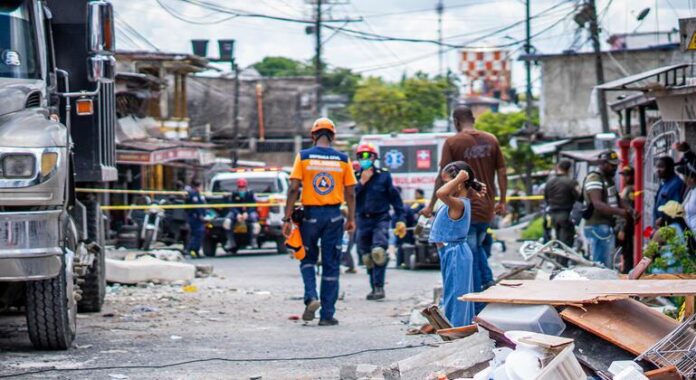
Humanitarian assessments are ongoing, particularly in the hardest-hit areas around Cali, Pereira, Manizales and Quibdo, where disruptions to communications, transport and public services continue to impede relief operations.

Children face ‘growing risks’

Children have seen their homes and schools damaged and are facing growing risks as essential services remain disrupted in the hardest-hit communities,” said, UNICEF’s Country Representative, Tanya Chapuisat.

The top children’s agency official in the country said UNICEF was mobilising “an early response in Chocó and Buenaventura in water, sanitation and hygiene to help reduce public health risks and protect the dignity of affected families while essential services are being restored and assessments continue.”

So far, the agency has reached 22,000 people in the Chocó and Buenaventura region along the Pacific coast – the epicentre of the quake – providing family hygiene kits, maternal care kits, menstrual kits and water storage tanks. 

UNICEF has been active in the Chocó region for over two decades, so it is coordinating its response with national and local authorities and partners. 

It is working with the Colombian Family Welfare Institute to strengthen child protection measures in the wake of the devastation.

© UNFPA
An excavator clears rubble from destroyed buildings in Quibdó, Colombia.

Cash and food assistance 

Colombia was already facing a complex humanitarian crisis before Monday’s earthquake, due to continued conflict and climate shocks. Seven million people were already experiencing moderate or severe food insecurity in the country’s most vulnerable areas. 

The UN World Food Programme (WFP) has been active in Colombia for nearly six decades and has an established presence in some of the areas hit hardest by the earthquake. 

Responding to the Government’s request for international assistance, the WFP is mobilising support and is ready to assist communities.

The organisation’s pre-existing cash-programme activities can help families meet urgent needs, and its 4,500 tonnes of pre-positioned food stocks in Colombia are ready to be dispatched if necessary. 

The stocks are located close enough to affected areas to enable a rapid response, with additional supplies available through WFP’s regional and global supply networks,” said Deputy Country Director Giulia Baldi.

Communities fear further aftershocks, she added: “The first 72 hours after an earthquake are crucial for search and rescue, and for positioning food and relief supplies before needs escalate.”

Rescue teams are continuing to search through rubble in the hardest-hit cities, with people of all ages continuing to be dug out alive. “Every minute is vital,” the mayor of Cali said on Tuesday.

Source link

Germany Backs Sweeping Spy Powers

0

Cabinet plan would let intelligence services disrupt hostile operations as journalists warn that oversight and source protection fall short Germany’s cabin…

Cabinet plan would let intelligence services disrupt hostile operations as journalists warn that oversight and source protection fall short

Germany’s cabinet has approved a far-reaching overhaul of the country’s intelligence laws, proposing new powers to penetrate digital devices and actively disrupt hostile operations. The government says the changes are needed to confront espionage, sabotage and cyberattacks, but press-freedom organisations warn that the bill could weaken protections for journalists and confidential sources. The legislation must still pass parliament before any of the new powers can take effect.

From intelligence gathering to intervention

The package, approved by the cabinet on Wednesday, would expand the authority of both the Federal Intelligence Service, known as the BND, and the domestic Federal Office for the Protection of the Constitution, or BfV.

Under the government’s cabinet draft, the agencies would gain broader digital-surveillance and data-analysis powers. These include covert searches of information technology systems and expanded access to data held on computers and mobile devices.

The most consequential change would allow intelligence officers to move beyond observing and assessing threats. In narrowly defined circumstances, the BND could undertake what the government calls active protective measures against operations attributed to foreign powers.

Officials offered examples including disabling servers used by state-linked hackers, interfering with systems supporting drone or chemical-weapons production, replacing components in hostile supply chains with defective ones, or substituting harmless material for explosives.

These examples describe proposed capabilities, not operations that Germany has confirmed carrying out. The legal thresholds, authorisation procedures and scope for judicial or independent review will therefore be central to the parliamentary debate.

Berlin cites a changed security environment

Interior Minister Alexander Dobrindt argued that Germany faces sustained pressure from espionage, cyberattacks, sabotage and covert foreign influence. Chancellor Friedrich Merz’s government also wants to reduce its dependence on intelligence supplied by allied countries.

The security concerns are not abstract. German authorities have investigated suspected sabotage, hostile cyber activity and unexplained drone incidents affecting transport, military and energy infrastructure. A drone carrying explosives was recently discovered at Leipzig/Halle airport, an important freight hub that also supports assistance to Ukraine.

Authorities have not publicly identified who was responsible for that incident. Although officials across Europe have repeatedly expressed concern about Russian hybrid operations, suspicion cannot substitute for evidence in an individual investigation.

The distinction matters because the proposed legislation would give secret agencies stronger tools to act before a conventional criminal case has been established. Intelligence assessments necessarily operate under uncertainty, making precise legal thresholds and independent scrutiny particularly important.

Journalists warn of weaker source protection

The reform has drawn criticism from German media organisations and civil-liberties advocates. Reporters Without Borders said the draft expands automated analysis and intrusive surveillance while leaving journalists and their sources with insufficient protection.

In its assessment of the intelligence overhaul, the organisation argued that confidentiality safeguards can be overridden under broadly worded conditions. It also warned that automated systems could analyse people who have not yet established a formal relationship with a journalist but may be considering disclosing wrongdoing.

That risk is especially difficult to remedy. If a potential source is secretly profiled or monitored, neither the source nor the journalist may ever learn that the surveillance occurred. Without eventual notification, challenging an unlawful measure in court can become practically impossible.

The government says oversight would be consolidated and professionalised through the Independent Control Council. Critics respond that its staffing, technical resources and enforcement authority may not grow sufficiently to match the volume and complexity of the proposed new powers.

Germany’s history raises the threshold

Germany has traditionally imposed tighter restrictions on intelligence activity than several European partners. Those limits reflect the country’s experience of political repression under National Socialism and the pervasive surveillance conducted by East Germany’s Stasi.

That history does not require the state to remain passive in the face of genuine foreign threats. It does require lawmakers to show that every intrusive power is necessary, proportionate and subject to controls capable of working in practice.

As earlier European Times reporting on surveillance has examined, the democratic question is not whether intelligence services should possess modern capabilities. It is whether authorisation, minimisation, oversight and effective remedies remain meaningful when surveillance becomes increasingly automated and secret.

Parliament now carries the burden

The cabinet decision begins rather than concludes the legislative process. The Bundestag can amend the package, and the reform will be examined against German constitutional protections for privacy, communications, press freedom and professional confidentiality.

Parliament should seek clear answers on who may authorise active disruption, how operations affecting systems outside Germany will be coordinated with allies, when journalists or other protected professionals may be monitored, how long collected data may be retained, and whether people subjected to unlawful surveillance will have an accessible remedy.

The debate will be watched beyond Germany. The BND is a significant European intelligence partner, while cyber operations and information sharing routinely cross national borders. Rules adopted in Berlin may consequently influence how other European governments frame the balance between operational independence and democratic restraint.

Germany faces real and evolving security threats. The credibility of its response will depend not only on whether its intelligence services become more capable, but also on whether the law draws boundaries strong enough to keep exceptional powers exceptional.

Source link

Zambia Votes Under EU Scrutiny

0

More than 100 European observers are following a high-stakes ballot shaped by living costs, media freedom and trust in institutions Zambians are voting in…

More than 100 European observers are following a high-stakes ballot shaped by living costs, media freedom and trust in institutions

Zambians are voting in a general election that will determine whether President Hakainde Hichilema receives a second term, while European Union observers examine the fairness, transparency and inclusiveness of the wider process. The ballot comes amid economic frustration, concerns about restrictions on journalism and renewed scrutiny of the EU’s democratic partnerships beyond Europe.

Polling stations opened at 06:00 local time on Thursday, 13 August, and are scheduled to close at 18:00. Zambia’s Electoral Commission lists 8,786,300 registered voters across the country’s ten provinces.

Alongside the presidency, voters are choosing members of the National Assembly and local representatives. A presidential candidate must receive more than half of the valid votes to win outright. If nobody reaches that threshold, a second round may be held within 37 days.

A record judged beyond polling day

The election is widely viewed as a judgment on Hichilema’s five years in office. His administration points to debt restructuring, greater currency stability, new investment and expanded access to education as evidence of economic recovery.

For many households, however, national indicators compete with the immediate experience of food prices, unreliable electricity supplies, unemployment and the cost of essential services. The central political question is therefore not simply whether economic management has improved, but whether voters believe its benefits have reached their communities.

Zambia’s position as a major copper producer also gives the election importance beyond its borders. Copper is central to electricity networks, renewable-energy infrastructure and electric vehicles. European policymakers and companies consequently have a direct interest in stable, accountable partnerships with producing countries, although commercial priorities should not displace labour rights, environmental safeguards or democratic accountability.

What the EU mission can establish

This is the sixth Zambian general election observed by the European Union since 2001. The EU Election Observation Mission, led by Irish Member of the European Parliament Michael McNamara, is expected to have more than 100 observers in the country around election day.

The mission is examining far more than the conduct inside polling stations. Its mandate covers voter registration, candidate nominations, campaign finance, the use of state institutions, media coverage, online information, political freedoms, counting procedures and the handling of complaints.

Observers are also assessing whether women, young people, persons with disabilities and other marginalised groups can participate effectively. That matters because an election can be orderly on polling day while remaining unequal in the months preceding it.

The mission is due to issue preliminary findings on 15 August and remain in Zambia through the principal stages of counting, dispute resolution and any possible run-off. Its final report will follow once the process has concluded.

EU observation does not validate the result or confer legitimacy on the election. Observers collect evidence and assess the process against Zambian law and international commitments. Their influence ultimately depends on the quality of their findings, the willingness of authorities to address shortcomings and sustained attention after the immediate political interest fades.

Earlier European Times coverage of EU election observation in Ghana illustrated the bloc’s established practice of following an electoral cycle before and after voting rather than treating election day as an isolated event.

Media freedom remains a credibility issue

The pre-election environment has drawn concern from Zambian and international rights organisations. Local media monitors have documented restrictions affecting journalists and access to information, while opposition parties have complained of obstacles to political activity.

In July, Amnesty International raised the case of journalist MacPherson Mukuka, who was charged under Zambia’s Cyber Crimes Act over a recording posted on social media. Amnesty argued that the case could have a chilling effect on investigative journalism during the election period. The authorities’ handling of such cases will form part of the broader assessment of whether citizens had access to diverse information before voting.

Press freedom is not a secondary concern in an election. Voters cannot make an informed choice if reporters fear prosecution, broadcasters provide substantially unequal access or online restrictions prevent legitimate scrutiny of those in power.

The count will carry its own risks

The credibility of the election will depend on transparent counting and tabulation, timely publication of results and accessible procedures for challenging alleged irregularities. Political leaders also bear responsibility for directing supporters towards lawful complaints mechanisms rather than intimidation or violence.

International observers can document failures and recommend reforms, but they cannot substitute for Zambian institutions, journalists, civil society groups and voters. Nor should European economic interests influence the assessment of whether the process respected political rights.

As ballots are cast, no reliable conclusion can yet be drawn about the outcome or the overall quality of the election. The more important judgment will emerge from the full record: who could campaign, whose voices were heard, whether votes were counted transparently and whether disputes were resolved without compromising fundamental freedoms.

Source link

Mercury has part-time radiation belts

0
Mercury has part-time radiation belts


Scientists thought Mercury’s magnetic field was disrupted by the sun too often to trap a radiation belt, but new analysis of MESSENGER data says that’s not always the case.

The BepiColombo spacecraft at Mercury. The spacecraft will help scientists study the composition, geophysics, atmosphere, magnetosphere and history of Mercury. Image credit: European Space Agency

Mercury was long considered the exception to the rule that magnetic planets have radiation belts similar to Earth’s Van Allen belts, but a new study by University of Michigan Engineering and the University of California, Berkeley, suggests otherwise—Mercury occasionally has such a layer of radiation in its magnetic field.

The radiation belt is present about 50% of the time Mercury is farther away from the sun in its oblong orbit, and about 20% of the time at closer distances. Each belt typically lasts less than eight-to-12 hours, but can persist for several Earth days, the researchers say.

Discovered by analyzing interference with instruments on the MESSENGER probe, the findings could help scientists time operations in future missions to Mercury, including BepiColombo, a joint European and Japanese mission scheduled to enter Mercury’s orbit this November.

“When we think about the future exploration of space, and what instruments we send to Mercury, we’ll want to be aware of this radiation belt and take the right sort of precautions and design around it,” said Ryan Dewey, U-M assistant research scientist in climate and space sciences and engineering and co-first author of the study, which was published in Nature Astronomy and funded by NASA and the National Science Foundation.

A photo of Mercury taken by the MESSENGER spacecraft between 2011 and 2015. Image credit: NASA, Johns Hopkins University Applied Physics Laboratory, and the Carnegie Institution of WashingtonA photo of Mercury taken by the MESSENGER spacecraft between 2011 and 2015. Image credit: NASA, Johns Hopkins University Applied Physics Laboratory, and the Carnegie Institution of Washington

A photo of Mercury taken by the MESSENGER spacecraft between 2011 and 2015. Image credit: NASA, Johns Hopkins University Applied Physics Laboratory, and the Carnegie Institution of Washington

Mercury is no longer an exception

All the other planets in our solar system with magnetic fields—Earth, Jupiter, Saturn, Uranus and Neptune—have radiation belts. Instruments that must pass through these belts are designed with radiation shielding, and crewed missions minimize astronauts’ time in the belts.

But scientists didn’t think that Mercury’s relatively weak magnetic field could trap radiation because it is constantly torn apart by the solar wind, the stream of electrically conductive gas that emanates from the sun. Since Mercury is so close to the sun, the solar wind pressure is six to 30 times greater than at Earth, and the sun’s magnetic field—which can break planetary magnetic fields—is four to 10 times stronger.

“Extreme space weather events at Earth are actually normal on Mercury,” said Weijie Sun, assistant research physicist in the Space Sciences Laboratory at UC Berkeley and the corresponding author of the study. “Mercury provides a natural laboratory to infer what the radiation could look like at other planets that orbit close to their stars, as well as distant planets during extreme space weather.”

Despite Mercury’s turbulent space environment, the researchers found that the planet can, at times, hold on to a radiation belt. Mercury’s magnetic field is more likely to trap radiation when it is further away from the sun in its oblong orbit. There, the solar wind blows less strongly, which relieves pressure on Mercury’s magnetic field. The magnetic field expands in turn, providing more space for radiation from the solar wind to accumulate. When Mercury is near the sun, the magnetic field shrinks, and the radiation is squeezed out.

“Mercury’s magnetic field is only about 1% the strength of Earth’s, so there’s not a whole lot of room for the energetic electrons that make up the radiation to survive before being ejected out into space or hitting the planet,” Dewey said.

Noisy data reveals the radiation belts

The researchers found Mercury’s radiation belts while diving into old data collected by MESSENGER, which orbited Mercury between 2011 and 2015. The spacecraft helped researchers figure out what elements were in Mercury’s crust by measuring gamma rays and neutrons with an instrument that converted them into light.

But sometimes, the instrument detected X-rays produced when its metal casing was struck by heightened levels of radiation. The instrument also converted such X-rays into light, but they could only appear in certain channels.

By tracking when and how often the signal was elevated in these channels, the researchers could determine when and where Mercury’s radiation belts appeared. The researchers then compared their measurements to a computer simulation of radiation moving inside Mercury’s magnetic field, which provided insights into how the radiation belt formed and disappeared.

Informing future Mercury missions

Whether the radiation in Mercury’s belt is strong enough to damage instruments aboard BepiColombo is still unclear, because the researchers only have indirect measurements. However, the study will help the BepiColombo team know when to turn off sensitive instruments and when to turn on instruments designed to better understand Mercury’s radiation levels.

“We don’t know how intense the radiation is right now, but that is something that can be solved by BepiColombo,” said Jiutong Zhao, postdoctoral researcher in the Space Sciences Laboratory at U-C Berkeley and co-first author of the study.

Source: University of Michigan


Source link

Cholera spreads across borders in West and Central Africa

0
Cholera spreads across borders in West and Central Africa

Key facts

  • Cholera outbreaks are active in six countries across West and Central Africa, spread along two major transmission corridors
  • Nigeria has the region’s largest outbreak: over 50,000 cases and 338 deaths since 1 January
  • The DRC has recorded the highest death toll: nearly 700 deaths from more than 30,400 cases
  • UNICEF is calling for $15 million in additional funding to scale up its response over the next six months

Seasonal rains, flooding, population displacement and cross-border transmission are accelerating the spread of the sometimes-deadly waterborne disease, which is both preventable and treatable.

Transmission corridors

The outbreaks are concentrated along two major routes. In the Lake Chad Basin, the same Vibrio cholerae O1 Ogawa strain is affecting Chad, Cameroon and Nigeria. 

In the Congo River Basin, outbreaks are linking the Democratic Republic of the Congo (DRC), the Republic of Congo and the Central African Republic (CAR).

Flooding along both corridors is contaminating water sources, damaging sanitation infrastructure and cutting off access to vulnerable communities.

Children are bearing a disproportionate share of the burden. In CAR, children under 10 account for 44 per cent of reported cases. In Chad, nearly two-thirds of infections are among children under 15. In Cameroon, the median age of patients is just 10.

Hardest hit

Nigeria has the largest outbreak in the region, with more than 50,000 cumulative cases and 338 deaths recorded since 1 January, driven largely by a major outbreak in Borno state.

The DRC has reported more than 30,400 cases and nearly 700 deaths – the highest death toll of any affected country.

Call for urgent funding

“This outbreak is no longer confined by borders,” said Gilles Fagninou, UNICEF Regional Director for West and Central Africa on Tuesday. “It is moving along shared rivers, trade routes and population movements, putting millions of children at risk.”

He said every new infection was a reminder that millions of children are still being denied access to safe water, and that stopping cholera required urgency, investment and regional solidarity.

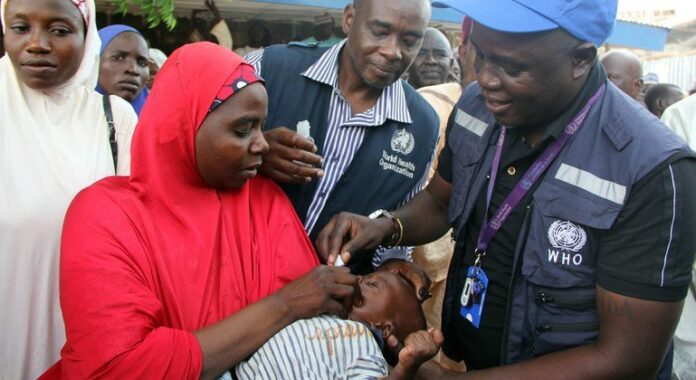
UNICEF and partners, working with national and sub-national authorities, are expanding access to safe water and sanitation, strengthening disease surveillance, supplying essential health materials and supporting oral cholera vaccination campaigns. 

The agency is also coordinating with the World Health Organization and Africa CDC along key transmission routes.

Source link

UN Estimates Russia Holds 16,000 Ukrainian Civilians

0

New figures expose the scale of incommunicado detention and put civilian release at the centre of any peace process More than 16,000 Ukrainian civilians de…

New figures expose the scale of incommunicado detention and put civilian release at the centre of any peace process

More than 16,000 Ukrainian civilians detained by Russia during the war remain deprived of their liberty, according to a new United Nations estimate. Many are reportedly held without contact with their families and on grounds that do not comply with international law. The figure reveals a vast protection crisis, but the UN’s lack of access to Russian detention facilities means it remains an estimate rather than a verified register of individual detainees.

The number was presented by Claudia Fuentes Julio, the UN assistant secretary-general for human rights, during an informal Security Council meeting convened by Latvia and the United Kingdom. According to the new UN estimate, the total includes civilians detained since Russia launched its full-scale invasion in February 2022.

The UN has not said how many of those believed to remain in custody are adults or children. It has also been unable to inspect detention facilities in Russia, leaving families without an independent mechanism capable of confirming where their relatives are, why they are held or whether they are alive.

Evidence of systematic ill-treatment

UN human rights monitors have interviewed 403 Ukrainian civilian detainees and 910 Ukrainian prisoners of war following their release. Fuentes Julio said 85 per cent of the former civilian detainees and more than 95 per cent of the former prisoners of war reported torture or ill-treatment, often repeatedly.

The accounts include allegations of severe beatings, electric shocks, sexual violence, food deprivation and inadequate medical care. The UN has separately documented the execution of 129 Ukrainian prisoners of war at the beginning of their captivity and the deaths of another 48 in custody as a result of torture, denial of medical treatment or other inhumane conditions.

The organisation’s latest human rights report on Ukraine, covering December 2025 to May 2026, found continuing torture and ill-treatment of prisoners, serious restrictions on fundamental freedoms in occupied territory and repeated Russian refusals to grant independent monitors access.

These findings reinforce evidence examined in earlier European Times reporting on torture prevention, where Ukrainian and civil-society representatives warned that detention abuses were continuing despite extensive international documentation.

Civilians are not prisoners of war

International humanitarian law makes a crucial distinction between prisoners of war and civilians. Civilians in occupied territory may be interned only for imperative security reasons, under procedures that include regular review. They cannot lawfully be seized to punish a community, compel cooperation, suppress political identity or provide leverage in negotiations.

Incommunicado detention can also amount to enforced disappearance when authorities conceal a person’s fate or whereabouts. Beyond the immediate risk of abuse, the uncertainty imposes lasting harm on families who may spend years searching through unofficial lists, former detainee accounts and fragments of information from occupied territories.

Leniie Umerova, a Crimean Tatar human-rights activist who addressed the UN meeting, described being detained on what she called fabricated charges while travelling to visit her ill father in Russian-occupied Crimea. Although a court initially ordered her release, she said she was taken away again and moved through seven facilities in six months. She was eventually released after nearly two years.

Russia’s representative rejected the allegations, said its armed forces complied with international humanitarian law and accused Ukraine of abusing Russian detainees. Moscow characterised the meeting as part of a disinformation campaign.

UN monitoring has also documented violations against Russian and third-country prisoners of war held by Ukraine. About half of the former prisoners interviewed reported torture or ill-treatment, mainly during capture, transit or initial interrogation. The UN said conditions generally improved after prisoners reached established Ukrainian detention facilities, to which monitors have been granted access.

Abuses by Ukrainian personnel require investigation and accountability. They do not diminish Russia’s obligations towards the far larger population it holds, nor do they justify denying monitors access to detention sites.

Release must be part of diplomacy

The new estimate arrives as diplomatic efforts to end the war continue without a comprehensive agreement on detainees. Prisoner exchanges have returned thousands of combatants, but civilians do not fit the same legal category and should not be treated as bargaining assets in military exchanges.

A credible peace process should require the disclosure of all civilian detention sites, access for independent monitors, regular family communication and the release of people held without lawful grounds. Urgent medical cases and those facing heightened risks because of age, disability or health should receive immediate attention.

Investigations must continue even where release is secured. Survivors need medical and psychological care, while families require reliable information, legal support and recognition of the harm caused by prolonged uncertainty.

The figure of 16,000 cannot yet identify every missing person or establish every individual case. Its uncertainty is itself part of the story: after more than four years of full-scale war, the outside world still cannot independently determine who is being held behind Russia’s closed detention system. Making those people visible, locating them and returning civilians home must be treated as a condition of peace, not an issue postponed until after it.

Source link

SpaceX Reportedly Takes Over Lerma Parador

0

Claims of a 140-person eclipse delegation draw attention as Burgos accommodation reaches capacity, although key details remain unconfirmed SpaceX has repor…

Claims of a 140-person eclipse delegation draw attention as Burgos accommodation reaches capacity, although key details remain unconfirmed

SpaceX has reportedly reserved the entire Parador de Lerma in northern Spain for a delegation of 140 specialists gathering to observe Wednesday’s total solar eclipse. The booking underlines the extraordinary scientific and commercial interest surrounding the event, but neither SpaceX nor Paradores had publicly confirmed the company’s involvement at the time of publication.

The reported delegation is said to include engineers, researchers and other technical personnel connected with Elon Musk’s aerospace company. According to the claim circulating in Spain, SpaceX secured exclusive use of the historic hotel 18 months before the eclipse.

Those details have not been independently verified by The European Times. Earlier local reporting from Burgos said an unnamed American group had reserved all the rooms at the Parador as early as 2022. That account supports the existence of a large overseas booking, but differs from the newer timeline and did not identify SpaceX.

A palace on the path of totality

The Parador de Lerma occupies the town’s imposing 17th-century ducal palace, overlooking the Plaza Mayor. Its location in Burgos province places it close to the centre of the eclipse’s path across northern Spain.

Totality in the Burgos area is expected shortly after 20:29 CEST, lasting approximately one minute and 44 seconds. The Sun will be low over the western horizon, making open sightlines and careful positioning especially important for observers and scientific equipment.

For technical teams, the eclipse offers more than a dramatic spectacle. Totality allows observations of the solar corona, changes in light and temperature, atmospheric responses and the performance of imaging and communications equipment under unusual conditions. SpaceX has not disclosed any eclipse-related research programme in Lerma, however, and the purpose of the reported gathering remains unclear.

Eclipse demand transforms local tourism

Lerma’s experience reflects a much wider rush for accommodation across the Spanish path of totality. Hotels and rural properties in Burgos began receiving international reservations years before the event, with groups arriving from the United States, Japan and other European countries.

The influx offers an economic opportunity for local hotels, restaurants and transport providers. It also creates pressure on roads, emergency services and small communities whose infrastructure was not designed for a sudden concentration of visitors. Authorities have urged spectators to arrive early, avoid stopping on road shoulders and stagger their return journeys.

Public access remains an important part of the occasion. While well-funded institutions and private groups can secure entire properties or specialist viewing sites, the eclipse itself is visible from numerous towns and open areas along the path. Safe observation still requires certified solar viewers during every partial phase.

The concentration of scientists, tourists and media teams in Burgos illustrates how a brief celestial event can reshape a region’s economy and public life. It also makes accurate attribution essential. As Europe confronts wider questions about trust in science and public information, the reported SpaceX booking should remain qualified unless the company, Paradores or an identified organiser confirms it.

Source link

Romania Warns Remaining Nuclear Reactor May Shut

0

Cernavodă Unit 2 could go offline Thursday as the falling Danube disrupts electricity supplies Romania’s only operating nuclear reactor may be shut down on…

Cernavodă Unit 2 could go offline Thursday as the falling Danube disrupts electricity supplies

Romania’s only operating nuclear reactor may be shut down on Thursday morning as severe hydrological drought pushes the Danube below the level needed to maintain reliable cooling-water supplies. The warning places new pressure on Romania’s electricity system after the plant’s other reactor was taken offline in July.

State-owned operator Nuclearelectrica said a controlled shutdown of Cernavodă Unit 2 was possible on 13 August, depending on river forecasts, operating parameters and the continued decline in the Danube’s water level.

The company’s latest notice, dated 11 August, did not say that the closure had begun. Nuclearelectrica said it would issue another statement if a shutdown became imminent.

Safety decision, supply consequences

The possible closure is a precaution intended to keep the reactor within its nuclear-safety margins. There is no indication of a radiological incident or malfunction at the facility.

Yet its effect on electricity supplies could be substantial. Cernavodă’s two reactors normally provide about one-fifth of Romania’s electricity generation. Unit 1 has been in a controlled shutdown since 28 July because of the exceptionally low river level, leaving Unit 2 as the plant’s sole source of power.

Nuclearelectrica has also obtained force-majeure certificates covering electricity supply contracts. The company said the drought had prevented it from fully meeting contractual obligations from its own production since 27 July. The certificates do not remove electricity from the grid by themselves, but they formally recognise that the hydrological emergency has disrupted the producer’s ability to deliver contracted volumes.

Romania declared an energy-sector state of alert on 31 July. Authorities have asked residents and public institutions to reduce consumption voluntarily during evening peaks, when solar generation falls and demand can remain high.

Emergency works bought limited time

Romanian authorities have dredged sections of the river and submerged four rock-filled barges near the Bala Canal to redirect more water towards Cernavodă. The intervention helped raise the local level temporarily, allowing Unit 2 to continue operating.

However, the benefit was never expected to be permanent. Earlier this month, the Danube’s flow into Romania fell to about 1,400 cubic metres per second, less than one-third of the seasonal norm, according to reporting on the emergency works.

The renewed shutdown warning indicates that those measures may have delayed rather than removed the risk. Restarting either reactor will depend on water conditions and confirmation that operating requirements can be met safely.

A regional grid problem

Romania can compensate through gas-fired generation, renewable energy, storage and imports. But neighbouring electricity systems are also confronting drought, heat and reduced hydroelectric or nuclear output. That makes cross-border capacity especially important during evening demand peaks.

The situation reinforces the case behind the EU’s proposed overhaul of European power networks. Stronger interconnections and faster access to flexible generation can prevent a national production loss from becoming a wider supply emergency.

Authorities must also distribute the burden of conservation fairly. Hospitals, care facilities and people who rely on electrically powered medical equipment cannot reduce demand as easily as other consumers. Clear public information, targeted assistance and protection against sudden price increases will therefore matter alongside technical grid management.

What to know about the Cernavodă shutdown warning

Romania’s state-owned nuclear operator, Nuclearelectrica, warned on 11 August 2026 that Cernavodă Unit 2 could be shut down on the morning of 13 August. Falling Danube water levels are threatening the cooling-water supply required for safe operation. Unit 1 has already been offline since 28 July, although authorities have reported no nuclear accident or radiological danger.

Key facts

  • Plant: Cernavodă Nuclear Power Plant, Romania
  • Operator: SN Nuclearelectrica SA
  • Reactor affected: Cernavodă Unit 2
  • Possible shutdown: Morning of 13 August 2026
  • Immediate cause: Exceptionally low Danube water levels during severe hydrological drought
  • Current status: A shutdown remains possible but had not been confirmed when the warning was issued
  • Safety status: No radiological incident or reactor malfunction has been reported
  • National importance: Cernavodă’s two reactors normally provide about 20% of Romania’s electricity generation

Has Cernavodă Unit 2 already been shut down?

No. Nuclearelectrica warned that a controlled shutdown could occur on 13 August 2026, but said a further announcement would be issued if the closure became imminent.

Why could the reactor be taken offline?

The Danube has fallen to an exceptionally low level. Cernavodă relies on river water for essential cooling processes, and the reactor must be stopped if safe operating requirements cannot be maintained.

Does the warning indicate a nuclear accident?

No. The proposed shutdown is a preventive safety measure. Authorities and the operator have reported no radiological release or nuclear emergency.

Could the shutdown affect other European countries?

The immediate impact would fall on Romania, but reduced production could increase its need for electricity imports. This matters regionally because drought and heat are also constraining power generation elsewhere in Central and Eastern Europe.

For now, Unit 2 remains under close monitoring. The next decision will turn on updated Danube forecasts and overnight operating data, leaving Romania facing a narrow margin between continued generation and the first complete drought-related shutdown of its nuclear plant.

Source link

Europe’s Young Adults Locked Out of Housing

0

International Youth Day highlights how rising costs are delaying independence and narrowing opportunity Europe marks International Youth Day with almost on…

International Youth Day highlights how rising costs are delaying independence and narrowing opportunity

Europe marks International Youth Day with almost one in four young people in the European Union at risk of poverty or social exclusion. Housing has become central to that insecurity, leaving many young adults unable to move out, accept work in expensive cities or establish the lives they had planned.

The annual observance on 12 August is intended to bring young people’s rights and priorities into public decision-making. In Europe, it arrives amid growing recognition that employment or education alone no longer guarantees access to an adequate home.

According to the latest Eurostat data on youth deprivation, 24.2% of EU residents aged 15 to 29 were at risk of poverty or social exclusion in 2025. The corresponding rate for the overall population was 20.9%.

The figures do not mean that every affected young person is homeless or living in severe deprivation. They measure several forms of vulnerability, including low income, material hardship and limited access to work. Nevertheless, the gap between younger people and the population as a whole points to an uneven transition into adulthood.

Independence Delayed by Price

Housing pressures appear in different ways across the continent. Some young adults leave home early but devote a very high proportion of their income to rent. Others remain with their parents because independent housing is unavailable or unaffordable.

In 2024, people in the EU left the parental home at an average age of 26.2. The average was at least 30 in Croatia, Slovakia, Greece, Italy and Spain, while it was below 22 in Finland, Denmark and Sweden.

Those contrasts require careful interpretation. A later departure can reduce a young person’s immediate exposure to rent and utility costs, but it may conceal unmet demand for housing. An apparently low housing-cost burden can therefore coexist with a large population of young adults who cannot afford to establish their own household.

Overcrowding provides another warning. In 2024, 26.5% of people aged 15 to 29 lived in overcrowded accommodation, compared with 16.9% of the EU population overall. Meanwhile, 9.7% of young people lived in households spending at least 40% of disposable income on housing.

Eurofound’s detailed study of youth housing found a persistent mismatch between how young people live and how they would prefer to live. The strain is especially visible in urban employment centres and popular tourist destinations, where wages have often failed to keep pace with rents and property prices.

More Than a Property-Market Problem

Adequate housing affects access to education, employment, healthcare and family life. A graduate who cannot afford accommodation near a suitable job does not enjoy the full benefit of European labour mobility. A student living in an overcrowded household may have less space to study. A young worker paying an excessive share of income in rent has less capacity to withstand unemployment or an unexpected expense.

Housing insecurity can also deepen existing inequality. Young people in precarious work, those without family wealth and people required to provide large rental deposits begin the search for a home from markedly different positions. Policies that rely mainly on home ownership may widen those gaps when prices rise faster than incomes.

The consequences extend beyond individual households. Delayed independence can influence decisions about relationships, children, migration and careers. It can also weaken trust in institutions when young people see economic growth and formal rights failing to produce basic security.

Europe’s Policy Response

The European Commission’s affordable-housing agenda acknowledges that Europe needs to build more than two million homes annually to meet demand, about 650,000 more than the present rate. Its proposals include increased investment in social and affordable housing, action on short-term rentals in areas under pressure and a pilot guarantee intended to reduce or eliminate rental security deposits for young people, students and trainees.

The initiative also envisages a European housing investment platform and an EU summit bringing together national governments, cities, regions and housing organisations. These measures could help mobilise finance and spread workable approaches, but most decisions on planning, tenancy law, taxation and social housing remain national or local responsibilities.

The European Parliament has extended its housing-crisis committee until January 2027, keeping youth housing, affordability and construction barriers on the institutional agenda. Continued scrutiny will be important because announcements about investment do not automatically produce homes in the places, price ranges or tenure types that young residents need.

A credible response will require measurable outcomes: more affordable rental homes, shorter social-housing waiting lists, stronger protection against discrimination, accessible student accommodation and better connections between housing, transport and employment policy. Authorities must also distinguish between increasing the number of buildings and expanding genuine access to secure, adequate housing.

International Youth Day offers Europe an opportunity to move beyond declarations about listening to younger generations. For millions of young adults, participation in society begins with somewhere safe and affordable to live. Whether European governments can provide that foundation will be one of the clearest measures of whether their social commitments reach everyday life.

Source link