

Wednesday, April 8, 2026
Home Blog Page 220

DPR Korea: The United Nations report finds that the human rights situation is still disastrous, a decade on

0

The Right’s Office, OhchrAsked 314 witnesses who left the RPDC – more commonly known as North Korea – and has consulted several organizations and experts to assess human rights conditions since 2014.

The situation has not improved and, in many cases, has worsened, “bringing even more suffering to the population,” said spokesperson Liz Throssell, information journalists in Geneva.

James Heenan, head of the office working on the RPDC, stressed the seriousness of human rights violations, where even a minor offense can lead to a sanction.

Killed to share online shows

“” We have credible evidence that individuals were executed-not only to watch the K-Dramas. The crime is for distribution At a certain level, foreign information, foreign media, “he said.

The report revealed that new laws, political and practices have led to increased surveillance and control over citizens, some of whom found themselves in forced work camps, as political prisoners.

Work in “shock brigades”

In a form of forced work called “shock brigades”, the Pyongyang authorities would have used thousands of orphans and street children to work in coal mines and other environments, exposing them to dangerous and long hours of work, according to the United Nations report.

Heenan also added that schoolchildren are also used to doing “exhausting” work collected harvesting and although they were supposed to be in class.

“The government says that it is a sort of study program to help them acquire life skills. But the information we have had for many years He responds to the qualification of forced work because children have no choice“He said.

The physically demanding and dangerous work of brigades is also undertaken by residents of the military or penitentiary system, as well as by mainly poor families of families who wish to become party members or improve their social status.

Deaths would be frequent under these conditions, but rather than increasing security measures, PDR publicly glorifies deaths as a sacrifice to the chief, according to the report.

The widely used death penalty

In 2014 and 2015, many senior officials were reportedly performed for “anti-state acts”, the report said.

Although this trend later decreased, escape said that from 2020, execution was used for the distribution of unauthorized media, drugs and economic crimes, prostitution, pornography, traffic and murder.

Since 2015, six new laws have made it possible to use the death penalty for offenses such as vaguely defined “anti-state” propaganda.

The respondents said they also witnessed public executions in the past decade. The report explains that the government has organized public tests and executions to inspire fear in the population and dissuasive.

“To block the eyes and ears of the people, they reinforced the repression,” said one of the witnesses to Ohchr.

Not enough progress

The escape expressed that certain improvements had been made to the treatment of people in detention establishments. North Korea has also ratified two other human rights treaties, but the report ultimately concludes that it is far from respecting its obligations under international law.

The RPDC remains more isolated than any other nation, adding more to the difficulty of monitoring and implementing fair human rights standards.

“” What we have seen is a lost decade »» said UN Human Rights Head Volker Türk. “And it hurts to say that if the RPDC continues on its current trajectory, the population will be subject to more suffering, brutal repression and fear that they have endured for so long. »»

Originally published at Almouwatin.com

Afghanistan: Livestry services cut like Taliban Barre Les Femmes

0

“We all at the United Nations suffering from a strengthening of the ban on women working with us … We simply cannot work without a woman”, ” said Arafat Jamal, UN refugee agency (Hcr) Representative of Afghanistan, one day after agencies warned that the measures of de facto authorities had an impact on vital aid for hundreds of thousands of people.

Last Sunday, de facto The Afghan security forces have prevented national staff and UN entrepreneurs to enter the compounds of the world organization in Kabul, the United Nations mission in the country, UNAMA, said on Thursday in a statement.

Closed centers

And in light of the restrictions on Tuesday, UNHCR temporarily closed its cash and support centers for vulnerable Afghans, at the border and in areas where so many people have returned from Iran, Pakistan and elsewhere since the beginning of the year.

The registration process is to provide biometric data, as well as screening and interviews – work that would be “entirely impossible without Afghan workers”, said the UNHCR manager, noting that more than one in two returnees are women.

“” It was an operational decision,»M. Jamal continued. “” It is not a decision taken to punish who. “”

Since the start of the year, some 2.6 million Afghans have returned from neighboring countries – “a lot by choice,” said UNHCR.

Mr. Jamal noted that the pace of yields continues to rise, with nearly 100,000 people who crossed Pakistan in the first week of September only ” stretch our capacities and capacities of this country at the limit».

Reverberant replicas

Echoing these concerns, the United Nations Fund for Children (Unicef) warned that Afghanistan is still in shock from the 6.0 magnitude earthquake which hit the provinces of Kunar and Nangarhar on August 31, followed by several serious aftershocks.

At least 1,172 children died, more than half of the total number of deaths, said a representative of Unicef ​​country in Afghanistan, Dr. Tajudeen Oyewale.

Briefing journalists in Geneva via Videolink, Dr. Oyewale described by meeting the young victims of the Machkandol disaster in Nangahar, three girls and a young boy saved in emergency.

“For girls, it was even more thinking; They were lost; They lost their family, their homes were destroyed, “he said. “Family cattle have died. And for these young girls and this young boy, the future is completely dark. ”

The provinces affected by the earthquake are mountainous and extremely distant, continued the head of UNICEF.

Stuck earth roads

“It is filled with steep lands, difficult navigation … It took us about three and a half hours by car, of which 40 minutes on the paved road and the rest was through restless earth roads, many laps with vehicles coming in the opposite direction and especially rocks that fall on the road.”

Humanitarian workers warn that the earthquake has aggravated existing acute problems of Afghanistan.

In total, the crisis made more than 2,164 lives, at least 3,428 people were injured and at least 6,700 houses were destroyed or seriously damaged.

“Behind these figures are children who stand alone in the rubble and families torn in the blink of an eye … UNICEF literally has an additional effort and does everything you need to achieve these children and families with the support they need,” insisted Dr. Oyewale.

Originally published at Almouwatin.com
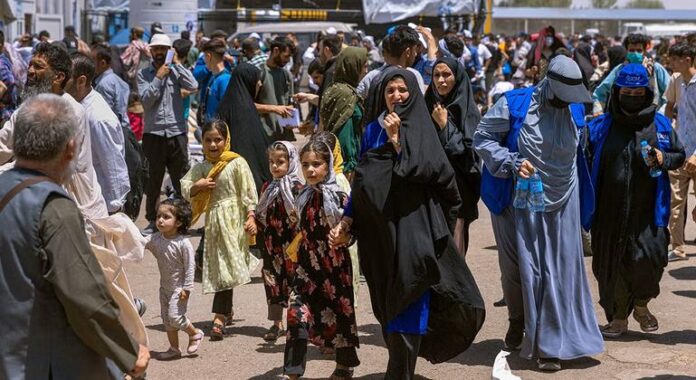
Afghanistan: Lifesaving services cut as Taliban bars women aid workers

0
Afghanistan: Lifesaving services cut as Taliban bars women aid workers

“All of us at the United Nations are suffering from a reinforcement of the ban on females working with us…We are simply unable to operate without females,” said Arafat Jamal, UN refugee agency (UNHCR) Representative to Afghanistan, a day after agencies warned that the de facto authorities’ measures have impacted life-saving assistance for hundreds of thousands of people.

Last Sunday, de facto Afghan security forces prevented national female staff members and contractors of the UN from entering the global body’s compounds in Kabul, the UN Mission in the country, UNAMA, said in a statement on Thursday.

Centres closed

And in light of the restrictions, on Tuesday, UNHCR temporarily closed its cash and support centres for vulnerable Afghans, both at the border and in areas where so many people have been returning from Iran, Pakistan and elsewhere since the start of the year.

The registration process involves providing biometric data, along with screening and interviews – work that would be “entirely impossible without Afghan female workers”, the UNHCR official stressed, noting that more than one in two returnees are women.

This was an operational decision,” Mr. Jamal continued. It is not a decision taken to punish anyone or to make a statement, but simply it demonstrates that we cannot work without female workers in certain circumstances.”

Since the start of the year, some 2.6 million Afghans have returned from neighbouring countries – “many not by choice”, UNHCR said.

Mr. Jamal noted that the pace of returns continues to surge, with nearly 100,000 people crossing back from Pakistan in the first week of September alone, “stretching our capacities and the capacities of this country to the limit”.

Aftershocks reverberate

Echoing those concerns, the UN Children’s Fund (UNICEF) warned that Afghanistan is still reeling from the 6.0 magnitude earthquake that struck Kunar and Nangarhar provinces on 31 August, followed by multiple severe aftershocks.

At least 1,172 children have died, more than half the entire death toll, said UNICEF Country Representative in Afghanistan, Dr. Tajudeen Oyewale.

Briefing journalists in Geneva via videolink, Dr Oyewale described meeting young victims of the disaster in Machkandol in Nangahar, three girls and a young boy rescued from the emergency.

“For the girls it was even more sobering; they were lost; they have lost their families, their homes have been destroyed,” he said. “The family livestock have died. And for these young girls and this young boy, the future is completely bleak.”

The provinces impacted by the earthquake are mountainous and extremely remote, the UNICEF official continued.

Jammed dirt roads

“It is filled with steep terrain, difficult navigation…it took us about three and a half hours’ drive, 40 minutes of which was on paved road and the rest was through rough mountain dirt roads, a lot of turns with jammed with oncoming vehicles and especially with falling rocks on the road.”

Humanitarians warn that the earthquake has compounded Afghanistan’s existing acute problems.

In total, the crisis has claimed more than 2,164 lives, at least 3,428 people have been injured and at least 6,700 homes have either been destroyed or badly damaged.

“Behind these numbers are children left standing alone in the rubble and families torn apart in the blink of an eye… UNICEF is literally going the extra mile and doing whatever it takes to reach these children and families with the support they need,” Dr Oyewale insisted.

Source link

Sudan: As children continue to suffer, school remains a distant hope

0

After more than two years of civil war, more than 25 million people are now hungry and At least 20 million require emergency health services.

The United Nations World Food Program (Wfp) also warned that families displaced in certain regions have not received no help for three months because it announced that For the first time, financing deficits forced her to withdraw support in areas where he does not have access.

“” The magnitude of needs in Sudan is so great that we must make difficult decisions about who receives help and who does not. These are heartbreaking decisions to make“Said WFP Leni Kinzli said in an urgent call for more international funding to help all people affected by more than two years of war.

Children are particularly vulnerable, have warned the humanitarian workers, with malnutrition “Roit”especially among young people and their mothers.

Education the last victim

According to the United Nations UNFPA Reproductive Health Agency, and partners Working in education, around 13 million of the 17 million young people who have stayed in Sudan are now outside school.

This includes seven million people registered but unable to take the courses due to the conflict or the trip – plus six million school children who have not registered for the school year.

Nevertheless, Unfpa said that since this month, 45% of schools in Sudan – almost 9,000 – have now reopenedquoting the Global education cluster that the groups 60 UN and NGO entities.

And although the situation in Sudan remains so disastrous, going back to school might not seem to be a priority, but help agencies insist that without this, the impact on young lives can be devastating, given the quantity of additional support which can be provided in schools, in addition to learning.

In schools, helped reopen by a partner without a partner, for example, additional support includes meals, safe water training, sanitation and teachers to help young people treat their trauma.

Pick up the parts

From November 2024 to July of this year, More than two million people have returned to their old houses Through Sudan, some 1,611 locations.

Most of these returnees reached Aj Jazirah (48%), Khartoum (30%), Sennar (nine percent), the blue Nile (seven percent) and the white Nile (five percent). The United Nations Migration Agency (Iom)) Travel monitoring matrix Note that only about one percent went to the Nile River and Western Darfur.

A Distribution of OI data Indicates that around 77% (or 1.5 million) returned from temporary houses inside Sudan, while 23% (around 455,000) returned from abroad.

This is a fraction of the more than 4.2 million refugees that crossed neighboring countries since the war broke out on April 15, 2023, between the Sudanese armed forces (SAF) and the paramilitary support forces (RSF).

Other key conclusions of the Sudanese movement OIM having an impact on the 18 states:

  • When the war broke out, people were mainly uprooted from Khartoum (31%), southern Darfur (21%) and northern Darfur (20%).
  • The highest proportion of internal displaced people was in southern Darfur (19%), northern Darfur (18%) and the Darfur center (10%).
  • More than half (53%) of people fleeing violence would have been children.

Case study: Life is moving away

Among the young victims of the conflict, Aysha Jebrellah, 18 months old, was admitted for treatment for severe acute malnutrition at the Port Sudan pediatric hospital.

His mother, Aziza, was alongside her daughter while medical teams provide vital nutritional support and approach the medical complications that Aysha has suffered, linked to her condition.

Aziza was moved from her Khartoum family when the conflict broke out more than two years ago, first fled to Kassala, then moving to Port Sudan where she lives with relatives.

She described how her daughter had diarrhea and fever for about two weeks before being admitted to the hospital. At that time, she had stopped eating and seemed to go away before their eyes.

“When she refused to taste anything and continued to weaken, I was afraid of losing her,” said Aziza. “” Now I hope she will recover. “”

To meet health needs in Sudan, the United Nations World Health Organization (WHO)) The call of $ 135 million is just a fifth funded. “This is only a fraction of what is necessary urgently”, the agency said.

Originally published at Almouwatin.com

EU releases extra €40 million to protect Ukraine’s civilians from the winter cold

0
EU releases extra €40 million to protect Ukraine’s civilians from the winter cold

The European Commission is allocating an extra €40 million in humanitarian funding to help Ukrainians endure a fourth winter of Russia’s war of aggression. This new support will strengthen the country’s preparedness for winter and protect civilians against extreme cold.

EU humanitarian aid partners will deliver shelter materials, repair damaged homes and centres for displaced people, improve access to water, sanitation, and heating.  The funding will include cash assistance, solid fuels, heating appliances and insulation, as well as emergency heating points. Particular attention will be given to vulnerable groups, such as older people, children, persons with disabilities, and displaced families living in collective sites.

The EU has channelled over 156,000 tonnes of relief supplies through its Civil Protection Mechanism. In response to the widespread destruction of Ukraine’s energy infrastructure, this support includes energy equipment such as 9,342 power generators, 6,917 transformers and millions of energy-saving LED bulbs. In parallel, the EU and its Member States have mobilised over €4.2 billion in humanitarian aid to Ukraine and neighbouring countries. The EU has also successfully coordinated the medical evacuation of more than 4,500 patients from Ukraine to hospitals across 22 European countries for treatment.

For more information

EU humanitarian aid in Ukraine

Source link

Source link

EU releases extra €40 million to protect Ukraine’s civilians from the winter cold

0
EU releases extra €40 million to protect Ukraine’s civilians from the winter cold

The EU is providing an extra €40 million in humanitarian funding to help Ukrainians endure a fourth winter of Russia’s war of aggression. This new support, which includes shelter materials and solid fuels, will strengthen the country’s preparedness for winter and protect civilians against the cold.

Source link

Apple Watch Blood Pressure Alert Goes Live After FDA Win

0


Apple’s smartwatch just became a potential lifesaver for millions. The tech giant secured FDA clearance Thursday for its

Source link

ECDC hosts GOARN Outbreak Response Scenario Training in Stockholm

0
ECDC hosts GOARN Outbreak Response Scenario Training in Stockholm

This was the first time ECDC hosts this training in the European region- representing a key milestone in strengthening outbreak preparedness and workforce development across Europe. As a core GOARN partner, ECDC is now well-positioned to deliver this training in the future, both within the region and potentially to counterparts globally.

ECDC’s Head of Emergency Preparedness and Response, Vicky Lefèvre, underlined the importance of the initiative: “Investing in practical, scenario-based training is essential to building a deployable and resilient public health workforce. Hosting this course allowed us to strengthen collaboration with our GOARN partners, and to better prepare experts across Europe for real-world outbreak response in the future”.

The intensive, week-long course brought together 24 mid-career public health professionals from across the region. Selected for their expertise and potential to contribute to future deployments through the EUHTF and GOARN field missions, participants represented a wide range of disciplines, including epidemiology, laboratory science, clinical management, infection prevention and control, animal health, and risk communication and community engagement.

Armand Bejtullahu, GOARN Manager, highlighted the global importance of the initiative: “This training exemplifies GOARN’s commitment to building a globally connected and locally grounded outbreak response workforce. Through our partnership with ECDC and the EU Health Task Force, we are investing in the next generation of responders who bring their technical expertise and equip them with response skills essential for real-world emergencies”.

A simulation-driven approach

First launched in 2005, the GOARN Outbreak Response Scenario Training has evolved into a scenario-driven, residential course designed to mirror the real-world complexity and unpredictability of public health emergencies.  In Stockholm, participants faced a fast-moving outbreak of unknown origin, testing their ability to prioritize, coordinate, and provide evidence-based recommendations under pressure.

The training emphasized both technical and soft skills – communication, leadership, collaboration, and problem-solving—essential for effective deployment. Each day introduced new challenges, from misinformation to logistical hurdles, forcing teams to adapt and respond under shifting conditions.

A stronger workforce for the future

By the end of the course, participants reported greater confidence and readiness to join multidisciplinary outbreak missions. Feedback highlighted the value of the immersive format in building teamwork and leadership capacity.

As global health threats grow more complex, the need for skilled and agile responders is greater than ever. This training in Stockholm represents an important investment in the next generation of outbreak responders- ensuring Europe’s public health workforce is prepared, connected, and ready to act when the next emergency strikes.

Source link

European Heritage Days puts architecture in focus

0
European Heritage Days puts architecture in focus

This weekend’s European Heritage Days offers you a chance to take a wander around some of Europe’s finest buildings and cultural sites for free. The theme of European Heritage Days 2025 is ‘architectural heritage’. Buildings that are often closed to the public for the rest of the year will open their doors on 13 and 14 September so that you can explore the diverse architectural styles, periods, and materials that have shaped Europe’s built environment.

Everyone is invited to take part in the events happening across Europe, including guided tours, exhibitions, workshops, performances, and digital experiences. “The identity of every town, village, and city across Europe is shaped by its architecture. It gives meaning and a sense of belonging to the places we call home,” says Glenn Micallef, Commissioner for Intergenerational Fairness, Youth, Culture and Sport.

Developed by the Council of Europe in 1989 and joined by the European Commission in 1999, European Heritage Days is an annual initiative. Each year more than 20 million visitors visit thousands of cultural sites in Europe over one weekend to understand better their shared cultural heritage and become part of preserving Europe’s heritage for present and future generations.

Since 2013, more than 60 cultural sites across Europe have also been awarded the European Heritage Label. The Commission selected these sites for their symbolic value, the role they have played in European history and the activities they offer. The Royal Theatre Toone in Brussels, the Monastery of San Jerónimo de Yuste in Spain, and the ‘Three Brothers’ complex of 15th and 17th centuries buildings in Riga have all been granted the European Heritage Label, for example.

In addition to European Heritage Days, the annual European Heritage Awards / Europa Nostra Awards honour remarkable achievements, promote best practices and set new standards in the conservation and promotion of Europe’s tangible and intangible heritage. In 2025, 30 winners from 24 countries will be announced at the European Heritage Awards Ceremony on 13 October in Brussels.

For more information

European Heritage Days

Creative Europe programme

European Heritage Label

European Heritage Awards

Source link

Source link

European Heritage Days puts architecture in focus

0
European Heritage Days puts architecture in focus

On 13 and 14 September, you can visit thousands of cultural sites across Europe for free as part of this year’s European Heritage Days. The theme of the 2025 initiative is architectural heritage. Everyone is invited to take part in the guided tours, exhibitions, workshops, and performances on offer.

Source link
