
Friday, March 20, 2026
Home Blog Page 26

‘No corner of Sudan is safe’: UN officials warn of famine and atrocities as war intensifies

0
‘No corner of Sudan is safe’: UN officials warn of famine and atrocities as war intensifies

“Just over a month ago, Sudan reached a horrific milestone: 1,000 days of a brutal war that has nearly destroyed the third largest country in Africa,” Rosemary DiCarlo, Under-Secretary-General for Political Affairs said.  

It has been “1,000 days of staggering violence and unimaginable suffering” and “1,000 days of total impunity for the perpetrators of a long list of atrocities and war crimes.”

As the conflict approaches its third anniversary in April, fighting continues to spread. Ms. DiCarlo said front lines have fluctuated in North Darfur, North Kordofan, South Kordofan and Blue Nile states, with drone attacks and aerial strikes by both the Sudanese Armed Forces (SAF) and the Rapid Support Forces (RSF) becoming “a defining feature of this conflict.”

Severe consequences for civilians

“The consequences for civilians and civilian infrastructure are severe. No corner of Sudan is safe from the threat of attack,” Ms. DiCarlo warned.

In North Kordofan, the state capital El Obeid is besieged from three sides by the RSF, while the SAF have sought to reassert their presence in and around the city. “Ground fighting inside El Obeid would have catastrophic consequences and deal a significant blow to the prospects for a ceasefire,” she said.

South Kordofan has also seen intensified fighting around Kadugli and Dilling. Although recent announcements suggested sieges there had been broken, humanitarian access remains uncertain.

© UNHCR/Andrew McConnell

Sudanese refugees arrive at the border town of Adré, Chad. (file)

Humanitarian crisis relentless

Edem Wosornu, Director of the Crisis Response Division at the UN Office for Coordination of Humanitarian Affairs (OCHA), said the situation in much of Kordofan and Darfur has deteriorated since the start of the year.

“In recent weeks, we have seen an alarming escalation of drone attacks across the three Kordofan states, leading to more civilian deaths and injuries and forcing families to flee their homes,” she said. Over one million people are now displaced in the region alone.

Food insecurity is deepening. UN-backed food security analysis indicates that famine conditions “may be prevalent” in Kadugli and Dilling. In North Darfur, acute malnutrition rates in Um Baru and Kernoi localities exceeded famine thresholds in December.

Toll on aid workers

The toll on relief workers is mounting. Since the conflict began on 15 April 2023, some 130 humanitarian workers – nearly all Sudanese – have been killed.

Aid workers and humanitarian assets must never be targets,” Ms. Wosornu stressed, noting that four incidents in 10 days recently left humanitarian personnel killed or injured while delivering food.

The World Health Organization (WHO) reported that in one week this month, three health facilities were attacked in South Kordofan, killing 31 people, including children and health workers.

Violence against women and girls has reached “catastrophic levels,” Ms. Wosornu said. Demand for prevention and response services has surged by 350 per cent since the war began, and documented cases of sexual violence have nearly tripled.
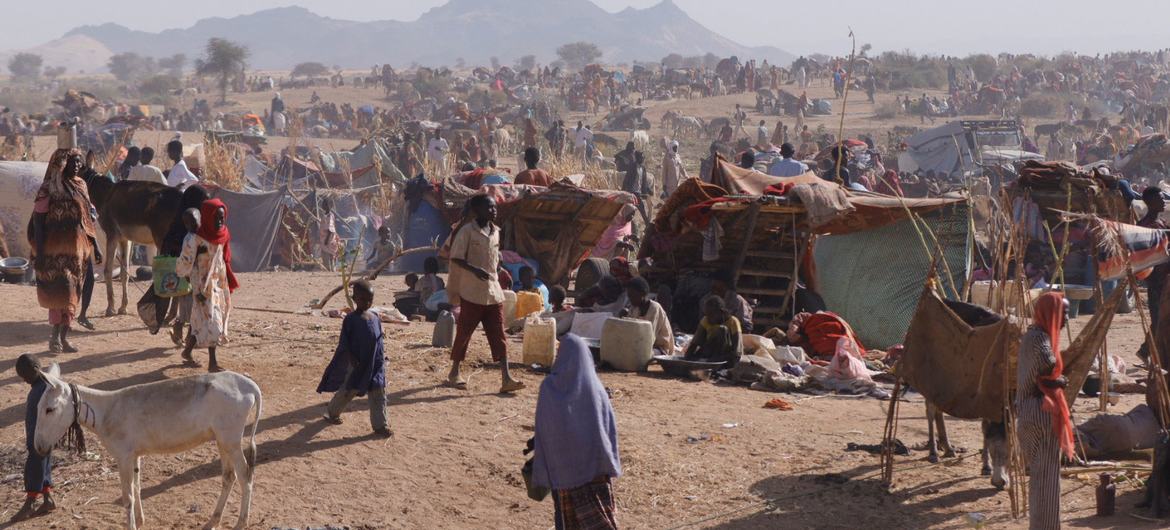
In Darfur, thousands of people have fled fighting to seek refuge in Tawila.

In Darfur, thousands of people have fled fighting to seek refuge in Tawila.

‘Indicators of a genocidal path’

The briefing came hours after a UN human rights fact-finding mechanism warned that atrocities committed by the RSF in El Fasher in October 2025 were “indicators of a genocidal path,” raising fears of similar patterns elsewhere.

Ms. DiCarlo said the events there were preventable. While the city was under siege for more than a year, UN officials “repeatedly sounded the alarm about the risk of mass atrocities. But the warnings were not heeded.”

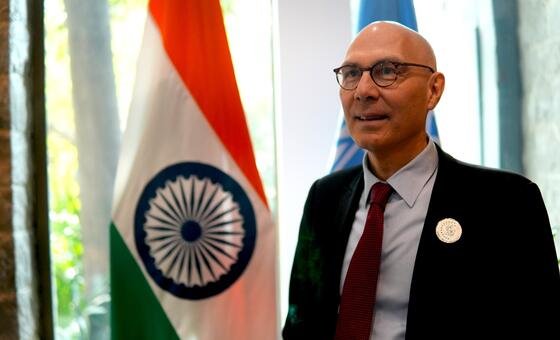
High Commissioner Volker Türk has now warned of the possibility of similar crimes in Kordofan, where civilians face risks of summary executions, sexual violence, arbitrary detention and family separation.

Need for international resolve

Concluding her briefing, Ms. DiCarlo urged stronger international resolve.

Unified messaging and strong action by the Security Council is more important than ever,” she said. “Pressure must be brought on the parties and those who back them to end the war now.”

Ms. Wosornu echoed that appeal, calling on Council members to use their influence to protect civilians, ensure humanitarian access and “work together in pursuit of an immediate stop to the fighting, to stem the flow of weapons into Sudan, and to press for the lasting, inclusive peace that the people of Sudan so desperately need.”
Source link

UN human rights chief: AI must be based on inclusiveness, accountability and global standards

0

UN human rights chief: AI must be based on inclusiveness, accountability and global standardsSpeaking at the AI ​​Impact Summit in New Delhi, Mr. Türk told UN News that the technology must be governed by a human rights framework that ensures transparency, accountability and inclusion. This interview has been edited for clarity and length. Volker Türk: Artificial intelligence is […]

Originally published at Almouwatin.com

World News in Brief: Conflict deepens hunger crisis in South Sudan, restrictions hinder aid delivery in Gaza, UN child rights envoy concludes first visit to Syria

0
World News in Brief: Conflict deepens hunger crisis in South Sudan, restrictions hinder aid delivery in Gaza, UN child rights envoy concludes first visit to Syria

About 60 per cent of the population – some 1.2 million people – is already acutely food insecure, according to WFP.

Food assistance is being transported along river routes, but rising insecurity is hampering humanitarian operations and threatening to drive hunger to unprecedented levels.

WFP teams are registering newly displaced families in Canal Pigi and other northern areas of Jonglei to receive urgently needed aid, in some cases for the first time since fighting began.

The agency aims to reach more than half a million people facing catastrophic food insecurity. However, it urgently requires $341 million to support 4.2 million people across South Sudan this year.

Adham Effendi, WFP’s acting country director, described the operation as a crucial step in assisting communities “caught in the crossfire,” noting that many had already lost homes and livelihoods to flooding before being forced to flee again.

In New York, UN Spokesman Stéphane Dujarric highlighted the dangerous conditions faced by aid workers in South Sudan.

He reported that a private contractor working with WFP on humanitarian airdrop coordination was killed earlier this week by an unknown gunman in Upper Nile state. The incident is under investigation.

Mr. Dujarric expressed condolences to the victim’s family and colleagues and stressed that humanitarian workers must never be targeted.

The United Nations continues to “call on all parties to de-escalate violence, ensure safe, rapid, and unimpeded access to all people in need and resolve all issues through dialogue.”

Relief arrives in Gaza, yet restrictions keep assistance far below needs

As of Monday, humanitarians have reached some 670,000 people in Gaza with the monthly general food assistance for February. 

Nonetheless, the ration size remains reduced at 50 per cent, as the current stocks in the Gaza Strip are insufficient to sustain larger rations for the rest of the month.

“Humanitarian partners report that impediments persist, and in recent weeks, the entry of humanitarian supplies from Egypt has remained critically low due to high rejection rates by Israeli authorities,” said UN Spokesman Stéphane Dujarric. 

Impediments must be lifted 

As of mid-February, more than 20 UN partners produced and distributed over 1.7 million meals every day through 180 kitchens, accounting for around half a million meals in the north and 1.3 million in the south. 

“UN partners are aligning the timing of cooked meal preparations, and distributions, with Ramadan fasting hours. They have also added additional fresh produce and protein products,” he said. 

UN agencies are on the ground providing tents, tarpaulins, sealing off kits, clothes, and other essential items to over 11,500 households in North Gaza, Deir al Balah and Khan Younis governorates. 

Mr. Dujarric said the UN and partners “reiterate that impediments must be urgently lifted so that we can do more to meet the massive humanitarian needs in Gaza”.

UN child rights envoy concludes first official visit to Syria 

The UN Special Representative for Children and Armed Conflict, Vanessa Frazier, ended a three-day visit to Syria on Thursday – her first official mission to the country since being appointed in October.

Ms. Frazier with Government representatives, UN partners, diplomats, as well as parents and children who have grown up throughout conflict spanning over a decade. 

She aimed to discuss new opportunities for collaboration with the new Government of Syria to strengthen the protection of children and engage in areas in which the UN may offer further support.

She also praised the government’s determination to turn the page and build a new Syria with children at its heart. 

Challenges remain

Challenges persist, especially concerning children — or their parents — who are allegedly linked to armed groups, particularly in the country’s northeast, the USG noted. 

She recalled that children should not be detained but be treated as victims and handed over to child protection actors. 

On top of that, the Ms. Frazier warned that unexploded ordnance and mines remained an immense challenge for Syria – hindering safe access to schools, hospitals and playgrounds for children  

“The children of Syria have suffered enough from the consequences of armed conflict,” she said.

“They deserve a future shaped by peace, stability, and opportunity — a future where classrooms replace conflict, dreams replace fear, and their voices help rebuild a nation rich in history and resilience.” 

Listen to an interview with Vanessa Frazier, the Special Representative of the Secretary-General for Children and Armed Conflict. 

Source link

Sudan: Rights chief alarmed after at least 57 people killed in drone attacks in two days

0

Sudan: Rights chief alarmed after at least 57 people killed in drone attacks in two daysVolker Türk was alarmed by reports that at least 15 children were among the victims. “These latest killings are yet another reminder of the devastating consequences on civilians of the growing use of drone warfare in Sudan,” he said. said. The attacks took place between the 15th and […]

Originally published at Almouwatin.com

Fears of ethnic cleansing in Gaza and West Bank: UN rights report

0

Fears of ethnic cleansing in Gaza and West Bank: UN rights reportThe report covers the period from November 1, 2024 to October 31, 2025 and draws on monitoring by OHCHR and information from government sources, other United Nations entities and non-governmental organizations. “The intensification of attacks, the methodical destruction of entire neighborhoods and the refusal of humanitarian aid seem to be aimed […]


Originally published at Almouwatin.com

Advancing Life Sciences: The Role of High-Fidelity 3D Visualization in Modern Research

0


 (The picture of medical specialists researching the molecular structure with the usage of a frame from the VOKA.io

Source link

Rumors of Lagarde’s departure spark race for succession at ECB

0

Speculation that Christine Lagarde could leave the European Central Bank before the end of her mandate have triggered a new round of political negotiations in Brussels, with euro zone capitals positioning their candidates and trying to avoid a bitter fight for one of Europe’s most influential economic posts.

A Brussels rumor with consequences for the euro zone

THURSDAY February 19, 2026a wave of articles in the European media suggested that Lagarde might not complete her mandate at the ECB, which runs until October 2027. THE Financial Times described a rapidly escalating “bargaining” dynamic between governments and decision-makers at EU level, while The World reported that the ECB said Lagarde remained focused on her work and had not made any decisions regarding an early departure.

The mere possibility of an early departure is important, because the ECB presidency is not only a monetary policy role, it is also a symbol of the credibility of the euro. A contested succession could add political noise at a time when euro zone governments are juggling budgetary pressures, debates over industrial competitiveness and resuming security spending.

Who appoints the ECB president — and why Brussels cares

Formally, the choice belongs to European Councilruling by reinforced qualified majority, after recommendation of the Council and consultation of the European Parliament and of ECB Governing Council. The EU institutions themselves set out this procedure in their explanatory note on nominations and appointmentsas defined inArticle 283 of the TFEU.

In practice, Brussels becomes the theater where national capitals test their support, negotiate their priorities in different files and look for a candidate capable of winning the trust of governments and markets. This balancing act is made more difficult by the ever-present question of geographic and political “fairness” within the EU: which countries already occupy the top positions and which feel under-represented?

Candidates, capitals and first maneuvers

Several names are already circulating. The articles mention figures such as former Spanish central bank governor Pablo Hernández de Cos and Dutchman Klaas Knot, as well as German candidates cited in the same article. The pressure exerted by Spain, in particular, was described by the Financial Times of unusually explicit early maneuvering in a competition that often takes place through discreet diplomacy.

For Brussels-based officials, the key question is not so much who will “win” the job, but rather how the process will be managed: whether it will be orderly, whether it will protect the ECB’s independence, and whether it will avoid spilling over into broader institutional negotiations that could give the impression of a politicization of the central bank.

What will happen next?

At this point, there is no official vacancy. But political tension has risen, as succession planning in the EU rarely begins the moment a position becomes vacant. If speculation continues, eurozone governments could step up their behind-the-scenes contacts, while the European Parliament, whose role is consultative, could further influence the tone of public debate through hearings and resolutions.

In Brussels, this episode also reminds us that institutional stability does not depend only on legal rules: it also depends on restraint, clear communication and credible continuity. For a city that already handles high-stakes regional political and governance debates, the prospect of a transition to the ECB adds an extra layer to an already busy European calendar. (Related: Brussels region forms new government after long deadlock.)

Originally published at Almouwatin.com

Lagarde exit talks spark ECB succession rush

0

Lagarde exit talks spark ECB succession rushSpeculation that Christine Lagarde could leave the European Central Bank before the end of her term is sparking a new round of political negotiations in Brussels, as euro zone capitals position their candidates and try to avoid a bruising fight for one of Europe’s most influential economic posts. […]

Originally published at Almouwatin.com

Lagarde exit talks spark ECB succession rush

0

Lagarde exit talks spark ECB succession rushSpeculation that Christine Lagarde could leave the European Central Bank before the end of her term is sparking a new round of political negotiations in Brussels, as euro zone capitals position their candidates and try to avoid a bruising fight for one of Europe’s most influential economic posts. […]

Originally published at Almouwatin.com

Lagarde Exit Talk Triggers ECB Succession Scramble

0
Lagarde Exit Talk Triggers ECB Succession Scramble

Speculation that Christine Lagarde could step down from the European Central Bank before her term ends is driving a fresh round of political bargaining in Brussels, as euro-area capitals position candidates and try to avoid a bruising fight over one of Europe’s most influential economic posts.

A Brussels rumour with euro-area consequences

On Thursday 19 February 2026, a wave of reporting in European media suggested that Lagarde may not serve out her full ECB mandate, which runs until October 2027. The Financial Times described a rapidly intensifying “horse-trading” dynamic among governments and EU-level power brokers, while Le Monde reported that the ECB said Lagarde remained focused on her work and had taken no decision on leaving early.

The mere possibility of an early departure matters because the ECB presidency is not only a monetary-policy role; it is also a symbol of the euro’s credibility. A contested succession could add political noise at a time when euro-area governments are juggling fiscal pressures, industrial competitiveness debates, and renewed security spending.

Who appoints the ECB president — and why Brussels cares

Formally, the choice belongs to the European Council, acting by a reinforced qualified majority, after a recommendation by the Council and consultations with the European Parliament and the ECB Governing Council. The EU institutions themselves lay out that procedure in their explainer on nominations and appointments, as set out in Article 283 TFEU.

In practice, Brussels becomes the arena where national capitals test support, trade priorities across dossiers, and seek a candidate who can command confidence from both governments and markets. That balancing act is made harder by the EU’s ever-present question of geographic and political “fairness”: which countries already hold top posts, and which feel underrepresented.

Candidates, capitals, and the early jockeying

Several names are already circulating. Reporting referenced figures such as Spain’s former central bank governor Pablo Hernández de Cos and the Netherlands’ Klaas Knot, alongside German candidates mentioned in the same coverage. Spain’s push, in particular, was framed by the Financial Times as an unusually explicit early move in a contest that is often conducted through discreet diplomacy.

For Brussels-based officials, the key question is less who “wins” the job and more how the process is managed: whether it is orderly, whether it protects the ECB’s independence, and whether it avoids spilling into wider institutional bargaining that can leave the impression of politicised central banking.

What happens next

There is, at this stage, no formal vacancy. But the political temperature has risen because succession planning in the EU rarely starts at the moment a post becomes open. If speculation continues, euro-area governments may intensify behind-the-scenes contacts, while the European Parliament—whose role is consultative—could still shape the public tone of the debate through hearings and resolutions.

In Brussels, the episode is also a reminder of how institutional stability depends on more than legal rules: it depends on restraint, clear communication, and credible continuity. For a city already managing high-stakes regional politics and governance debates, the prospect of an ECB transition adds another layer to a busy European calendar. (Related: Brussels Region forms a new government after prolonged deadlock.)

Source link