Sunday, September 20, 2026
Home Blog Page 26

Gaza: 300 children killed in 300 days of Israeli-Hamas ‘ceasefire’

0
Gaza: 300 children killed in 300 days of Israeli-Hamas ‘ceasefire’

Why it matters

  • Children still being killed despite ceasefire 
  • More babies born premature to hungry mothers 
  • Agencies say much greater aid access needed 
  • A generation of children lack education and other basic services

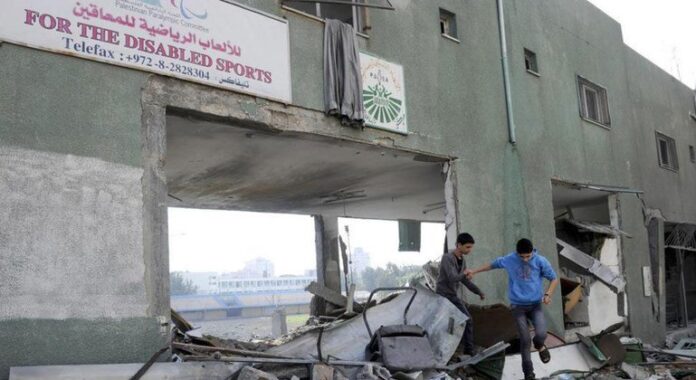
Amid reports of a new United States-led peace plan for the war-torn enclave and a recent spike in Israeli airstrikes on alleged Hamas targets in Gaza, UNICEF stressed that families are now confined to approximately one third of the Strip, sheltering among destroyed buildings, rubble and uncleared waste. 

A ceasefire that leaves an average of one child dead each and every day is failing children,” said UNICEF Regional Director for the Middle East and North Africa, Edouard Beigbeder. “With hundreds more children injured, many severely, children in Gaza are still waiting for the end to the violence they were promised.”

Responding to the reports about the mooted Gaza peace plan, the senior UN official welcomed recent announcements suggesting “steps towards ending hostilities” and scaled-up deliveries of humanitarian relief.

For children in Gaza, the test is simple. Does the killing stop? Does aid reach them at scale? Do hospitals reopen and water flow? Will children return to school safely in September?” Mr. Beigbeder said. “Children have heard promises before. This time, agreements must translate into action.”

Suffering on a huge scale

Deadly Hamas-led attacks on Israel in October 2023, that sparked the war in Gaza have caused an ongoing humanitarian crisis on an epic scale.

In common with many other UN agencies and partners, UNICEF warned once again that across the Strip, children continue to face acute malnutrition, disease, unsafe water and damaged sanitation systems.

For the duration of the hostilities, the UN has not stopped working to help the people of Gaza.

And yet despite repeated calls to flood the enclave with aid – and for the killing to stop – UNICEF health workers describe how exhausted and hungry mothers continue to arrive at health centres carrying their severely malnourished children. 

Another consequence of this chronic lack of assistance is a worrying increase in premature births, along with more newborns in a critical condition. 

There’s not enough incubators and in some cases [health workers are] saying they see two or even three babies sharing a single machine,” explained UNICEF spokesperson Louise Wateridge. “In Gaza, children only days old are already fighting to stay alive, born into partially functioning hospitals lacking equipment and medicine.”

Ms. Wateridge added: “This is what the world has chosen to tolerate. The killing must stop, aid has to enter at scale and children must be protected.”

Burying children

The world calls it a ceasefire but families in Gaza are still burying their children,” the UNICEF spokesperson continued.

In its latest update on Gaza, the UN aid coordination office, OCHA, noted that airstrikes in Gaza had reportedly resulted in civilian casualties and damage to critical medical supplies and civilian infrastructure. 

“Ongoing military operations near the so-called ‘Yellow Line’ – coupled with strikes reported in other parts of the Strip – are disrupting civilian life, damaging shelters, driving renewed displacement, and restricting access to life-saving services,” the agency said, in reference to the line of separation consisting of concrete blocks erected by Israeli soldiers.

Citing the Gazan health authorities, OCHA said that the overall casualty toll since the announcement of a ceasefire agreement on 10 October 2025 is 1,209 people killed and 3,943 injured. 

After attacks on a medical storage facility next to Al-Aqsa Hospital in Deir al-Balah last weekend, the UN World Health Organization (WHO) said that essential medical supplies had been destroyed, including some delivered by the agency.

Assistance continues

Amid the violence, the UN and its partners continue to respond “wherever and whenever they can”, OCHA said. This included work to improve 3,000 makeshift shelters in Gaza City last week and the distribution of emergency shelter and essential items to 9,000 households, including kitchen sets, tarpaulins, blankets, mattresses, solar lights and clothes.

“To scale up assistance and carry out further upgrades of makeshift shelters, it is critical that timber, ropes, more solar lights and tools are allowed to enter Gaza in a timely manner,” OCHA insisted. 

On Tuesday, UNICEF delivered more than 600 pallets of recreational kits, school bags and soap into Gaza. The supplies will be distributed ahead of the new school year, expected to begin in about two weeks.

Other partners working on education continue to provide support, too. More than 250,000 pre-school and school-aged children are participating in summer learning activities, helping to provide a sense of routine and stability, while helping students recover some of the learning lost during the hostilities.

Source link

Ceuta’s Child Protection Crisis Deepens

0
Ceuta’s Child Protection Crisis Deepens

More than 1,000 unaccompanied minors remain in Ceuta after a deadly mass crossing, exposing urgent child-protection gaps in Spain and the EU.

AI-generated from cited sourcesTransparency information

AI-generated content: This report was produced from the cited sources using artificial intelligence and underwent automated source and consistency checks. It was not substantively reviewed by a human editor.

More than 1,000 unaccompanied minors remain after the mass crossing, stretching Spain’s protection system and exposing a gap in the European response.

More than 1,000 children are believed to remain without their families in Ceuta after an extraordinary mass crossing from Morocco overwhelmed the Spanish enclave. The immediate border emergency has eased, but the harder work has only begun: identifying the children, finding safe accommodation, tracing relatives and deciding each case according to the child’s rights and best interests.

A border emergency becomes a protection emergency

Around 72,000 people entered Ceuta during the final days of July, according to Spain’s Interior Minister, Fernando Grande-Marlaska. Approximately 70,000 had returned to Morocco by the following week, either voluntarily or after being taken back by Spanish authorities.

An estimated 1,000 unaccompanied minors remained in the city. Spanish officials reported 75 deaths, most of them in the water, while Moroccan authorities reported another 11 deaths that were not included in the Spanish total. The final toll may still change as families continue searching for missing relatives. The Associated Press documented the scale of the crossing and the conditions facing children who remained in Ceuta.

Ceuta has about 84,000 residents. Its child-protection services were not designed to absorb such a large number of vulnerable young people in a matter of days.

Reception centres filled quickly. Children and young adults slept on beaches, in industrial areas and in other makeshift locations. Local residents and civil-society groups distributed food, clothing and basic supplies, but informal solidarity cannot replace professional care.

One 17-year-old girl told reporters that she had seen her eight-year-old brother drown during the crossing. Separated from her mother, she was left begging in Ceuta. “Now we are children begging on the street,” she said.

Her account shows why the situation can no longer be treated mainly as a question of border numbers. Every child remaining in Ceuta has an individual history, family situation and set of protection needs.

Children cannot be included in collective returns

Spanish law distinguishes unaccompanied children from adult migrants who enter the country without authorisation.

Under Spain’s law on the rights and freedoms of foreign nationals, unaccompanied foreign minors must be placed under the responsibility of public child-protection authorities.

Repatriation cannot be treated as an automatic administrative measure. It must serve the best interests of the child and normally involve either safe family reunification or placement with appropriate child-protection services in the country of origin. Authorities must also consider whether return could expose the child or the family to danger.

These safeguards require individual identification and assessment. Officials must determine whether a young person is a minor, whether the child has been separated from relatives, whether there is a risk of trafficking and whether international protection may be needed.

The importance of these procedures became clear when an Associated Press journalist witnessed soldiers escorting a crying 12-year-old boy towards the Moroccan border. The return was stopped only after residents and journalists insisted that he was a child. The boy was then transferred to the Civil Guard.

The incident raises a wider concern. In a mass movement involving tens of thousands of people, speed can easily take priority over careful identification. A child who is incorrectly treated as an adult may be returned before receiving protection, legal assistance or an opportunity to explain what happened.

Spain announces emergency funding

The Spanish government has allocated €25 million to assist the minors remaining in Ceuta.

The funding can help provide accommodation, food, healthcare, interpreters and specialised support. It can also strengthen family-tracing work and increase the number of professionals available to interview children.

Money alone, however, cannot immediately produce trained guardians, social workers, psychologists and suitable long-term placements.

Save the Children called for a coordinated response involving Spain’s central government, Ceuta and the autonomous communities. It urged authorities to identify children facing heightened risks, including trafficking survivors, children separated from relatives and those who may need international protection.

“A child does not stop being a child simply because they crossed a border,” the organisation said.

Spain has a national legal mechanism for responding to extraordinary migration situations involving unaccompanied minors. It allows children to be transferred when the protection system of one autonomous community or city is overwhelmed.

The principle is straightforward: Ceuta should not be expected to manage the crisis alone. Applying that principle will require cooperation from regional governments, adequate funding and clear safeguards against repeatedly moving children between temporary centres.

European rules require individual representation

The crisis also comes shortly after the EU Pact on Migration and Asylum became fully applicable in June 2026.

The pact places strong emphasis on border screening, faster procedures and responsibility-sharing. It also contains specific safeguards for children.

Under the EU’s reception standards for asylum applicants, the best interests of the child must be a primary consideration. Unaccompanied minors entering asylum procedures must receive qualified representation and assistance.

Under normal circumstances, one representative should not be responsible for more than 30 unaccompanied minors at the same time. That limit is intended to ensure that each child receives meaningful support rather than merely having a name assigned on paper.

Ceuta’s situation makes that requirement difficult to meet. Providing effective representation for approximately 1,000 children could require dozens of trained professionals, as well as interpreters and specialists able to work with traumatised young people.

The rules also require child-friendly procedures and communication in a language the child understands. This matters in cases involving children who may not speak Spanish, may not understand their legal status and may be afraid to speak openly about their journey.

The EU response remains centred on borders

EU home affairs ministers held an emergency video conference on 4 August to discuss Ceuta.

According to the Council of the European Union’s published account, ministers expressed solidarity with Spain and offered condolences for the loss of life. They also praised Spain’s response and stressed the need to protect the EU’s external borders.

The discussion focused on returns, migrant-smuggling networks, cooperation with third countries, early-warning systems and the monitoring of social media. Ministers also noted that there had been no significant onward movement from Ceuta to mainland Spain or other EU countries.

The Council’s public summary did not set out a specific European package for the children remaining in Ceuta.

Border management is a legitimate responsibility. Governments must be able to respond when tens of thousands of people enter a small territory within days. But a response cannot be considered complete when the border is controlled while children remain without stable accommodation, guardians or reliable information about their families.

European solidarity should therefore include practical child-protection assistance. That could involve emergency funding, specialist personnel, family tracing, support for transfers within Spain and independent monitoring of return procedures.

As The European Times previously reported in its examination of future EU migration funding, Europe’s migration system will depend on whether governments invest in legal assistance, reception standards and rights monitoring as seriously as they invest in border control.

Families continue searching across the border

In Fnideq, on the Moroccan side of the frontier, parents and relatives have gathered with photographs of missing children.

Some question returning migrants. Others search social-media groups or wait near the border, hoping to recognise a familiar face.

The same online networks that circulated information about crossing routes are now being used to trace missing people. Families post photographs and phone numbers, asking anyone in Ceuta or northern Morocco to share information.

The mass movement was fuelled partly by online claims that the border was open and that people reaching Ceuta would be transferred to mainland Europe. It was also driven by deeper conditions, including poverty, inequality, unemployment and the belief among many young Moroccans that Europe offers opportunities unavailable at home.

These pressures do not remove the need for controlled borders. They do show why enforcement alone is unlikely to prevent future attempts.

Spain, Morocco and the EU will need to examine how the rumours spread, whether organised actors amplified them and why so many people were willing to risk their lives on the basis of uncertain information.

That investigation must not overshadow the urgent need to locate missing people and reunite children with relatives whenever this can be done safely.

Protection must continue after the headlines move on

The streets of Ceuta may gradually return to normal, but the children who remain there cannot return to the lives they had before the crossing.

Some have lost relatives. Others do not know whether their parents are searching for them. Many have no clear understanding of where they will live, whether they will be returned or how long the authorities will take to decide their cases.

Spain must maintain an orderly border while respecting its child-protection obligations. These responsibilities are not incompatible.

The border response can be measured through patrols, returns and the number of people who remain. Protecting children requires slower and less visible work: individual interviews, guardianship, healthcare, education, family tracing and careful decisions about reunification or residence.

The minors in Ceuta must not become an administrative problem left behind when European attention moves elsewhere.

Their protection is not an optional humanitarian gesture. It is a legal obligation and a measure of whether Europe can preserve human dignity during a migration emergency.

Sources

Associated Press: Children remaining in Ceuta after the mass crossing

Associated Press: Moroccan families search for missing relatives

Council of the European Union: Informal meeting on Ceuta

Save the Children: Children arriving in Ceuta need protection

Spanish legislation on foreign nationals and unaccompanied minors

EUR-Lex: EU reception standards for asylum applicants

Source link

Biblical Anthropology and Medicine

0

By H. Em. Bishop of Tikhvin Konstantin (Goryanov) The biblical understanding of medicine is very important to us: it always remains a reference point for e…

By H. Em. Bishop of Tikhvin Konstantin (Goryanov)

The biblical understanding of medicine is very important to us: it always remains a reference point for everyone who believes in God. However, it is very difficult to compare today’s medicine with the healing practice of biblical times. We are referring not only to the difficulty of comparing the biblical terminology, which is highly metaphorical, with the modern international classification of diseases, but also to the very psychology of the attitude towards illness.

Nowadays, a number of diseases have almost disappeared, for example, smallpox; in their place have come others, such as AIDS. And yet, the words spoken by the psalmist King David almost three thousand years ago remain valid: “The days of our lives are seventy years; and if because of strength they are eighty years” (Ps. 89:10). Despite the colossal achievements of modern medicine, they remain true to this day.

Questions of religious ethics also remain significant for the believer’s consciousness, one of which is: what does illness mean for the one who is sick. Illness was usually seen as a punishment for sins – for example, seeing the man born blind, the disciples asked Jesus: “Rabbi, who sinned, this man or his parents, that he was born blind?” (John 9:2). It can be sent by God directly – for example, before the plagues on the Egyptians: “The Lord said (to Moses): ‘Who made man’s mouth? Who makes him mute, deaf, seeing, or blind? Is it not I, the Lord (God)?’” (Ex. 4:11). Illness can occur in a person by God’s permission or by God’s consent through an unclean force, as in Job. Then “Satan went out from the presence of the Lord and struck Job with a malignant leprosy from the sole of his foot to the crown of his head” (Job 2:7). Envy can also be a cause of illness. We also read in Job: “…anger kills a fool, and wrath destroys a fool” (Job 5:2). On the other hand: “A meek heart is the life of the flesh, but envy is rottenness to the bones” (Prov. 14:30). The Old Testament also points to physical satiety as a cause of illness; The book Wisdom of Jesus, son of Sirach calls out to us from the depths of the centuries: “My son! examine your soul during your life and observe what is harmful to it, and do not give it that… Do not be full of all sweetness and do not rush into all kinds of food, for from much eating comes illness, and overeating brings cholera; many have died from overeating, but the one who abstains will prolong his life” (Sir. 37: 30-34).

In any case, it was believed that the disease was sent by God because of sins.

In the Holy Scriptures there is no clear classification of internal diseases, medical observations are reduced primarily to what is visible: skin diseases, wounds, fractures and fever accompanying infectious diseases. In addition to them, general concepts are used: weakness and infirmity, excitement and fainting. The natural causes of many diseases are not revealed, but only those of them that are obvious: injuries, falls, weakness and blindness in old age. Another essential question remains: why does the disease, striking the mortal body, also affect the soul of man, in which the image of God is hidden. We must seek the answer to this question in biblical anthropology. The Holy Scriptures do not deal with anatomy and physiology. But from the very beginning they directly and clearly speak about the origin of man: “And the Lord God formed man of the dust of the ground and breathed into his nostrils the breath of life; and man became a living soul” (Gen. 2: 7). Man is not an alien, he does not come from other worlds, he is dust and his body returns to dust.

So, man is composed of two basic elements: the mortal body, the primary substance of which is dust, and the spiritual immortal soul, which carries within itself the image of God. The flesh came out from under the hands of God, as if from under the hands of a potter or a weaver, and the psalmist praises God: “… You formed my inward parts and woven me in my mother’s womb. I will praise You, for I am fearfully and wonderfully made” (Ps. 138:13-14).

In the Old Testament, the body was worthy of respect in the same way as the flesh, because both express the person in his entirety. However, the New Testament emphasizes the dignity of the body to a greater extent. As the flesh returns to the earth, so the body is dedicated to the Lord. The greatness of the body does not reach its highest degree on earth: Jesus Christ “Who will transform our lowly body so that it may be conformed to His glorious body” (Phil. 3:21) in the image of the heavenly Adam – Christ. While “… flesh and blood cannot inherit the kingdom of God” (1 Cor. 15: 49-50). The concept of “soul” in the biblical sense of this word differs from what we are usually used to. Our consciousness first of all imagines a person as consisting of body and soul, like a vessel with immiscible liquids, say – water and oil. In the Bible “soul” has too many meanings. In general, the soul denotes the whole person, insofar as he is animated by the spirit of life, but it is not a “part” that forms in union with the body the human essence. In other words, the soul does not reside in the body, but manifests itself through it, which in turn, like the flesh, denotes the whole living person. Therefore, the concepts “person” and “soul” often turn out to be synonymous.

In biblical times, medicine was practiced by priests and to some extent it was connected with magic, although the Holy Scriptures forbid the use of magic, which is anyway an expression of idolatry. But in the Old Testament, the relationship between the priest and the healer was very close; as a rule, this was the same person. In religious ideas about illness, healing was perceived as a sign of forgiveness from the Lord, “for I am the Lord (your God), your healer” (Ex. 15: 26). In the Bible, up until the era of the Kingdoms, doctors are not mentioned as specialists. As in Ancient Egypt, from where the Jews came, medical duties were mainly performed by priests. They examined the sick, imposed quarantine in cases of leprosy, monitored the sanitary condition of the camp and personal hygiene. Sanitary and hygienic regulations are described in particular detail in the book of Leviticus. In addition to prohibiting the use of blood for food, chapter 11 contains a list of unclean animals that were not to be eaten: “And anything upon which one of them falls dead, whether it be a wooden vessel or a garment or a skin or a sack, or any vessel with which any work is done, shall be unclean” (Lev. 11:32). The use of any dead animal was forbidden. Chapter 12 lists the hygienic regulations for a woman giving birth. She “must not touch any holy thing, nor come near the sanctuary, until the days of her purification are fulfilled” (Lev. 12:4).

The most important instructions in the Bible concern leprosy and the differential diagnosis of skin diseases: “… Every garment, shoes, and everything that the leper had touched was subject to burning. Even the plaster was scraped from his house. The leper had to live outside the camp, wear torn clothes, and cry out: Unclean, unclean! (Lev. 13:45). And in the New Testament, Jesus Christ, healing ten lepers, ordered them to go and present themselves before the priests (Luke 17:14)

The medical knowledge of the Old Testament priests, who were engaged in healing activities, was basically empirical. The ritual of sacrifice gave some idea of ​​the anatomy of animals. Human anatomy hardly existed as a science, considering the Old Testament ritual prohibitions against touching a dead person, let alone opening a corpse. In In the Bible we find very few references to anatomical and physiological facts.

The specific names of diseases are also very few. The expressions used are mainly: disease, weakness, infirmity. Specifically, leprosy, kel, lichen, scabies are mentioned. Plague, ulcer and plague are also often mentioned in the Old Testament. The bubonic plague was a scourge for the ancient population. Blindness was widespread in Palestine and its neighboring countries. We can distinguish two main types: trachoma – viral conjunctivitis, which to this day is a cause of blindness in the Near and Middle East; and atrophy of vision, found in the elderly – such as in Isaac (Gen. 27: 1), in the priest Eli (1 Chron. 3: 2), etc. Blindness deprived men of the right to the priesthood, but compassion for the blind was considered a duty (Lev. 19: 14), and the one who insulted the blind was cursed (Deut. 27: 18). As for the methods of treatment, the Holy Scriptures do not contain much data in this aspect. They focus on how the person perceives his illness. We read about washing, anointing with oil, applying pain-relieving ointments to wounds before bandaging them (Isa. 1: 6), about a plaster of fig leaves applied to boils (Isa. 38: 21), about pouring wine and oil on the wounds of the good Samaritan (Luke 10: 34), about warming a body from another body, as Abishag warmed the elderly King David (1 Sam. 1: 2). The Bible says little about medicines taken internally, although the Near East was well acquainted with herbal concoctions. The wine with myrrh offered to Jesus on the cross was intended to relieve pain. Myrrh or myrrh (an aromatic resin – b. p.) is a mild soporific. The Apostle Paul recommended that his disciple Timothy use a little wine to relieve stomach pains (1 Tim. 5: 23). Mandrake was considered to aid conception. The Gospel mentions tithing of mint, dill, and cumin (Matt. 23: 23), which suppress the formation of gases in the stomach. The majority of the remedies in both the Jewish and Egyptian pharmacopoeias were dietary, for example: flour, milk, vinegar, wine, water, almonds, figs, raisins, oranges, honey. The art of pharmacy is only mentioned in the sense of preparing incense. The most important surgical operation that has religious significance and is mentioned in the Bible is circumcision of the foreskin, traditionally performed with a flint knife. Piercing the ear with an awl as a visible sign of voluntary slavery is described in the book of Exodus (Ex. 21: 6).

In the New Testament era, the healing art of Jesus Christ was accepted as a heritage by the apostles along with His teaching; healing the sick was considered the main duty of the Church. Listing the gifts of the Holy Spirit (charisms), the apostle Paul writes: “… to one is given through the Spirit the word of wisdom, to another the word of knowledge by the same Spirit; to another the gifts of healing” (1 Cor. 12: 8, 9). The apostle calls the apostle Luke his “beloved physician” (Col. 4: 14). According to Tradition, Luke was a physician. His Gospel contains a number of accurate medical observations.

Following the example of the apostles, the priests of the New Testament Church of Christ are called to alleviate suffering. Addressing the first Christians, the apostle James calls: “Is anyone among you sick? Let him call for the elders of the church, and let them pray over him, anointing him with oil in the name of the Lord. And the prayer of faith will save the sick, and the Lord will raise him up” (James 5:14-15).

Since the time of Jesus Christ, it has been believed not that illnesses should not happen, but that the Divine power, which will ultimately triumph, is already at work on earth. For illness has a spiritual significance, but nevertheless remains a test for man. The last enemy, the ancient enemy with whom Christ fights, is death. God is life. After the Second Coming of Christ, there will be no more diseases and the mysterious apocalyptic “leaves of the tree of life” will heal the nations (Rev. 22:2).

Ad Notem: By decision of the Russian Orthodox Church’ Holy Synod of May 5, 2015 (Journal No. 9), the author of this article was appointed His Grace of Petrozavodsk and Karelia, head of the Karelian Metropolitanate. He is a member of several academies (Russian Academy of Natural Sciences, Mannequin of the Russian Academy of Sciences and Biology, etc.), a member of the Ethics Council under the Ministry of Health of the Russian Federation, a member of the Union of Writers of Russia, and a member of the editorial board of the journal “Theological Works.”

Related coverage: Prayer Turns Solitude into Spiritual Communion with God | The threshold of profitability of wheat in Ukraine | After years of sanctions: Russia took off the MS-21 – the plane that should replace Boeing and Airbus

Source link

From Atari Reboots to Bitcoin-Powered Play

0


Not long ago, the story of digital entertainment was written in quarters. A player fed a coin into

Source link

Prayer Turns Solitude into Spiritual Communion with God

0

By Romanian Patriarch Daniel Homily for the 9th Sunday after Pentecost Three main teachings emerge from today’s Gospel – Matt. 14:22-34: 1. By withdrawing…

By Romanian Patriarch Daniel

Homily for the 9th Sunday after Pentecost

Three main teachings emerge from today’s Gospel – Matt. 14:22-34:

1. By withdrawing to pray, Christ transforms physical solitude into spiritual communion with God.

2. Jesus leaves the disciples alone to fight the storm at sea, so that they understand how necessary God’s help is for man in difficult situations

3. The ship engulfed in the storm at sea represents Christ’s Church in a hostile world.

Christ withdraws to pray alone to teach us to thank God for every achievement in our lives. He prays alone so that he will not be praised by the multitude that he fed by multiplying the loaves and fishes.

Every good deed must be attributed to the help received from God

Through prayer, human loneliness is transformed into communion with God. The praying person, even if he lives isolated in the desert, is not alone, but together with God and all His saints. The praying person, even if he is in solitude, is not a loner. However, a person who no longer prays to God, even if he is in the midst of a crowd, becomes a spiritual loner.

The spiritual “test” of the disciples is their struggle with the trials of life and their mission

Christ sends the disciples to the sea to teach them to struggle alone, and not to wait for everything to be ready, without a struggle. He wanted to teach them to overcome obstacles, to understand how necessary the blessing of God’s help is in their lives.

Christ leaves them to struggle at night with the sea storm, to understand that sometimes they cannot rely only on their own strength and skill, even though they are experienced fishermen.

Fourth watch: the time between 3 a.m. and 6 a.m. (sunrise).

The words of the apostle Peter: “Lord, if it is You, command me to come to You on the water” (Matt. 14:28) mean that the apostle confesses that Jesus is the Lord of the elements.

St. Peter’s request to walk on the sea testifies to gratitude and respect for Jesus

St. Peter, going to Christ, shows respect and gratitude for Him, rejoices in the Guest. He shows humility and obedience to the Lord and the other disciples.

Firm faith in Jesus Christ overcomes the difficulties of life’s trials

While St. Peter looked only at Jesus, he walked on the water like Him. However, when he looked at the wind and became afraid, he began to waver in his strength and sink into the water.

The ship in the stormy sea is a symbol of the militant Church in the world

The ship represents the Church in the trials of the waves or storms of history, persecutions, heresies, dark forces against her. The ship of the Gospel also means the Church, which is in the stormy world of sins, of individual or collective selfish passions.

At the same time, the Gospel shows us how the Christian soul should resist in times of trial. Some holy fathers (St. John Chrysostom) consider the ship, tossed by waves, as an image of the believing human soul in the struggle with life’s trials and disturbing passions. But if the Lord is called upon in prayer to come to his aid, He will calm the storm of selfish passions, of troubles and sufferings that disturb man. Today’s Gospel speaks of trials and encouragement, of struggle and victory. It shows us that getting out of difficult situations is not due to our own strength, but first of all to divine help. No matter how skilled or experienced sailors and fishermen Christ’s disciples are, no matter how good swimmers they are, they would not have been saved from the sea storm by their own strength alone and without Jesus’ help.

In the same way, no matter how many and worthy ministers the Church has, they alone cannot save Christ’s Church in its struggle with sin, with evil spirits, with the storms of persecution and heresies, with the waves of unbelief, secularization or spiritual indifference, but only with Christ’s help.

The main lesson that the Master Christ teaches His disciples, and through them to all of us, using the ship as a chair for the theology of salvation, is this: all the trials and tribulations that we encounter in life can be overcome if we do not rely only on our own strength, but first trust in God’s help.

May the Most Merciful God help us to learn from this gospel that Christ the Lord loves us, even if he sometimes leaves us in great trials that we do not understand when we are in the midst of them, but only later. Although He sometimes seems far away or even absent, Christ the Lord still knows that we need His help and expects us to go to Him, because He also constantly comes to us.

Source in Romanian: Daniel Patriarch of the Romanian Orthodox Church, Evangelia slavei lui Hristos. Predici la Duminicile de peste an, București, 2023, p. 164-173.

Source link

The threshold of profitability of wheat in Ukraine

0
The threshold of profitability of wheat in Ukraine

The Institute of Agrarian Economics of the Ukrainian Academy of Sciences published a number in the middle of the harvest, with which every farmer can check…

The Institute of Agrarian Economics of the Ukrainian Academy of Sciences published a number in the middle of the harvest, with which every farmer can check himself: below 500 kg per hectare at 9,000 hryvnias (about 176 euros) per ton, wheat is at a loss.

The number that Ukrainian science gave the farmer

On July 28, in the midst of the harvest, the Ukrainian National Scientific Center “Institute of Agrarian Economics” announced through the specialized publication AgroPortal.ua a single number with which every farmer can check himself, without waiting for the end of the season: at a market price of 9,000 hryvnias per ton (about 176 euros/t at an exchange rate of 51.2 UAH/euro), the threshold of profitability for winter wheat is about 5 tons per hectare – that is, 500 kg per hectare. The calculation behind the number is open: the institute estimates the cost of growing a hectare of wheat this year at about 45,000 hryvnias, which is approximately 88 euros per decare. Whoever divides 88 by 0.176 gets 500 — below this yield, the income from the decare does not cover its costs.

The reason for the statement is diesel, which in Ukraine approached 90 hryvnias per liter (about 1.76 euros/l) right at the height of the campaign. Fuel and lubricants account for 12–15 percent of the production costs of Ukrainian farms — second only to mineral fertilizers. Over 85 percent of diesel in the agricultural sector is burned directly in field work, and a third of this amount falls on the harvest — so the price increase reaches the cost price almost immediately. The author of the assessment, corresponding member Oleksandr Zakharchuk, explicitly points out that fuel is only one of the feathers: in total, costs have increased by about 15 percent per year — fertilizers, seeds, preparations, electricity, logistics, labor. The intermediate average yield in Ukraine as of July 28, with 30 percent harvested areas, is 432 kg/hectare — below the threshold, although it will grow with the inclusion of more productive areas.

A scientific institution has translated the market into a single number that the farmer can compare with the display of his combine that very day.

Illustrative photo: pexels-anna-lupa-2161503734-38598699

Related coverage: Biblical Anthropology and Medicine | Prayer Turns Solitude into Spiritual Communion with God | After years of sanctions: Russia took off the MS-21 – the plane that should replace Boeing and Airbus

Source link

Russia took off the MS-21 – the

0

/CROSS/ The newest Russian passenger plane, the MS-21, completed its first flight. Its uniqueness lies in the fact that this is the first flight of a fully…

/CROSS/ The newest Russian passenger plane, the MS-21, completed its first flight. Its uniqueness lies in the fact that this is the first flight of a fully import-substituting serial aircraft, which means that it is in this configuration that airlines will begin to receive the aircraft. However, the deadline has been postponed to 2027. But given the many challenges facing the project, this is no longer such a critical issue. The important thing is that Russia has created a machine from scratch that will be able to fly for the next three to four decades.

The first fully import-substituting serial aircraft, the MS-21, took off from the airport of the Irkutsk Aviation Plant, according to a statement from the Ministry of Industry and Trade. The flight took place on August 3, lasting 1 hour and 23 minutes at an altitude of up to 6,000 meters and an instrument airspeed of up to 600 km/h. The flight mission was fully completed.

UAC confirmed its readiness to produce the first batch of 18 aircraft. The MS-21 flight program is planned to be completed in the first quarter of next year, and certification is expected by the end of 2027.

The first customer will be Aeroporta Group, which has booked over 200 of these aircraft.

What distinguishes this flight from previous ones? “This is the first flight of a serial passenger aircraft, that is, of the aircraft in the form that it will occupy for decades to come. The launch of serial production is one process. And at the same time, a second process is underway – the certification of the aircraft, during which pre-series aircraft complete a flight certification program,” says Roman Gusarov, head of Avia.ru.

“For the first time, we flew the plane not as a prototype, but as an aircraft as close as possible to the aircraft that will be delivered to customers. Secondly, this is a flight of a prototype assembled using manufacturing technologies, with the same systems and components that will be used in future airline aircraft.”

Thirdly, this flight means that the plant is truly capable of producing a mass-produced product. This is a sign that the project is close to mass production and delivery of the aircraft to airlines. – explained Dmitry Baranov, a leading expert at Finam Management.

Gusarov believes that the delay in the delivery of Aeroflot’s first aircraft from the end of this year to next is no longer critical. This aircraft already faces a difficult fate: the West began to create obstacles for it long before 2022.

The development of the aircraft began in 2009; the development cycle for such an aircraft usually takes ten years. The first aircraft flew in 2017, with certification scheduled for 2019. However, in 2018 the US imposed sanctions on the manufacturer of the MC-21 composite wing, delaying certification until the end of 2020 and the start of deliveries to Aeroflot until 2021. In 2022 the US suspended the supply of its engines for the aircraft, after which general sanctions were imposed on the supply of all equipment.

“With sanctions and 100% import substitution, schedule delays are no longer so critical. No one in the world has coped with such a challenge. Boeing is already a major international designer, and Airbus is even more so. And here, down to the last rivet, everything is produced domestically. The most important thing is that we received aircraft that will carry us for the next 30-40 years. After all, passenger aircraft are designed for many years to come. The MC-21 is the only aircraft of its class in the world created from scratch in the 21st century. It has enormous development potential; it will change and modernize over time,” noted Roman Gusarov.

According to him, if there were no sanctions, Russia would gradually replace half of its fleet of aircraft similar to the MC-21 with domestically produced aircraft, but internal competition with other suppliers would remain.

“But they showed us how they can land us overnight, deprive us of our sky. And Russia cannot do without aviation. We are not Poland, which you can drive from border to border in a few hours. It takes us longer to get to St. Petersburg. We need our own aviation, completely replacing imports,” says the head of Avia.ru.

According to him, Russia needs approximately 620 MC-21s within 10-15 years to replace foreign aircraft, and if the market develops and passenger traffic increases, then even more.

The MC-21 occupies a niche among the most widely produced and popular aircraft in the world. “Aircraft of this type carry the lion’s share of passenger traffic: 80% of flights are performed by medium-haul aircraft of the Boeing 737 and Airbus A320 families. The MC-21 is intended to replace them. Our 620 aircraft make up half of our entire national fleet,” explains Gusarov.

According to the latest data, the production plan is to reach 36 aircraft per year by 2030. Previously, even later targets were mentioned. “This will be a remarkable result, since Russia has never produced so many aircraft in the 21st century,” Gusarov notes.

The plan is entirely feasible if the plant gradually increases production volumes, doubling them every year. Thus, if production is expected to reach four aircraft in 2027, eight in 2028, 16 in 2029 and 32 in 2030.

Whether this will be enough to meet market demand depends on the service life of the aircraft currently in service with airlines and how long they can fly. If necessary, the Irkutsk plant can reach its initial maximum production rate of 72 aircraft per year. The question is whether the market will demonstrate this demand.

Photo: State Corporation “Rostec”

Source: Copyright © CROSS Agency Ltd.

Related coverage: Biblical Anthropology and Medicine | Prayer Turns Solitude into Spiritual Communion with God | The threshold of profitability of wheat in Ukraine

Source link

Iceland Puts Fisheries at Heart of EU Referendum

0
Iceland Puts Fisheries at Heart of EU Referendum

With an August vote approaching, Reykjavík is signalling that any renewed accession talks must preserve national control over its marine resources. Iceland…

AI-generated from cited sourcesTransparency information

AI-generated content: This report was produced from the cited sources using artificial intelligence and underwent automated source and consistency checks. It was not substantively reviewed by a human editor.

With an August vote approaching, Reykjavík is signalling that any renewed accession talks must preserve national control over its marine resources.

Iceland’s debate over closer European Union ties has narrowed around a familiar but decisive issue: who controls the fish. Ahead of a national referendum on 29 August, the Icelandic government has made clear that any future membership agreement would need to protect the country’s authority over fisheries. The vote will not decide whether Iceland joins the EU. It will decide whether Reykjavík should return to negotiations suspended more than a decade ago.

A firm message from Reykjavík

Foreign Minister Þorgerður Katrín Gunnarsdóttir has called for Iceland to retain “sovereign control over all fisheries” under any eventual EU membership agreement. Her position reflects the economic importance of the industry and the deeper place that marine resources occupy in Iceland’s understanding of independence.

The government’s published negotiating objectives identify fisheries alongside energy, agriculture, regional development, employment, currency, taxation, security and defence as areas requiring a clear national position.

In the objectives prepared for Iceland’s previous accession process, the country sought to guarantee national sovereignty over fisheries resources, sustainable management and a strong role in international agreements governing shared stocks. Those principles remain central to the present debate.

The European Union’s Common Fisheries Policy gives member states collective rules for conserving stocks, allocating fishing opportunities and managing fleets. For Iceland, however, accepting a system designed for 27 states could limit national discretion over waters that have long been managed as a strategic resource.

EU Fisheries Commissioner Costas Kadis has indicated that Brussels may consider flexible arrangements, particularly for stocks shared between Iceland and neighbouring waters. Yet a complete and permanent exemption from major parts of EU fisheries law would be politically and legally difficult to secure.

Fisheries carry economic and political weight

The scale of Iceland’s fishing sector explains why the issue reaches far beyond technical regulation. Statistics Iceland recorded exports of more than 624,000 tonnes of marine products in 2024, worth approximately 347 billion Icelandic krónur.

Marine products represented 36 per cent of Iceland’s total goods exports that year. Cod alone generated an export value of 143 billion krónur, while fresh and frozen products supported processing plants, ports and employment across communities outside Reykjavík.

Control over quotas is also a sensitive domestic issue. Iceland’s quota-based system has been credited with establishing long-term management and profitability, but critics have argued that fishing rights have become concentrated among powerful companies. The referendum debate therefore involves not only Iceland versus Brussels, but also disagreements inside Iceland over who benefits from national control.

EU membership would not automatically dismantle the Icelandic system. It would, however, require negotiations over quota allocation, access to waters, environmental standards, market organisation and the relationship between domestic ownership rules and the EU single market.

A vote on negotiations, not membership

The distinction between reopening talks and joining the EU is essential. The official referendum information states that voters are being asked whether accession negotiations should resume.

A “yes” vote would allow the government to seek a detailed agreement. Icelanders would then vote again before any membership could take effect. A “no” vote would leave the country’s current relationship with the EU largely unchanged.

That two-stage process is intended to let voters examine actual negotiated terms rather than decide membership on the basis of assumptions. It also means that supporting talks does not necessarily amount to supporting accession.

A June survey reported by Icelandic public broadcaster RÚV found that 53.1 per cent of decided voters favoured reopening negotiations. At the same time, a majority of respondents continued to oppose EU membership itself. The result suggests that some Icelanders want to see what Brussels will offer before making a final choice.

Absentee voting for Icelanders abroad began on 27 July, giving the campaign practical momentum weeks before polling day.

Already closely connected to the EU

Iceland is not approaching Europe from a position of isolation. Through the European Economic Area, it already participates in much of the EU single market and applies extensive European legislation governing goods, services, capital, competition, consumer protection, employment and environmental standards.

It is also part of the Schengen area and participates in several EU programmes. However, the EEA Agreement excludes the EU’s common fisheries and agricultural policies, customs union, common trade policy and monetary union.

This arrangement gives Iceland considerable market access while preserving autonomy in areas such as fishing. Its limitations are equally clear: Iceland can contribute to the early preparation of some EEA-related rules but has no voting representatives in the European Parliament or European Council.

The referendum therefore asks Icelanders to compare two different kinds of influence. Remaining in the EEA protects more national control in selected fields, while EU membership would provide direct representation within institutions that already shape much of Iceland’s regulatory environment.

The Arctic changes the political calculation

The renewed membership debate is also unfolding within a less stable international environment. Russia’s war against Ukraine, pressure on North Atlantic security and disputes involving Greenland have given the Arctic greater strategic importance.

Iceland has no standing army and has traditionally relied on NATO and its defence relationship with the United States. The government’s pro-European voices argue that EU membership could add economic and political security without replacing NATO.

The European Union, meanwhile, has become more attentive to its northern neighbourhood, energy routes, maritime resources and Arctic security. Iceland’s location between continental Europe and North America gives a relatively small state considerable strategic importance.

The European Times has previously examined how European support for Greenland’s sovereignty has become linked to wider questions of Arctic security and Europe’s ability to defend the autonomy of northern partners.

At the same time, the EU is pursuing accession processes with countries facing very different circumstances. Recent movement in Ukraine and Moldova’s membership negotiations shows how enlargement has become connected to security, resilience and geopolitical alignment, rather than being treated solely as an economic project.

Negotiating before deciding

Iceland’s earlier accession process began after the 2008 financial crisis. Talks opened in 2010 and were put on hold in 2013. By that stage, 27 of 33 substantive chapters had been opened and 11 had been concluded, according to the Icelandic government’s account of the negotiations.

A renewed process would not simply continue from the same point. Existing chapters would need to be reassessed because EU law and Icelandic policy have changed during the intervening years. Reykjavík would also update its negotiating objectives through domestic consultation and submit them to the Althing, Iceland’s parliament.

The government estimates that negotiations could be completed within 18 to 24 months if both sides were willing to move quickly. Fisheries, agriculture and currency arrangements would almost certainly be among the most difficult areas.

For the EU, flexibility could make Icelandic accession more politically possible. But concessions would also be examined closely by member states with major fishing industries and by neighbouring countries such as Norway, where EU membership remains contested.

For Iceland, the central democratic question is whether the country should obtain a concrete offer before deciding. Fisheries will shape that answer, but the referendum also concerns representation, economic stability, Arctic security and the degree of sovereignty a small European state can exercise from outside the Union.

Whatever voters decide on 29 August, the campaign is forcing both Reykjavík and Brussels to define their positions more clearly. Iceland is signalling that closer integration cannot come at the cost of losing meaningful authority over the waters that have sustained its economy and coastal communities for generations.

Sources

Source link

Between an Extradition Request and

0

PRESS RELEASE: Spain Will Not Sacrifice Its Dignity for a Few Barrels of Oil. Since July 25, 2026, Ayoub Aïssiou has been detained in a center…

PRESS RELEASE

Spain will not sacrifice its dignity for a few barrels of oil

Since July 25, 2026, Ayoub Aïssiou has been detained in a detention center in Barcelona, awaiting extradition proceedings to Algeria. Yet this man has committed no crime. He is neither a terrorist nor a criminal, but a political target of the Algerian regime. His only “crime”? Daring to challenge, through his media activism and support for the democratic opposition, a system that crushes any dissenting voice.

A peaceful dissident, victim of a political vendetta

A resident of France since 2019 and traveling freely between France and Spain, Ayoub Aïssiou has never been harassed until now. The numerous international arrest warrants issued against him—like those targeting dozens of other Algerian dissidents abroad—have been systematically rejected by Interpol, precisely because of their eminently political nature. Yet, in a cynical move, the Algerian regime has exploited bilateral agreements with Spain to secure his arrest, capitalizing on an opportunistic diplomatic thaw.

This strategy is part of an ongoing policy of systematic repression. How can we forget that notoriously corrupt generals, such as Habib Chentouf and Ghali Belksir—respectively, the former head of the First Military Region in Spain and the former commander of the National Gendarmerie in France—enjoy total impunity despite military convictions for desertion, embezzlement of public funds, tax evasion, and money laundering? Or that Lotfi Nezzar, son of former Defense Minister Khaled Nezzar (himself sentenced in absentia to twenty years in prison for economic crimes), had his convictions for illegal currency transfers and money laundering simply wiped clean after his return to Algeria in December 2020?

The Algerian justice system—which Algerians ironically refer to as “telephone justice”—is nothing more than a tool in the service of the powerful. It cracks down on opponents while turning a blind eye to the crimes of men in uniform and their relatives.

Ayoub Aïssiou, the scapegoat of a regime on the ropes

The charges against Ayoub Aïssiou are completely without legal basis. They stem from a political vendetta orchestrated by the Tebboune-Chengriha duo, who have never forgiven this journalist for his support—via his television channel, Algeria One—of the rival candidate to Abdelmadjid Tebboune, the army’s official candidate, during the December 2019 presidential election.

The arbitrary shutdown of this channel and the seizure of its equipment were not enough: the regime, thirsting for revenge, went so far as to demand his extradition, even though he has never broken any law.

True to his democratic convictions, Ayoub Aïssiou reaffirmed his commitment during the September 2024 presidential election by throwing his support behind Saïda Neghza, the most determined opposition figure standing against the incumbent president. Today, she is serving a four-year prison sentence alongside three other candidates imprisoned for daring to challenge the regime.

Spain Faces a Historic Choice: Dignity or Complicity

That authoritarian regimes, known for their systematic human rights violations, are now turning to Spain—a respected state governed by the rule of law—to carry out their dirty work should outrage any democratic conscience. The Algerian government, which imprisons, tortures, and stifles fundamental freedoms, could not care less about the discredit it would bring upon Spain if it were to succeed. Once Ayoub Aïssiou is handed over, he will suffer the same fate as Guermit Bounouira, who was extradited by Turkey in July 2020 and is now being held in inhumane conditions after being sentenced to death (a sentence commuted to life imprisonment). And what has become of former gendarme Mohamed Abdallah, extradited on August 22, 2021, after suffering the most inhumane abuse? Or take the case of Mohamed Benhalima, extradited from Spain in March 2022, whose torture, sexual violence, prolonged isolation, and repeated beatings have been documented by human rights organizations such as Amnesty International and Al-Karama.

Extraditing Ayoub Aïssiou is condemning him to a slow death in the name of oil that Algeria threatens to withhold from Europe. It is selling out the honor of a country that prides itself on its values, for a few drops of black gold. It is inflicting needless and cruel suffering on his family—a heartbroken mother, a devastated father, a distraught wife, and young children who will grow up without understanding why their father was torn from them.

A solemn appeal to reason and justice

We appeal to the wisdom of the Catalan justice system, to the foresight of the Spanish people, and to Spain’s historical memory—a country that, in the past, has known how to resist the pressures of the darkest regimes. Algeria is not a reliable partner, much less an ally that respects human rights.

Its regime, repeatedly denounced by the European Parliament as a “rogue dictatorship,” deserves no leniency. Spain has a choice: to side with the perpetrators or with the victims. We ask it to choose dignity.

The Committee in Support of Ayoub Aïssiou

Related coverage: Isaac Hammouch-Ceuta: The Unanswered Questions Behind the Exodus of Thousands of Moroccans | Mélenchon Challenges the Franco-German Engine | Kadyrov responds to rumors of food shortages in Chechnya

Source link

Strengthening El Niño to push 49 million more people into acute hunger

0
Strengthening El Niño to push 49 million more people into acute hunger

In response, the agency and partners are boosting efforts in eight countries to protect some of the most vulnerable communities who are already struggling with poverty, conflict, joblessness and repeated climate extremes. 

Priorities include preparing for floods, droughts and storms before they hit.     

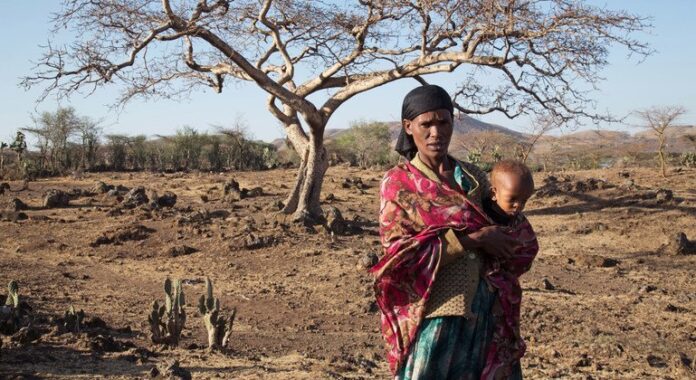
El Niño is a massive threat to the food security of millions who are already vulnerable,” said Carl Skau, WFP’s Acting Executive Director. “The sooner we help families to prepare for these climate shocks, the greater our ability to save lives and protect livelihoods.”

Acute hunger refers to people who are unable to meet their daily food needs. 

Key points

  • 49 million more people could face acute hunger because of El Niño beginning in September.
  • 225-274 million: the number of acutely food-insecure people could rise by around 22 per cent.
  • Central America and southern Africa are expected to be among hardest-hit regions.
  • Early action benefits: every $1 invested in prevention can save $3–$7 in future losses and response.

Learning from past El Niños

WFP noted that the 2015-2016 El Niño impacted the food security of 60 to 100 million people. Early projections indicate that the 2026-2027 El Niño could push at least 49 million more people into acute food insecurity by the end of next year.

After analysing 45 countries already considered food insecure – and where El Niño will significantly influence rainfall patterns, temperatures, floods and droughts – the agency expects the total number of acutely food-insecure people to rise from 225 million to 274 million people, an increase of approximately 22 per cent. 

Parts of Central America and southern Africa are expected to bear the brunt of climate extremes, although significant impacts are also forecast in eastern Africa and South and Southeast Asia.

WFP stressed the variety of El Niño’s impact: “Some countries are already experiencing below-average rainfall, flooding and unusually hot temperatures, while others are expected to face deteriorating conditions during upcoming planting seasons and harvests.”

WFP report findings:

  • Latin America and the Caribbean could see one of the sharpest rises in food insecurity, with more than 16 million people affected. 
  • Central America is projected to have the largest proportional increase (83.1 per cent) of all areas analysed in the report.
  • East and Southern Africa face substantial risks, particularly where upcoming rainy seasons are critical for food production. More than 18 million people could see their food security deteriorate, representing a 26 per cent increase. 
  • Southern African countries are particularly exposed because many households depend on rain-fed subsistence agriculture.
  • Asia and the Pacific could see significant impacts in several already vulnerable countries with an estimated 8.2 million additional people facing acute food insecurity.
  • West and Central Africa are also at risk with food insecurity projected to increase by 12 per cent, affecting nearly six million additional people.

WFP and the Food and Agriculture Organization of the United Nations (FAO) have already appealed for increased support to help at-risk communities prepare for El Niño to help protect lives, livelihoods and food security before emergencies escalate.

Investment multiplier

El Niño is expected to peak between September and December 2026, but the effects will be felt throughout 2027 in many countries, owing to impacts on future harvests. “Drought, flooding and extreme temperatures are already putting communities at risk,” WFP warned.

Working closely with FAO, OCHA and other partners, WFP has active prevention  plans in more than 50 countries and is supporting governments and communities to reduce risks.

Since May, WFP has triggered anticipatory action plans in South Sudan, Chad, Mauritania, Uganda, Guatemala and El Salvador, providing more than $14 million in lifesaving responses to support half a million people. This includes scaling its pre-arranged financing mechanisms such as disaster risk insurance, credit, and digital payments, to make more money available at lower cost.

These efforts help communities and governments prepare for and withstand sudden shocks while reducing future humanitarian needs. In fact, experiences from prior El Niño events have shown that $1 invested in anticipatory programs can save between $3 and $7 in avoided losses and response costs.

Source link