Tuesday, April 21, 2026
Home Blog Page 269

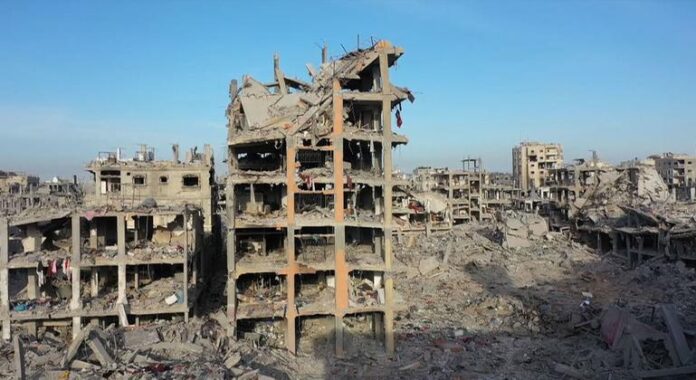
In the middle of the massive destruction of Gaza City, the UN Renew Renews Casefire Call

0

“It is essential to immediately reach a ceasefire in Gaza”, ” The secretary general told journalists on the sidelines of the Ninth Tokyo International Conference on African Development (Ticad9)“” And the unconditional release of all hostages and to avoid the massive death and destruction that a military operation against Gaza City would inevitably cause.“”

About a million people still live in the city – the largest in Gaza – in the north of the enclave torn by the war. The Israeli army would have described it as a bastion of Hamas, the terrorist group whose murderous attacks in Israel and the hostage taking the war on October 7, 2023.

The UN chief also condemned the Israeli government’s decision to approve a project of expansion of colonization for a long time in the occupied West Bank.

“” The decision of the Israeli authorities to extend the construction of illegal regulations, which would divide the West Bank, must be reversed. Any construction of settlement is a violation of international law“, He insisted.

The rules would have permission of more than 3,000 houses, schools and a clinic, cutting East Jerusalem from the occupied West Bank, which Israel captured during the 1967 war of 1967 after defeating Egypt, Jordan and Syria.

Urban destruction

Meanwhile, in Gaza City, entire urban areas are “completely destroyed”, the UN understands, with new destruction in progress in the South and the Southeast, while military maneuvers continue.

Recent attacks have been particularly devastating in the city Az Zaytoun district, the United Nations Human Rights Office (Ohchr)) reported Wednesday.

Highlighting more than 50 attacks against residential buildings and whole blocks in Gaza City since August 8, Ohchr warned that its “Systematic destruction” had started.

Acute malnutrition

Meanwhile, the United Nations aid teams highlighted the catastrophic impact of accelerating the Israeli military operation, with Shapeless malnutrition in children from Gaza City at 28.5%Or more than one in four young people.

“Children continue to die from artificial famine”, ” UNRWA said in a statement, noting that it has projected more than 95,000 children aged six months to five years for malnutrition through the Gaza Strip since March 2025, after the ceasefire collapse.

While the ceasefire has always stood in early March And the emergency supplies have been allowed to enter Gaza in much larger quantities than today,, Malnutrition rates were six times lower than Gaza CityAt 4.5%, according to the United Nations Agency for Palestinians, UNRWA.

Through Gaza, acute malnutrition increased to almost 16% in mid-August, more than three times higher than the level of 5.2% recorded by the United Nations Agency in March, he said.

Vital services in danger

Today, the services provided by UNRWA in Gaza City are “at serious risks”, warned the agency, pointing tens of thousands of people who still live in its shelters and “many others” who remain in the surrounding regions.

There is a particular concern for the compound of the UNRWA field office – its largest logistics center in northern Gaza – because the operations of the United Nations Agency in the South have been “paralyzed” by travel and bombing orders.

To indicate the key role of UNRWA in the assistance and rescue provisions in Gaza, he noted that last month, he provided more than 100,000 medical consultations and projected 3,500 children for malnutrition to Gaza City.

UNRWA has also delivered drinking water to 220,000 people, domestic water at 250,000 and has eliminated hundreds of tonnes of waste.

Specialists in education and protection against the United Nations agency have reached thousands of others in temporary learning spaces or by offering advice, recreational activities and risk awareness training on the dangers of unplodified deadly weapons.

“While our colleagues, like the rest of the UN, are determined to stay and deliver, all these services are now in danger while military operations are intensifying,” said UNRWA.

Originally published at Almouwatin.com

In the midst of the ongoing Israeli attacks, “the systematic destruction of Gaza City is already underway”: United Nations Rights Office

0

The recent attacks have been particularly devastating in the Az Zaytoun district, where air strikes, artillery bombings and shots are continuous and intense, causing a large number of civilian victims and large -scale destruction of residential buildings and public facilities, the United Nations Human Rights Office, Ohchrin the occupied Palestinian territory, said in a declaration.

Since August 8, the office has recorded 54 attacks against residential buildings and whole blocks in Gaza City, killing 87 Palestinians, including at least 25 children and whole families.

He also recorded attacks on shelters for internal displaced people, including tents and schools, killing at least 14.

These injury figures “indicate that The systematic destruction of Gaza City is already underway“, According to the press release.

However, the OHCHR stressed that these devastating figures are only part of the real balance sheet due to the sub-declaration in such disastrous circumstances.

Impact of attacks

Following recent attacks, hundreds of families were forced to flee, nowhere in complete safety in the midst of disastrous humanitarian conditions through the Gaza Strip.

However, those who remain trapped are completely cut off from food, water and medical supplies.

Ohchr stressed that “The decision reported by Israel to take full control of the city of Gaza and forcibly move its population leads to massacres of civilians and the destruction of vital infrastructure to the survival of the population. “”

The office sees the means of the War repeated Israeli military who caused mass killings, serious injuries, forced displacement, arbitrary detention, famine and in -depth destruction in previous operations in North Gaza and Rafah.

To prepare for the offensive, the Israeli army has repeatedly called upon the Palestinians to move to Al Mawasi, west of Khan Younis.

However, Israel has repeatedly struck tents in Al Mawasi, where people find it difficult to survive without any access to food, water and other necessities.

Violations of international law

Under international law, Israel must not destroy civil property unless it is made necessary by military operations. However, the general destruction of residential buildings in the city of Gaza is not considered an imperative military necessity.

In addition, by forcing the entire population of Gaza City and those who remain in North Gaza to move – homeless, food or medical arrangements and no indication to allow them to return home in the future – the OHCHC fears that these are not serious offenses to offenses to serious offenses Fourth Geneva Convention.

Thus, the office urges the states who left in the United States to the Geneva conventions to follow their obligation “to exert maximum pressure on Israel to immediately stop this offensive, which risks triggering an unprecedented and potentially deadly and unprecedented humanitarian crisis and life in matters of life and unprecedented and deadly constantly extinguish the Palestinian presence in the largest urban area in Gaza. “”

Famine worse cases

Meanwhile, the World Food Program (Wfp)) welcomed The contribution of Japan safeguarding 500 million yen ($ 3.3 million) to provide food and nutritional assistance to Palestinians because they face severe food insecurity.

Adding limited commercial truck entrances to the help, on August 4, mainly containing dry foods and a small amount of fresh products, according to at the United Nations Coordination Office, Ochha.

However, the risk of deterioration and infestation of food supplies has increased considerably due to its exchange for months, heat and imminent expiration dates.

In addition, the cooking gas has not entered Gaza for more than five months, and firewood has become more and more unaffordable, forcing a lot to use waste and scrape the wood as alternative sources of cooking, to exacerbate health and environmental risks.

Due to such limited help, WFP stressed that the last classification of the integrated food security phase report find that The worst case of famine is currently occurring in the Gaza Strip.

“I meet families who have lost everything and do not know where their next meal will come from.” said Antoine Renard, PAM representative and director of countries in Palestine.

But thanks to this support from Japan, he continued: “PAM can continue to obtain wild food aid, but we need a ceasefire and sustained access to reach the most risky and prevent a large-scale famine.”

Originally published at Almouwatin.com

Amid ongoing Israeli attacks, ‘the systematic destruction of Gaza City is already underway’: UN rights office

0
Amid ongoing Israeli attacks, ‘the systematic destruction of Gaza City is already underway’: UN rights office

Recent attacks have been particularly devastating in the Az Zaytoun neighbourhood, where airstrikes, artillery shelling and gunfire are continuous and intense, causing a high number of civilian casualties and the large-scale destruction of residential buildings and public facilities, the UN human rights office, OHCHR, in the Occupied Palestinian Territory said in a statement.

Since 8 August, the office has recorded 54 attacks on residential buildings and entire blocks in Gaza City, killing 87 Palestinians, including at least 25 children and entire families.

It also recorded attacks on shelters for internally displaced people, including tents and schools, killing at least 14.

These casualty figures “indicate that the systematic destruction of Gaza City is already underway,” the statement said.

However, OHCHR stressed that these devastating figures are only a portion of the actual toll due to underreporting in such dire circumstances.

Impact of attacks

As a result of recent attacks, hundreds of families have been forced to flee, with nowhere safe to go amid dire humanitarian conditions across the Gaza Strip.

However, those who remain trapped are completely cut off from food, water and medical supplies.

OHCHR emphasised that “Israel’s reported decision to take full control of Gaza City and to forcibly displace its population will lead to mass killings of civilians and destruction of infrastructure vital to the survival of the population.”

The office is seeing the Israeli military repeat means of warfare that caused mass killings, serious injuries, forced displacement, arbitrary detention, starvation and extensive destruction in previous operations in North Gaza and Rafah.

To reportedly prepare for the offensive, the Israeli military has repeatedly called on Palestinians to move to Al Mawasi, west of Khan Younis.

However, Israel has repeatedly struck tents of the displaced in Al Mawasi, where people are struggling to survive with barely any access to food, water and other necessities.

Violations of international law

Under international law, Israel must not destroy civilian property unless it is rendered necessary by military operations. Yet, the widespread destruction of residential buildings in Gaza City is not seen as an imperative military necessity.

Additionally, by forcing the entire population of Gaza City and those remaining in North Gaza into displacement – with no shelter, food or medical provisions and no indication for allowing them to return to their homes in the future – OHCHR is concerned that these are grave breaches of the Fourth Geneva Convention.

Thus, the office is urging States party to the Geneva Conventions to follow their obligation “to exert maximum pressure on Israel to immediately halt this offensive, which risks triggering an unprecedented, life-threatening humanitarian crisis and permanently extinguishing the Palestinian presence in Gaza’s largest urban area.”

Worst-case famine

Meanwhile, the World Food Programme (WFP) welcomed Japan’s life-saving contribution of 500 million yen ($3.3 million) to provide emergency food and nutrition assistance to Palestinians as they face severe food insecurity.

Adding to the assistance, on 4 August, limited commercial truck entries resumed, containing mainly dry food items and a small amount of fresh produce, according to the UN aid coordination office, OCHA.

However, the risk of spoilage and infestation of food supplies has drastically increased due to being stranded for months, heat and impending expiration dates.

Furthermore, cooking gas has not entered Gaza for over five months, and firewood has become increasingly unaffordable, forcing many to use waste and scrap wood as alternative cooking sources, exacerbating health and environmental risks.

Due to such limited aid, WFP underscored that the latest Integrated Food Security Phase Classification report finds that the worst-case scenario of famine is currently occurring in the Gaza Strip.

“I meet families who have lost everything and don’t know where their next meal will come from.” said Antoine Renard, WFP Representative and Country Director in Palestine.

But thanks to this support from Japan, he continued, “WFP can continue procuring life-saving food assistance, but we urgently need a ceasefire and sustained access to reach those most at risk and prevent a full-scale famine.” 

Source link

The terrorist threat posed by ISIL “remains volatile and complex”, the Security Council hears

0

While several Da’esh leaders have perished in recent years, “The group has managed to keep its operational capacity», Vladimir Voronkov, Head of the United Nations Terrorism Bureau (UNOCT) said THE Security advice Wednesday.

Da’esh uses regional and national affiliates and continues to receive substantial global donations, operating through regional centers and cross -border financial networks.

The threat that the extremist group poses is notably exacerbated in the African region of the Sahel, where the affiliates of ISIL such as the province of West Islamic Africa have become prolific producers of terrorist propaganda, which continues to attract foreign recruits.

Despite important national and international efforts to counter DA’ESH – which increased in 2014 after taking care of large expanses from Iraq and Syria – the continuous threat posed, underlines the urgency of sustained global cooperation.

Safety gaps

In Afghanistan, Isil-Khorasan continues to represent one of the most serious threats to Central Asia and beyond, the group continuing to target civilians, while exploiting dissatisfaction with the country’s de facto authorities.

Meanwhile, Da’esh remains active in Iraq and Iraq – despite the military defeats in Mosul and Raqqa in 2017 – trying to restore its operational capacity in the Badia region and renew the efforts to destabilize local authorities.

In Syria, where the situation remains fragile since the takeover led by Hay’at Tahrir al-Sham, ISIL continues to exploit security gaps, carry out secret operations and encourage sectarian tensions in the country.

Detention camps

“” The situation of security, humanitarian and human rights in camps and other facilities in northeast Syria remains deeply concerning“Said Mr. Voronkov.

Camps like Al-Hol are currently welcoming tens of thousands of people, mainly women and children-many having presumed links with ISIL-who remain prolonged in dangerous and unworthy conditions.

These environments present serious risks of radicalization to terrorism and are contrary to obligations under international law, “he said.

Mr. Voronkov called “secure repatriation, voluntary and worthy of all those concerned, with a particular accent on children”.

New technology

“There is a marked increase in the entry of various methods and the integration of digital technologies with conventional techniques,” said Elisa de Anda Madrazo, president of Close Unpartner, the financial action working group, Embassadors.

The use of new and emerging technologies and artificial intelligence by Da’esh remains a growing challenge, in particular, because the group is increasingly using these tools to collect funds and establish a wider communications network.

“” While we hold at the crossroads of technological transformation and geopolitical uncertainty, the threat of terrorism is more diffuse and complexSaid Nathalia Gherman, Chief Executive Department of the Terrorism Committee (CTED).

Prevention still the best healing

“” Prevention remains our best answer To terrorism and the violent extremism of favorable terrorism, “said Voronkov.

He stressed the importance of prioritizing long -term and principle responses that attack the engines of terrorism and its hably conditions.

“It is more effective-and profitable-to prevent terrorism than to remedy its impact,” he said.

Originally published at Almouwatin.com

Amid ongoing Israeli attacks, ‘the systematic destruction of Gaza City is already underway’: UN rights office

0
Amid ongoing Israeli attacks, ‘the systematic destruction of Gaza City is already underway’: UN rights office

Recent attacks have been particularly devastating in the Az Zaytoun neighbourhood, where airstrikes, artillery shelling and gunfire are continuous and intense, causing a high number of civilian casualties and the large-scale destruction of residential buildings and public facilities, the UN human rights office, OHCHR, in the Occupied Palestinian Territory said in a statement.

Since 8 August, the office has recorded 54 attacks on residential buildings and entire blocks in Gaza City, killing 87 Palestinians, including at least 25 children and entire families.

It also recorded attacks on shelters for internally displaced people, including tents and schools, killing at least 14.

These casualty figures “indicate that the systematic destruction of Gaza City is already underway,” the statement said.

However, OHCHR stressed that these devastating figures are only a portion of the actual toll due to underreporting in such dire circumstances.

Impact of attacks

As a result of recent attacks, hundreds of families have been forced to flee, with nowhere safe to go amid dire humanitarian conditions across the Gaza Strip.

However, those who remain trapped are completely cut off from food, water and medical supplies.

OHCHR emphasised that “Israel’s reported decision to take full control of Gaza City and to forcibly displace its population will lead to mass killings of civilians and destruction of infrastructure vital to the survival of the population.”

The office is seeing the Israeli military repeat means of warfare that caused mass killings, serious injuries, forced displacement, arbitrary detention, starvation and extensive destruction in previous operations in North Gaza and Rafah.

To reportedly prepare for the offensive, the Israeli military has repeatedly called on Palestinians to move to Al Mawasi, west of Khan Younis.

However, Israel has repeatedly struck tents of the displaced in Al Mawasi, where people are struggling to survive with barely any access to food, water and other necessities.

Violations of international law

Under international law, Israel must not destroy civilian property unless it is rendered necessary by military operations. Yet, the widespread destruction of residential buildings in Gaza City is not seen as an imperative military necessity.

Additionally, by forcing the entire population of Gaza City and those remaining in North Gaza into displacement – with no shelter, food or medical provisions and no indication for allowing them to return to their homes in the future – OHCHR is concerned that these are grave breaches of the Fourth Geneva Convention.

Thus, the office is urging States party to the Geneva Conventions to follow their obligation “to exert maximum pressure on Israel to immediately halt this offensive, which risks triggering an unprecedented, life-threatening humanitarian crisis and permanently extinguishing the Palestinian presence in Gaza’s largest urban area.”

Worst-case famine

Meanwhile, the World Food Programme (WFP) welcomed Japan’s life-saving contribution of 500 million yen ($3.3 million) to provide emergency food and nutrition assistance to Palestinians as they face severe food insecurity.

Adding to the assistance, on 4 August, limited commercial truck entries resumed, containing mainly dry food items and a small amount of fresh produce, according to the UN aid coordination office, OCHA.

However, the risk of spoilage and infestation of food supplies has drastically increased due to being stranded for months, heat and impending expiration dates.

Furthermore, cooking gas has not entered Gaza for over five months, and firewood has become increasingly unaffordable, forcing many to use waste and scrap wood as alternative cooking sources, exacerbating health and environmental risks.

Due to such limited aid, WFP underscored that the latest Integrated Food Security Phase Classification report finds that the worst-case scenario of famine is currently occurring in the Gaza Strip.

“I meet families who have lost everything and don’t know where their next meal will come from.” said Antoine Renard, WFP Representative and Country Director in Palestine.

But thanks to this support from Japan, he continued, “WFP can continue procuring life-saving food assistance, but we urgently need a ceasefire and sustained access to reach those most at risk and prevent a full-scale famine.” 

Source link

Zero Emission Bus Conference 2025

0
Zero Emission Bus Conference 2025

Save the date for the European Zero Emission Bus Conference 2025!

The 6th edition of the European Zero Emission Bus Conference will be held at Busworld Europe in Brussels. The conference is organised by ERM and Busworld Foundation.

Join industry leaders, policymakers, and innovators as they dive into the latest breakthroughs in electric and hydrogen-powered buses, cutting-edge battery technology, and smart charging infrastructure. Discover how cities around Europe and the world are revolutionising public and private transit to meet climate goals, and what’s next for zero-emission mobility. Whether you’re involved in policy, technology, or urban planning, ZEB 2025 is your opportunity to shape the future of sustainable bus transit! 

This year, 12 breakouts and plenary sessions will open discussions on various topics such as real-world performance of battery electric and fuel cell buses, depot energy management, charging opportunities and grid challenges, technology and telematics, innovative business models and evolution of CAPEX/OPEX, market trends and policy support and more.

The Horizon Europe project BatteReverse, in which EIT Urban Mobility is a partner, will be featured in the plenary session ‘Navigating Battery Degradation, Safety and End-of-Life Management’ on Thursday 9 October. The session will explore the full lifecycle of batteries, from operation to end-of-life, addressing key challenges such as degradation, safety and disposal. Participants will gain insights into effective strategies for ensuring performance and sustainability throughout the battery’s lifespan.

Register here

Source link

ESMA and the European Environment Agency signed a Memorandum of Understanding to strengthen their cooperation in sustainable finance area

0

The European Securities and Markets Authority (ESMA) and the European Environment Agency (EEA) signed a Memorandum of Understanding (MoU) whose purpose is to strengthen cooperation in sustainable finance. The MoU focuses on environmental factors and their integration in the EU sustainable finance framework, including the supervision of the framework.

The MoU outlines how ESMA and the EEA will exchange expertise, information and data with one another and support mutual capacity building activities. ESMA and the EEA will also work together on facilitating the collaboration between national securities regulators and national authorities or agencies in charge of environmental protection. Furthermore, they will jointly work on enhancing policy dialogue on various areas of the sustainable finance agenda.

Both institutions recognise that their close cooperation on these tasks and activities will bring mutual benefits and synergies through preventing duplication of efforts, and ultimately contribute to addressing the significant challenges related to biodiversity, climate change and pollution.


Further information:

Solveig Kleiveland

Team Leader – Communications
press@esma.europa.eu 

Source link

World Humanitarian Day 2025: Aid workers mull record toll of their own

0
World Humanitarian Day 2025: Aid workers mull record toll of their own

Speaking to UN News from the wartorn enclave to mark World Humanitarian Day, Olga Cherevko from the UN aid coordination office, OCHA, said that exhausted aid workers continue to show up for work “day in and day out”.

Approaching two years since the start of the war in Gaza, Ms. Cherevko emphasized the commitment of her Palestinian colleagues, “the doctors, the nurses, aid workers who many of them have, lost everything and several times over”.

Red lines crossed

In comments in support of aid workers everywhere, UN Secretary-General António Guterres pointed out that humanitarian teams “are the last lifeline for over 300 million people” impacted by conflict or disaster.

Despite their lifesaving role, funding cuts are having a serious and negative impact on the world’s most vulnerable people, Mr. Guterres warned, while those who provide aid are increasingly under attack as “red lines are crossed with impunity”.

This is despite the fact that such attacks are prohibited under international law, the UN chief continued, noting that although governments have pledged action to protect them, “what is missing is political will – and moral courage…Humanitarians must be respected and protected. They can never be targeted.”

Powerless to help

From her base in Deir Al-Balah in central Gaza, Ms. Cherevko reflected on the nature of humanitarian work today and the frustration that aid teams often face when their lifesaving missions are delayed, preventing them from delivering assistance at scale.

“I think as a humanitarian, I feel powerless sometimes in Gaza because I know what it is that we can do as humanitarians when we’re enabled to do so, both here in Gaza and in any other humanitarian crisis,” she explained.

“The fact that we continue to face massive impediments for delivering aid at scale, when our missions are delayed, when our missions lasted 12, 14, 18 hours; the routes that we’re given are dangerous, impassible or inaccessible.”

Surge in killings

Latest data indicates a 31 per cent surge in aid worker deaths compared to 2023, driven by the relentless conflict in Gaza.

The Strip saw 181 humanitarian workers killed in 2024, with 60 more fatalities in Sudan. More widely, violence against aid workers increased in 21 countries in 2024 compared to the previous year, with State actors the most common perpetrators.

Worryingly, there is no sign that the trend is slowing this year, with 265 aid workers killed as of 14 August this year, according to provisional data from the Aid Worker Security Database.

Amid early reports that Hamas has agreed to a 60-day ceasefire in Gaza and ongoing uncertainty about the Israeli plan to pursue a complete military takeover of the enclave, OCHA’s Ms. Cherevko highlighted the need for a permanent end to the conflict.

Aid teams are exhausted and “everyone’s still showing up (to work), but courage alone and commitment alone isn’t going to feed people, isn’t going to save people”, she insisted. “What we need is, again, a permanent ceasefire. We need political solutions to this conflict and a resolution to this crisis.”

According to OCHA, most of the aid workers killed last year were national staff serving their communities, attacked in the line of duty or in their homes.

An additional 308 aid workers were wounded, with 125 kidnapped and 45 detained in 2024.

“Even one attack against a humanitarian colleague is an attack on all of us and on the people we serve,” said Tom Fletcher, UN Emergency Relief Coordinator. “Attacks on this scale, with zero accountability, are a shameful indictment of international inaction and apathy...Violence against aid workers is not inevitable. It must end.”

Why do we mark World Humanitarian Day?

On 19 August 2003, a bomb attack on the Canal Hotel in Baghdad killed 22 humanitarian aid workers, including the UN Special Representative of the Secretary-General for Iraq, Sergio Vieira de Mello. Five years later, the General Assembly adopted a resolution designating 19 August as World Humanitarian Day.

Each year, the international day brings together partners from across the humanitarian system to advocate for the survival, well-being and dignity of people affected by crises, and for the safety and security of aid workers.

The theme of this year’s commemoration overseen by OCHA is an end to the attacks on humanitarians and civilians and impunity under International Humanitarian Law. “We urge those in power to #ActForHumanity,” the UN agency said.

Source link

International Day Commemorating the Victims of Acts of Violence based on Religion or Belief: Statement by the High Representative on behalf of the European Union

0
International Day Commemorating the Victims of Acts of Violence based on Religion or Belief: Statement by the High Representative on behalf of the European Union

The EU issued a statement honoring victims of religious intolerance and violence, and reaffirms its commitment to protect freedom of religion or belief, promote interfaith dialogue, and support global projects that combat discrimination and hatred.

Source link

“ Africa is ready for progress ” Guterres told the development conference in Japan

0

“With the youngest population in the world, abundant natural resources and a dynamic entrepreneurial spirit, Africa is ready to do said The 9th Tokyo International Conference on African Development (Ticad) in Yokohama.

He said the theme of Reunion – Co-create innovative solutions with Africa -was a reminder that these same forces can help shape a more peaceful, prosperous and lasting world in Africa and beyond.

Progress and reform

In this regard, he underlined the need to accelerate progress to achieve Sustainable development objectives (ODD) by investment, reform and partnerships.

Mr. Guterres highlighted five areas of cooperation, starting with his long -standing push to reform global governance institutions so that they reflect the realities of today.

“” Africa must have a stronger voice to shape decisions that affect its future“He said.

“” Which includes a long -awaited reform of Security adviceWhere incredibly, Africa has no permanent member and other regions remain underrepresented. »»

He also called for the revision of international financial architecture, describing the current system as “unjust and unfair”, as well as daring actions on the relief of debt.

Value and renewable energy chains

The secretary general then highlighted investment in sustainable global value chains and regional integration.

“The path of prosperity of Africa must focus on adding value to its raw materials, the creation of decent jobs and the strengthening of resilience, the profit of the African continental free trade area,” he said.

He also underlined the need to fight against the “African energy paradox”, noting that although the continent has enormous potential to produce renewable energies, it receives only 2% of global investments in the sector. Meanwhile, some 600 million Africans do not have access to electricity.

“Africa also houses the critical minerals necessary to fuel renewable technologies,” he continued. ” But The countries welcoming them must be those that benefit from them first and most, while adding value to local and global value chains. “”

Invest in technology, youth and peace

By turning alongside technology, Mr. Guterres called to exploit digital innovation, including artificial intelligence (AI), for development.

He said that Japan’s technological leadership can help close the digital fracture, “and ensure that technology helps African countries catch up with adequate digital public infrastructure, rather than being left behind. »»

“Young people are the manufacturers of the future of Africa”, the fourth point of the Secretary General stressed the need to invest in their skills and their education, in particular in STEMs (Science, Technology, Engineering and Mathematics).

“” Invest in the full participation of women in economies, companies and political systems“, He added.

Mr. Guterres concluded by recognizing the link between peace and prosperity.

“Sustainable development requires sustainable peace,” he said.

“By silencing firearms as clearly points out the African Union. And by putting an end to violence in all its forms and by strengthening social cohesion and stability that can attract investments and businesses in Africa. ”

About Ticad

The Tokyo International Conference on African Development (TICAD) is co-organized by Japan and UN, the United Nations Development Program (Predict), the World Bank and the African Union Commission (AUC).

It has been taking place since 1993 in order to promote the development, peace and security of Africa, thanks to the strengthening of relations in multilateral cooperation and partnership.

“For more than three decades, the Ticad has embodied the spirit of multilateralism – based on mutual respect, shared responsibility and a deep belief in the potential of Africa,” said the secretary general.

The conference takes place from August 20 to 23.

Originally published at Almouwatin.com