Wednesday, April 22, 2026
Home Blog Page 276

From dough to dough: the Bahrainais chefs rise with a soft and spicy success

0

What started as a simple joy of making cookies for family and friends quickly flourished in brown sugar, a brand that embodies both its love for desserts and its trip to independence.

“I liked to eat candies,” said Eman Fareed, a retired mother and official UN News While cooking in his kitchen.

“At the beginning, I cooked cookies just for my family. They loved the taste, and soon, my friends started to encourage me to sell them. It was then that I realized that I could transform it into something bigger. ”

Part of a basic model

It is among the beneficiaries of Kaaf Humaninian, a non -profit organization (NGO) launched in Bahrain in 2021 which has become a basic model for the realization of Sustainable development objectives (ODD) by empowering individuals and communities for autonomy.

Kaaf has shown the fruit of her efforts, including spices and cookies made by Ms. Fareed and others during an exhibition during the fifth Investment Forum in Entrepreneurship (Weif), held in Manama, Bahrain, in 2024 and facilitated by the industrial development of the United Nations (Unido), in Bahrain.

As for the forum, the members approved the Manama declaration, calling on the international community to exploit the power of entrepreneurship and innovation to reach the SDGs, strongly emphasizing the inclusion of productive families.

What is a “productive family”?

Saud Al Mahmood, specialist in public relations at Kaaf Humanitarian, said that productive families are those “who are based on the skills of their members to support family and improve their standard of living”.

“Helping productive families is very important because it is not only a question of helping individuals; It is a question of helping the whole family, “he said, noting that Kaaf offers families training and the tools they need to improve their products and compete on the market.

“Our work addresses many SDGs, including those related to water, food and refuge, as well as to improve the economy. We are always encouraged to collaborate with the United Nations and other organizations. ”

After cooking his cookies, Eman Fareed wraps them in an attractive box marked with his business name.

A passion for spices

Noora Khalid Musaifer, another beneficiary of Kaaf, said that she was inspired by her mother’s love for cooking and roasting coffee.

After getting married, she started mixing Bahrainite spices and, over time, developed to include different spice notes, Daqoos pepper and coffee roasting, all made with high quality ingredients and under the Mallawal brand.

It treats spices – washing, drying, roasting and packaging – at home. While she was initially sold them under her home brand, participation in exhibitions and opportunities emerging through the COVID 19 The forty pandemic helped his business prosper.

From investment to the brand

A key factor in the successful course of Ms. Fareed and Ms. Musaifer was the support of Kaaf Humanitarian, who provided them financial support, packaging equipment and brand assistance.

Ms. Musaifer is the family support of her family, having made spices for 20 years and joined Kaaf a decade ago.

“Their financial support allowed me to get high quality spices,” she said, adding that some of the spices she gets from the market or Bahrainian companies who import them from India and are very expensive.

Noora Khalid Musaifer received training to become a prosperous entrepreneur.

Social media as a marketing tool

Fareed said Kaaf Humanitaire had been a pillar of her success in the cooking field.

“The technology is crucial in today’s world, and they have helped me to adapt.”

She started her business after her retirement in 2014, but initially missed advice on how to develop it.

“When I joined Humanitarian Kaaf, they trained me in business management, social skills and digital marketing,” she said, stressing that the NGO has provided it financial and moral support. “They taught me to take professional photos of my products and maximize online sales.”

Reinforcement of women’s capacities

One afternoon, 15 women entrepreneurs gathered for a training session at Kaaf’s humanitarian house in the suburbs of Manama, each bringing their products to share with others, presenting their mastery of skills.

“They are housewives. Some worked, but now they work at home, “said Budoor Buhijji, a university speaker who directed the session.

“They manage small entrepreneurial projects: food, candies, spices, chocolates, pens and craft products that they can sell in their communities. And they hope to extend beyond their community and to become international. ”

Challenges and dreams for the future

As a female entrepreneur in a commercial environment traditionally dominated by men, Ms. Musaifer considers her success as a testimony to the strength of Bahrainites women, able to balance the responsibilities of work and the family.

Kaaf Humanitarian authorizes women thanks to training in entrepreneurship and offers them opportunities to market and sell their products.

“I dream of opening a shop under my name, where I can continue to make hand-made spices and traditional foods,” she said, “she said

For Ms. Fareed, being a businesswoman in Bahrain is already a success because business has traditionally been dominated by men.

“In my family, women were not encouraged to work alongside men or to manage businesses, but over time, my father saw my strength and supported me,” she said. “Now I feel confident and empowered.”

For the future, she dreams of extending her business to a factory.

“I want to build something big, have my own team and leave an inheritance for my children. One day, I will tell them how I became a strong and independent woman. ”

Originally published at Almouwatin.com

Pathways2Resilience: call for European regions to build climate resilience

0

Pathways2Resilience, the flagship programme under the EU Mission on Adaptation to Climate Change led by Climate KIC, has launched its second open call to select 61 European regions and communities.

The selected regions will join the previous cohort of 39 regions in receiving direct funding and support to create their transformative, long-term climate adaptation plans, for a total of 100 regions supported by the programme between 2023 and 2027.

What will you gain?

Through a comprehensive and ambitious learning programme, Pathways2Resilience supports regions with varying levels of adaptive capacity, ranging from those equipped with advanced climate risk knowledge and governance structures to highly vulnerable communities in need of foundational support.

To address these diverse challenges, the programme offers selected regions an 18-month tailored learning journey, based on the Regional Resilience Journey framework, that includes thematic sessions and peer learning activities:

  • Finance Innovation Lab: Europe’s first dedicated facility for piloting innovative finance solutions.
  • Innovation Practice Groups: Collaborative week-long sessions that explore locally-led climate adaptation solutions.
  • Deep Dives: Thematic expert sessions focusing on critical enablers of climate resilience, including knowledge and data, governance, innovation, finance, skills and behavioural change.

At the end of the programme, participating regions will have produced a baseline assessment, a climate resilience strategy, an action plan and an investment plan ready to be implemented.

How to apply?

Eligible regional authorities can apply for the Pathways2Resilience second open call until 20 August 2025 at 12:00 CET via the Pathways2Resilience website

A total of 61 subgrantees will be selected, each receiving €210,000 for a period of 18 months (January 2026 – June 2027). The main selection criteria include a focus on the most vulnerable regions (high climate risk and low adaptive capacity) and diversity across countries, bioregions, climate risk types, and scale.

Information sessions

Apply Here

Source link

We shouldn’t oppose the integration of European banking, as long as it makes financial sense

0
We shouldn’t oppose the integration of European banking, as long as it makes financial sense

DISCLAIMER: Information and opinions reproduced in the articles are the ones of those stating them and it is their own responsibility. Publication in The European Times does not automatically means endorsement of the view, but the right to express it.

DISCLAIMER TRANSLATIONS: All articles in this site are published in English. The translated versions are done through an automated process known as neural translations. If in doubt, always refer to the original article. Thank you for understanding.

Source link

Statement by President Macron, Prime Minister Meloni, Chancellor Merz, Prime Minister Starmer, President Stubb, Prime Minister Tusk, President Costa, President von der Leyen

0
Statement by President Macron, Prime Minister Meloni, Chancellor Merz, Prime Minister Starmer, President Stubb, Prime Minister Tusk, President Costa, President von der Leyen

Statement by President Macron, Prime Minister Meloni, Chancellor Merz, Prime Minister Starmer, President Stubb, Prime Minister Tusk, President Costa, President von der Leyen, following President Trump’s debrief on his meeting with the Russian President in Alaska on 15 August 2025.

Source link

Volvo Uses Generative AI to Test Its Safety Software

0


The Swedish car manufacturer Volvo is famous for its efforts to make the safest cars possible. It pioneered

Source link

UN warns Gaza crisis could worsen without safe, unrestricted aid flow

0
UN warns Gaza crisis could worsen without safe, unrestricted aid flow

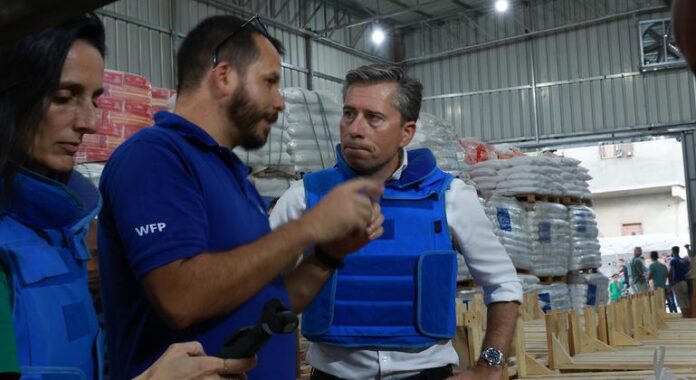
In his regular daily briefing, UN Spokesperson Stéphane Dujarric highlighted that ongoing delays, bottlenecks at holding points and interference in the loading process at crossing platforms are undermining efforts to collect and distribute supplies to those in need.

It is imperative that the UN and its humanitarian partners are enabled to deliver aid at scale, using community-based mechanisms to reach the most vulnerable,” he said.

Injured trying to reach food

Recent figures illustrate the scale of the challenge. Between May 27 and August 8, the Red Cross Field Hospital in Rafah treated more than 4,500 wounded patients – most reporting injuries sustained while attempting to reach food distribution sites.  

Many were hurt in crowd crushes or subjected to theft or violence immediately after receiving critical food aid.

Of 12 aid missions requiring coordination with Israeli authorities on Thursday, five were facilitated without impediments. Four missions were cancelled by the organisers, and three others were impeded and only eventually fully accomplished – these included the collection of food aid from Zikim and Kerem Shalom/Karem Abu Salem crossings.

The UN Spokesperson also highlighted an ongoing starvation crisis, with increasing numbers of deaths, particularly among children.

Hospitals are struggling to cope with rising cases of malnutrition and many facilities have reportedly run out of bedspace to treat patients, he said.

No cooking fuel

Energy shortages are compounding the crisis, Mr. Dujarric said, noting that cooking gas has been unavailable in Gaza’s markets for five months, while firewood has become increasingly unaffordable.

More people are resorting to using waste and scrap wood as alternative fuel sources for cooking, which only makes worse health and protection risks, and causes environmental hazards,” he added.

Protect fleeing civilians

He also stressed that civilians must be protected in the event of expanded military operations in Gaza City.

Fleeing civilians must be protected and they must have their essential needs met, and they must be able to voluntarily return when the situation allows. And if they choose to stay, they should not be threatened or put at risk,” he said.

Mr. Dujarric also reiterated the UN’s long-standing call for the immediate and unconditional release of hostages held in the Strip.

Source link

Cybersecurity Skills Alliance: A new vision for Europe

0
Cybersecurity Skills Alliance: A new vision for Europe

The Cybersecurity Skills Alliance – A New Vision for Europe project (REWIRE), is co-funded by the ERASMUS+ programme of the European Union, and aims to build a Blueprint for the Cybersecurity industry and a concrete European Cybersecurity Skills Strategy.

REWIRE brings together 25 partners from academia and vocational education and training (VET), the cybersecurity industry, non-cyber industries, certification partners and umbrella organizations, which includes EIT Deep Tech Talent Initiative Pledger, the European Vocational Training Association (EVTA).

The EIT Deep Tech Talent Initiative offers a catalogue of over 200 courses and training programmes, 35 are dedicated to Cybersecurity and Data Protection. This wide choice of training programmes allows European professionals to skill, reskill or upskill in this important deep tech field.

Building upon four pilot projects: CONCORDIA, SPARTA, ECHO, CyberSec4Europe implemented with the support of the European Union’s Horizon 2020 research and innovation programme, REWIRE focuses on delivering concrete recommendations and sustainable solutions that will lead to the reduction of skill gaps between industry requirements and sectoral training provision and contribute to the growth, innovation and competitiveness of the Cybersecurity sector.

Reducing the skill and talent gaps and shortages will be achieved through the following specific objectives:

Innovation

  • Design and deliver the European Cybersecurity Blueprint
  • Develop the European Cybersecurity Skills Framework
  • Deliver training programmes on highly innovative fields
  • Develop a digital, on-line, publicly accessible Skills Observatory for cybersecurity skills

Impact

  • Involve all stakeholders for exploiting the VET potential in cutting-edge subjects for creating growth and jobs in the Cybersecurity sector
  • Enhance the use of Cyber Ranges
  • Promote the application of EQAVET and EQF/ECVET frameworks that ensure both quality and better transferability of the project’s results

Sustainability

  • Create a lasting partnership of all types of stakeholders that will monitor and adjust to changes in the sector’s needs
  • Facilitate transnational mobility between the sectors’ stakeholders
  • Provide transversal skills as well as career guidance, career management skills and access to the labour market, thus improving their long-term employability

About EVTA

EVTA is a leading network in VET, that promotes European values and connects stakeholders to strengthen the VET ecosystem, and represents thousands of providers across Europe and beyond. Its core goals are supporting the internationalisation of education and training and promoting vocational excellence through innovation, quality, and strong partnerships.

As an EIT Deep Tech Talent Initiative Pledger, EVTA is fostering knowledge exchange, advocating policy improvements, and amplifying deep tech training visibility.

Discover more

Source link

A bidirectional street: reverse brain leak in Somalia

0

The crisis continues therefore. And brain flight intensifies.

But what happens if there was a way to reverse brains leak? This is the question that the International Migration Organization (Iom) Asked questions about Somalia.

“There was a lot of brain flight in Somalia. How to bring these skills that they have been able to achieve in their country of residence in their country of origin? ” said Yvonne Jepkoech Chelmio, a Iom Official focused on work and migration in Africa.

The migration migration program in Africa for development (Mid) Selects members of the Somali diaspora who are experts in the selected fields and places them in local hospitals, schools and national ministries in order to build self -sufficiency of Somalia.

Over the past 20 years, Mida has sponsored the return of more than 400 Somalians from 17 different countries. These returnees have worked in many areas – including education and health, as well as climate action, town planning and the rule of law – all in the hope of advancing sustainable development in Somalia.

Thanks to the Mida program, the Somali diaspora was placed in hospitals to supervise local doctors.

‘Change engines’

The Somali Civil War that started in 1991 caused a mass movement, both internally and externally. More than 30 years later, the situation has improved, but security continues to be a problem which, in turn, is in danger of sustainable development.

“What is happening in countries like Somalia is that someone becomes skilful in an educated field, he does not want to stay here. So you lose talent, you lose skills, “said the pedagogy expert, Shire Salad, participating in the diaspora in the Mida program, which was placed in the Ministry of Education to work alongside his evaluation development team.

With two million Somalians living abroad, the Somali diaspora has long played an essential role in the country’s economy. The money they refer as a funds sometimes exceeds direct foreign aid, totaling more than $ 2 billion per year and contributing at least a third of national GDP.

© Iom / Spotlight Communications

Solar panels provide constant power at the University of Abudwaq, Galmadug.

But the MIDA deviates from an only economic understanding of the contributions of the diaspora, creating rather ways for their return which underline their technical skills, their expertise and their international networks.

“” [The diaspora] Serving bridges, as ambassadors, as engines of the actors of change and development, “said Nasra Sheikh Ahmed, one of the OIM officials in charge of the program.

And according to Ms. Ahmed, who is a member of the Somali diaspora herself, one of the most remarkable things in the MIDA program is that she has something that already exists-the Somali diaspora wants to come back.

“” [The diaspora] Always see him like their house. They are not immigrants in another country. They always see themselves as Somalians. They consider themselves an extension, living mainly elsewhere. »»

Heart education

While the MIDA program has worked in many sectors, one of the main sectors on which the MIDA program has concentrated is education.

Mohamed Gure, professor at Somali University National, participated in the Mida program as a local professional who worked alongside the members of the diaspora to improve the program of studies for budding teachers.

When Dr. Gure started his studies years ago, he said that there were no programs in Somalia which offered a doctorate in education. So, like many others, he went abroad.

Today, he sees a new problem – not enough that Somalians want to become teachers, and those who believe that they do not need formal training.

“Class teachers have no training to be a teacher. This will affect the quality of long -term Somalia education, “said Dr. Gure.

Over a few years, Dr. Gure worked alongside the diaspora professionals to develop a new study program and create a sustainable partnership with the University of Helsinki in Finland.

For him, the advantages of this new program are already clear – students learn more, and online collaborations with students in Helsinki create an international expertise network.

“All this [training] is a resource for the country. All programs that have been developed for the country will remain. It will be used by teachers who can train other teachers, “said Dr. Gure.

The MIDA program focused on empowering the education sector in Somalia.

A double -meaning street

Partnerships, like that which Dr. Gure, has known, is an essential part of the long -term impact of the MIDA program, ensuring that even after the professional leave of the diaspora, their contributions remain.

“We have not only provided transfer skills to two people, but these two people can now transfer to four people. There is therefore more sustainability in terms of process, “said Chelmio.

But this transfer of skills is not without challenges. Many diaspora returning to Somalia have left for years, sometimes decades. The Somalia to which they return is very different from that they have left.

“Although you can speak the language and you can understand this culture, they always see you as a stranger,” said Dr. Salad, who left Somalia when he was quite young and “came back with gray hair”.

The adaptation of expertise to the Somali context is essential to sustainable development, and it is something that local professionals are only equipped, creating a bidirectional street with the two parties acting as full -fledged experts.

“” [The diaspora] I do not understand the context, the dynamics of the country itself. The local expert is able to give the diaspora expert the perspective, ”said Chelmio.

A future in which Somalians remain

Mida has, in small ways, reversed the brain flight of recent decades. He brought hundreds of members of the diaspora. And even if they did not stay, their skills and their expertise did it.

But, the Somalians always leave the country, risking their lives on boats towards the Gulf and in Europe by pure despair and many of them die.

Dr. Salad hopes that one day for Somalia, there will be no brain flight to reverse.

“If they had hope in this country, they would have stayed. If they thought this country was going to be a better country, they would have stayed. I hope that the younger generations would have this hope, that they will stay. ”

Originally published at Almouwatin.com

The UN warns the Gaza crisis could get worse without flow of assistance without security and without restriction

0

In his regular daily briefing, UN spokesperson Stéphane Dujarric stressed that the delays in progress, the bottlenecks in the maintenance points and the interference in the process of loading the cross platforms are efforts to collect and distribute supplies to those who need it.

“” It is imperative that the UN and its humanitarian partners are able to provide large -scale aidUsing community mechanisms to reach the most vulnerable, “he said.

Injured while trying to reach food

Recent figures illustrate the extent of the challenge. Between May 27 and August 8, the Rafah Red Cross hospital treated more than 4,500 injured patients-most of the reported injuries suffered during the attempt to reach food distribution sites.

Many were injured in crowd crushing or subjected to theft or violence immediately after receiving critical food aid.

Out of 12 assistance missions requiring coordination with the Israeli authorities on Thursday, five were facilitated without obstacle. Four missions were canceled by the organizers, and three others were hampered and finally fully accomplished – there is in particular the food aid collection of Zikim and Kerem Shalom / Karem Abu Salem Crossings.

The UN spokesperson also underlined an ongoing famine crisis, with an increasing number of deaths, especially in children.

Hospitals find it difficult to deal with the increase in malnutrition cases and many facilities have been short of bed space to treat patients, he said.

No cooking fuel

Energy shortages aggravate the crisis, said Dujarric, noting that cooking gas has not been available on the Gaza markets for five months, while firewood has become more and more unaffordable.

“” More people use the use of waste and wood rackets as alternative fuel sources For cooking, which only allows health and protection risks, and causes environmental risks, “he added.

Protect civilians on the run

He also pointed out that civilians should be protected in the event of extended military operations in Gaza City.

“” The leakage of civilians must be protected and they must satisfy their essential needsAnd they must be able to return voluntarily when the situation allows. And if they choose to stay, they should not be threatened or endanger, “he said.

Mr. Dujarric has also reiterated the long -standing call from the UN to the immediate and unconditional exit of the hostages held in the strip.

Originally published at Almouwatin.com

Rebuilding with Data: My Syla Foundation to Implement ReGrow.UA 2025 Activity

0
Rebuilding with Data: My Syla Foundation to Implement ReGrow.UA 2025 Activity

EIT Food is proud to announce the winner of the 2025 ReGrow.UA Request for Proposal: the My Syla Charitable Foundation.

The organisation will receive €40,000 in funding to implement its innovative project titled “National Platform for Soil and Water Contaminant Intelligence.”

The project aims to support Ukraine’s agricultural recovery by piloting the country’s first open-access environmental data platform for mapping and mitigating war-related soil and water contamination. The platform will provide farmers, cooperatives, and local authorities with interactive maps and evidence-based recommendations on land use, safe cultivation, and remediation options.

The initiative will be implemented by My Syla in close collaboration with the newly launched Centre of Excellence for Life Sciences, Agriculture, and Bioingenuity (CE-LAB). This cooperation brings together top Ukrainian institutions, such as the National University of Life and Environmental Sciences (NUBiP) and the National Academy of Agrarian Sciences, whose shared expertise ensures the project’s scientific rigour and real-world impact for Ukrainian farmers.

Over a six-month pilot phase, the project will:

  • Aggregate and analyse up to 100 soil and 50 water samples per month from war-affected regions;
  • Launch a user-friendly prototype platform featuring GIS-based maps and decision-support tools;
  • Train participants, including farmers and agronomists, in using the platform and interpreting data;
  • Engage agri-tech start-ups to explore future services based on the platform’s environmental intelligence.

By focusing on data-driven recovery, the project will empower farmers to make informed decisions about land use, apply for government support, and safely resume food production on previously contaminated lands.

The platform is designed as a scalable solution, with the potential to evolve into a national-level agricultural data infrastructure a future “digital backbone” for Ukraine’s green recovery.

Learn more

Source link