Wednesday, April 22, 2026
Home Blog Page 277

Rebuilding with Data: My Syla Foundation to Implement ReGrow.UA 2025 Activity

0
Rebuilding with Data: My Syla Foundation to Implement ReGrow.UA 2025 Activity

EIT Food is proud to announce the winner of the 2025 ReGrow.UA Request for Proposal: the My Syla Charitable Foundation.

The organisation will receive €40,000 in funding to implement its innovative project titled “National Platform for Soil and Water Contaminant Intelligence.”

The project aims to support Ukraine’s agricultural recovery by piloting the country’s first open-access environmental data platform for mapping and mitigating war-related soil and water contamination. The platform will provide farmers, cooperatives, and local authorities with interactive maps and evidence-based recommendations on land use, safe cultivation, and remediation options.

The initiative will be implemented by My Syla in close collaboration with the newly launched Centre of Excellence for Life Sciences, Agriculture, and Bioingenuity (CE-LAB). This cooperation brings together top Ukrainian institutions, such as the National University of Life and Environmental Sciences (NUBiP) and the National Academy of Agrarian Sciences, whose shared expertise ensures the project’s scientific rigour and real-world impact for Ukrainian farmers.

Over a six-month pilot phase, the project will:

  • Aggregate and analyse up to 100 soil and 50 water samples per month from war-affected regions;
  • Launch a user-friendly prototype platform featuring GIS-based maps and decision-support tools;
  • Train participants, including farmers and agronomists, in using the platform and interpreting data;
  • Engage agri-tech start-ups to explore future services based on the platform’s environmental intelligence.

By focusing on data-driven recovery, the project will empower farmers to make informed decisions about land use, apply for government support, and safely resume food production on previously contaminated lands.

The platform is designed as a scalable solution, with the potential to evolve into a national-level agricultural data infrastructure a future “digital backbone” for Ukraine’s green recovery.

Learn more

Source link

World News in Brief: cholera strikes Sudan and beyond, humanitarian needs have grown up for the return of Afghans, increasing insecurity in Dr Congo Congo

0

So far this year, cholera has killed more than 4,300 people in 31 countries. These figures are underestimated and there is a particular concern for those affected by war in Sudan, Chad, the Democratic Republic of Congo, South Sudan and Yemen.

In Sudan, the disease has already made more than 1,000 lives since January 1. He reached all the states of the country, a year after the start of the epidemic, according to WHO.

Cases increase in the darfur torn by war

With the current sub -Saharan rainy season, the United Nations agency is concerned about a peak in water disease, linked to the large number of people fleeing in progress.

“While cases have flatten or decreased in certain regions, including Khartoum, they are increasing in the Darfur region and neighboring Chad in Tawila, northern Darfur,” said who is Kathryn Alberti.

Refugees quadrupled the population from almost 200,000 to more than 800,000, causing immense pressure on water and sanitation systems, she added.

“People have as little as three liters of water a day and it’s for cooking, washing, cleaning and consumption of alcohol.”

To respond to the problem, WHO and partners have set up working groups, deployed rapid response teams for monitoring and stored essential cholera supplies in Darfur – although the “main parts” of Darfur and Kordofan remain inaccessible.

Humanitarian needs continue to grow in Afghanistan

Four years after the de facto Taliban regime has taken control of Afghanistan, more than half of the population needs vital aid, according to the United Nations Humanitarian Office (Ochha).

Women and girls are particularly vulnerable because of the increasingly restrictive policies that the Taliban authorities have imposed, excluding them from education, labor and public life.

“Humanitarian aid is a rescue buoy for women and girls who are otherwise unable to access essential services and assistance,” said UN spokesman Stéphane Dujarric during Friday briefing in New York.

1.7 million returnees

The OCHA has also warned that the return of 1.7 million Afghan citizens from Iran and Pakistan this year has further increased humanitarian needs, because most have limited community ties and have trouble finding shelter and means of making a living.

To support the response of under-resorted reception communities, the United Nations Central Emergency Intervention Fund (Deer) recently published $ 10 million and additional funding is during the pipeline of the Afghan humanitarian fund.

But more resources are required. This year Plan of humanitarian needs and responses in Afghanistan is only 25% financed, with $ 624 million received on the necessary $ 2.4 billion, and another influx of refugees is expected before the release of Pakistan for the Afghan exit from the proof of the registration card.

Insecurity also increases in eastern Dr Congo

In the eastern parts torn by the war, the Democratic Republic of Congo, OCHA says that insecurity is increasing the territory of Djigu, in the province of Ituri.

The clashes between several armed groups and the Congolese armed forces in several areas led to nearly 50 civil deaths and more than 30 injuries in the last month only.

During the same period, violence and insecurity led to the movement of more than 80,000 people in Djugu.

In attacks, the houses have been pounded or burned, and those who fled refer to schools, churches and other public buildings.

Targeted killings

There have been three targeted attacks on sites welcoming internal displaced people.

These clashes have severely limited humanitarian access, depriving approximately 250,000 people from essential service. In the Nizi health district of the ITURI territory, nine of the 12 health establishments are now out of service.

The UN and its humanitarian partners are ready to respond, but they need unhindered and safe access to do so.

“All parties must take urgent measures to protect civilians and facilitate humanitarian access. Civilians must be protected at any time, in accordance with international law, ”said Dujarric on Friday.

Originally published at Almouwatin.com

World News in Brief: Shipwreck off Italy kills at least 27 years, anniversary of the Taliban takeover, Peru Amnesty Law

0

Hcr Supports at least 60 survivors who were brought to the ground, but the Italian coast guard warned that more bodies could still be recovered.

According to local reports, passengers were traveling from Libya in the hope of reaching Italy.

Migrants and refugees heading to Italy from the African coast often use boats fleeing or overcrowded organized by human traffickers and travel via the often mortal Mediterranean path, aimed at reaching Lampedusa.

In a social media Thursday, the High Commissioner of Refugees, Filippo Grandi, reported that more than 700 refugees and migrants died in the central Mediterranean in 2025.

“All responses-rescue at sea, safe routes, helping countries in transit and approaching deep causes-must be reinforced,” he said.

UN women have mark four years since the Taliban taking control

United Nations The special representative of Afghanistan, Susan Ferguson, addressed erosion on a social level of human rights of women in the country in a briefing to journalists in New York on Thursday, just before the fourth anniversary of the Taliban takeover.

Since the takeover, dozens of permanent decrees have restricted the rights and dignity of women and girls.

“” The most serious crisis in women’s rights in the world is standardized, “she told the correspondents during the Kabul’s daily briefing.

For example, the “moral law” of last year has crystallized the systematic erasure of women in public life, codifying longtime social standards.

Prohibition of schools and most jobs, women “continue to feel – and are often – dangerous in public places, in their communities or their families, and are unable to take advantage of the advantages of an increase in the global security situation since taking control,” said Ferguson.

Migration and organizations managed by women

This year, 1.7 million Afghans have returned, but women among them cannot interact with humanitarian workers to access education, health care or economic support.

The organizations managed by women are therefore essential, providing health care, psychosocial services and protection against violence.

However, in March, it was reported in civil society organizations that financing reductions have noted layoffs for 50% of employees, and more than a third of these organizations warned that they may have to retreat or close.

These organizations are trying to continue – but they need more financial assistance.

“We must continue to invest in their NGOs, their companies and their voices in international dialogues,” concluded Ms. Ferguson.

Türk: The Pérou amnesty Act is a “affront” to the victims of the country’s war

The senior UN Human Rights Responsible, Volker Türk, described the Pérou amnesty Act as a “affront” to the victims of the country’s armed conflict on Thursday.

The development comes after the President of Peru signed the law on the law one day earlier, granting the amnesty to the armed forces, the committees of the national police and self -defense, for crimes committed between 1980 and 2000.

According to the National Commission and reconciliation, around 70,000 people were killed during the conflict and at least 20,000 people have disappeared.

‘Start back’

Türk said hundreds of cases, both concluded and underway, will be affected by the new law. And him describe It is a “step back” in the search for justice for the raw violations of human rights committed.

“It is an affront to the thousands of victims who deserve the truth, justice, repairs and guarantees of non-competition, and not of impunity,” said Türk.

International law, to which Peru is linked, clearly prohibits amnesties and prescription statutes for raw violations of human rights and serious humanitarian violations.

Ohchr called to his immediate reversal.

Originally published at Almouwatin.com

World News in Brief: Cholera strikes Sudan and beyond, humanitarian needs grown for returning Afghans, rising insecurity in DR Congo

0
World News in Brief: Cholera strikes Sudan and beyond, humanitarian needs grown for returning Afghans, rising insecurity in DR Congo

So far this year, cholera has killed more than 4,300 people across 31 countries. These figures are underestimates and there is particular concern for those impacted by war in Sudan, Chad, the Democratic Republic of the Congo, South Sudan and Yemen.  

In Sudan, the disease has already claimed over 1,000 lives since 1 January. It has reached every state in the country, one year after the outbreak started, according to WHO.

Cases rise in war-torn Darfur

With the sub-Saharan rainy season now underway, the UN agency is worried about a spike in the waterborne disease, linked to the huge numbers of people fleeing ongoing violence.

“While cases have plateaued or decreased in some areas, including Khartoum, they are rising in the Darfur region and neighboring Chad. In Tawila, North Darfur,” said WHO’s Kathryn Alberti.

Refugees have quadrupled the population from close to 200,000 to over 800,000, causing immense strain on water and sanitation systems, she added.

“People have as little as three litres of water daily and this is for cooking, washing, cleaning and drinking.”  

To respond to the problem, WHO and partners have set up task forces, deployed rapid response teams for surveillance and stockpiled essential cholera supplies in Darfur – although “large parts” of Darfur and Kordofan remain unreachable.

Humanitarian needs keep growing in Afghanistan

Four years after the de-facto Taliban regime took over Afghanistan, more than half of the population needs vital aid, according to the UN humanitarian office (OCHA).

Women and girls are particularly vulnerable due to the increasingly restrictive policies that Taliban authorities have imposed, excluding them from education, the workforce and public life.

“Humanitarian aid is a lifeline for women and girls who are otherwise unable to access essential services and assistance,” said UN Spokesperson Stéphane Dujarric, at Friday’s daily briefing in New York.  

1.7 million returnees 

OCHA also warned that the return of 1.7 million Afghan citizens from Iran and Pakistan this year has further increased humanitarian needs, as most have limited community ties and are struggling to find shelter and ways of making a living.

To support the response of the under-resourced host communities, the UN Central Emergency Response Fund (CERF) recently released $10 million, and additional funding is in the pipeline from the Afghanistan Humanitarian Fund.

But more resources are urgently needed. This year’s Humanitarian Needs and Response Plan in Afghanistan is just 25 per cent funded, with $624 million received of the $2.4 billion that are needed, and another influx of refugees is expected ahead of Pakistan’s 1 September deadline for Afghan Proof of Registration cardholders to exit.

Insecurity also rising in DR Congo’s restive east

In the war-torn eastern parts Democratic Republic of the Congo, OCHA says insecurity is on the rise in Djigu territory, in Ituri province.

Clashes between multiple armed groups and the Congolese armed forces in several areas has resulted in nearly 50 civilian deaths and more than 30 injuries in the past month alone there.

In the same period, violence and insecurity have led to the displacement of more than 80,000 people in Djugu.

In the attacks, homes were looted or burned, and those who fled are now sheltering in schools, churches and other public buildings.

Targeted killings

There have been three targeted attacks on sites hosting internally displaced people.

These clashes have severely limited humanitarian access, depriving around 250,000 people of essential services. In the Nizi health district in the Ituri territory, nine out of 12 health facilities are now out of service.

The UN and its humanitarian partners are ready to respond, but they need unimpeded, safe access to do so.

“All parties must take urgent measures to protect civilians and facilitate humanitarian access. Civilians must be protected at all times, in line with international law,” stressed Mr. Dujarric on Friday. 

Source link

Syria: Statement by the Spokesperson on the Report of the Independent International Commission of Inquiry on Violations against civilians in Coastal and Western Central Syria in January – March 2025

0
Syria: Statement by the Spokesperson on the Report of the Independent International Commission of Inquiry on Violations against civilians in Coastal and Western Central Syria in January – March 2025

Syria: Statement by the Spokesperson on the Report of the Independent International Commission of Inquiry on Violations against civilians in Coastal and Western Central Syria in January – March 2025

Source link

“Humanitarian work, a moral obligation”: the retired doctor returns to the “silent threat” in Gaza

0

After a successful career which lasted 43 years, during which he worked in Saudi Arabia, for the Palestinian Ministry of Health, then the United Nations Children’s Fund (Unicef), Dr Awadallah decided to retire at the end of 2021.

But it was short -lived. While the Gaza crisis intensified and the polio reappeared, it decided to return to the field. It was not just an assignment of employment. As he describes, it is a “message of loyalty” to his profession, the children of Gaza and the institution that gave him so much.

The return of Dr. Awadallah was motivated by a “deep inner feeling of responsibilities and belonging”.

“I felt that my long experience and my knowledge in the field could make a difference in these critical moments,” he said UN News.

‘The silent threat to Gaza’

The story of Dr Awadallah was at the center of the film The silent threat to GazaProduced by UNICEF in collaboration with World Humanitarian Day, observed each year on August 19. The organization stresses that the film is a powerful testimony to the resilience of humanitarian workers who are confronted with the dangers of the conflict.

Appointed in May on Time MagazineTime health list 12 to carry out “a heroic vaccination campaign” which reached 600,000 children in Gaza, Dr. Awadallah was one of the main 32 -minute documentary subjects. The film follows him and his colleague, Faituz Abu Warda, who, for short periods of ceasefire from last year, delivered vital vaccines to children through the Gaza Strip.

Look at the full documentary here:

UNICEF has said that their courage highlights a fundamental fact that when humanitarian principles are respected, workers are protected and have given safe and timely access, lives can be saved even in the most fragile environments. The United Nations agency has stressed that the courage of humanitarian workers, such as Dr Awadallah and Ms. Warda, strengthens the urgent need for action in principle and international responsibility.

Dr Awadallah said UN News How exhaustion, hunger and fear were part of their daily routine under constant bombing of air and sea.

However, their priority was to maintain effective vaccinations and reach each child, he said, remembering the moments when he saw his colleagues collapse from exhaustion, then immediately return to work.

A testimony living in Willpower

Dr. Awadallah stresses that each scene of the vaccination campaign, from the smile of a child to the insistence of the teams to reach the most distant house despite the safety difficulties and the danger of moving, reminded him that “humanitarian work cannot be removed”.

Children received the polio vaccine as part of a Gaza -scale campaign. (deposit)

“I provide humanitarian work, and even if I retire, it does not apply to humanitarian work,” he said.

“The silent threat to Gaza was not only a film or a representation of events, but a living testimony of the strength of the will and the power of hope. »»

He believes that each blow in the film was “A message to the world that despite injuries, despite the death and difficulty of life, Gaza is able to get up and protect her children. ”

Despite the risks for their lives, Dr. Awadallah and his fellow humanitarian workers in Gaza continue to work under constant bombing.

The protection of humanitarian workers is “not a luxury”

“Fear knows no way to their hearts,” he said. “” We hear the explosion, then we will do our job. We are heading towards our goal and we are used to it. »»

He said more than 350 medical staff had been killed, hundreds injured and more than 1,300 orders.

He called on the world that the protection of those who give a helping hand “is not a luxury, but a prerequisite for ensuring that life and hope are reaching those who need it”, and that it is a “humanitarian duty” which is as important as the supply of the aid itself.

Dr. Younis Awadallah administers a polio vaccine in Gaza.

Propagate hope

After decades of experience, Dr. Awadallah said he had learned that human beings had incredible resilience beyond the imagination.

“Resilience is not the lack of pain and suffering, but the ability to persevere and rise despite the tragedies,” he said. “I saw mothers who are smiling and laughing at their children despite bleeding and pain. I saw patients face pain with a smile and hope. ”

Their role as humanitarian workers goes beyond the provision of treatment and material assistance to include “the promotion and integration of hope in the hearts of people, psychologically supporting them and the maintenance of their strength in the face of problems,” he said.

Not just a profession

On World Humanitarian DayDr. Awadallah pays tribute to all those who choose to walk towards danger rather than far from that.

I believe in this company

“We throw ourselves into perdition for others,” he said.

Humanitarian workers in Gaza and all over the world-whatever their specialties-“are witnesses that mercy has no borders and that human solidarity can flourish even during wars or in the middle of the rubble,” he added.

He said he hoped that he could soon find his family.

“My message today is that humanitarian work is not only a profession, but a moral and humanitarian obligation. I left my family and I haven’t seen them for two years because I believe in this business. ”

Originally published at Almouwatin.com

Trapped in Gaza: Palestinians with disabilities cannot reach aid

0
Trapped in Gaza: Palestinians with disabilities cannot reach aid

But for an increasing number of Palestinians, including those who cannot hear the orders or whose mobility is impaired, following these orders may be impossible. Yet, failure to do so, could cost them their lives.  

“In a normal situation, people with disabilities suffer the most. And in wartime, of course, the situation is heightened further,” said Muhannad Salah Al-Azzeh, member of the UN Committee on the Rights of Persons with Disabilities at a public dialogue this week in Geneva.  

With the number of disabled people in Gaza increasing every day, Mr. Al-Azzeh said that the minimum level of safety for people with disabilities is not being upheld.  

No replacements for a broken hearing aid

Over 83 per cent of people with disabilities in Gaza do not have the assistive devices they need, including wheelchairs, hearing aids and other tools. And for those that do, the batteries which enable these devices to work are in very short supply.   

This makes it exponentially more difficult – if not impossible – for them to access healthcare and food.  

This shortage comes amidst an increasing number of people with disabilities. The UN Relief and Works Agency in Palestine (UNRWA) estimates that one in four Gazans has a new disability as a result of the war between Israeli forces and Hamas, which requires treatment and rehabilitation.

At least 35,000 people have “significant hearing damage” as a result of repeated explosions. And Ammar Dwaik, director-general of the Palestinian Independent Commission for Human rights, said that an average of 15 children are newly disabled each day. According to some rights groups, Gaza has the largest number of child amputees in modern history.  

But with over 134,000 people having sustained conflict-related injuries – 40,500 of whom are children – the besieged and under-resourced healthcare system cannot keep up.  

“Hospitals, ambulances, and medical and humanitarian personnel have been systematically targeted, with over 1,580 health workers and 467 humanitarian staff killed,” UNRWA noted.

Aid out of reach

Seeking life-saving aid has become a life-threatening prospect for even the healthiest in Gaza. But for people with disabilities, is almost impossible, according to Hector Sharp, a representative from UNRWA at the meeting in Geneva.  

“Reaching [the distribution points] and needing to physically compete for this aid is difficult for all Palestinians, but all the more so for people with disabilities to whom aid is being effectively placed out of reach,” Mr. Sharp said.  

The US and Israel-backed Gaza Humanitarian Fund, for example, has only a handful of distribution points throughout the Gaza Strip since it bypasses all established UN and NGO operations, forcing people to walk long distances in the hopes of receiving meagre amounts of food.  

If people with mobility impairments do not have families or friends willing to retrieve aid for them, they may simply be unable to reach it, according to Mr. Al-Azzeh.

Key infrastructure destroyed

Since 1962, UNRWA has operated a rehabilitation centre for the visually impaired in the Gaza Strip. It was the only one of its kind and served, at any given time, over 500 children.  

Today [the centre] lies in rubble,” Mr. Sharp said.  

The destruction of other civilian infrastructure throughout the Strip – including schools and hospitals – is impeding rehabilitation efforts for people with disabilities and further entrenching societal exclusion.  

The UNRWA representative in Geneva noted the impact that shuttered schools will have on children with disabilities.  

“For children with disabilities the loss of inclusive education deepens the systematic inequalities and places them at a heightened risk of lifelong social and economic exclusion,” he said.  

Peace, the only answer 

Despite the challenges, UNRWA has continued to provide services to people with disabilities, including over 53,000 sessions of physiotherapy and assistive devices or rehabilitation services to 8,500 people since the beginning of the year.  

Tedros Adhanom Ghebreyesus, Director-General of the World Health Organization (WHO), has called on the Israeli authorities to allow in more assistive devices and technology both for people with existing disabilities and those who are sustaining new ones amidst the ongoing conflict.  

He also called for medical evacuations to be expanded in order to allow people with disabilities to obtain vital, specialised care. But ultimately, he said, the only lasting solution is to end the conflict.  

“Peace is the only way to stop the suffering of Palestinians, including those with disabilities.” 

Source link

Trapped in Gaza: Palestinians with disabilities cannot reach help

0

But for an increasing number of Palestinians, including those who cannot hear orders or whose mobility is altered, follow these orders may be impossible. However, not doing it could cost them their life.

“In a normal situation, people with disabilities suffer the most. And in wartime, of course, the situation is even more important, “said Muhannad Salah al-Azzeh, member of the United Nations Committee on the Rights of Persons with Disabilities during a public dialogue this week in Geneva.

The number of disabled people in Gaza increasing every day, Mr. Al-Azzeh said that the minimum safety level for people with disabilities was not maintained.

No replacement for broken hearing aid

More than 83% of people with disabilities in Gaza do not have the assistance devices they need, including wheelchairs, hearing aids and other tools. And for those who do it, the batteries that allow these devices to operate are very rare.

This makes it exponentially more difficult – if not impossible – for them to access health care and food.

This shortage comes in the middle of an increasing number of disabled people. The United Nations delegation and work agency in Palestine (UNRWA) estimates that in four Gazans has a new handicap following the war between Israeli forces and Hamas, which requires treatment and rehabilitation.

At least 35,000 people have “significant hearing damage” as a result of repeated explosions. And Ammar Dwaik, director general of the independent Palestinian human rights commission, said that On average, 15 children are newly disabled each day. According to certain rights groups, Gaza has the greatest number of children in modern history.

But with more than 134,000 people who have suffered conflict-related injuries-40,500 of which are children-the besieged and under-strengthered health system cannot follow.

“Hospitals, ambulances and medical and humanitarian staff have been systematically targetedWith more than 1,580 health workers and 467 humanitarian workers killed “,” UNRWA note.

Help out

The search for vital aid has become a very healthy perspective in Gaza. But for people with disabilities, is almost impossible, according to Hector Sharp, a representative of UNRWA at the Geneva meeting.

“Reach [the distribution points] And need to compete physically for this aid is difficult for all Palestinians, but even more for people with disabilities to whom Help is actually placed out of reach“Said Mr. Sharp.

The Gaza humanitarian fund, supported by the United States and Israel,, for example, has only a handful of distribution points throughout the Gaza Strip because it bypassing all the established United Nations and NGO operations, forcing people to travel long distances in the hope of receiving meager quantities of food.

If people with mobility disorders do not have families or friends ready to recover help for them, they can simply be unable to achieve itAccording to Mr. Al-Azzeh.

Key infrastructure destroyed

Since 1962, UNRWA has operated a rehabilitation center for visually impaired in the Gaza Strip. It was the only one and served more than 500 children at any time.

“” Today [the centre] is in the rubble“Said Mr. Sharp.

The destruction of other civil infrastructure throughout the strip – including schools and hospitals – hinders rehabilitation efforts for disabled people and further anchor societal exclusion.

UNRWA representative in Geneva noted the impact that closed schools will have on disabled children.

“For disabled children, the loss of inclusive education deepens systematic inequalities and presents them to an increased risk of social and economic exclusion for life,” he said.

Peace, the only answer

Despite the challenges, UNRWA has continued to provide services to disabled people, including more than 53,000 physiotherapy sessions and assistance or rehabilitation services for 8,500 people since the start of the year.

Tedros adhanom ghebreyesus, General manager of the World Health Organization (WHO), called on the Israeli authorities to allow more aidive devices and technologies for both people with existing handicaps and those who maintain new ones in the middle of the current conflict.

He also called on medical evacuations to be extended in order to allow disabled people to obtain specialized and specialized care. But ultimately, he said, the only lasting solution is to end the conflict.

“Peace is the only way to stop the suffering of Palestinians, including those who disabled.”

Originally published at Almouwatin.com

Hunger and a plague with heat wave The Gaza strip

0

Recently, Israel has denied fewer humanitarian movements, but the approved missions “still take hours and the teams have been forced to wait on roads which are often dangerous, congestioned or impassable”, the United Nations Coordination Office Ochha said in his last update.

Between August 6 and 12, humanitarian workers made 81 attempts to coordinate the planned movements with the Israeli authorities, in particular to transfer fuel and staff.

Challenges to help delivery

Of this number, 35 were facilitated, 29 were initially approved but then hampered in the field, 12 were refused and five had to be removed by the organizers.

However, 14 of the missions that had been confronted with obstructions ended up continuing.

Almost three years have passed since hostilities broke out in Gaza following the attacks led by Hamas against Israel, which left around 1,200 dead.

Some 250 others – Israelis and foreign – were taken hostage. It is believed that 50 people are still detained in Gaza, including some who have been declared dead.

Desperate time, desperate measures

Famine in the enclave has now been at its highest level since the start of the conflict, according to The world gastronomic program (Wfp).

The update quotes the The Gaza health authorities, who documented 235 deaths related to malnutrition, including 106 childrenFrom August 13.

Despite the dissemination of hunger, the convoys of aid are limited every day and that the dangers persist while the trucks travel through the enclave ravaged by the war.

” In addition, Desperate crowds often unload the food supplies of trucks to feed their families – while looting also prevents the aid from reaching its planned destinations“Said Ocha.

Last month, the WFP collected 1,012 trucks carrying nearly 13,000 metric tonnes of food from Kerem Shalom and Zikim border passages with Israel. Only 10 arrived in the warehouses and the rest was discharged on the way.

Risks of food help to spoil

Although WFP and partners have enough food in the region or went there to feed the 2.1 million people in Gaza for at least three months, “the risk of deterioration and infestation of failed food supplies has increased considerably and some of them approach their expiration dates.”

Humanitarian workers continue to put pressure so that more aid and commercial goods are allowed to enter Gaza. Although more food is between, quality and quantity remain insufficient to meet the immense needs.

As of August 10, 81 community kitchens were preparing 324,000 individual meals per day – a “notable increase” compared to the 259,000 daily meals prepared two weeks ago, but below the more than a million daily meals distributed in April.

The heat is lit

Meanwhile, a heat wave aggravates the conditions because Gaza is currently experiencing temperatures that exceed 40 ° C or 104 ° F.

United Nations Palestine refugee agency UNRWA warned that dehydration increases due to the very limited water available.

As part of its current efforts to help the inhabitants of Gaza, UNRWA has provided water, sanitation and hygiene emergency services to around 1.7 million people Since the start of the war.

Temperatures skyrocketing because hundreds of thousands of gasans have no protection against heat. An Israeli ban on the entrance to shelter equipment has been in force for five months.

Ochha note That “almost everyone in Gaza has been moved at least once since the start of the war, and the makeshift shelters that they have managed to improvise or acquire have often been exhausted or abandoned in the precipitation to flee.”

Fear for Gaza City

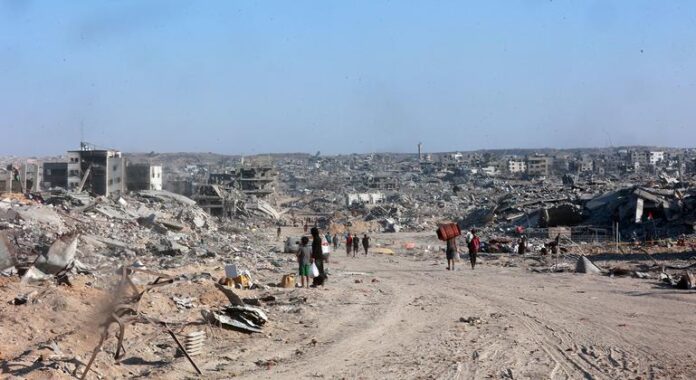
In recent days, air strikes and bombings have intensified in some parts of Gaza City while attacks also continue to Deir Al-Balah and Khan Younis, who have led to a large number of victims.

“If the Israeli field operation announced in Gaza City advances, thousands of families who have already endured appalling humanitarian conditions could be pushed on the edge,” warned the agency.

A staggered 86% of the territory of Gaza is now found in Israeli-militarized areas or under travel orders, and humanitarian workers do not have both access and supplies to meet their needs.

Originally published at Almouwatin.com

The United Nations highlight the need for peaceful resolution, while Trump and Putin prepare to meet on Ukraine

0

The UN underlines that any effort or peace agreement must comply with the principles of Charter of the United NationsIncluding respect for the sovereignty and territorial integrity of Ukraine.

Addressing journalists on Thursday, UN spokesperson Stéphane Dujarric praised the “dialogue at the highest level” between the two permanent members of the Security advice.

The meeting should take place in Alaska at 11 a.m. local time (3 p.m. in New York). The state of the northern United States is separated from the continent by Canada, while Russia is just west through the Bering Strait and the International Date line.

Mr. Dujarric reaffirmed that the “[UN’s] The position concerning the war in Ukraine remains the same. »»

“” We want an immediate, complete and unconditional cease-fire as a first step in search of a just and sustainable and complete peaceWhoever supports Ukraine’s sovereignty, its territorial integrity and its independence in the internationally recognized border and in accordance with the Charter of the United Nations, international law and all relevant United Nations resolutions, “he said.

Asked about the information according to which the United States and Russia would meet without Ukraine at the table, Mr. Dujarric recalled the point of view of the UN principles according to which, to reach a lasting settlement, “it is useful to have all parts of the conflict at the table, at the same table. »»

“We will obviously look at what’s going on, and we look at what gets out of it. »»

The summit takes place in a context of worsening humanitarian conditions. According to the United Nations Coordination Office, OchhaHostilities continue to demand a heavy civil toll, destroying houses and infrastructure, forcing thousands of others to flee.

Between Monday and Wednesday, only Wednesday, more than 6,000 people evacuated their high -risk communities near fronts in the Donetsk region, either by organized evacuations or on their own will.

The United Nations Human Rights Surveillance Mission in Ukraine reported this week that July had seen the highest number of monthly civilian victims since May 2022, with 286 people killed and 1,388 injured.

Since Russia launched its large -scale invasion of Ukraine, the rights mission has documented the death of at least 13,883 civilians, including 726 children and 35,548 injured, including 2,234 children.

Originally published at Almouwatin.com