
Thursday, April 23, 2026
Home Blog Page 298

Master School and Fellowship Open Call 2026

0

Universities, academic consortia, and education-focused innovators this call is for you!

The Master School and Fellowship Open Call is designed to accelerate the development and delivery of high-quality learning experiences that build the skills and capabilities needed for sustainable urban mobility. 

This Call focuses on a series of specific activity areas aimed at meeting the objectives of the EIT Urban Mobility Master School and the EIT Urban Mobility Innovation & Entrepreneurship (I&E) Fellowship. The Call supports proposals that contribute to closing the knowledge gap within urban mobility by offering high-quality, challenge-based, intersectoral, and international education. 

We are seeking proposals that align with the key objectives of the Master School and I&E Fellowship, including fostering innovation and entrepreneurship skills, increasing student and graduate volumes, strengthening links to industry and cities, and supporting startup creation through EIT-labelled programmes. 

Who can apply? 

This Call is open to organisations from the Member States of the European Union, and Third Countries associated with Horizon Europe. This Call is open to multi-participant proposals or mono-participant proposals.

In the case of mono-participant proposals, it is considered that the pan-European dimension is achieved through the network and truly international experience required from all our Master School and Fellowship programmes with compulsory mobility requirements embedded in the curriculum. Our programmes bring together students and teaching staff from the whole of Europe and beyond, attracting the best talent globally. In addition to this, universities who become partners in the Master School are required to sign the Master School Agreement, thereby becoming part of the consortium of partners jointly supporting the delivery of the EIT Urban Mobility Master School and offering the programmes. A similar agreement will be in place for the EIT Urban Mobility I&E Fellowship, which universities selected to take part will be required to join.    

In case of multi-participant proposals, as a minimum requirement, proposals must be composed of at least two independent legal entities established in two different EU Member States and/or Third countries associated to Horizon Europe. 

For information on special cases, including Switzerland and Hungarian universities please refer to section 2.1 of the Call Manual.

Info Webinar 

EIT Urban Mobility will host an online information session on 9 July 2025, 12.00 – 13.30 CEST. To register for the webinar, please visit this website.

Discover more about the call here

Source link

Gaza: “No one should never be forced to risk their life to find food,” said the UN humanitarian agency

0

The deprivation of several months of most basic goods in the suspension of life has resulted in an approval of the crisis. More than 100 people have been killed and hundreds of others injured along the Israeli-Israelis food convoy and distribution centers in the past two days.

As one in three people are currently spending days without food, Ochha reiterated that no one should never be forced to risk their life to eat something.

Ted Chaiban, deputy director of the United Nations Agency for Children UnicefWho is fresh for a visit to Gaza, noted that “the brands of deep suffering and hunger were visible on the face of families and children”.

He informed journalists in New York about his five -day visit to Gaza, the West Bank and Israel.

Serious risk of famine

“Gaza is now risking a serious risk of famine,” he said, informs journalists in New York about her five-day mission in the enclave, the West Bank and Israel.

“This is something that has accumulated, but we now have two indicators that have exceeded the famine threshold. »»

The crisis can only be addressed by the unrestricted help flow in Gaza, commercial supplies is also authorized to enter to help meet the needs of people.

Almost a week for the Israeli announcement to allow the scaling of aid and tactical breaks to allow the sure passage of the UN convoys, the OCHA has reported that the aid that has entered Gaza so far remains insufficient, while UN convoys continue to cope with obstacles and a danger along the routes provided by the Israeli authorities.

“Civilians must always be protected and the delivery of aid to the large -scale community level must be facilitated, not obstructed,” said OCHA.

Hungry, bombed and moved

“The children I met are not victims of a natural disaster. They are hungry, bombed and moved, “said Chaiban. He noted that more than 18,000 boys and girls have been killed since the start of the war, “an average of 28 children a day, the size of a classroom, disappeared. »»

During his stay in Gaza, Mr. Chaiban met the families of the 10 children killed and 19 injured by an Israeli air strike while they were line up for food with their mothers and fathers in a nutrition clinic supported by UNICEF in Deir al-Balah.

Discussion with Israeli authorities

Commit to the Israeli authorities in Jerusalem and Tel Aviv, Unicef “has pressed a review of [Israel’s] The rules of military engagement to protect civilians and children, ”said Chaiban.

Simultaneously, UNICEF also called for more humanitarian aid and trade traffic to stabilize the situation and reduce the despair of the population.

“Children should not be killed by queuing in a nutrition center or by collecting water, and people should not be so desperate as rushing a convoy,” he said.

“What’s going on on the field is inhuman. Mr. Chaiban said, hoping for a sustained ceasefire and a political path to follow.

Originally published at Almouwatin.com

World News in Brief: Hunger in the English and Nerf-Orch Dizuly Caribbean, Climate and Deplacement Cromis in Somalie, World Mallfeed Week

0

Throughout the region, Nations are faced with challenges related to food In particular due to geographic distance, the lack of available local resources and exposure to climate change.

“The Caribbean are particularly vulnerable to the natural risks and disturbances of the supply chain, which can result in an increase in food prices”, ” saidBrian Bogart. chief Wfp for the region.

“It is deeply concerned that many people find it difficult to afford the food they need,” he said.

Deposit of the supply chain

The rise in food prices is a major concern for the region, food inflation constantly exceeding overall inflation rates, local production efforts called into question by increasing operational costs.

In 2025, 30% of the Caribbean said they had eaten less than usual, a trend notably triggered by the increase in food costs and the global geopolitical factors.

As the region is significantly based on imported agricultural inputs, “the strengthening and diversification of supply chains and commercial roads in the region are essential,” said Bogart.

He added that in a region particularly affected by climatic disasters, “these efforts will help make food more accessible and affordable while supporting faster recovery in times of crisis. »»

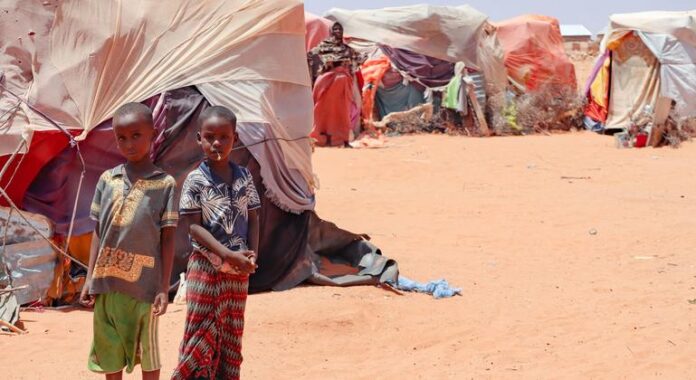
A girl moves a container full of water on a site for people displaced in Dolow, Somalia. (deposit)

The United Nations Migration Agency highlights the deepening of the climate crisis and movements in Somalia

Climatic shocks and mass trips caused by conflicts have uprooted some 3.6 million people in Somalia, according to the International Organization for Migration (Iom).

Almost half of the population was affected by the climate crisis, added the United Nations Agency.

Deputy Director General of OIM UGOCHI Daniels concluded A four -day visit to Somalia this week when she expressed her solidarity for communities which continue to endure incessant droughts, floods and conflicts.

Daniels also noted that communities find solutions to resist the worst impact of the climate crisis, but they need international support from the Green Climate Fund urgently.

The IOM is active through Somalia in travel sites and in rural and other fragile areas. His work includes promoting land restoration and “environmental peacebuilding”, which aims to reduce tensions on shared resources.

Another IOM initiative encourages Somalians to invest in their own development by providing additional funding.

Last year, the communities contributed more than half a million dollars to projects such as solar energy, access to drinking water and small-scale agriculture-investments all equaled more than $ 2 million in IOM.

World Breastfeeding Week: Investing in health systems and policies for the benefit of moms and babies

This Friday (August 1) marks the start of the World Breastfeeding Week and this year’s theme calls for investing in health systems as well as policies, laws and programs that prioritize women, babies and breastfeeding.

The World Health Organization (WHO)) said Investing in the support of breastfeeding is one of the most powerful tools that political decision-makers must improve public health, strengthen savings and guarantee the well-being of future generations.

The United Nations agency explained that breastfeeding protects children’s health and improves survival, especially during the first months of life. For infants, breast milk is more than food: it also offers protection against many common diseases such as diarrhea, pneumonia and infections.

Mothers also benefit from breastfeeding reduces the risk of postpartum hemorrhage, as well as breast and ovary cancers, heart disease and type 2 diabetes.

Who urges governments to allocate dedicated funding for breastfeeding, including the return of new mothers, as well as maternity protection as a leave paid after childbirth.

Originally published at Almouwatin.com

Live: The United Nations Security Council meets on the crisis in Ukraine

0

The United Nations Security Council meets on Friday afternoon to discuss the current crisis in Ukraine, where recent attacks have killed dozens or injured. A senior United Nations Political Affairs officials should inform the situation. Follow our cover live from UN Newsin coordination with Cover of United Nations MeetingsFor real -time updates and key developments in the room. UN News Application Users can Follow the cover here.

Originally published at Almouwatin.com
The push of Africa for the independence of HIV advances with the first supply of drugs manufactured locally

0

Development brands An important step for a region that carries almost 65% of the world HIV burden and has long depends imports antiretroviral drugs and test kits. But it can start to change.

THE Human immunodeficiency virus (HIV) weakens the body’s immune system, reducing its ability to combat infections and certain cancers. Without a timely intervention, it can progress to acquired immunodeficiency syndrome (AIDS), the most advanced infection stage.

In 2023, the Kenya -based pharmaceutical company, Universal Corporation LTD, became the first African manufacturer to receive the World Health Organization (WHO) Prequalification to produce tenofovir disoproxil fumarate, lamivudine and the dolutegravir (TLD) – front -line antiretroviral therapy for HIV.

From now on, in a big step forward, the Global Fund-a global partnership funding HIV, tuberculosis and malaria responses-is accompanied by this HIV treatment produced locally for Mozambique, which makes it the first time that the Afro-Fabrocked TLD has been deployed via this channel.

“” The supply of first -line African HIV treatment by the Mozambique Global Fund is a big step to strengthen supply chain systems in Africa, »» said Meg Doherty, Director of World HIV Programs.

“” This will contribute to better health results for people living with HIV who need uninterrupted medication supplies.“”

Reinforcement of regional capacities

Who says that the realization is part of a broader thrust to strengthen local production capacity and improve access to essential health technologies across Africa.

The United Nations agency is associated with global countries, manufacturers and health organizations – including the Global and Unitaid Fund – to extend quality African manufacturing.

“The local production of health products provided by quality is an urgent priority,” said Rogerio Gaspar, director of regulation and prequalification.

“” With each African manufacturer that meets prequalification standards, we get closer to a more independent, resilient and fair health system.“”

Progress, but structural gaps remain

Despite the milestone, which warned that production alone is not enough. To guarantee long -term sustainability, the agency calls for advanced market commitments, fair supply policies and continuous technical support.

Which also underlines diagnoses as a critical gap. With the movement of donors’ financing, many countries are under pressure to maintain HIV testing test programs, which are the first time for prevention and treatment.

In a related effort, codix organic, a Nigerian diagnostic company, recently has received an underside to make quick diagnostic tests for HIV.

Quick HIV tests produced locally will contribute to increasing affordability and approaching vulnerabilities and delays in the supply chain
– Who director Meg Doherty

“” Having quick tests on HIV products locally helps increase affordability and more broadly approach vulnerabilities and delays in the supply chain in access to diagnostics“Said Dr. Doherty.

Support the impact in the middle of the financing strain

As part of its directives, the United Nations health agency also encourages countries to adopt rapid HIV rapid tests, in particular as the first test in national algorithms, which can considerably reduce costs while maintaining services.

Although the last update marks tangible progress, more action is necessary.

“The local TLD is a major step towards this objective,” said, “but more action is necessary. »»

Originally published at Almouwatin.com

Former Russian President Threatened the US with “Dead Hand” – What is That?

0


Donald Trump, the president of the United States, is going to punish countries that buy Russian energy products

Source link

Gaza: nearly 1,400 Palestinians killed during food, because the UN warns that paratroopers are not a solution

0

Between July 30 and 31 only, 105 Palestinians were killed and at least 680 others injured along the convoy roads in the Zikim region in northern Gaza, from the south of Khan Younis, and near GHF sites in Middle Gaza and Rafah, at the office (Ohchr) said in a press release published Friday

In total, since May 27, at least 1,373 Palestinians were killed during the search for food; 859 near the GHF and 514 sites along the roads of food convoys.

Ohchr noted that most murders were committed by the Israeli army and that, even if it is aware of the presence of other armed elements in the same areas, it has no information indicating their involvement in murders.

“” [The office] Has no information that these Palestinians participated directly in hostilities or threat to Israeli security forces or other people. Each person killed or injured had desperately fought for survival, not only for themselves, but also for their families and dependents, “he said.

Maintain international law

The office pointed out that intentionally directing attacks on civilians who do not directly participate in hostilities and intentionally using civilians as a war method by depriving them of objects essential to their survival, including rescue supplies that voluntarily prevent war crimes.

“If part of a systematic or widespread attack against the civilian population can also constitute crimes against humanity,” added the OHCHR, noting that the cumulative impact of these incidents and humanitarian access restrictions.

“Each of these murders must be studied quickly and independently, and those responsible for accounting for. Urgent measures must be put in place to avoid recurrence, “he said.

Non -efficient paratroopers

Meanwhile, the United Nations Rescue and Work Agency for Palestinian refugees (UNRWA), underlined the need to open level passages to provide large -scale aid through the Gaza strip.

“Airdrops are at least 100 times more expensive than trucks. The trucks carry twice as much aid as planes ”, the general commissioner of UNRWA Philippe Lazzarini said on social networks.

“If there is a political will to authorize paratroopers-who are very expensive, insufficient and ineffective, there should be a similar political will to open up to level passages,” he said.

Mr. Lazzarini also noted that UNRWA had 6,000 trucks responsible for helping stuck outside Gaza pending authorization to enter.

During the ceasefire earlier this year, UNRWA and other UN agencies were able to bring 500 to 600 aid trucks every day.

“Aid has reached the entire Gaza population in terms of safety and dignity. He managed to reverse in -depth famine without any hijacking, “said UNRWA chief.

“Let’s go back to what works and do we do our job.”

Originally published at Almouwatin.com

Gaza Strip: Humanitarians warn of worsening famine conditions, attacks on civilians

0
Gazans face hunger crisis as aid blockade nears two months

Of the 154 malnutrition-related deaths since October 2023 (including 89 children) reported by Gazan health authorities, the World Health Organization (WHO) said 63 occurred in July alone.

These deaths follow a steep drop in food consumption: 81 per cent of households reported poor food consumption in July (up from 33 per cent in April), and 24 per cent experienced severe hunger (up from 4 per cent), crossing the famine threshold, according to the humanitarian update issued by the UN Office for the Coordination of Humanitarian Affairs (OCHA) on Wednesday.

Acute malnutrition rates also surpassed famine thresholds in Khan Younis, Deir al Balah and Gaza City.

Given these recent figures, IPC food security experts warned that the worst-case famine scenario is unfolding. However, they added that while the third famine threshold of starvation-related deaths is rising, collecting data remains a challenge. 

UN agencies caution that time is running out for a full-scale humanitarian response. 22 per cent of the analyzed population is facing “catastrophic” level of food insecurity, and a further 54 per cent is at “emergency” level. 

At the same time, less than 15 per cent of essential nutrition services remain functional.

Attacks on civilians

Of the over 60,000 Palestinians reported killed since October 2023, nearly 9,000 died after hostilities reignited in March, and 640 between 23 and 30 July.

Civilian casualties while seeking food are also rising, with 1,239 killed and over 8,152 injured since 27 May.

OCHA further noted that displacement figures since 18 March have surpassed 767,800, though no new evacuation orders were issued by Israeli authorities since 20 July. The 20 July order affecting a humanitarian hub in Deir al Balah has since been rescinded.

Amid ongoing displacement, overcrowding in shelters, lack of privacy and worsening hunger has elevated the risk of gender-based violence (GBV) for women and girls.  

The conditions are especially dire in southern Gaza, where there are no longer any safe shelters for GBV survivors.

Humanitarian measures

Between 23 and 29 July, only 47 per cent of 92 coordinated aid movements were fully facilitated by Israeli authorities. About 16 per cent were denied, 26 per cent impeded after initial approval and 11 per cent withdrawn by organizers.

The Israeli military announced a daily 10-hour pause in military activity, beginning 27 July, in Al Mawasi, Deir al Balah and Gaza City “to increase the scale of humanitarian aid entering Gaza.”

They also announced measures including airdrops of flour, sugar and canned food; the reconnection of the power line from Israel to the southern Gaza desalination plant; the removal of customs barriers on food, medicine, and fuel from Egypt; and the designation of secure routes for UN humanitarian convoys.

However, humanitarian partners warned that airdrops could endanger civilians, lead to unequal distribution and fall short of needs.

Working with limited funding

In addition, lack of sufficient funding is also hampering response efforts.

As of 30 July, only about 21 per cent of the $4 billion requested for the 2025 urgent humanitarian appeal for the region has been secured, leaving critical gaps. 

Source link

Haiti: more than 1,500 killed between April and June, the UN report finds

0

These numbers are similar to those of the first quarter Out of 2025, when 1,617 people were killed and 580 were injured.

“Gang attacks in the Articonites and Central departments, and in the capital, continue to cause serious human rights violations and worsen an already disastrous humanitarian crisis,” said Ulrika Richardson, resident and humanitarian coordinator of the United Nations in Haiti.

Gangs inside and beyond the Capitol

The assassination of President Jenel Moses in 2021 sparked great violence in the gangs in the capital of Port-au-Prince. Today, the UN estimates that gangs control at least 85% of the city. In recent months, many have started to extend their influence in the departments of the Center and Artibonite.

In June alone, 45,000 people were moved to the center and at the artibonite, which means that the total number of people displaced in these two departments has more than 240,000, according to the International Migration Organization (Iom).

Between April and June, the security forces were able to slow down the expansion of the gang in the capital, but the United Nations Office in Haiti, Binuh. noted that the situation remains exceptionally volatile.

While they expand their territory, the gangs have committed human rights violations, according to the UN, including the rape of gangs, extrajudicial murders, children’s farms, trafficking and murder.

“The gang members continued to use murders, gang rapes and kidnappings to maintain their control over the populations living in areas under their influence,” said Binuh.

Different authors

The UN has long warned that gangs are not the only groups that commit violations and human rights violations in Haiti – government security forces and local self -defense groups also have engaged violations.

Of the 1,520 people killed and 609 injured between April and June, most of them were in the capital or the departments of the center and artibonite, with 24% of them killed or injured by gangs.

Gangs security operations represented 64% of deaths and injuries during this period, with 73 documented cases of summary executions and a third of deaths occurring following explosive drones.

The self -defense groups, which were formed in reaction against gangs and the inability of the security force to contain them, were responsible for 12% of people killed and injured.

Respect human rights

The humanitarian situation in Haiti is increasingly disastrous, with more than 1.3 million displaced people and half of the population faced with food insecurity.

With the humanitarian response plan only at 8%, the United Nations Office for Humanitarian Affairs Coordination (Ochha) calls on the international community to intensify financial support.

The report has also urged the international community to continue to increase the support of Haiti’s struggle against gangs.

“The report calls for the Haitian government, with the support of the international community, to strengthen the fight against gangs while strictly respecting human rights and standards on the use of force,” said the United Nations mission in Haiti.

Originally published at Almouwatin.com

The EBA publishes the results of its 2025 EU-wide stress test

0
The EBA publishes the results of its 2025 EU-wide stress test

The European Banking Authority (EBA) today released the results of its 2025 EU-wide stress test involving 64 banks from 17 EU and EEA countries and covering 75% of EU banking sector assets. The results confirm that European banks remain resilient even under a severe hypothetical economic downturn. The simulated scenario involves a sharp deterioration in the global macro-financial environment, driven by a resurgence in geopolitical tensions, entrenched trade fragmentation, including increase in tariffs, and persistent supply shocks. EU banks, despite bearing losses of EUR 547bn,[1] maintain strong capital positions and their capacity to continue supporting the economy.

Key findings

  • The capital depletion under the adverse stress test scenario amounts to 370 bps, resulting in a CET1 ratio at the end of the scenario of 12%[2]. The strong income generation during the exercise helps banks to partly offset their losses and results in a lower depletion compared to the 2023 exercise.
  • Banks start the exercise with higher profitability and capital than in recent years. While banks are more risk-sensitive, showing higher nominal losses, they have better absorption capacity through income generation. Banks show more vulnerabilities in credit and market risk, which are the main contributors to the stress test losses.
  • Specific adverse scenarios affect economic sectors differently. Banks have improved their ability to differentiate the impact of adverse scenarios across sectors, but there is still a need to further improve their modelling efforts.
  • Strong performance of the EU banks in the 2025 EU-wide stress test is reassuring, nonetheless, maintaining adequate capital remains essential to ensure the safety of the EU banking system.

Summary of key results[3]

Transparency and input to the Supervisory Review and Evaluation Process

The EBA has published detailed, bank-level results from the stress test, including comprehensive data on both the starting point and the projected outcomes under the baseline and adverse scenarios.

While the EU-wide stress test does not apply a predefined pass/fail threshold, it serves as a critical input for the Pillar 2 supervisory assessment. The results will support Competent Authorities in evaluating banks’ ability to meet prudential requirements under stress and provide a robust basis for discussions between supervisors and individual institutions. These discussions cover capital adequacy and distribution plans as part of the regular Supervisory Review and Evaluation Process (SREP).

Notes to the editors

  1. Detailed information on bank-level results, including interactive tools, can be found on in the 2025 EU-wide stress test website.
  2. The 2025 EU-wide stress test involves 64 banks from 17 EU and EEA countries, covering 75% of the EU banking sector assets. This stress test allows supervisors to assess the resilience of EU banks over a three-year horizon under both a baseline and an adverse scenario. The full sample of banks can be found in Annex 1 of the EBA methodology.
  3. The EU-wide stress test is initiated and coordinated by the EBA and undertaken in cooperation with the EU Competent Authorities, including the European Central Bank (ECB) for the Banking Union, and the European Systemic Risk Board (ESRB).
  4. The EBA develops a common methodology and is responsible for the final dissemination of the outcome of the exercise. The adverse scenario is designed jointly by the ESRB and the ECB, and the baseline scenario is provided by the national central banks. Competent Authorities, including the ECB Banking Supervision for the euro area banks, are responsible for ensuring that banks correctly apply the common methodology. In particular, they are responsible for assessing the reliability and robustness of banks’ assumptions, data, estimates and results and the resulting supervisory actions.
  5. The EU-wide stress test is based on the implementation by the banks of the EBA methodology and the two scenarios, under the close scrutiny of their supervisors (“constrained bottom-up” exercise). Some parts of the stress test rely on top-down projections or have been centralised. The 2025 methodology benefits from enhancements, including the centralisation of net interest income (NII) projections with a revised NII scope and a more risk-sensitive market risk approach with enhanced proportionality. The changes are part of the medium-term plan of revising the stress test framework.
  6. The EU banking package regulation (CRR3/CRD VI), which applies from 1 January 2025, is reflected in the 2025 EU-wide stress test methodology and templates, which should, however, continue to be understood as a risk exercise, and not as an exercise that assesses the impact of regulatory changes. The Capital Requirements Regulation (CRR3) is introduced step by step using transitional arrangements until full implementation in 2033. The Report focuses on applicable CET1 capital ratios, i.e. “transitional ratios” taking into account all the applicable transitional arrangements specified in the CRR3 over the three-year scenario horizon. For completeness, the outcome of the exercise under the assumption of full implementation, i.e. “fully loaded ratios”, is also reported (see section 2.4 of the Report for further details).
  7. Detailed information about the baseline and adverse scenarios can be found in the note produced by the ESRB.
  8. The EBA’s 2025 stress test methodology can be found on the EBA website


[1] These are total credit, market and operational risk losses.

[2] This refers to the applicable capital ratios and stress test impacts computed considering all applicable CRR3 transitional arrangements (i.e. “transitional capital ratios“). See section 2.4 of the Report for more details about the implementation of CRR3.

[3]Bank projections are based on the regulatory regime applicable as of January 1, 2025, when CRR3 applies. The ratios are provided on transitional basis. The progressive phase-in of the regulation through transitional arrangements facilitates the adjustment of banks towards the new framework, which will apply in full as of 2033.


Documents

Digital publication of the 2025 EU-wide stress test results
2025 EU-wide stress test – Results

(2.9 MB – PDF)

2025 EU-wide stress test – FAQs

(254.11 KB – PDF)

2025 EU-wide stress test – Presentation

(939.85 KB – PDF)

Source link